
Hitch Receivers
- Product
- Qty in Cart
- Quantity
- Price
- Subtotal
-

KFI 07-10 John Deere Gator XUV 620i/ 850D 2 in. Receiver Hitch Front/Rear - 100720
KFI
$52.95What is the weight capacity of this receiver?This KFI receiver boasts a substantial towing capacity, engineered with 3/16 inch steel for reliable performance across demanding applications.Is...$52.95 -
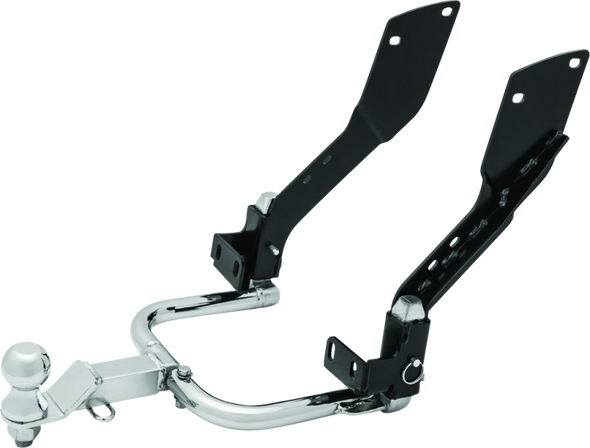

Kuryakyn Receiver Hitch 14-up Touring Models Black & Chrome - 7657
Kuryakyn
$449.99How do I install the Kuryakyn KUR Trailer Hitch Receiver?This hitch receiver features a straightforward bolt-on installation, designed to integrate seamlessly with your motorcycle's existing frame...$449.99 -
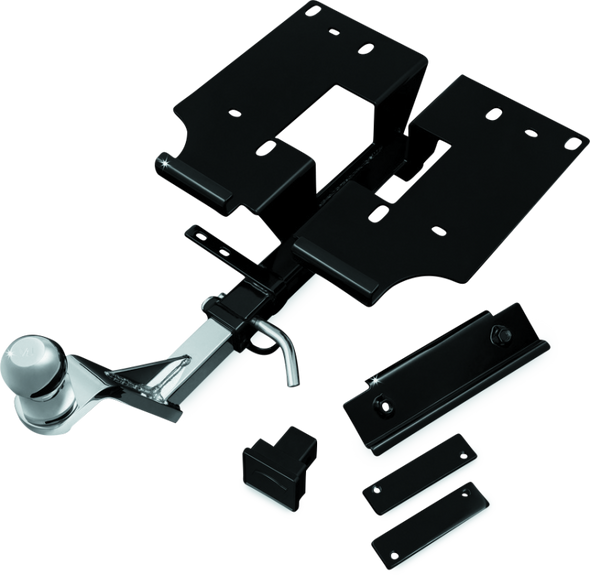
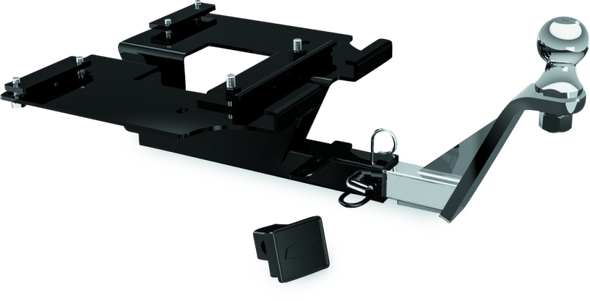
Kuryakyn Receiver Hitch 09-Up Trike Models - 7653
Kuryakyn
$499.99Our hitches are designed for superior strength and rigidity, while allowing bolt-on installation using a few common hand tools. Once installed, these beauties look right at homeVisible parts are...$499.99 -


Kuryakyn Trailer Hitch 01-10 Honda GL1800 - 7642
Kuryakyn
$649.99How difficult is the installation process for the KUR Trailer Hitches D?The KUR Trailer Hitches D features a simple bolt-on installation process utilizing just a few common hand tools for a...$649.99 -

Kuryakyn Trailer Hitch 12-17 Honda GL1800 - 7641
Kuryakyn
$699.99Does this hitch receiver fit my motorcycle?Confirm fitment with your specific vehicle model to ensure proper installation and optimal performance of this hitch receiver.How difficult is the...$699.99 -
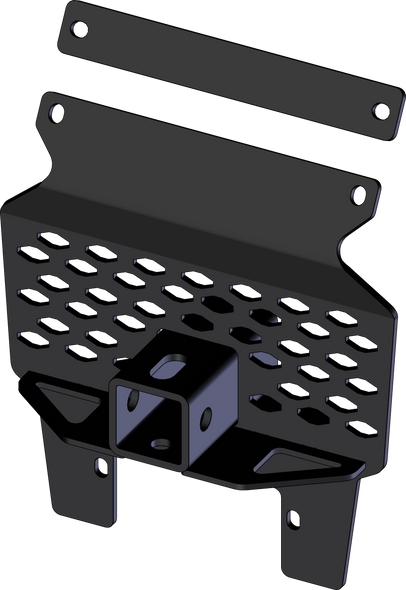
KFI 22-25 Honda Pioneer 1000 5/ 6 2 in. Receiver Hitch Front Upper - 102165
KFI
$102.95What is the weight capacity of this front receiver?This front receiver's robust construction supports demanding off-road applications and winch mounting, delivering exceptional strength.Is...$102.95 -
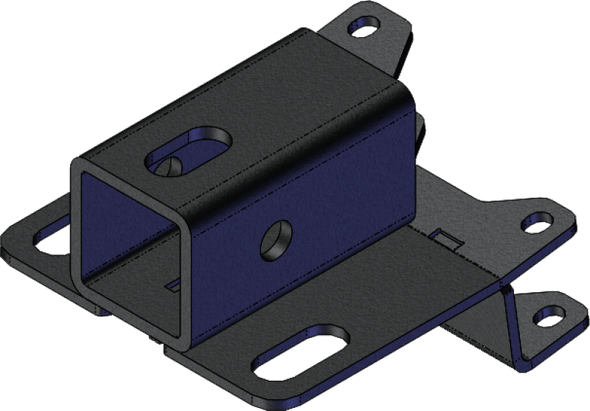
KFI 02+ Honda TRX520 Recon 2 in. Receiver Hitch Rear - 102035
KFI
$56.95Will this receiver hitch fit my vehicle?Confirm fitment with your vehicle's specifications before purchasing this KFI receiver hitch for optimal compatibility.How difficult is the installation...$56.95 -

KFI 22+ Polaris Ranger Pro XD/ Ranger SP 570 2 in. Receiver Hitch Front Lower - 102005
KFI
$79.95Does this hitch receiver require drilling for installation?This KFI Front Receiver features a bolt-on install type, eliminating the need for any drilling into your vehicle's frame.What is the weight...$79.95 -
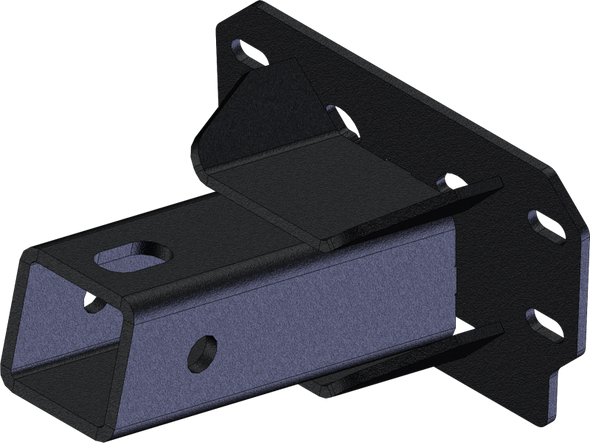
KFI 18+ Polaris Ranger 1000/ XP/ Crew 2 in. Receiver Hitch Lower Front - 101915
KFI
$69.95What Polaris Ranger models does the KFI Front Receiver fit?The KFI Front Receiver expertly fits 2018-2022 Polaris Ranger 1000, 1000 EPS, and 1000 Premium models, plus four additional specific trims...$69.95 -

KFI 21+ Yamaha Wolverine RMAX/ 4 2 in. Receiver Hitch Front Lower - 101870
KFI
$89.95Will this hitch receiver fit my Yamaha Wolverine RMAX2?This KFI Front Receiver is engineered for specific Yamaha Wolverine RMAX2 models; confirm compatibility to ensure a perfect bolt-on fitment for...$89.95 -

KFI 16+ Can-Am Defender HD5-HD10 MAX/ PRO 2 in. Receiver Hitch Front Upper - 101860
KFI
$69.95What vehicles is the KFI Front Receiver compatible with?Confirm exact vehicle fitment using the provided compatibility checker to ensure seamless installation of this front receiver.How difficult is...$69.95 -

KFI 17-23 Kawasaki Mule 400 SX/ 05-16 Mule 610 2 in. Receiver Hitch Rear - 101820
KFI
$69.95Will this KFI rear receiver fit my 2018 Kawasaki Mule?This KFI rear receiver hitch is engineered to precisely fit 2005 through 2022 Kawasaki Mule 610 4x4 and Mule SX models.How easy is the...$69.95
A hitch receiver is the standardized steel interface between your vehicle and every tow, recovery, or accessory load you'll ever put behind it — and the difference between a properly rated receiver and a budget bracket is measured in weld quality, steel grade, and whether your rig stays on the road when things get heavy. Motor Sport Mayhem stocks 92 hitch receivers across 31 brands, spanning $1.99 accessory hardware to $3,960 expedition-grade systems engineered for maximum tongue weight, drop adjustability, and off-road abuse.
Our Top Picks for Hitch Receivers
Each of these products was hand-selected based on build quality, real-world performance data, and value delivered across towing, recovery, and off-road applications.
ADD Stealth Fighter Winch Kit
Addictive Desert Designs | $798.98
A fully integrated front-mount winch and receiver system built from laser-cut domestic steel with seamless bumper integration for clean load transfer.
- Combines winch mounting and receiver function into a single structural assembly, eliminating flex points found in bolt-on adapters
AFE Tow Hooks
aFe | $172.00
Heavy-gauge steel front tow hooks with a matte gray finish engineered for high-load recovery pulls from factory mounting positions.
- Direct OEM mounting compatibility ensures load paths align with chassis engineering rather than transferring stress to sheet metal
ABR Winches
All Balls Racing | $261.20
A 3,500 lb rated winch cable assembly built for ATV and UTV receiver-mounted winch systems where cable integrity under tension is non-negotiable.
- High-tensile steel cable construction rated to 3,500 lbs provides a reliable, cost-effective recovery option for light-duty receiver winch setups
ARB Winches
ARB | $1,515.63
ARB's receiver-mounted winch platform delivers expedition-proven pulling capacity with IP68-rated sealing and a thermally protected motor for sustained load cycles.
- IP68 water and dust rating means this system performs in full submersion conditions — a critical spec for serious off-road and overlanding recovery use
BOD Hitch Steps
Body Armor 4x4 | $119.99
A receiver-mounted skid step that doubles as rear hitch protection, built from textured steel plate to handle trail contact and cargo loading simultaneously.
- Dual-function design protects the receiver tube from impact while providing a functional step — a practical upgrade for lifted trucks and SUVs with high hitch clearance
BRN 12K Winch
Borne Off-Road | $649.95
A 12,000 lb capacity winch equipped with orange synthetic rope for lightweight, heat-dissipating recovery pulls from a standard receiver mount.
- Synthetic rope is 20–25% lighter than equivalent steel cable and doesn't store kinetic energy on snap — a genuine safety advantage in high-load recovery situations
COBB Hitch Covers
COBB | $95.00
A 2-inch receiver-mounted D-ring shackle adapter that converts a standard hitch tube into a functional recovery point with a rated shackle anchor.
- Adds a rated recovery anchor to any 2-inch receiver without permanent modification — practical for performance and track vehicles that need occasional tow-out capability
CUS Tow Hooks
Cusco | $162.00
Cusco's front tow hook is a motorsport-heritage recovery anchor machined for precise OEM fitment with a high-visibility finish for quick identification in competition or trail situations.
- Forged steel construction and motorsport pedigree make this an ideal choice where a compact, purpose-built tow point is required without bulky receiver hardware
DFR Receiver Hitch
DragonFire Racing | $129.99
A rear-mount receiver hitch engineered specifically for side-by-side UTVs, providing a standard 2-inch receiver interface for trailer and accessory mounting on machines with compact rear frames.
- Purpose-built UTV receiver geometry matches the chassis architecture of sport side-by-sides, avoiding the fit and clearance issues common with universal hitch adapters
DVE Hitch Mounts
DV8 Offroad | $899.99
A rear spare tire guard and accessory mount system that integrates receiver hitch functionality with full spare tire protection and multi-point accessory mounting for overland builds.
- Combines structural spare tire protection with integrated accessory mounting and receiver capability — a high-value single-component solution for serious expedition builds
How to Choose the Right Hitch Receivers
The receiver tube class, tongue weight rating, drop height, and steel specification are the four numbers that separate a hitch that works from one that fails under load — and none of them are interchangeable. A Class I receiver handling 200 lbs tongue weight is a completely different piece of hardware than a Class V receiver rated to 2,000 lbs, and using the wrong class for your application is how hitches bend, balls shear, and trailers go sideways. Weld quality is equally critical: look for full-penetration welds on the receiver tube-to-shank junction, because partial welds in this area are the single most common failure point in budget receivers. Surface treatment matters too — raw steel receivers rust from the inside out, degrading structural integrity long before visible corrosion appears, while powder-coated or galvanized receivers maintain their rated capacity through years of weather exposure.
Key Specifications
Receiver tube size is the first spec to confirm: the industry standard 1-1/4-inch and 2-inch tube sizes are not interchangeable with adapters under full tongue weight load — adapters add a mechanical joint at the highest stress point and reduce effective capacity. Always match receiver tube diameter to your hitch ball mount, cargo carrier, or bike rack specification before purchasing.
Tongue weight capacity (TWC) and gross trailer weight (GTW) ratings must both exceed your actual load — never operate at 100% of rated capacity as a daily practice. Most engineers recommend staying at or below 80% of rated TWC for sustained towing, particularly with adjustable drop hitches where leverage on the shank increases effective load at the receiver junction. Ball mount drop height directly affects trailer level, which affects tongue weight distribution and trailer stability: an incorrectly sized drop creates a nose-up or nose-down trailer attitude that shifts dynamic load onto either the front or rear axle of the tow vehicle in ways the chassis was not designed to handle.
For off-road and recovery applications, look for forged or DOM tube steel construction rather than stamped or welded box steel — forged receivers are significantly stronger at equivalent wall thickness and resist the shock loads of snatch-strap recovery better than cast or stamped alternatives. Shackle-rated receiver mounts and D-ring adapters must carry their own load rating independent of the receiver itself, and that rating should be certified to an industry standard rather than a manufacturer-specified number without test data behind it.
Hitch pin retention is frequently overlooked: a properly torqued hitch pin with a locking clip or hitch lock is the last line of defense against a ball mount walking out under vibration. Stainless or zinc-plated hitch pins resist corrosion that can seize or weaken the retention mechanism, and anti-rattle clips or sway-control inserts are worth adding on any setup that will see highway miles with a loaded trailer. If you're running a weight-distributing setup for heavy towing, confirm your receiver is rated for the additional vertical loads that weight-distribution bars impose — not all Class III receivers handle the leverage geometry of a WD head.
Hitch Receiver Class Reference: Capacity, Tube Size, and Application
| Receiver Class | Tube Size | Max Tongue Weight | Max GTW | Typical Application |
|---|---|---|---|---|
| Class I | 1-1/4 inch | 200 lbs | 2,000 lbs | Small trailers, bike racks, light cargo carriers |
| Class II | 1-1/4 inch | 350 lbs | 3,500 lbs | Small utility trailers, folding cargo carriers |
| Class III | 2 inch | 500–800 lbs | 5,000–8,000 lbs | Full-size trucks, SUVs, standard towing |
| Class IV | 2 inch | 1,000–1,200 lbs | 10,000–12,000 lbs | Heavy-duty trucks, gooseneck prep, large trailers |
| Class V | 2-1/2 inch | 1,700–2,000 lbs | 16,000–20,000 lbs | Commercial towing, fifth-wheel prep, expedition rigs |
Price Guide
Entry ($1.99–$90): Hitch accessories, receiver covers, D-ring inserts, hitch pins, and light-duty bike rack adapters live in this range — functional hardware for low-load applications, but not where you want to be sourcing a primary towing receiver or recovery anchor for anything serious.
Mid-range ($90–$500): This is where the majority of quality tow balls, drop hitches, adjustable ball mounts, UTV-specific receivers, and light winch setups sit — most truck and SUV owners doing regular towing or weekend off-roading will find everything they need here from brands with real engineering behind the numbers.
Premium ($500–$3,960.02): Integrated bumper-receiver systems, expedition winch platforms, multi-function hitch mounts with spare tire carriers, and high-capacity adjustable systems justify this investment for full-time overland builds, commercial towing setups, and serious off-road rigs where a component failure has genuine consequences.
Who Is This For?
Hitch receivers serve a broader range of applications than almost any other single component category — from lightweight accessory mounting to full expedition recovery systems — and the usage data reflects that range directly.
Weekend Off-Roading — 8.0/10
Weekend off-roading is the highest-rated application in our data set, covering 188 products, and it makes sense: a receiver is the recovery anchor, the winch mount, the hi-lift point adapter, and the accessory rail all at once on a trail rig. A well-specified 2-inch receiver with a shackle adapter or recovery hitch turns any tow point into a functional extraction anchor without permanent chassis modification. The combination of accessibility, standardized sizing, and broad accessory compatibility makes this the single most versatile upgrade for trucks and SUVs that see dirt regularly.
Overlanding / Expedition — 7.7/10
With 196 products scoring 7.7 out of 10 for overlanding use, the receiver is central to expedition vehicle configuration — mounting jerry cans, spare tire carriers, camp kitchen slides, roof tent adapters, and winch systems all standardize around the 2-inch receiver tube. Multi-function integrated receiver mounts that combine bumper protection, accessory rails, and winch platforms in one chassis-attached assembly are specifically engineered for this use case. Weight distribution and tongue weight management become critical on long-haul builds where recovery gear, water, and fuel cans are all living off the rear receiver.
Heavy Towing — 7.6/10
134 products in this category are rated for heavy towing applications at a 7.6/10 score, reflecting a lineup that covers Class III through Class V applications with adjustable drop hitches, weight-distributing receiver heads, and high-capacity ball mounts. The key differentiation in heavy towing hardware is not just GTW rating but sway control compatibility, anti-rattle construction, and shank engagement depth — all specs that become non-negotiable above 8,000 lbs. Brands like GEN-Y Hitch and Weigh Safe have built their reputations specifically around the engineering tolerances that make the difference at maximum tow ratings. Pairing a properly rated receiver with well-maintained suspension is essential — overloaded rear springs and worn shocks amplify trailer sway even with a correctly rated hitch.
Serious Rock Crawling — 7.6/10
122 products score 7.6/10 for rock crawling, which speaks to the receiver's role as a recovery interface in low-speed, high-load extraction scenarios where controlled winching and anchor points matter more than towing capacity. In a crawling context, the receiver's structural integrity under shock load — rather than sustained tongue weight — is the critical spec, and forged or DOM-steel construction outperforms stamped alternatives when a snatch strap comes tight against a ledge. Rear receiver placement also matters for approach and departure angles; low-mount receivers can catch rock before the skid plate does on steep descents.
Easy DIY Install — 7.1/10
With 141 products rated 7.1/10 for DIY installation, most receiver hitches in this category are genuinely bolt-on with basic hand tools — a ratchet, torque wrench, and a second set of hands for alignment is all most installations require. The caveat is that frame-mount hitches require correct torque sequences on load-bearing fasteners, and overtightening or undertightening mounting bolts is the most common DIY installation error that leads to early hitch failure. Brands that provide clear torque specs and vehicle-specific installation templates remove the guesswork that causes problems.
Trusted Hitch Receivers Brands We Carry
The brands that dominate this category have earned their positions through engineering specificity, material standards, and real-world load testing rather than price competition. GEN-Y Hitch has built a technical reputation around adjustable ball mount systems with published load ratings verified under dynamic tow conditions, while Weigh Safe integrates built-in tongue weight scales directly into the ball mount shank — a genuinely useful engineering solution for drivers managing gross vehicle weight on commercial or long-haul setups. ARB's receiver and recovery hardware is developed in parallel with their bumper and winch systems, ensuring load paths are engineered as an integrated system rather than bolt-together afterthoughts. Rugged Ridge brings trail-specific geometry to receiver mounts designed for lifted applications where drop height and clearance angles are non-standard, and Borne Off-Road focuses on high-capacity winch integration with receiver systems rated for the shock loads that synthetic rope recovery demands. KFI rounds out the lineup with the broadest UTV and ATV-specific receiver catalog in the industry, covering machines where chassis geometry and hitch placement require purpose-built hardware rather than scaled-down truck hardware.
Frequently Asked Questions
Are air ride hitches worth it?
Air ride hitches use a pneumatic cushion to absorb trailer surge and road shock before it transfers into the tow vehicle's frame and suspension — on long-haul towing with heavy trailers over rough roads, the reduction in fatigue and chassis stress is measurable and real. They are most valuable when towing heavy loads frequently, particularly with trailers that have stiff couplers or no integral suspension of their own. The cost premium over a conventional ball mount is significant, but if you're putting serious miles behind a loaded flatbed or horse trailer on imperfect roads, the reduction in wear on your tow vehicle's shocks and struts and rear suspension bushings can justify the investment over time. For occasional weekend towing with a light trailer on good roads, a high-quality conventional adjustable hitch is sufficient and more cost-effective.
Are aluminum drop hitches strong enough for real towing?
Aerospace-grade aluminum alloy hitches — specifically those made from 6061-T6 or 7075-T6 billet — are fully capable of meeting Class III and Class IV tongue weight ratings when properly engineered, and several premium manufacturers publish third-party load test data confirming this. The material itself is not the weakness; the weakness in low-quality aluminum hitches is inadequate cross-section and insufficient wall thickness at the ball platform and shank junction, where bending stress is highest. A properly machined billet aluminum drop hitch will save 40–60% of the weight of an equivalent steel unit without sacrificing rated capacity, which matters when you're managing rear GAWR on a weight-sensitive build. Avoid cast aluminum hitches, which are fundamentally different from billet in grain structure, fatigue resistance, and impact toughness — cast aluminum should not be used in load-bearing tow applications.
Are CURT hitches made in China?
CURT Manufacturing is a US-based company headquartered in Eau Claire, Wisconsin, and while they manufacture a significant portion of their hitch product line domestically, some products in their catalog are sourced or assembled overseas — the specific origin varies by product line and SKU. For buyers where country of manufacture is a firm requirement, the practical approach is to verify the specific product's documentation before purchase, as the brand's domestic and import lines coexist in their catalog. What matters more for most towing applications is whether the product carries SAE J684 compliance or equivalent structural testing certification, which validates the load ratings independent of manufacturing location. CURT's domestic-manufactured products are generally well-regarded in the industry for weld quality and dimensional consistency.
Are clam shell recovery shackles actually useful?
Clamshell-style receiver shackle mounts — the hinged two-piece shackle adapters that fit into a 2-inch receiver — are genuinely functional for low to moderate recovery loads when made from properly rated steel with a certified WLL (working load limit) stamped or engraved on the body. The limitation is that the clamshell geometry creates a stress concentration at the hinge under lateral loading that solid forged D-rings and shackle mounts do not have, which means they are less appropriate for dynamic snatch-strap recoveries where shock loading exceeds static pull force. For vehicle-to-tow-rope connections, straightforward recovery pulls, and rated anchor points for winch fairlead rigging, a quality clamshell receiver shackle is a compact and practical solution. Always verify the WLL on any shackle receiver and never use unrated hardware for vehicle recovery — the consequences of a failure under tension are severe.
Are Crosby shackles made in the USA?
Crosby Group manufactures a significant portion of their shackle line in the United States at their Tulsa, Oklahoma facility, and their US-made shackles carry full traceability documentation and meet or exceed ASME B30.26 and Federal Specification RR-C-271 requirements. They also source some product internationally, so buyers requiring US manufacture should confirm the specific item's country of origin documentation. Crosby shackles are among the most widely used in industrial rigging and off-road recovery precisely because their load ratings are tested and certified rather than manufacturer-claimed — the difference between a proof-tested shackle and an unmarked import becomes significant when you're anchoring a 12,000 lb winch pull. For receiver-mounted recovery applications, matching shackle WLL to your winch rated line pull with an appropriate safety factor is the correct engineering approach, regardless of brand.
Building something specific? Our performance specialists can help you select the right Hitch Receivers for your application — street, track, or full race build.