
Drivetrain
- Product
- Qty in Cart
- Quantity
- Price
- Subtotal
-

Vortex Racing V3 2.0 Chain 530SX3-112- Gold - VORTEXRACINGG530SX3-112
Vortex Racing
MSRP: $251.95$214.16What is the recommended chain size for my bike?Confirm exact fitment using the provided vehicle compatibility tool to ensure optimal chain size selection for your specific motorcycle.Do I need a...MSRP: $251.95$214.16 -

Vortex Racing V3 2.0 Chain and Sprocket Kit 3481-16,435S-43,520RX3-114- Black - VORTEXRACINGCK5168
Vortex Racing
MSRP: $296.95$252.41Are there any special tools required for installing a VTX Chain Kit?Professional installation is strongly recommended to ensure proper fitment and safe operation of your VTX Chain Kit.How often...MSRP: $296.95$252.41 -

DSS Chevy Camaro 1993-2001 8Cyl auto T56 for Moser 9in conversion-(1350 3-1/2 Alum shaft) MOCA16 - DRIVESHAFTSHOP610034
Driveshaft Shop
$824.98$824.98 -
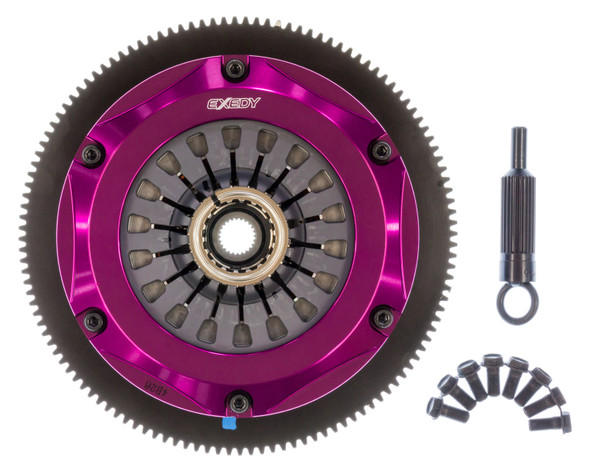
Exedy 2004-2014 Subaru Impreza WRX STI H4 Hyper Twin Cerametallic Clutch Sprung Disc Pull Type - EXEDYFM022SD
Exedy
MSRP: $2,472.59$2,101.65What is the main benefit of the Exedy Hyper Multi Clutch Kit?EXE Hyper Multi Clutch Kits deliver lightning-fast gear changes, crucial for aggressive track driving and superior torque capacity in...MSRP: $2,472.59$2,101.65 -

Torque Solution Short Shifter 12-15 Honda Civic / Civic Si - TORQUESOLUTIONTS-SS-024
Torque Solution
MSRP: $134.99$112.48MSRP: $134.99$112.48 -
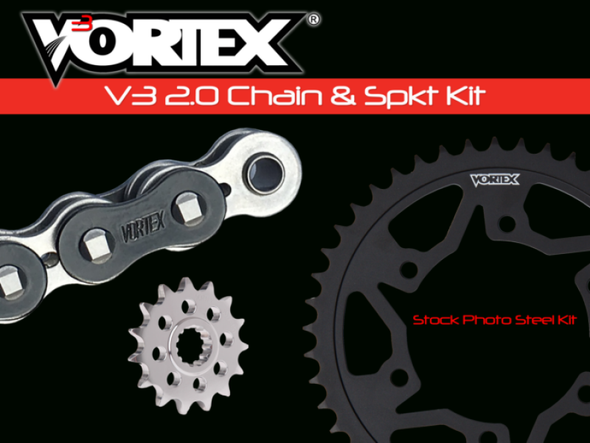
Vortex Racing V3 2.0 Chain and Sprocket Kit 3291-15,435S-45,520SX3-108- Black - VORTEXRACINGCK6445
Vortex Racing
MSRP: $265.95$226.06Are Vortex Racing VTX Chain Kits pre-stretched?Vortex Racing VTX Chain Kits are engineered with advanced manufacturing processes to minimize initial stretch for immediate, consistent performance.Do...MSRP: $265.95$226.06 -

Yukon Gear Positraction internals For 8.5in GM w/ 28 Spline Axles - YUKONGEAR&AXLEYPKGM8.5-P-28
Yukon Gear & Axle
$355.89What is a Yukon Positraction internal?Yukon Positraction internals are differential components designed to maximize traction by delivering power to both 28 spline axles simultaneously.Are these Yukon...$355.89 -

BD Diesel Dodge 68RFE Trans & Converter Stg 5 Pkg Dodge 2019-2022 4wd c/w Billet Input - BDDIESEL1064294BM
BD Diesel
$8,594.95$8,594.95 -

Vortex Racing V3 2.0 Chain and Sprocket Kit 3291-15,435K-41,520RX3-114- Black - VORTEXRACINGCK6466
Vortex Racing
MSRP: $342.95$291.51Is this chain kit compatible with my motorcycle?Confirm precise fitment for your motorcycle model before ordering to ensure optimal chain kit compatibility and performance.Can I install this chain...MSRP: $342.95$291.51 -
 $1,450.00
 -

ATS Diesel 2012+ Dodge 68RFE Performance Valve Body (For Use With Gray Connector Solenoid Pack) - ATSDIESEL303-900-2380
ATS Diesel
$889.99$889.99 -

Ford Racing 8.8inch Aluminum Axle Cover with Differential Cooler Ports - FORDRACINGM-4033-KA
Ford Racing
$326.28$326.28
The drivetrain is every component between the engine output and the contact patch — clutches, differentials, axles, driveshafts, flex plates, and everything that determines how power actually reaches the ground. Motor Sport Mayhem stocks 4,361 drivetrain components across 92 brands, covering applications from daily-driven street builds to purpose-built drag and off-road race vehicles.
Our Top Picks for Drivetrain
Each of these components was selected based on engineering quality, proven performance across real-world applications, and strong value at their respective price points.
ACT Mod-Twin Kits
ACT | $2,104.00
Twin-disc race clutch system engineered to handle extreme torque loads that exceed the limits of any single-disc setup.
- Sprung mono-drive hub design absorbs driveline shock and reduces transmission stress under hard launches
AON Clutch – Twin – 7.25in
Action Clutch | $1,377.45
A 7.25-inch twin-disc race clutch paired with a chromoly flywheel for a complete, matched rotating assembly upgrade.
- Chromoly flywheel reduces rotating mass while maintaining the structural integrity required for high-RPM race use
AFE Diff/Trans/Oil Covers
aFe | $430.00
Cast aluminum covers with machined cooling fins that increase fluid capacity and drop operating temperatures under sustained load.
- Machined fin design actively dissipates heat, extending fluid life and protecting internals during towing or track use
ABR Prop Shafts
All Balls Racing | $790.35
Direct-fit prop shafts built to exceed OEM torsional strength specifications for powersports applications running increased power or aggressive terrain.
- Designed to replace failure-prone OEM shafts on high-torque powersports builds without requiring modifications to mounting points
AMS Master Cylinder Conversion
AMS | $494.95
A complete clutch master cylinder conversion that resolves the chronic hydraulic fade and inconsistent pedal feel issues common in high-output clutch systems.
- Includes the master cylinder unit as a complete conversion kit, eliminating the partial-upgrade guesswork that leads to hydraulic incompatibilities
ARB Air Locker Kits
ARB | $2,604.95
Air-actuated locking differentials that deliver 100% torque transfer to both axle shafts on demand, with full open-diff behavior when unlocked.
- Pneumatic actuation engages with no rotational torque requirement, meaning they lock reliably even when one wheel is completely unloaded
ART Easy Link Kit
Artec Industries | $1,484.99
A geometry-adjustable three-link suspension kit that properly locates the axle under lift while eliminating the binding and caster issues inherent to stock control arm designs.
- Gusset-adjustable upper link with outside frame offset positioning corrects pinion angle without requiring secondary correction hardware
ATS Flex Plates
ATS Diesel | $804.99
SFI-certified billet steel flex plates that replace stamped OEM units unable to survive the torsional forces generated by high-output diesel and performance builds.
- SFI 29.3 certification confirms the unit has been destructive-tested to a safety factor well beyond rated torque capacity
GBE Diff Covers
Banks Power | $425.00
A heavy-duty differential cover that increases fluid volume, lowers operating temperature, and adds structural protection over the stamped steel OEM unit.
- Increased fluid capacity directly extends differential service intervals and reduces thermal degradation under towing or sustained high-load conditions
BBK Clutch Cable & Firewall Adjuster
BBK | $169.99
An adjustable clutch cable and firewall adjuster kit that corrects the engagement point and eliminates the slop introduced by worn or flexing OEM cable quadrant systems.
- Firewall adjuster is a mandatory companion to any performance clutch install on cable-actuated systems — without it, proper pedal geometry is impossible to achieve
How to Choose the Right Drivetrain
Every drivetrain component sits in the critical path between engine power and wheel speed — a mismatch in torque capacity, material grade, or actuation type doesn't just underperform, it fails. The single most important buying decision is matching the component's rated torque capacity to your actual drivetrain output with a realistic safety margin, not just stock power figures. Stamped steel and cast iron OEM components are engineered for cost efficiency and longevity at factory power levels; once you exceed those levels through forced induction, cam upgrades, or converter changes, the failure modes become predictable and expensive.
Key Specifications
Clutch systems are rated by clamping force (measured in pounds or kilonewtons) and friction material composition. Organic pads deliver the smoothest street engagement but begin to glaze and slip above moderate heat cycles. Ceramic and carbon-metallic compounds tolerate significantly higher temperatures but generate more chatter at low speeds — acceptable on a race build, irritating on a street car. Twin-disc configurations multiply clamp load without increasing pedal effort, which is why they dominate high-horsepower builds where a single disc of equivalent capacity would require brutal pedal force. Always verify that your hydraulic master cylinder can generate sufficient pressure for the clutch kit you're installing; mismatched actuation is one of the most common mistakes in clutch upgrades.
Differentials and axle components are defined by ring gear diameter, spline count, and carrier spread. Larger ring gears handle more torque but require more carrier spread — both must match your housing. Axle shaft material matters enormously: 1541H is the standard for OEM replacement, 4340 chromoly is the correct choice for any performance application, and 300M is reserved for extreme drag race loads. Spline count directly affects the contact area between the shaft and the differential side gear — 28 and 30 spline shafts are common OEM specs, and upgrading to 33 or 35 spline significantly increases the failure threshold. Locking differential selection — mechanical, air, or electronic — determines traction delivery strategy and must match your intended use case.
Flex plates and flywheels are among the most failure-critical and most overlooked components in a performance build. SFI certification is not optional on any drag race application — it's a sanctioning body requirement at most tracks and a safety necessity at power levels where harmonic resonance can destroy an uncertified unit at speed. Billet steel construction is required for any diesel or high-torque application; the original stamped units are not engineered for repeated shock loading from aggressive torque converter lock-up. Flywheel weight is a performance trade-off: lighter units reduce rotational inertia and improve throttle response but reduce low-speed drivability on street cars.
Driveshafts and prop shafts must be evaluated by material (steel vs. aluminum vs. carbon fiber), critical speed rating, and u-joint or CV joint type. A driveshaft spinning above its critical speed enters harmonic resonance and can destroy itself and surrounding components within seconds. After any suspension lift or lowering modification, the operating angle of your u-joints changes — exceeding roughly 3 degrees of continuous u-joint angle accelerates wear and induces vibration. If your application requires consistent high angles, a double-cardan CV joint at the front solves the problem that phased u-joints only partially address. Pairing drivetrain upgrades with appropriate suspension geometry work is essential for long-term reliability.
Clutch Torque Capacity by Disc Configuration and Friction Material
| Configuration | Friction Material | Approx. Torque Capacity | Best Application |
|---|---|---|---|
| Single Disc | Organic | Up to ~350 ft-lbs | Street / mild performance |
| Single Disc | Ceramic / Sprung | 350–500 ft-lbs | Street/strip, spirited driving |
| Single Disc | Full-face Ceramic | 450–600 ft-lbs | Dedicated track / light drag |
| Twin Disc | Ceramic / Carbon-Metallic | 600–900 ft-lbs | High-output street/race hybrid |
| Twin Disc | Full-Race Sintered | 900–1,200+ ft-lbs | Purpose-built drag / time attack |
| Triple Disc | Sintered / Carbon | 1,200–2,000+ ft-lbs | Extreme drag race, pro-level builds |
Price Guide
Entry ($1.99–$180): This range covers replacement-grade components — cables, hardware, seals, bearings, and basic clutch lines. Quality varies widely; stick to known brands for anything load-bearing. Appropriate for restoring worn components to stock function, not for extracting more performance.
Mid-range ($180–$800): The bulk of performance clutch kits, upgraded axle shafts, aftermarket differential covers, and quality prop shafts sit here. This is where most enthusiasts doing real builds spend their money — you get genuine material upgrades over OEM without paying race-only premiums. Brands like Exedy, Yukon Gear & Axle, and EBC Powersports offer well-engineered solutions across this range.
Premium ($800–$4,999.99): Twin-disc clutch systems, air locker kits, billet flex plates, full link kits, and high-end differential rebuilds occupy this tier. The cost is justified when your power output or use case has genuinely exceeded what the mid-range can handle — forced induction builds, dedicated off-road rigs, and competition drag cars all belong here. Buying premium before you need it is waste; buying mid-range when you need premium is a rebuild waiting to happen.
Who Is This For?
Drivetrain upgrades serve a wide spectrum of builders — from weekend autocross drivers to full competition builds — and the usage data reflects that range clearly.
Drag Racing — 8.1/10
Drivetrain components score highest for drag racing because the application is unforgiving: every part from the flex plate to the axle shafts experiences maximum shock loading on every pass. The combination of high torque multiplication through the converter, instantaneous load application at launch, and repeated thermal cycling eliminates OEM-spec components quickly. Upgraded clutch systems, billet flex plates, and high-spline axle shafts are not optional on any serious drag build — they're the baseline.
Racing Competition — 8.0/10
Wheel-to-wheel and time-attack competition demands drivetrain components that maintain consistent behavior lap after lap under thermal load. Clutch fade, differential chatter, and driveshaft vibration are all performance variables that separate fast builds from unreliable ones. Competition-spec limited slip differentials, matched clutch and flywheel assemblies, and properly rated driveshafts are what keep a race car competitive through a full event.
Track / Autocross — 7.8/10
Track and autocross use generates different stresses than drag racing — repeated direction changes, sustained lateral load, and consistent thermal cycling rather than single explosive events. Clutch engagement feel becomes critical when lap times depend on precise throttle modulation, and differential behavior directly affects corner exit speed. Upgraded hydraulic actuation components, like a quality master cylinder conversion, can transform pedal feel and consistency at this level.
Street Performance — 7.7/10
Street performance builds score well because this is where most of the real-world volume lives — modified vehicles that see daily use alongside occasional spirited driving. The demands here require a balance between engagement quality and drivability that pure race components can't deliver. Street-oriented clutch kits with sprung disc designs, quality short shifters, and upgraded differential covers provide measurable improvements without sacrificing the driveability needed for everyday use.
Weekend Off-Roading — 7.7/10
Off-road applications stress the drivetrain in unique ways: extreme articulation angles, low-speed high-torque rock crawling, and the constant risk of wheel lift that renders open differentials useless. Locking differentials, upgraded axle shafts in larger spline counts, and reinforced differential covers are the three most impactful upgrades for serious trail use. Suspension lift geometry changes also require drivetrain attention — longer or replacement-angle driveshafts and CV joints are often necessary alongside suspension upgrades.
Trusted Drivetrain Brands We Carry
The brands that dominate this category earned their positions through engineering depth, not marketing. Yukon Gear & Axle is the largest aftermarket axle manufacturer in North America, producing shafts in 4340 chromoly with spline counts unavailable from OEM sources. ACT has been pressure-plate engineering for over 30 years, building clamping load specifications from real dyno and track data rather than theoretical models. Clutch Masters and Competition Clutch both supply to professional racing series and translate that engineering directly into their street and performance product lines. Exedy is an OEM clutch supplier to major manufacturers worldwide, meaning their performance aftermarket products are built on manufacturing tolerances that most aftermarket-only brands can't match. ARB is the definitive name in air-actuated locking differentials, with a field reliability record built across decades of professional off-road competition and expedition use globally.
Frequently Asked Questions
Are ACT clutches hard to drive in daily traffic?
It depends entirely on which ACT product line you select — they produce everything from near-stock street kits to full race units that are genuinely difficult to modulate in slow traffic. Their street-series kits use a sprung organic or sprung ceramic disc that preserves engagement feel close to OEM while increasing clamping force. Race-spec kits with unsprung full-face discs have an abrupt engagement window that demands precise throttle and clutch coordination — manageable on track, fatiguing in commuting. Match the product line to your actual use case and the driveability question answers itself.
Are aftermarket differential covers actually worth buying?
Yes, with the qualification that the value is in thermal management and impact protection, not horsepower gains. Quality differential covers in aluminum or nodular iron add 30–50% more fluid capacity than stamped OEM units, which directly lowers operating temperature and extends fluid service intervals. For towing, off-road, and track applications where differentials run hot, this is a meaningful reliability upgrade. On a purely street-driven vehicle with no added power, the benefit is real but modest — the bigger payoff comes when the application actually stresses the differential.
Are aftermarket master cylinders reliable for clutch systems?
Quality aftermarket clutch master cylinders from reputable manufacturers are fully reliable and often more consistent than aging OEM units — the OEM master cylinder is engineered for factory clutch clamping loads, and when you install a higher-clamp-force clutch, the original master may not generate sufficient line pressure for clean, full engagement. Upgraded master cylinders address this with larger bore diameters that increase fluid displacement per pedal stroke. The key is buying from a manufacturer with documented bore sizing and pressure specifications rather than a generic replacement unit. For hydraulic system integrity, always replace the master cylinder with a complete kit rather than piecemealing the hydraulic circuit.
Are air lockers more reliable than e-lockers in off-road use?
Air lockers have a longer proven track record in severe off-road competition and are generally considered more reliable for extreme applications because pneumatic actuation is not sensitive to water ingress, mud contamination, or electrical failures — common failure modes in deep off-road environments. E-lockers are simpler to install because they don't require a compressor and air line routing, and they perform well in moderate off-road use. The reliability difference narrows significantly for weekend trail use and widens in expedition or competition contexts where the vehicle faces submersion, extreme terrain, and extended operation far from repair facilities. Both lock 100% mechanically once engaged; the difference is entirely in the actuation system's durability.
Are aftermarket wheel bearings as good as OEM?
Premium-tier aftermarket wheel bearings from manufacturers with verifiable load ratings and material certifications are fully equivalent to OEM and in some cases exceed OEM specifications. The problem is that the wheel bearing market has significant quality stratification — budget units with unverified steel grades and loose tolerance machining will fail faster than OEM, sometimes dramatically so. For performance and safety-critical applications, specify bearings with documented ABEC rating (ABEC-3 or better for performance use), confirmed material grade, and a manufacturer with load rating data. Brands that supply to OEM programs or publish their engineering specifications are the correct choice; anonymous import units at unusually low prices are not. Wheel bearing failure at speed has serious safety consequences, making this a category where the cheapest option carries real risk.
Building something specific? Our performance specialists can help you select the right Drivetrain for your application — street, track, or full race build.