
Steering Knuckles & Spindles
- Product
- Qty in Cart
- Quantity
- Price
- Subtotal
-

MaxTrac 99-06 GM C1500 2WD V6/V8 2in Front Lowering Spindles - 100920
Maxtrac
MSRP: $344.50$301.95Will these spindles fit my vehicle?Confirm specific vehicle fitment by consulting the provided compatibility guide to ensure these Maxtrac lowering spindles integrate seamlessly with your steering...MSRP: $344.50$301.95 -
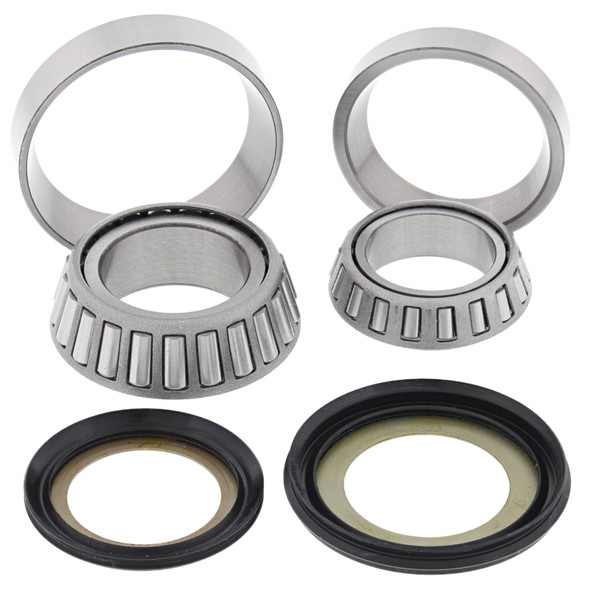
All Balls Racing 10-22 Kawasaki KLX110 Steering Bearing Kit - 22-1063
All Balls Racing
MSRP: $67.03$63.68Are these bearings compatible with my stock steering knuckle and spindle assembly?ABR Steering Bearing Kits convert from OEM ball bearings to taper bearings, requiring confirmation of specific...MSRP: $67.03$63.68 -


RockJock JL/JT Currectlync Tie Rod 1.65in Dia. Tube w/ Hardware - RJ-442101-101
RockJock
$449.75How do I find the correct ROK Currectlync Steering Kit for my vehicle?Confirm vehicle fitment using the provided compatibility checker before purchasing ROK Currectlync Steering Kits to ensure proper...$449.75 -
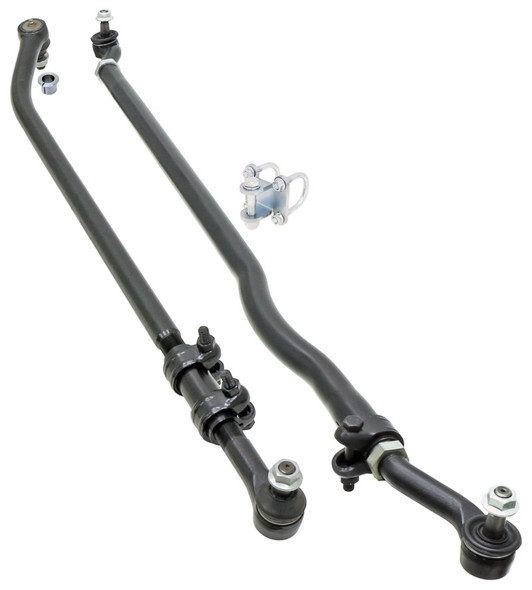
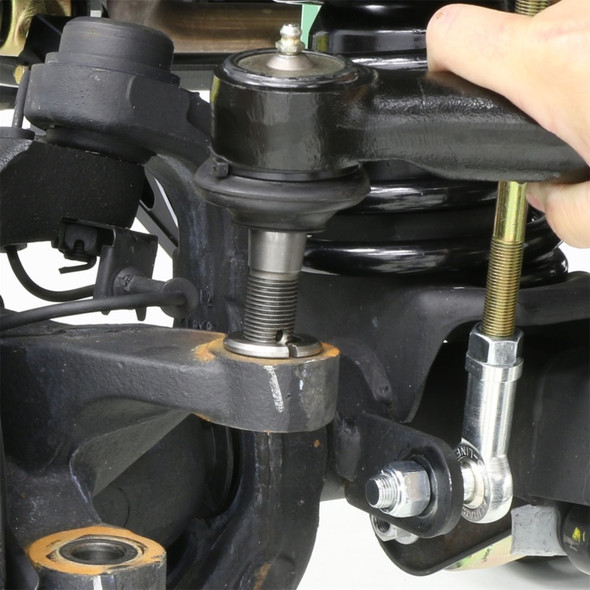
RockJock JK Currectlync Steering Sys. w/Flipped Drag Link 1.65in Dia. Tie Rod 1.3in Dia. w/Hardware - JK-9704P
RockJock
$761.00Will this steering kit fit my 2015 Jeep Wrangler JK?Yes, the ROK Currectlync Steering Kit is specifically designed to bolt-on and fit all 2007-2018 Jeep Wrangler JK models.What is the diameter of the...$761.00 -
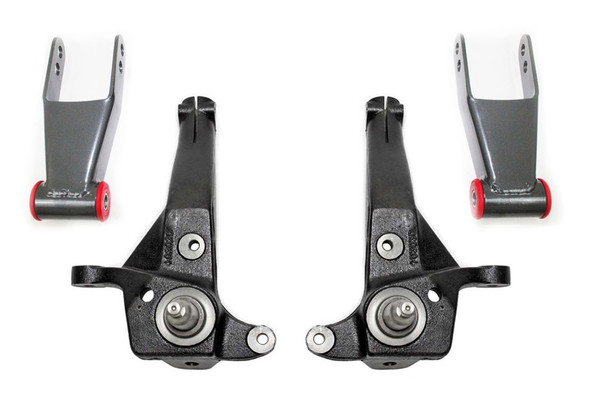
MaxTrac 98-00 Ford Ranger 2WD w/Coil Susp. (Non Stabilitrak) 4in/2in Spindle Lift Kit - K883042A
Maxtrac
MSRP: $561.66$485.07Will these spindles fit my Ford Ranger?Confirm fitment with your specific Ford Ranger model; these Maxtrac Lift Spindles are engineered for precise integration to ensure proper steering knuckle and...MSRP: $561.66$485.07 -

Rancho 07-17 Jeep Wrangler High-Steer Knuckles - RS62100
Rancho
$654.12What is the recommended lift height for these knuckles?These Rancho high-steer knuckles are engineered for Jeep Wrangler JK models from 2007-2018, providing optimal performance with a compatible lift...$654.12 -

All Balls Racing 14-16 Honda NSS300 Steering Bearing Kit - 22-1037
All Balls Racing
MSRP: $75.95$72.15What is a steering knuckle?A steering knuckle is a critical component within the steering knuckles and spindles assembly, connecting the suspension to the wheel.Are these parts difficult to...MSRP: $75.95$72.15 -

MaxTrac 05-18 Toyota Tacoma 2WD 6 Lug 4in/2in MaxPro Spindle Lift Kit w/MaxTrac Shocks - K886842
Maxtrac
$933.61How do Maxtrac Lift Spindles work?Maxtrac Lift Spindles lower the wheel hub position, effectively achieving a four-inch lift for your vehicle's Steering Knuckles & Spindles.Can I install these...$933.61 -

All Balls Racing 98-01 TM EN 125 Steering Bearing Kit - 22-1003
All Balls Racing
MSRP: $50.37$47.85What is the difference between ball bearings and taper bearings?Taper bearings distribute loads more effectively across their raceways, reducing friction and wear compared to OEM ball bearings in...MSRP: $50.37$47.85 -
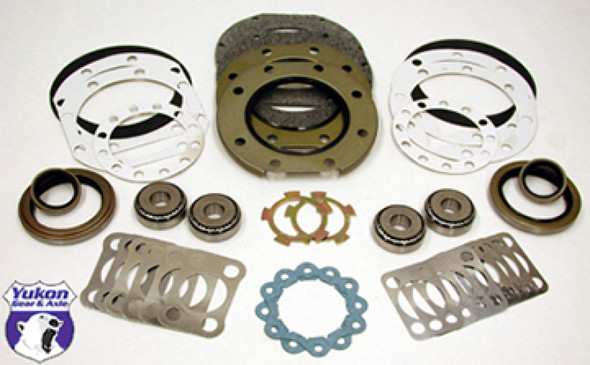

Yukon Gear Toyota 79-85 Hilux and 75-90 Landcruiser Knuckle Kit - YP KNCLKIT-TOY
Yukon Gear & Axle
$238.88Are these the correct knuckle kits for my 1985 Toyota 4Runner?Yes, YUK Knuckle Kits precisely fit your 1985 Toyota 4Runner, delivering enhanced steering and lasting durability for off-road adventures...$238.88 -

All Balls Racing 83-87 Honda ATC200X Steering Bearing Kit - 22-1029
All Balls Racing
MSRP: $58.08$55.18How do I know if these steering bearings will fit my motorcycle?ABR Steering Bearing Kits require careful confirmation of fitment with your specific vehicle model and year to ensure proper...MSRP: $58.08$55.18 -

Skyjacker 1987-1988 Chevrolet V20 Suburban Steering Arm - CA100
Skyjacker
$124.04Does this steering arm fit my specific vehicle model?Confirm fitment with your vehicle's specific application details to ensure seamless integration with your steering knuckles and spindles.What is...$124.04
Steering knuckles and spindles are the structural pivot points that connect your wheel hub, brake assembly, and suspension geometry into a single load-bearing unit — and no other suspension component has a more direct impact on caster, camber, and scrub radius than this one. Motor Sport Mayhem stocks 88 in-stock knuckles and spindles across 109 brands, ranging from budget-friendly replacements to full race-spec billet units engineered for extreme cornering loads.
Our Top Picks for Steering Knuckles & Spindles
Each of these products was hand-selected based on engineering quality, real-world performance results, and fitment breadth across the most common performance builds.
AEM IND Strut Bars
AEM Induction | $346.99
Ties the strut towers together to reduce chassis flex and maintain consistent knuckle geometry under hard cornering loads.
- Precision-machined mounting points preserve factory strut-to-knuckle alignment angles
AFE Coilover Systems
aFe | $3,729.00
A complete damper-and-spring system engineered to work in direct tandem with the knuckle and hub assembly for precise corner-weight tuning.
- Single-adjustable damping allows ride height changes without disrupting knuckle-to-strut geometry
ALF Wireless Air Control Systems
Air Lift | $1,363.99
Wireless air management that adjusts ride height independently at each corner, directly altering the load distribution through the spindle and knuckle under dynamic conditions.
- Remote-controlled pressure adjustment lets you dial spindle loading without getting under the car
ABR Steering Racks
All Balls Racing | $209.62
A direct-replacement steering rack built to restore factory tie-rod geometry and steering feel when knuckles are replaced or upgraded on UTV platforms.
- OEM-specification rack dimensions ensure correct Ackermann geometry after knuckle replacement
PA Alta Adj Control Arms
Alta | $339.15
Adjustable control arms that restore proper knuckle sweep arc when ride height or suspension geometry has been altered from stock.
- Eccentric adjusters correct knuckle-side ball joint angle to prevent premature wear after geometry changes
ANT Micro-Start Tire Inflator
Antigravity Batteries | $24.99
A compact tire inflator essential for maintaining correct tire pressure after knuckle or alignment changes that alter rolling radius and load distribution.
- Pairs with any XP-series jump starter for a complete trailside or paddock service kit
ARB BP51 Coilovers
ARB | $4,580.69
A bypass-style coilover system engineered to maintain correct knuckle caster and camber throughout the full suspension travel range on lifted trucks.
- Internal bypass zones tune high-speed and low-speed damping independently to reduce knuckle stress under repeated impact loading
ART Coils
Artec Industries | $351.99
Frame-side coil spring buckets that reposition the spring perch to accommodate knuckle geometry changes from long-travel suspension lifts.
- Heavy-gauge DOM steel construction handles the lateral and torsional loads transferred through front knuckles during full articulation
AST 5100 Series Coilovers
AST | $4,554.00
A competition-grade coilover system with camber plates and precise spring perch positioning that optimizes knuckle loading angles for aggressive track alignment specs.
- Threaded body design allows static ride height adjustment without altering the knuckle-to-damper mounting angle
AWE Chassis Bars
AWE Tuning | $435.00
A drivetrain stabilizer that reduces chassis torque twist, which directly affects the repeatability of steering knuckle positioning under hard acceleration.
- Polyurethane mount bushing provides a firm but street-compliant connection that reduces dynamic toe change at the knuckle under power
How to Choose the Right Steering Knuckles & Spindles
The steering knuckle — also called a spindle, upright, or hub carrier depending on suspension architecture — is one of the highest-stress components in any suspension system, subjected simultaneously to braking torque, lateral cornering loads, vertical bump forces, and steering inputs. What separates a quality unit from a failure-prone one comes down to three things: base material, machining tolerances, and load-path geometry. Forged steel or billet aluminum units outperform cast iron OEM replacements in fatigue resistance and weight. Machined bore tolerances at the ball joint taper, hub bearing seat, and tie-rod mount should be held to ±0.001" or tighter — slop in any of these locations introduces dynamic camber and toe variation that no alignment can fully correct. Avoid any knuckle without documented load rating data or manufacturer testing results, especially in lifted or track applications where forces exceed OEM design envelopes significantly.
Key Specifications
Material selection is the first decision. Cast iron OEM-spec knuckles are adequate for stock-power daily driving, but they're heavy and offer limited strength margin for performance use. Forged steel units — common on serious off-road and motorsport builds — deliver higher yield strength with better crack resistance under repeated shock loading. Billet aluminum knuckles save 30–50% in unsprung weight compared to iron, which translates directly to faster suspension response and reduced steering effort, though they require proper anodizing or surface treatment to resist corrosion at the bearing seat and ball joint bores.
Ball joint taper angle and thread specification must match your existing suspension links or you'll need to replace those components as well. Most performance knuckles use a Morse taper ranging from 1:8 to 1:12, and mismatching this angle — even slightly — causes the joint to seat improperly, leading to fretting, loosening under dynamic load, and eventually catastrophic separation. When upgrading to a knuckle with a different taper specification, always replace the mating ball joints simultaneously and confirm torque specs with a torque wrench, not an impact gun.
Geometry correction is the primary functional reason most builders upgrade knuckles in the first place. On lifted trucks and SUVs, factory knuckles place the ball joint pivot axis at an angle that induces severe caster and camber change as the suspension cycles, causing tire wear, bump steer, and vague steering feel. High-clearance or geometry-corrected knuckles reposition the ball joint mounting points to restore factory suspension arc geometry at the new ride height. On track cars, knuckles with extended steering arm lengths reduce Ackermann error at extreme steering angles and allow for more aggressive negative camber without requiring stretched ball joint tapers.
Hub bearing seat diameter and the associated bearing specification are non-negotiable fitment parameters. A knuckle machined for a 72mm bearing bore will not accept a 75mm bearing without rework, and running an undersized bearing in an oversized bore — even with loctite — is a documented cause of hub bearing failure at speed. Always verify bearing bore diameter, bearing preload design (press-fit vs. bolt-in hub), and brake caliper mounting flange orientation before purchasing any knuckle intended for a vehicle with non-stock brakes. Pairing upgraded knuckles with upgraded brake hardware is common practice and requires confirming rotor hat depth matches the new hub offset.
Steering Knuckle & Spindle Selection by Application and Load Rating
| Application | Recommended Material | Minimum Yield Strength | Key Geometry Feature |
|---|---|---|---|
| Street Replacement / OEM Spec | Cast Iron or Forged Steel | 40,000–60,000 PSI | Factory caster/camber geometry, OEM bearing bore |
| Street Performance (Lowered) | Forged Steel or Billet Aluminum | 60,000–80,000 PSI | Roll center correction, extended steering arm |
| Track / Autocross | Billet Aluminum (6061-T6 or 7075-T6) | 70,000–83,000 PSI | Aggressive camber gain curve, reduced scrub radius |
| Lifted Truck / Off-Road (2–4 in.) | Forged Steel or Nodular Iron | 65,000–80,000 PSI | Caster correction, raised ball joint pivot axis |
| Extreme Off-Road / Long Travel | DOM Steel Fabricated or Billet Steel | 80,000+ PSI | Full geometry rebuild, extended spindle pin length |
| Full Race / Tube Chassis | Billet 4130 Chromoly or 7075-T6 Aluminum | 90,000–125,000 PSI | Custom pivot axis, integrated upright tabs for pushrod/pullrod |
Price Guide
Entry ($1.14–$425.00): This range covers OEM-equivalent replacement knuckles, individual spindle hardware, and bearing/seal service components. Quality varies significantly — name-brand pieces made to OEM tolerances are worth the premium over no-name castings, which can show bore diameter variation that causes premature bearing failure. Best suited for direct OEM replacement where original geometry is being retained.
Mid-range ($425.00–$4,000.00): The most populated segment for performance builds — forged steel geometry-correction knuckles for lifted trucks, roll-center-correcting units for lowered performance applications, and quality billet aluminum uprights for track-day and autocross cars all fall here. This is where most serious enthusiasts land because these pieces offer genuine engineering improvements over OEM at a cost-justifiable price point.
Premium ($4,000.00–$13,544.00): Full billet race uprights, custom-fabricated tube knuckles for long-travel race trucks, and complete front end assemblies with integrated geometry corrections for serious motorsport applications. The cost is justified by material certifications, precision machining to aerospace tolerances, documented load testing, and the engineering support that comes with purpose-built race hardware. If you're building a competitive trophy truck, time attack car, or professional off-road race vehicle, this is not an area to cut budget.
Who Is This For?
Steering knuckles and spindles serve builders across the full performance spectrum — from weekend autocrossers correcting roll center geometry to off-road racers fabricating custom long-travel front ends from scratch.
Racing Competition — 8.1/10
This category scores at the top for racing applications because knuckle geometry is a primary tuning variable in any purpose-built race car — pivot axis inclination, scrub radius, and steering arm length are all defined by the knuckle casting or machined upright. Billet race knuckles allow engineers to dial in caster recovery rates, anti-dive percentages, and camber gain curves that are simply impossible to achieve with factory hardware. At this level, every geometry parameter is calculated, not estimated, and the knuckle is the component that makes those calculations physical.
Track / Autocross — 8.0/10
Track and autocross applications score nearly as high because geometry correction at the knuckle produces immediate, measurable lap time improvement — often more so than powertrain modifications of similar cost. Roll center correction keeps the car flatter in transitions, and extended steering arms reduce the Ackermann error that causes inside tire scrub during tight autocross elements. These are not marginal gains; drivers consistently report reduced understeer and more consistent tire temperatures after knuckle geometry upgrades.
Street Performance — 7.7/10
Lowered street performance builds score well here because dropped ride height without geometry correction induces camber and toe changes that cause rapid tire wear and vague steering feel. Knuckles designed for lowered applications restore correct suspension arc geometry so that the suspension behaves as intended at the new ride height, rather than operating at the extreme end of its designed range. The driving quality improvement on a properly sorted street performance build is immediately noticeable — the car tracks straight, steering is precise, and tire wear becomes consistent again.
Weekend Off-Roading — 7.7/10
Lifted trucks and SUVs used for weekend trail work benefit substantially from geometry-correcting knuckles because stock knuckles induce severe caster loss and death wobble tendencies once the suspension is raised beyond approximately two inches. High-clearance knuckles that raise the ball joint mounting point restore the factory-designed caster angle, dramatically improving on-road stability and reducing steering shimmy at highway speeds. For serious rockcrawling, knuckles with extended steering arm geometry also reduce bumpsteer at full droop, which is critical when the front axle is articulating at extreme angles.
Overlanding / Expedition — 7.2/10
Overlanding builds score moderately here because the focus is on durability and long-term reliability rather than peak performance — an expedition rig needs knuckles that won't crack a ball joint bore 500 miles from the nearest shop. Forged steel units with sealed bearing assemblies and quality ball joint tapers are the priority for this application, and many overlanders also prioritize knuckles with integrated diff-lock actuator provisions and high-clearance ball joint mounts that keep the steering geometry within spec across a broad range of terrain-induced suspension travel.
Trusted Steering Knuckles & Spindles Brands We Carry
The brands that consistently earn trust in this category do so through verifiable engineering — documented material certifications, geometry testing data, and real-world race or expedition validation. All Balls Racing has built a reputation on precision-machined steering and suspension components for powersports and off-road platforms, with bearing bore tolerances that match or exceed OEM specifications. Artec Industries brings fabricated steel expertise to knuckle-adjacent structural components, with DOM and chromoly construction that handles the loads generated by long-travel suspension systems. ARB's engineering depth in off-road suspension is backed by decades of global rally and expedition use, with every component validated in conditions that would destroy lesser hardware. Alta's adjustable geometry approach gives builders the ability to correct knuckle sweep arc without replacing the knuckle itself — a cost-effective solution for mild geometry misalignment. AST and aFe both bring motorsport-grade engineering to their suspension systems, with component-level attention to how each part interacts with the knuckle and hub assembly to deliver consistent, repeatable dynamic behavior lap after lap.
Frequently Asked Questions
Are aftermarket control arms any good — and how do they relate to steering knuckle performance?
Quality aftermarket control arms are genuinely better than OEM in most performance applications because they're designed with adjustability and improved geometry in mind rather than lowest manufacturing cost. The critical connection to steering knuckles is the ball joint interface — aftermarket arms often use higher-grade ball joints with tighter taper tolerances, which reduces the dynamic play that causes wandering knuckle position under load. Look for arms with chromoly or forged construction, rebuildable ball joints, and published geometry specifications that confirm the arm is designed to work in conjunction with your existing or upgraded knuckle. Pairing upgraded control arms with a geometry-correcting knuckle delivers multiplicative handling improvements that neither component achieves alone.
Are aftermarket lower control arms worth it for a performance build?
For any build that has been lowered, lifted, or taken to track use, aftermarket lower control arms are worth the investment because they restore the correct sweep arc that the lower ball joint — and by extension the knuckle — travels through. Factory lower arms are designed for one specific ride height and spring rate; deviate from either and you're operating the knuckle's lower pivot at an angle and position it was never designed to see. Adjustable aftermarket lower arms allow you to correct the ball joint angle at the knuckle, reduce bumpsteer at full droop or compression, and dial in the static camber that your alignment shop can then set precisely. The handling gains on lowered street cars and lifted trucks are both immediate and measurable in tire wear patterns within the first few thousand miles.
Are aftermarket ball joints any good, and will they hold up in the knuckle taper bore?
Reputable aftermarket ball joints from established brands are equal to or better than OEM in terms of load rating and service life, provided the taper specification matches the knuckle bore exactly. The failure point with cheap aftermarket ball joints is taper angle mismatch — if the ball joint taper is even slightly off from the knuckle's machined bore, the joint will never fully seat, fretting corrosion develops at the interface, and the joint loosens under load far faster than a properly seated unit. Premium aftermarket ball joints typically use higher-durometer urethane or greaseable metal-on-metal designs that outperform the factory rubber-boot sealed units in high-heat or high-load applications like track use and off-road. Always verify the taper angle and thread specification against the knuckle's documented bore before installation, and always torque to specification with a calibrated torque wrench.
Are aftermarket bump stops worth it when I'm upgrading my knuckles and suspension?
Aftermarket bump stops are worth including in any suspension rebuild that changes knuckle geometry or ride height because they redefine the maximum suspension compression point, which protects the ball joint taper at the knuckle from bottoming-induced shock loads. Factory bump stops are sized for stock suspension travel; when you extend travel with geometry-correcting knuckles or add a lift, the bump stop no longer contacts at the right point in the suspension arc, allowing the knuckle to travel past its intended limit under hard compression. Progressive-rate aftermarket bump stops made from microcellular foam or hydraulic bump stop designs provide a gradual force ramp that absorbs the impact energy before it reaches the ball joint seat in the knuckle. This is especially critical on off-road builds where high-speed terrain hits can generate several times the vehicle's static corner weight at the knuckle in milliseconds.
Are adjustable drop links worth upgrading when I've already corrected my knuckle and control arm geometry?
Adjustable drop links are a necessary final step in a geometry correction build because the sway bar end link length must match the new knuckle and control arm position at static ride height — otherwise the sway bar is preloaded in one direction before the car moves, which creates an artificial roll bias and degrades the sway bar's ability to resist body roll symmetrically. On lowered performance cars, standard-length drop links often place the sway bar end link at an angle that binds under compression and causes clunking — adjustable units eliminate both problems simultaneously. For lifted trucks where knuckles have been raised and the suspension geometry corrected, extended drop links prevent the sway bar from limiting the available suspension articulation that the geometry-corrected knuckles were designed to provide. The cost of adjustable drop links is modest relative to the geometry correction investment already made, and skipping them leaves measurable handling performance on the table.
Building something specific? Our performance specialists can help you select the right Steering Knuckles & Spindles for your application — street, track, or full race build.