
Fork Seal Kits
- Product
- Qty in Cart
- Quantity
- Price
- Subtotal
-

All Balls Racing 19-23 Beta RR 2T 125 Fork Oil Seal Only Kit - 55-132
All Balls Racing
MSRP: $19.20$18.24The seal profile is engineered so that each seal lip places equal pressure on the fork tube; equalized seal pressure creates less drag and longer seal life.Dyno tested 3x to 4x stronger than OEMThis...MSRP: $19.20$18.24 -
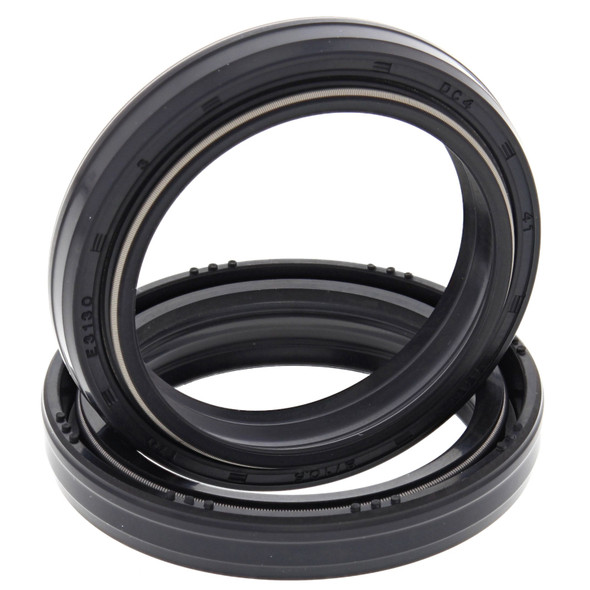
All Balls Racing 86-04 Honda XR250R Fork Oil Seal Only Kit - 55-117
All Balls Racing
MSRP: $20.16$19.15How often should I replace my fork seals?Fork Seal Kits require inspection at regular service intervals, with replacement dictated by wear, leaks, or loss of damping performance.Can I install these...MSRP: $20.16$19.15 -

All Balls Racing 22-23 Gas-Gas MC85 1714 Fork Oil Seal Only Kit - 55-114
All Balls Racing
MSRP: $20.13$19.12The seal profile is engineered so that each seal lip places equal pressure on the fork tube; equalized seal pressure creates less drag and longer seal life.Dyno tested 3x to 4x stronger than OEMThis...MSRP: $20.13$19.12 -
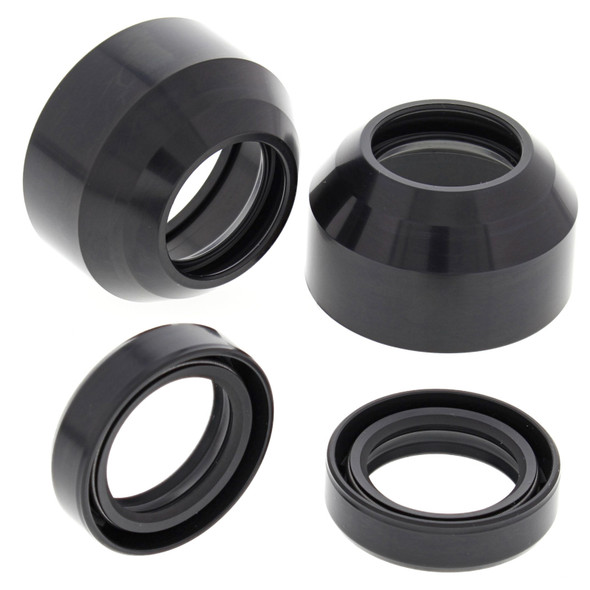
All Balls Racing 83-03 Kawasaki KX60 Fork Oil Seal & Dust Seal Kit - 56-106
All Balls Racing
MSRP: $40.53$38.50What makes All Balls Racing Fork Seal Kits different from OEM seals?ABR Fork Seal Kits feature a third lip for added dust protection and dyno tested strength 3x to 4x stronger than OEM.Can I install...MSRP: $40.53$38.50 -

Bitubo KITS Front Fork Sliding Kit - KITS042
Bitubo Suspension
$335.95Are these fork seals specific to my motorcycle?The BIT KITS Fork Sliding Kits are engineered specifically for the 2021-2023 Kawasaki ZX1000 Ninja ZX-10RR.How do these fork seals improve motorcycle...$335.95 -

BikeMaster NOK Fork Seal 43x55x9.5/10.5 - 429128
BikeMaster
$49.99Are these fork seals a direct replacement for my stock fork seals?Confirm fitment with your vehicle using our detailed compatibility guide to ensure these BikeMaster Fork Seals are a direct...$49.99 -
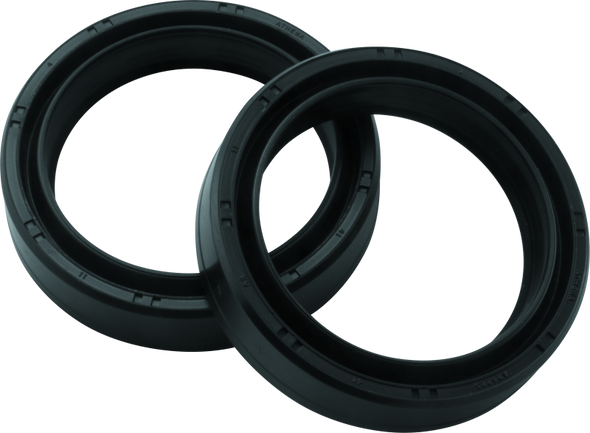
BikeMaster Fork Seal 41x53x11 - 429118
BikeMaster
$24.99Are these fork seals universal?BKM Fork Seals are available in various sizes, ensuring a precise fit for a wide range of motorcycle models and specifications.Can I install these myself?Professional...$24.99 -
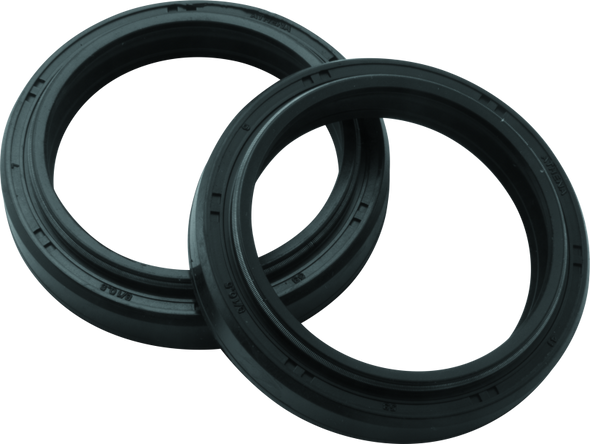
BikeMaster Fork Seal 41x53x8/10.5 - 429116
BikeMaster
$24.99What is included in a fork seal kit?A BKM Fork Seal Kit includes essential components for a complete fork seal replacement, ensuring optimal suspension performance.Can I install these...$24.99 -

BikeMaster Fork Seal 45x57x11 - 429114
BikeMaster
$29.99What motorcycles do these fork seals fit?BikeMaster Fork Seals precisely fit 1989-2025 Honda CBR600RR/CBR900RR/CR125R and 28 more, plus specific Kawasaki, Suzuki, and Triumph models.How difficult is...$29.99 -

BikeMaster Fork Seal 43x55x9.5/10.5 - 429112
BikeMaster
$21.99How do I know if these fork seals will fit my motorcycle?BKM Fork Seals are available in various sizes, precisely engineered to fit 1989-2020 Kawasaki ZX1200 Ninja ZX-12R/ZZR1200 and Suzuki...$21.99 -

BikeMaster Fork Seal 42x54x11 - 429109
BikeMaster
$21.99What is the expected lifespan of fork seals?Fork seals, when professionally installed and maintained, deliver consistent performance, preventing leaks and ensuring optimal fork function for extended...$21.99 -
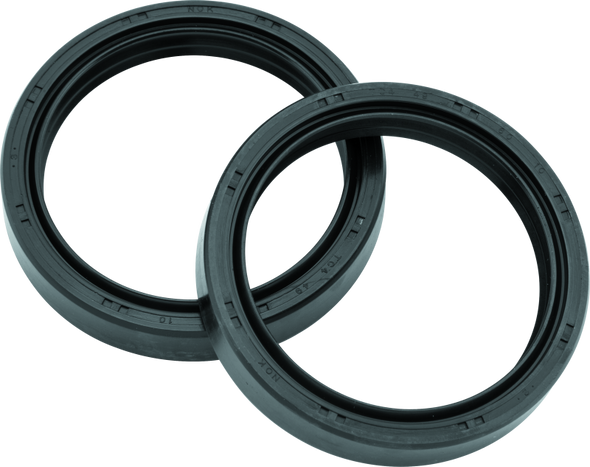
BikeMaster NOK Fork Seal 49x60x10 - 429089
BikeMaster
$28.99What are BKM Fork Seals made from?BKM Fork Seals are engineered with advanced anti-stiction material, ensuring unparalleled smoothness and longevity for your motorcycle's fork seals.How do BKM Fork...$28.99
Fork seal kits are the first line of defense against oil contamination and damper failure in telescopic suspension systems — a blown seal kills fork performance immediately, coating the lower leg in oil and destroying compression and rebound control. Motor Sport Mayhem stocks 68 fork seal kits across 109 brands, from single-seal replacements under two dollars to complete professional-grade rebuild kits engineered for racing-level damper precision.
Our Top Picks for Fork Seal Kits
Each of these picks was selected by our in-house suspension specialists based on engineering quality, fitment precision, and proven real-world performance across street, track, and off-road applications.
AEM IND Strut Bars
AEM Induction | $346.99
Chassis triangulation hardware that directly reduces suspension flex and improves fork alignment geometry under hard cornering loads.
- Reducing strut tower flex keeps fork tubes parallel, dramatically extending seal service life by eliminating side-load distortion.
AFE Coilover Systems
aFe | $3,729.00
A single-adjustable coilover platform built to featherlight tolerances with premium internal sealing architecture designed for sustained track use.
- The internal seal and wiper design on this system reflects the same standard of precision found in top-tier fork seal rebuild specifications.
ALF Wireless Air Cntrl Systems
Air Lift | $1,363.99
Wireless air management hardware that pairs with air-sprung suspension systems requiring properly sealed pneumatic damper circuits.
- Air suspension systems depend on airtight sealing as critically as hydraulic forks depend on oil seals — this system pairs with that maintenance discipline.
ABR Steering Racks
All Balls Racing | $209.62
A complete OEM-replacement steering rack engineered to tighter tolerances than stock for UTV applications that demand long-term seal integrity.
- All Balls Racing is a recognized OEM-grade seal and bearing supplier — their rack assemblies integrate the same seal-quality philosophy as their standalone fork seal kits.
PA Alta Adj Control Arms
Alta | $339.15
Adjustable rear control arms that restore correct suspension geometry after lowering — preventing the side-load conditions that accelerate fork and damper seal wear.
- Correcting alignment geometry is a prerequisite to any fork seal rebuild lasting its full service interval on lowered applications.
ANT Micro-Start Tire Inflator
Antigravity Batteries | $24.99
A compact, battery-powered tire inflator engineered to pair with Antigravity jump starters for trackside and trailside service situations.
- Completing a fork seal service in the field requires proper supporting tools — a reliable inflator is part of any complete trackside suspension kit.
ARB BP51 Coilovers
ARB | $4,580.69
A bypass-style internal floating piston coilover designed for extreme off-road duty with serviceable internals and field-rebuildable seal cartridges.
- ARB's BP51 platform uses a user-serviceable seal architecture — understanding fork seal replacement directly applies to maintaining this system in the field.
ART Coils
Artec Industries | $351.99
Heavy-duty front frame coil buckets that accept OEM bump stops and provide a solid foundation for rebuilt or upgraded damper assemblies.
- Proper coil bucket geometry ensures dampers operate on-axis — misaligned mounting is one of the leading causes of premature seal failure in solid-axle suspensions.
AST 5100 Series Coilovers
AST | $4,554.00
A competition-grade coilover system built to FIA-recognized tolerances with a fully rebuildable damper body and replaceable seal head assembly.
- AST designs their dampers from the ground up for long-term serviceability — their seal specifications represent the benchmark standard for fork seal rebuild quality.
AWE Chassis Bars
AWE Tuning | $435.00
A drivetrain stabilizer with polyurethane mounting that reduces powertrain movement and limits torsional chassis flex that can stress suspension sealing surfaces.
- Excessive drivetrain torque reaction loads the subframe and suspension pickups in ways that can misalign fork tubes and shorten seal service intervals on performance builds.
How to Choose the Right Fork Seal Kits
The defining quality separator in fork seal kits is elastomer compound specification — low-grade NBR (nitrile) seals harden and crack under thermal cycling, while PTFE-lip and fluoro-elastomer (FKM/Viton-grade) compounds maintain their sealing edge across a far wider temperature and chemical exposure range. Dimensional precision matters equally: a seal with even 0.05mm excess radial play against the fork stanchion will allow micro-weeping under compression load, accelerating both tube scoring and complete seal failure. The difference between a $2 seal and a $25 seal is almost always compound quality and lip geometry — not marketing.
Key Specifications
Fork seal inner diameter (ID), outer diameter (OD), and installed height are the three non-negotiable dimensions. A mismatch in any one of them produces either immediate leakage or a seal that will not seat correctly in the dust wiper groove, allowing contamination to pack behind the primary lip. Always verify all three dimensions against your fork tube diameter and lower leg bore — do not rely solely on vehicle application charts, particularly on forks that have been re-tuned with aftermarket cartridge emulators or valving kits that may alter the installed depth.
Dust wiper condition is as critical as the primary oil seal itself. A torn or hardened dust wiper allows trail grit and brake dust to contact the stanchion on extension strokes, scoring the surface and destroying the replacement seal within a few hundred miles or kilometers. Quality rebuild kits include a matched dust wiper with the correct interference fit for the specific fork tube diameter — any kit that ships only the oil seal without the wiper is a compromise at best.
For shocks and struts and inverted fork applications, the seal stack design becomes more complex — these systems run a primary oil seal, a secondary backup seal, and a scraper ring in sequence. Kits for inverted forks must include all three elements with correct material pairing; mixing compounds across the seal stack causes differential thermal expansion and premature failure of whichever seal has the lower temperature tolerance.
Oil viscosity selection works in tandem with seal specification. Running a heavier fork oil than the seal compound was designed for generates elevated fluid film pressure against the seal lip, compressing the lip geometry over time and causing permanent set — the seal leaks even though it appears undamaged visually. Match fork oil weight to the manufacturer's recommended range for the specific seal kit compound, and document both at every service interval.
Fork Seal Specification Reference by Fork Tube Diameter
| Fork Tube OD (mm) | Typical Seal ID (mm) | Typical Seal OD (mm) | Recommended Oil Viscosity Range |
|---|---|---|---|
| 30mm | 30.0 | 42.0–42.5 | 5W–10W |
| 35mm | 35.0 | 47.0–48.0 | 5W–10W |
| 41mm | 41.0 | 53.0–54.0 | 7.5W–15W |
| 43mm | 43.0 | 55.0–55.1 | 7.5W–15W |
| 48mm | 48.0 | 58.0–60.0 | 10W–20W |
| 50mm | 50.0 | 63.0–63.5 | 10W–20W |
Price Guide
Entry ($1.14–$215): Single-seal and basic dust wiper replacements in standard NBR compound — fully appropriate for low-mileage street bikes running stock fork oil and moderate operating temperatures, where OEM-spec restoration is the goal and rebuild intervals are closely maintained.
Mid-range ($215–$1,500): Where most serious enthusiasts and professional shops land — complete rebuild kits with matched oil seals, dust wipers, and backup seals in upgraded FKM or PTFE-lip compounds, often paired with fork oil and crush washers, providing meaningfully longer service intervals and better thermal resistance than entry-level replacements.
Premium ($1,500–$13,544.00): Complete serviceable damper assemblies, professional-grade cartridge rebuild systems, and race-specification seal sets engineered for sustained high-temperature, high-cycle applications — justified for competition builds, high-output street bikes with aggressive spring and oil tune combinations, and any application where fork service must be performed trackside under time pressure.
Who Is This For?
Fork seal kits serve a remarkably broad range of applications — from a commuter bike owner doing a basic leak repair to a professional race team rebuilding dampers between sessions — and the usage data reflects that span clearly.
Racing Competition — 8.1/10
This is the category's highest-scoring use case and for good reason: in competition, a weeping fork seal is a DNF waiting to happen, coating the front rotor in oil and eliminating braking confidence entirely. Race teams run scheduled seal replacement intervals regardless of visible wear, typically after every 10–15 race hours on hard-compound forks, and use only the highest-spec seal compounds available. The 128 products tagged for racing competition in our catalog reflect the professional-grade rebuild market that demands zero-compromise materials.
Track / Autocross — 8.0/10
Track and autocross applications stress fork seals through high-frequency, high-amplitude compression cycles that build heat in the fork oil rapidly — thin seals that perform acceptably on the street begin to take permanent set under these thermal loads within a single track day. Upgraded seal compounds with higher durometer ratings and tighter lip tolerances are the correct choice here, paired with a heavier fork oil that maintains consistent viscosity through a full session. The 132 products in this use case largely overlap with competition-grade materials at more accessible price points.
Street Performance — 7.7/10
Street performance riders pushing hard in canyon or sport-riding conditions generate sustained fork loading that OEM seal compounds were not always designed to accommodate long-term, particularly on machines that have been spring and oil-tuned beyond stock specification. A higher-grade seal kit restores and maintains leak-free performance across the additional loading imposed by stiffer springs and heavier oil, extending service intervals over the stock replacement timeline. The 192 products in this segment make it the largest in the catalog, reflecting the volume of street rebuilds performed annually.
Weekend Off-Roading — 7.7/10
Off-road and trail riding introduces a contamination challenge that road applications largely avoid — mud, water, and fine silica grit contact the stanchion on every extension stroke, and a degraded dust wiper allows this material to attack the primary seal lip directly. Kit selection for off-road use should prioritize the dust wiper quality as much as the oil seal compound, with aggressive scraper-lip geometry and sufficient spring tension to maintain contact against a coated stanchion. The 85 products in this category include kits specifically engineered for inverted forks common in motocross and enduro platforms.
Easy DIY Install — 6.7/10
Fork seal replacement is a moderately skilled DIY task — it requires a seal driver or improvised equivalent, a torque wrench, and comfort working on a disassembled front end — but it is well within reach of a mechanically confident home builder following a proper service manual. The 6.7/10 score reflects that the task is achievable DIY but has genuine consequences if done incorrectly, primarily seal damage during installation from improper driving technique. Complete kits that include installation instructions and all required consumables reduce that risk substantially and make up the majority of entry and mid-range products in the catalog.
Trusted Fork Seal Kits Brands We Carry
All Balls Racing has built a specific reputation as the aftermarket's most comprehensive seal and bearing supplier — their dimensional database spans tens of thousands of applications and their NBR-to-FKM compound options cover everything from budget street rebuilds to serious competition use. Brands like Bilstein and KONI, both OEM suspension suppliers with decades of damper manufacturing heritage, produce seal kits designed to the same tolerances as their factory-supplied units, which matters when rebuilding a damper that was precision-valved from the factory. FOX and ICON bring motocross and off-road race pedigree to their seal specifications — both brands run their own damper rebuild programs and their seal materials reflect what survives desert and enduro race conditions. For the performance street and track market, Skyjacker and Whiteline round out the catalog with application-specific rebuild hardware that aligns with their broader suspension product philosophy — engineered for specific platforms rather than generic across-the-board sizing.
Frequently Asked Questions
Are aftermarket fork seal kits as good as OEM replacements?
In most cases, quality aftermarket kits from established manufacturers match or exceed OEM seal specifications because the aftermarket has the flexibility to use upgraded elastomer compounds that OEM cost constraints sometimes prevent. An OEM seal is engineered to meet warranty-period durability at the lowest acceptable material cost — a premium aftermarket kit built with FKM or PTFE-lip compound is engineered for extended service life and broader operating conditions. The critical word is quality: low-cost generic seals sold with no compound specification are genuinely inferior and are not a valid comparison to either OEM or name-brand aftermarket kits. Fitment precision is where OEM has a real advantage — always verify all three seal dimensions against your specific fork bore and tube OD before installing any aftermarket kit.
Are aftermarket control arms worth it for a performance build?
On a vehicle that has been lowered or lifted beyond OEM ride height range, aftermarket suspension control arms are not optional — they are geometrically necessary to restore correct camber curve, caster angle, and suspension travel without binding. OEM control arm length is calibrated for OEM ride height, and running them outside that range introduces roll-center drop, camber gain curves that create unpredictable handling, and accelerated bushing and ball joint wear. For unmodified ride heights, OEM arms with upgraded polyurethane bushings are often the better value, but the moment ride height changes significantly, arms with adjustable ball joint positions pay for themselves in tire wear and handling precision alone.
Are adjustable sway bars worth the investment?
Adjustable sway bars are specifically worth it when a vehicle is used across multiple conditions — a street car that also sees track days, or an off-road rig that transitions between high-speed desert running and technical trail work. A fixed bar is always a compromise between roll stiffness and axle articulation; an adjustable bar lets you dial understeer and oversteer balance to suit specific conditions without changing springs or damper tune. For purely street-driven builds with no track use, a quality fixed-rate upgraded bar in the correct diameter for the application delivers the same handling improvement at lower cost and complexity. The payoff for adjustability shows up in lap times and confidence, not in daily driving comfort.
Are adjustable drop links worth it on a lowered suspension?
Adjustable drop links are a functional requirement rather than an optional upgrade on any car lowered more than 25–30mm from stock — at that point, the OEM fixed-length drop link pulls the sway bar end link past its designed operating arc, binding the bar in a position where it cannot roll freely and effectively making your sway bar rate nonlinear and unpredictable. The symptom is a clunking noise over bumps and a suspension that feels like it catches and releases rather than progressing smoothly — this is the ball joint in the drop link reaching the end of its range of motion. Adjustable drop links restore the bar to its designed geometry, and the cost to correct this is minimal relative to the suspension investment already made in springs and dampers.
Are aftermarket bump stops worth it on a performance or off-road build?
Aftermarket bump stops, particularly progressive-rate polyurethane or microcellular foam units, are a significant upgrade over OEM rubber stops for both track and off-road applications because they allow controlled suspension travel near full compression rather than a hard mechanical stop. OEM bump stops are designed to prevent structural damage at absolute full jounce — they are not tuned to contribute progressively to spring rate, which is exactly what a quality aftermarket unit does. On an off-road build with increased travel, extended or supplemental bump stops are essential to protect the damper from bottoming the shaft, which destroys seals immediately and catastrophically. On a track build, a correctly specified progressive bump stop can function as a third spring element that rounds off the handling at the limit without the sudden stiffening that causes snap oversteer.
Building something specific? Our performance specialists can help you select the right Fork Seal Kits for your application — street, track, or full race build.