
Brake Rotors - Drilled
- Product
- Qty in Cart
- Quantity
- Price
- Subtotal
-


DFC 14-22 Maserati Ghibli Rear Drilled Brake Rotor - 620-79008
DFC
$95.05How do I ensure these brake rotors fit my vehicle?DFC Drilled Brake Rotors require confirming specific vehicle fitment before purchase to guarantee proper installation and performance.Are these brake...$95.05 -

Brembo 1993 Mercedes-Benz 300TE/96-97 C36 AMG Rear Premium Xtra Cross Drilled UV Coated Rotor - 08.7211.2X
Brembo OE
$84.45Do I need to bed in my new drilled rotors?Brembo OE Drilled UV Coated Rotors do not require a special bedding procedure for optimal performance.Are these rotors quiet?These rotors minimize noise and...$84.45 -

SHW 07-13 Porsche 911 Turbo 3.8L w/o Ceramics Right Rear Drilled-Dimpled MB Brake Rotor(99735240602) - PRR39978
SHW Performance
MSRP: $259.40$222.14SHW 07-13 Porsche 911 Turbo 3.8L w/o Ceramics Right Rear Drilled-Dimpled MB Brake Rotor(99735240602)This Part Fits:YearMakeModelSubmodel2007-2008Porsche911GT32007-2008MSRP: $259.40$222.14 -

DFC 16-23 Mercedes-Benz GLC300 Front Drilled Hi-Carbon Alloy Geomet Coated Rotor - 920-63152
DFC
$136.05Do these rotors fit my car?Confirm exact vehicle fitment using our online compatibility tool before ordering to ensure perfect installation and performance.Are these rotors easy to install?Install...$136.05 -


DFC 20-25 Mercedes-Benz GLA35 AMG Front Drilled Brake Rotor - 620-63188
DFC
$107.54How do I know if DFC Brake Rotors - Drilled will fit my car?DFC Brake Rotors - Drilled fitment must be confirmed using the provided vehicle compatibility tool before purchase and installation.Are...$107.54 -


DFC 14-21 Mercedes-Benz S400 (Canada & Mexico) Front Drilled Brake Rotor - 620-63112
DFC
$132.51What is the primary benefit of these DFC Drilled Brake Rotors for daily driving?DFC Drilled Brake Rotors deliver smooth, vibration-free operation, achieving a score of 8 for Daily Driving Comfort...$132.51 -


SHW 2020 BMW X5 M 4.4L Left Rear Cross-Drilled Lightweight Brake Rotor (34208074285) - BRL43507
SHW Performance
MSRP: $449.31$376.00How do I know if SHW Drilled Lightweight Rotors will fit my BMW X5 or X6?Confirm your specific vehicle's fitment using our provided compatibility tool before purchasing these SHW Drilled Lightweight...MSRP: $449.31$376.00 -

SHW 2021 BMW M3 / 21-22 BMW M4 Front Left Drilled Lightweight Brake Rotor (34108093709) - BFL43851
SHW Performance
MSRP: $602.54$500.13SHW 2021 BMW M3 / 21-22 BMW M4 Front Left Drilled Lightweight Brake Rotor (34108093709)Quality Tested To Ensure Long-Lasting PerformanceThis Part Fits:YearMakeModelSubmodel2023-2025<MSRP: $602.54$500.13 -
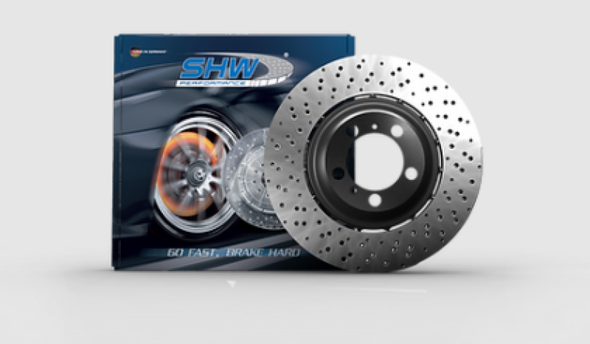
SHW 21-22 Audi RS6 4.0L V8 Rear Drilled-Dimpled Lightweight Brake Rotor (4K0615601A) - ARX40483
SHW Performance
$882.21SHW 21-22 Audi RS6 4.0L V8 Rear Drilled-Dimpled Lightweight Brake Rotor (4K0615601A)Up to 50% better cooling to prevent brake fadeThis Part Fits:YearMakeModelSubmodel2020-2025Aud$882.21 -
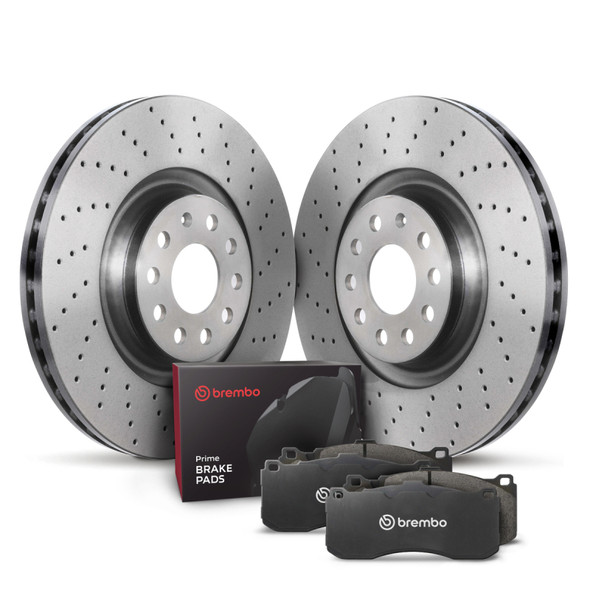
Brembo OE 12-13 Volkswagen Golf R/10-21 GTI Rear Disc Brake Kit - KTX4089
Brembo OE
$467.85Will these Brembo OE drilled rotors fit my 2015 Volkswagen Golf GTI?Brembo OE Drilled UV Coated Rotors are engineered to fit your 2015 Volkswagen Golf GTI, ensuring precise compatibility and...$467.85 -

Brembo OE 08-15 Audi TT Quattro/12-13 TT RS Quattro/09-15 TTS Quattro Rear Disc Brake Kit - KTX4088
Brembo OE
$327.85Will these drilled rotors fit my specific vehicle model?BRE Drilled UV Coated Rotors require confirming exact fitment with your vehicle's make, model, and year for optimal compatibility.Can I install...$327.85 -

Brembo OE 10-11 Audi S4/08-12 S5 Front Disc Brake Kit - KTX4055
Brembo OE
$484.85What is the UV coating on BRE Drilled UV Coated Rotors?BRE Drilled UV Coated Rotors feature a protective UV coating that prevents corrosion and enhances visual appeal during installation and initial...$484.85
Drilled brake rotors remove material from the rotor face in a precision-machined hole pattern to accelerate heat dissipation, reduce unsprung rotational mass, and allow outgassing from aggressive brake pad compounds — making them one of the most effective single-component upgrades for street performance and light track use. Motor Sport Mayhem stocks 198 drilled rotor options spanning 53 brands, from budget-friendly daily driver replacements to full competition-grade iron and two-piece floating assemblies priced up to $3,743.
Our Top Picks for Brake Rotors - Drilled
Every product below was hand-selected based on engineering quality, verified fitment data, real-world performance results, and value across different budgets and build types.
ALC Front Brake Kits
Alcon | $3,450.00
A purpose-built front brake upgrade pairing large-diameter drilled rotors with multi-piston monoblock calipers for maximum clamping force and thermal capacity under sustained heavy load.
- Alcon's motorsport-derived rotor metallurgy and caliper geometry deliver consistent pedal feel even after repeated hard stops from high speed
ABR Caliper Rebuild Kits
All Balls Racing | $73.99
Restores caliper bore integrity and piston seal performance to factory spec, ensuring your drilled rotors receive even, full-face pad contact without fluid bypass or drag.
- Matched bore seals and dust boots prevent the caliper flex and piston sticking that causes uneven rotor wear patterns on drilled surfaces
AMS Brake Lines
AMS | $144.95
Stainless steel braided construction eliminates the hose expansion that robs pedal travel and pressure, feeding your calipers the consistent hydraulic force drilled rotors demand at elevated temperatures.
- PTFE inner liner resists brake fluid degradation from the higher operating temperatures generated during aggressive driving with high-friction pad compounds
ART ABS Kits
Artec Industries | $98.99
Maintains accurate wheel speed signal integrity when upgrading axles or brake components, ensuring ABS and traction control systems function correctly alongside upgraded drilled rotors.
- Precisely machined tone ring tooth count preserves stock ECU calibration so ABS threshold braking works in concert with your rotor upgrade rather than against it
BKM Brake Rotors
BikeMaster | $264.99
A direct-fit drilled rotor engineered for powersports applications where weight reduction and heat management are critical due to limited caliper mass and airflow compared to automotive setups.
- Precision-drilled hole pattern maintains sufficient material cross-section to resist cracking under the rapid thermal cycling typical of aggressive two-wheel braking
BKC Brake Caliper
Bikers Choice | $399.99
A direct OEM-replacement caliper that restores correct pad contact geometry on drilled rotors where worn or corroded original hardware causes off-axis clamping and accelerated hole-edge cracking.
- Period-correct casting geometry ensures the caliper bridge aligns precisely with the rotor swept area, preventing edge loading that concentrates stress around drill holes
BX Brake Master Cylinders
BLOX Racing | $124.80
An upgraded master cylinder that provides a firmer, more progressive pedal feel — critical when pairing drilled rotors with high-friction compounds that demand precise modulation at the threshold of lockup.
- Bore diameter tuned to match stock caliper piston area for optimal mechanical advantage without overboosting line pressure on street-legal setups
BMR Brake Kits for Conversions - D&S
BMR Suspension | $1,339.95
A complete drilled-and-slotted rotor conversion kit matched with performance calipers, eliminating the component mismatch risk that comes from sourcing rotors, brackets, and calipers separately.
- Engineered as a system so rotor hat offset, caliper bridge width, and pad compound are all optimized together rather than assembled from mismatched individual components
BRB Big Brake Kits
Brembo | $1,995.00
Brembo's GT series big brake kit combines a two-piece floating rotor with a cast multi-piston caliper, delivering the thermal mass and clamping force required for sustained track sessions without brake fade.
- Two-piece floating hat design allows the iron disc to expand thermally without transmitting stress into the aluminum hat or the wheel bearing assembly
BRE OE Equivalent Rotors
Brembo OE | $1,798.75
Factory-specification replacement rotors built to the same OEM tolerances as the original equipment, preserving the engineered braking balance of high-performance vehicles that left the factory with Brembo hardware.
- OEM-matched metallurgy and hat geometry prevent the lateral runout and DTV buildup that causes pedal pulsation when installing undersized or improperly bedded aftermarket replacements
How to Choose the Right Brake Rotors - Drilled
Drilled rotors are not universally superior — they are a deliberate engineering trade-off that prioritizes heat dissipation and outgassing at the cost of some structural cross-section. The quality of a drilled rotor is determined almost entirely by three factors: the grade of cast iron or composite iron alloy used, the precision of the drilling process (chamfered vs. raw-drilled holes make a massive difference in crack propagation), and the overall rotor mass relative to the thermal load of your intended application. Cheap drilled rotors fail because they use low-carbon grey iron with inconsistent grain structure drilled with no chamfer, leaving sharp stress risers that crack under repeated thermal cycling. Quality units use SHY or G3000-specification iron, apply a chamfered or radius-dressed hole edge, and are balanced to within tight rotational tolerances before shipping.
Key Specifications
Rotor diameter is the single most impactful specification for thermal capacity. A larger diameter increases the swept area, which distributes frictional heat over more material mass while simultaneously improving mechanical leverage — meaning the same pedal force generates more stopping torque. When upgrading rotor diameter, you must verify wheel clearance, caliper bracket offset, and whether your existing caliper can span the increased rotor thickness, or whether a big brake caliper upgrade is also warranted. Pairing oversized drilled rotors with an undersized caliper produces uneven pad contact that accelerates hole-edge wear.
Rotor thickness and minimum discard thickness (MDT) are critical safety specs that are frequently ignored. A drilled rotor loses mass at the holes, which reduces the effective thermal reservoir compared to a solid rotor of the same nominal thickness. Always verify that the rotor you're purchasing exceeds its MDT by at least 1.5mm at installation — drilled rotors at or near MDT have significantly reduced crack resistance because wall thickness between holes becomes critically thin. Two-piece rotors with aluminum hats address this by allowing a thicker iron disc while keeping overall weight lower than a comparable one-piece casting.
Surface coating matters more on drilled rotors than on solid or slotted designs. Zinc electroplating or geomet coating applied to the non-swept hat and vane surfaces prevents the rust blooming that migrates into drill holes, accelerates edge cracking, and causes the cosmetic orange streaking that appears within days on bare uncoated rotors. Black zinc coating offers corrosion resistance and a clean aesthetic, but the swept pad contact surface must break in before the coating is fully worn away — plan for a proper bedding cycle regardless of rotor type. If you're pairing drilled rotors with performance brake pads, the bedding process is non-negotiable for achieving consistent bite and even pad transfer film.
Vane design — the internal cooling passages between the two rotor faces — is the most underspecified aspect of drilled rotor selection. Pillar-vane and curved-vane designs move significantly more air through the rotor at a given wheel speed than straight-vane designs, and the difference is measurable under track conditions. For daily street use the vane style is largely academic, but if you're running any sustained high-speed braking, select rotors with directional curved vaning and verify that left and right rotors are correctly sided — reversed directional vanes reduce cooling efficiency by up to 30% compared to correctly oriented installation.
Drilled Rotor Diameter vs. Vehicle Weight and Application
| Vehicle Weight (lbs) | Recommended Min. Rotor Diameter (Front) | Recommended Min. Rotor Diameter (Rear) | Application Suitability |
|---|---|---|---|
| Under 2,500 | 255–280mm | 240–260mm | Street, light autocross — drilled hole pattern presents no durability risk at these thermal loads |
| 2,500–3,200 | 280–305mm | 255–280mm | Street performance and occasional track days — chamfered holes essential to prevent cracking |
| 3,200–4,000 | 305–330mm | 280–305mm | Spirited street and regular autocross — two-piece floating design recommended for track use |
| 4,000–5,000 | 330–355mm | 305–330mm | Heavy street performance and towing — maximum iron mass priority; slotted combination advised for track |
| 5,000–6,500 | 355–380mm | 330–355mm | Heavy-duty performance trucks — full big brake kit with matching multi-piston calipers required |
| Over 6,500 | 380mm+ | 355mm+ | Competition and extreme towing — professional caliper and line pressure analysis required before selection |
Price Guide
Entry ($0.20–$138): This range covers individual replacement rotors for powersports, light-duty vehicles, and budget street applications. You'll find straightforward grey iron castings with basic zinc coating, acceptable for low-stress daily driving but not appropriate for sustained high-load use. Quality control is variable at this price point — buy from brands with verifiable G3000 spec compliance and dimensional guarantees.
Mid-range ($138–$700): This is where most street performance and autocross builds land, and where drilled rotor engineering quality improves meaningfully — better iron grades, chamfered holes, directional vane designs, and more consistent coating processes. Complete axle pairs from established brands, drilled-and-slotted combination rotors, and entry-level two-piece designs all live here. The $276 average in this category reflects how well-served this segment is.
Premium ($700–$3,743.73): Two-piece floating rotors, OEM-equivalent replacements for factory high-performance systems, and complete big brake kit assemblies occupy this range. The cost is justified by motorsport-grade iron alloys, precision CNC machining of aluminum hats, floating drive pin systems that eliminate thermal stress transfer, and complete system engineering that ensures all components work together. If you're running consistent track days or replacing factory equipment on a vehicle that came with serious OEM braking hardware, this investment pays for itself in rotor longevity and fade resistance.
Who Is This For?
Drilled rotors span a wide range of performance applications, from upgraded daily drivers seeking better heat management to full competition builds demanding maximum fade resistance — here's how this category scores across real use cases.
Street Performance — 8.3/10
Drilled rotors score highest in street performance applications because this is precisely what they were designed for: aggressive road driving with variable braking intensity, brief cool-down periods, and occasional hard stops from high speed. The improved outgassing characteristic of drilled rotors is most beneficial when using performance street pads that generate more gas at operating temperature than standard OEM compounds. At 8.3 out of 10, this is the category's strongest use case, and the 200 products available at this rating level reflect how thoroughly the market serves this application.
Track / Autocross — 7.8/10
Drilled rotors perform well on track with an important caveat: thermal cycling intensity matters. For autocross, where braking events are short and cool-down laps are available, drilled rotors are excellent — outgassing and weight savings provide real lap time benefits without the sustained heat soak that stresses drill holes. On dedicated road course builds with consecutive hot laps, slotted or combination drilled-and-slotted rotors are often preferred because slots provide continuous outgassing without reducing rotor cross-section. The 7.8/10 score across 192 products accurately reflects this nuanced suitability.
Racing Competition — 7.5/10
At the competition level, drilled rotors remain relevant primarily in endurance formats and classes with rotor specification restrictions, where their weight advantage and outgassing performance justify the reduced structural margin compared to solid units. Dedicated sprint racing typically migrates toward carbon-ceramic or fully solid iron rotors where maximum thermal mass and zero crack risk outweigh the modest weight benefit of drilling. The 7.5/10 score across 161 products reflects genuine suitability for a range of competitive formats rather than universal endorsement for all racing disciplines.
Easy DIY Install — 7.4/10
Drilled rotors earn a solid 7.4/10 on DIY installability because the physical swap is mechanically identical to replacing any disc rotor — no special tooling beyond standard hub puller equipment and torque wrench access is required. The additional steps that separate a successful drilled rotor install from a problematic one are proper bedding procedure and confirming minimum thickness before installation, both of which are well within the capability of a home mechanic. With 89 products rated at this level, there is a clear segment of bolt-in-friendly options that do not require professional installation.
Daily Driving Comfort — 6.4/10
Daily driving comfort scores 6.4/10 — functional but not the primary strength of drilled rotors. The main comfort consideration is noise: drilled rotors can produce a subtle harmonic tone at certain pad speeds as the holes pass under the pad face, particularly with harder compound street pads during light brake application. This is not a defect but an inherent characteristic of the design that most drivers habituate to quickly. For drivers who prioritize completely silent, vibration-free braking above all else, standard OE replacement rotors remain the quieter choice.
Trusted Brake Rotors - Drilled Brands We Carry
The brands that dominate this category do so because of verifiable engineering standards, not marketing. EBC brings motorsport compound development into their rotor lineup with matched iron grades designed to work with their own pad compounds — a genuine systems engineering advantage. Brembo supplies original equipment to factory high-performance programs worldwide and applies that same metallurgical specification to their aftermarket and OE-equivalent replacement rotors. Wilwood engineers their rotors as components within complete brake system designs, using proprietary iron alloys and two-piece floating configurations that are standard equipment on professional race cars. StopTech pioneered the two-piece AeroRotor design for the aftermarket and maintains rigorous dimensional tolerances that minimize lateral runout from the first installation. DBA brings Australian motorsport engineering pedigree with their Kangaroo Paw vane design, which measurably outperforms straight-vane alternatives in computational fluid dynamics testing. PowerStop serves the performance street segment with complete kit solutions that combine drilled rotors with matched pads, simplifying the selection process for enthusiasts who want a validated compound pairing without engineering the system from scratch.
Frequently Asked Questions
Are aftermarket brake calipers any good?
Quality aftermarket brake calipers are not only good — for performance applications they are often superior to the OEM units they replace. The key differentiator is casting quality and bore machining tolerance: a caliper with inconsistent bore geometry will apply uneven pad pressure across the rotor face, causing the accelerated wear patterns and edge-loading that are particularly destructive on drilled rotors. Reputable aftermarket manufacturers like Brembo, Wilwood, and Alcon machine their bore and seal grooves to tighter tolerances than many OEM suppliers because their quality control is the core of their brand reputation. The concern about aftermarket calipers typically stems from no-name castings with untested seals — from established performance brands, the quality is well-documented and often independently tested.
Are aftermarket master cylinders good?
Aftermarket performance master cylinders are highly effective when properly matched to your caliper piston area and desired pedal ratio. The master cylinder bore diameter directly determines the hydraulic pressure output per unit of pedal force — a smaller bore increases line pressure but requires more pedal travel, while a larger bore gives a firmer pedal with less travel at the cost of increased pedal effort. For street performance builds pairing drilled rotors with high-friction compounds, a performance master cylinder with a matched bore diameter provides the firm, progressive pedal feel that allows precise threshold braking. The critical failure mode is mismatched bore sizing, which is why it is essential to select a master cylinder that is engineered specifically for your caliper configuration rather than sourced generically.
Are black coated rotors worth it?
Black-coated rotors — typically zinc electroplate or geomet-finished — are worth the modest price premium for two practical reasons beyond aesthetics. First, corrosion protection on the hat, vane, and non-swept surfaces prevents rust migration into the drill holes, which is the primary mechanism that accelerates hole-edge cracking on untreated rotors in wet climates. Second, a fully coated rotor eliminates the aggressive surface rust that forms within 24 hours on bare iron rotors stored in humid conditions, which causes pad contamination and inconsistent bite during the first brake applications. The swept contact surface will shed the coating within the first bedding cycle regardless of treatment, so performance is not affected — the value is entirely in corrosion management and longevity on non-swept surfaces.
Are ABS tone rings magnetic?
Yes — the vast majority of passive ABS tone rings used in automotive and powersports applications are ferromagnetic, typically manufactured from low-carbon steel that generates a variable magnetic flux signal as teeth pass the reluctor sensor. The sensor itself is a passive variable-reluctance unit that produces an AC voltage signal whose frequency is proportional to wheel speed, and that system requires a magnetic material to function. Active ABS systems using Hall-effect sensors with encoder rings embedded in wheel bearing seals do use magnetized multipole rings that are inherently magnetic but structured differently. When upgrading axle components or running a brake conversion that requires a replacement tone ring, confirming correct tooth count and material compatibility is essential — an incorrect tooth count will alter the ECU's wheel speed calculation and either trigger false ABS activation or suppress ABS intervention when it is needed.
Are Akebono brakes better than OEM?
Akebono is not simply comparable to OEM — Akebono IS the OEM supplier for the original equipment brake systems on a substantial number of factory vehicles, meaning their aftermarket replacements are built on the same engineering platform as the original parts. Their ceramic compound formulation is particularly relevant for drilled rotor longevity because ultra-low dust ceramic compounds generate less abrasive particulate that can accumulate in drill holes and contribute to stress corrosion. For vehicles where Akebono was the original supplier, their replacement pads provide the closest possible match to the factory brake bias calibration, which matters because drilled rotors calibrated to a specific compound friction coefficient will behave predictably within a known system and unpredictably outside it. Whether Akebono is better than a given OEM part depends on whether Akebono built that OEM part — in many cases, they did.
Building something specific? Our performance specialists can help you select the right Brake Rotors - Drilled for your application — street, track, or full race build.