
Oil Pumps
- Product
- Qty in Cart
- Quantity
- Price
- Subtotal
-
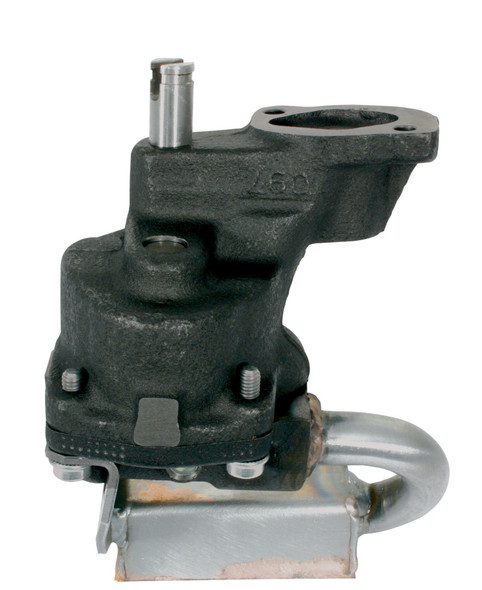
Moroso Chevrolet Small Block Standard Volume Street/Strip Oil Pump & Pick-Up For 8.25in Pan - MOROSO22124
Moroso
$161.94$161.94 -

Moroso Chevrolet Big Block High Volume Welded Oil Pump & Pick-Up For 8in Pan - MOROSO22187
Moroso
$221.11$221.11 -
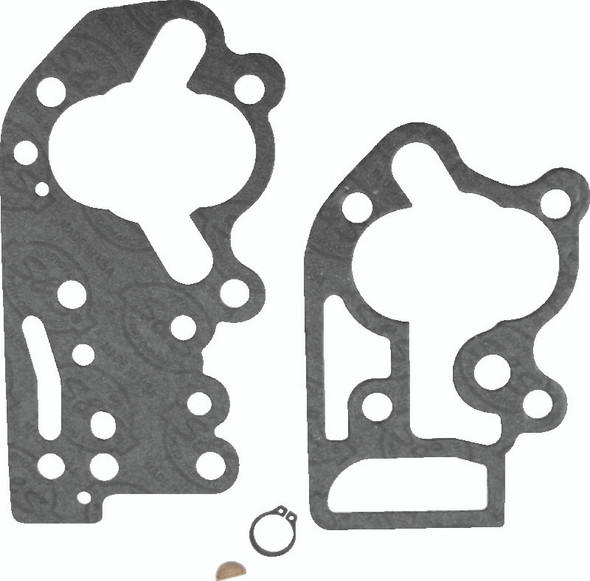

S&S Cycle 36-91 Standard Oil Pump Gasket - 31-6271
S&S Cycle
$17.95What is included in the S&S Cycle oil pump rebuild kit?This SSC Rebuild Kit provides essential gaskets for 1936-1991 big twin S&S oil pumps, restoring critical lubrication.Is this oil pump rebuild...$17.95 -


S&S Cycle 68-99 BT .4223in x .4.650in Oil Pump Drive Shaft - 31-6011
S&S Cycle
$29.95What is the primary function of an oil pump?The oil pump is critical for engine operation, delivering consistent oil flow for smoother engine function and extended component life.Can I install this...$29.95 -

Boundary Nissan VK56 5.6L Billet Oil Pump Assembly - VK56-S1
Boundary
$610.04Boundary Nissan VK56 5.6L Billet Oil Pump Assembly$610.04 -

Boundary 93-02 Toyota 2JZ Supra Dual Rotor MartenWear Treated Billet Oil Pump Gear - 2JZ-OPG-DR
Boundary
$711.88Boundary 93-02 Toyota 2JZ Supra Dual Rotor MartenWear Treated Billet Oil Pump Gear$711.88 -

Twin Power 07-17 Twin Cam and 06 Dyna High Performance Oil Pump - 601826
TwinPower
$202.99Is this a direct replacement for my stock oil pump?Confirm vehicle fitment with our comprehensive compatibility guide to ensure this TwinPower oil pump is a direct replacement.What is the...$202.99 -
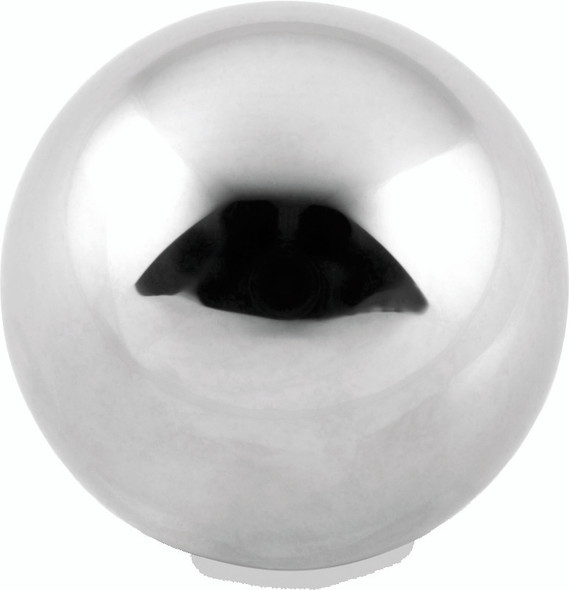
Twin Power 37-99 Big Twin Except 99 Twin Cam Oil Pump Check Ball Replaces H-D 8866 - 046504
TwinPower
$11.99What is the part number for this oil pump?This TWP Oil Pump is designed as a direct fit replacement for 1958-1999 Harley-Davidson FLH Electra Glide and related models.Is this oil pump a direct...$11.99 -


Ford Racing 96-04 Mustang 4.6L 2V High Volume Oil Pump and Pickup Tube - M-6600-D46
Ford Racing
MSRP: $185.00$176.38Don't waste time installing a stock oil pump when you can get one of these high-volume oil pumps from Ford Racing. These high-quality oil pumps are pressure-tested and hand-turned to deliver more oil...MSRP: $185.00$176.38 -
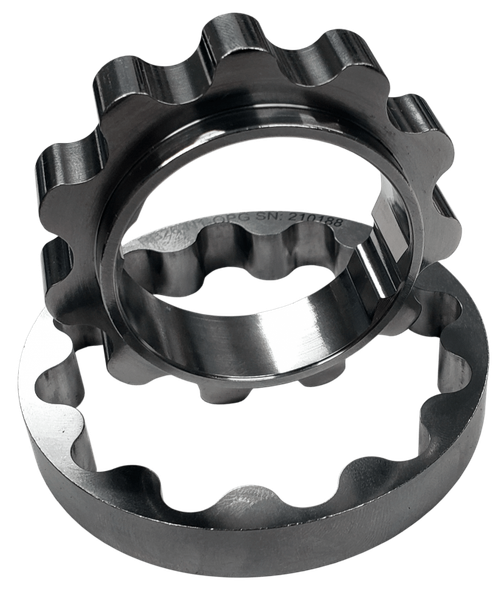
Boundary Nissan RB26 MartenWear Treated Billet Oil Pump Gear (Fits OEM Housing 81mm) - RB26-81-OPG-M
Boundary
$406.35What is the primary function of an oil pump?An oil pump's primary function is to circulate engine oil, ensuring vital components receive consistent lubrication for optimal performance and longevity...$406.35 -
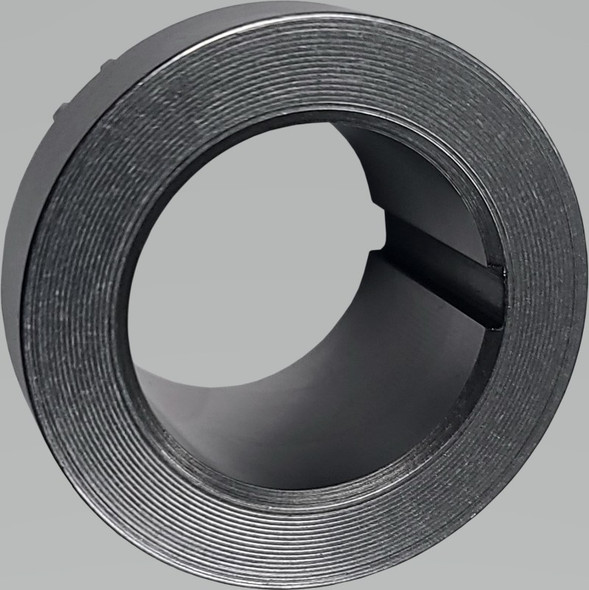
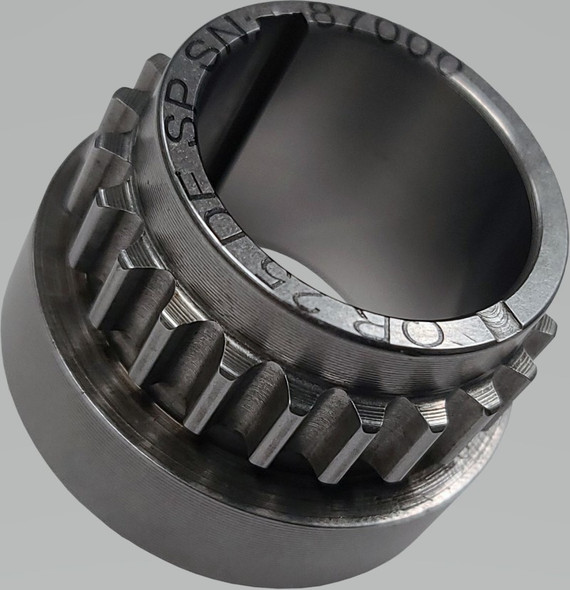
Boundary Nissan VQ 2.5L QR/DE Billet Crankshaft Timing Sprocket - QR25DE-SP
Boundary
$151.75What is the primary function of a crankshaft timing sprocket?Crankshaft timing sprockets precisely synchronize crankshaft and camshaft rotation, ensuring optimal valve timing for superior engine...$151.75 -

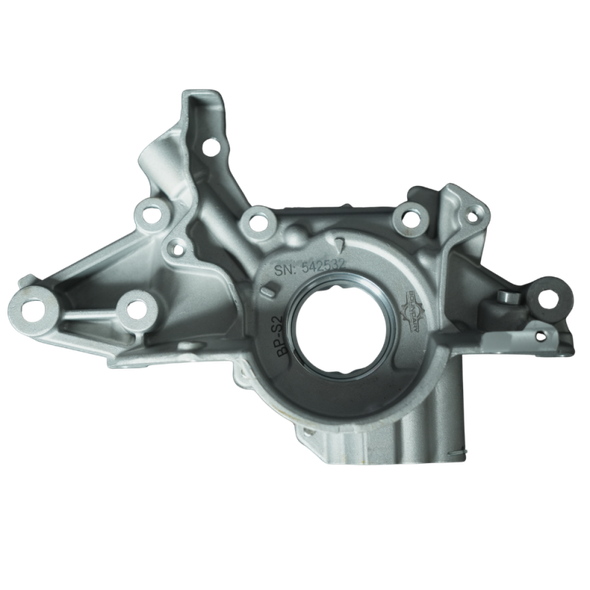
Boundary 89-91.5 Ford/Mazda BP 1.6L I4 Oil Pump Assembly (w/o Crank Seal) - BP-S2-SNC
Boundary
$477.64How do I know if the BOU Oil Pump Assembly fits my vehicle?Confirm fitment using our detailed vehicle compatibility guide before purchasing to ensure a perfect match for your specific application.Is...$477.64
An oil pump is the single most critical lubrication component in any performance engine — it determines oil pressure at idle, at redline, and under the lateral G-forces that kill stock units in competition applications. Motor Sport Mayhem stocks 73 oil pumps spanning entry-level street replacements to full race-spec dry sump systems, covering everything from mild street builds to purpose-built drag and road race engines.
Our Top Picks for Oil Pumps
Each of these products was hand-selected based on verified performance results, engineering quality, and the real-world demands of performance builds at every budget level.
ACL Race Series Main Bearings
ACL | $329.72
Engineered with extra oil clearance tolerances that work in direct partnership with your oil pump to maintain film thickness under high-load, high-rpm conditions where stock clearances fail.
- Tri-metal construction with a performance overlay optimized for sustained high oil pressure environments
ACT Pilot Bearing
ACT | $17.00
A precision-fit pilot bearing that eliminates input shaft runout — runout that causes premature oil seal failure at the front of the engine block and pump drive interface.
- Tight dimensional tolerances prevent vibration harmonics that can propagate through the oil pump drive shaft
AON Clutch Components
Action Clutch | $89.69
A race-spec pedal stop that protects drivetrain components during aggressive shifting sequences — reducing shock loads that ripple back through accessory drives including oil pump drive gears.
- Universal fitment with adjustable engagement point for consistent clutch release and reduced drivetrain shock
AEM Wiring Connectors
AEM | $430.95
K-type thermocouple sensing at four independent points gives you real-time thermal data critical for monitoring oil temperature thresholds that govern pump viscosity and pressure behavior.
- Four-channel simultaneous logging catches oil temperature gradients across a full race session with precision accuracy
AER Wiring Kits
Aeromotive | $358.52
A 60-amp deluxe wiring harness built for high-draw motorsport applications — the same electrical discipline needed for dry sump oil pump motor circuits in dedicated race builds.
- Relay-protected, fused circuit architecture prevents voltage drop that would otherwise destabilize electrically driven oil pump systems
AFE PFADT Mount Set
aFe | $660.00
Polyurethane subframe mounts eliminate the chassis flex that causes oil pan distortion and windage issues in high-G cornering — a root cause of pressure drop that goes undiagnosed in stock builds.
- Eliminates subframe movement that can misalign oil pan baffles and starve pick-up tubes under sustained lateral loading
ALF Wiring Harness
Air Lift | $97.23
Second-generation wireless harness architecture that demonstrates clean motorsport electrical integration principles applicable to any ancillary motor or pump wiring install in a performance build.
- Plug-and-play connector design reduces installation error risk on any electrically actuated pump circuit
ABR CVT Belts
All Balls Racing | $200.40
A heavy-duty CVT drive belt built to motorsport tolerances — representing the same belt-driven accessory drive engineering used on gear-driven and belt-driven oil pump configurations in performance applications.
- Reinforced construction resists the heat cycling and shock loading that destroys OEM-spec drive components under race conditions
ARX Tail Light Converters
AlphaRex | $395.00
LED tail light assemblies with full sequential function — representative of the electrical load management required when adding high-draw motorsport accessories including auxiliary oil system components to a tow or support vehicle.
- Plug-and-play OEM connector fitment ensures no voltage regulation issues that could affect ancillary pump circuits sharing the same chassis ground
PA Alta Crank Pulley
Alta | $129.20
A lightened crank pulley that reduces rotational mass at the front of the engine — directly affecting the drive efficiency of any belt- or chain-driven oil pump by reducing parasitic accessory load.
- Reduced rotating mass at the crank nose lowers the inertial load on oil pump drive gears during high-rpm acceleration events
How to Choose the Right Oil Pump
The difference between a pump that survives a season of track abuse and one that fails at the worst possible moment comes down to three variables: volume capacity, pressure relief valve calibration, and construction material. Stock oil pumps are engineered to minimum OEM specification — they move adequate volume at normal operating conditions but offer no margin for high-rpm sustained use, oil viscosity swings from heat soak, or the bearing clearance increase that comes with a worn or built engine. Aftermarket performance pumps address these failure modes through tighter gear-to-housing tolerances, stiffer pressure relief springs, and billet or high-grade iron construction that maintains geometry under thermal stress. Choosing wrong — oversized for a street car or undersized for a race application — creates its own set of problems: excessive volume pumps on street engines cavitate at low rpm and wear the drive gear faster, while undersized units starve main and rod bearings at the RPM peaks where your engine makes power.
Key Specifications
Gear-type versus rotor-type (gerotor) design is the first fork in the road. Gear pumps move a fixed volume per revolution, are simple to rebuild, and are the standard choice for most high-performance wet sump builds. Gerotor pumps are more compact, flow more quietly, and are increasingly used by OEMs and in aftermarket units targeting late-model engines where package space is constrained. For performance applications, gear pumps remain the dominant choice because gear-to-housing clearance is easily measured and corrected at rebuild time.
Pressure relief valve (PRV) spring rate is frequently overlooked but critically important. A stock PRV spring is calibrated for OEM bearing clearances and OEM oil viscosity at normal operating temperatures. When you add extra oil clearance in the bearings — as most race engine builders do — the pump must sustain higher volume to maintain target pressure, and a stiffer PRV spring is required to prevent pressure bypass before the oil circuit is fully charged. Most quality aftermarket pumps include a stiffer-than-stock PRV spring as standard; always verify this before purchase.
Housing material tells you a lot about the intended use case. Cast iron housings are dimensionally stable under heat and are the correct choice for any engine that sees sustained high-temperature operation — sustained track sessions, forced induction, or high-compression naturally aspirated builds. Billet aluminum housings are lighter and cosmetically appealing but require closer attention to thermal expansion coefficients when matching to an iron block. In a purpose-built race engine where weight matters and coolant temperatures are actively managed, billet aluminum is entirely appropriate. For a dual-purpose street and track car, iron or ductile iron is the safer long-term choice.
Drive interface integrity — whether your pump is crank-driven via gear, chain, or belt — determines how much of your pump selection comes down to the rest of the rotating assembly. A worn timing chain that introduces backlash into the oil pump drive gear will cavitate even the best pump at high rpm. Before upgrading your oil pump, inspect the drive interface for wear and consider the complete engine components picture to ensure the new pump isn't the only fresh component in an otherwise worn system.
Oil Pump Flow Rate vs. Engine Power Level Reference
| Engine Power Level | Recommended Pump Volume | Target Oil Pressure (Hot Idle / WOT) | Recommended PRV Spring |
|---|---|---|---|
| Stock – 300 WHP | OEM or standard volume replacement | 15–20 psi / 55–65 psi | OEM spec |
| 300–500 WHP (Street/Track) | Standard to +15% high volume | 20–25 psi / 65–75 psi | Stiffer than OEM (+10–15%) |
| 500–750 WHP (Built Engine) | High volume (+15–25%) | 25–30 psi / 75–85 psi | Race-spec PRV spring |
| 750–1000 WHP (Full Race) | High volume with baffled pan and accusump | 30–40 psi / 85–100 psi | Adjustable PRV, race-spec |
| 1000+ WHP / Road Race | Dry sump system (3–4 stage) | System-dependent / 90–110 psi | External PRV, fully adjustable |
Price Guide
Entry ($1.19–$130): Direct OEM-replacement units and individual components — gaskets, drive gears, pressure relief valves, and pilot bearings that support a pump swap without replacing the entire assembly. Correct choice for a stock or mildly modified engine that needs a fresh unit at service intervals or after a contamination event.
Mid-range ($130–$500): Where the majority of serious street and track builds land — high-volume aftermarket pumps with upgraded PRV springs, tighter housing tolerances, and materials that support 500+ WHP builds. This tier covers most engine builds that have gone through a performance rebuild with aftermarket bearings and machined clearances.
Premium ($500–$11,495.95): Dry sump systems, billet multi-stage scavenge pump assemblies, and complete oiling system packages intended for purpose-built race engines where pan-level oil starvation is unacceptable. The cost is justified by the catastrophic alternative — a spun bearing at 9,000 rpm during a race is far more expensive than the pump that would have prevented it.
Who Is This For?
Oil pump selection spans everything from a daily driver refresh to a full dry sump race system — knowing where your build sits on that spectrum determines every specification decision that follows.
Engine Performance — 8.5/10
This is the category's highest-scoring use case and for good reason: oil pump specification is a direct engine performance variable, not a maintenance item in a performance build. Inadequate oil pressure at peak RPM accelerates bearing wear in proportion to your power output, and bearing wear degrades ring seal, which hurts compression and blowby — a chain reaction that starts at the oil pump. For any engine that has been internally modified, the oil pump specification should be recalibrated to match the new bearing clearances and RPM targets.
Racing Competition — 8.2/10
Competition use introduces sustained high-RPM operation, elevated oil temperatures, and sustained lateral G-forces that cause oil surge and pump cavitation in stock wet sump configurations. At 8.2/10, this use case demands pumps with baffled or accusump-supported systems at minimum, and dry sump at the serious end of the spectrum. Pressure consistency under cornering load is non-negotiable in any wheel-to-wheel competition environment.
Track / Autocross — 8.2/10
Track and autocross use shares the same 8.2/10 score as full competition for a reason — even a single session of sustained lateral loading can cavitate a stock oil pump pickup tube if the pan lacks adequate baffling. Autocross events are particularly deceptive: short duration hides the cumulative stress of back-to-back high-G transitions on oil control. A high-volume pump paired with a baffled pan covers the vast majority of track day and autocross applications without the cost and complexity of a full dry sump conversion.
Drag Racing — 8.2/10
Drag racing loads the oiling system differently than road course work — the dominant stress is violent longitudinal acceleration rather than lateral G-forces. Oil surge under hard launch moves fluid rearward and can momentarily uncover a stock pickup tube. High-volume pumps with extended pickup tubes and front-sump pan configurations address this directly. At the top end of drag racing, where engine builds routinely exceed 1,000 WHP, dry sump systems become standard practice regardless of cost.
Street Performance — 7.6/10
Street use scores 7.6/10 — meaningful, but a different set of priorities than competition. On the street, an oil pump upgrade is most justified when the engine has been rebuilt with tighter or looser bearing clearances than stock, when a high-revving cam profile has been added, or when the vehicle is used for occasional track days. For a stock-clearance engine used purely on the street, a quality OEM-spec replacement pump is often the correct answer over an oversized unit that will reduce idle oil pressure and accelerate wear on the drive gear.
Trusted Oil Pump Brands We Carry
ACL has built its race series reputation on tri-metal bearing technology developed for Australian touring car racing, with clearance specifications that work in direct partnership with properly sized oil pump output — their race series bearings are engineered assuming you've addressed the pump simultaneously. King Engine Bearings brings OEM-supplier precision to the aftermarket, manufacturing to tolerances that demand consistent oil pressure delivery to function correctly under race loads. Wiseco's engine component engineering extends to oiling system components built to survive the thermal and mechanical stress of their own high-compression piston applications. GSC Power Division sources and validates components against the demands of high-boost, high-rpm builds where oil system failure is never a recoverable situation. Brian Crower's approach to complete engine system engineering means their components are validated as a system — camshafts, valvetrain, and oiling components developed together rather than in isolation. For engine bearings that work in concert with your oil pump selection, the bearing clearance specification and pump volume must be matched — brands like ACL and King publish their clearance data specifically so builders can make that calculation correctly.
Frequently Asked Questions
Are ACL or King bearings better for a high-performance build?
Both ACL and King Engine Bearings manufacture to genuine race-level tolerances and either is a legitimate choice over OEM replacements in a performance build. ACL's race series uses a tri-metal construction with a performance overlay specifically designed for extra oil clearance applications — meaning they're engineered for use with a pump that can sustain pressure at wider-than-stock clearances. King's approach emphasizes tighter dimensional consistency across a set, which is critical when you're line-honing a block and need every bearing in the set to land within a half-tenth of your target clearance. The practical difference for most builders is application-specific: ACL's extra oil clearance variants are a strong choice for builds targeting high oil flow, while King's standard race series suits builders who machine to a precise target clearance and want the tightest manufacturing tolerances in the set.
Are ACL race bearings coated, and does the coating matter for oil pump sizing?
ACL race series bearings use a polymer-based performance overlay on the bearing face — this is a functional coating, not a cosmetic one, and it directly affects the oil film requirements at the bearing interface. The overlay provides additional protection during cold-start oil pressure buildup, which is the highest-wear event in an engine's life, and it reduces the minimum oil film thickness needed to prevent metal-to-metal contact at sustained high load. From an oil pump sizing perspective, the coating does not eliminate the need for adequate pump volume — it extends the survival window during the brief period between startup and full system pressure, but sustained operation still requires the pump to deliver target pressure at operating temperature and RPM. Builders pairing ACL race bearings with extra oil clearance specifications should size their pump volume accordingly and not rely on the coating as a substitute for correct system pressure.
Are aftermarket head gaskets worth using in a performance engine rebuild?
In any engine that has been bored, has elevated compression, or runs forced induction, an aftermarket head gasket is not optional — it's a system requirement. OEM multi-layer steel gaskets are engineered for stock combustion pressures, stock bore diameters, and stock surface finish specifications; change any one of those variables and the OEM gasket's sealing margin shrinks. Aftermarket performance head gaskets from brands like Cometic use application-specific steel layer counts and embossment heights that are calibrated to the actual bore size, surface finish (typically Ra 50–125 microinches for MLS gaskets), and clamp load from your fasteners. The interaction with the oiling system is direct: a failed head gasket that allows coolant into the oil gallery destroys bearing surfaces in a single heat cycle, meaning a correct head gasket choice is part of protecting the entire oiling system investment.
Are 2-piece or 3-piece crankshafts better for high-performance engine builds?
For the vast majority of performance street and race applications, a forged steel one-piece crankshaft is the correct answer — but in the context of the two-piece versus three-piece discussion, the relevant difference is in the rear main seal design and the oil retention implications at the back of the crank. Two-piece rear main seals, common on older domestic engines, have a higher failure rate at elevated RPM and cylinder pressures because the seal halves rely on precise mating to prevent oil bypass. One-piece lip seals used on most modern performance engines offer far superior oil retention under sustained high-RPM operation and are compatible with the elevated crankcase pressures that accompany high-compression or forced induction builds. From an oil pump perspective, any seal failure at the rear main reduces effective system pressure and puts the pump into a condition where it's working against a constant leak — correct seal specification is part of the same system design conversation as pump sizing.
Are aftermarket ignition coils a legitimate performance upgrade, and do they affect the rest of the engine system?
Aftermarket ignition coils that deliver higher peak energy and faster saturation times produce a more complete combustion event — and complete combustion is directly relevant to oil contamination levels in a performance engine. Incomplete combustion from marginal coil output contributes to fuel wash on cylinder walls, which dilutes the oil film, reduces viscosity, and places additional demand on the oil pump to maintain pressure with compromised fluid. In a high-boost or high-compression application, the ignition system's ability to fire reliably at elevated cylinder pressures is a prerequisite for the engine to operate within its designed oil temperature and pressure envelope. Coil upgrades from established manufacturers are a legitimate component in a complete engine build — not a standalone fix, but part of ensuring the combustion events that the oiling system is built to support are actually occurring as designed.
Building something specific? Our performance specialists can help you select the right Oil Pumps for your application — street, track, or full race build.