
Fuel Delivery
- Product
- Qty in Cart
- Quantity
- Price
- Subtotal
-

Snow 8AN Braided Stainless PTFE Hose - 30ft (Black) - SNOWPERFORMANCESNF-60830B
Snow Performance
MSRP: $241.43$172.45MSRP: $241.43$172.45 -

Radium Engineering BMW E46 Excl Convertible Fuel Surge Tank Install Kit - RADIUMENGINEERING20-0974
Radium Engineering
MSRP: $469.95$446.45Will this surge tank fit my BMW E46 convertible?This Radium Engineering surge tank is engineered specifically for the BMW E46, excluding convertible models, ensuring optimal fuel delivery.How...MSRP: $469.95$446.45 -

Radium Engineering VW 2.8L 24V VR6 Fuel Rail - RADIUMENGINEERING20-0878
Radium Engineering
MSRP: $299.95$284.95MSRP: $299.95$284.95 -
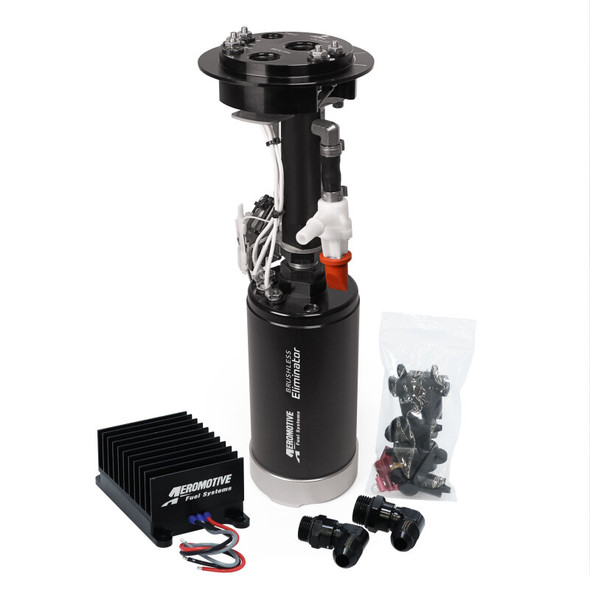
Aeromotive 14-19 Chevrolet C7 Corvette Brushless In-Tank Fuel Pump w/TVC - Eliminator - AEROMOTIVE19131
Aeromotive
$1,745.99$1,745.99 -

Snow 2020+ Ford Mustang GT500 Max Flow Fuel Hat - Triple Pump - SNOWPERFORMANCESNF-52300R
Snow Performance
MSRP: $1,697.85$1,212.75MSRP: $1,697.85$1,212.75 -

Radium Engineering 15-17 Ford Mustang Fuel Hanger Plumbing Kit - Stainless Filter - RADIUMENGINEERING20-1816-03
Radium Engineering
MSRP: $979.95$930.95Is professional installation recommended for fuel pump hangers?Professional installation is recommended for RAD Fuel Hanger Plumbing Kits to ensure optimal integration and performance of your fuel...MSRP: $979.95$930.95 -

All Balls Racing 2001 Yamaha WR250F Carburetor Rebuild Kit - ALLBALLSRACING26-1303
All Balls Racing
MSRP: $82.62$78.49Will this carburetor rebuild kit fit my 2001 Yamaha WR250F?This ABR Carburetor Rebuild Kit is specifically designed for the 2001 Yamaha WR250F, ensuring a precise and effective restoration of your...MSRP: $82.62$78.49 -

Radium Engineering Toyota 1UZ-FE Non-VVT-I Fuel Rails - RADIUMENGINEERING20-0961
Radium Engineering
MSRP: $239.95$227.95MSRP: $239.95$227.95 -

Aeromotive 67-68 Chevrolet Camaro 340 Stealth Gen 2 Fuel Tank - AEROMOTIVE18457
Aeromotive
$923.48How do I install the Aeromotive fuel tank?Professional installation is recommended for your Aeromotive fuel tank to ensure precise fuel system integration and optimal performance.What is the fuel...$923.48 -

All Balls Racing 01-03 Polaris Sportsman 400 4x4 Carburetor Rebuild Kit - ALLBALLSRACING26-1022
All Balls Racing
MSRP: $52.97$50.32Is this ABR Carburetor Rebuild Kit compatible with my 2001 Polaris Sportsman 400 4x4?This ABR Carburetor Rebuild Kit is designed as a drop-in replacement specifically for the 01-03 Polaris Sportsman...MSRP: $52.97$50.32 -
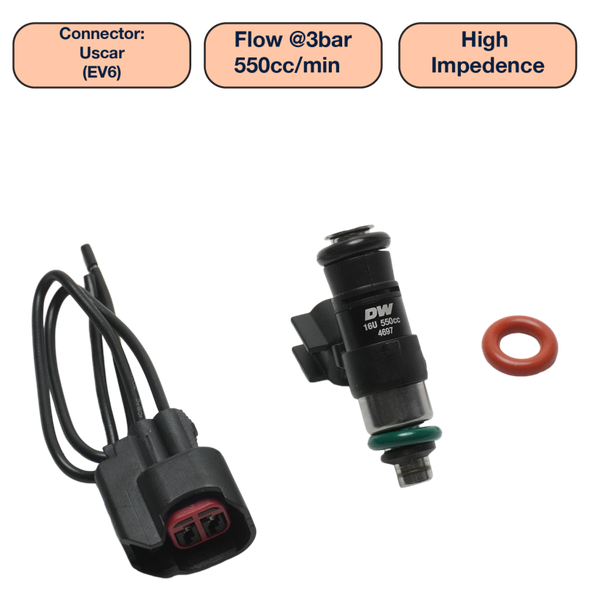
DeatschWerks Universal 550cc Single Fuel Injector / 34mm Length / 14mm O-Ring Seals - DEATSCHWERKSDW550-34-14-14-1
DeatschWerks
$69.00$69.00 -

DeatschWerks 340lph DW300C Compact Fuel Pump w/ Ford Focus MK2 RS Set Up Kit (w/o Mounting Clips) - DEATSCHWERKS9-307-1017
DeatschWerks
$189.00What is the flow rate of the DW300C fuel pump?The DW300C fuel pump delivers a substantial 340 liters per hour of fuel flow to support demanding engine configurations.Is this a direct replacement fuel...$189.00
Fuel delivery is the foundation of every horsepower gain — your engine can only make power proportional to the fuel it can reliably receive, atomize, and combust under load. Motor Sport Mayhem stocks 1,785 fuel delivery components from 58 performance brands, covering everything from drop-in pump upgrades to full race-spec fuel cell systems priced from $1.16 to $6,439.78.
Our Top Picks for Fuel Delivery
Each of these products was selected based on proven performance, engineering quality, and real-world results across street, track, and competition builds.
ACB Fuel Tanks
Acerbis | $436.73
High-density polyethylene construction delivers a significant capacity upgrade over the OEM tank without adding meaningful weight.
- Expanded fuel capacity directly extends range on off-road and adventure builds where refueling isn't always an option
AEM Fuel Pressure Regulators
AEM | $222.95
Adjustable fuel pressure regulation gives tuners precise control over base fuel pressure across the full RPM range.
- Billet aluminum construction and adjustable set point make this a cornerstone component for any forced induction or naturally aspirated tune
AER Fuel Systems
Aeromotive | $3,624.93
An integrated brushless fuel cell system purpose-built for high-demand race applications where consistent fuel delivery at extreme angles and G-forces is non-negotiable.
- Brushless motor technology eliminates the heat and wear associated with traditional brushed pump designs, extending service life under continuous wide-open-throttle conditions
AFE ProGuard Fuel Filter
aFe | $74.00
Multi-stage filtration media captures particulates that OEM filters routinely pass, protecting injectors and high-pressure pump components in diesel applications.
- Diesel high-pressure fuel systems operate at pressures where even minor contamination causes accelerated injector and CP3/CP4 pump wear
ADG AirDog II-5G A/F Separator
AirDog | $854.00
A dedicated air and fuel separation system that removes entrained air and vapor from diesel fuel before it reaches the high-pressure injection circuit.
- Aerated fuel is a primary cause of cavitation damage in diesel CP4 pumps — a separator system is essential insurance on modified diesel builds
ABR Fuel Pump Kits
All Balls Racing | $310.11
Complete module replacement kits deliver a direct OEM-fit solution with upgraded internal components for powersports applications that see hard off-road use.
- Module-style kits replace the entire pump, sender, and strainer assembly in one service, eliminating the common failure point of piecemeal repairs on aging EFI powersports units
AMS Flex Fuel Kit
AMS | $999.95
A complete CAN-based flex fuel integration kit that communicates ethanol content directly to the ECU for real-time fuel mapping on modern sports car platforms.
- CAN-bus integration is the clean, future-proof method for flex fuel sensing — it avoids the signal interference and latency issues found in analog ethanol sensor wiring approaches
ATS Fuel Regulators
ATS Diesel | $74.99
An electronic fuel pressure regulator kit engineered specifically for the high-pressure oil-actuated injection system used in early Powerstroke diesel applications.
- The ICP/IPR regulator is a known hard-start and power loss failure point on these diesel platforms — a quality replacement restores proper injection timing and pressure
BBK Fuel Pump
BBK | $419.99
A high-flow in-tank pump rated at 300 lph that provides the fuel volume headroom necessary for naturally aspirated or boosted performance builds pushing well beyond stock power levels.
- 300 lph flow capacity supports gasoline-fueled builds into the 400–500 whp range before the pump becomes the limiting factor in the fuel delivery chain
BDD Injection Pumps
BD Diesel | $883.95
A stock-exchange CP3 injection pump rebuild that restores factory rail pressure specifications and fuel delivery volume on high-mileage diesel common rail systems.
- Worn CP3 pumps produce low rail pressure codes, rough idle, and reduced power long before complete failure — a remanufactured pump is a high-value repair on any diesel with performance modifications that stress the fuel system
How to Choose the Right Fuel Delivery Components
The single biggest mistake builders make is treating fuel delivery as an afterthought — upgrading power adders like forced induction or camshafts without confirming the fuel system can support the new demand. Every component in the fuel delivery chain has a flow ceiling, and the weakest link determines your actual power potential. Good fuel delivery components share common traits: consistent flow rates across the full operating pressure range, materials compatible with ethanol and oxygenated fuels, and tight manufacturing tolerances that prevent cavitation, vapor lock, and pressure drop under sustained high-load conditions. Cheap components fail on quality at the internals — pump impellers that cavitate, regulators with diaphragms that crack under heat, and injectors with spray patterns that drift within hours of installation.
Key Specifications
Fuel pump flow rate is measured in liters per hour (lph) at a specific pressure, typically 43.5 PSI (3 bar) for gasoline applications and higher for direct injection systems. The critical detail most buyers miss is that published flow ratings drop significantly as backpressure increases — a pump rated at 255 lph at 40 PSI may only deliver 190 lph at 60 PSI. Always spec your pump against the actual operating pressure of your fuel system, not the spec sheet's best-case number. For forced induction applications, base fuel pressure rises with boost, which compounds this effect and means undersized pumps starve the engine precisely when demand peaks.
Fuel injector sizing requires matching static flow rate in cubic centimeters per minute (cc/min) or lph to your target horsepower and fuel type, with a duty cycle that stays below 80–85% at maximum demand. Exceeding 85% injector duty cycle leaves no headroom for fuel trims and causes lean conditions under load. Ethanol fuels like E85 require approximately 30–40% more fuel volume than gasoline for equivalent power output, which means injectors sized for a gasoline tune will be undersized if you convert to E85 without upgrading. High-impedance (saturated) injectors in the 12–16 ohm range are compatible with most factory and aftermarket ECUs without additional resistor packs, while low-impedance peak-and-hold injectors require a compatible driver circuit.
Fuel pressure regulators fall into two categories: return-style and returnless. Return-style regulators sit at the end of the fuel rail, maintain a fixed differential pressure relative to manifold pressure via a vacuum reference port, and return excess fuel to the tank — they are the correct choice for any performance or modified application. Returnless systems, common on modern OEM platforms, regulate pressure at the pump module and cannot maintain consistent rail pressure under varying demand as effectively as a return-style setup with an adjustable regulator. Billet aluminum bodies resist the thermal cycling and vibration fatigue that causes cast regulators to crack or develop slow leaks over time.
Fuel filtration micron rating determines what particle sizes the filter captures — lower micron ratings offer finer filtration but also restrict flow and clog faster in contaminated fuel environments. High-pressure diesel common rail systems require filtration in the 2–10 micron range because injection nozzle tolerances are measured in single-digit microns and contamination causes catastrophic pump and injector failure. Gasoline EFI systems typically run 10–40 micron filtration at the filter with a finer strainer sock at the pump inlet. Always confirm a filter's rated flow capacity against your pump's maximum output — an undersized filter causes fuel starvation that manifests as a lean condition at high RPM, not a fuel filter code.
Fuel Pump Flow Rate vs. Horsepower Target Reference
| Horsepower Target (WHP) | Minimum Pump Flow (lph @ 43.5 PSI) | Recommended Injector Size (cc/min) | Notes |
|---|---|---|---|
| Up to 300 WHP | 190–255 lph | 440–550 cc/min | OEM-style replacement pumps adequate; stock rail and FPR often sufficient |
| 300–450 WHP | 255–340 lph | 550–750 cc/min | Upgraded in-tank pump required; adjustable FPR recommended on boosted builds |
| 450–600 WHP | 340–450 lph | 750–1000 cc/min | High-flow pump mandatory; return-style fuel system strongly recommended |
| 600–800 WHP | 450–600 lph | 1000–1300 cc/min | Dual in-tank pump or external inline pump; upgraded fuel rail and -8AN lines |
| 800–1000 WHP | 600–800 lph | 1300–1650 cc/min | External surge tank or fuel cell system; dedicated fuel pump controller recommended |
| 1000+ WHP | 800+ lph (often dual pump) | 1650+ cc/min or port + direct injection | Full race fuel system with dedicated cell, surge tank, and high-capacity regulator required |
Price Guide
Entry ($1.16–$200): This range covers consumables, hardware, and OEM-replacement components — fuel filter elements, strainer socks, fuel line fittings, small regulators, and basic carbureted components. Appropriate for maintenance, stock restorations, and light-duty applications where power levels remain near factory. Quality varies significantly in this range; buy from known brands rather than unbranded sourced parts, particularly for anything contacting pressurized fuel.
Mid-range ($200–$800): This is where the majority of street performance and track-day builders will spend their budget, and it represents the strongest value density in the category. High-flow in-tank pumps, quality adjustable fuel pressure regulators, upgraded injector sets for naturally aspirated or modestly boosted builds, performance fuel rails, and complete powersports pump modules all land here. Components in this range are typically manufactured to tighter tolerances, carry more meaningful flow certifications, and are built from materials that tolerate ethanol-blend fuels without seal degradation.
Premium ($800–$6,439.78): Serious horsepower builds, dedicated race cars, diesel performance systems, and complete fuel cell installations justify this tier. High-flow injector sets from precision manufacturers, complete brushless fuel cell systems, diesel air/fuel separation systems, CP3 and CP4 injection pump rebuilds, and flex fuel integration kits for modern platforms all occupy this range. The cost is justified by tighter flow matching tolerances across injector sets, brushless pump technology for longevity under sustained load, and system-level engineering that eliminates the compatibility guesswork of mixing components from multiple suppliers.
Who Is This For?
Fuel delivery components serve everyone from daily drivers maintaining their fuel system to professional race teams chasing the last fraction of available horsepower — here is how the category breaks down by application.
Engine Performance — 8.7/10
Fuel delivery scores highest in the engine performance category because it is the direct enabler of every other power-producing modification — camshafts, cylinder heads, and forced induction upgrades all require a fuel system capable of supporting the increased demand. The 8.7 score reflects how fundamental proper fuel delivery is to unlocking the full potential of engine component upgrades. A fuel system that cannot maintain target rail pressure and injector duty cycle under load will produce tuning anomalies, lean conditions, and detonation that limit or destroy the engine regardless of what other parts are installed.
Drag Racing — 8.2/10
Drag racing places unique demands on fuel delivery systems because the entire power output happens in a short, sustained, maximum-load event with no recovery time — there is no coasting section to allow a marginal pump to refill a surge tank or a regulator to stabilize pressure. The 8.2 score reflects how critical fuel system reliability is in this discipline, where a momentary lean spike at the top of a quarter-mile run damages pistons. Fuel cells, surge tanks, and high-capacity regulators are common in drag applications specifically because they eliminate the fuel starvation risk that comes from aggressive acceleration causing fuel to slosh away from the in-tank pump pickup.
Racing Competition / Track & Autocross — 8.1/10
Circuit and autocross applications demand fuel delivery systems that maintain consistent pressure through sustained lateral G-forces that can unport a standard in-tank pump pickup, combined with the thermal load of repeated full-throttle acceleration zones. The 8.1 score across both track categories reflects the real risk of fuel starvation under sustained cornering — a risk that is largely absent in straight-line or street driving. Baffled fuel tanks, swirl pots, and fuel cells with internal foam baffling are the engineering solutions that address this specific failure mode in competition applications.
Street Performance — 7.8/10
Street performance builds score 7.8 because while the fuel system demands are real — particularly for turbocharged or supercharged street cars pushing 400+ wheel horsepower — the duty cycle is far less severe than dedicated race applications, and the consequences of brief fuel delivery anomalies are manageable compared to sustained race conditions. Most street performance builders need an upgraded in-tank pump, matched injectors, and a quality adjustable regulator; a full fuel cell or external surge system is overkill for street use unless the car sees track days. The 7.8 score correctly positions fuel delivery as important but not the top priority in a street build where other systems like brakes and suspension see proportionally higher urgency.
Easy DIY Install — 7.4/10
Fuel delivery scores a respectable 7.4 for DIY installation because the majority of common upgrades — in-tank pump swaps, fuel filter replacements, regulator changes, and injector upgrades — are within reach for an intermediate home builder with basic tools and attention to safety procedures. The limiting factors that prevent a higher score are the safety considerations around working with pressurized fuel systems, the need to depressurize lines properly before disassembly, and the fact that some components like injection pump rebuilds and flex fuel integration require ECU calibration work that falls outside pure mechanical installation. Following fuel system safety procedures — relieving pressure, using proper line disconnect tools, and avoiding ignition sources — makes these installs straightforward.
Trusted Fuel Delivery Brands We Carry
The brands that have earned dominant positions in performance fuel delivery did so through engineering investment and real-world validation, not marketing. DeatschWerks has built a reputation on precision-matched injector sets with individual flow testing and tight set-to-set variance that makes tuning predictable — their catalog depth of 405 products reflects how broadly their injectors are applied across platforms. Aeromotive is the benchmark name in performance fuel system design, with 153 products averaging over $710 because their pumps, regulators, and complete systems are engineered for sustained race use rather than occasional performance driving. Injector Dynamics occupies the premium injector space with a 130-product lineup averaging nearly $1,000 — their flow-matched, characterization-data-backed injectors are used by professional tuners who need accurate injector models for closed-loop calibration. Radium Engineering brings precision fabrication to fuel system plumbing with 283 products covering fuel rails, surge tanks, and system components machined to tolerances that eliminate the fitment issues found in lower-cost options. Fuelab focuses specifically on regulators and pumps where their billet construction and consistent set-point accuracy have made them a trusted choice for both street and competition builds, while AirDog and Fleece Performance have carved out dominant positions in the diesel fuel system segment where their separation and lift pump systems address the specific vulnerabilities of modern common rail injection.
Frequently Asked Questions
Are Aeromotive fuel pressure regulators worth the price?
Yes — Aeromotive regulators consistently earn their premium price through accurate, stable pressure control that cheaper regulators cannot match under sustained high-demand conditions. The key differentiator is diaphragm quality and valve seat tolerance: budget regulators often show pressure creep or drop under thermal load because their internal components flex or wear. Aeromotive's billet construction and tightly controlled manufacturing keep set pressure consistent across the full operating range, which is critical for accurate fuel tuning on modified engines. For any build where the tune is dialed to specific fuel pressure targets, regulator accuracy directly impacts air-fuel ratio precision across the RPM range.
Are aftermarket fuel pumps as good as OEM — or better?
For performance applications, quality aftermarket pumps are not just as good as OEM — they are purpose-built to exceed OEM flow capacity, which is deliberately sized for stock power levels with minimal headroom. OEM pumps are engineered to a cost and a specification that matches the factory tune; once you increase power demand through engine modifications or fuel type changes, the OEM pump becomes the weakest link in the system. The caveat is that not all aftermarket pumps are equal — reputable brands publish tested flow curves across a range of pressures, while off-brand alternatives often post peak flow numbers measured at minimal backpressure. Stick to brands with published pressure-vs-flow data and a known track record in your specific application.
Are aftermarket fuel rails worth installing on a performance build?
Aftermarket fuel rails are worth it on builds where the OEM rail becomes a restriction or a reliability risk — specifically on high-flow injector installs, ethanol fuel conversions, and any application where the factory rail's internal diameter limits flow to the injectors under sustained demand. The practical benefit is larger internal bore volume that reduces rail pressure drop between injectors at high flow rates, which matters most on high-RPM, high-demand builds. Aftermarket rails also typically use AN-style fittings that integrate cleanly with performance fuel system plumbing versus the barbed or crimped OEM connections that are harder to modify. For a mildly modified street car running stock-diameter injectors, the OEM rail is usually adequate, but once you cross into oversized injectors or dual-fuel configurations, a matched rail is part of doing the system correctly.
Are aftermarket fuel filters actually better than OEM replacements?
Quality aftermarket fuel filters from performance-focused manufacturers offer real advantages over generic OEM replacements in two areas: filtration media quality and flow capacity at the rated micron level. The relevant spec is micron rating combined with flow rate at pressure — a filter that achieves fine filtration by restricting flow is counterproductive on a high-demand performance fuel system. Performance aftermarket filters are typically designed with higher surface area media to maintain flow while achieving effective filtration, particularly important on diesel common rail systems where injection pump longevity depends directly on fuel cleanliness. For modified gasoline engines, the most important thing is matching filter flow capacity to pump output — an undersized filter starves the pump at high demand regardless of filtration quality.
Are aluminum fuel tanks better than steel for performance and off-road use?
Aluminum tanks offer meaningful advantages in weight savings — typically 30–50% lighter than equivalent steel — and superior corrosion resistance, which matters particularly in off-road environments with water ingestion and in regions where road salt accelerates steel tank degradation. The trade-off is that aluminum is more susceptible to impact damage and puncture than steel, which has led many off-road competition applications to use polyethylene (HDPE) tanks instead, as HDPE flexes rather than cracks on impact. For road racing and time attack applications where weight reduction is prioritized and impact risk is lower, aluminum cells and tanks are a legitimate upgrade. Steel tanks remain appropriate where durability against physical damage outweighs weight savings, particularly in rock crawling and rough off-road use where underbody contact is frequent.
Building something specific? Our performance specialists can help you select the right Fuel Delivery for your application — street, track, or full race build.