
Carburetors
- Product
- Qty in Cart
- Quantity
- Price
- Subtotal
-

QuadBoss 04-05 Yamaha YFZ450 (03) Carburetor Kit - 418362
QuadBoss
$73.20What does a carburetor rebuild kit typically include?QBS Carburetor Kits for your 2004-2005 Yamaha YFZ450 include all necessary O-rings, gaskets, jets, needle, and mixture screw for a complete...$73.20 -
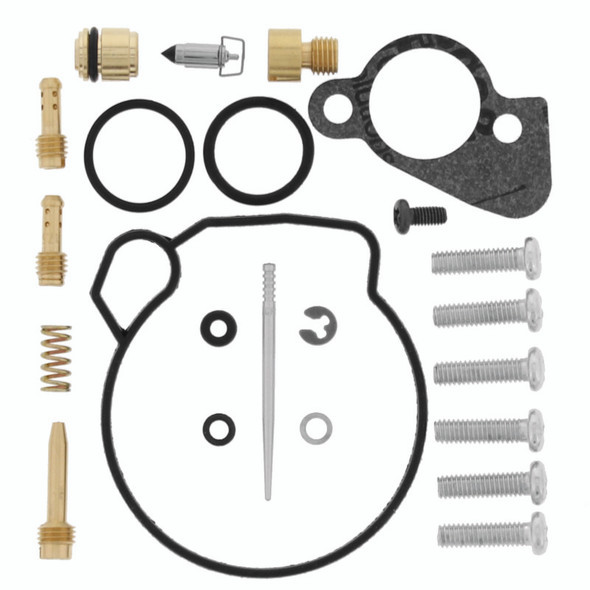
QuadBoss 2003 Polaris Predator 90 (2) Carburetor Kit - 418163
QuadBoss
$51.42What is included in the QBS Carburetor Kit?QBS Carburetor Kits include all necessary O-rings, gaskets, jets, needle, mixture screw, and float bowl components to repair your carburetor.Can I install...$51.42 -

QuadBoss 1993 Polaris 350L 2x4 Carburetor Kit - 418139
QuadBoss
$36.97What vehicles does this QBS Carburetor Kit fit?This QBS Carburetor Kit is specifically designed for 1990-1993 Polaris Big Boss or Trail Boss 350L models; confirm fitment with your vehicle.How...$36.97 -

QuadBoss 01-05 Yamaha YFM660R Raptor Carburetor Kit - 418357
QuadBoss
$91.75What is included in the QuadBoss carburetor kit?This QuadBoss carburetor kit contains all essential O-rings, gaskets, jets, needle, and mixture screw for a complete carburetor rebuild.Is professional...$91.75 -

QuadBoss 08-10 Polaris Outlaw 450 Accelerator Pump Kit - 420593
QuadBoss
$26.45How do I know if my QuadBoss Accelerator Pump Kit will fit my carburetor?Confirm vehicle fitment using the provided compatibility guide to ensure precise installation for your specific carburetor...$26.45 -

QuadBoss 99-01 Arctic Cat 250 2x4 (04) Carburetor Kit - 420515
QuadBoss
$56.67What is the main benefit of using a QBS Carburetor Kit?QBS Carburetor Kits restore your Arctic Cat 250 2x4 engine to peak running condition with all necessary carburetor repair components.Are these...$56.67 -

QuadBoss 01-08 Kawasaki KAF620E Mule 3010 Carburetor Kit - 420479
QuadBoss
$61.08What is included in a QBS Carburetor Kit?QBS Carburetor Kits contain all essential O-rings, gaskets, jets, a mixture screw, float valve, and needle for a complete carburetor rebuild.How difficult is...$61.08 -

QuadBoss 88-90 Honda TRX300 FourTrax (02) Carburetor Kit - 418086
QuadBoss
$36.12Does this kit include everything needed for a full carburetor rebuild?Yes, this QBS Carburetor Kit for 1988-1990 Honda TRX300 models provides all O-rings, gaskets, jets, and internal components for a...$36.12 -

QuadBoss 89-92 Polaris Big Boss 250 4x6 Carburetor Kit - 418142
QuadBoss
$45.12What is the primary function of a carburetor?A carburetor precisely mixes air and fuel in specific ratios to ensure optimal combustion within an engine for peak performance.How do I know if I need a...$45.12 -

QuadBoss 87-92 Yamaha YFM350 Warrior (02) Carburetor Kit - 420532
QuadBoss
$56.08How many carburetors does this kit cover?This QBS Carburetor Kit includes components to repair both carburetors if your 1987-1992 Yamaha YFM350X Warrior is equipped with a dual carburetor setup.Do I...$56.08 -

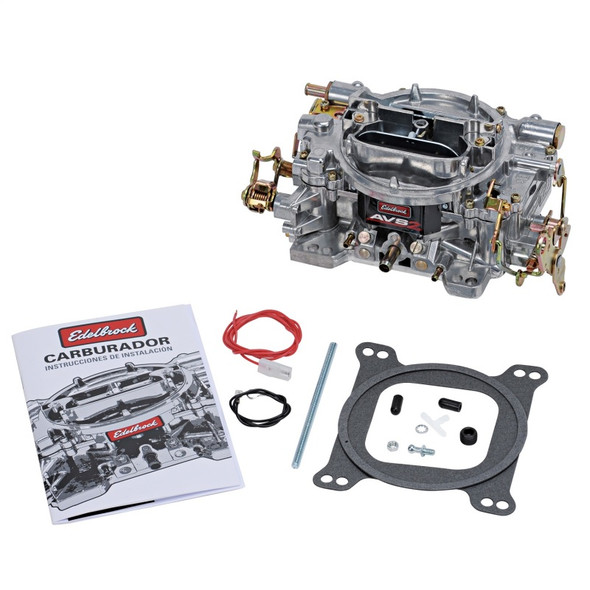
Edelbrock 650 CFM Thunder AVS Annular Carb w/ Manual Choke - 1905
Edelbrock
$463.78Will this Edelbrock carb fit my vehicle?Confirming specific vehicle fitment is essential before installation to ensure optimal performance and compatibility with your carburetor setup.Is this...$463.78 -

QuadBoss 03-04 Polaris Sportsman 600 4x4 (2) Carburetor Kit - 418178
QuadBoss
$59.20What year Polaris Sportsman MV7 does this QBS Carburetor Kit fit?This QBS Carburetor Kit is specifically engineered to fit the 2005 Polaris Sportsman MV7 model, ensuring precise component...$59.20
Carburetors and fuel delivery components are the foundation of consistent power output — every drop of fuel entering your engine must be metered, pressurized, filtered, and delivered at the right rate for your specific application. Motor Sport Mayhem stocks 67 in-demand fuel system components across 58 brands, covering everything from entry-level carburetor rebuilds to purpose-built race fuel cells and injection pump upgrades.
Our Top Picks for Carburetors
These components were hand-selected by our performance team based on documented results, build quality, and real-world fit across street, track, and race applications.
ACB Fuel Tanks
Acerbis | $436.73
High-density polyethylene construction delivers a significant capacity upgrade over stock without adding structural weight.
- OEM-style fitment with expanded fuel range — ideal for enduro, adventure, and off-road builds where range matters more than lap times
AEM Fuel Pressure Regulators
AEM | $222.95
Adjustable fuel pressure regulation with a 1:1 boost-referenced design keeps fuel pressure in lockstep with manifold pressure under forced induction.
- Anodized billet aluminum body with steel-reinforced seat tolerates high-ethanol fuel blends without seal degradation
AER Fuel Systems
Aeromotive | $3,624.93
An integrated brushless fuel cell combining surge-proof baffling and spur pump technology in a single race-ready enclosure rated for extreme flow demands.
- Brushless pump motor eliminates brush wear — critical for high-duty-cycle race applications where pump longevity directly affects reliability
AFE ProGuard Fuel Filter
aFe | $74.00
Multi-stage diesel filtration with a 2-micron absolute rating protects high-pressure common rail injection components from abrasive particulate contamination.
- Direct OEM replacement housing with upgraded media — one of the highest-value protection upgrades available for diesel applications
ADG AirDog II-5G A/F Separator
AirDog | $854.00
A purpose-built fuel-air separation system that removes entrained air and vapor before they reach the injection pump — the root cause of most diesel fuel system failures under load.
- Integrated lift pump delivers consistent positive feed pressure, eliminating the cavitation that destroys OEM lift pump diaphragms on high-mileage diesel builds
ABR Fuel Pump Kits
All Balls Racing | $310.11
Complete fuel pump module assemblies restore factory-spec fuel pressure and flow for ATV and powersports applications that suffer from aging OEM pump failures.
- Drop-in module format includes regulator, strainer, and sender — reducing installation time and eliminating the risk of mixing mismatched components
AMS Flex Fuel Kit
AMS | $999.95
A CAN-bus flex fuel system that enables real-time ethanol content detection and dynamic fueling compensation without requiring a standalone ECU.
- Integrated fuel filter in the kit means you're protecting injectors from E85 particulate contamination at the same time you're unlocking higher octane capability
ATS Fuel Regulators
ATS Diesel | $74.99
An electronic fuel pressure regulator kit designed to address the known pressure drop failures that cause hard starting, rough idle, and injection timing issues on high-mileage diesel platforms.
- OEM-specification electrical connector and sealing ensure reliable signal to the PCM without triggering fault codes or requiring tune modification
BBK Fuel Pump
BBK | $419.99
A 300 LPH in-tank fuel pump upgrade that delivers the sustained flow required by modified engines running larger injectors or higher boost without starving under wide-open throttle.
- Direct in-tank installation maintains factory fuel system architecture while significantly raising the ceiling on power potential
BDD Injection Pumps
BD Diesel | $883.95
A stock-exchange CP3 injection pump rebuild restores rail pressure output to factory specification on worn diesel engines that have lost injection efficiency and fuel economy.
- Exchange program means you're getting a professionally rebuilt unit with tight internal clearances — not a remanufactured unit assembled from mixed-grade cores
How to Choose the Right Carburetors
The difference between a carburetor or fuel system component that performs and one that fails comes down to three things: rated flow capacity relative to your engine's demand, materials compatibility with your fuel type, and the tolerances held during manufacturing. Cheap castings leak under pressure. Undersized metering circuits starve the engine at peak RPM. Incompatible seal materials swell and fail within months on ethanol blends. Every specification on a fuel system component exists for a reason — understanding what those numbers mean for your application is what separates a correct purchase from an expensive mistake.
Key Specifications
Flow rate is the most critical specification in any fuel system component, measured in liters per hour (LPH) for pumps or cubic feet per minute (CFM) for carburetors. A naturally aspirated engine running pump gas needs roughly 0.55 lbs of fuel per horsepower per hour at wide-open throttle — use that figure to calculate minimum pump and injector flow requirements before you buy. Under-sizing any link in the fuel chain will result in lean conditions at high load, which causes detonation and piston damage on gasoline engines or injector failure on diesel platforms.
Material selection matters more than most builders realize. Billet aluminum components — bodies, floats, and housings — resist vibration fatigue far longer than pot metal castings and hold tighter dimensional tolerances over temperature cycles. For ethanol or flex fuel applications, you need nitrile or Viton seals rated for oxygenated fuels; standard Buna-N seals will swell and fail. On diesel systems, stainless internal components resist the reduced lubricity of ultra-low-sulfur diesel that accelerates wear in older pump designs.
Fuel pressure regulation accuracy directly impacts fueling consistency. Street applications typically run 43–60 psi base fuel pressure depending on injector design, while forced induction builds require a rising-rate regulator that adds 1 psi of fuel pressure for every 1 psi of boost — maintaining the same pressure differential across the injector throughout the boost curve. A non-boost-referenced regulator on a forced induction engine will cause a lean condition as boost rises, regardless of how large your injectors are. This is one of the most commonly overlooked fueling errors on turbocharged builds.
For diesel and powersports applications, filtration rating is the specification that determines injection system longevity. Common rail diesel injectors operate at pressures between 15,000 and 30,000 psi and have internal tolerances measured in microns — a single abrasive particle above 5 microns can score an injection seat. Absolute micron ratings (not nominal) on fuel filters tell you the actual worst-case particle size that passes through; an absolute 2-micron filter is meaningfully more protective than a nominal 10-micron filter even though the numbers suggest otherwise. Always confirm your filter's rating type before comparing specifications.
Carburetor CFM vs. Engine Displacement Reference
| Engine Displacement | Naturally Aspirated CFM | Mild Forced Induction CFM | High-Boost / Race CFM |
|---|---|---|---|
| Small Block / Under 300ci | 390–500 CFM | 500–600 CFM | 650–750 CFM |
| 300–350ci (5.0–5.7L) | 500–600 CFM | 600–750 CFM | 750–850 CFM |
| 350–400ci (5.7–6.5L) | 600–700 CFM | 700–800 CFM | 800–950 CFM |
| 400–454ci (6.5–7.4L) | 700–800 CFM | 800–900 CFM | 950–1050 CFM |
| 454ci+ / Big Block | 800–850 CFM | 900–1000 CFM | 1050–1250 CFM |
| Pro Street / All-Out Race | N/A | 1050–1250 CFM | 1250–1500+ CFM |
Price Guide
Entry ($1.16–$200): This tier covers filters, small hardware, replacement regulators, and rebuild components — honest workhorses that restore OEM fuel system function or serve as maintenance items on stock and lightly modified vehicles. Quality varies significantly here; stick to brands with documented OEM supplier relationships rather than unbranded alternatives.
Mid-range ($200–$1,000): Where most performance builds land, this range includes adjustable fuel pressure regulators, upgraded in-tank pump assemblies, flex fuel conversion kits, and diesel fuel-air separation systems. At this tier you're getting purpose-engineered performance components rather than OEM replacements — machined tolerances, better materials, and application-specific flow ratings that a stock replacement simply cannot match.
Premium ($1,000–$6,439.78): Race-spec fuel cells with integrated surge baffling and brushless pump technology, high-volume injection pump rebuilds for modified diesel platforms, and complete fuel system overhauls for serious power levels. These components are justified when your power output exceeds what any OEM-architecture fuel system can reliably support, or when race regulations mandate a specific safety-rated fuel cell design.
Who Is This For?
Fuel system and carburetor upgrades serve a wide spectrum of builders — from weekend autocrossers chasing consistent fueling to diesel tuners pulling maximum torque and drag racers who cannot afford a single fuel-related failure at the top end.
Engine Performance — 8.7/10
This is the highest-scoring application in our catalog for a reason: fuel system components are direct engine performance multipliers. An engine making more power than its fuel system was designed to support will always leave power on the table or, worse, run destructively lean. Upgrading fuel delivery components is often the highest-return investment after initial power modifications, because it unlocks the full potential of the hardware that's already installed.
Drag Racing — 8.2/10
Drag racing imposes some of the most demanding fuel system requirements of any motorsport — full-throttle sustained runs, repeated back-to-back heat cycles, and zero tolerance for lean stumbles or pressure drop at the top of the track. Surge-resistant fuel cells, high-flow regulators, and oversized pump assemblies are not optional at serious power levels; they're what keep a full-pass consistent from launch to finish line. The 8.2/10 score reflects that this category directly enables drag racing performance rather than merely supporting it.
Racing Competition — 8.1/10
Competitive motorsport requires fuel systems that perform identically on lap one and lap thirty — heat-soak, lateral G-loads, and sustained high-RPM operation all stress components that are adequate on the street but marginal at the track. Fuel starvation under hard cornering, vapor lock from underhood heat, and regulator drift under sustained load are failure modes that only appear in competition conditions. Properly specified fuel system components eliminate these variables entirely.
Track / Autocross — 8.1/10
Autocross and track day driving introduce lateral acceleration and high-frequency direction changes that can momentarily uncover factory fuel pickup points, causing brief lean conditions that feel like ignition misfires. An upgraded in-tank fuel pump with a baffled sump or a dedicated surge tank eliminates this entirely. At the 8.1/10 score, this category earns its place as a meaningful track upgrade rather than a purely cosmetic one.
Street Performance — 7.8/10
Street builds benefit most from fuel pressure regulation accuracy and pump flow headroom on modified engines — particularly those running forced induction or larger injectors than stock. The 7.8/10 score reflects that most street applications are already well-served by OEM fuel architecture up to moderate power levels, but once you're past 30–40% over stock power output, fuel system upgrades move from optional to necessary. Flex fuel capability is also increasingly relevant for street builds where E85 access is consistent.
Trusted Carburetors Brands We Carry
Aeromotive has built its reputation on high-volume fuel system components used in some of the fastest drag cars in North America, with brushless pump technology and billet construction that set industry benchmarks for flow consistency. Fuelab engineers regulators and filters to aerospace-inspired tolerances, with anodized 6061-T6 billet bodies that hold pressure settings with less than 1 psi variance across the full RPM range. AirDog's fuel-air separation systems have become the standard solution for diesel builders dealing with cavitation-related injection failures, using a multi-stage separation process that no OEM system replicates. Walbro supplies OEM fuel pump assemblies to major powersports manufacturers and carries that same manufacturing precision into its aftermarket offerings, making it one of the few brands where "aftermarket" genuinely means OEM-grade. AMS Performance brings motorsport engineering to flex fuel system integration, with solutions that work within factory ECU architecture rather than requiring standalone engine management. BD Diesel's injection pump rebuilds are trusted by the diesel performance community for holding tight internal clearances that restore lost rail pressure on high-mileage common rail engines.
Frequently Asked Questions
Are AED carburetors worth buying for performance builds?
AED carburetors are well-regarded in the performance community, particularly for vacuum secondary applications on street and mild strip builds. They're produced with tighter tolerances than many mass-market units and are built on proven double-pumper and vacuum secondary platforms that have decades of tuning data behind them. The metering blocks are machined to accept standard aftermarket jets and power valves, which makes tuning straightforward without specialized tooling. For builders who want a carburetor that comes closer to race-ready out of the box without full custom calibration work, AED sits above the mid-range crowd in terms of delivered quality.
Are Aeromotive fuel pressure regulators actually good?
Aeromotive regulators are consistently among the most accurate and durable units available in the aftermarket, with billet aluminum construction and stainless steel internal components that resist corrosion from ethanol-blended fuels. Their rising-rate designs hold boost-referenced pressure within extremely tight tolerances across the full boost curve, which is critical for consistent fueling on turbocharged and supercharged builds. Independent dyno testing has repeatedly confirmed that Aeromotive regulators maintain set pressure with minimal variance even at sustained high-flow conditions that cause cheaper units to drop off. If you're running a modified fuel system with upgraded injectors, an accurate regulator is not an area to economize — pressure drop at peak demand causes lean conditions that can destroy pistons.
Are aftermarket fuel filters worth it compared to OEM?
Aftermarket performance fuel filters are worth the upgrade specifically when your OEM filter was not designed for the fuel type you're running or when you've added power modifications that increase fuel demand. High-quality aftermarket filters from brands like aFe use multi-stage media with absolute micron ratings that OEM filters often don't publish — because OEM filters are designed for cost efficiency at normal service intervals, not maximum protection for modified engines. On diesel applications, the case for an aftermarket filter upgrade is even stronger: common rail injection systems are uniquely vulnerable to particulate contamination, and a 2-micron absolute filter provides measurably better protection than a 10-micron nominal OEM unit. Change intervals matter too — follow the aftermarket manufacturer's recommended service interval, not the OEM schedule, as higher filtration efficiency can also mean faster media saturation.
Are aftermarket fuel pumps as reliable as OEM pumps?
Quality aftermarket fuel pumps from established brands like Walbro, BBK, and All Balls Racing match or exceed OEM reliability because they're manufactured on the same type of production lines — Walbro, for example, is a direct OEM supplier to multiple major manufacturers. The reliability gap appears with lower-tier unbranded units that use inferior commutator materials, undersized brush assemblies, and pump housings with looser tolerances that allow internal bypass. A correctly sized aftermarket pump running within its rated duty cycle will last as long as an OEM unit; an undersized pump running at maximum output continuously will fail prematurely regardless of brand. The key is matching rated flow to actual demand — an oversized pump running at partial output is more reliable than a correctly-sized pump working at its limit.
Are aftermarket fuel rails worth it for performance builds?
Aftermarket fuel rails deliver measurable benefit on modified engines where fuel pressure uniformity across all injectors matters — stock rails are designed for OEM injector flow rates and can create pressure differential between the first and last injector positions at higher flow demands. Billet aluminum rails with larger internal bore diameter reduce pressure drop across the rail length, which means every injector sees the same fuel pressure rather than a slight gradient from inlet to end cap. For naturally aspirated builds making power within 30% of stock output, the OEM rail is rarely the limiting factor. Once you're running significantly larger injectors, higher base fuel pressure, or E85 blends that require longer injector pulse widths, a properly sized aftermarket rail eliminates one more variable from your fueling equation. Pair any fuel rail upgrade with a correctly matched regulator for it to have full effect — the rail and regulator work as a system, not independently. For the complete fuel delivery picture, also see our Fuel Delivery category.
Building something specific? Our performance specialists can help you select the right Carburetors for your application — street, track, or full race build.