
Intercoolers
- Product
- Qty in Cart
- Quantity
- Price
- Subtotal
-

aFe Bladerunner Intercooler Tubes Combo 2015 Ford F-150 V6 Ecoboost 3.5L (tt) - AFE46-20214-B
aFe
$693.72$693.72 -

AWE Tuning 997TT/GT2 Performance Intercoolers - Black Hoses - AWETUNING4510-11046
AWE Tuning
MSRP: $1,836.84$1,755.14MSRP: $1,836.84$1,755.14 -
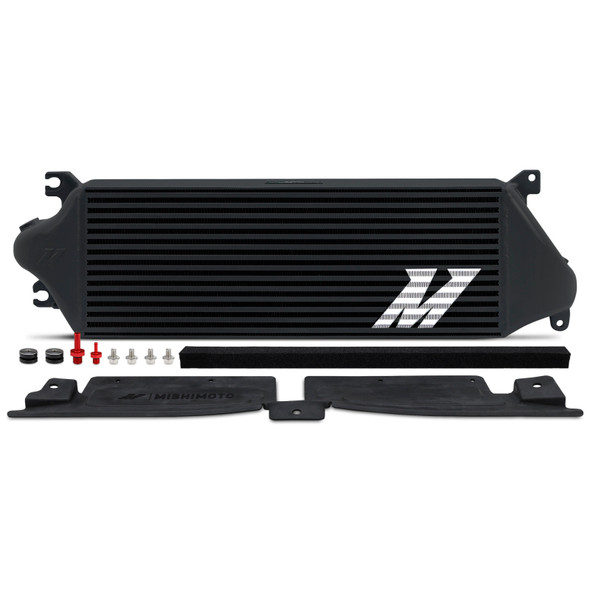
Mishimoto 2024+ Toyota Tacoma Performance Intercooler - Black - MISHIMOTOMMINT-TAC-24BK
Mishimoto
MSRP: $935.00$849.95Will this intercooler fit my 2024 Toyota Tacoma?This Mishimoto intercooler is engineered specifically to fit your 2024+ Toyota Tacoma, ensuring a direct and precise installation.What is the...MSRP: $935.00$849.95 -

Mishimoto Universal Air-To-Water Intercooler Single Pass (500hp) - MISHIMOTOMMINT-A2W-SP-1
Mishimoto
MSRP: $650.00$590.95MSRP: $650.00$590.95 -
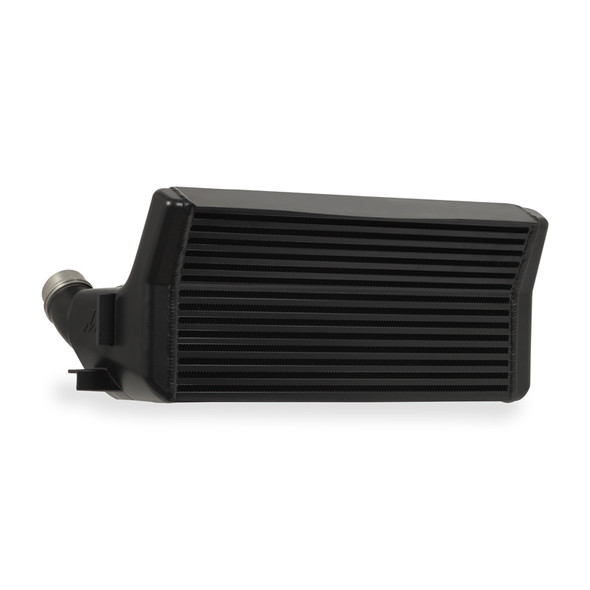
Mishimoto 2012-2016 BMW F22/F30 Intercooler (I/C ONLY) - Black - MISHIMOTOMMINT-F30-12BK
Mishimoto
MSRP: $693.00$629.95Will this intercooler fit my 2016 BMW 335i?This Mishimoto intercooler is specifically designed to fit your BMW F30 2012-2016 model, ensuring a direct and proper installation.Is professional...MSRP: $693.00$629.95 -

Mishimoto Universal Air-To-Water Intercooler Single Pass (1500hp) - Opposite Side Inlet/Outlet - MISHIMOTOMMINT-A2W-SPR-3
Mishimoto
MSRP: $1,305.00$1,185.95What are the key features of this Mishimoto intercooler?This air-to-water intercooler boasts a single-pass coolant design, delivering rapid circulation for optimal thermal management and sustained...MSRP: $1,305.00$1,185.95 -

aFe Bladerunner Intercooler Tubes Hot & Cold 17-18 Fiat 124 Spider I4-1.4L (t) - AFE46-20354-B
aFe
$584.98$584.98 -
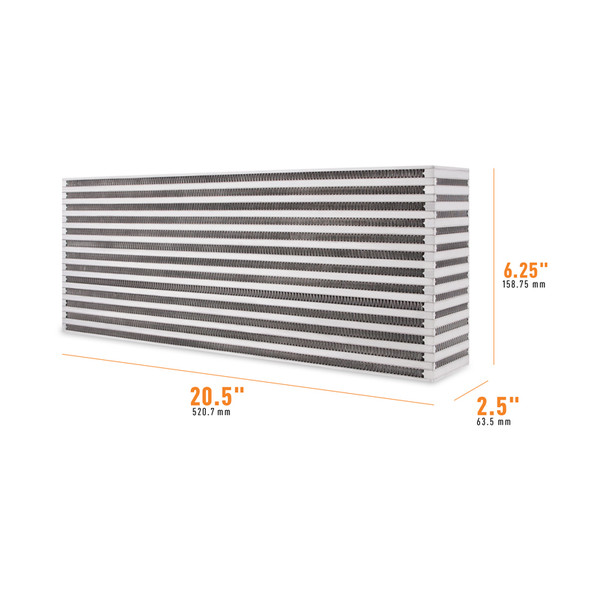
Mishimoto Universal Air-to-Air Intercooler Core - 20.5in / 6.25in / 2.5in - MSM-T-224572
Mishimoto
MSRP: $152.00$137.95What is the core size of the Mishimoto Universal Intercooler?The Mishimoto Universal Air-to-Air Race Intercooler features a substantial core measuring 20.5 inch by 6.25 inch by 2.5 inch for maximum...MSRP: $152.00$137.95 -
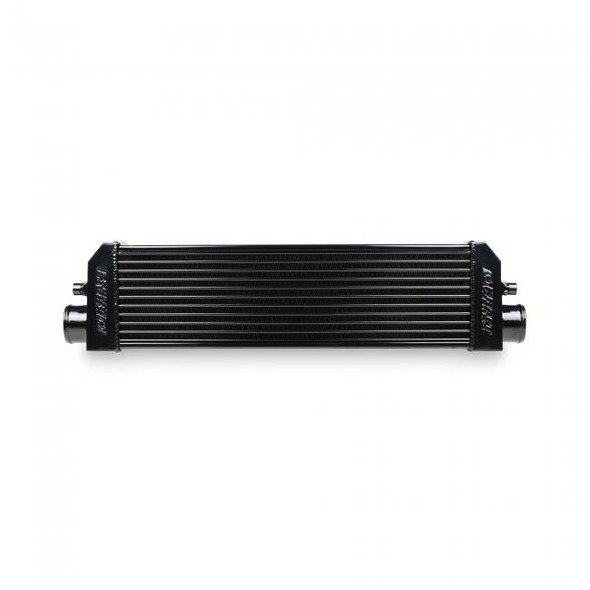
KraftWerks Core Size 22x7x3 - 2.5in Inlet/Outlet Universal Intercooler - Black - MSM-T-338005
KraftWerks
$319.91$319.91 -
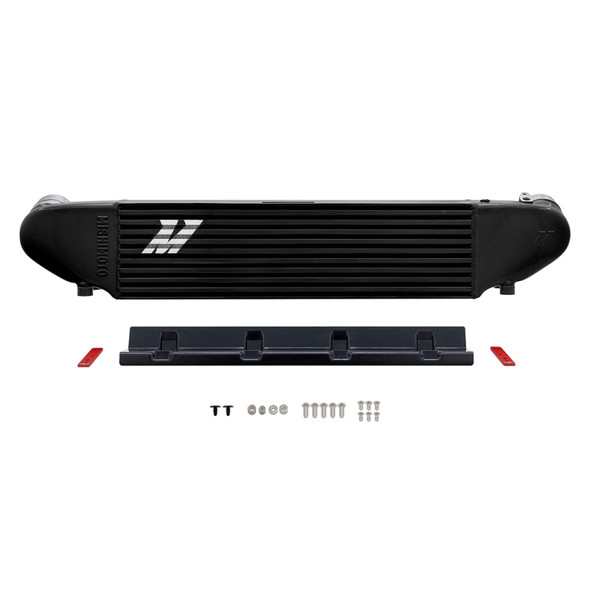
Mishimoto 2024+ Ford Mustang EcoBoost Performance Intercooler - Black - MSM-T-888763
Mishimoto
MSRP: $910.00$826.95Will this intercooler fit my vehicle?Confirm exact fitment for your specific vehicle model by checking our comprehensive compatibility guide before purchase.How difficult is the installation of this...MSRP: $910.00$826.95 -
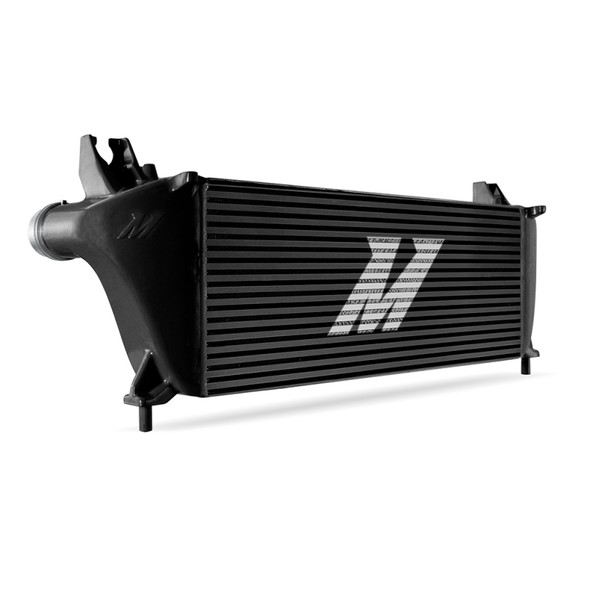
Mishimoto 19+ Ford Ranger 2.3L EcoBoost Performance Intercooler - Black - MSM-T-428054
Mishimoto
MSRP: $935.00$849.95MSRP: $935.00$849.95 -
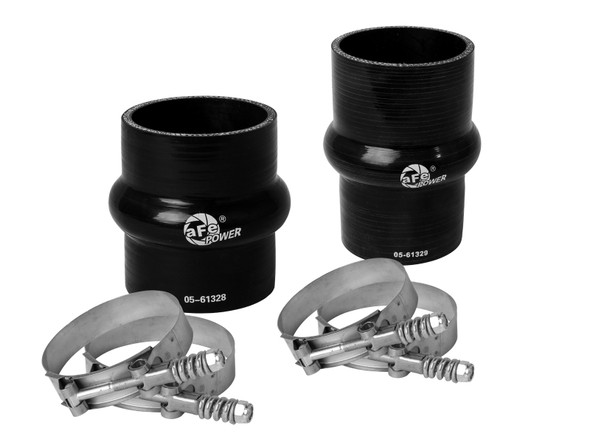
aFe BladeRunner Intercooler Coupling Kit for Hot Side Charge Pipe Ford Diesel Trucks 08-10 V8-6.4L - MSM-T-894987
aFe
$161.10Is this a direct bolt-on replacement for my factory intercooler?BladeRunner I/C & Tubes integrate with your factory hot charge pipe, requiring professional installation for optimal performance...$161.10
An intercooler is a heat exchanger placed between the turbocharger or supercharger and the intake manifold to reduce compressed charge air temperature, directly increasing air density and safe boost capacity. Motor Sport Mayhem stocks 336 intercoolers across 48 brands — from bolt-on OEM-replacement cores to full race-spec air-to-water systems — spanning $3.42 to $13,288.86 to cover every forced induction application.
Our Top Picks for Intercoolers
Every product below was hand-selected based on real-world thermal performance, construction quality, and proven results across street, track, and competition builds.
ADD Intercooler Upgrade Kits
Addictive Desert Designs | $1,499.99
A direct-fit intercooler upgrade engineered to maximize charge air cooling in high-demand off-road and performance truck applications.
- Designed for trucks running elevated boost under sustained load — critical for preventing heat soak on aggressive terrain or towing
AEM Water/Meth Systems
AEM | $699.95
Water-methanol injection delivers a charge-cooling effect that complements or replaces intercooler upgrades by chemically dropping intake temps before the manifold.
- Effective supplemental solution for diesel and gas forced induction builds where physical intercooler size is limited by chassis packaging
AFE Bladerunner I/C & Tubes
aFe | $2,036.00
A complete intercooler and charge pipe system that eliminates the factory core's thermal bottleneck while delivering matched airflow across the entire charge circuit.
- Full-system approach ensures tube diameter and core volume are sized together — avoiding the mismatched flow losses common with piecemeal upgrades
ABR Solenoids
All Balls Racing | $41.33
Precision-rebuilt solenoid components provide reliable electrical actuation for boost control and bypass valve systems in forced induction setups.
- Entry-level price point makes this ideal for restoring correct boost solenoid function without a full-system replacement
PA Alta Tensioner Stop
Alta | $99.45
A supercharger belt tensioner stop that prevents belt slip under high boost, directly protecting drive efficiency to the supercharger and therefore charge air delivery.
- Often overlooked but critical for supercharged applications — belt slip under load costs both power and supercharger longevity
AMS Intercoolers
AMS | $2,178.27
A front-mount intercooler kit with integrated bumper beam that replaces both the charge cooling and structural components in a single engineered assembly.
- AMS builds these to their own in-house flow-bench and dyno standards — a premium option for builds pushing past the factory intercooler's thermal limits
ATS 4000 Turbo Kits
ATS Diesel | $3,549.99
A complete turbo system upgrade that increases compressor outlet flow, requiring a matched intercooler upgrade to handle the higher charge volumes and temperatures produced.
- Turbo system upgrades like this make intercooler sizing critical — more airflow and higher discharge temps demand a proportionally larger core
AWE Intercoolers
AWE Tuning | $3,545.00
A performance intercooler kit engineered specifically for high-output turbocharged sports car applications where thermal consistency across repeated hard laps is non-negotiable.
- AWE's motorsport engineering background is evident in the bar-and-plate core construction and precision end-tank design that minimizes charge pressure drop
GBE Techni-Cooler Systems
Banks Power | $1,829.00
Banks Power's Techni-Cooler system combines an oversized intercooler core with optimized charge tubes to maximize inlet air density for diesel towing and performance applications.
- Banks has decades of diesel forced induction development behind this system — built for sustained high-load use, not just peak-power dyno pulls
BDD Turbos
BD Diesel | $3,918.95
A high-flow turbo upgrade for late-model diesel platforms that substantially increases compressor outlet pressure and temperature — making a properly sized intercooler upgrade the mandatory next step.
- BD Diesel's reputation in the diesel performance market is built on real-world durability — this is a foundational turbo upgrade that anchors a complete forced induction system build
How to Choose the Right Intercoolers
The single most important intercooler decision is matching core volume and flow capacity to your turbo or supercharger's actual output — undersizing the core causes heat soak and detonation risk, while oversizing adds pressure drop and throttle lag. Core construction, end-tank design, pipe diameter, and mounting location all determine whether your charge air temperatures drop consistently lap after lap or creep up after the first hard run.
Key Specifications
Core type matters more than brand name. Bar-and-plate cores offer higher thermal mass and are more resistant to heat soak under sustained load — preferred for track and diesel towing applications. Tube-and-fin cores are lighter and flow with slightly less restriction at low boost, making them common in street builds where steady-state heat soak is less of a concern. Neither is universally superior — match the core type to how you actually drive, not to what looks best in photos.
Core thickness and frontal area determine cooling capacity. A thicker core cools more aggressively but introduces more pressure drop. The goal is to maximize frontal area (the face the airflow hits) while keeping core depth proportional to your boost level. At under 15 psi, a 3.5-inch core is typically adequate. At 20+ psi on a performance build, you want a 4- to 5-inch core with a large frontal face to keep charge temps within 30–40°F of ambient.
End-tank geometry is frequently underestimated. Poorly designed end tanks create uneven flow distribution across the core, with center channels running hotter than outer channels. Quality intercoolers use dividers, baffles, or curved casting profiles to equalize flow. When evaluating core options, look for evidence of CFD-optimized end tanks — it's a real differentiator between OEM-replacement budget cores and purpose-engineered performance units.
Charge pipe diameter must be matched to core inlet and outlet port size. A large core plumbed with undersized charge pipes creates a flow bottleneck that eliminates the cooling benefit. Pipes should match or slightly exceed the intercooler port diameter, with smooth bends rather than sharp angles. If you're upgrading to a forced induction system with significantly higher airflow, plan to upgrade the full charge circuit — core, pipes, couplers — as a system rather than swapping the core alone.
Intercooler Core Sizing Reference by Boost and Power Target
| Boost Level (psi) | Power Target (whp) | Recommended Core Volume (in³) | Minimum Core Thickness (in) |
|---|---|---|---|
| 5–10 psi | Up to 250 whp | 750–1,000 in³ | 2.5" |
| 10–15 psi | 250–400 whp | 1,000–1,500 in³ | 3.0" |
| 15–20 psi | 400–600 whp | 1,500–2,200 in³ | 3.5" |
| 20–25 psi | 600–800 whp | 2,200–3,000 in³ | 4.0" |
| 25–30 psi | 800–1,100 whp | 3,000–4,000 in³ | 4.5"–5.0" |
| 30+ psi | 1,100+ whp | 4,000+ in³ or air-to-water | 5.0"+ or A2W system |
Price Guide
Entry ($3.42–$350): This range covers individual components — solenoids, couplers, clamps, tensioner hardware, and small upgrade parts that support an intercooler system rather than replace the core itself. Appropriate for restoring failed components or fine-tuning an existing setup on a budget.
Mid-range ($350–$2,000): The most populated tier and where the majority of complete intercooler kits and upgraded cores live. Street performance builds, diesel towing upgrades, and bracket-racing applications are well served here — brands like aFe, Mishimoto, and Banks Power deliver genuine performance gains without diminishing returns. This is where most enthusiasts should be shopping.
Premium ($2,000–$13,288.86): Purpose-built race cores, complete turbo system packages, air-to-water intercooler systems with integrated reservoirs and pumps, and OEM-fit kits for high-output European performance platforms occupy this range. Garrett, HKS, BorgWarner, AMS, and AWE Tuning justify these prices through measurable efficiency gains, race-validated construction, and in some cases OEM-supplier engineering heritage. If you're building past 600 whp or demanding consistent performance across a full race day, this investment is real — not just branding.
Who Is This For?
Intercoolers serve the broadest possible performance spectrum — from a diesel truck owner fighting heat soak on a mountain grade to a full-build race car running 30+ psi through a precision turbo.
Engine Performance — 8.7/10
Engine performance is the highest-rated use case in our catalog at 8.7 out of 10 across 198 products, and the reason is straightforward: every degree of charge air temperature reduction translates directly into denser intake charge, more oxygen per stroke, and safer ignition timing advance. A quality intercooler upgrade is one of the most mechanically direct power-per-dollar improvements available on any forced induction engine. It also reduces knock risk, which is especially critical as ethanol blends and pump gas quality vary regionally.
Racing Competition — 8.2/10
Scoring 8.2 out of 10 across 167 products, racing competition builds demand intercoolers that perform consistently across an entire event — not just on the first run. Heat soak in competition means slower lap times, reduced power under load, and potential detonation at exactly the wrong moment. Bar-and-plate race cores, air-to-water systems with dedicated reservoirs, and pre-cooled ice water setups are all within this category and all serve competitive racing applications where thermal recovery between runs is limited.
Drag Racing — 8.0/10
Drag racing scores 8.0 out of 10 across 184 products, reflecting the discipline's unique thermal demands — short, explosive power events followed by brief cool-down periods. Air-to-water intercoolers with ice water reservoirs are common in bracket and heads-up drag racing specifically because they can pre-chill charge air below ambient, providing a significant density advantage at the starting line. Consistent charge temps run to run are what separate professional drag setups from amateur builds that go slower every pass.
Street Performance — 8.0/10
Tied at 8.0 out of 10 across 200 products, street performance represents the largest absolute product count in our intercooler catalog. Street builds benefit from intercooler upgrades primarily in high-ambient-temperature conditions, aggressive daily driving, and spirited back-road use where factory intercoolers routinely heat-soak within minutes. Direct-fit upgrade kits that retain factory charge pipe routing are the dominant solution here — they deliver measurable IAT reductions without requiring custom fabrication or tuning changes.
Track / Autocross — 8.0/10
Track and autocross applications score 8.0 out of 10 across 183 products, with the key differentiator being sustained thermal performance under repeated hard acceleration. Unlike drag racing's single-pass demand, track driving means the intercooler must recover between corners rather than between rounds — frontal area and core mass both matter here. Autocross adds the complication of low vehicle speeds reducing ram airflow through the core, making high-efficiency fin designs and fan-assisted cooling increasingly relevant.
Trusted Intercoolers Brands We Carry
The brands dominating this category earned their positions through measurable performance engineering, not marketing. Mishimoto has built a reputation on fully tested bar-and-plate cores with lifetime warranty backing across hundreds of direct-fit applications. Garrett and BorgWarner bring genuine OEM turbocharger supplier engineering to the aftermarket — their intercooler and turbo system products reflect the same compressor map precision applied to OEM platforms worldwide. aFe's Bladerunner program combines intercooler cores with full charge pipe systems, addressing the complete thermal circuit rather than just the core. AMS Performance validates every intercooler kit on their in-house dyno before release — a standard that separates engineered solutions from commodity cores. Banks Power's diesel intercooler work spans decades of real-world commercial and performance use, and HKS brings Japanese OEM-quality construction to high-output turbocharged sport compact builds. Together these brands cover every power level, application, and budget in forced induction cooling.
Frequently Asked Questions
Are air-to-air intercoolers good?
Air-to-air intercoolers are highly effective for most street, track, and drag racing applications and remain the dominant design in aftermarket performance. They work by routing hot compressed charge air through a core exposed to ambient airflow, transferring heat into the passing air. The key advantages are simplicity, low maintenance, and no parasitic pump losses. The limitation is that cooling efficiency drops at low vehicle speeds or in high ambient temperatures — conditions where air-to-water systems have an edge. For the majority of forced induction builds under 800 whp, a properly sized air-to-air core is the most cost-effective and reliable solution available.
Are boost pipes and charge pipes the same thing?
Yes — boost pipes and charge pipes refer to the same components: the tubing that carries compressed air from the turbocharger outlet through the intercooler and into the intake manifold. The terms are used interchangeably in the aftermarket, though some builders use "boost pipes" specifically for the hot side (compressor outlet to intercooler inlet) and "charge pipes" for the cold side (intercooler outlet to throttle body). Diameter matters significantly — undersized pipes create a flow bottleneck that increases pressure drop and negates intercooler gains. Pipe diameter should be sized to match or exceed the intercooler's inlet and outlet port dimensions, and all bends should use mandrel-bent tubing to avoid flow-restricting kinks. When upgrading an intercooler core, always evaluate the full charge circuit together.
Are boost controllers worth it?
Electronic boost controllers are absolutely worth it on any build where you need precise, repeatable boost pressure across the RPM range — which is most performance turbo builds beyond basic street driving. A manual boost controller is inexpensive and functional but delivers a fixed wastegate spring-based boost curve that varies with RPM, temperature, and altitude. An electronic boost controller allows you to program boost by gear, RPM, and throttle position, enabling safer high-boost strategies on track while protecting the drivetrain on street. For builds running upgraded intercoolers and modified engine management, a boost controller is part of a complete forced induction system — not an optional accessory. The alternative is leaving boost control to a stock solenoid that was never calibrated for your new power level.
Are blow-off valves bad for your engine?
Blow-off valves (BOVs) are not harmful to your engine when correctly specified and installed — they protect the turbocharger by venting excess boost pressure during throttle lift rather than forcing that pressure surge back through the compressor wheel. On mass airflow (MAF) sensor-equipped engines, an atmospheric BOV that vents to atmosphere can cause a momentary rich condition because metered air is released before combustion, which is why many OEM and tuner setups use recirculating bypass valves instead. A properly calibrated recirculating BOV or bypass valve eliminates both the compressor surge risk and the fueling disruption. The only scenario where a BOV causes problems is when it's incorrectly sized, opens at the wrong pressure threshold, or fails to seal properly at boost — all of which are fitment and quality issues, not an inherent design flaw.
Are boost solenoids universal?
Boost solenoids are not universal — they vary in port size, flow rate, operating frequency, and voltage requirements, all of which must match your specific boost control system. Most electronic boost controllers use a 3-port or 4-port solenoid operating at 12V DC, but the critical spec is the duty cycle frequency (typically 15–30 Hz) and the flow coefficient, which determines how quickly the solenoid can respond to boost control commands. Using a mismatched solenoid results in erratic boost, boost creep, or boost spikes that can cause detonation and damaged engine components. When replacing a boost solenoid, match the original's port dimensions, flow rating, and operating frequency — or consult your boost controller manufacturer's recommended solenoid list. On older or high-mileage forced induction systems, solenoid degradation is a common cause of inconsistent boost that's often misdiagnosed as a wastegate or intercooler problem.
Building something specific? Our performance specialists can help you select the right Intercoolers for your application — street, track, or full race build.