
Gauges
- Product
- Qty in Cart
- Quantity
- Price
- Subtotal
-
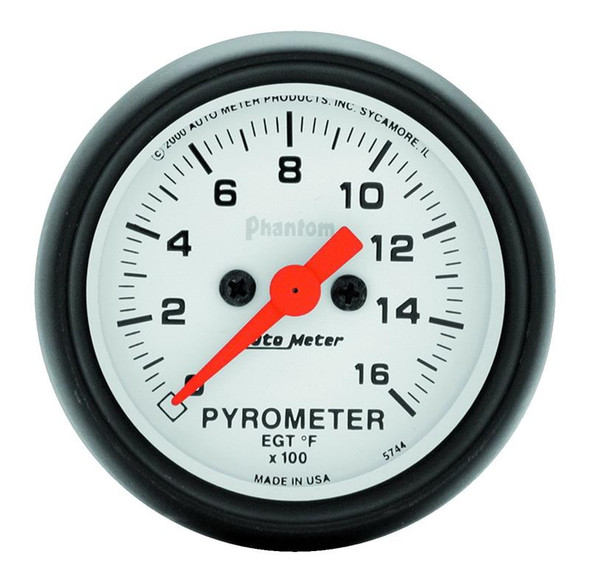 $250.17
 -
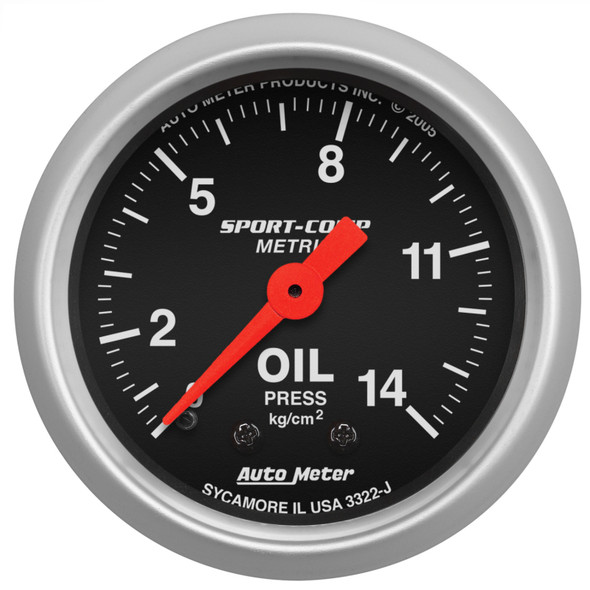
Autometer Sport Comp 52.4 mm Mechanical 0-14 Kg/ Cm2 Oil Pressure Metric Gauge - AUTOMETER3322-J
AutoMeter
$90.15$90.15 -

Autometer Marine Carbon Fiber 2-1/16in 240-33 Ohms Electric Fuel Level Gauge - AUTOMETER200760-40
AutoMeter
$59.66$59.66 -

Autometer Designer Black Fuel Level Gauge 2-1/16in Electrical 70 Ohms E / 10 Ohms F - 90 Deg Sweep - AUTOMETER1423
AutoMeter
$64.95$64.95 -
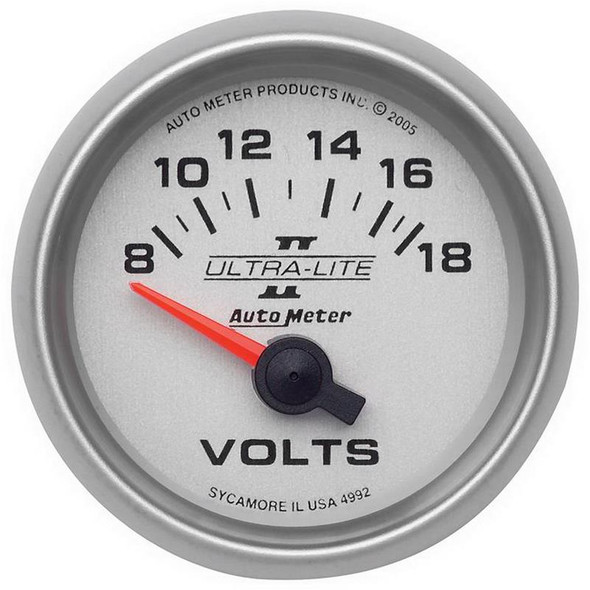
Autometer Ultra-Lite II 52mm 8-18 Volt Short Sweep Electronic Voltmeter - AUTOMETER4992
AutoMeter
$90.25$90.25 -
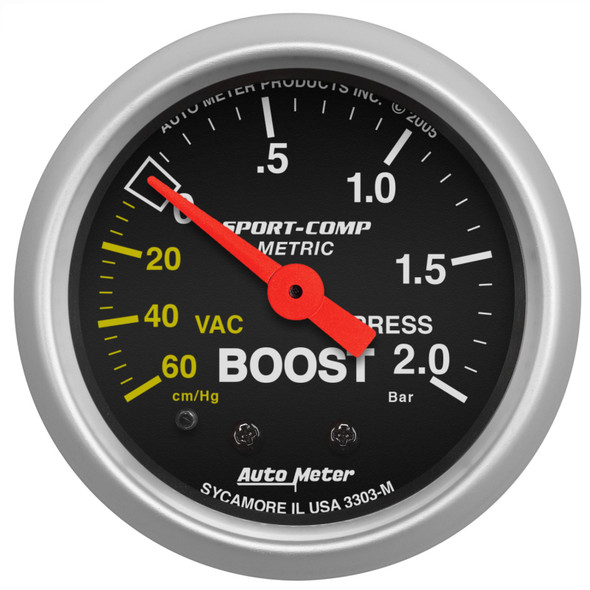
Autometer Sport-Comp 52mm 60cm/HG -2.0 Bar Mechanical Boost Gauge - AUTOMETER3303-M
AutoMeter
$95.33$95.33 -
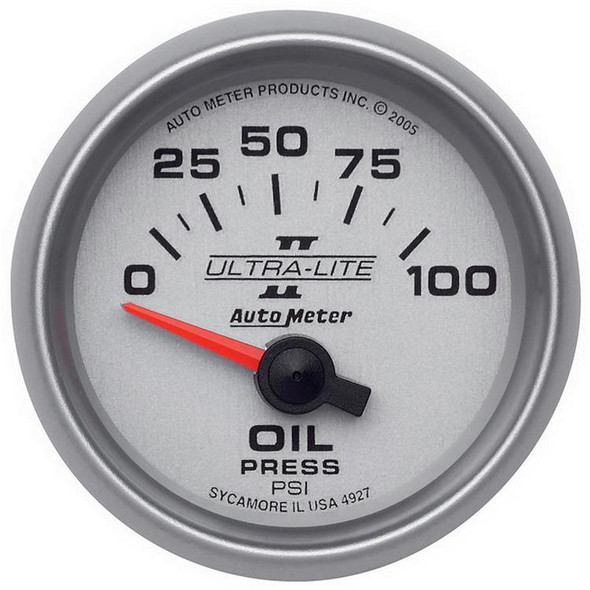
Autometer Ultra-Lite II 52mm 0-100 PSI Electrical Oil Pressure Gauge - AUTOMETER4927
AutoMeter
$130.19$130.19 -

Autometer Z Series 2-1/16in 4K PSI High Pressure Oil Pump Gauge w/ Digital Stepper Motor - AUTOMETER2696
AutoMeter
$199.80$199.80 -
 $305.66
 -

Autometer Carbon Fiber 52mm 140-300 Deg F Electronic Oil Temperature Gauge - AUTOMETER4748
AutoMeter
$96.58$96.58 -
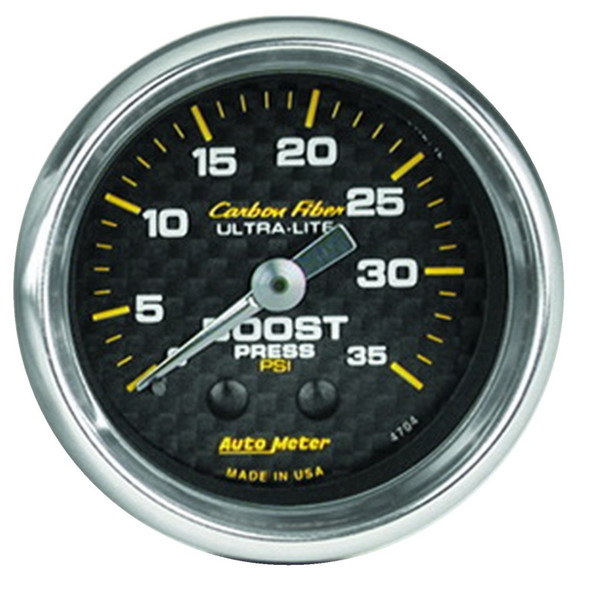 $105.80
 -

Autometer Z Series 52mm Black Digital 5-100 PSI Fuel Pressure Gauge - AUTOMETER6363
AutoMeter
$305.66$305.66
Performance gauges are the data backbone of any serious build — they translate real-time engine, fuel, boost, and exhaust parameters into actionable readings that protect your powertrain and sharpen your tune. Motor Sport Mayhem carries 338 in-stock gauges across 36 brands, spanning $9.60 entry-level senders to $2,151.95 full digital race dashes, so every application from daily street driving to full competition has a precise solution.
Our Top Picks for Gauges
Every product below was hand-selected based on measurable performance output, installation reliability, and proven real-world results across street and competition builds.
AEM Digital Race Dash
AEM | $2151.95
A GPS-enabled, logging-capable carbon fiber digital display that consolidates every critical channel into a single high-resolution race dash via CAN bus input.
- CAN-only input architecture keeps wiring clean and data transmission latency under 10ms — essential for real-time logging at high RPM
Aeromotive Fuel Pressure Gauge
Aeromotive | $58.74
A 0–15 PSI mechanical fuel pressure gauge purpose-built for direct-line monitoring of low-pressure EFI and carbureted fuel systems.
- Liquid-filled bourdon tube dampens needle flutter under high-vibration conditions, maintaining read accuracy within ±1% full scale
aFe Advanced Gauge Display
aFe | $522.00
A 5.5-inch digital multi-parameter monitor designed specifically for diesel truck platforms, reading boost, EGT, DEF, and transmission temp simultaneously.
- OBD-II and direct sensor integration allows multi-channel diesel-specific parameter monitoring without cutting factory wiring
Air Lift Load Controller II Single Gauge
Air Lift | $336.99
A dedicated single-gauge air management controller with a built-in low-pressure safety threshold, engineered for air suspension systems requiring precise in-cab PSI control.
- Integrated 5 PSI minimum pressure switch protects air bags from bottoming damage during rapid deflation cycles
Alta Gauge Pod
Alta | $37.40
A direct-fit gauge pod accepting 52mm and 60mm gauges, precision-molded to OEM dash contours for a factory-integrated look without permanent modification.
- ABS plastic construction with textured finish matches factory interior grain — maintains full gauge visibility without obstructing forward sightlines
AutoMeter Jeep Direct-Fit 7-Piece Dash Kit
AutoMeter | $1401.46
A complete seven-gauge direct-fit kit engineered for the Jeep Wrangler YJ dash, replacing every OEM instrument with calibrated analog gauges in a single installation.
- Direct-fit harness eliminates adapter splicing — plug-and-play accuracy across all seven channels from a single matched sender set
Banks Power Dual Gauge Pod Suction Mount
Banks Power | $68.00
A windshield-mount dual gauge pod that supports both the iDash 1.8 monitor and a standard 52mm gauge simultaneously without drilling or permanent hardware.
- Heavy-duty suction cup rated for high-vibration diesel applications keeps both gauge faces at optimal viewing angle through sustained off-road or towing loads
BBK O2 Sensor Wire Harness Extensions
BBK | $74.99
A 16-inch OEM-connector O2 sensor extension harness pair that resolves sensor relocation conflicts created by long-tube headers or exhaust upgrades.
- Factory-spec weatherproof connectors and shielded wiring preserve signal integrity and prevent ECU fault codes after exhaust system modifications
BD Diesel Low Fuel Pressure Alarm Kit
BD Diesel | $98.95
A red LED warning system that triggers a high-visibility alarm the moment fuel pressure drops below the safe threshold on 24-valve diesel applications.
- Pressure-triggered LED alert responds faster than an analog needle sweep — critical for catching injection pump starvation before catastrophic failure
Bikers Choice Electronic Speedometer
Bikers Choice | $295.99
A 5-inch black-face electronic speedometer built as a direct OEM replacement for Softail applications, delivering clean analog readout from a magnetic pickup signal.
- Electronic sender compatibility eliminates the mechanical cable failure point while maintaining period-correct analog aesthetics for custom builds
How to Choose the Right Gauges
The single most important factor in gauge selection is matching sensor technology to application — a mechanical gauge plumbed directly to oil pressure is fast and reliable for a street car, but a vibrating tube routed through a race chassis firewall is an oil fire waiting to happen; that application demands an electric sender with an isolated display. Beyond that, accuracy class, sweep range, environmental rating, and communication protocol (analog voltage, digital CAN, or serial data) determine whether your investment actually protects the engine or just decorates the dashboard.
Key Specifications
Gauge type and sensing method: Mechanical gauges use direct fluid or pressure connection through a bourdon tube — they are simple, require no power, and respond instantly, but they introduce fluid routing risk and are susceptible to needle flutter under vibration. Electric gauges use a remote sender that converts pressure, temperature, or flow into a resistance or voltage signal transmitted to the display — cleaner install, vibration-resistant, but accuracy depends entirely on sender quality. Digital displays using CAN bus or serial data can log, display, and alarm on dozens of channels simultaneously with sub-10ms update rates, making them the standard for serious track and competition builds.
Accuracy and calibration: Consumer-grade gauges typically carry ±3–5% full-scale accuracy; motorsport-grade units are specified at ±1–2% full scale. For critical channels like oil pressure and wideband air-fuel ratio, that difference matters — a 3% error on a 100 PSI oil pressure gauge is 3 PSI of ambiguity, which is the margin between healthy and cavitating. Look for gauges that reference NIST-traceable calibration or list specific accuracy classes, and be skeptical of budget units that list no accuracy specification at all.
Temperature and environmental rating: Under-hood gauge senders and probes operate in ambient temperatures that can exceed 250°F around headers and turbine housings; exhaust gas temperature probes in forced induction applications must survive continuous EGT readings above 1600°F. Type-K thermocouple sensors are the standard for EGT because they maintain accuracy to 2300°F — thermistors are cheaper but degrade rapidly above 300°F. For interior-mounted displays, backlighting brightness (measured in nits) determines daytime readability; anything under 200 nits will wash out in direct sunlight, which is a serious problem on a track car with a stripped interior. If you're running a forced induction setup, EGT and boost monitoring are non-negotiable.
Diameter, mounting, and sweep: The industry standard gauge diameter is 52mm (2-1/16 inch), which fits the overwhelming majority of gauge pods, pillar mounts, and dash cutouts — this is the baseline for cross-compatibility. Larger 60mm and 80mm formats offer improved readability at a glance but require dedicated mounting solutions. Gauge sweep matters for usability: a 270-degree sweep gives finer graduation resolution per PSI or degree than a 180-degree sweep, reducing read ambiguity. For fuel delivery and boost monitoring in particular, a full 270-degree sweep with clear hash marks at critical thresholds is worth specifying.
Performance Gauge Accuracy and Sensor Type Reference
| Parameter | Recommended Sensor Type | Typical Accuracy Class | Critical Threshold / Notes |
|---|---|---|---|
| Oil Pressure | Electric resistive sender (motorsport) or mechanical (street) | ±1–2% FS (motorsport) / ±3% FS (street) | Alarm set point: 10 PSI at idle; 10 PSI per 1000 RPM minimum at speed |
| Boost / Vacuum | Electric pressure transducer (0–5V) | ±1% FS | Range: −30 inHg to +30 PSI covers most street/track boost applications |
| Exhaust Gas Temp (EGT) | Type-K thermocouple + amplifier | ±2.2°C or ±0.75% reading | Safe continuous limit: ~1550°F gasoline; ~1300°F diesel; redline alarm recommended |
| Air-Fuel Ratio (Wideband) | Bosch LSU 4.9 wideband lambda sensor | ±0.1 lambda (±1.5 AFR) | Stoichiometric = 14.7:1 gasoline; target 12.5–13.0:1 WOT naturally aspirated; 11.5–12.5:1 forced induction |
| Coolant / Oil Temp | NTC thermistor or PT100 RTD (high accuracy) | ±2–3°C (thermistor) / ±0.5°C (RTD) | Oil temp alarm: 260°F; coolant alarm: 230°F — RTD preferred for logged data |
| Fuel Pressure (EFI) | Stainless steel diaphragm transducer | ±0.5–1% FS | EFI base pressure typically 43–58 PSI; vacuum/boost referenced — monitor under full load |
Price Guide
Entry ($9.60–$80): Mechanical pressure and temperature gauges, basic analog single-channel displays, sender extensions, and gauge mounting hardware live here. These are legitimate tools for non-critical monitoring channels — transmission temp, coolant temp on a stock engine, or tire pressure verification. Accuracy is typically ±3–5% full scale, which is acceptable when you're trending data rather than tuning against it. Do not use budget units on oil pressure or wideband AFR where precision is safety-critical.
Mid-range ($80–$600): This is where the majority of serious street and track builds land, and for good reason. Electric sender-based analog gauges with ±1–2% accuracy, wideband O2 controllers with Bosch LSU 4.9 sensor integration, multi-channel digital displays, and diesel-specific multi-parameter monitors all populate this range. Build quality jumps substantially — machined aluminum bezels, vibration-dampened movements, and weatherproof sender connectors are standard at this tier. AutoMeter, Innovate Motorsports, BBK, and Haltech all have strong representation here.
Premium ($600–$2151.95): Full digital race dashes with CAN bus logging, GPS lap timing integration, multi-channel wideband controllers with external controller modules, and complete direct-fit multi-gauge kits belong in this tier. The cost is justified when you're making tuning decisions based on logged data, running a dedicated track or competition car, or replacing an entire instrument cluster with calibrated motorsport-grade instruments. AEM and Haltech dominate this space — their hardware is spec'd for professional motorsport and the data resolution reflects it.
Who Is This For?
Performance gauges serve an exceptionally wide range of builders — from weekend autocrossers monitoring a single boost channel to professional race teams logging 40+ parameters per lap — and the usage data from our product catalog reflects exactly that spread.
Engine Performance — 8.3/10
This is the highest-scoring use case in the entire category, and it makes complete sense: gauges are first and foremost an engine protection and tuning tool. Monitoring oil pressure, coolant temperature, oil temperature, and air-fuel ratio in real time gives you the data to catch a developing failure before it becomes a rebuild. For any modified engine — especially one with camshaft, compression, or engine component changes — gauges aren't optional equipment.
Easy DIY Install — 8.0/10
The high install-ease score reflects how the industry has evolved — the majority of modern electric gauges use plug-and-play harness connectors, pre-calibrated senders, and direct-fit mounting pods that eliminate custom fabrication. Most single-channel electric gauge installations require a sender tap, a switched 12V power source, and a ground — a competent home builder can complete a four-gauge pillar pod installation in under three hours with basic hand tools. Digital CAN-based dashes take longer to configure but come with guided software setup that previously required a professional calibration shop.
Track / Autocross — 7.6/10
Track applications demand gauges that are readable at a glance under acceleration loads and bright ambient light, which pushes builders toward high-nit digital displays, large-sweep analog faces, and critical-channel alarm outputs rather than just continuous monitoring. Autocross builds often prioritize compact mounting solutions — pillar pods and single-channel wideband controllers — while dedicated circuit cars gravitate toward full digital dashes with logging for post-session data review. Either way, EGT, oil pressure, and AFR are the three non-negotiable channels for any car that sees sustained high-RPM operation.
Racing Competition — 7.6/10
Competition builds score identically to track/autocross here, but the application requirements diverge sharply at the product level — sanctioned racing often mandates data logging and specific sensor certifications, and the consequences of a missed warning are immediate retirement from the event rather than a slow cool-down lap. This is where CAN bus digital dashes with onboard logging, dedicated wideband controllers with controller-area-network output, and multi-sensor alarm systems become the correct specification rather than a luxury upgrade.
Street Performance — 7.4/10
Street performance scores slightly lower than track applications simply because the average street build doesn't require the same data density — but any modified street car still benefits substantially from oil pressure, boost, and coolant temperature monitoring beyond what OEM warning lights provide. A stock oil pressure light triggers at roughly 4–7 PSI depending on the vehicle, which is already engine-damaging territory; a calibrated gauge with an adjustable alarm set at 10 PSI gives you a meaningful margin. For turbocharged street builds, boost monitoring also confirms the tune is behaving as expected under daily driving conditions.
Trusted Gauges Brands We Carry
The brands that dominate this category earned their position through engineering precision and motorsport validation, not marketing spend. AutoMeter has been producing SAE-certified analog and digital gauges for over 60 years, with stepper-motor movements and sender calibrations that are recognized as the benchmark for analog accuracy in motorsport. AEM Electronics built their gauge line from the same engineering foundation as their standalone ECU and wideband controller platforms, meaning their display hardware and sensor calibrations are designed to work as an integrated data system. Innovate Motorsports is the wideband specialist — their proprietary digital sensor control technology and Bosch LSU 4.9 integration set the standard for AFR measurement accuracy in the enthusiast market. Haltech approaches gauges from the ECU side, producing digital displays that communicate natively with their engine management systems via CAN for seamless multi-channel logging. BBK and OMIX serve critical supporting roles — BBK focusing on OEM-spec sensor harness extensions that maintain signal integrity after exhaust modifications, and OMIX delivering accurate direct-replacement instruments for off-road applications where factory gauges have long since failed. Hardline and BLOX Racing round out the accessible end of the catalog with mechanical gauges and mounting hardware that deliver reliable baseline monitoring at a price point that makes sense for budget-conscious builds.
Frequently Asked Questions
Are AutoMeter gauges accurate?
AutoMeter gauges are among the most accurate analog instruments available for motorsport applications, with most of their performance-grade units carrying a ±1% full-scale accuracy specification — that's tighter than many OEM instrument clusters. Their stepper-motor movements eliminate the mechanical hysteresis that causes traditional air-core movements to read differently on the way up versus on the way down. Sender calibration is the other half of the accuracy equation: AutoMeter uses matched sender-and-gauge pairs calibrated as a system, which is why mixing third-party senders with their gauges can degrade accuracy. For critical channels like oil pressure and coolant temperature, their motorsport-grade units are a legitimate professional tool, not just a visual upgrade.
Are all wideband O2 sensors the same?
No — and the differences are significant enough to affect your tune. The sensor element itself matters most: the Bosch LSU 4.9 is the industry-standard planar lambda sensor used by professional tuners and OEM calibrators because of its ±0.007 lambda accuracy and fast 150ms response time from cold start. Budget wideband kits often use older Bosch LSU 4.2 sensors or generic equivalents with slower response times and higher drift over thermal cycles, which produces inaccurate AFR readings under transient throttle conditions — exactly when accurate data matters most. The controller hardware is equally important: the analog-to-digital conversion quality and the calibration algorithm determine how accurately the sensor output is translated into a lambda or AFR reading on the display. For any application where you're tuning a standalone ECU or evaluating air-fuel ratio under boost, use a unit built around the LSU 4.9 with a purpose-designed digital controller.
Are boost gauges necessary?
On any turbocharged or supercharged application, a boost gauge is one of the most valuable instruments you can install — not because it's legally required, but because boost pressure is the single most direct indicator of whether your forced induction system is functioning within its intended operating range. An OEM boost warning light, if present at all, typically triggers only at extreme overboost and does nothing to indicate underboost caused by a boost leak, wastegate malfunction, or intercooler failure. A calibrated boost gauge shows you both peak boost and boost decay behavior during a pull — a properly functioning system holds boost flat to redline, while a boost leak shows up as a pressure drop above a certain RPM threshold. For turbocharged builds making any sort of power target, a boost gauge is a tuning tool, not an accessory.
Are digital tachometers accurate?
Modern digital tachometers are highly accurate — typically within ±0.1% of actual RPM — because they count ignition or reluctor wheel pulses directly rather than relying on an analog voltage sweep, eliminating the mechanical inaccuracy inherent in traditional air-core movements. The critical setup variable is pulse-per-revolution configuration: a digital tach must be programmed with the correct number of cylinders or trigger pulses per revolution for your specific ignition system, or the displayed RPM will be a multiple of the actual value. Most performance digital tachs accept input from points, electronic ignition, coil negative terminal, or direct CAN data from an ECU — match the input type to your ignition system for best results. For high-revving engines above 8000 RPM, digital displays with fast refresh rates (above 20Hz) are preferable to analog steppers, which can lag visually at extreme RPM.
Are aftermarket wheel speed sensors any good?
Quality varies considerably by application and manufacturer — OEM-replacement wheel speed sensors from reputable suppliers match factory signal output specifications and are fully compatible with ABS and traction control systems, but cheap off-brand units often produce erratic signal patterns that trigger fault codes or cause ABS module miscommunication. The sensor type matters: passive variable-reluctance sensors generate their own voltage from wheel rotation and work reliably at speed, but active Hall-effect sensors require a 5V supply and produce a cleaner square-wave signal at low speeds, which is why all modern ABS systems use active sensors. For motorsport data logging — tracking individual wheel speeds for traction control input or yaw rate calculation — sensor accuracy and signal consistency are critical; this is an application where matching the sensor specification to your data logger's input requirements is essential. If you're replacing a failed sensor for street use, stick with OEM-spec units from established suppliers and verify the air gap specification during installation.
Building something specific? Our performance specialists can help you select the right Gauges for your application — street, track, or full race build.