
Speakers
- Product
- Qty in Cart
- Quantity
- Price
- Subtotal
-

Rockford Fosgate M0 6.5in. Element Ready Moto-Can Speakers (Pair) - M0WL-65MB
Rockford Fosgate UTV
$749.99Rockford Fosgate M0 6.5in. Element Ready Moto-Can Speakers (Pair)$749.99 -
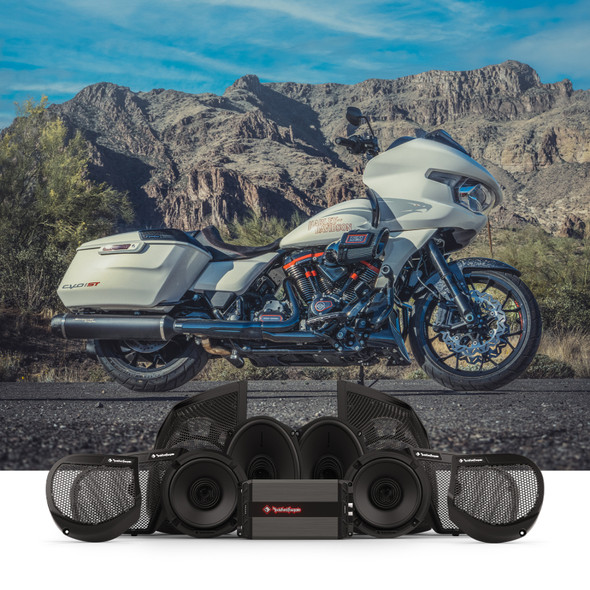
Rockford Fosgate 24+ Harley-Davidson Stage 3 Audio Kit - HD24-STG3
Rockford Fosgate
$2,449.99How do I know if the ROC Stage 3 Audio Kit is compatible with my vehicle?Confirm vehicle fitment using our comprehensive compatibility checker to ensure seamless integration of these premium speakers...$2,449.99 -

Rockford Fosgate 24+ Harley-Davidson TMS 2.0 6.5in. Motorcycle Speakers - TMS24-65
Rockford Fosgate
$599.99Will these speakers fit my specific vehicle model?Confirm exact speaker fitment for your vehicle model using our compatibility guide to ensure proper installation and optimal performance.Are these...$599.99 -
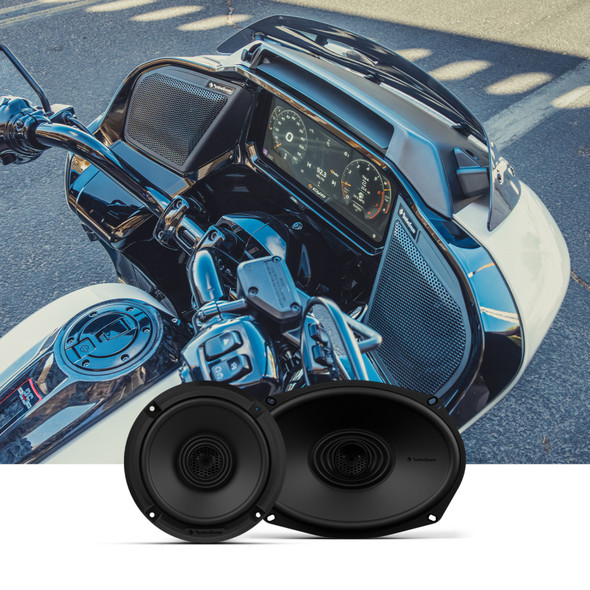
Rockford Fosgate 24+ Harley-Davidson 150 Watt TMS 6.5in. Speaker Kit - TMS14-65
Rockford Fosgate
$499.99Will these speakers fit my car?ROC Speakers require you to confirm specific vehicle fitment for proper installation and optimal audio performance.Do I need a professional to install these...$499.99 -
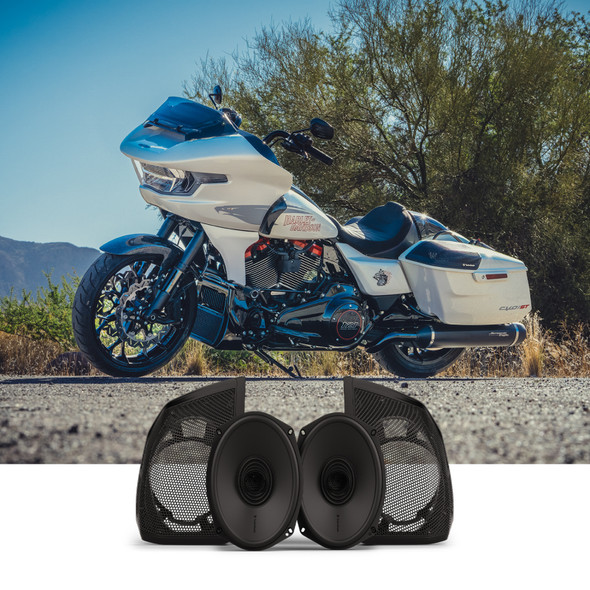
Rockford Fosgate 24+ Harley-Davidson TMS Cut-In Baglid Speaker Kit - HD24BL69
Rockford Fosgate
$849.99What is the frequency response range of the Rockford Fosgate ROC Speakers?Rockford Fosgate ROC Speakers deliver unparalleled audio fidelity with a wide frequency response from 50Hz to 20kHz for...$849.99 -
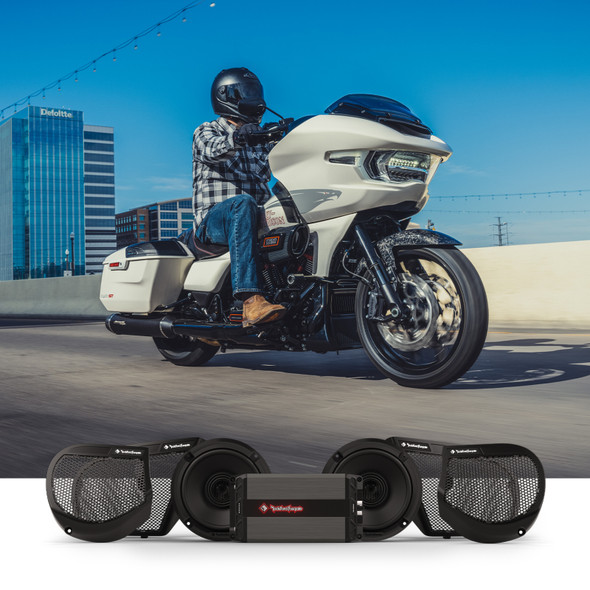
Rockford Fosgate 24+ Harley-Davidson Stage 2 Audio Kit - HD24-STG2
Rockford Fosgate
$1,599.99What vehicles is the ROC Stage 2 Audio Kit compatible with?The ROC Stage 2 Audio Kit is designed for plug-and-play installation and requires you to confirm specific vehicle fitment before purchase...$1,599.99 -

Rockford Fosgate 18+ Ranger Stage-5 Audio System (Gen-2) - RNGR18-STG5
Rockford Fosgate UTV
$2,749.99What kind of sound quality can I expect from the ROC UTV Stage 5 Stereo Kit?These UTV speakers deliver crystal-clear audio that cuts through engine noise, achieving powerful bass for an immersive...$2,749.99 -
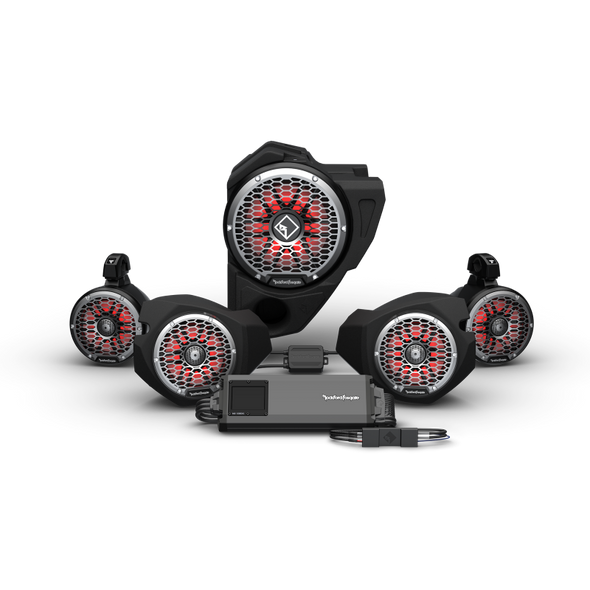
Rockford Fosgate 14+ RZR Stage-5 Audio System For Ride Command (Gen-3) - RZR14RC-STG5
Rockford Fosgate UTV
$2,949.99Are these speakers compatible with my UTV?Confirm vehicle fitment meticulously to ensure these UTV Stage 5 Stereo Kit speakers integrate perfectly with your specific machine.Can I install these...$2,949.99 -
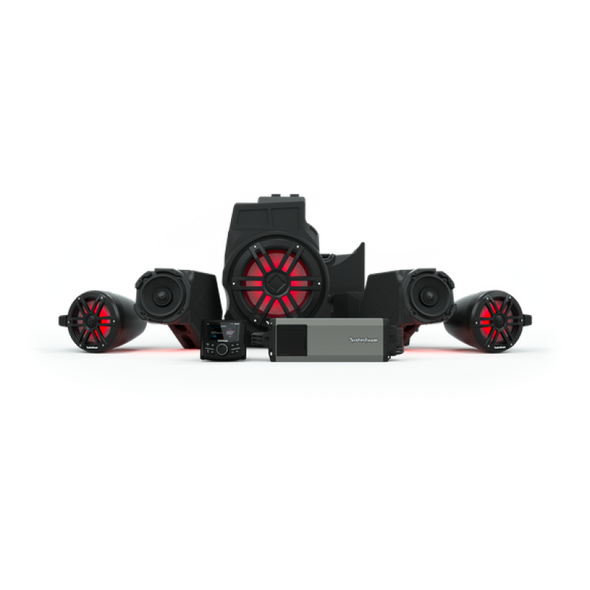
Rockford Fosgate 19+ Polaris RZR Pro XP/ Pro R/ Turbro R Stage 4 Audio System - RZR19PXP-STG4
Rockford Fosgate UTV
$2,214.15Will these speakers fit my UTV?Confirm fitment with your specific vehicle model and year to ensure seamless integration of these UTV speakers.How difficult is the installation process?Professional...$2,214.15 -
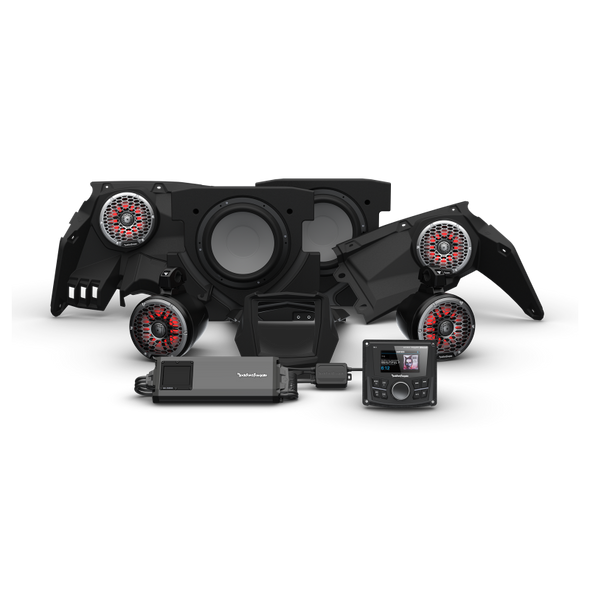
Rockford Fosgate 17+ Can-Am X3 Stage-5 Audio System (Gen-3) - X317-STG5
Rockford Fosgate UTV
$4,049.99How do I confirm my vehicle is compatible with this kit?Confirm fitment with your vehicle using our detailed compatibility checker before purchase for a guaranteed perfect integration.Is professional...$4,049.99 -

Rockford Fosgate 17+ Can-Am X3 Stage-4 Audio System (Gen-3) - X317-STG4
Rockford Fosgate UTV
$2,949.99What is the best way to install these speakers?Professional installation is strongly recommended to ensure optimal fitment and performance of these UTV speakers.Will these speakers sound good over my...$2,949.99 -
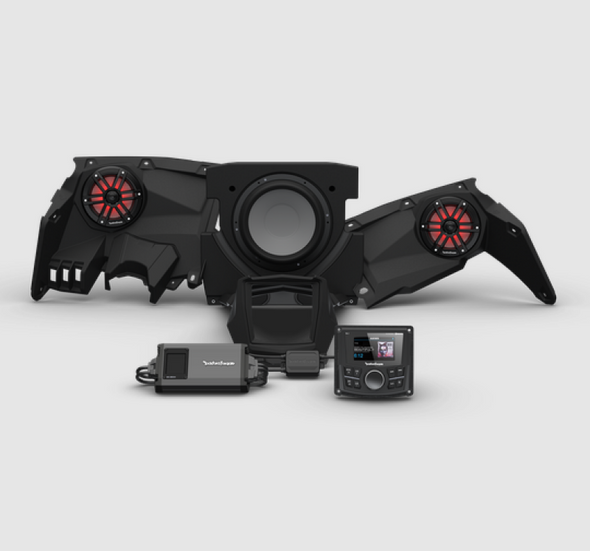
Rockford Fosgate 17+ Can-Am X3 Stage-3 Audio System (Gen-3) - X317-STG3
Rockford Fosgate UTV
$1,999.99How do I know if this kit will fit my UTV?Confirm your specific UTV model's fitment with our detailed compatibility guide before purchasing these high-performance speakers.Can I install this system...$1,999.99
Powersports speakers are purpose-built audio components engineered to deliver intelligible sound against wind, engine, and terrain noise — where standard consumer speakers fail within hours. Motor Sport Mayhem stocks 69 in-stock speakers and audio systems from seven proven brands, spanning entry-level protection baffles at $15.89 to full multi-channel UTV stage systems at $4,399.99.
Our Top Picks for Speakers
Every product below was selected based on real-world performance in off-road and powersports applications, verified fitment data, and category-leading build quality at its price point.
BAZ Party Bars
Bazooka | $529.99
An all-in-one bar-style speaker system with integrated RGB LED lighting and Bluetooth connectivity designed to mount on powersports roll cages and racks without additional hardware.
- Sealed enclosure design protects drivers from dust and water ingress common in off-road environments
BSA Motorcycle Speakers
Boss Audio | $699.99
A bundled front speaker and 4-channel amplifier system built specifically for motorcycle fairings, delivering clean amplified sound at highway speeds without aftermarket wiring complexity.
- 4-channel amplification allows independent level control for front and rear speaker zones
DEI Speaker Baffles
DEI | $15.89
Thermal and acoustic baffles that isolate 6.5-inch round speakers from engine bay heat, road noise, and moisture — a critical and often overlooked component in any door or fairing speaker install.
- Closed-cell foam construction blocks heat transfer and deadens panel resonance that muddies midrange clarity
KUR Sound Bars
Kuryakyn | $499.99
Chrome-finished speaker pods with integrated Bluetooth audio controller built for handlebar or fairing mounting, combining OEM-style aesthetics with modern wireless audio management.
- Weatherproof enclosure with chrome finish rated for sustained outdoor exposure including rain and UV
ROC Subwoofer Kit
Rockford Fosgate | $2,499.99
A dual 10-inch saddlebag subwoofer kit engineered as a direct-fit solution that adds genuine low-frequency extension to touring motorcycle audio systems without sacrificing cargo space.
- Dual-driver configuration compensates for the acoustic limitations of shallow-mount bag enclosures
ROC UTV Stage 6 Stereo Kits
Rockford Fosgate UTV | $4,399.99
A complete multi-zone UTV audio system that integrates head unit, amplification, and speaker components into a single engineered package with vehicle-specific mounting and wiring provisions.
- Stage 6 designation indicates the highest output tier, with amplifier power levels that overcome 80+ mph cabin noise
RGD Polaris Mounts
Rugged Radios | $1,628.69
A competition communication kit combining Bluetooth intercom and GMRS two-way radio with vehicle-specific mounting hardware, purpose-built for race and high-speed off-road environments where crew communication is safety-critical.
- GMRS radio integration provides longer range than consumer Bluetooth alone, critical for desert running and organized events
How to Choose the Right Speakers
Powersports and motorsport audio fails for one consistent reason: consumer-grade components installed in environments they were never designed to survive. Vibration, temperature cycling, UV exposure, mud, and constant high-SPL operation destroy paper cones, foam surrounds, and plastic tweeters in short order. Purpose-built powersports speakers use polypropylene or marine-grade woven cones, rubber surrounds, UV-stabilized grilles, and sealed or heavily vented magnet structures to tolerate conditions that would destroy a home audio driver within a season.
Key Specifications
Power handling and sensitivity are your two most critical specs. In a powersports environment, ambient noise from engine, wind, and terrain can easily reach 85–100 dB at the listener's ear. A speaker with 90 dB sensitivity (1W/1m) requires dramatically less amplifier power to achieve the same perceived loudness than an 85 dB unit — which is the difference between a manageable wiring job and a full electrical upgrade. Match your speaker's RMS power handling to your amplifier's continuous output channel, not its peak rating. Undersized power handling causes thermal compression and driver failure; oversized power handling with an underpowered amp causes clipping distortion that destroys tweeters faster than any other failure mode.
Enclosure type determines low-frequency performance as much as driver size. Bar-style and surface-mount powersports speakers are inherently limited in bass extension due to shallow enclosure depth. This is by design — deep enclosures are a liability in off-road environments. If low-end output matters for your application, a dedicated underseat or saddlebag subwoofer running a high-pass filtered signal to your main speakers will deliver far more usable bass than trying to force a full-range signal through a shallow-mount 6.5-inch driver. Expect useful bass extension down to roughly 60–80 Hz from bar-style systems; a dedicated subwoofer can extend this to 35–50 Hz in a properly tuned enclosure.
IP rating and vibration tolerance determine longevity. Look for IPX5 or higher water resistance ratings for any speaker that will see trail riding, rain exposure, or pressure washing. Vibration tolerance is less standardized in product specs, but rubber-surround drivers with cast aluminum baskets hold up significantly better than pressed steel basket designs under sustained mechanical shock. Tweeters are the most vibration-sensitive component — ferrofluid-cooled designs handle both heat and vibration better than dry-bearing units in sustained high-output environments.
System integration matters more than individual component specs. A complete stage system from a single manufacturer — head unit, amplifier, and speakers tuned together — will almost always outperform a mismatched stack of individually selected components at an equivalent total price. Impedance matching, crossover points, and amplifier gain structure are pre-engineered in bundled systems, eliminating the most common sources of distortion and reliability issues in DIY installs. For serious builds, also consider whether your electrical system can support the added continuous draw — most UTV and motorcycle charging systems are not designed for sustained high-wattage audio loads without a dedicated capacitor or second battery.
Speaker Power Handling vs. Recommended Amplifier Output by Application
| Application | Typical Ambient Noise (dB) | Recommended Speaker RMS (per channel) | Recommended Amplifier RMS (per channel) |
|---|---|---|---|
| Casual Trail / Campsite | 70–80 dB | 25–50W RMS | 30–60W RMS |
| Moderate Off-Road / Weekend Riding | 80–88 dB | 50–75W RMS | 60–90W RMS |
| High-Speed Desert / Dunes | 88–95 dB | 75–150W RMS | 90–175W RMS |
| Competition / Race Communication | 95–105 dB | Not applicable — helmet speaker/intercom | Intercom amplified internally |
| Motorcycle Highway Cruising | 85–95 dB | 50–100W RMS | 60–120W RMS |
| UTV Full Stage System | 88–100 dB | 100–200W RMS | 150–300W RMS (multi-channel) |
Price Guide
Entry ($10.35–$300): This range covers acoustic accessories like speaker baffles, replacement grilles, and single-driver surface-mount speakers suited to casual trail riding or add-on audio for vehicles with existing head units. Build quality is functional, not premium — expect pressed steel baskets and foam surrounds that will require replacement in aggressive environments. Correct application at this price is a significant upgrade; incorrect application is money wasted.
Mid-range ($300–$1,000): The majority of serious powersports audio buyers land here, and rightfully so. This tier delivers rubber-surround drivers, weatherproof enclosures, integrated Bluetooth, and enough amplification to overcome typical off-road ambient noise. Bar systems, motorcycle speaker-amp bundles, and quality standalone component sets dominate this range. Build quality is substantially better than entry level — cast basket construction, UV-stable materials, and 2–3 year rated lifespans in outdoor use are reasonable expectations.
Premium ($1,000–$4,399.99): Complete integrated stage systems, high-displacement subwoofer kits, and professional communication systems with audio integration live here. This is the correct tier for anyone running organized events, competitive desert racing, or long-distance touring where audio clarity and communication reliability are not optional. The cost justification is straightforward: engineered system matching, vehicle-specific fitment, commercial-grade component tolerances, and support ecosystems that entry-level products cannot provide.
Who Is This For?
Powersports audio serves a broader range of use cases than most buyers expect — from weekend dune runners who want bass at camp to competitive racers who depend on intercom clarity at speed.
Weekend Off-Roading — 8.4/10
Weekend off-road use scores at the top of the matrix for good reason: this is the core use case the entire powersports audio category was built around. Riders and drivers in this category spend hours on trail, covering varied terrain at moderate to high speeds, and audio is both entertainment and a comfort multiplier on long days. Speakers in this context need to handle vibration, occasional water exposure, and sustained output — requirements that narrow the field quickly away from consumer products and toward purpose-built powersports components.
High Speed Desert Running — 8.4/10
Desert running ties weekend off-roading at 8.4/10 but presents a more demanding audio engineering problem: cabin noise at high speed is substantially louder, requiring higher sensitivity drivers and more amplifier headroom to maintain intelligible audio. Vibration loads are also higher over rough desert terrain, making driver mounting rigidity and surround material quality critical durability factors. Communication systems that integrate intercom and radio — rather than music-only speaker systems — become genuinely safety-relevant at this use level.
Serious Rock Crawling — 8.4/10
Rock crawling scores identically at 8.4/10, but the audio demands differ from speed-based applications. Ambient noise is lower at crawling pace, but the mechanical shock loads on speaker mounting hardware are extreme — repeated hard impacts against rock faces transmit directly through the chassis into any rigidly mounted component. Bar systems and speaker pods need to be mounted with vibration-isolating hardware, and exposed grille designs are at high risk of rock strike damage without protection. Communication clarity between spotter and driver is the primary audio priority in this context.
Overlanding / Expedition — 7.9/10
Overlanding scores 7.9/10 and represents the use case where audio quality at rest — at camp, during extended breaks — matters as much as on-vehicle performance. Battery management becomes a design constraint here: sustained audio draw over multi-day trips without shore power requires either efficient low-draw systems or dedicated auxiliary power. Bluetooth connectivity and the ability to stream from multiple devices are practical priorities for this use case.
Street Performance and Racing Competition — 7.5/10
Both street performance and racing competition score 7.5/10, reflecting the fact that audio is a secondary consideration in these applications rather than a primary one. Street builds benefit from quality component speakers and underseat subwoofers for daily driving enjoyment, while competition applications are almost exclusively focused on intercom and radio communication systems where audio fidelity to music is irrelevant — speech intelligibility under sustained high-noise conditions is the only metric that matters.
Trusted Speakers Brands We Carry
The brands in this category were selected because they engineer specifically for powersports and motorsport environments — not because they adapted consumer products with a cosmetic refresh. Rugged Radios built its reputation entirely within the race communication and powersports intercom market, with products validated at events like Baja and King of the Hammers where communication failure has real consequences. Rockford Fosgate's powersports division carries the acoustic engineering heritage of one of the most respected names in car audio into vehicle-specific systems with certified weather protection. Rockford Fosgate UTV takes that further with complete stage systems matched to specific chassis electrical and acoustic profiles.
Bazooka's bar-style systems brought sealed-enclosure engineering to a form factor that works natively on roll cages and racks, solving a fitment problem that plagued the category for years. Boss Audio delivers accessible price points without abandoning weatherproofing fundamentals, making it the correct entry point for riders adding audio to an existing vehicle without a full system budget. Kuryakyn approaches the motorcycle audio segment from a chrome-and-styling heritage that results in products that integrate visually with touring bike aesthetics while meeting the acoustic and durability demands of highway riding. DEI rounds out the category with acoustic installation accessories that improve the performance of any speaker install — often the lowest-cost, highest-impact upgrade available.
Frequently Asked Questions
Are ATV speakers actually worth the investment?
Yes, with the correct product selection they are. The key qualifier is purpose-built construction: ATV speakers designed for powersports environments use rubber surrounds, sealed or properly vented enclosures, and weatherproof grilles that consumer speakers do not. A properly selected and mounted ATV speaker system will deliver years of reliable service; a consumer component installed in the same position will typically fail within one season due to vibration fatigue, moisture ingress, or UV degradation of surround materials. The value calculation also includes communication — on longer rides, audio fatigue from wind and engine noise is real, and a quality system that delivers clear audio at moderate volume reduces that fatigue measurably.
Can you put speakers on a 4-wheeler or ATV?
You can, and it's a straightforward installation when you use products designed for the application. ATV speaker mounting typically uses handlebar clamps, rack mounts, or roll cage brackets depending on the vehicle configuration — bar-style speakers that clamp directly to existing tubular structure are the most popular solution because they require no fabrication. The electrical side requires a basic 12V power connection to the battery with appropriate fusing, and most modern bar systems include integrated amplification so no separate amp is needed. Bluetooth connectivity eliminates antenna routing entirely, which simplifies the install to a single power connection and speaker positioning.
Are wake tower speakers worth it for powersports applications?
Wake tower speakers are engineered for one of the most acoustically hostile environments in powersports: open-air, high-ambient-noise conditions with continuous water and UV exposure. The technology — high-sensitivity drivers, marine-rated enclosures, and wide dispersion patterns — translates directly to other open-cockpit applications like UTVs and side-by-sides. The core engineering value of a tower speaker is its ability to project sound over distance in an open environment, which is why the same acoustic principles show up in UTV cage-mount systems. If your application involves open-cockpit use at speed, tower speaker engineering principles are directly relevant even if the product isn't marketed as a wake tower unit.
Are underseat subwoofers worth buying for powersports and performance vehicles?
For applications where available mounting space is severely limited, underseat subwoofers deliver the best low-frequency output per cubic inch of any format. The engineering tradeoff is excursion: a shallow underseat driver must move more air per unit of cone area to achieve equivalent SPL to a deeper-mounted driver, which means power handling and long-term durability are more sensitive to amplifier matching in this format. Pair an underseat subwoofer with a properly set low-pass crossover — typically 80Hz or below — and a high-pass filter on your full-range speakers, and the result is a coherent system that dramatically outperforms full-range-only bar systems for music listening. For pure communication or voice audio, a subwoofer adds nothing and is not worth the power draw.
Can you put speakers on a motorcycle, and what do you need to make it work?
Motorcycle audio installation is fully achievable and extremely popular in the touring segment. The core requirements are weatherproof speaker enclosures rated for continuous rain and road spray exposure, an amplifier with enough output to overcome wind noise at highway speeds (85–95 dB ambient is typical), and a head unit or Bluetooth receiver positioned within reach of the rider. Most modern motorcycle-specific audio systems are sold as matched bundles specifically to eliminate the impedance and gain-staging problems that occur when mismatched components are combined. Electrical load is the primary constraint on older motorcycles — verify your charging system output capacity before adding amplified audio, as sustained underpowering of a charging system causes both audio performance issues and battery damage over time.
Building something specific? Our performance specialists can help you select the right Speakers for your application — street, track, or full race build.