
Brake Shoes
- Product
- Qty in Cart
- Quantity
- Price
- Subtotal
-
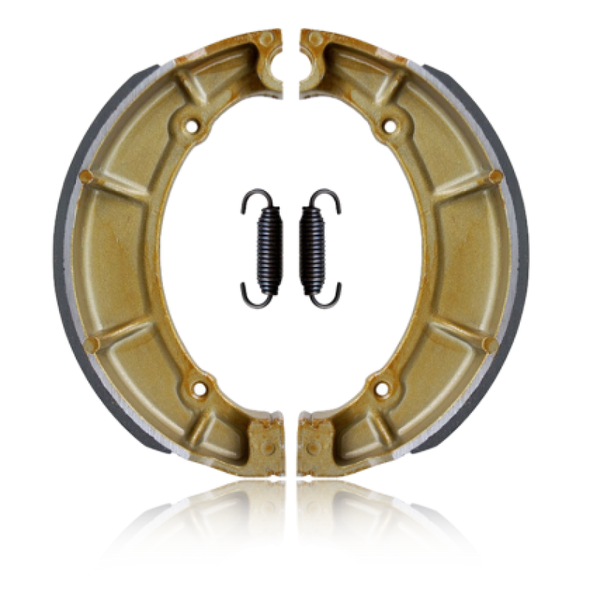
EBC 2007 Kawasaki KAF 450 B1 Mule 1000 Rear Left/Right FA-SFA-TT-X Brake Shoes - 720
EBC Powersports
MSRP: $37.22$35.36How do I know if these EBC Powersport Brake Shoes will fit my motorcycle?Confirm exact fitment with your specific vehicle's make, model, and year before purchasing these EBC Powersport Brake Shoes...MSRP: $37.22$35.36 -
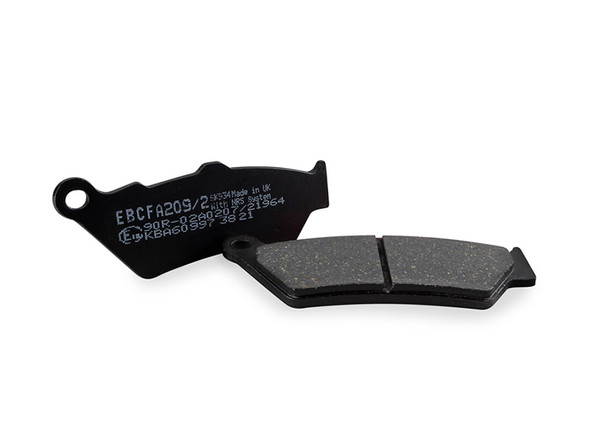

EBC 2007 Kawasaki KAF 450 B1 Mule 1000 Front Left/Right FA-SFA-X Brake Shoes - 719
EBC Powersports
MSRP: $37.22$35.36Are EBC Powersport Brake Shoes compatible with my motorcycle?Confirm specific fitment for your motorcycle model by using our comprehensive compatibility checker before purchasing these EBC Powersport...MSRP: $37.22$35.36 -


DFC 89-13 UD UD 18HD Rear Premium Riveted Shoes - 1903-0717-00
DFC
$206.08Do these brake shoes fit my vehicle?DFC Premium Riveted Shoes require confirmation of precise vehicle fitment to ensure proper installation and optimal braking performance.What is the recommended...$206.08 -


DFC 86-13 Chevrolet W6500 Tiltmaster Front Premium Riveted Shoes - 1903-0603-00
DFC
$221.88What vehicles are DFC Premium Riveted Shoes compatible with?DFC Premium Riveted Shoes offer wide compatibility; always confirm exact fitment for your vehicle using our provided tools.Are DFC Premium...$221.88 -
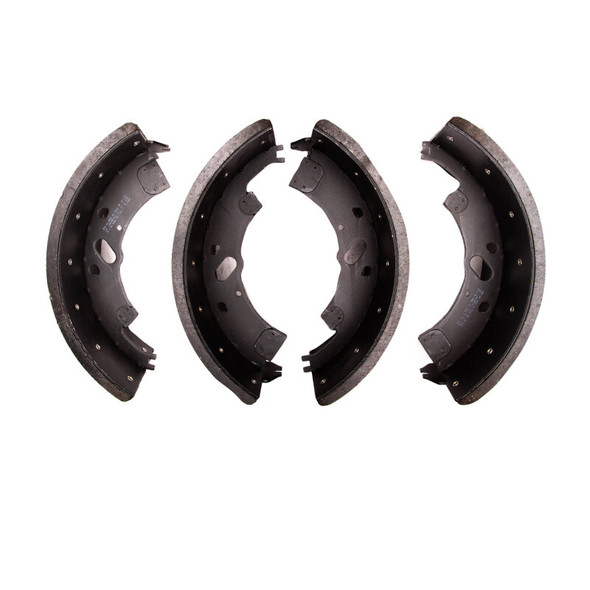
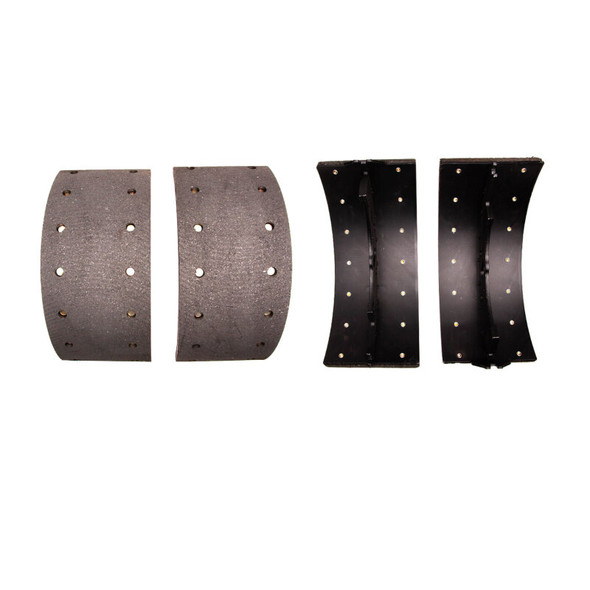
DFC 60-87 Chevrolet 60 Rear Premium Riveted Shoes - 1903-0381-00
DFC
$274.53Will these brake shoes fit my 1974 International 100?DFC Premium Riveted Shoes are precision engineered to provide a perfect shoe-to-drum fitment for your 1974 International 100.What is the...$274.53 -
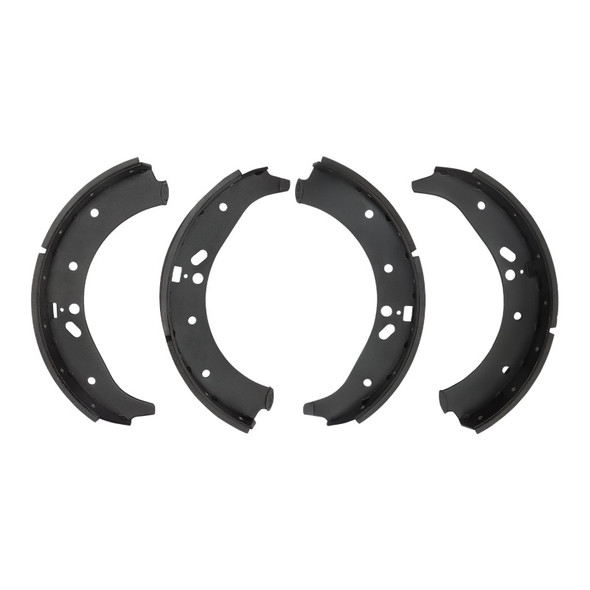

DFC 60-87 Chevrolet W6N042 Tilt Cab Front Premium Riveted Shoes - 1903-0321-00
DFC
$262.50Do DFC Premium Riveted Brake Shoes require a professional installation?DFC Premium Riveted Shoes are recommended for professional installation to ensure precise fitment and optimal braking system...$262.50 -


DFC 99-10 Chevrolet Express 3500 Parking Brake/Parking Parking Shoes - 1902-0771-00
DFC
$31.22Are DFC parking brake shoes a direct replacement for my vehicle's original parking brake shoes?Confirm fitment for your specific vehicle before purchase to ensure these DFC parking brake shoes match...$31.22 -
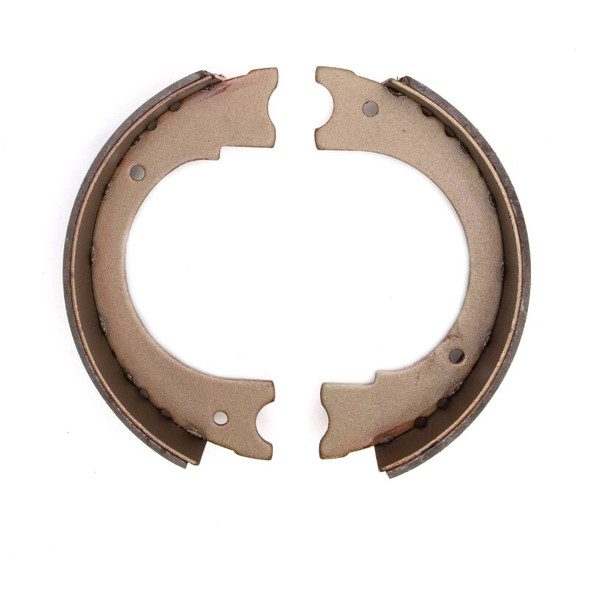

DFC 83-24 Blue Bird ALL American FE (Hydro Disc Brakes) Parking Brake/Parking Parking Shoes - 1902-0647-00
DFC
$30.96What is the recommended installation procedure for DFC Parking Brake Shoes?DFC Parking Brake Shoes are designed for professional installation to ensure proper fitment and optimal braking system...$30.96 -


DFC 08-13 Chevrolet Silverado 1500 Rear Premium Service Shoes - 1901-0960-00
DFC
$48.11Are these brake shoes compatible with my vehicle?DFC Premium Service Shoes are engineered to precisely fit 2008-2013 Chevrolet Silverado 1500 and GMC Sierra 1500 models.How long do these brake shoes...$48.11 -
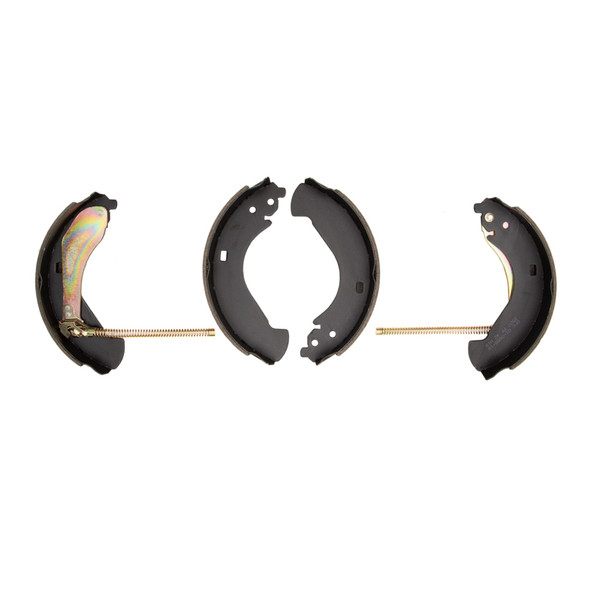

DFC 05-09 Chevrolet Silverado 1500 Rear Premium Service Shoes - 1901-0855-10
DFC
$60.93Do these brake shoes fit my 2007 Chevrolet Silverado 1500?Confirm vehicle fitment for your 2007 Chevrolet Silverado 1500 by utilizing our comprehensive vehicle compatibility checker before purchase...$60.93 -


DFC 01-06 Toyota 4Runner Rear Premium Service Shoes - 1901-0764-00
DFC
$45.10What kind of material are DFC Premium Service Shoes made from?DFC Premium Service Shoes feature a reliable friction material bonded with glue lining and treatment for superior steel adhesion.How long...$45.10 -


DFC 90-23 Honda Civic Sedan Rear Premium Service Shoes - 1901-0627-00
DFC
$26.71100% New Carbon Steel Dipped With High Temp Anti-Rust Corrosion Black Paint100% New Carbon Steel Dipped With High Temp Anti-Rust Corrosion Black PaintField And Lab Tested To Ensure Reliability And...$26.71
Brake shoes are the friction components inside drum brake assemblies that press outward against the drum surface to generate stopping force, and at Motor Sport Mayhem, our catalog spans 62 in-stock options across 53 brands — from budget-grade replacements to full race-spec friction compounds engineered for sustained high-temperature performance. Whether you're rebuilding a rear drum setup for daily reliability, maintaining a classic restorer, or sourcing shoes for a heavy-duty trailing axle on a purpose-built off-road rig, friction material grade, arc geometry, and heat tolerance are the specs that determine whether your drums perform or fade under load.
Our Top Picks for Brake Shoes
Every product below was selected based on performance data, verified fitment accuracy, and real-world results across street, track, and specialty applications.
ALC Front Brake Kits
Alcon | $3,450.00
Alcon's motorsport-derived brake architecture delivers massive clamping force and thermal capacity for high-performance truck applications demanding more than stock hardware can provide.
- 6-piston caliper design with oversized rotor diameter engineered for sustained fade-free braking under heavy repeated stops
ABR Caliper Rebuild Kits
All Balls Racing | $73.99
All Balls Racing rebuild kits restore hydraulic integrity and consistent pedal feel to aging caliper assemblies without the cost of full caliper replacement.
- Includes all seals, boots, and hardware required for a complete hydraulic restoration to OE specification
AMS Brake Lines
AMS | $144.95
Stainless steel braided brake lines eliminate the pressure expansion inherent in rubber OE lines, translating directly into a firmer, more progressive pedal feel under hard braking.
- Stainless braid construction resists burst, abrasion, and heat-induced line swell across the full operating temperature range
ART ABS Kits
Artec Industries | $98.99
Artec Industries ABS tone ring kits allow full ABS system retention when upgrading to heavier axle assemblies, preserving critical electronic braking integration on modified builds.
- Precision-machined tooth count matches OE sensor calibration to eliminate false ABS trigger events after axle swaps
BKM Brake Rotors
BikeMaster | $264.99
BikeMaster's motorcycle-specific rotor geometry is engineered for the unique thermal and mechanical demands of two-wheel braking, where weight and heat dissipation matter in equal measure.
- Precision-balanced disc construction minimizes brake judder and thermal warping under repeated aggressive stops
BKC Brake Caliper
Bikers Choice | $399.99
Bikers Choice calipers deliver period-correct OE replacement fitment for vintage big-twin applications where restoring authentic brake function is the priority over performance upgrades.
- Direct bolt-on replacement geometry eliminates the need for bracket modifications or line re-routing on classic builds
BX Brake Master Cylinders
BLOX Racing | $124.80
BLOX Racing master cylinders are purpose-built for sport compact platforms, offering improved bore consistency and fluid displacement characteristics over aging OE units.
- Optimized bore sizing improves pedal ratio feel and reduces the dead-stroke common in high-mileage OE master cylinders
BMR Brake Kits for Conversions - D&S
BMR Suspension | $1,339.95
BMR's conversion brake kits pair drilled and slotted rotors with matched calipers in a single system designed for large-wheel fitment without compromising brake bias or pedal feel.
- Complete hardware-inclusive kit eliminates the guesswork of sourcing individually compatible components for wheel size upgrade builds
BRB Big Brake Kits
Brembo | $1,995.00
Brembo GT big brake kits represent the benchmark in aftermarket brake system upgrades, combining two-piece rotor construction with multi-piston calipers for track-proven stopping performance.
- Two-piece floating rotor design reduces unsprung weight and manages thermal expansion better than solid one-piece alternatives at sustained high temperatures
BRE OE Equivalent Rotors
Brembo OE | $1,798.75
Brembo OE disc brake kits restore factory-engineered braking performance on high-performance platforms where OE-spec components are the only acceptable replacement standard.
- Manufactured to original equipment tolerances, ensuring correct pad clearance, rotor runout, and hydraulic compatibility on factory brake-by-wire systems
How to Choose the Right Brake Shoes
Brake shoe selection comes down to four non-negotiable factors: friction material compound, arc radius match to your drum, heat range rating, and hardware quality. A shoe with the wrong arc radius will contact the drum unevenly, generating hot spots, rapid wear, and inconsistent pedal response regardless of how premium the friction material is. Friction compound grade determines everything from initial bite aggressiveness to fade resistance — a semi-metallic shoe designed for light street use will glaze and lose effectiveness under repeated hard stops, while a high-carbon or race-compound shoe may be too aggressive for a daily-driven application with cold morning starts. Quality manufacturers hold their arc tolerances to within 0.5mm; budget shoes often deviate 1–2mm, which translates directly to uneven drum contact and shortened service intervals.
Key Specifications
Friction material is the most consequential spec in any brake shoe. Organic compounds (NAO — non-asbestos organic) offer quiet operation and low dust but wear faster and fade earlier under sustained heat loads above approximately 400°F. Semi-metallic compounds extend heat range to 700°F or beyond, improve wet-weather performance, and resist glazing — but they generate more noise and can wear drums faster on softer cast iron. For track or heavy towing use, full-metallic or sintered friction materials handle temperatures exceeding 900°F and maintain consistent friction coefficients where organic compounds collapse entirely.
Arc geometry is the second critical specification. Brake shoes are arced to match a specific drum diameter, and even a 0.25mm mismatch in radius results in either toe contact or heel contact on the drum — both of which concentrate heat and pressure in a fraction of the available friction area. Always verify the arc specification against your measured drum diameter, not just the nominal listed size, especially on drums that have been turned previously and may no longer be at factory dimension.
Hardware matters more than most buyers realize. Return springs, hold-down clips, and adjuster assemblies all see repeated thermal cycling and mechanical stress with every brake application. Shoes that ship without hardware, or with hardware of inconsistent spring rate, produce inconsistent retraction, drag, and premature lining wear. Full hardware kits from reputable suppliers are not optional on a proper rebuild — they are part of the friction system's designed operating behavior.
For vehicles with ABS, sensor ring compatibility is an additional fitment consideration. Certain drum assemblies integrate the ABS tone ring into the drum hub, meaning an incorrectly specified replacement can alter the signal frequency the ABS module uses for wheel speed calculation. Always confirm ABS compatibility when sourcing shoes for modern vehicles — this applies equally to the broader brake system, not just the shoe itself.
Brake Shoe Friction Material Selection by Application
| Application | Recommended Compound | Continuous Heat Limit | Notes |
|---|---|---|---|
| Light daily driving | NAO Organic | Up to 400°F | Low noise, low dust, moderate service life; avoid extended downhill grades |
| Street performance / spirited driving | Semi-Metallic | Up to 700°F | Better fade resistance, slightly more noise, longer drum service life |
| Heavy towing / trailer brakes | High-carbon Semi-Metallic | Up to 800°F | Consistent friction coefficient under repeated load; prioritize hardware replacement |
| Autocross / track use (drum rear) | Full Metallic or Sintered | 900°F+ | Aggressive initial bite; may require bedding procedure; check drum hardness rating |
| Off-road / desert running | Sintered or High-Temp Semi-Met | 850°F+ | Dust and contamination resistance critical; sealed hardware assembly preferred |
| Classic / restoration | OE-spec NAO or Low-Met | Up to 450°F | Match original friction coefficient to preserve drum wear characteristics and pedal feel |
Price Guide
Entry ($0.20–$138): This range covers basic replacement shoes for daily drivers, light-duty passenger vehicles, and restoration projects where OE friction performance is the target. Material quality is adequate for normal street use, but heat tolerance and arc consistency vary — verify fitment specs carefully and budget for hardware replacement separately.
Mid-range ($138–$800): The majority of serious enthusiasts, daily drivers with performance intent, and towing applications land here. This range delivers improved friction compound consistency, better arc tolerances, validated hardware kits, and compounds rated for broader temperature windows. Brands like EBC, Hawk Performance, PowerStop, and Stoptech each offer well-engineered options in this tier that outperform budget shoes measurably on both wear rate and fade resistance.
Premium ($800–$3,743.73): Complete system solutions — full big brake conversion kits, race-engineered assemblies, and OE-replacement kits for exotic factory brake systems — occupy this tier. The cost reflects precision manufacturing, validated system compatibility, and thermal engineering that budget components cannot match. This is the correct choice for track-day competitors, heavily modified street cars pushing beyond the thermal limits of OE systems, and owners of high-performance vehicles where maintaining engineered brake balance is non-negotiable.
Who Is This For?
Brake shoes serve a wider range of applications than most buyers realize — from mild daily-driver replacements to heavy tow rigs and track-prepped builds — and the usage data across our catalog reflects that range clearly.
Street Performance — 8.3/10
Street performance is the highest-scoring application in our catalog data, and for good reason — drum brake rear systems on street performance builds need shoes that can absorb repeated aggressive stops without glazing during cool-down periods in traffic. Semi-metallic and high-carbon compounds dominate this use case because they maintain a consistent friction coefficient across the cold-to-hot temperature swings that street driving produces. The 200 products cataloged for this application represent the broadest selection we carry, giving builders and daily drivers the widest choice of compound grades and fitments.
Track / Autocross — 7.8/10
At 7.8 out of 10 across 192 products, track and autocross use cases demand the highest heat tolerance available in drum shoe form — typically full-metallic or sintered compounds that maintain friction coefficient stability through repeated hard stops in short succession. Unlike street use, track applications produce sustained drum temperatures rather than cyclic spikes, which means thermal saturation resistance matters as much as peak heat rating. Proper bedding procedure is mandatory for track-spec compounds to achieve the surface transfer film that maximizes performance and minimizes wear.
Racing Competition — 7.5/10
Racing applications score 7.5 out of 10 across 161 cataloged products, with the narrower product count reflecting the fact that most dedicated race platforms have converted rear braking to disc — but drum rear setups persist in certain stock classes, vintage racing, and rally applications where regulations or weight limits dictate the system. In these contexts, friction coefficient consistency across the full race stint matters more than any other spec, and only race-grade sintered or full-metallic shoes deliver the predictability a driver needs to balance the car under braking at the limit.
Easy DIY Install — 7.4/10
With a score of 7.4 out of 10 across 89 products, DIY installation is a meaningful use case for drum brake shoes — and rightfully so, as a rear drum shoe replacement is within the skill range of any home mechanic with basic hand tools and a service manual. The key variable is hardware: kits that include all springs, clips, and adjusters dramatically reduce the chance of incorrect assembly, which is the primary source of comeback issues in DIY drum jobs. Brands that package complete hardware kits with their shoes earn higher scores in this category because they remove the most common failure point from the equation.
Heavy Towing — 7.0/10
Heavy towing scores a solid 7.0 out of 10 across 21 products — a smaller but highly specific segment where brake shoe selection directly affects safety under repeated load. Trailer brake applications and heavy rear drum assemblies on tow vehicles require high-carbon semi-metallic or sintered compounds rated for sustained elevated temperatures, because descending grades with a loaded trailer keeps drum temperatures elevated far longer than any street driving scenario. Brake fade under tow load is a brake shoe compound failure first and a system design failure second, making material selection the primary buying decision in this application.
Trusted Brake Shoes Brands We Carry
The brands that consistently deliver in this category do so through material science investment, tight manufacturing tolerances, and validated test data — not marketing claims. EBC has built its reputation on compound-specific friction material formulations tested across motorsport and street applications, with a range that spans from organic daily-driver compounds to sintered race-spec materials. Hawk Performance brings brake engineering rooted in motorsport compound development, with friction ratings and temperature range data that professionals can actually use to spec the right shoe for the application. Brembo OE supplies factory-spec brake components to original equipment manufacturers, which means their replacement parts carry the same engineering validation as the parts that came on the vehicle originally. Wilwood's history in racing applications gives their products a pedigree in high-temperature, high-load environments that few aftermarket brands can match, while PowerStop focuses on delivering consistent performance for the performance street market at pricing that makes quality accessible. DFC rounds out the catalog with a strong OE-quality replacement focus and broad fitment coverage that makes them a reliable choice for restorers and fleet applications where precise fitment and consistent friction output are the priority.
Frequently Asked Questions
Are aftermarket brake calipers as good as OEM?
Quality aftermarket brake calipers from reputable manufacturers are not just as good as OEM — in many cases they outperform original equipment, particularly when the OEM caliper is a single-piston sliding design and the aftermarket unit is a fixed multi-piston design with improved thermal management. The critical variables are bore diameter consistency, seal material quality, and bracket tolerances — a poorly manufactured aftermarket caliper with inconsistent bore dimensions will produce uneven pad wear and inconsistent pedal feel regardless of price. Brands with OEM supply relationships or motorsport pedigree — Brembo, Wilwood, Stoptech — manufacture to tolerances that match or exceed original equipment specifications. Budget aftermarket calipers sourced from unknown manufacturers are a legitimate concern, but that concern applies to brand selection, not the category as a whole.
Are aftermarket master cylinders reliable?
Aftermarket master cylinders are reliable when sourced from manufacturers who validate their bore dimensions, seal compatibility, and fluid displacement curves against the application's requirements. The master cylinder is the hydraulic origin point of the entire brake system — bore diameter determines the pressure ratio between pedal input and caliper clamping force, and an incorrectly sized bore alters pedal feel and braking efficiency regardless of every other component in the system. High-quality aftermarket units from performance-focused brands often improve on OEM units by using more consistent bore finishes and higher-grade seal materials that extend service life and resist fluid contamination better than the original. Always verify bore size compatibility with your caliper piston area when upgrading — matching hydraulic advantage across the system is a fundamental engineering requirement, not an optional consideration.
Are Akebono brakes better than OEM?
Akebono is not simply an aftermarket brand — they are an OEM supplier to multiple major automotive manufacturers, which means in many cases their aftermarket parts are the same components or manufactured on the same production lines as what came on the vehicle originally. Their ceramic friction formulations are specifically engineered for low dust output and consistent bite across a wide operating temperature range, which makes them a genuine performance improvement for street drivers who value clean wheels and progressive pedal feel over maximum initial bite. For track or autocross use, Akebono's street-oriented ceramic compounds may not provide the heat capacity of purpose-built performance compounds from brands like EBC or Hawk, but for daily driving and street performance, their OEM supplier status means the engineering validation is unquestionable. Comparing them to OEM is often literally comparing them to themselves.
Are ABS tone rings magnetic?
Most passive ABS tone rings are ferromagnetic — they are manufactured from steel or iron so that the variable-reluctance wheel speed sensor can detect the passage of each tooth as a change in magnetic field strength, generating the frequency signal the ABS module converts to wheel speed. Active ABS systems use magnetized encoder rings, which generate their own alternating magnetic field read by a Hall-effect sensor — these rings are themselves magnetic and can be identified with a simple ferrite magnet. The distinction matters when sourcing replacement tone rings because passive and active systems are not interchangeable — installing a passive ring on a system designed for an active encoder ring will produce no speed signal or an incorrect signal, disabling ABS function. Always verify whether your system uses variable-reluctance or Hall-effect sensor architecture before sourcing a replacement tone ring or ABS kit.
Are black coated rotors worth it?
Black coated rotors — typically zinc-phosphate, e-coat, or geometric black powder coat applied to the hat and outer edge — are worth the modest price premium for a specific reason: they prevent the surface rust that forms on uncoated iron within days of exposure to moisture, eliminating the cosmetic deterioration visible through open-wheel designs and the light surface rust that transfers to pad faces on vehicles that sit unused for more than a day or two. The coating on the friction surface itself burns off during the first heat cycle and has no effect on braking performance — the benefit is entirely in corrosion protection on non-swept surfaces. For track use, the coating on the hat and vane passages can slightly impede initial airflow heat dissipation until it burns off, but this effect is negligible under normal use. If clean aesthetics behind your wheels matter to you and your vehicle sits in variable weather, the coating is absolutely worth it; if the car lives in a dry climate and you're optimizing purely for braking performance, it's a minor cosmetic consideration rather than an engineering requirement.
Building something specific? Our performance specialists can help you select the right Brake Shoes for your application — street, track, or full race build.
Powered by BigCommerce. Theme designed by Papathemes.