
Connecting Pipes
- Product
- Qty in Cart
- Quantity
- Price
- Subtotal
-

GrimmSpeed 04-21 Subaru STI EJ25 2-Bolt Up-Pipe - GRM.1099.1.SS
GrimmSpeed
$289.00Will these uppipes fit my 2015 Subaru WRX?GrimmSpeed uppipes require careful fitment confirmation with your specific 2015 Subaru WRX model before installation to ensure proper compatibility.What kind...$289.00 -
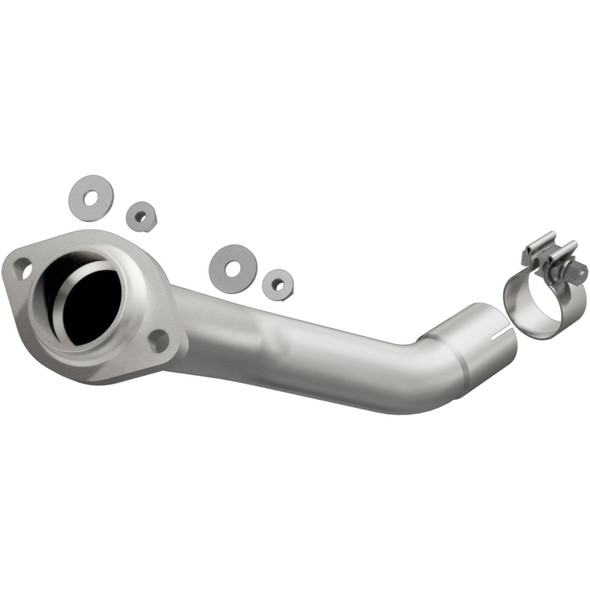

MagnaFlow 18-20 Jeep Wrangler V6 3.6L Bolt On Extension Pipe 2in Pipe Diameter - 19432
Magnaflow
$179.00Will this Magnaflow connecting pipe fit my specific vehicle?Confirming exact fitment is essential; consult your vehicle's make, model, and year before purchasing this connecting pipe.Is professional...$179.00 -
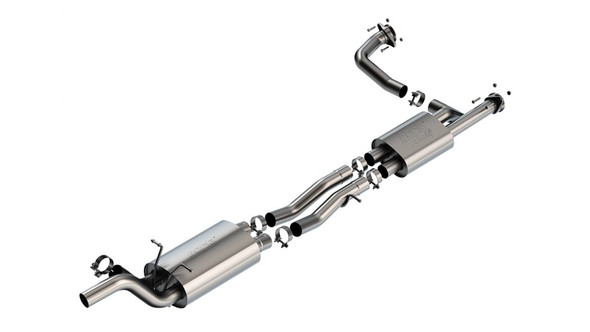
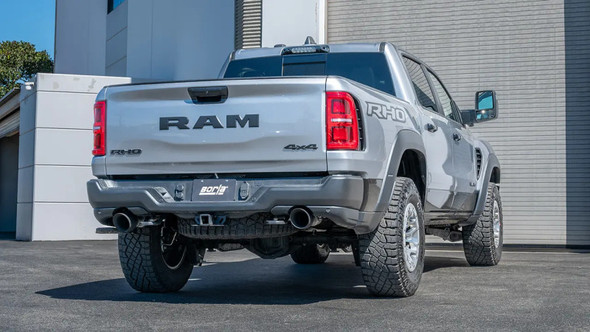
Borla 25-26 RAM 1500 RHO 3.0L V6 3in ATAK Exhaust Mid-Section - 145.1in WB - 60756
Borla
MSRP: $1,735.99$1,549.99Will these mid pipes fit my specific vehicle?Confirm vehicle fitment for these Borla mid pipes before purchase to ensure a perfect, custom integration with your existing exhaust system.Is...MSRP: $1,735.99$1,549.99 -
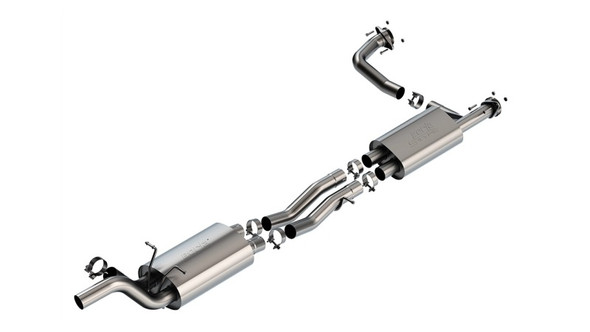
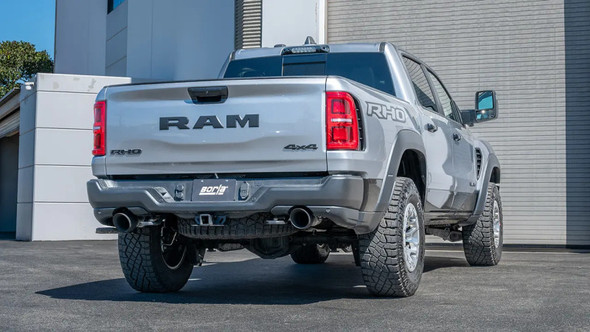
Borla 25-26 RAM 1500 RHO 3.0L V6 3in S-Type Exhaust Mid-Section - 145.1in WB - 60755
Borla
MSRP: $1,791.99$1,599.99Will this Borla mid pipe fit my vehicle?Confirm fitment for your specific vehicle before purchasing, as professional installation is recommended for proper integration.What is the expected...MSRP: $1,791.99$1,599.99 -
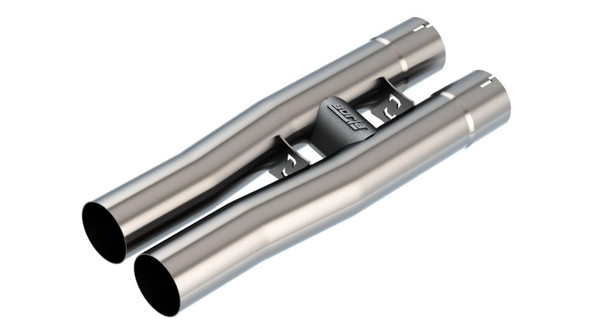
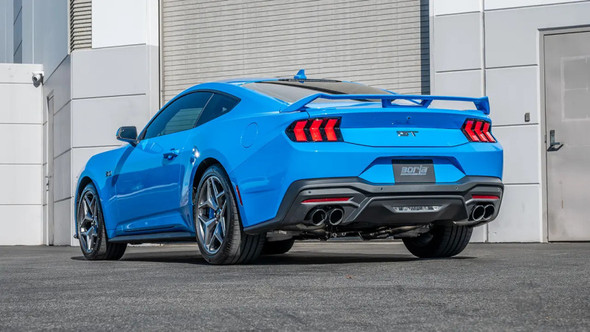
Borla 18-25 Ford Mustang GT Replacement H-Pipe - 60753
Borla
MSRP: $335.99$299.99What is the primary function of the BOR Connection Pipes?BOR Connection Pipes enhance exhaust flow by replacing the factory Merge X-Pipe, directly contributing to optimized engine performance and a...MSRP: $335.99$299.99 -
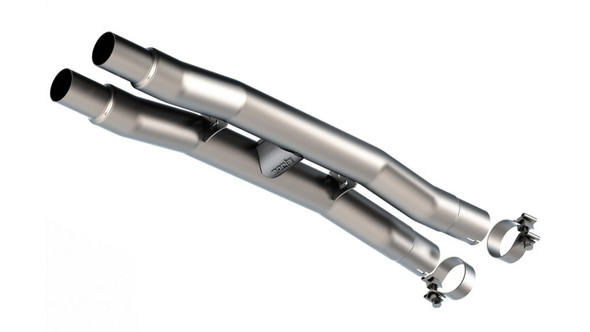

Borla 15-23 Ford Mustang GT H-Pipe 2.75in OE Resonator Replacement - 60752
Borla
MSRP: $399.99$356.99What is the primary function of Borla Connecting Pipes?Borla Connecting Pipes are engineered to significantly enhance exhaust flow, delivering a more aggressive exhaust note and improved engine...MSRP: $399.99$356.99 -
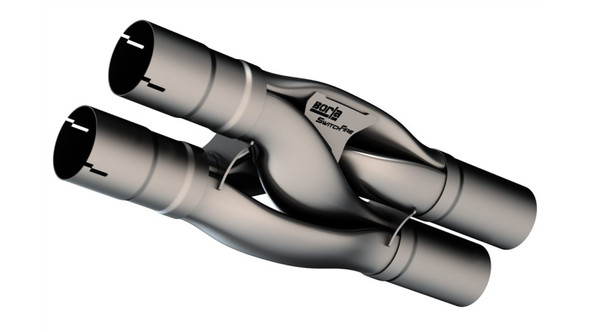
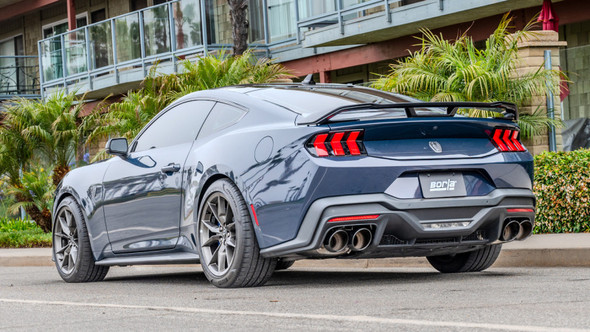
Borla 18-25 Mustang GT / 24-25 Mustang Dark Horse SwitchFire X-Pipe - 60748
Borla
MSRP: $659.99$589.99Will the Borla BOR Connection Pipes fit my vehicle?Borla BOR Connection Pipes are engineered to precisely fit all 2018-2025 Ford Mustang models, ensuring seamless integration.How difficult is the...MSRP: $659.99$589.99 -
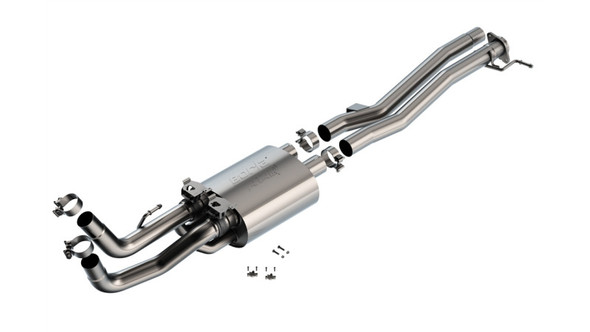
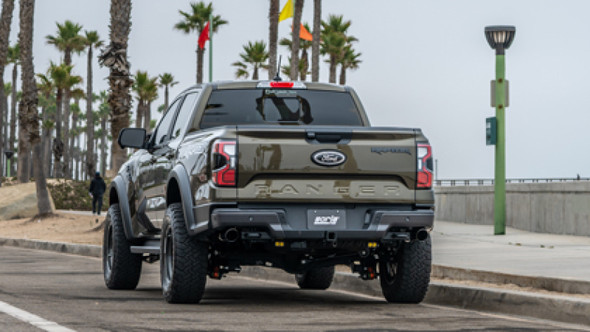
Borla 24-25 Ford Ranger Raptor 2.75in Atak Mid Section Connection Pipes - 60742
Borla
MSRP: $2,195.99$1,959.99BORLA system is a True Dual design. This 2.75" diameter Mid-Section / Muffler Assembly includes Active Exhaust Valves. The muffler has an internal H-Pipe for increased performance and improved sound...MSRP: $2,195.99$1,959.99 -

AWE Tuning 21-23 Ford F-150 0FG Resonated Mid Pipe- (RWD|4WD) *Only fits stock Y-Pipe* - 3815-11144
AWE Tuning
MSRP: $521.05$506.47How do AWE Midpipes affect cabin drone?AWE Midpipes utilize a proprietary drone-canceling solution to minimize unwanted exhaust resonance, ensuring daily driving comfort.What is the install type for...MSRP: $521.05$506.47 -

Akrapovic 2020 BMW M340i (G20) Link-Pipe Set (SS) (Excl OPF/GPF Models) - E-BM/SS/8
Akrapovic
$1,840.38Does the Akrapovic Evolution Link Pipe Set (SS) fit my 2020 BMW M340i without an OPF?The AKR Link Pipe Set SS is engineered specifically for the 2020 BMW M340i without an Otto/gasoline particulate...$1,840.38 -
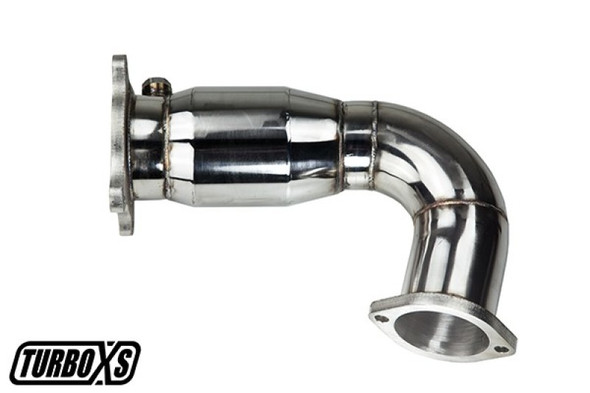
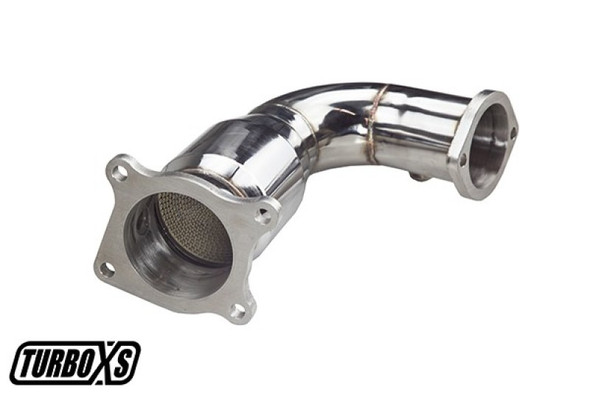
Turbo XS 2015+ Subaru WRX Front Pipe w/ Catalytic Converter - W15-FP-1C
Turbo XS
MSRP: $455.50$332.50Will this front pipe fit my 2015 Subaru WRX?Yes, the TXS Front Pipe is specifically engineered as Pipe # 1 Only for a direct fit on your 2015 Subaru WRX.Do I need professional installation for this...MSRP: $455.50$332.50 -
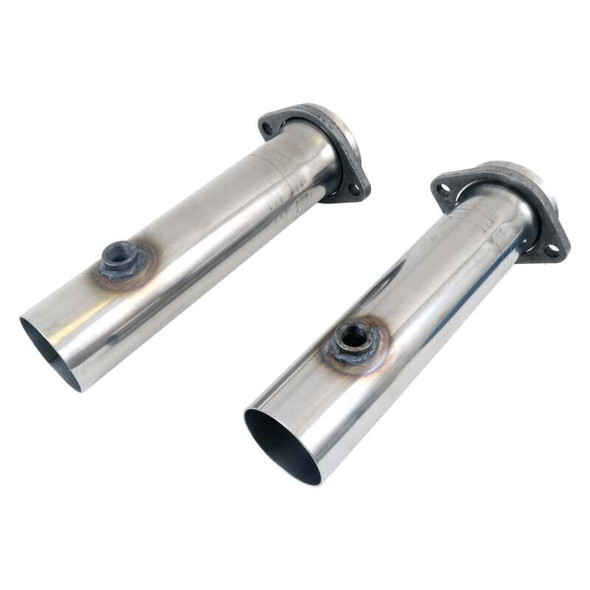

BBK 2-1/2in Universal Flared Exhaust Flow Tubes - 14680
BBK
MSRP: $139.99$129.99Will this mid pipe kit fit my Ram 1500?Confirm specific fitment details for your Ram 1500 model year before purchase to ensure seamless integration of this connecting pipe system.Is professional...MSRP: $139.99$129.99
Connecting pipes are the structural backbone of any performance exhaust system, routing gases between headers, catalytic converters, mufflers, and tips with zero compromise on flow velocity or back pressure. Motor Sport Mayhem stocks 111 connecting pipes across 64 brands — from entry-level fitment solutions under $10 to full titanium race-spec systems pushing nearly $12,000 — so every build level has a direct path to more power.
Our Top Picks for Connecting Pipes
Each of these units was selected based on verified performance gains, material quality, and real-world results across street, track, and competition builds.
AFE Exhaust Cat Back
aFe | $2593.00
Stepped 3-inch to 3.5-inch mandrel-bent stainless construction maximizes exhaust velocity without sacrificing structural integrity under high thermal load.
- High-flow stainless pipe with stepped diameter transition optimizes scavenging across the RPM range
AKR Slip-On Line - Titanium
Akrapovic | $5768.53
Full titanium construction delivers a significant weight reduction over stainless while maintaining superior heat resistance at sustained race temperatures.
- Race-pedigree titanium pipework engineered to FIA-compliant dimensional tolerances for competition-level fitment precision
AMS Downpipes
AMS | $2249.95
Street-tuned downpipe geometry removes turbine outlet restriction to lower boost threshold and improve mid-range torque on turbocharged platforms.
- Larger-diameter outlet tubing reduces post-turbine backpressure — the single biggest choke point on factory forced-induction exhaust routing
ATS Exhaust Manifolds
ATS Diesel | $894.99
Pulse-flow manifold design preserves exhaust gas kinetic energy at the turbine inlet, directly improving spool response and reducing turbo lag on diesel applications.
- Cast with tighter port-to-port volume consistency than OEM units, which eliminates the flow imbalance that robs diesel turbos of low-end response
AWE Cat-Back SwitchPath
AWE Tuning | $3895.00
SwitchPath valve technology lets the driver toggle between aggressive open-pipe tone and a quieter cruise mode through the same connecting pipe architecture.
- Dual-mode valve integration built directly into the connecting pipe section eliminates the need for external bypass plumbing
GBE Torque Tube Systems
Banks Power | $569.00
Torque tube routing corrects the undersized factory pipe diameter that limits low-end torque output on 4x4 platforms running stock exhaust.
- Engineered specifically for off-road duty cycles where ground clearance and pipe bend radius both matter as much as flow capacity
BBK Full Header & Cat
BBK | $1499.99
Long-tube header and high-flow catted mid-pipe combination addresses both primary exhaust scavenging and secondary flow restriction in a single bolt-on system.
- Silver ceramic coating on the connecting sections retains heat inside the pipe to sustain gas velocity and protect surrounding chassis components
BDD Exhaust Brakes
BD Diesel | $1685.95
A 4.0-inch universal exhaust brake integrates directly into the connecting pipe run to deliver engine braking on demand without friction brake wear on heavy-duty towing applications.
- Air-compressor-actuated butterfly valve closes within the pipe bore to create controlled backpressure for deceleration — fully reversible with zero parasitic loss when open
BIG EXO Aluminum ATV Dual Full System
Big Gun | $944.22
Dual aluminum exhaust routing on an ATV platform cuts unsprung and chassis weight while delivering a broadened power curve for off-road performance riding.
- Aluminum pipe construction saves meaningful mass over OEM steel without sacrificing durability under the impact and vibration loads of ATV riding
BKM Exhaust Bungs B
BikeMaster | $12.99
Muffler packing and bung hardware that restores sound absorption and sealing integrity in connecting pipe and muffler assemblies worn by heat cycling.
- Correct packing density inside connecting pipe and muffler junctions prevents the drone, rasp, and turbulence noise that develops when OEM packing breaks down
How to Choose the Right Connecting Pipes
The single most important specification in a connecting pipe is bore diameter — get it wrong in either direction and you either choke flow at high RPM or kill exhaust gas velocity at low RPM, both of which cost real power. Beyond diameter, material grade, bend method, and wall thickness determine whether a pipe survives a 1,000-degree exhaust pulse for 100,000 miles or cracks at the collector flange after two seasons. Mandrel bending preserves full cross-sectional area through every curve; crush bending — still used on some budget pieces — reduces the effective bore by 15–30% at every bend and should be rejected outright for any performance application.
Key Specifications
Material selection comes down to three realistic options: aluminized steel, 304 stainless, and titanium. Aluminized steel is cost-effective for low-budget builds and holds up in dry climates, but the aluminum coating fails in road-salt environments within three to five years, leading to structural rust from the outside in. 304 stainless steel is the workhorse of the performance market — corrosion-immune, weldable, and capable of sustained use above 1,200°F without oxidation-driven scale buildup inside the pipe. Titanium is reserved for weight-critical competition builds; it offers roughly 45% weight savings over stainless at equivalent wall thickness, but it demands precise TIG welding with inert gas purge on both the ID and OD to prevent embrittlement at the heat-affected zone.
Wall thickness matters more than most buyers realize. Street pipes typically run 16-gauge (0.060-inch) stainless, which balances durability with weight. Race applications drop to 18-gauge (0.049-inch) or thinner to reduce system mass, but thinner walls are less forgiving of improper support and will crack at vibration nodes if hangers are spaced beyond 18 inches. On diesel and turbocharged platforms, the downpipe section directly downstream of the turbine outlet sees the highest thermal load in the system and should always be specified in 304 or 321 stainless — never aluminized — regardless of what the rest of the system uses.
Flange design and slip-fit tolerance determine long-term leak resistance. Three-bolt and V-band flanges are the standard for high-performance applications because they distribute clamping force evenly around the pipe circumference, compensating for thermal expansion cycles that cause two-bolt flat flanges to warp and leak over time. Slip-joint connections require a minimum 1.5-inch overlap to maintain a seal under axial thermal movement — short overlaps that looked tight at room temperature will open gaps once the system reaches operating temperature. For any connecting pipe that transitions between fixed chassis hard points, a flex section or bellows joint should be incorporated to absorb drivetrain and chassis flex without transmitting stress into rigid pipe welds.
For forced induction applications, downpipe diameter is the most consequential connecting pipe specification in the system. Factory downpipes are frequently undersized to meet noise and emissions packaging constraints, not flow requirements, and upsizing them is one of the highest return-per-dollar modifications available on turbocharged platforms. Similarly, on cat-back systems, the connecting pipe between the catalytic converter outlet and the muffler inlet is where many budget systems lose the gains made upstream — thin walls, tight crush bends, and undersized diameter in this section can negate even the best header and cat work.
Pipe Diameter vs. Horsepower Target Reference Guide
| Target HP (at crank) | Recommended Pipe OD | Typical Application | Notes |
|---|---|---|---|
| Up to 250 HP | 2.0–2.25 inch | Mild street, small displacement NA | Factory diameter is often sufficient; focus on bend quality |
| 250–400 HP | 2.25–2.5 inch | Street performance, light boost | Mandrel bends required; aluminized or 304 stainless acceptable |
| 400–550 HP | 2.5–3.0 inch | Street/track, moderate forced induction | 304 stainless recommended; V-band flanges preferred |
| 550–750 HP | 3.0–3.5 inch | High-output turbo/supercharged, track | Stepped diameter (smaller at header, larger toward muffler) optimizes velocity |
| 750–1,000 HP | 3.5–4.0 inch | Drag race, competition turbo builds | 304/321 stainless or titanium; full V-band system, no slip joints |
| 1,000+ HP | 4.0 inch+ | Pro-level drag, diesel competition | Custom fab often required; titanium or Inconel for sustained race duty |
Price Guide
Entry ($3.99–$500): This tier covers hardware, bungs, packing materials, and basic replacement pipe sections — the components that maintain an existing system rather than transform it. You are buying correct fitment and material integrity, not a performance upgrade, and for maintenance purposes these pieces deliver exactly what is needed at a rational price point.
Mid-range ($500–$2,000): The overwhelming majority of performance enthusiasts land here, and for good reason — this is where mandrel-bent 304 stainless systems, high-flow downpipes, and quality cat-back connecting pipe sections live. Wall thickness, flange machining quality, and coating durability all improve meaningfully over entry-level offerings, and most mid-range systems from established brands will outlast the vehicle they are installed on.
Premium ($2,000–$11,935.89): At this level you are paying for titanium construction, precision CNC-machined flanges, race-validated flow testing, and in many cases FIA or motorsport sanctioning body compliance. The weight savings and thermal performance are real and quantifiable, but the ROI is almost exclusively justified on dedicated track cars, competition builds, and high-horsepower turbocharged platforms where every pound and every pound of backpressure has a measurable effect on lap time or quarter-mile ET.
Who Is This For?
Connecting pipes serve every segment of the performance market — from a weekend autocrosser looking for a cleaner exhaust note to a diesel competition builder eliminating every restriction between the turbine and the tailpipe.
Street Performance — 7.9/10
Connecting pipes score at their highest for street performance use, and the data reflects the reality that most performance exhaust spending happens on driven daily vehicles. A properly sized connecting pipe section eliminates the factory bottleneck between the cat and muffler without requiring any tuning changes, making it one of the cleanest street-legal bolt-ons available. The 7.9/10 rating reflects both the breadth of fitment options available and the consistent, repeatable gains street drivers actually experience.
Engine Performance — 7.9/10
Matched identically with street performance at 7.9/10, engine performance scores confirm that connecting pipe diameter and flow quality have a direct and measurable effect on output numbers — not just sound. Reducing exhaust backpressure downstream of the catalytic converter allows the engine to evacuate combustion gases more completely on each exhaust stroke, which translates to more oxygen-rich mixture on the intake stroke that follows. The gains compound when connecting pipe upgrades are paired with engine component improvements upstream.
Exhaust Note / Sound — 7.7/10
A 7.7/10 score for sound reflects the significant but secondary role connecting pipes play in exhaust acoustics — the muffler and tips shape final tone, but the connecting pipe diameter, material resonance, and bend geometry all influence the raw note that the muffler has to work with. Larger bore pipes allow more fundamental frequencies to develop, contributing to a deeper, fuller tone rather than the high-frequency rasp common in undersized or crush-bent systems. Builders targeting a specific exhaust note should treat the connecting pipe specification as the foundation of that acoustic outcome, not an afterthought.
Track / Autocross — 7.2/10
The 7.2/10 score for track and autocross use reflects the real gains available at the connecting pipe level but also the reality that track regulations often impose catalytic converter and noise requirements that limit how aggressively the system can be opened up. For autocross and time attack applications, connecting pipe weight savings and backpressure reduction contribute to both power output and handling dynamics through reduced unsprung and chassis mass. Track builders should cross-reference connecting pipe upgrades with custom fabrication options when factory fitment points require modification for clearance.
Easy DIY Install — 7.8/10
A 7.8/10 DIY score is one of the strongest in any exhaust subcategory, reflecting the fact that most performance connecting pipe systems are designed as direct bolt-on replacements using factory mounting points and standard clamp or flange connections. The majority of installations require only basic hand tools, a lift or jack stands, and penetrating oil for corroded OEM hardware — no welding, cutting, or custom fabrication required. Builders who are comfortable with full exhaust system work will find connecting pipe replacement among the most straightforward performance modifications in the category.
Trusted Connecting Pipes Brands We Carry
The brands that dominate this category earned their position through consistent material specifications and fitment engineering — not marketing. Borla and Magnaflow both manufacture in stainless steel with mandrel-bent tubing and maintain some of the tightest dimensional tolerances in the consumer performance segment, which is why their systems fit correctly on the first installation attempt. AWE Tuning brings a precision-engineering approach rooted in European motorsport, delivering connecting pipe sections with CNC-machined flanges and valve-integrated designs that other brands simply do not offer at comparable price points. FMF Racing's dominance in the powersports segment comes from decades of developing connecting pipe geometry specifically for small-displacement high-revving engines where exhaust pulse timing is as important as raw flow area. aFe's engineering team validates connecting pipe sections through computational fluid dynamics before they reach production, which shows in their stepped-diameter designs that optimize velocity at both ends of the power band. Vibrant rounds out the category as the go-to source for raw fabrication-quality pipe, fittings, and bungs — the components that professional builders and serious DIY fabricators reach for when constructing custom connecting pipe runs from scratch.
Frequently Asked Questions
Are aftermarket exhaust tips worth it as a standalone upgrade?
Exhaust tips alone have no measurable effect on engine performance — they sit at the very end of the system where exhaust gas pressure has already dissipated, so there is no flow restriction to remove. Their value is purely aesthetic and acoustic at the margin: a larger-diameter tip can slightly reduce exit restriction and alter the final resonance of the exhaust note, but the change is subtle compared to modifications made to the connecting pipe sections upstream. If you want a visual upgrade and you are already satisfied with your system's performance, a tip swap is a legitimate cosmetic choice. If you are chasing power or a fundamentally different exhaust note, invest in the connecting pipe and muffler sections first — the tip is the last variable to optimize.
Are aftermarket intake manifolds worth the investment on a modified engine?
On a stock or mildly modified engine, an aftermarket intake manifold delivers minimal gains because the cylinder head ports and camshaft profile are the actual flow restrictions — the manifold is not the bottleneck. The equation changes significantly once the head has been ported, the camshaft has been upgraded, and the throttle body has been upsized, at which point the factory manifold's runner length, plenum volume, and port cross-section become the limiting factor. Aftermarket manifolds tuned for high-RPM power use shorter, straighter runners to reduce charge reversion; those tuned for torque use longer runners to enhance low-RPM wave tuning. Pair an intake manifold upgrade with the correct air intake system to ensure the charge side of the engine matches the exhaust side improvements.
Are Akrapovic exhausts worth the money at their price point?
Akrapovic systems command a premium because they are manufactured to motorsport tolerances using aerospace-grade titanium and hand-TIG-welded construction — the cost reflects the production method, not a brand markup on an otherwise commodity product. Independent dyno testing consistently shows Akrapovic systems at or near the top of the power gain charts within their application-specific categories, and their weight savings over stainless competitors are real and significant — often 40–50% lighter per section. For a dedicated track car or a high-horsepower street build where every kilogram matters, the performance justification is genuine. For a street vehicle that sees occasional spirited driving, the performance delta over a quality 304 stainless alternative does not justify the price difference for most buyers.
Are axle-back exhausts a good starting point for exhaust modifications?
Axle-back systems are the lowest-cost entry point into exhaust modification and the most legally compliant option in regions with strict emissions testing, because they leave the catalytic converter and mid-pipe entirely untouched. The trade-off is that axle-back changes primarily affect exhaust note and visual appearance — power gains are minimal because the flow restrictions that matter most are located upstream in the mid-pipe and downpipe sections. For a driver whose primary goal is a better exhaust sound on a street vehicle, an axle-back is a rational and cost-effective choice. Builders targeting real power gains should budget for a full connecting pipe and cat-back system, or invest in downpipes and headers where the return is substantially higher.
Are BBK headers made in the USA and are they stainless steel?
BBK Performance manufactures its header line in the United States, which gives them direct quality control over the mandrel bending process and weld quality that imported pieces often lack. Their performance headers are produced in stainless steel — typically 304-grade — with a ceramic coating option that retains heat inside the pipe to sustain exhaust gas velocity and reduce underhood temperatures simultaneously. The ceramic coating also provides corrosion resistance superior to bare stainless in road-salt environments and acts as a thermal barrier that protects nearby components including oxygen sensor wiring and heat shields. Long-tube header fitment from BBK is consistently reported as accurate on supported applications, which matters because long-tube headers have the tightest chassis clearance tolerances of any connecting pipe component in the exhaust system.
Building something specific? Our performance specialists can help you select the right Connecting Pipes for your application — street, track, or full race build.