
Intake Gaskets
- Product
- Qty in Cart
- Quantity
- Price
- Subtotal
-

Fel-Pro Jeep Cherokee 17340 Engine Intake Manifold Gasket Set - 17340
Fel-Pro
$35.63What is the typical lifespan of an intake manifold gasket?FEL Intake Manifold Gaskets are engineered for lasting results, providing reliable operation for your vehicle's specific repair needs.Can I...$35.63 -
Fel-Pro 1357 Engine Intake Manifold Gasket Set - 1357
Fel-Pro
$41.92What are the advantages of using Fel-Pro intake manifold gaskets over other brands?Fel-Pro intake manifold gaskets utilize exclusive sealing innovations and proprietary materials engineered...$41.92 -
Fel-Pro 1289-5 Engine Intake Manifold Gasket Set - 12895
Fel-Pro
$45.19What is the primary function of an intake manifold gasket?An intake manifold gasket seals the intake manifold to the cylinder head, preventing vacuum leaks and ensuring optimal engine performance and...$45.19 -
Fel-Pro 1289 Engine Intake Manifold Gasket Set - 1289
Fel-Pro
$32.07What is the main purpose of Fel-Pro intake manifold gaskets?Fel-Pro intake manifold gaskets are engineered with exclusive sealing innovations to provide a superior seal, preventing critical air and...$32.07 -


Fel-Pro 1288 Engine Intake Manifold Gasket Set - 1288
Fel-Pro
$33.25Is this gasket compatible with my specific vehicle model and year?Confirm fitment with your vehicle's specific make, model, and year before purchasing these intake manifold gaskets.Can I install...$33.25 -


Fel-Pro 1286 Engine Intake Manifold Gasket Set - 1286
Fel-Pro
$36.46Fel-Pro(R) gaskets are specifically designed for the repair environment to deliver a reliable seal on even the most troublesome applications. Designed for imperfect sealing surfaces and manufactured...$36.46 -

Fel-Pro 1284 Engine Intake Manifold Gasket Set - 1284
Fel-Pro
$36.15Do Fel-Pro intake manifold gaskets need to be replaced at the same time as my timing belt?Fel-Pro intake manifold gaskets should be replaced whenever the intake manifold is removed for any service...$36.15 -
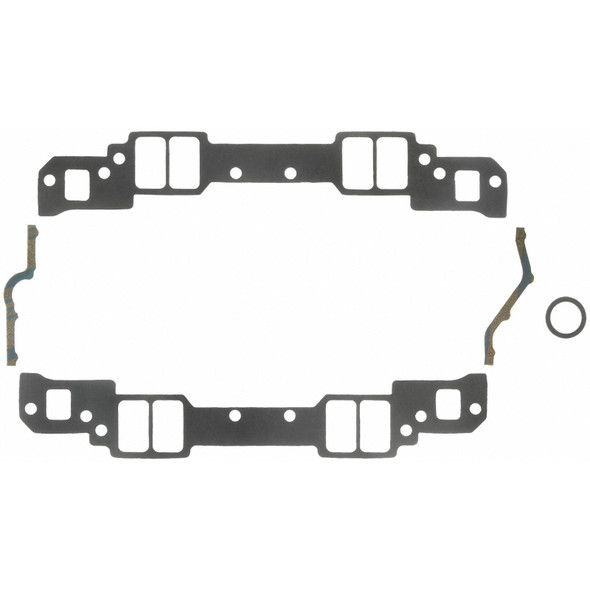

Fel-Pro 1282 Engine Intake Manifold Gasket Set - 1282
Fel-Pro
$32.38Do I need to use sealant with these gaskets?Fel-Pro Intake Manifold Gaskets are engineered for a perfect seal without additional sealants for optimized airflow and power on custom builds.Can these...$32.38 -


Fel-Pro 1278 Engine Intake Manifold Gasket Set - 1278
Fel-Pro
$30.67Can I install these gaskets myself?These performance intake manifold gaskets are designed for precision, recommending professional installation to ensure optimal engine performance and proper fitment...$30.67 -

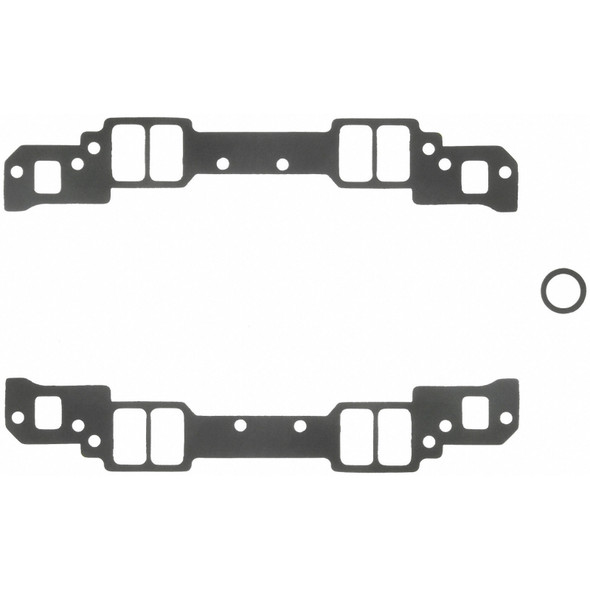
Fel-Pro 1277 Engine Intake Manifold Gasket Set - 1277
Fel-Pro
$30.81What does the Fel-Pro intake manifold gasket set include?Fel-Pro intake manifold gaskets are engineered for the repair environment, ensuring a reliable seal on all included components for your...$30.81 -

Fel-Pro 1276 Engine Intake Manifold Gasket Set - 1276
Fel-Pro
$42.35What is the primary function of an intake manifold gasket?Intake manifold gaskets create a critical seal between the intake manifold and the cylinder head, preventing air leaks and ensuring optimal...$42.35 -

Fel-Pro Engine Intake Manifold Gasket Set - 1275
Fel-Pro
$27.19What is the primary function of an intake manifold gasket?Intake manifold gaskets create a critical seal between the intake manifold and cylinder head for optimal engine performance and efficiency...$27.19
Intake gaskets are the precision sealing interface between the intake manifold, throttle body, or air intake system and the engine's cylinder head or intake ports — a failed or incorrectly specified gasket introduces air leaks that lean out the air-fuel mixture, trigger misfires, and erase every horsepower gain you've built elsewhere. Motor Sport Mayhem stocks 54 intake gaskets across 49 brands, from budget-friendly OE replacements at $4.95 to race-grade multi-layer steel units reaching $4,012.37, so you can seal the system correctly whether you're refreshing a daily driver or building a dedicated track car.
Our Top Picks for Intake Gaskets
Every product below was selected based on verified performance credentials, material quality, and real-world results across street and competition applications.
AEM IND Cold Air Intakes
AEM Induction | $629.99
Engineered with matched intake sealing surfaces that eliminate air leaks from filter to throttle body for consistent, measurable power delivery.
- OEM-plus fitment tolerances ensure zero-leak clamping without gasket distortion under heat cycling
AFE Black Series Stage-2 Carbon Fiber Cold Air Intakes
aFe | $1,606.00
Carbon fiber construction paired with heat-resistant sealing gaskets maintains dimensional stability under extreme thermal load where aluminum tubes would expand and leak.
- Stage-2 designation confirms optimized inlet geometry with all interface seals pre-fitted for guaranteed airtight assembly
AIR Cold Air Intake Kit
Airaid | $472.99
Complete kit includes all necessary intake sealing components so there are no gaps in the air charge path from the filter housing to the throttle body flange.
- Airaid's dry-media filter system pairs with precision-molded coupler seals rated for continuous high-heat underhood environments
PA Alta Intake
Alta | $369.75
Purpose-built for forced-induction applications where intake seal integrity is critical — a leaking coupler or port gasket on a boosted engine causes immediate boost loss and tuning errors.
- Application-specific design means sealing surfaces are matched to OEM port dimensions, eliminating the step mismatches that cause turbulence and gasket blowout
AMS Air Intakes
AMS | $999.95
AMS builds their intake systems with race-proven sealing strategies developed from high-horsepower competition platforms where unmetered air entering after the MAF sensor directly corrupts fuel trims.
- Open airbox design uses precision-machined flanges and gaskets to maintain a controlled sealing environment even in high-vibration competition use
ARB Safari V-Spec Snorkels
ARB | $699.95
Snorkel-to-airbox sealing is one of the most overlooked failure points in off-road intake systems — ARB's V-Spec design uses gasket-sealed entry heads rated for full water immersion to prevent hydrostatic lock.
- UV-stabilized polyethylene body with vulcanized entry seals maintains structural integrity and airtight performance across extreme temperature swings
AWE S-FLO Intakes
AWE Tuning | $1,895.00
AWE's S-FLO carbon intake system incorporates a fully sealed charge path with silicone coupler gaskets that hold integrity under both positive and negative pressure cycles common in twin-turbo applications.
- Carbon fiber tube paired with laser-trimmed gasket mating surfaces ensures consistent clamping load without the crush deformation seen in cheaper fitments
BAJ Powersports Hood Scoop Kits
Baja Designs | $432.95
Hood scoop-to-airbox sealing is mechanically identical to intake manifold gasket function — both must maintain a sealed positive-pressure boundary, and this kit includes the foam and rubber seals needed to do it correctly in powersports applications.
- Designed for turbocharged powersports duty where vibration and chassis flex would quickly destroy a poorly sealed scoop-to-intake junction
GBE Monster-Ram Intake
Banks Power | $898.00
Banks Power's Monster-Ram replaces the factory intake manifold with a high-flow unit engineered with a precision-machined mounting face and supplied gaskets that handle the thermal expansion cycles of a diesel working under sustained load.
- Manifold-to-head gasket sealing is a critical constraint on diesel intake systems — Banks engineers this interface to OEM-plus tolerances so torque specs hold across the full temperature range
BBK Cold Air Intake Kit
BBK | $449.99
BBK's cold air intake kit ships with all required couplers and sealing hardware so there are no gaps introduced at the throttle body inlet or mass airflow sensor mounting point — two of the most common leak locations on performance intake installs.
- CARB EO certification requires verified airflow and emissions integrity, which indirectly confirms the sealing system meets a defined performance and leak standard
How to Choose the Right Intake Gaskets
The single most important specification in an intake gasket is its ability to maintain a gas-tight seal across the full thermal cycle of your engine — from cold startup through sustained wide-open throttle operation — without creeping, cracking, or compressing beyond its rated crush tolerance. A gasket that fails at operating temperature introduces unmetered air after the MAF sensor, causing lean conditions, misfires, and incorrect fuel trim adaptations that no tune can fully correct while the leak exists. Material selection, port matching, and correct torque sequence are the three variables that separate a gasket that lasts the life of the intake manifold from one that fails at the first track day.
Key Specifications
Material is the first decision point. Composite fiber gaskets — typically graphite or aramid-reinforced — offer excellent compressibility and conformability to slightly irregular flange surfaces, making them the right choice for street applications where bolt torque is moderate and surfaces may not be perfectly flat. Multi-layer steel (MLS) gaskets use embossed steel layers that create localized sealing beads under high clamping load; they require a smooth, properly surfaced flange to function correctly but offer superior resistance to high-cylinder-pressure blowout and thermal deformation at the port edge. Silicone-coated versions of both types add a secondary chemical seal that compensates for minor surface irregularities without requiring flange resurfacing.
Port matching is a performance consideration that most buyers overlook. An intake gasket with a port opening smaller than the intake manifold runner restricts airflow and creates a turbulence-inducing step; one with an opening larger than the port exposes a ledge of gasket material to hot gases that will eventually cause erosion and delamination. Correctly matched port dimensions — ideally within ±0.5mm of the manifold and head port openings — ensure both maximum flow and long-term sealing durability. On performance builds with ported heads or aftermarket manifolds, the gasket port should be hand-matched or ordered oversized and trimmed.
Bolt pattern and thickness both affect clamping distribution. A gasket that is too thick increases the compressed volume above the piston, altering compression ratio — relevant on high-compression naturally aspirated builds or boosted applications where every point of compression ratio is measured. Most performance intake gaskets target a compressed thickness between 0.040" and 0.080"; race applications often use thinner MLS units below 0.030" to minimize this effect. Ensure the gasket's bolt pattern exactly matches the manifold flange — any mismatch shifts the clamping load off-center and creates a high-leak-risk zone on the opposite side of the port.
For forced induction applications, pressure rating becomes a critical specification that naturally-aspirated buyers never need to consider. Boosted intake manifolds operate under positive pressure that actively works to unseat the gasket, which means the sealing bead geometry and material compression resistance must be rated above your peak boost pressure with meaningful safety margin. High-boost applications running more than 20 psi of manifold pressure should use MLS or solid-core copper gaskets with a re-torque procedure specified by the manufacturer.
Intake Gasket Material and Application Reference Guide
| Gasket Material | Recommended Application | Boost / Pressure Rating | Typical Compressed Thickness |
|---|---|---|---|
| Composite Fiber (Graphite / Aramid) | Street N/A, mild performance refresh | Atmospheric only (0 psi boost) | 0.060"–0.090" |
| Silicone-Coated Composite | Street performance, moderate boost | Up to 10 psi | 0.055"–0.080" |
| Multi-Layer Steel (MLS) — 2-Layer | Performance N/A, low-boost forced induction | Up to 18 psi | 0.030"–0.050" |
| Multi-Layer Steel (MLS) — 3-Layer | High-boost turbo / supercharger builds | 18–30+ psi | 0.025"–0.045" |
| Solid Copper | Race engines, extreme boost, high-temp diesel | 30+ psi / diesel manifold pressure | 0.020"–0.040" (annealed) |
| Rubber-Bonded Steel (RBS) | Throttle body flange, low-vibration sealing | Up to 15 psi at flange | 0.040"–0.060" |
Price Guide
Entry ($4.95–$175): OE-equivalent composite gaskets designed for stock replacement on naturally aspirated engines — correct material for the application, meets factory torque specs, and will outlast the original if installed cleanly. The honest assessment is that there is nothing wrong with this tier for a street vehicle returning to stock configuration; the money saved is better spent elsewhere in the build.
Mid-range ($175–$800): This is where most performance enthusiasts land, and for good reason — mid-range intake gaskets step up to silicone-coated composite or entry-level MLS construction, include port-matched options for common aftermarket manifolds, and often ship as part of complete intake system kits from brands like Airaid, BBK, and aFe that include all coupler seals and hardware. The jump in material quality translates directly to leak-free operation on modified engines where heat cycling, higher torque output, and occasional boost pressure stress the OE gasket beyond its design limits.
Premium ($800–$4,012.37): Multi-layer steel units, full copper gasket sets, and race-engineered intake manifold kits with billet-quality sealing surfaces live here — justified by competition duty, extreme boost levels, diesel applications running sustained high exhaust back-pressure, or builds where the cost of a gasket failure (seized engine, destroyed turbo, contaminated intercooler) far exceeds the price of the gasket itself. If your build has a four-figure engine or more than 20 psi of boost, this is the segment where spending correctly protects the investment upstream.
Who Is This For?
Intake gaskets serve every segment from routine maintenance to full race engine assembly, and the usage data across our catalog reflects that range clearly.
Engine Performance — 8.6/10
This is the highest-scoring use case in our catalog at 8.6 out of 10 across 198 products, and it makes mechanical sense: an intake gasket is a direct constraint on engine performance because any air leak between the intake system and the combustion chamber is power the engine calculated for but never received. A correctly specified, properly installed intake gasket is not a glamorous upgrade, but it is the baseline condition that all other engine performance modifications depend on — you cannot accurately tune an engine that is breathing through a leaking seam. For builders working on engine components upgrades, sealing integrity at every gasket interface is non-negotiable before dyno time.
Street Performance — 8.1/10
Street performance scores 8.1 out of 10 across 197 products, essentially tied with engine performance, which reflects the reality that the vast majority of intake gaskets sold are going into street-driven vehicles where reliability across thousands of heat cycles matters as much as outright performance. A street performance gasket needs to survive cold starts in winter, sustained highway cruising, and occasional hard acceleration without weeping hydrocarbons or admitting air — composite and silicone-coated materials are typically the right call here because they tolerate the thermal expansion of aluminum manifolds on stock-torqued fasteners better than rigid MLS designs that require perfectly prepared surfaces.
Easy DIY Install — 8.1/10
An 8.1 out of 10 install score across 147 products signals that intake gaskets are genuinely accessible to experienced home mechanics — intake manifold removal is a common DIY procedure on most engines, and replacing the gasket requires only standard hand tools, a torque wrench, and attention to the manufacturer's torque sequence. The critical technique is following a cross-pattern torque sequence in multiple stages rather than torquing each bolt to spec in order, which distributes clamping load evenly across the sealing surface and prevents warping the manifold flange. Clean mating surfaces and correct fastener torque — not special tools — are what separate a leak-free result from a comeback job.
Track / Autocross — 7.3/10
Track and autocross applications score 7.3 out of 10 across 154 products, reflecting that competition use places real additional stress on intake sealing that OE-equivalent gaskets are not always designed to handle. Sustained high-RPM operation generates more heat cycling per session than a year of street driving, vibration from aggressive driving can work loose a gasket that was borderline on clamping load, and the higher manifold vacuum of a performance engine at high RPM increases the mechanical work done against the gasket's sealing bead on every intake stroke. Track-use intake gaskets should be inspected at every service interval and replaced proactively rather than waiting for a detectable leak.
Drag Racing — 7.2/10
Drag racing scores 7.2 out of 10 across 117 products, and the specific challenge in that application is the violent pressure differential experienced at wide-open throttle — the intake manifold transitions from near-atmospheric at idle to full manifold vacuum under load to positive boost pressure on forced-induction builds, all within a fraction of a second at the launch. MLS and copper gaskets are the correct specification for drag racing duty on boosted engines because their rigid construction resists the sudden load reversals that cause composite gaskets to micro-crack at the port edge over time. For high-horsepower naturally aspirated drag builds, a thinner gasket also means less compressed volume, which preserves the static compression ratio the engine was built around.
Trusted Intake Gaskets Brands We Carry
The brands that dominate our intake gasket and intake system catalog have earned that position through engineering depth, not marketing spend. aFe Power brings aerospace-influenced filtration and sealing engineering developed across hundreds of platform-specific applications, with material testing that covers both street longevity and track durability. K&N Engineering has been manufacturing intake sealing solutions since 1969 and holds ISO 9001 certification — their quality management standards are verifiable, not claimed. AEM Induction designs intake systems with sealing surfaces held to tolerances tighter than OEM, which matters when an aftermarket manifold must interface cleanly with a cylinder head that was not machined to the same spec. Banks Power approaches intake sealing from a diesel performance and towing background, where thermal stress on manifold gaskets is orders of magnitude more severe than in gasoline applications, producing gasket solutions that routinely outlast the stock parts by significant margins. Mishimoto and Airaid both supply complete intake kits with all sealing hardware included — an important practical distinction because building a leak-free intake system from mixed components requires matching gasket, coupler, and clamp specifications that these brands do the engineering work on in advance.
Frequently Asked Questions
Are AEM and K&N the same company?
AEM Induction and K&N Engineering are separate, independent companies with distinct ownership, engineering teams, and product development philosophies. K&N was founded in 1969 and built its reputation around oiled cotton gauze air filtration technology; AEM was founded in 1987 with a focus on performance electronics and intake systems engineered for measurable dyno-verified power gains. Both brands compete in the cold air intake and filtration market, and both produce high-quality products, but they are not related corporate entities and their products are not interchangeable — fitment, filter media, and intake tube geometry differ between the two brands on the same application.
Are aftermarket intake manifolds worth it?
An aftermarket intake manifold is worth the investment on any engine that has been modified beyond the point where the factory runner length, plenum volume, and port cross-section are the limiting factor — typically once cam, cylinder head, or forced induction work has been completed. The factory intake manifold is designed by OEM engineers as a compromise between peak power, low-end torque, emissions compliance, packaging constraints, and cost; an aftermarket unit can optimize runner length for a specific RPM power band and increase plenum volume for better throttle response at wide-open throttle. The critical caveat is that a new intake manifold requires a correctly specified intake gasket — the sealing interface between the manifold and head is the first place that power gains are lost if the gasket spec does not match the new manifold's port dimensions and bolt pattern.
Are cold air intakes actually worth it?
A properly designed cold air intake delivers measurable power gains by moving the air filter away from underhood heat and reducing intake restriction relative to the factory airbox — typical gains on a naturally aspirated engine range from 5 to 15 horsepower depending on how restrictive the OEM system was. The thermodynamic principle is straightforward: cold air is denser than hot air, so the engine ingests more oxygen molecules per intake stroke, supporting more fuel combustion and producing more power. The sealing integrity of the intake system matters enormously here — a cold air intake that draws cold air but leaks warm underhood air through a poorly seated coupler or a cracked gasket at the throttle body flange will partially or fully negate the thermal benefit. The investment is worth it on vehicles with demonstrably restrictive stock intakes; the gain is smaller on vehicles where the factory intake was already well-engineered.
Are closed box intakes better than open ones?
Closed box air intake systems outperform open designs in most real-world street and track conditions because the sealed enclosure physically isolates the air filter from hot underhood air — the same principle that makes a cold air intake effective, but achieved through housing geometry rather than filter relocation. An open conical filter mounted in the engine bay draws from whatever air temperature surrounds it, which on a hot engine after a hard run can be 30 to 50 degrees Fahrenheit warmer than ambient, meaningfully reducing air density and power output. The gasket and sealing quality of the closed box lid-to-housing interface is the weak point of this design — a box that breathes through a poorly sealed lid edge provides none of the thermal isolation it was designed for. For track and autocross use where underhood temperatures are elevated and sustained, the closed box with a dedicated cold air feed is the correct choice.
Are carbon fiber intakes worth the premium cost?
Carbon fiber intake tubes and airboxes carry a genuine engineering justification beyond aesthetics: carbon fiber has dramatically lower thermal conductivity than aluminum, meaning the tube itself does not absorb and radiate heat from the engine bay into the intake charge the way a metal tube does. On a track car or any vehicle where sustained power output matters, this thermal isolation effect contributes to more consistent air density across a session. The premium cost is justified on high-horsepower or competition builds where the marginal air temperature reduction translates to consistent power; on a street vehicle that sees occasional spirited driving, the thermal benefit is smaller and the cost-to-benefit ratio tilts toward aluminum. The sealing surfaces on carbon fiber intakes also require careful inspection at installation — carbon's dimensional stability is excellent, but the gasket and coupler interfaces must still be verified for correct clamping load since carbon does not deform to compensate for a loose fit the way aluminum does.
Building something specific? Our performance specialists can help you select the right Intake Gaskets for your application — street, track, or full race build.