
Body
- Product
- Qty in Cart
- Quantity
- Price
- Subtotal
-

Acerbis 24-25 Royal Enfield Himalayan 450 Chain Guide-Block - Black - ACERBIS2986330001
Acerbis
MSRP: $87.95$66.16MSRP: $87.95$66.16 -
 MSRP: $219.99$178.21
 -

Acerbis 24+Triumph TF250-X/ TF450-X Chain Guide- Black - ACERBIS2986350001
Acerbis
MSRP: $87.95$66.16MSRP: $87.95$66.16 -
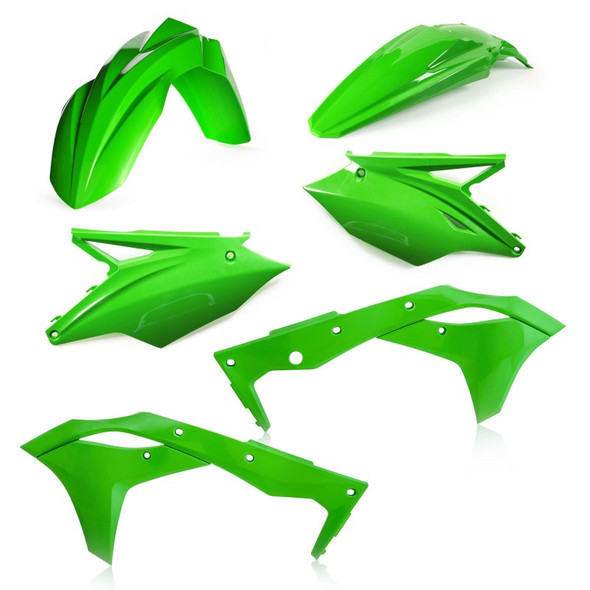 MSRP: $157.95$118.82
 -
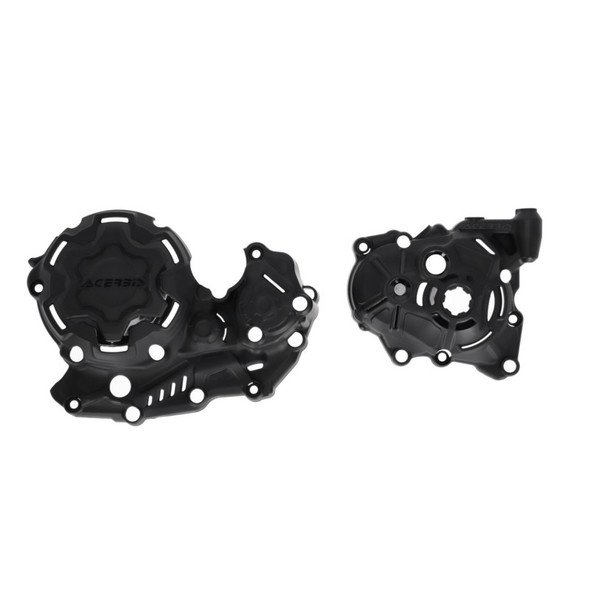 MSRP: $76.95$57.89
 -

Acerbis 21+ Kawasaki KX250 KX250X/19-23 KX450 Plastic Kit - Black - ACERBIS2736280001
Acerbis
MSRP: $157.95$118.82MSRP: $157.95$118.82 -
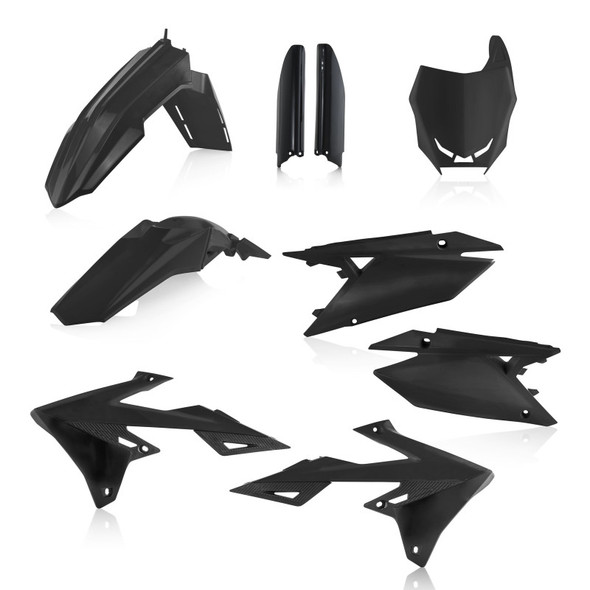
Acerbis 18+ Suzuki RMZ250/ RMZ450 Full Plastic Kit - Black - ACERBIS2686550001
Acerbis
MSRP: $193.95$145.90MSRP: $193.95$145.90 -
 MSRP: $66.61$53.97
 -

Cycra 13-15 KTM 125 SX Powerflow Radiator Shrouds - Black - CYCRA1CYC-1899-12
Cycra
MSRP: $94.95$76.93MSRP: $94.95$76.93 -

Cycra 16-18 KTM 125 SX Piece Replica Body Kit - Black - CYCRA1CYC-9417-12
Cycra
MSRP: $149.95$121.48MSRP: $149.95$121.48 -

Cycra 19+ Suzuki RMZ-250 5-pc Replica Body Kit - Yellow - CYCRA1CYC-9430-55
Cycra
MSRP: $149.95$121.48MSRP: $149.95$121.48 -

Cycra 19-22 Husqvarna FC250 5-pc Replica Body Kit - White - CYCRA1CYC-9429-42
Cycra
MSRP: $149.95$121.48MSRP: $149.95$121.48
Motocross and off-road body components serve two engineering functions simultaneously: protecting critical chassis and mechanical systems from impact and abrasion, and optimizing airflow and ergonomics for rider performance. Motor Sport Mayhem stocks 673 body parts spanning protective plastics, full body kits, frame guards, swingarm protectors, and disc brake covers — all priced between $14.22 and $246.39 with same-day shipping on in-stock items.
Our Top Picks for Body
Each of these kits was hand-selected based on material quality, fitment accuracy, and proven results across racing and recreational riding.
ACB Body Kit
Acerbis | $202.75
A complete OEM-profile full plastic replacement kit molded from high-density polyethylene for impact resistance that holds geometry under repeated stress.
- Full-coverage replacement that restores factory fitment tolerances without trimming or modification
CYC Body Kit
Cycra | $246.39
Cycra's Powerflow system uses aerodynamically contoured shrouds engineered to channel air directly toward the radiator for measurable cooling efficiency gains at race pace.
- Integrated airflow ducting is a genuine aerodynamic engineering feature, not a styling detail
How to Choose the Right Body
The single most important decision in off-road body selection is material grade — virgin high-density polyethylene (HDPE) versus recycled or blended polymer compounds. Virgin HDPE maintains consistent flex memory across temperature cycles, which means panels that take a hit in cold morning conditions return to profile rather than creasing permanently. Recycled compounds are cheaper to produce and often indistinguishable by appearance, but they develop stress fractures at mounting tabs after repeated impacts — exactly the failure point that costs you a race day. UV stabilizer content matters equally: panels without adequate UV inhibitors chalk and embrittle within two seasons of sun exposure, accelerating crack propagation from the surface inward.
Key Specifications
Panel thickness is a direct proxy for impact resistance, and it varies significantly across product tiers. Competitive-grade front fenders and side panels typically run 2.5–3.5mm wall thickness at the stress points around fork leg clearances and frame tab slots. Budget panels often measure 1.8–2.2mm at those same points, which is adequate for casual trail riding but will crack on the first hard laydown at speed. Measure at the tab area, not the face of the panel — manufacturers can inflate overall appearance of thickness by adding material to cosmetically visible flat surfaces while leaving the structural mounting zones thin.
Fitment tolerance is the second critical spec. Factory OEM panels are produced to ±0.5mm dimensional tolerances on critical mounting holes and tab slots. Aftermarket panels from quality manufacturers hold ±1.0mm, which installs without modification. Lower-tier imports routinely run ±2–3mm variance, requiring drilling, slotting, or heat-forming tabs to achieve flush panel gaps — and those gaps directly affect how well the panels manage dirt, water ingestion, and airflow to the engine and air filter. Loose panels also vibrate against the frame, wearing through protective coatings and creating stress risers.
For protective components specifically — frame guards, swingarm protectors, and disc covers — the substrate material shifts from polyethylene to either molded polypropylene composite or dual-layer co-polymer with a sacrificial outer face bonded to a rigid inner shell. The outer face is designed to abrade against rocks and roost rather than transmitting that force to the frame. Guard thickness of 4–6mm at the contact face is the minimum for genuine rock impact protection; thinner guards function more as mud shields than true protective armor. Look for guards with rubber-backed mounting surfaces — bare plastic-on-frame contact telegraphs vibration and can wear through powder coat over a full season.
Color consistency across kits matters if you are running a matched livery, but it also serves as a quality indicator. Manufacturers who achieve consistent colorfast results across an entire kit — panels, guards, and covers — are running tightly controlled pigment dispersion in a consistent base resin. Color variation within a kit, visible in side-by-side comparison, signals inconsistent resin batches and unreliable mechanical properties across the set. White and black are the most consistent colors industry-wide; saturated colors like yellow, red, and orange are where resin batch discipline separates manufacturers most clearly.
Motocross Body Panel Material & Protection Reference
| Component Type | Recommended Material | Minimum Wall Thickness | Primary Failure Mode if Underspec'd |
|---|---|---|---|
| Front Fender | Virgin HDPE | 3.0mm at fork clearance zone | Cracking at fork tube relief cutout under flex |
| Side Panels / Shrouds | Virgin HDPE with UV inhibitor | 2.5mm at frame tab slots | Tab fracture after repeated engine heat cycles |
| Rear Fender | Virgin HDPE or PP blend | 2.8mm at subframe mount | Mount hole elongation leading to panel rattle |
| Frame Guards | Co-polymer with rubber backing | 4.0mm contact face | Frame powder coat wear and guard delamination |
| Swingarm Protectors | Polyurethane or PP composite | 5.0mm at chain contact zone | Chain saw-through exposing bare aluminum |
| Disc Brake Covers | Polypropylene composite | 3.5mm minimum | Deflection under rotor heat causing disc contact |
Price Guide
Entry ($14.22–$79.00): Individual protective components — frame guards, disc covers, swingarm sliders, and filter wraps — fall primarily in this range. These are the right buy when you need targeted protection on a specific vulnerable area without replacing an entire body kit. Quality varies significantly at this tier; stick with established brands and verify material specs before buying on price alone.
Mid-range ($79.00–$180.00): This is where most serious weekend riders and club racers land, covering full fender sets, matched shroud and side panel combinations, and upgraded guard kits with rubber backing and hardware. At this price point, fitment accuracy tightens noticeably and UV stabilizer content is typically adequate for multiple seasons of use.
Premium ($180.00–$246.39): Complete body kit systems with aerodynamic engineering — integrated airflow management, matched panel geometry across all components, and race-validated mounting systems — occupy this bracket. The cost is justified for competition riders where consistent panel fitment eliminates distracting vibration and aerodynamic shroud design contributes to thermal management at sustained race pace.
Who Is This For?
Off-road body components serve a wide spectrum from casual trail riders replacing crashed panels to professional competitors chasing every thermal and aerodynamic advantage.
Easy DIY Install — 8.0/10
Body components score the highest DIY install rating in our catalog at 8.0 out of 10, and for good reason — the majority of panel and guard replacements require only basic hand tools and follow the same bolt pattern as OEM parts. Most full panel swaps take under an hour for a rider who has done it once. The few exceptions are aerodynamic kit systems that require minor trim work to integrate with factory mounts, but even those include detailed fitment instructions that eliminate guesswork.
Visual / Aesthetic Upgrade — 7.6/10
At 7.6 out of 10 across 192 products, visual upgrade is the second-strongest use case in the category — and it's honest, not just cosmetic vanity. A full color-matched body kit is often the fastest way to rebuild a crashed bike's identity and resale value. Beyond aesthetics, riders who take pride in their bike's appearance tend to inspect panels more frequently, catching hairline cracks before they become failures mid-ride.
Weekend Off-Roading — 7.5/10
Weekend off-roaders represent the largest product count in the usage matrix at 196 products and score 7.5 out of 10 for relevance. Rocks, logs, roost, and repeated low-speed tip-overs are the primary abuse vectors for this crowd, making protective guards and impact-resistant panel materials more important than aerodynamic refinement. A well-chosen combination of frame guards, swingarm protectors, and durable panels will survive years of technical trail riding without replacement.
Overlanding / Expedition — 7.3/10
Overlanding applications score 7.3 out of 10, reflecting a specific need for panels and guards that can withstand multi-day sustained abuse in remote environments where replacement parts are not available. Durability and resistance to UV degradation take priority over weight savings here. Expedition riders frequently add supplemental frame and skid protection beyond a standard kit to cover areas that see repeated brush and rock contact on long-distance routes.
Serious Rock Crawling — 7.4/10
Rock crawling scores 7.4 out of 10 despite only 24 products in that use case, indicating that the products which do apply are highly relevant to the application. Frame guards and heavy-duty swingarm protectors with thick co-polymer construction are the primary components here, where slow-speed sustained contact with granite and basalt demands abrasion resistance over flexibility. Riders in this discipline typically prioritize guard coverage area and material hardness over weight, since rock crawling speed negates any aerodynamic consideration.
Trusted Body Brands We Carry
Acerbis has been manufacturing motocross plastics since 1973 and holds OEM supplier relationships with multiple factory race teams, which means their material specifications and fitment tolerances are validated at the highest level of the sport. Cycra entered the market with a focused engineering brief around airflow-optimized body systems, and their shroud designs have been independently validated for cooling efficiency improvements over standard panel profiles. Beyond these two primary suppliers, the broader body protection market draws from specialists including UFO Plast — one of the original Italian motocross plastic manufacturers — along with Twin Air for filter protection components, Polisport for budget-conscious full replacement kits, and Maier for legacy OEM-profile panels where factory replacement accuracy is the priority. Each of these manufacturers brings distinct engineering heritage: UFO and Polisport from European GP racing development, Twin Air from filtration science applied to protective wraps, and Cycra from American desert racing where thermal management under sustained high-speed load is non-negotiable.
Frequently Asked Questions
Are frame guards actually worth it?
Frame guards are worth every dollar if you ride in rocky or wooded terrain, and they are non-negotiable for anyone running an aluminum-frame bike. Aluminum frames develop surface notches from rock strikes that become fatigue crack initiation points — a process that is completely invisible until the frame fails. Quality guards with rubber-backed mounting surfaces also prevent the frame powder coat from wearing through at high-contact zones, which is where corrosion accelerates on bikes that see mud and water. The cost of a set of frame guards is a fraction of a frame repair or replacement, and the installation takes fifteen minutes.
Are swingarm protectors worth it?
Swingarm protectors are worth it specifically to prevent chain wear-through on the swingarm's upper surface — a damage mode that is slow, invisible, and expensive to fix once it reaches bare metal. On bikes with tight chain-to-swingarm clearance, chain slap under load will cut through unprotected aluminum within a single season of hard riding. A co-polymer swingarm protector with adequate thickness at the chain contact zone sacrifices itself instead of the structural component. Secondary benefit is rock and roost protection on the lower swingarm surface, which is particularly relevant in rocky terrain where lateral impacts are common.
Are disc brake covers worth it?
Disc brake covers are worth it in specific riding environments — primarily sand, deep mud, and heavily wooded trails where debris ingestion into the rotor and caliper area is a real risk. A disc cover prevents the kind of rock or stick impact that bends a rotor or damages caliper seals, which are failures that end a ride immediately. In open desert or motocross track conditions where debris is fine-grained and the rotor stays clean naturally, covers add weight without meaningful benefit. The relevant calculus is the cost of a bent rotor or damaged caliper versus the cost of the cover — in technical terrain, the cover wins that math easily. For more on brake system components that work alongside disc protection, see our Brakes, Rotors & Pads section.
Do Acerbis frame guards improve grip?
Acerbis frame guards are not designed as a grip enhancement product — their primary function is impact and abrasion protection for the frame rails. However, the textured outer surface on most guard designs does provide incidental grip improvement at the knee-frame contact zone, which riders with narrow leg positioning notice when standing on the pegs. This is a byproduct of the material's surface finish rather than an engineered grip feature, and it should not be the primary purchase justification. If grip at the frame is the primary concern, purpose-built grip tape or frame grip overlays are the correct solution; if protection is the goal, frame guards deliver that with the grip benefit included.
Do filter wraps restrict airflow?
A quality filter wrap does not meaningfully restrict airflow when properly maintained and sized correctly for the filter housing. The wrap's function is to block large debris from loading the primary filter element in severely dusty or muddy conditions, extending service intervals without sacrificing filtration efficiency at the element itself. Where restriction problems occur is when a wrap is used past its service life — a saturated or clogged wrap creates measurable intake restriction that will reduce power output and increase engine temperature. In normal use, the pressure drop across a clean wrap is negligible. For the complete picture on intake filtration, our Air Filters category covers filter elements, wraps, and servicing in full detail.
Building something specific? Our performance specialists can help you select the right Body for your application — street, track, or full race build.