
Wheel Bearings
- Product
- Qty in Cart
- Quantity
- Price
- Subtotal
-


Pivot Works 83-06 Yamaha PW80 Rear Wheel Bearing Kit - PWRWK-Y28-001
Pivot Works
MSRP: $30.54$20.68Exact OEM replacement bearing and seal kit. Each kit includes the necessary components to rebuild each wheel. Double sealed ball bearings keep moisture and contamination from entering bearing. Seals...MSRP: $30.54$20.68 -

Pivot Works 12-13 Kawasaki Teryx 4 4x4 Rear Wheel Bearing Kit - PWRWK-K39-000
Pivot Works
$67.97Exact OEM replacement bearing and seal kit. Each kit includes the necessary components to rebuild each wheel. Double sealed ball bearings keep moisture and contamination from entering bearing. Seals...$67.97 -

Pivot Works 06-13 Kawasaki KVF650 I Brute Force Rear Wheel Bearing Kit - PWRWK-K16-430
Pivot Works
$80.75Exact OEM replacement bearing and seal kit. Each kit includes the necessary components to rebuild each wheel. Double sealed ball bearings keep moisture and contamination from entering bearing. Seals...$80.75 -
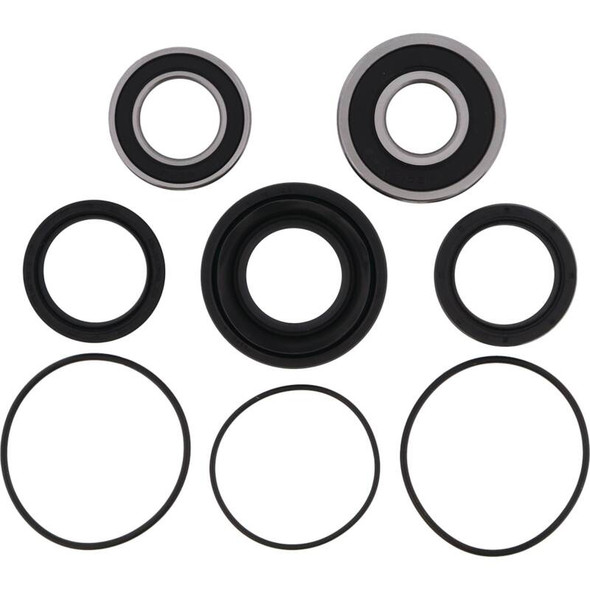

Pivot Works 14-23 Honda TRX420 FA Solid Axle Rear Wheel Bearing Kit - PWRWK-H72-000
Pivot Works
MSRP: $61.75$41.81Exact OEM replacement bearing and seal kit. Each kit includes the necessary components to rebuild each wheel. Double sealed ball bearings keep moisture and contamination from entering bearing. Seals...MSRP: $61.75$41.81 -

Pivot Works 06-15 Can-Am Outlander 400 STD 4x4 Rear Wheel Bearing Kit - PWRWK-C01-000
Pivot Works
MSRP: $90.18$61.06Exact OEM replacement bearing and seal kit. Each kit includes the necessary components to rebuild each wheel. Double sealed ball bearings keep moisture and contamination from entering bearing. Seals...MSRP: $90.18$61.06 -

Pivot Works 14-20 Yamaha Viking 700 Front Wheel Bearing Kit - PWFWK-Y55-000
Pivot Works
MSRP: $92.65$62.73Exact OEM replacement bearing and seal kit. Each kit includes the necessary components to rebuild each wheel. Double sealed ball bearings keep moisture and contamination from entering bearing. Seals...MSRP: $92.65$62.73 -
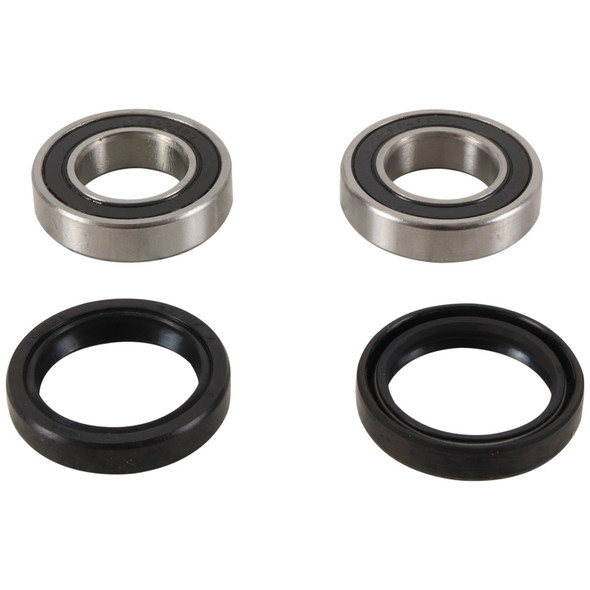
Pivot Works 01-08 Suzuki RM125 Front Wheel Bearing Kit - PWFWK-S07-021
Pivot Works
MSRP: $45.85$31.04Exact OEM replacement bearing and seal kit. Each kit includes the necessary components to rebuild each wheel. Double sealed ball bearings keep moisture and contamination from entering bearing. Seals...MSRP: $45.85$31.04 -


Pivot Works 06-11 Polaris Hawkeye 2x4 Front Wheel Bearing Kit - PWFWK-P02-530
Pivot Works
$70.07Exact OEM replacement bearing and seal kit. Each kit includes the necessary components to rebuild each wheel. Double sealed ball bearings keep moisture and contamination from entering bearing. Seals...$70.07 -


Pivot Works 15-23 Honda TRX420 FA IRS Front Wheel Bearing Kit - PWFWK-H56-000
Pivot Works
MSRP: $71.91$48.69Exact OEM replacement bearing and seal kit. Each kit includes the necessary components to rebuild each wheel. Double sealed ball bearings keep moisture and contamination from entering bearing. Seals...MSRP: $71.91$48.69 -

Pivot Works 01-14 Honda TRX250X / EX Sportrax Front Wheel Bearing Kit - PWFWK-H05-400
Pivot Works
MSRP: $45.85$31.04Exact OEM replacement bearing and seal kit. Each kit includes the necessary components to rebuild each wheel. Double sealed ball bearings keep moisture and contamination from entering bearing. Seals...MSRP: $45.85$31.04 -


Pivot Works 06-15 Can-Am Outlander 400 STD 4x4 - Front Wheel Bearing Kit - PWFWK-C01-000
Pivot Works
MSRP: $90.18$61.06Exact OEM replacement bearing and seal kit. Each kit includes the necessary components to rebuild each wheel. Double sealed ball bearings keep moisture and contamination from entering bearing. Seals...MSRP: $90.18$61.06 -

All Balls Racing 2015 Polaris Hawkeye 325 2x4 Tapered DAC Rear Upgrade Kit - 25-1788-HP
All Balls Racing
MSRP: $69.17$65.71Are these bearings compatible with my vehicle?ABR Tapered Dac Wheel Bearings require careful fitment confirmation with your specific vehicle model for guaranteed compatibility and optimal performance...MSRP: $69.17$65.71
Wheel bearings are the precision interface between your rotating hub assembly and the static knuckle or spindle — when they fail, handling precision collapses and catastrophic wheel separation becomes a real risk. Motor Sport Mayhem stocks 116 wheel bearings across 92 brands, priced from $1.99 to $4,999.99, covering everything from daily drivers to purpose-built race machines.
Our Top Picks for Wheel Bearings
Every product below was hand-selected based on proven performance, engineering quality, and real-world results across street, track, and off-road applications.
ACT Mod-Twin Kits
ACT | $2,104.00
Built exclusively for competition use, this twin-disc system handles extreme torque loads that destroy OEM drivetrain components at the hub.
- Engineered for sustained high-RPM engagement cycles where bearing preload and hub concentricity are critical to power delivery
AON Clutch - Twin - 7.25in
Action Clutch | $1,377.45
The chromoly flywheel pairing reduces rotational mass at the hub interface, directly improving response time through the drivetrain.
- Twin-disc geometry distributes clamping load more evenly across the hub face, reducing heat-induced bearing preload loss
AFE Diff/Trans/Oil Covers
aFe | $430.00
Machined aluminum construction keeps transmission fluid temperatures in check, which directly protects the bearing surfaces inside the gearbox.
- Increased fluid capacity buffers thermal spikes during tow, drag, or track use where bearing lubrication is most at risk
ABR Prop Shafts
All Balls Racing | $790.35
Prop shaft integrity is inseparable from wheel bearing longevity — driveline vibration from a worn shaft accelerates bearing fatigue faster than almost any other factor.
- All Balls Racing specs tighter U-joint and carrier bearing tolerances than OEM, reducing the oscillating radial loads that destroy hub bearings prematurely
AMS Master Cylinder Conversion
AMS | $494.95
A properly sized master cylinder ensures consistent hydraulic pressure delivery across all four corners, which matters when you're relying on bearing-mounted hub assemblies to handle lateral cornering loads.
- Improved pedal modulation reduces brake-induced thrust loads on wheel bearings during hard deceleration events
ARB Air Locker Kits
ARB | $2,604.95
ARB air lockers are the gold standard for selectable traction control in off-road applications, engaging cleanly without the shock loading that hammers wheel bearings in e-locker or open-diff wheel spin events.
- Pneumatic engagement eliminates the sudden torque spike that causes axle bearing fatigue in aggressive off-road conditions
ART Easy Link Kit
Artec Industries | $1,484.99
Proper suspension geometry from a well-engineered link kit keeps axle alignment consistent, which is one of the most overlooked factors in preventing premature wheel bearing wear on lifted or modified suspension setups.
- Geometry-corrected link positioning reduces the misalignment-induced moment loads that destroy bearing raceways in lifted applications
ATS Flex Plates
ATS Diesel | $804.99
Billet SFI-certified flexplates eliminate the harmonic torsional vibration that transmits through the drivetrain and into wheel bearing assemblies on high-torque diesel applications.
- SFI 29.3 certification ensures the flexplate meets the same safety and dimensional standards demanded of purpose-built race drivetrain components
GBE Diff Covers
Banks Power | $425.00
A thermally efficient differential cover keeps axle lubricant viscosity stable under load, directly protecting the tapered roller bearings inside the differential carrier.
- Increased oil capacity in the differential housing buffers the thermal load spikes that thin out gear oil and starve pinion and carrier bearing surfaces
BBK Clutch Cable & Fwall Adjt
BBK | $169.99
Precise clutch engagement geometry from an adjustable cable and firewall kit eliminates the driveline shock loading that telegraphs directly into front wheel bearing assemblies on rear-wheel-drive performance builds.
- Adjustable engagement point allows tuning for smooth, consistent torque transfer that reduces the axial shock loads responsible for spalling bearing raceways prematurely
How to Choose the Right Wheel Bearings
The single biggest mistake enthusiasts make when buying wheel bearings is treating them like a commodity — any bearing of the right diameter will do. That thinking is responsible for repeat failures, because what separates a quality wheel bearing from a failure-prone one comes down to steel grade, internal clearance tolerances, cage material, and sealing design. OEM-spec bearings use bearing steel that meets ISO 683-17 or DIN 17230 standards, and quality aftermarket units match or exceed those specs. Cheap offshore replacements frequently use softer steel that Brinells under load, meaning the ball or roller track indents under cornering forces and the bearing fails prematurely. For performance and race applications, the gap between budget and quality units widens dramatically.
Key Specifications
Internal clearance — expressed as C2, C3, or standard — is one of the most critical and least discussed specs on a wheel bearing. Standard clearance is fine for daily driving. C3 (loose clearance) is preferred for applications with significant thermal cycling, like track use or towing, because it allows the bearing to expand into its operating clearance without binding. C2 (tight clearance) finds application in precision preloaded setups where zero play is required, such as rear wheel drive axle shaft bearings running against a dedicated preload spacer. Using the wrong clearance class causes either premature fatigue from overload or noise and slop from excessive play.
Sealing matters as much as the bearing itself in off-road and track applications. Contact seals — also called RS or 2RS type — physically rub the inner ring and provide superior contamination exclusion, making them the right call for muddy, wet, or gritty environments. Non-contact shields (ZZ type) reduce friction fractionally but allow fine contamination to enter under high-pressure wash conditions, which is a real failure mode on vehicles driven hard in wet conditions. For sealed hub bearing assemblies used in front-wheel-drive and modern independent rear suspension setups, look for units with dual-lip contact seals and ABS tone ring integration that matches your OEM sensor air gap specification — typically 0.3 to 0.8mm — or your ABS system will throw codes post-installation.
Load ratings are published as dynamic (C) and static (C0) load capacity in kilonewtons. The dynamic rating tells you what radial load the bearing can sustain for one million revolutions at standard life expectancy — the L10 life calculation. For a street car, OEM load ratings are adequate. For track, drag, or off-road builds where cornering G-forces, shock loads, or jump landings multiply the normal radial and axial forces on the hub, you need bearings rated at or above the calculated equivalent dynamic load including the application's duty cycle. Heavier vehicles and wider track widths both increase the moment arm acting on the outer bearing, making load rating selection especially critical on lifted or widened builds. When in doubt, go to the next load rating step up — the bearing's physical size difference is usually minor and the life improvement under race or trail conditions is substantial.
Hub bearing units — the flanged, bolt-in Generation 2 and Generation 3 units used on most modern passenger cars and light trucks — have simplified installation but added complexity to specification. Gen 3 units integrate the ABS sensor ring and sometimes even the CV joint interface into a single sealed assembly. These units must be spec'd to the exact OEM flange bolt pattern, flange OD, and hub bore dimensions, with no tolerance for substitution. Aftermarket units from quality manufacturers maintain these dimensions within ±0.01mm — cheap units routinely deviate enough to cause rotor runout, vibration, and premature failure of adjacent suspension components.
Wheel Bearing Load Rating and Application Reference Guide
| Application Type | Typical Radial Load Range | Recommended Bearing Type | Minimum Dynamic Load Rating (C) |
|---|---|---|---|
| Light passenger car — street/daily | 2–5 kN equivalent dynamic load | Gen 2/3 sealed hub unit, standard clearance | 20–30 kN |
| Performance street / sport compact | 4–8 kN, elevated cornering loads | Gen 3 hub unit or angular contact, C3 clearance | 30–45 kN |
| Track / autocross (unmodified weight) | 6–12 kN sustained lateral load | Angular contact or heavy-duty hub unit, C3 | 45–60 kN |
| Drag racing (straight-line, high HP) | High axial shock load at launch | Tapered roller or heavy-duty sealed unit | 50–80 kN axial capacity priority |
| Off-road / overlanding (stock height) | 3–8 kN with shock/impact loads | Sealed hub unit, contact seal, C3 clearance | 35–55 kN |
| Lifted / modified off-road | 8–18 kN due to increased moment arm | Heavy-duty tapered roller or upgraded hub unit | 60–100 kN minimum |
Price Guide
Entry ($1.99–$100): Individual bearings, seals, and hardware for straightforward replacements on older vehicles with serviceable tapered roller assemblies — these are appropriate for shop stock, routine maintenance, or low-stress applications where OEM-equivalent quality is all that's required. Inspect carefully for steel grade and country of manufacture before purchasing for any performance application.
Mid-range ($100–$500): This is where most street performance and track-day enthusiasts should be shopping — quality sealed hub bearing assemblies from established manufacturers, heavy-duty tapered roller sets with upgraded cage materials, and differential bearing kits with proper preload shims. You get tighter tolerances, better sealing, and verified load ratings that hold up under repeated stress cycles.
Premium ($500–$4,999.99): Full bearing kit systems for high-horsepower builds, complete axle and differential rebuilds with race-grade bearing sets, and purpose-built motorsport hub assemblies with ceramic or hybrid ceramic construction — justified for dedicated competition vehicles, high-output diesel builds, or professional off-road race programs where bearing failure means a DNF or worse.
Who Is This For?
Wheel bearings serve a wider range of applications than almost any other drivetrain component — the usage data across our catalog reflects that spread clearly, with strong representation from drag racing at one end and weekend off-roading at the other.
Drag Racing — 8.1/10
Drag racing scores highest in our usage matrix for this category, and the reason is straightforward: a hard launch applies enormous axial thrust loads to the front hub bearings simultaneously with the rear bearings absorbing the full torque multiplication of a slipping tire biting hard. Factory hub assemblies on high-horsepower builds are often the first unaddressed weak point — they're sized for normal driving, not 60-foot times under maximum torque. Heavy-duty tapered roller assemblies and upgraded hub units that specify higher static and dynamic load ratings are essential on any serious drag build, and they need to be paired with proper axle drivetrain components to handle the full load path.
Racing Competition — 8.0/10
At 8.0/10, dedicated racing competition is a primary use case for the premium end of this catalog — sealed angular contact hub units, ceramic hybrid bearings, and race-spec tapered roller assemblies all appear here. High-G cornering loads in road racing multiply the radial loads on outer bearings by three to four times compared to street driving, and the sustained thermal cycling of endurance racing degrades standard bearing grease past its service threshold within a single race. Proper bearing selection, correct preload, and a defined service interval are non-negotiable at this level.
Track / Autocross — 7.8/10
Track and autocross use sits at 7.8/10 — slightly below outright racing because the duty cycles are shorter, but still well above street use in terms of demands on the bearing. Autocross specifically subjects hub bearings to repeated high-lateral-G direction changes at speeds where the tire is right at its grip limit, producing large momentary radial loads that are harder on bearings than sustained cornering. Upgraded hub units with higher dynamic load ratings are a smart investment here, particularly on front-wheel-drive platforms where the front bearings carry both lateral cornering loads and driving torque simultaneously. Check your suspension geometry at the same time — any toe or camber error amplifies bearing wear dramatically.
Street Performance — 7.7/10
Street performance scores 7.7/10 with 192 products applicable — the largest product count in the matrix — because the vast majority of customers upgrading wheel bearings are doing so on modified street cars that have outgrown their OEM hub assemblies. Power upgrades, wider tires, lowered suspension, and increased use on spirited backroads all push OEM bearings past their intended service envelope faster than the factory engineers designed for. A quality aftermarket sealed hub unit at the mid-range price point delivers meaningfully better durability here without any sacrifice in ride quality or noise.
Weekend Off-Roading — 7.7/10
Matching street performance at 7.7/10 with 82 products, weekend off-road use puts a specific and underappreciated type of stress on wheel bearings — impact shock loading from rocks, ledges, and water crossings combined with mud and water contamination that attacks sealing integrity. Hub bearing failures on trail vehicles are often traced back not to overload but to seal failure from a single high-pressure water crossing that forced contaminated water past the contact seal lip. For off-road applications, specifying sealed hub units with double-lip contact seals and higher contamination ratings is as important as the load rating.
Trusted Wheel Bearings Brands We Carry
The brands in our wheel bearing catalog were chosen based on engineering pedigree, manufacturing tolerances, and demonstrated performance in real-world competition and trail environments. Yukon Gear & Axle supplies bearing kits that meet or exceed OEM dimensional tolerances and are a staple in axle rebuild work for serious off-road and high-power applications. All Balls Racing has built a strong reputation in the powersports space with complete bearing and seal kits that address the full wheel-end system, not just individual components. Exedy brings decades of OEM transmission and drivetrain supplier experience to their bearing-adjacent drivetrain components, with material specs traceable to OEM engineering standards. ARB's engineered axle and locker systems are designed with bearing service life as a core design parameter, not an afterthought. EBC Powersports addresses the full rotating assembly ecosystem with components spec'd for track and competition duty. ACT and Clutch Masters both engineer their hub-interfacing drivetrain components around the bearing load paths, ensuring that power delivery hardware doesn't introduce destructive misalignment into adjacent bearing assemblies.
Frequently Asked Questions
Are aftermarket wheel bearings as good as OEM?
Quality aftermarket wheel bearings from established manufacturers are fully equal to OEM — and in some cases better — because they use the same bearing steel grades, meet equivalent ISO or DIN dimensional tolerances, and often carry higher load ratings than the original factory part. The key word is quality: the aftermarket is flooded with low-cost units that use softer steel, looser tolerances, and inferior sealing that fails early under any real stress. Look for manufacturers who publish dynamic load ratings, specify steel grade, and have a track record in motorsport applications. For performance and race builds, purpose-built aftermarket hub assemblies will outperform the OEM part because they're specifically engineered for higher loads and thermal cycles than the factory ever designed for.
Are air lockers better than e-lockers?
For serious off-road use, air lockers are generally the preferred choice over e-lockers because they engage and disengage more cleanly, operate independently of the vehicle's electrical system, and hold their engagement reliably under the sustained loads of technical trail driving. E-lockers are electrically actuated and can be slower to engage, more susceptible to failure in water crossings where electrical connections are compromised, and can disengage unexpectedly if the solenoid or wiring is damaged. The engagement characteristic also matters for bearing life: air lockers engage with a smoother pneumatic action that introduces less shock loading to the differential and axle bearings compared to the snap engagement of some e-locker designs. That said, e-lockers have improved significantly and are a viable choice for moderate off-road and overlanding use where the electrical system is well-maintained.
Are air lockers reliable?
ARB air lockers have an extremely well-documented reliability record across decades of serious off-road and competition use, and air locker systems broadly are considered among the most dependable selectable traction devices available when properly installed and maintained. The weak points in any air locker system are the air line routing, the compressor integrity, and the solenoid sealing — all of which are addressable with correct installation and periodic inspection. The locking mechanism itself — a precision machined steel dog-tooth assembly — is mechanically simple and extremely robust when kept properly lubricated. Running quality synthetic differential fluid and servicing the axle seals on schedule are the two most important maintenance items for preserving both the locker mechanism and the surrounding wheel bearing assemblies it depends on.
Are aftermarket differential covers worth it?
Aftermarket differential covers are worth it in any application where the differential runs hot, sees regular heavy loads, or operates in environments where the stock stamped-steel cover is a puncture risk. The increased fluid capacity alone — typically 20 to 50 percent over stock depending on the unit — meaningfully extends bearing and gear service life by buffering thermal spikes and maintaining viscosity above the threshold where lubrication film breaks down on bearing surfaces. Machined aluminum and nodular iron covers also dissipate heat faster than stamped steel, keeping fluid temperatures lower during sustained towing, trail driving, or repeated track runs. For lifted trucks, rock crawlers, or any vehicle that sees regular loaded operation, a quality differential cover is inexpensive insurance against the kind of bearing and gear damage that requires a complete axle rebuild to fix.
Are aftermarket brake discs any good?
Quality aftermarket brake rotors from reputable manufacturers are absolutely good, and for performance applications they often outperform OEM parts in specific areas like heat dissipation, fade resistance, and rotor life under repeated hard stops. The differentiating factors are metallurgy and dimensional precision — rotors cast from G3000 or higher grade iron with proper carbon content hold up to thermal cycling without cracking, while lower-grade castings develop micro-cracks at the friction surface that propagate under heat stress. Dimensional accuracy matters for wheel bearing health specifically: a rotor with excessive lateral runout creates a cyclic axial load on the hub bearing every wheel revolution, accelerating bearing fatigue significantly. For track and performance street use, slot-cut or combination slotted and drilled rotors offer measurable improvements in gas and debris evacuation from the friction interface — see our full selection of brakes, rotors, and pads for application-specific options.
Building something specific? Our performance specialists can help you select the right Wheel Bearings for your application — street, track, or full race build.