
Brake Rotors - OE
- Product
- Qty in Cart
- Quantity
- Price
- Subtotal
-

EBC 13-18 BMW R 1200 GS LC/Radial Mounted Caliper-Disc Fitting Kit Required Rear Left Standard Rotor - MD8001
EBC Powersports
MSRP: $168.49$160.06Are these direct bolt on replacements for my stock rotors?EBC Standard Rotors are direct size for size replacements for OEM rotors, ensuring perfect fitment with your vehicle's existing brake system...MSRP: $168.49$160.06 -

EBC 17-24 Yamaha YZ 125 Front CX Extreme Rotors - MD6392CX
EBC Powersports
MSRP: $275.77$261.98Are EBC CX Extreme Rotors compatible with my vehicle?EBC CX Extreme Rotors are designed for specific vehicle applications; confirm precise fitment for your motorcycle before ordering.Do EBC CX...MSRP: $275.77$261.98 -

EBC 09-14 Yamaha YFM 550 Grizzly FI 4WD Auto Front Left/Right Standard Brake Rotor - MD6291D
EBC Powersports
MSRP: $139.54$132.56Are EBC Standard Rotors a direct bolt-on replacement for my factory rotors?EBC Standard Rotors are direct size for size replacements, ensuring a perfect fit and hassle-free installation on your...MSRP: $139.54$132.56 -

EBC 13-24 Suzuki DR-Z 400 SM Front Left Standard Brake Rotor - MD6247D
EBC Powersports
MSRP: $317.28$301.42Are EBC Standard Rotors a direct replacement for my OEM rotors?EBC Standard Rotors are direct size-for-size replacements, ensuring a perfect fitment for your specific vehicle's OE rotor configuration...MSRP: $317.28$301.42 -

EBC 11-14 Yamaha XVS 1300 Stryker Rear Left Standard Rotor - MD2114
EBC Powersports
MSRP: $217.11$206.25What is the most important consideration when purchasing EBC Standard Rotors for my vehicle?EBC Standard Rotors require confirming precise vehicle fitment to ensure direct, bolt-on installation and...MSRP: $217.11$206.25 -
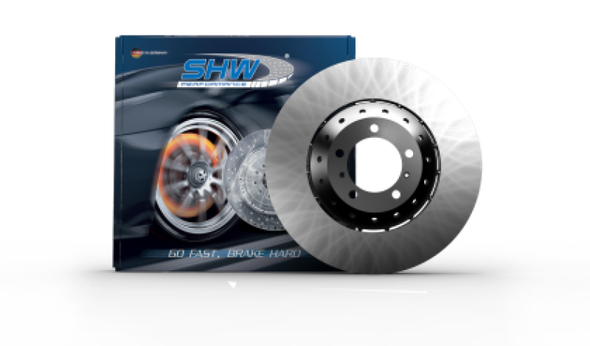
SHW 20-26 Audi A6 Allroad Premium Front Smooth Lightweight Brake Rotor (4K0615301G) - AFX45013
SHW Performance
MSRP: $489.83$408.82UV Coating for the entire disc. An environmentally friendly protective coating with a high resistance to corrosionUV Coating for the entire disc. An environmentally friendly protective coating with a...MSRP: $489.83$408.82 -

EBC 10-12 Ducati Hypermotard 796 Rear Left Standard Rotor - MD627
EBC Powersports
MSRP: $154.56$146.83Are EBC Standard Rotors direct fit replacements for my motorcycle?EBC Standard Rotors are direct size for size replacements, ensuring perfect fitment for your OEM rotors with no modifications needed...MSRP: $154.56$146.83 -

EBC 2004 ATK 250 2T Rear Left/Right CX Extreme Rotor - MD6035CX
EBC Powersports
MSRP: $120.95$114.90Are these rotors compatible with my vehicle?EBC CX Extreme Rotors are designed for specific vehicle fitments; always confirm compatibility before purchase to ensure proper installation and...MSRP: $120.95$114.90 -

EBC 17-23 Kawasaki Z 125 Pro Front Left Contour Profile Rotor - MD4171C
EBC Powersports
MSRP: $139.54$132.56What is the primary benefit of using EBC MD Contour Rotors for my motorcycle?EBC MD Contour Rotors deliver superior stopping power and consistent performance, enhancing your motorcycle's braking...MSRP: $139.54$132.56 -

EBC 03-10 Suzuki SV 650 Rear Left/Right Contour Profile Rotor - MD3060C
EBC Powersports
MSRP: $142.69$135.56Are these EBC MD Contour Rotors a direct replacement for my stock rotors?EBC MD Contour Rotors are engineered as direct bolt-on replacements, ensuring a seamless fitment for your specific Suzuki...MSRP: $142.69$135.56 -


DFC 71-74 BMW 3.0CS Front Brake Rotor - 600-31004
DFC
$47.17Engineered With Premium G3000/G11H18 Iron Castings For Strength, Stability, And DurabilityEngineered With Premium G3000/G11H18 Iron Castings For Strength, Stability, And DurabilityOriginal Equipment...$47.17 -

Brembo OE 11-17 Audi Q5/11-16 S4/11-17 S5/14-17 SQ5 Rear Disc Brake Kit - KT04344
Brembo OE
$280.85Are these rotors a direct fit for my vehicle?Confirm fitment with your vehicle's specific application before installation to ensure a precise and safe match for your Brake Rotors - OE.How do I...$280.85
OE brake rotors are direct-fit disc brake rotors manufactured to original equipment specifications or better — covering everything from daily-driven street cars to dedicated track builds — and Motor Sport Mayhem stocks 1,482 in-stock options across 53 brands, priced from under a dollar to over $3,700 for exotic multi-piece applications. Whether you're restoring factory stopping power or upgrading an entire corner with a big brake kit, OE-spec rotors deliver the dimensional accuracy, metallurgy, and surface finish that your calipers and pads were engineered to work with.
Our Top Picks for Brake Rotors - OE
Each of these products was hand-selected for its engineering quality, real-world performance value, and consistent results across street, track, and competition applications.
ALC Front Brake Kits
Alcon | $3,450.00
A complete front brake upgrade combining large-diameter rotors with multi-piston calipers for dramatic heat capacity and fade resistance under sustained heavy use.
- Alcon's motorsport-heritage engineering delivers race-spec clamping force and rotor mass in a bolt-on package
ABR Caliper Rebuild Kits
All Balls Racing | $73.99
A cost-effective caliper restoration solution that returns brake hydraulics to OE specification without the expense of replacing the entire caliper assembly.
- All Balls Racing seals and pistons meet or exceed OEM dimensional tolerances, preventing fluid bypass and restoring consistent pedal feel
AMS Brake Lines
AMS | $144.95
Stainless-steel braided construction eliminates the expansion inherent in OEM rubber lines, translating directly into a firmer pedal and more precise modulation.
- PTFE inner liner resists brake fluid breakdown and moisture absorption that degrades OEM rubber lines over time
ART ABS Kits
Artec Industries | $98.99
A complete ABS tone ring solution for axle conversion builds that need to retain factory anti-lock braking functionality after a drivetrain upgrade.
- 52-tooth ring gear pattern matches OEM ABS controller pulse requirements so no ECU recalibration is needed
BKM Brake Rotors
BikeMaster | $264.99
A solid OE-replacement rotor engineered to meet original thickness, runout, and hardness specifications for predictable, noise-free motorcycle braking.
- Precision-ground friction surfaces reduce bedding time and ensure even pad contact from the first ride
BKC Brake Caliper
Bikers Choice | $399.99
A direct OEM-replacement caliper that restores factory hydraulic geometry and clamping force for vintage motorcycle platforms where original units are no longer available.
- Black finish and period-correct banana caliper profile maintain factory aesthetics while delivering fully rebuilt hydraulic performance
BX Brake Master Cylinders
BLOX Racing | $124.80
An OE-bore replacement master cylinder that restores factory pedal travel and line pressure for non-ABS applications where the OEM unit has worn or leaked.
- Matched bore sizing preserves the original pedal ratio so feel and modulation remain consistent with the rest of the brake system
BMR Brake Kits for Conversions - D&S
BMR Suspension | $1,339.95
A bolt-on conversion brake kit pairing drilled-and-slotted rotors with multi-piston calipers for a significant step up in thermal capacity and stopping force over stock.
- 15-inch rotor diameter maximizes swept area and lever arm for faster heat dissipation under repeated hard stops
BRB Big Brake Kits
Brembo | $1,995.00
Brembo's GT series big brake kit delivers two-piece rotor construction and multi-piston cast calipers in a track-validated package that sets the benchmark for thermal management and pedal consistency.
- Two-piece floating rotor design allows the friction ring to expand independently under heat, dramatically reducing thermal distortion and warping
BRE OE Equivalent Rotors
Brembo OE | $1,798.75
A complete front disc brake kit sourced from the same supplier that built the original system, ensuring every tolerance, friction surface specification, and hydraulic interface matches factory engineering exactly.
- OEM-supplier provenance means no adaptation required — fit, feel, and ABS compatibility are identical to the original build
How to Choose the Right Brake Rotors - OE
The single most important factor separating a quality OE rotor from a cheap one is metallurgy: gray cast iron formulation, carbon content, and heat treatment determine how consistently the rotor maintains its friction surface under repeated thermal cycling. A rotor that warps under moderate street use almost always traces back to improper iron composition or insufficient thickness tolerances, not to the design itself. Look for rotors that specify runout tolerances of 0.001–0.003 inches and thickness variation under 0.0005 inches — these are the numbers that prevent pulsation complaints after 10,000 miles. Certifications from OEM suppliers (Brembo OE and DBA both supply directly to OEM programs) carry real meaning here; they indicate the manufacturing process has been validated against automaker quality standards, not just aftermarket durability tests.
Key Specifications
Rotor diameter and minimum thickness (Discard Thickness, or DT) are the two dimensions you cannot compromise on. Diameter is fixed by your hub and caliper bracket — you cannot run a larger rotor without a caliper relocation bracket, and you should never run a smaller-diameter rotor than OEM because it reduces the lever arm available to the caliper, directly reducing stopping torque. DT is stamped or cast into every quality rotor: once the rotor wears to that dimension through resurfacing or normal use, structural integrity and heat capacity are compromised and the rotor must be replaced.
Vane design inside the rotor hat is where thermal performance separates budget rotors from engineered ones. Straight vane rotors are directional-neutral and cost-effective for light-duty use. Curved vane rotors increase airflow through the rotor by 20–40% and are the standard on any performance or track-oriented OE application. Pillar-vane designs, common on high-mass performance rotors, provide additional structural support while maintaining airflow — they resist cracking under sustained thermal shock better than either straight or curved configurations.
Surface finish spec matters more than most buyers realize. A factory crosshatch or non-directional finish in the 60–125 microinch Ra range beds brake pads correctly and reduces initial noise. Rotors with overly smooth surfaces (below 30 Ra) cause glazing; overly rough surfaces (above 200 Ra) generate noise and accelerate pad wear in the first hundred miles. Quality brands machine their friction surfaces to a specified Ra range — budget rotors often skip the final finishing pass entirely.
Coating type affects longevity for everything except the friction surface. Black e-coat or zinc phosphate coatings on the hat, vanes, and outer edge prevent rust jacking — the process by which corrosion forces pad contact area inward, creating an uneven wear pattern and rotor lip. On vehicles in salt-belt regions, a coated rotor will outlast an uncoated one by 30–50% in calendar life, even when the friction surfaces wear at the same rate. The friction surface itself must remain uncoated; any surface treatment there will burn off unevenly during first bedding and potentially contaminate the pad material.
OE Brake Rotor Sizing Reference: Diameter, Thickness, and Application Class
| Vehicle Class / Application | Typical Rotor Diameter (Front) | Nominal Thickness (Front) | Discard Thickness (Front) |
|---|---|---|---|
| Compact / Sub-compact Street | 256–280 mm (10.1–11.0 in) | 22–24 mm | 19–21 mm |
| Mid-size Sedan / Coupe Street | 280–305 mm (11.0–12.0 in) | 25–28 mm | 22–25 mm |
| Full-size Sedan / Sport Coupe | 305–330 mm (12.0–13.0 in) | 28–32 mm | 25–29 mm |
| Performance / Sport Application | 330–380 mm (13.0–15.0 in) | 32–36 mm | 28–32 mm |
| Light Truck / SUV Street | 305–355 mm (12.0–14.0 in) | 28–34 mm | 24–30 mm |
| Heavy Truck / Tow / Off-Road | 355–400 mm (14.0–15.7 in) | 34–42 mm | 30–38 mm |
Price Guide
Entry ($0.20–$138): This range covers OE-replacement rotors for light-duty, low-stress applications — compact vehicles with modest power, vehicles driven conservatively, and powersports platforms where rotor mass and heat capacity demands are inherently low. DFC and R1 Concepts both operate heavily in this segment, offering serviceable metallurgy and acceptable surface finish for straightforward replacements. The honest caveat: at the very bottom of this range you are trading dimensional consistency for price, which often shows up as pedal pulsation within 15,000–20,000 miles.
Mid-range ($138–$700): This is where the majority of performance enthusiasts, track-day participants, and serious street drivers land, and for good reason. Brands like PowerStop, Stoptech, and EBC engineer their mid-range rotors with improved iron compositions, proper vane geometry, and protective coatings that extend service life in real-world conditions. The jump in metallurgy quality between entry and mid-range is measurable: better rotors in this range maintain their friction surface geometry through 30,000+ miles of mixed street and occasional track use without warping or significant thickness variation.
Premium ($700–$3,743.73): Premium OE and big brake kit territory is justified for vehicles that see sustained track use, competitive motorsport, or extreme towing loads where thermal capacity is genuinely the limiting factor in braking performance. Wilwood's average product price of $637 and Brembo's multi-piece kits approaching $2,000–$3,700 reflect real engineering costs: two-piece floating rotor construction, aerospace-grade aluminum hats, proprietary iron alloys, and extensive dyno and track validation programs. If your vehicle never exceeds street use with factory power levels, you will not use the capability you're paying for in this tier.
Who Is This For?
OE brake rotors serve an unusually wide user base — from daily commuters replacing worn hardware to professional motorsport teams who need rotor dimensions held to fractions of a millimeter under race conditions.
Street Performance — 8.3/10
This category scores highest for street performance, and the data reflects reality: the vast majority of OE rotor upgrades happen on vehicles driven hard on public roads where consistent bite, low noise, and durability under repeated hard stops matter most. An OE-spec or OE-plus rotor in the correct diameter with proper vane design handles everything a performance street driver encounters — emergency braking, mountain roads, track-day warm-up laps — without the NVH compromises or wear rates of aggressive race compounds. The 8.3 score reflects both product depth and genuine fitness for this application across hundreds of catalog options.
Track / Autocross — 7.8/10
Track and autocross applications demand rotors that can absorb repeated thermal cycles without warping, cracking, or depositing pad material unevenly — and OE-spec rotors in the right size class deliver this when combined with appropriate performance brake pads and proper bedding procedure. The 7.8 score reflects the category's strength at the entry-to-mid track level; sustained endurance racing eventually exceeds what a single-piece OE rotor can manage thermally, which is where two-piece floating designs earn their premium price. For HPDE events, autocross, and sprint days, however, a quality OE rotor in the correct application is entirely appropriate hardware.
Racing Competition — 7.5/10
Competition applications score well because many racing classes mandate OE-equivalent brake specifications, and because the rotor is only one part of a thermal management system that includes pad compound, fluid spec, and caliper design. In classes where big brake kits are permitted, the premium end of this catalog — multi-piece rotors with high-carbon iron friction rings — provides genuine competitive advantage in braking zone consistency across a full stint. The 7.5 rating acknowledges that dedicated race rotors (such as those from Wilwood and Alcon's competition line) occupy the top of this category's capability range.
Daily Driving Comfort — 6.4/10
A 6.4 for daily driving comfort is honest: OE brake rotors are not primarily an NVH product, and the rotor itself contributes relatively little to ride quality compared to shocks and struts or pad compound selection. Where rotor quality does affect daily comfort is in preventing pulsation — a warped or thickness-variable rotor creates a low-frequency brake pedal pulse that is immediately noticeable on the highway. Choosing a rotor with tight runout and thickness variation specs eliminates this complaint entirely, which is the primary comfort argument for spending slightly more than the absolute minimum on a daily driver replacement.
Easy DIY Install — 7.4/10
OE rotors are among the most DIY-accessible brake components in any catalog: on the vast majority of platforms, rotor replacement requires removing the wheel, the caliper, and the caliper bracket, then sliding the rotor off the hub — no specialty tools, no bleeding, no calibration. The 7.4 score reflects genuine ease of installation for most fitments, with the caveat that integrated parking brake drums, retained rotor hardware, and corrosion in rust-belt environments can add complexity. Following a proper bedding procedure after installation — progressive stops from moderate speed over 10–15 cycles — is the single most important post-install step and takes less than 15 minutes.
Trusted Brake Rotors - OE Brands We Carry
The brands that dominate this category do so through genuine engineering depth, not just catalog breadth. Brembo OE carries direct OEM-supplier status for numerous major automakers, meaning their rotors are often built on the same production lines as the parts your vehicle shipped with from the factory. EBC compounds their own friction materials and controls the iron specification on their rotors in-house, giving them direct traceability between rotor and pad performance that aftermarket-only brands cannot match. Stoptech's engineering team has published peer-reviewed thermal analysis on rotor vane geometry that has influenced how the broader industry approaches airflow modeling. Wilwood manufactures rotors and calipers to aerospace tolerances in their California facility, holding dimensional specs tighter than almost any other brand in this price class. DBA (Disc Brakes Australia) pioneered the T3 slotting pattern now used across the industry and brings genuine OEM supply relationships from the Australian and international markets. PowerStop rounds out the accessible performance tier with zinc-coated hats and consistent surface finish specs that outperform the average budget replacement at a price that makes full-axle upgrades practical for most buyers.
Frequently Asked Questions
Are aftermarket brake calipers any good?
Quality aftermarket brake calipers from established manufacturers are fully engineered replacements that meet or exceed OEM performance specifications. The key differentiators are bore sizing accuracy, seal material quality (EPDM seals outperform standard rubber in high-temperature applications), and casting integrity — a caliper with a porous casting will weep fluid under sustained heat regardless of how good the seals are. Brands with motorsport programs — Brembo, Wilwood, and Stoptech — validate their calipers against thermal cycles that far exceed street driving demands, giving them a documented performance margin over cheap no-name alternatives. For OEM replacement on a daily driver, any reputable brand will perform acceptably; for track use or high-performance street applications, stick to brands with verifiable engineering data behind their caliper designs.
Are Akebono brakes better than OEM?
Akebono is an OEM supplier to a significant number of major automakers, which means in many cases their aftermarket parts are genuinely the same component as the OEM part — just sold through a different channel. Their ceramic compound formulation produces lower dust output and reduced rotor wear compared to semi-metallic OEM pads, which translates to cleaner wheels and longer rotor service life on street-driven vehicles. The trade-off is that ceramic compounds generate less initial cold bite than semi-metallic, which some performance drivers notice as a softer pedal feel in the first few stops before the system reaches operating temperature. For daily driving comfort and rotor longevity, Akebono's OEM-supplier status makes them a legitimate upgrade over generic replacement parts; for track or aggressive street use, a dedicated performance compound from EBC or Hawk will outperform them in thermal stability.
Are black coated rotors worth it?
Black e-coat or zinc-based coatings on the non-friction surfaces of a rotor are worth the modest price premium in most real-world applications, particularly in high-humidity or salt-belt environments. The coating prevents oxidation on the hat, inner vanes, and outer edge — areas where rust formation can cause uneven thermal expansion, rotor lip buildup, and premature pad edge wear. The friction surfaces burn the coating off during the first bedding cycle, which is normal and expected; the benefit is entirely in protecting the structural and non-contact surfaces. On a vehicle that sits unused for extended periods, an uncoated rotor will develop surface rust on the friction face within 48 hours of exposure to moisture — this is cosmetic and clears after one stop cycle — but rust jacking in the vanes is structural and permanent, making coated rotors a sound long-term investment.
Are ABS tone rings magnetic?
Traditional passive ABS tone rings are ferromagnetic — they are machined from steel or cast iron and work by passing teeth past a stationary magnetic reluctor sensor, generating an AC voltage signal whose frequency the ABS controller reads as wheel speed. Active tone rings, used in most vehicles built after roughly 2000, embed a magnetic encoder ring (alternating north-south poles) into the bearing seal or hub assembly and work with a Hall-effect sensor that reads the magnetic field changes directly. Active systems require no minimum wheel speed to generate a signal, which is why modern ABS activates accurately at very low speeds whereas older passive systems had a defined minimum threshold. When replacing or converting axles, matching the correct tone ring tooth count and type (passive vs. active) to your ABS controller is critical — a mismatch will trigger ABS fault codes and disable the system entirely.
Are backing plates necessary?
Brake backing plates — also called dust shields or splash shields — serve a functional purpose beyond debris protection: they direct airflow through the rotor by acting as a partial shroud that forces air to enter through the center hat and exit through the vanes under forward motion. Removing them entirely can reduce rotor cooling efficiency by 10–15% depending on the vehicle's underbody aerodynamics and rotor vane design. On daily drivers and light performance applications they are worth retaining; on dedicated track builds where the cooling duct system has been redesigned, they are often removed or replaced with purpose-built ducting that actively channels cold air to the rotor center. Structurally, they also protect the caliper slider pins and brake hose from direct water and road debris impact, which extends caliper service life — particularly relevant on trucks and SUVs in off-road environments.
Building something specific? Our performance specialists can help you select the right Brake Rotors - OE for your application — street, track, or full race build.