
2-Stroke Pipes
- Product
- Qty in Cart
- Quantity
- Price
- Subtotal
-

FMF Racing Sherco 250/300SE 20-22 Factory Fatty Pipe - 025268
FMF Racing
MSRP: $329.99$274.96Hand-pounded seams for superior flow, lighter gauge metal for the Factory sound.Hand pounded seams for smooth flow transitions19-gauge steel on the header positionLighter 20-gauge steel on the...MSRP: $329.99$274.96 -

FMF Racing KTM 200XC-W 2011-16 Gnarly Pipe - 025143
FMF Racing
MSRP: $329.99$274.96Tractor-like bottom end pull, thicker midrange and rugged 18-gauge steel construction.O-rings includedThis Part Fits:YearMakeModelSubmodel2011-2016KTM200 XC-WBaMSRP: $329.99$274.96 -

FMF Racing KTM 200 XC/XCW 2006-10 Gnarly Pipe - 025087
FMF Racing
MSRP: $329.99$274.96Tractor-like bottom end pull, thicker midrange and rugged 18-gauge steel construction.O-rings includedThis Part Fits:YearMakeModelSubmodel2006-2009KTM200 XCBaseMSRP: $329.99$274.96 -

FMF Racing KTM 125 SX 2004-10/144 SX 2007-08/150 SX/XC 2009-10 Factory Fatty Pipe - 025076
FMF Racing
MSRP: $319.99$266.63FMF Racing KTM 125 SX 2004-10/144 SX 2007-08/150 SX/XC 2009-10 Factory Fatty PipeHand pounded seams for smooth flow transitions19-gauge steel on the header positionLighter 20-gauge steel on the...MSRP: $319.99$266.63 -

FMF Racing Suzuki RM250 2002 Fatty Pipe - 023006
FMF Racing
MSRP: $329.99$274.96The most copied pipe in the world and #1 best seller for FMF, the Fatty broadens the powerband and provides significant increases throughout.Increases throttle response and enhances over-revTru-Flo...MSRP: $329.99$274.96 -
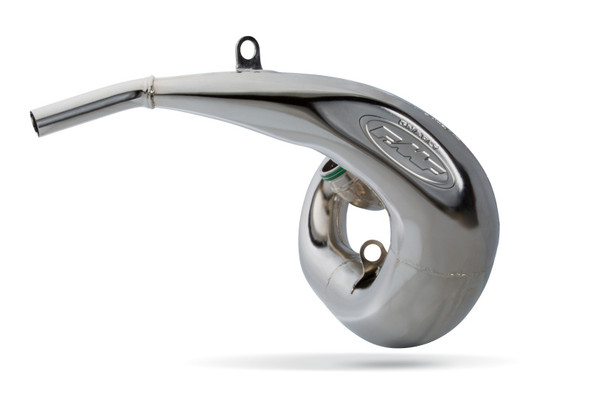
FMF Racing Kawasaki KX250 2005-07 Gnarly Pipe - 022053
FMF Racing
MSRP: $329.99$274.96Tractor-like bottom end pull, thicker midrange and rugged 18-gauge steel construction.O-rings includedThis Part Fits:YearMakeModelSubmodel2005-2007KawasakiKX250MSRP: $329.99$274.96 -

FMF Racing Kawasaki KX125 2004 Fatty Pipe - 022044
FMF Racing
MSRP: $319.99$266.63The most copied pipe in the world and #1 best seller for FMF, the Fatty broadens the powerband and provides significant increases throughout.Increases throttle response and enhances over-revTru-Flo...MSRP: $319.99$266.63 -
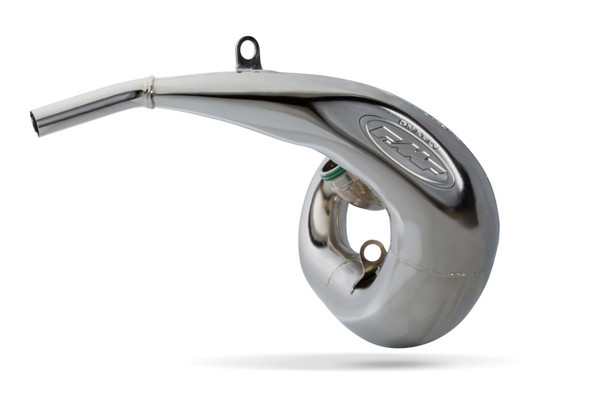
FMF Racing KTM 380 1998-02 Gnarly Pipe - 020081
FMF Racing
MSRP: $379.99$316.63Tractor-like bottom end pull, thicker midrange and rugged 18-gauge steel construction.O-rings includedMSRP: $379.99$316.63 -
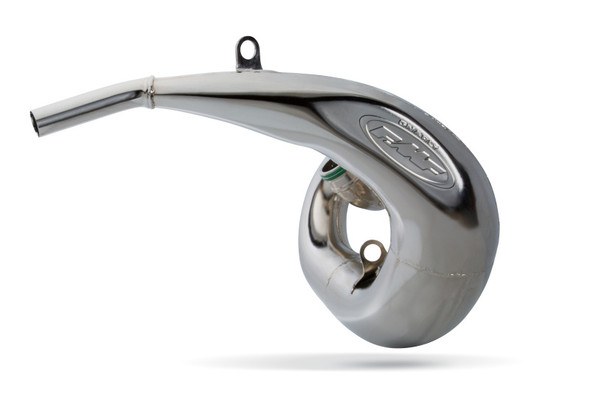
FMF Racing KTM 200EXC/MXC 1998-99 Gnarly Pipe - 020080
FMF Racing
MSRP: $349.99$291.63Tractor-like bottom end pull, thicker midrange and rugged 18-gauge steel construction.O-rings includedMSRP: $349.99$291.63 -

FMF Racing KTM 250/300 1990-97 Gnarly Pipe - 020079
FMF Racing
MSRP: $349.99$291.63Tractor-like bottom end pull, thicker midrange and rugged 18-gauge steel construction.O-rings includedThis Part Fits:YearMakeModelSubmodel1990-1997KTM250 EXCBasMSRP: $349.99$291.63 -

FMF Racing Kawasaki KX500 1988-04 Gnarly Pipe - 020055
FMF Racing
MSRP: $379.99$316.63Tractor-like bottom end pull, thicker midrange and rugged 18-gauge steel construction.O-rings includedThis Part Fits:YearMakeModelSubmodel1988-2004KawasakiKX500MSRP: $379.99$316.63 -
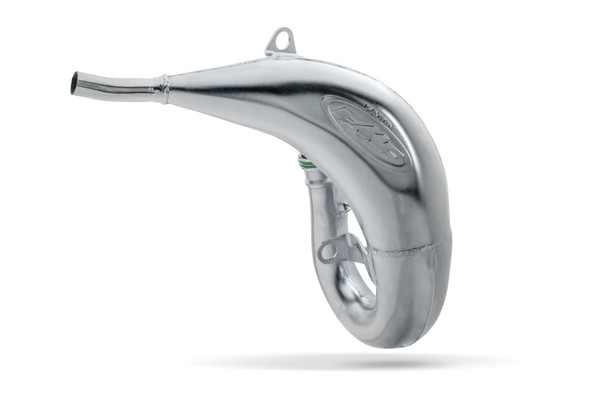
FMF Racing Kawasaki KX125 1995-97 Fatty Pipe - 020048
FMF Racing
MSRP: $329.99$274.96The most copied pipe in the world and #1 best seller for FMF, the Fatty broadens the powerband and provides significant increases throughout.Increases throttle response and enhances over-revTru-Flo...MSRP: $329.99$274.96
2-stroke pipes — properly called expansion chambers — are tuned exhaust systems that use precisely timed pressure waves to push unburned mixture back into the cylinder, directly controlling the powerband width and peak RPM where maximum horsepower is delivered. Motor Sport Mayhem carries 99 in-stock 2-stroke pipes from 64 brands, ranging from budget-friendly replacement units to full race-spec titanium systems built to competition tolerances.
Our Top Picks for 2-Stroke Pipes
Every product below was hand-selected based on demonstrated performance gains, material quality, and proven real-world results across street, trail, and track applications.
AFE Exhaust Cat Back
aFe | $2593.00
Mandrel-bent stainless steel construction with a stepped pipe diameter delivers measurable exhaust velocity gains and a deep, aggressive tone without drone.
- Full cat-back design reduces back-pressure across the entire RPM range for broad, usable power gains
AKR Slip-On Line - Titanium
Akrapovic | $5768.53
Full titanium construction cuts significant weight versus stock while meeting race-line sound and flow requirements for high-revving competition engines.
- Aerospace-grade titanium tubing offers the best strength-to-weight ratio available in any production exhaust system
AMS Downpipes
AMS | $2249.95
Large-diameter downpipes remove the most restrictive section of the factory exhaust path to dramatically lower exhaust backpressure on turbocharged platforms.
- Direct bolt-on fitment with precision CNC-machined flanges eliminates the leak points that plague universal-fit downpipe kits
ATS Exhaust Manifolds
ATS Diesel | $894.99
Pulse-flow manifold geometry maintains individual exhaust pulse separation to improve turbocharger spool speed and reduce thermal cracking common on cast-iron OEM units.
- High-grade stainless steel resists the extreme heat cycling that destroys factory diesel manifolds under towing and performance loads
AWE Axle-Back SwitchPath
AWE Tuning | $3895.00
Electronically switchable valve technology lets you toggle between a subdued street tone and full race volume without removing any hardware or cutting any wires.
- SwitchPath valve design is tested to outlast the vehicle in durability cycles, unlike budget butterfly-valve alternatives that seize or rattle loose
GBE Torque Tube Systems
Banks Power | $569.00
Torque-tube exhaust architecture is engineered specifically for low-end and mid-range torque recovery, making it the right solution for towing, off-road, and utility applications.
- Banks Power's dyno-validated tube sizing prioritizes torque curve width over peak horsepower numbers, which matters for real-world load conditions
BBK Full Header & Cat
BBK | $1499.99
Long-tube header and high-flow catted mid-pipe combination addresses two of the most restrictive points in the factory exhaust path in a single matched system.
- Silver ceramic coating reflects radiant heat away from the engine bay while protecting the tube walls from the oxidation that degrades uncoated steel headers
BDD Exhaust Brakes
BD Diesel | $1685.95
An exhaust brake creates backpressure on demand to use the engine as a compression retarder, dramatically reducing service brake wear and heat on long downhill grades.
- Universal 4-inch bore fits a wide range of diesel exhaust pipe diameters, with the included air compressor providing the actuation source without tapping existing air circuits
BIG EXO Aluminum ATV Dual Full System
Big Gun | $944.22
Dual full-system design replaces everything from the header to the tip in aluminum canister packaging that cuts weight and improves mid-to-top power on four-stroke ATV platforms.
- Big Gun's EXO series is tuned specifically for ATV powerbands, not adapted from motorcycle templates, which produces more usable gains in real riding conditions
BKM Exhaust Bungs B
BikeMaster | $12.99
Muffler repacking restores exhaust sound and flow characteristics that degrade as packing material breaks down under heat cycling and use.
- Fresh packing material is the lowest-cost maintenance item that directly affects both noise levels and power delivery on any 2-stroke or 4-stroke muffler canister
How to Choose the Right 2-Stroke Pipes
The expansion chamber is the single most influential performance component on any 2-stroke engine — more so than jetting, porting, or intake work — because its internal geometry physically determines where in the RPM range peak power occurs and how wide that powerband extends. A pipe tuned for a high-revving motocross application will actively hurt performance on a trail or enduro engine that needs broad, usable mid-range torque. Getting the pipe-to-application match wrong means leaving real power on the table regardless of how much you spend.
Key Specifications
The three geometric variables that define a 2-stroke expansion chamber's tuning characteristics are the header length, the mid-cone angle, and the diffuser-to-stinger ratio. The header pipe length controls where in the RPM band the primary resonance point falls — shorter headers push the powerband higher, longer headers broaden it toward the low and mid range. Mid-cone angle directly affects how aggressively the pipe "hits" its powerband: steep cone angles produce a sharp, narrow power spike suited to track racing, while shallower angles create the gradual, rolling power delivery preferred for trail riding and general use. Stinger diameter controls how much the pipe restricts outgoing exhaust flow and is the tuner's primary tool for adjusting top-end extension versus bottom-end torque.
Material selection affects weight, heat management, and longevity equally. Mild steel pipes are the lowest-cost option and weld easily for custom fabrication, but surface rust is a real concern in wet or humid climates without a proper heat-resistant coating. Stainless steel in 304 or 321 alloy resists corrosion and handles the thermal cycling of hard race use without fatiguing at the welds, and it's the standard for serious street and enduro builds. Titanium sits at the top of the material hierarchy — it matches stainless steel's corrosion resistance and heat tolerance at roughly 40 percent less weight, which matters significantly on lightweight motocross and off-road race machines where every gram of unsprung and rotating mass has measurable handling consequences.
Fitment tolerance is a specification that most buyers overlook until they're under the bike with a pipe that won't seat flush against the cylinder port. OEM-spec port diameter matching at the header flange is non-negotiable — even 1–2mm of mismatch creates a step that generates turbulence and disrupts the pressure wave timing the entire pipe geometry depends on. Quality aftermarket pipes will specify port-match diameter and should require no hand-blending at the gasket surface. Look for TIG-welded seams rather than MIG — TIG welds on thin-wall pipe tubing produce less heat distortion, tighter bead geometry, and more consistent wall thickness through the joint, all of which matter when the pipe is subjected to sustained high-temperature operation.
If you're running a forced induction setup on a modified 2-stroke or building a dedicated race engine, pipe selection needs to account for any changes to port timing or displacement — a pipe tuned for a stock engine will be significantly off on a modified one. Similarly, riders who are also evaluating air intake systems should coordinate those changes with pipe selection, since both components affect the engine's volumetric efficiency and must be tuned as a matched system for best results.
2-Stroke Expansion Chamber Tuning Reference: Powerband Target vs. Pipe Geometry
| Application / Powerband Target | Header Length (relative) | Mid-Cone Angle | Stinger Diameter |
|---|---|---|---|
| MX / Supercross (peak top-end power) | Short | Steep (10–14°) | Small (narrow top-end restriction) |
| Enduro / Trail (broad mid-range) | Long | Shallow (5–8°) | Medium (balanced flow) |
| Desert Racing (wide usable band) | Medium | Moderate (7–10°) | Medium-large |
| Kart Racing (high-RPM, narrow band) | Very short | Steep (12–16°) | Small |
| Road Racing / GP (peak mid + top) | Short-medium | Moderate-steep (9–13°) | Small-medium |
| Woods / Trials (low-end torque focus) | Long | Shallow (4–7°) | Large (minimal restriction) |
Price Guide
Entry ($3.99–$300): This range covers replacement pipes, muffler repacking kits, exhaust bungs, mounting hardware, and basic slip-on mufflers for recreational and trail use. You're getting functional parts that restore stock performance or deliver modest gains without significant engineering investment in pipe geometry. Suitable for casual riders, maintenance-focused builds, and applications where the engine isn't being pushed hard.
Mid-range ($300–$1,500): The majority of serious enthusiasts land in this range, where you find properly engineered expansion chambers and full systems from dedicated motorsport brands with real dyno development behind them. Material quality steps up noticeably — stainless steel construction, precision port-matched flanges, and verified powerband tuning for specific displacement and application classes. This is where the performance-per-dollar ratio is at its highest for most builds.
Premium ($1,500–$11,935.89): Full titanium construction, competition-homologated systems, hand-welded race-spec headers, and complete exhaust solutions for high-displacement or high-output platforms justify this investment for serious racers and professional builds. The cost reflects materials science, manufacturing precision, and application-specific dyno development — not branding. If weight, peak output, and competition legality are the primary requirements, premium systems deliver measurable, documentable differences over mid-range alternatives.
Who Is This For?
2-stroke pipe upgrades serve a wider range of riders and builders than most assume — from weekend trail riders chasing better mid-range response to professional race teams optimizing every last horsepower out of a competition engine.
Street Performance — 7.9/10
Street-oriented pipe systems score at the top of the usage matrix because the performance gains are immediately tangible in real-world riding — sharper throttle response, broader powerband, and improved pull through the rev range all translate directly to how the machine feels under power. For street-legal builds, sound levels and emissions compliance matter, so pipe selection needs to account for decibel limits and catalyst requirements where applicable. The 7.9 score reflects how consistently well-matched aftermarket pipes outperform factory exhaust systems on street applications across displacement classes.
Engine Performance — 7.9/10
The expansion chamber is a tuning tool as much as an exhaust component — its geometry actively shapes the engine's power delivery in ways that no other bolt-on modification can replicate. Matching pipe design to engine state of tune, displacement, and target RPM range is the difference between a pipe that adds 5 horsepower and one that adds 15 with a measurably wider powerband. A 7.9 engine performance score signals that buyers in this category are consistently seeing real, dyno-verifiable gains rather than subjective impressions.
Exhaust Note / Sound — 7.7/10
The acoustic signature of a properly tuned 2-stroke expansion chamber is distinct and recognizable — a sharp, mechanical crack at peak RPM that signals the pipe coming onto its powerband. Sound character varies meaningfully between pipe designs: shorter, steeper-cone pipes produce a harder, higher-pitched note while longer, shallower designs generate a deeper, more rolling sound. The 7.7 score here reflects that sound quality is a genuine performance indicator on 2-strokes, not purely cosmetic — a pipe that sounds right is usually one that is flowing and resonating correctly.
Easy DIY Install — 7.8/10
Most 2-stroke pipe systems are direct bolt-on replacements that require no cutting, welding, or specialized tooling — header flange removal, pipe swap, and gasket replacement is a straightforward job well within the capability of any mechanically inclined rider. The 7.8 install score is a genuine reflection of how accessible this category is compared to other performance modifications. Proper torque on the header flange and a fresh crush gasket are the two most important installation details — undertorqued flanges are the leading cause of exhaust leaks that throw off pipe pressure dynamics and produce visible power loss.
Racing Competition — 7.6/10
Competition-class 2-stroke pipe work is where engineering depth matters most — class rules often specify which pipe configurations are legal, and the difference between a well-chosen and poorly-chosen pipe in a spec-displacement class can determine whether you're consistently in the top three or fighting the midfield. Race-spec pipes are built to tighter tolerances, use lighter materials, and have verified dyno data behind the geometry claims. The 7.6 competition score reflects strong category representation across motocross, cross-country, and kart racing disciplines where 2-stroke pipe selection is a primary performance variable.
Trusted 2-Stroke Pipes Brands We Carry
FMF Racing built its reputation on decades of motocross and off-road pipe development with a dyno program that has validated gains on hundreds of displacement and application combinations — their average product price of $309.71 reflects accessible performance engineering rather than budget compromises. Big Gun targets the ATV and off-road segment with application-specific tuning that separates their catalog from motorcycle-derived designs adapted to fit. BikeMaster covers the maintenance and hardware side of the 2-stroke exhaust ecosystem, providing the consumable components that keep performance systems functioning correctly over time. On the broader exhaust systems side, brands like Akrapovic bring aerospace-grade titanium fabrication and competition homologation experience from world championship road racing programs directly to production pipe systems, while BBK delivers USA-engineered header and pipe systems backed by in-house CNC machining and documented dyno development. AWE Tuning rounds out the category with electronically integrated exhaust solutions for enthusiasts who need both street compliance and competition-level flow in one system.
Frequently Asked Questions
Are aftermarket exhaust tips worth it on a 2-stroke?
On a 2-stroke specifically, the stinger tip at the outlet of the expansion chamber is a functional tuning component, not a cosmetic one — diameter and length directly affect how the pipe's pressure wave dynamics behave and where the powerband falls. A larger stinger tip can push power higher in the RPM range and extend top-end at the expense of bottom-end torque, while a smaller stinger narrows the powerband but sharpens its peak. Standalone cosmetic exhaust tips bolted to the end of a slip-on muffler on a 2-stroke have minimal tuning effect, but any change to the effective outlet diameter of the stinger is a real tuning input. For 4-stroke applications, aftermarket exhaust tips are primarily aesthetic unless they alter the muffler's internal restriction characteristics.
Are aftermarket intake manifolds worth it on a 2-stroke?
On a 2-stroke engine, the intake manifold — typically the reed valve cage and boot assembly — is a meaningful performance component because reed valve response speed and petal material directly control how quickly the intake charge enters the crankcase at varying RPM. Aftermarket carbon fiber or fiberglass reed petals respond faster than stock steel or rubber units, improving throttle response and mid-range power, particularly on engines where the reed cage is a known restriction. The gains compound when intake manifold work is matched to a proper pipe upgrade, since both modifications affect the engine's breathing efficiency from opposite ends of the cycle. If you're exploring broader engine breathing improvements, the engine components category covers reed cages, cases, and related hardware.
Are Akrapovic exhausts worth the money?
Akrapovic systems command premium pricing because they are designed and manufactured to competition-grade specifications — full titanium construction, hand-TIG-welded seams, homologation documentation for sanctioned racing classes, and independently verified dyno gains that are published and reproducible. The weight savings alone are substantial: a titanium Akrapovic system can weigh 40–60 percent less than an equivalent stainless steel system, which on a lightweight race machine translates to real handling and power-to-weight improvements beyond the flow gains alone. For professional-level competition or high-end street builds where every measurable advantage matters, the price-to-performance ratio holds up. For recreational use, the mid-range options in this catalog deliver excellent real-world results at a fraction of the cost.
Are axle-back exhaust systems a good starting point?
Axle-back systems are the easiest exhaust upgrade to install and the most street-friendly in terms of emissions and tune compatibility, making them an excellent starting point for builders who want improved sound and modest flow gains without touching the catalytic converters or triggering check-engine codes. The trade-off is that axle-back systems modify only the muffler and tail section — the highest-restriction areas of most exhaust systems are further upstream at the catalytic converters, mid-pipe, and header, which axle-back upgrades don't address. For 2-stroke applications specifically, the full system replacement approach is standard practice because the expansion chamber's performance depends on the geometry of the entire pipe from the cylinder port to the stinger outlet — partial replacements defeat the tuning principle. Buyers interested in broader exhaust upgrades should also consider cat-back systems for more comprehensive flow improvement.
Are BBK headers made in the USA, and are they stainless steel?
BBK Performance manufactures its header products domestically in the USA using in-house CNC machining and fabrication equipment, which allows them to maintain tighter quality control over port-match geometry and tube diameter consistency than offshore-manufactured alternatives. Their headers are offered in both mild steel with ceramic coating and full stainless steel configurations depending on the application — the stainless variants use 304-grade material, which provides excellent corrosion resistance and thermal cycling durability for sustained street and track use. Ceramic coatings on the mild steel variants serve a dual function: they insulate radiant heat to protect surrounding components while protecting the tube walls from oxidation that accelerates on uncoated steel under sustained high-temperature operation. For long-tube header applications where ground clearance and heat management near drivetrain components are concerns, the ceramic-coated stainless option represents the most durable long-term solution.
Building something specific? Our performance specialists can help you select the right 2-Stroke Pipes for your application — street, track, or full race build.