
Wheels
- Product
- Qty in Cart
- Quantity
- Price
- Subtotal
-
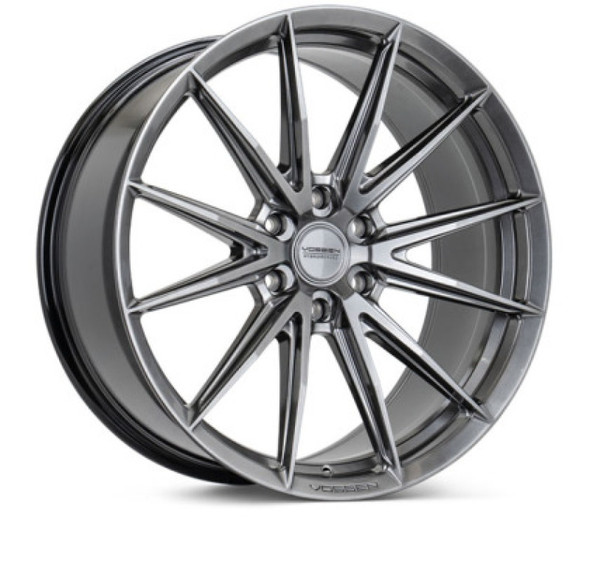
Vossen HFX-2 20x10 - 6x139.7 - ET-18 - Super Deep - 106.1 - Hyper Gunmetal Wheel - VOSSENHFX2-0G09
Vossen
$749.00$749.00 -
 MSRP: $506.55$253.98
 -

Konig Ampliform 17x8 5x114.3 ET40 Dark Metallic Graphite - KONIGAM87514406
Konig
MSRP: $574.61$289.95MSRP: $574.61$289.95 -
 MSRP: $619.68$297.25
 -

Konig Ampliform 18x10 5x114.3 ET20 Dark Metallic Graphite - KONIGAM08514206
Konig
MSRP: $722.96$364.76MSRP: $722.96$364.76 -
 MSRP: $747.07$369.92
 -

Vossen HF-8 24x10 / 6x135 BP / ET25 / 87.1 CB / Deep - Gloss Black Wheel - VOSSENHF8-4F60
Vossen
$1,149.00$1,149.00 -

Weld Draglite 15x15 / 5x4.5 & 5x4.75 BP / 4.5in. BS Polished Wheel - Non-Beadlock - WELD90-515348
Weld
$569.00Do these wheels require specific installation?Wel Draglite Wheels installation demands professional expertise to ensure precise fitment and optimal performance on your vehicle.What is the primary...$569.00 -
 MSRP: $724.52$355.43
 -

BBS RE-V7 18x8.5 5x112 ET42 Diamond Black Wheel -82mm PFS/Clip Required - BBSREV7007DB
BBS
$1,110.00$1,110.00 -
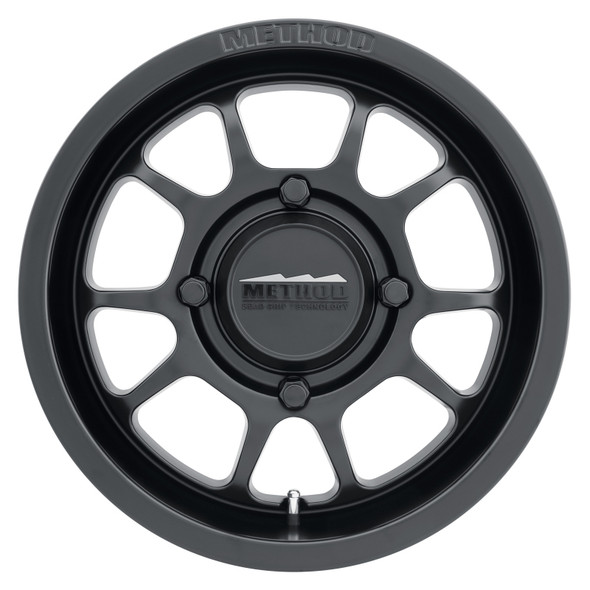
Method MR409 Bead Grip 15x7 / 4+3/13mm Offset / 4x136 / 106.25mm CB Matte Black Wheel - METHODWHEELSMR40957047543
Method Wheels
$230.00What is the bolt pattern for the MRW MR409 Wheels?The MRW MR409 Wheels feature a 4/136 bolt pattern, ensuring precise integration with compatible hubs.Are these wheels easy to install?Professional...$230.00 -
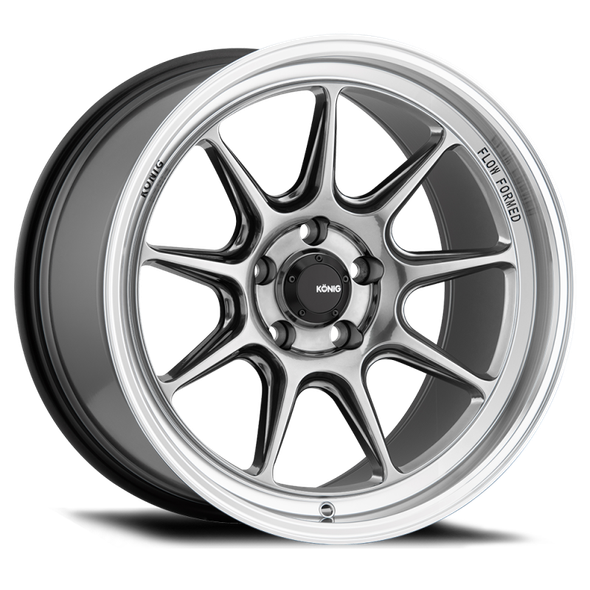
Konig Countergram 18x8.5 5x100 ET40 Hyper Chrome / Machined Lip - KONIGCT8851040C
Konig
MSRP: $718.20$355.62MSRP: $718.20$355.62
Performance wheels are the most mechanically consequential upgrade on any vehicle — directly affecting unsprung weight, brake clearance, load rating, and cornering response across every application from street commuting to full race competition. Motor Sport Mayhem stocks 1,508 wheels from 28 brands spanning $50.99 to $3,105.00, covering cast, flow-formed, and forged construction in fitments for street cars, dedicated track builds, off-road rigs, and SxS machines.
Our Top Picks for Wheels
Each of these wheels was selected based on documented performance credentials, construction quality, and real-world results across the applications our customers actually run.
AVN GT Wheels
Advan | $1,334.08
A precision-forged track wheel engineered for maximum rigidity and minimum rotational mass in high-load racing applications.
- Forged construction delivers exceptional stiffness-to-weight ratio for track and time-attack use
BBS FI-R Wheels
BBS | $3,105.00
The flagship center-lock forged race wheel from BBS, purpose-built to meet the extreme structural demands of factory supercar performance packages.
- Center-lock forged aluminum construction with OEM-certified fitment tolerances for extreme performance applications
BKC Hubcap
Bikers Choice | $50.99
A direct OEM-replacement chrome hubcap for classic FLST-series motorcycles, restoring factory appearance without modification.
- Chrome finish matches factory spec with direct bolt-on compatibility — no hardware changes required
DLW Enigma Race 9313 Wheels
Dirty Life | $538.99
A machined off-road competition wheel engineered to handle the lateral and impact loads of race-pace desert and trail driving.
- Wide 9-inch section and negative offset geometry optimize tire contact patch for aggressive off-road terrain
ENK GTC01RR Wheels
Enkei | $619.20
A flow-formed GT competition wheel balancing low rotational mass with the structural integrity required for track-day and autocross abuse.
- Enkei's MAT (Most Advanced Technology) flow-forming process strengthens the barrel without adding cast-wheel weight penalties
EXC Takasago Rims
Excel | $350.84
A 36-hole motorcycle rim built for strength and spoke tension consistency under sustained load across varied road surfaces.
- 36-hole lacing pattern distributes stress evenly, reducing fatigue failure risk on hard-use moto applications
FFT Holeshot RSR Wheels
fifteen52 | $488.75
A rally-inspired tarmac wheel engineered for the precise fitment tolerances and spoke geometry demanded by stage and performance road applications.
- 57.1mm center bore and tight offset tolerance deliver hub-centric fit without adapters on common European platforms
FR Wheels
Ford Racing | $1,693.66
A factory-engineered staggered wheel kit developed alongside OEM handling package development, sized to maximize front and rear tire footprint simultaneously.
- Staggered front/rear sizing (19x10.5 / 19x11) mirrors factory performance intent for optimal weight distribution and grip balance
FRG F14 Wheels
Forgestar | $870.00
A beadlock-equipped flow-forged wheel combining the bead retention essential for low-pressure off-road and drag applications with reduced rotational mass.
- Mechanical beadlock ring retains tire bead at near-zero PSI — critical for rock crawling and drag launches on slicks
GL 57DR Wheels
Gram Lights | $758.08
A Rays-engineered flow-formed performance wheel delivering near-forged weight figures at a cost accessible to serious track-day and street-performance builds.
- Rays' flow-forming process densifies the aluminum barrel, enabling sub-20 lb weights in an 18-inch fitment without full forging cost
How to Choose the Right Wheels
The single most important decision in wheel selection is construction method — cast, flow-formed, or forged — because it determines structural integrity, weight, and how the wheel behaves at its failure point. A cast wheel that cracks under cornering loads does so suddenly; a forged wheel under the same stress typically deforms, giving the driver a warning. Beyond construction, load rating, center bore tolerance, and offset accuracy directly affect hub stress, bearing wear, and tire clearance. Cheap wheels fail not in the spoke face where you can see them but in the barrel where metal fatigue is invisible until separation occurs.
Key Specifications
Construction Method: Cast wheels are poured into molds — the resulting grain structure is porous and inconsistent, making them heavier for equivalent strength. Flow-formed (also called flow-forged or spun-formed) wheels start as cast blanks but have their barrels rolled under pressure and heat, aligning the grain structure and significantly improving tensile strength and reducing weight. True forged wheels are machined from a solid billet or die-forged blank, producing the highest strength-to-weight ratio available and the tightest dimensional tolerances — typically holding ±0.1mm on center bore versus ±0.5mm or worse on cast units.
Offset and Backspacing: Offset is the distance in millimeters from the wheel's mounting face to its centerline — positive offset pushes the wheel inboard, negative offset pushes it outboard. Running incorrect offset by more than 10–15mm in either direction increases bearing moment arm, accelerates hub bearing wear, and can cause tire-to-strut or tire-to-fender interference under compression. Backspacing achieves the same measurement in inches from the inboard edge to the mounting face and matters critically when sizing for large brake upgrades — a big brake kit may require a minimum 4.5-inch backspace to clear calipers without spacers.
Center Bore: Hub-centric wheels use the center bore to carry the vehicle's weight load, with lug nuts serving only as retention. Lug-centric wheels rely entirely on the lug nuts for both centering and load bearing, which introduces vibration under load and stresses fasteners unevenly. Always verify the wheel's center bore matches the hub diameter within ±0.1mm for hub-centric fit; if the bore is larger, hub-centric rings are a valid solution, but they must be the correct material — aluminum rings are acceptable, plastic degrades under heat cycling and should be avoided on track use.
Load Rating and JWL/VIA Certification: JWL (Japanese Light Alloy Wheel standard) and VIA (Vehicle Inspection Association) markings indicate the wheel has passed rotary fatigue, radial fatigue, and 13-degree impact tests to Japanese Ministry of Land, Infrastructure and Transport standards — the most rigorous wheel certification protocol in the global aftermarket. TÜV certification carries equivalent weight for European markets. Wheels without any third-party certification stamp have not been independently validated for structural performance under dynamic load — acceptable for show use, not for any performance driving application.
Wheel Weight vs. Diameter: Target Weights by Application
| Wheel Diameter | Street Performance Target (Cast/Flow-Formed) | Track / Autocross Target (Flow-Formed / Forged) | Race Competition Target (Forged) |
|---|---|---|---|
| 15 inch | 16–20 lbs | 13–16 lbs | 10–13 lbs |
| 17 inch | 20–25 lbs | 16–20 lbs | 13–17 lbs |
| 18 inch | 22–28 lbs | 18–22 lbs | 15–19 lbs |
| 19 inch | 25–32 lbs | 20–25 lbs | 17–21 lbs |
| 20 inch | 28–36 lbs | 22–28 lbs | 19–24 lbs |
| 21 inch | 32–40 lbs | 25–32 lbs | 21–27 lbs |
Price Guide
Entry ($50.99–$300): This range covers OEM-replacement hubcaps, basic cast alloy wheels for daily-driven vehicles, and motorcycle rims where weight savings are not the primary driver. Cast construction is standard here — perfectly adequate for street miles at legal speeds where dynamic load cycles stay within the wheel's rated capacity. Do not use entry-tier cast wheels for track days; thermal cycling from braking combined with lateral cornering loads accelerates fatigue failure in porous cast aluminum.
Mid-range ($300–$700): The majority of serious enthusiasts build here, and for good reason — flow-formed construction becomes accessible at this price point, delivering 15–25% weight savings over comparable cast designs with measurably improved structural integrity. Most JWL/VIA-certified street-to-track crossover wheels live in this tier, alongside the strongest cast off-road designs from brands with genuine race development programs. This is also where fitment breadth is greatest — expect the widest selection of bolt patterns, offsets, and diameter options.
Premium ($700–$3,105.00): Full forged construction, center-lock racing applications, OEM-certified factory performance packages, and purpose-built competition wheels occupy this range. The cost is justified by material density consistency, dimensional precision holding sub-0.1mm tolerances, and in many cases third-party structural certification at load ratings that exceed standard JWL thresholds. If you are running sustained track sessions, timed competition, or building around a big brake package with specific caliper-to-spoke clearance requirements, the engineering precision at this tier is not a luxury — it is a functional requirement. Pair any serious wheel upgrade with a tire selection that matches the wheel's performance ceiling.
Who Is This For?
Performance wheels serve a broader range of applications than any other single upgrade category — from weekend trail runners needing beadlock retention to road racers chasing every tenth through unsprung weight reduction.
Racing Competition — 8.6/10
Wheels score at the top of the usage matrix for racing competition because unsprung weight reduction produces measurable lap time gains that no bolt-on interior or engine tune can replicate at equivalent cost. Every pound removed from a rotating wheel assembly reduces the gyroscopic resistance that fights direction changes, improves suspension response speed, and decreases the rotational inertia the drivetrain must accelerate and decelerate. At this level, JWL/VIA certification is a minimum, and most sanctioning bodies mandate specific load ratings — verify compliance before purchase.
Track / Autocross — 8.3/10
Track and autocross applications score identically high because the physics are the same as competition — weight, strength, and fitment precision determine performance — but the wheel must also survive road transit and variable surface quality between events. Flow-formed construction hits the optimal cost-to-performance ratio here, delivering forged-adjacent weights and strength without the forged price premium. Brake clearance is a critical consideration: confirm spoke-to-caliper clearance with your specific brake setup before finalizing wheel selection.
Weekend Off-Roading — 8.3/10
Off-road applications match track scores for a completely different reason — impact resistance under unpredictable loads rather than sustained dynamic fatigue. Off-road wheels must absorb sharp rock strikes, ledge drops, and lateral trail impacts without cracking, which demands a different alloy blend and barrel geometry than track wheels optimized for rotational efficiency. Wider barrels, reinforced bead seats, and in serious applications, mechanical beadlock rings that prevent tire separation at low inflation pressures, define what separates a competent off-road wheel from a cast unit that looks the part but fails on the trail.
Street Performance — 7.8/10
Street performance is where the widest range of buyers operates — and where the temptation to prioritize aesthetics over engineering is highest. A wheel optimized for street performance needs to balance low weight against the impact resistance requirements of public roads, where potholes and curb strikes are inevitable. Flow-formed wheels with a load rating appropriate to the vehicle's gross axle weight rating represent the technically correct choice, paired with the right suspension setup to manage the change in unsprung mass dynamics.
Overlanding / Expedition — 7.7/10
Overlanding and expedition use scores slightly below off-road and street because the application demands durability across extended mileage in remote conditions over raw peak performance — repairability and load capacity matter as much as weight. Wheels for expedition use must carry significant static loads from gear, water, and recovery equipment while maintaining structural integrity across thousands of miles of corrugated dirt, river crossings, and temperature extremes. Beadlock-compatible designs and high load ratings are the priority; saving 2 lbs per corner is irrelevant if a wheel cracks 200 miles from the nearest town.
Trusted Wheels Brands We Carry
The brands that dominate serious performance wheel applications earned their position through verifiable engineering credentials, not marketing. Enkei developed the MAT flow-forming process that became the industry benchmark for accessible high-performance construction, and their motorsport program has validated that process at the highest levels of Japanese touring car and GT competition. BBS is an OEM supplier to factory racing programs across Formula racing, DTM, and GT categories, and their forged production processes carry the tightest dimensional tolerances in the aftermarket. Gram Lights — a Rays Engineering sub-brand — applies the same forging and flow-forming technology Rays developed for JGTC and Super GT to street-accessible price points. Method Wheels built their reputation in desert racing and SxS competition, where wheel failure carries genuine consequence, and their off-road construction standards reflect that environment. fifteen52 draws directly from rally and tarmac competition development, engineering wheels to the specific demands of mixed-surface high-speed driving. Weld Racing has supplied drag racing and oval competition teams for decades, with forged beadlock and bead-retention designs proven at the strip and on short tracks where bead separation is a safety issue, not just a performance one.
Frequently Asked Questions
Are Advan wheels made by Rays Engineering?
Yes — Advan is the motorsport and performance wheel brand operated by Yokohama Rubber Company, but the relationship with Rays Engineering is a common point of confusion because both brands are prominent in Japanese performance culture. Rays Engineering manufactures its own distinct performance wheels under the Rays, Gram Lights, Volk Racing, and other sub-brands, and Advan and Rays are separate companies. Advan wheels are manufactured by Yokohama and the Advan brand name also appears on Yokohama's performance tire lineup. When you see an Advan wheel, it is a Yokohama-engineered and manufactured product — not a Rays product, despite both brands being associated with Japanese motorsport.
Are BBS wheels considered high-end?
BBS is definitively a premium, high-end wheel manufacturer — not just by price, but by engineering standard and manufacturing process. BBS wheels used in OEM factory performance packages and motorsport applications are produced to tolerances that exceed standard JWL certification requirements, and BBS holds direct OEM supplier contracts with multiple factory racing programs. The manufacturing facility in Schiltach, Germany operates forging presses and CNC machining centers to dimensional tolerances typically reserved for aerospace components. The premium pricing reflects real material and process costs — forged billet aluminum, flow-formed barrels, individual quality inspection — not brand positioning alone.
Are BBS LM wheels two-piece or three-piece?
The BBS LM is a two-piece wheel, constructed from a forged aluminum center bolted to a flow-formed or spun aluminum outer rim section. This two-piece construction allows width and offset customization during the build process that a one-piece forged or cast wheel cannot provide, while still delivering near-one-piece structural rigidity through precision bolt-circle fastening between the two sections. Three-piece BBS wheels — such as the classic three-piece design with a separate center, inner barrel, and outer lip — offer even greater fitment flexibility but are typically found in the BBS motorsport catalog at correspondingly higher price points. The LM's two-piece architecture is the key reason it can be ordered in fitments that cover a wide range of platform-specific offset and width requirements.
Are beadlock wheels worth it on an SxS?
For serious off-road SxS use, beadlock wheels are a genuine functional upgrade — not an aesthetic accessory. Running reduced tire pressures (8–12 PSI) on rocky or loose terrain dramatically improves traction by increasing tire contact patch and conformability, but conventional bead seats cannot reliably retain the tire below approximately 15 PSI under lateral load. A mechanical beadlock ring clamps the outer tire bead between the wheel and a bolt-on ring, preventing bead rolloff regardless of inflation pressure. The trade-off is added rotating weight from the ring hardware, the need for periodic ring bolt torque checks (typically 10–15 ft-lbs on a staggered pattern), and the fact that most beadlock wheels are not DOT-approved for public road use — a practical concern for SxS owners who trailer between trails.
Are cast wheels acceptable for daily driving?
Cast wheels are entirely appropriate for daily street driving, and the majority of OEM factory alloy wheels fitted to production vehicles are gravity-cast or low-pressure cast aluminum. The limitations of cast construction — higher weight, more porous grain structure, lower tensile strength compared to forged — matter most under the sustained high-heat, high-lateral-load conditions of track driving, not normal street use. For street applications, the more important selection criteria are correct load rating for the vehicle's GAWR, accurate center bore for hub-centric fit, and verified offset within the platform's acceptable range. A well-engineered cast wheel from a manufacturer with JWL/VIA certification will outlast any premium wheel fitted with incorrect fitment specs.
Building something specific? Our performance specialists can help you select the right Wheels for your application — street, track, or full race build.