
Intercooler Pipe Kits
- Product
- Qty in Cart
- Quantity
- Price
- Subtotal
-
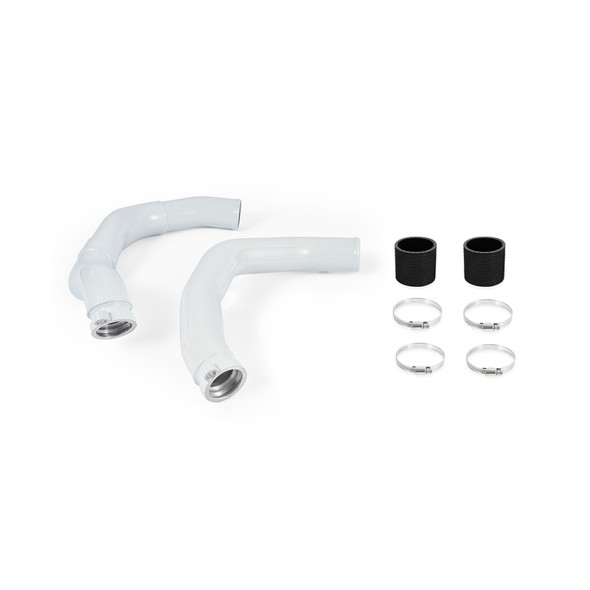
Mishimoto 2015-2020 BMW F80 M3/M4 Intercooler Pipe Kit Alpine White III - MISHIMOTOMMICP-F80-15CAW
Mishimoto
MSRP: $396.00$359.95Will this intercooler pipe kit fit my BMW F8X M3/M4?This Mishimoto Intercooler Pipe Kit is engineered for a direct fit on BMW F8X M3/M4 models manufactured between 2015 and 2020.Is installation of...MSRP: $396.00$359.95 -

Mishimoto 2024+ Toyota Tacoma Intercooler Pipe Kit - Red - MISHIMOTOMMICP-TAC-24RD
Mishimoto
MSRP: $492.00$446.95MSRP: $492.00$446.95 -
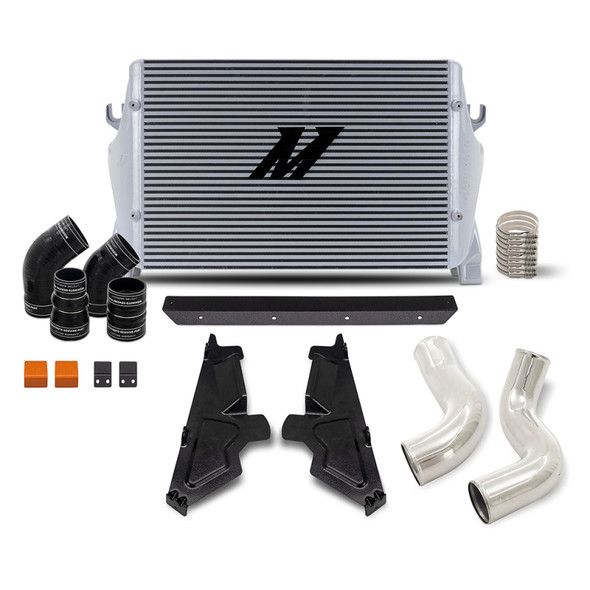
Mishimoto 2019+ Dodge Ram 6.7L Cummins Intercooler Kit / SL Cooler - P Pipes - MISHIMOTOMMINT-RAM-19KSLP
Mishimoto
MSRP: $2,397.00$2,178.95Are Mishimoto Intercooler Pipe Kits compatible with all turbocharged vehicles?Mishimoto Intercooler Pipe Kits are engineered for specific vehicle applications; always confirm fitment for your exact...MSRP: $2,397.00$2,178.95 -
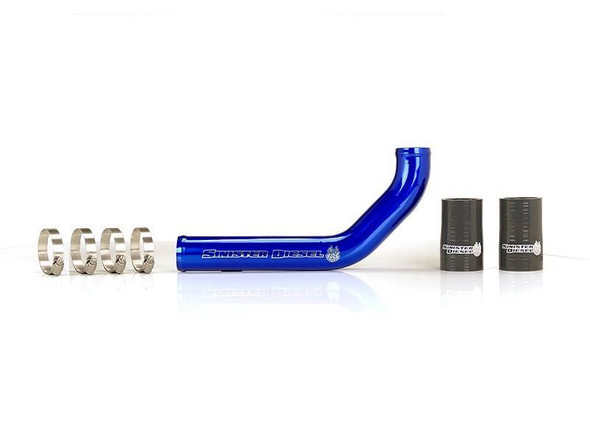
Sinister Diesel 01-05 GM Duramax 6.6L (LB7/LLY) Radiator Pipe - MSM-T-200576
Sinister Diesel
MSRP: $233.99$179.99MSRP: $233.99$179.99 -
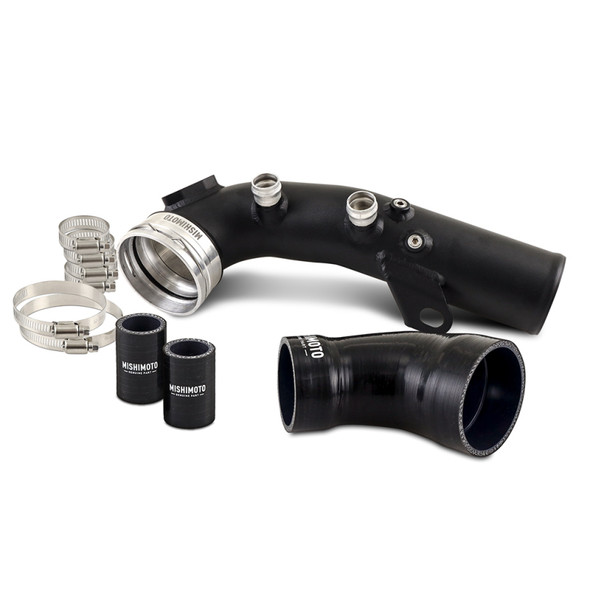
Mishimoto BMW N54 Charge Pipe - MSM-T-711663
Mishimoto
MSRP: $275.00$249.95Are these intercooler pipes compatible with my vehicle?Mishimoto Intercooler Pipe Kits fit BMW N54 2007-2013; always confirm exact vehicle fitment before purchase for optimal performance.How...MSRP: $275.00$249.95 -

Mishimoto 2024+ Toyota Tacoma Intercooler Pipe Kit - Black - MSM-T-871957
Mishimoto
MSRP: $492.00$446.95MSRP: $492.00$446.95 -
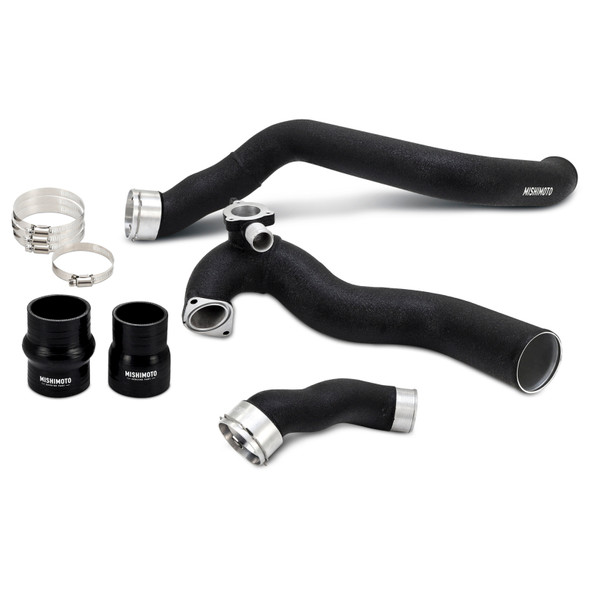
Mishimoto 2024+ Ford Mustang EcoBoost Charge Pipes - Wrinkle Black - MSM-T-888762
Mishimoto
MSRP: $615.00$558.95Will these intercooler pipes fit my specific vehicle?Mishimoto Intercooler Pipe Kits require you to confirm exact vehicle fitment using our compatibility tool before purchase for guaranteed...MSRP: $615.00$558.95 -
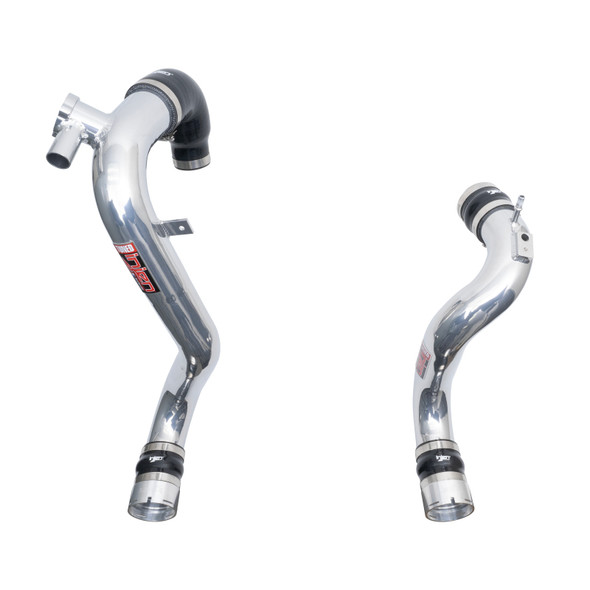
Injen 21-23 Ford Bronco L4-2.3L Turbo EcoBoost SES Intercooler Pipes Polished - MSM-T-666639
Injen
$681.75Will these Injen intercooler pipes fit my 2023 Ford Bronco?These Injen intercooler pipes are specifically designed for the 2021-2023 Ford Bronco L4-2.3L Turbo EcoBoost, ensuring a precise fit for...$681.75 -

Cobb BMW N54 Intercooler Charge Pipe - Wrinkle Black - COBB7B1212
COBB
$250.00Is the COBB Hard Pipe Kit compatible with my vehicle?Confirm fitment with your specific vehicle before ordering to ensure proper installation and performance of this intercooler pipe kit.What is the...$250.00 -
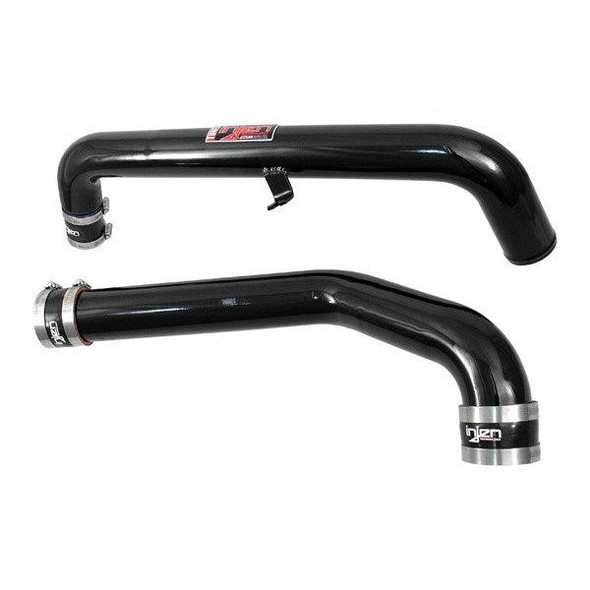
Injen 08-09 Cobalt SS Turbochared 2.0L Black Intercooler Piping Kit - INJENSES7027ICPBLK
Injen
$309.64What is included in the Injen Intercooler Pipe Kit?This Injen Intercooler Pipe Kit includes all necessary piping components to optimize your vehicle's air intake system for enhanced performance.How...$309.64 -

Injen 08-09 Cobalt SS Turbochared 2.0L Polished Intercooler Piping Kit - INJENSES7027ICP
Injen
$309.64How can I ensure this Injen intercooler pipe kit fits my vehicle?Confirm precise vehicle fitment using our detailed compatibility checker before purchasing this Injen intercooler pipe kit.Is this...$309.64 -
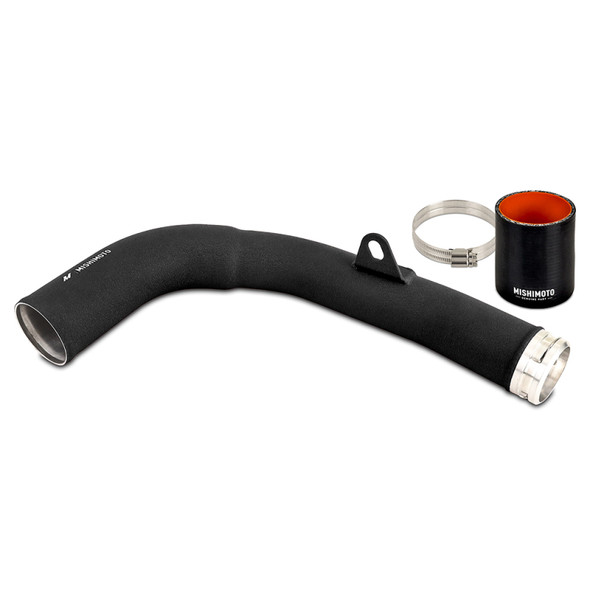
Mishimoto 2022+ Subaru WRX Charge Pipe Micro - Wrinkle Black - MISHIMOTOMMICP-WRX-22MWBK
Mishimoto
MSRP: $337.00$305.95Do Mishimoto Intercooler Pipe Kits require professional installation?Mishimoto Intercooler Pipe Kits are recommended for professional installation to ensure optimal fitment and performance results...MSRP: $337.00$305.95
Intercooler pipe kits are the critical charge-air plumbing that routes compressed, heat-soaked air from your turbo or supercharger outlet through the intercooler core and into the throttle body — undersized or poorly sealed pipes directly limit boost response, cause heat soak, and cap your power ceiling. Motor Sport Mayhem stocks 141 intercooler pipe kits across 48 brands, from budget silicone couplers to full billet-aluminum front-mount systems built for all-out competition.
Our Top Picks for Intercooler Pipe Kits
Every product below was selected based on verified performance data, material quality, and real-world results across street, track, and race applications.
ADD Intercooler Upgrade Kits
Addictive Desert Designs | $1499.99
A bolt-in intercooler upgrade kit engineered for high-heat off-road and performance truck applications where stock charge-air systems thermally saturate under sustained load.
- Designed to replace restrictive OEM piping and cores with larger cross-section charge routing for sustained power output
AEM Water/Meth Systems
AEM | $699.95
Water/methanol injection works in tandem with intercooler piping to chemically lower charge-air temps, effectively functioning as a second-stage intercooling system for diesel and forced-induction builds.
- Internal MAP-referenced progressive controller pairs directly with charge-pipe injection ports for precise meth delivery across the boost curve
AFE Bladerunner I/C & Tubes
aFe | $2036.00
The Bladerunner series pairs a high-density bar-and-plate intercooler core with matching cast-end-tank tubes, eliminating the flow restriction and heat soak bottleneck built into factory diesel charge systems.
- Cast aluminum end tanks and larger tube diameter reduce pressure drop across the entire charge-air circuit, not just the core
ABR Solenoids
All Balls Racing | $41.33
Boost control solenoids are a critical component in any turbocharged charge-pipe system, and a quality rebuild kit ensures the pneumatic control signal feeding boost pressure to your wastegate or BOV remains accurate and leak-free.
- Precision-tolerance rebuild components maintain consistent solenoid actuation response, which directly affects boost pressure stability through charge pipes
PA Alta Tensioner Stop
Alta | $99.45
On supercharged platforms, supercharger belt tensioner stability is directly tied to consistent boost delivery and charge-pipe pressure — a tensioner stop eliminates belt slip that causes unpredictable boost spikes and pressure drops.
- Adjustable design allows fine-tuning of belt tension to match upgraded pulley and charge-pipe configurations without over-tensioning the drive system
AMS Intercoolers
AMS | $2178.27
A complete front-mount intercooler kit with bumper beam retention delivers the full FMIC upgrade — larger core, optimized charge piping routing, and structural integrity — in a single fitment-verified package.
- Retaining the factory bumper beam mounting structure means this is a genuine bolt-in FMIC conversion, not a compromise fitment requiring custom fab
ATS 4000 Turbo Kits
ATS Diesel | $3549.99
A stage 2 upgraded turbo system demands matching charge-pipe diameter and flow capacity — this kit addresses both the turbocharger and the charge routing simultaneously to eliminate bottlenecks at the source.
- Aurora 4000-series turbine and compressor sizing are calibrated to work within a defined charge-pipe pressure and flow envelope for reliable high-output diesel performance
AWE Intercoolers
AWE Tuning | $3545.00
AWE's performance intercooler kit for the Porsche 991 Turbo platform represents the premium end of the charge-cooling spectrum — engineered specifically for high-output turbocharged sports car applications where charge density directly translates to lap time.
- Platform-specific core sizing and end-tank design maintain OEM fitment tolerance while delivering significantly greater thermal capacity under sustained track conditions
GBE Techni-Cooler Systems
Banks Power | $1829.00
The Techni-Cooler system integrates a high-efficiency intercooler core with matched charge-pipe routing in a system engineered specifically for heavy-duty diesel platforms that demand sustained performance under towing and hauling loads.
- Banks' air-to-air design maximizes heat rejection across repeated thermal cycles, preventing the charge-temp creep that kills power on long pulls
BDD Turbos
BD Diesel | $3918.95
Upgrading to a larger-frame Screamer turbo requires a charge-pipe system matched to the increased airflow volume — BD Diesel builds their turbo upgrades with charge routing compatibility in mind from the engineering stage.
- Billet compressor wheel and optimized housing geometry increase mass airflow that only produces usable power gains when paired with charge piping sized to move that volume without restriction
How to Choose the Right Intercooler Pipe Kits
The single most common mistake in selecting charge piping is choosing pipes based on OEM replacement fit without accounting for the airflow demands of an upgraded forced induction system — undersized pipes create turbulence, increase velocity-induced pressure drop, and force the turbocharger to work harder to maintain target boost pressure at the throttle body. Material quality, internal surface finish, bend radii, coupler durometer, and end fitting tolerances all directly affect whether your boost builds cleanly or bleeds off through leaks, restrictions, and heat transfer into the charge air stream.
Key Specifications
Internal pipe diameter is the primary sizing specification and must be matched to your power target and expected airflow volume — not just your current boost level. A pipe that flows adequately at 15 psi and 300 whp will become a genuine restriction at 25 psi and 500 whp even if the boost gauge reads the same number, because mass airflow has increased substantially. Size up when building for power headroom, not just for current output.
Material choice determines both weight and thermal behavior. Mandrel-bent aluminum is the industry standard for performance charge piping because it offers a smooth internal bore, excellent thermal mass for short heat-soak events, and negligible weight versus steel. Cast aluminum end tanks on intercooler cores improve over stamped designs by eliminating the internal seam restrictions that create turbulence at the core inlet and outlet. High-silicone couplers in 60–70 Shore A durometer handle boost pressures through 30+ psi reliably; cheaper rubber couplers swell, crack at the clamp bead, and fail progressively rather than catastrophically — meaning you lose boost before you notice a problem.
Bend quality is equally critical and often overlooked. OEM and budget pipes frequently use crush-bent or press-bent sections with an oval cross-section at the apex of each bend — this reduces effective flow area by up to 20% compared to a true circular cross-section. Mandrel bending maintains a consistent internal diameter through every bend, which is non-negotiable on pipes feeding high-output applications. Check wall thickness specifications too: pipes thin enough to flex under boost pressure will cause coupler seal failures at the clamping points even when the clamps are properly torqued.
System-level thinking matters more than individual component quality. The full charge circuit runs from the compressor outlet through the hot-side pipe, through the intercooler core, through the cold-side pipe, and into the throttle body or intake manifold — a premium intercooler core matched to restrictive stock charge pipes delivers a fraction of its potential cooling efficiency. Similarly, mismatched pipe-to-coupler sizing creates step restrictions at every joint. Buy kits that were engineered as complete systems where possible; otherwise, verify that every transition in the charge circuit is smooth, same-diameter, and properly clamped.
Intercooler Pipe Diameter vs. Power Target Reference
| Power Target (WHP) | Minimum Pipe ID | Recommended Pipe ID | Notes |
|---|---|---|---|
| Up to 250 WHP | 2.0 in (51mm) | 2.25 in (57mm) | Stock replacement or mild upgrade; OEM diameter often acceptable |
| 250–400 WHP | 2.25 in (57mm) | 2.5 in (63mm) | Upgrade piping strongly recommended; stock pipes create measurable pressure drop |
| 400–600 WHP | 2.5 in (63mm) | 2.75–3.0 in (70–76mm) | Mandrel-bent aluminum required; silicone couplers rated to 35+ psi |
| 600–900 WHP | 3.0 in (76mm) | 3.0–3.5 in (76–89mm) | Full-system charge pipe kit essential; verify coupler clamp type and torque spec |
| 900–1200 WHP | 3.5 in (89mm) | 3.5–4.0 in (89–102mm) | Consider V-band flanges at core connections to eliminate coupler failure risk |
| 1200+ WHP | 4.0 in (102mm) | 4.0 in+ custom | Full custom fabrication typically required; off-the-shelf kits rarely cover this range |
Price Guide
Entry ($3.42–$350): Individual couplers, clamps, solenoids, and small hardware components that support a charge-pipe system rather than replacing it outright — ideal for leak repairs, coupler upgrades on existing piping, or sourcing boost control hardware. Quality varies significantly at this tier; stick to name brands over anonymous imports for anything under pressure.
Mid-range ($350–$2,000): Where the majority of complete intercooler pipe kits and FMIC upgrade systems live — this tier covers purpose-built, vehicle-specific charge-pipe kits in mandrel-bent aluminum with proper silicone couplers and hardware. Most street performance and track-day builds are fully served here, and the engineering quality from established brands at this price point is genuinely strong.
Premium ($2,000–$13,288.86): Complete FMIC conversion systems, twin-turbo charge routing kits, integrated turbo upgrade packages with matching piping, and race-spec intercooler systems engineered for sustained high-boost competition use. Justified for builds targeting 600+ WHP, diesel competition trucks, or platform-specific builds where off-the-shelf kits genuinely do not exist — the cost reflects engineering development and fitment verification, not just materials.
Who Is This For?
Intercooler pipe kits serve a wide spectrum of builders — from street performance enthusiasts chasing cleaner throttle response to professional racing operations eliminating every fraction of a degree of charge-air heat.
Engine Performance — 8.7/10
Engine performance is the highest-scoring application in our usage data at 8.7/10, which reflects how directly charge-pipe quality impacts measured output — charge-air temperature is one of the most significant variables in knock threshold, ignition timing authority, and achievable boost pressure. Every degree of charge-air temperature reduction translates to approximately 1% increase in air density, which directly supports additional fueling and timing advance. Upgrading charge piping is one of the highest return-on-investment engine components available for any forced-induction build.
Racing Competition — 8.2/10
At 8.2/10 for racing competition applications, intercooler pipe kits are considered essential infrastructure in any purpose-built race car running forced induction — not an optional upgrade. Race applications demand pipes that maintain charge pressure through sustained high-RPM operation, repeated thermal cycles, and the vibration environment of competition use. V-band connections, thicker wall tubing, and reinforced silicone couplers are common specifications at this level that justify premium pricing.
Street Performance — 8.0/10
Street performance scores 8.0/10, driven by the fact that OEM charge piping on factory turbocharged vehicles is almost universally undersized relative to the power levels that even modest tune upgrades target. A charge-pipe upgrade on a stock-turbo, tuned street car delivers measurably faster boost response, reduced heat soak during stop-and-go driving, and eliminates the coupler failures that become common once boost pressure increases beyond the OEM system's design parameters. This is a foundational upgrade for any street-driven boosted vehicle running anything beyond a stock tune.
Drag Racing — 8.0/10
Drag racing also scores 8.0/10 and presents a specific set of demands distinct from circuit racing: charge-air temperature management between passes, maximizing peak flow for short-duration high-boost runs, and ensuring zero pressure loss events during a pass. Heat soak between rounds is a major power-robbing factor at the drag strip, and larger-volume charge piping with a high-efficiency intercooler core retains lower charge temps for longer between runs. Drag racers often pair upgraded charge piping with water/methanol injection as a complementary charge cooling strategy.
Track / Autocross — 8.0/10
Track and autocross applications score 8.0/10 and are particularly sensitive to heat soak because circuit and autocross conditions involve sustained moderate loads rather than the single short burst of a drag pass — meaning the intercooler and charge pipes must manage heat continuously rather than just peak it. Properly sized charge piping paired with a high-capacity intercooler core maintains consistent charge-air temperatures across an entire session, preventing the power fade that characterizes stock systems as intake temperatures climb. For autocross specifically, the consistent throttle response enabled by stable charge temperatures is as valuable as peak power numbers.
Trusted Intercooler Pipe Kits Brands We Carry
The brands that dominate this category earned their position through engineering depth, materials investment, and validated performance data — not marketing. Mishimoto has built a reputation on bar-and-plate intercooler cores and silicone coupling systems engineered to specific pressure and temperature cycles, with extensive in-house testing backing their fitment claims. aFe Power's Bladerunner lineup is one of the most respected charge-air systems for diesel performance applications, combining cast end-tank intercooler cores with matched aluminum tube-and-coupler kits. AMS Performance brings motorsport-derived engineering to street and track builds, with front-mount intercooler kits developed through actual competition program data. Banks Power has decades of diesel performance engineering with a particular focus on sustained-load thermal management that translates directly to towing and hauling applications. AWE Tuning operates at the premium platform-specific end of the spectrum, with intercooler systems engineered under active racing programs and validated on dynamometers before hitting the market. ATS Diesel rounds out the heavy-duty diesel segment with turbo and charge-system upgrades designed for high-output Cummins and Duramax applications where reliability under extreme load is non-negotiable.
Frequently Asked Questions
Are boost pipes and charge pipes the same thing?
Yes — boost pipes, charge pipes, intercooler pipes, and boost tubes all refer to the same components: the pressurized aluminum or composite tubing that routes compressed air between the turbocharger compressor outlet, through the intercooler core, and into the intake manifold or throttle body. The terminology varies by community and platform but describes the same functional system. Some builders use "boost pipe" specifically for the hot-side section between the turbo and intercooler inlet, and "charge pipe" for the cold-side section from the intercooler outlet to the throttle body, though this distinction is informal rather than technical. Regardless of what they're called, the engineering requirements are the same: consistent internal diameter, smooth bends, leak-free couplers, and adequate wall strength to handle peak system boost pressure.
Are air-to-air intercoolers good?
Air-to-air intercoolers are the dominant intercooler type in performance applications for a reason — they are simpler, lighter, require no coolant circuit or pump, and deliver excellent charge cooling efficiency when properly sized and positioned in adequate airflow. The core exchanges heat from the compressed charge air directly to ambient air passing through the fins, making cooling capacity a direct function of core size, fin density, and vehicle speed. At sustained low speeds or in stop-and-go conditions, air-to-air units can heat-soak because ambient airflow is insufficient to evacuate heat from the core — this is where air-to-water systems offer an advantage for city driving or repeated drag passes. For most street, track, and race applications with adequate front-end airflow, a properly sized air-to-air front-mount intercooler is the most cost-effective and reliable charge cooling solution available.
Are blow-off valves bad for your engine?
Properly specified blow-off valves are not bad for your engine — they protect the turbocharger by venting pressurized charge air to atmosphere (BOV) or recirculating it back to the intake pre-compressor (bypass valve/BPV) during throttle-lift events, preventing the compressor surge that causes the compressor wheel to stall and the turbine shaft to experience sudden load reversal. The concern about BOVs being harmful specifically applies to mass airflow sensor-equipped engines running a venting-to-atmosphere valve: the engine has already metered and calculated fueling for that air volume, and when it's vented rather than returned, the ECU receives an incorrect air-fuel signal that causes a momentary rich condition. On a properly tuned or speed-density system, atmospheric venting is not an issue. On a MAF-based street tune, a recirculating bypass valve is the correct solution to maintain sensor accuracy while still protecting the turbo.
Are boost controllers worth it?
A boost controller — whether manual or electronic — is worth the investment on any turbocharged build where you want to run boost levels above what the factory wastegate spring pressure allows, or where you want precise, repeatable boost control across the RPM range. Manual boost controllers are simple and reliable but set a fixed boost target; electronic boost controllers use a solenoid-actuated duty-cycle signal to modulate wastegate opening dynamically, enabling boost curves that build harder in the low-mid RPM range and taper at peak RPM to protect the engine and turbo. On a modified engine with a supporting tune, an electronic boost controller working through the factory ECU or a standalone system provides the precision needed to extract maximum performance without exceeding safe cylinder pressure limits. The charge-pipe and coupler system must be leak-free for any boost controller to function accurately — boost control is only as good as the system it's pressurizing.
Are AMS racing parts worth the money?
AMS Performance products command premium pricing that is justified by the engineering and testing investment behind the parts — their intercooler and charge-pipe systems are developed through active motorsport programs and verified against real power targets on specific platforms rather than being generic designs with application-specific brackets bolted on. The core sizing, end-tank port placement, and pipe routing geometry in AMS kits reflect genuine CFD and dyno development work, which means less tuning effort to extract the expected gains compared to generic alternatives. For builders targeting high power levels on platforms where AMS has a dedicated application, the cost-per-horsepower math typically works out favorably because the fitment accuracy and documented performance gains reduce the diagnostic and rework time that cheaper alternatives frequently require. On platforms where AMS doesn't have a direct application, the premium pricing is harder to justify, and equally capable alternatives from aFe, Mishimoto, or Banks often deliver similar results at lower cost.
Building something specific? Our performance specialists can help you select the right Intercooler Pipe Kits for your application — street, track, or full race build.