
Super Core Assemblies
- Product
- Qty in Cart
- Quantity
- Price
- Subtotal
-


Garrett G-XRace GXR50-88 88/120mm Supercore - 953234-5010S
Garrett
MSRP: $5,226.13$4,389.95What is the expected horsepower output of the GRT GXR50 Super Cores?GRT GXR50 Super Cores are engineered to achieve a formidable 1000 horsepower, delivering explosive acceleration.How difficult is it...MSRP: $5,226.13$4,389.95 -


Garrett G-XRace GXR50-80 80/120mm Supercore - 953234-5009S
Garrett
MSRP: $4,988.04$4,189.95How do I know if the GRT GXR50 Super Core is compatible with my vehicle?Confirm precise fitment for your specific vehicle model using our comprehensive compatibility database before purchase.What is...MSRP: $4,988.04$4,189.95 -


Garrett G-XRace GXR50-76 76/120mm Supercore - 953234-5008S
Garrett
MSRP: $4,952.32$4,159.95What is the expected horsepower output of the GRT GXR50 Super Core?GRT GXR50 Super Cores are engineered to achieve a remarkable 1000 horsepower, delivering explosive acceleration for demanding...MSRP: $4,952.32$4,159.95 -


Garrett G-XRace GXR47-76 76/120mm Supercore - 953234-5006S
Garrett
MSRP: $4,833.27$4,059.95How can I confirm if the Garrett GRT GXR47 Super Cores will fit my specific vehicle model?Garrett GRT GXR47 Super Cores require confirming fitment with your vehicle; consult our detailed application...MSRP: $4,833.27$4,059.95 -
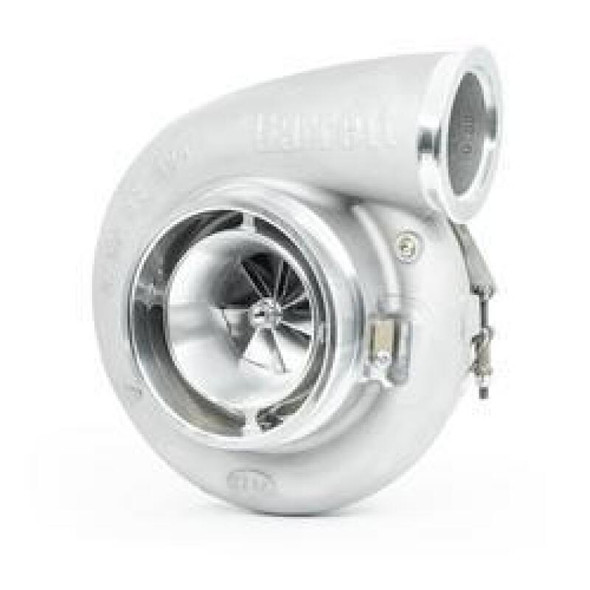
Garrett G-XRace GXR47-80 80/120mm Supercore - 953234-5007S
Garrett
MSRP: $4,868.99$4,089.95How do I know if the GRT GXR47 Super Cores will fit my vehicle?Confirm exact fitment for your vehicle using Garrett's online compatibility tool before installation of these Super Core Assemblies.What...MSRP: $4,868.99$4,089.95 -

Garrett G-XRace GXR47-80 80/109mm Supercore - 953234-5004S
Garrett
MSRP: $4,868.99$4,089.95What is the primary purpose of the GRT GXR47 Super Cores?GRT GXR47 Super Cores are engineered for maximum horsepower, achieving up to 1000 horsepower with advanced aerodynamic compressor wheel...MSRP: $4,868.99$4,089.95 -


Garrett G-XRace GXR47-76 76/109mm Ultra Street Super Core - 953234-5001S
Garrett
MSRP: $4,833.27$4,059.95Will this super core assembly fit my vehicle?Confirming specific vehicle fitment is essential; consult your vehicle's compatibility list before ordering your GRT GXR47 Super Core Assembly.What is the...MSRP: $4,833.27$4,059.95 -
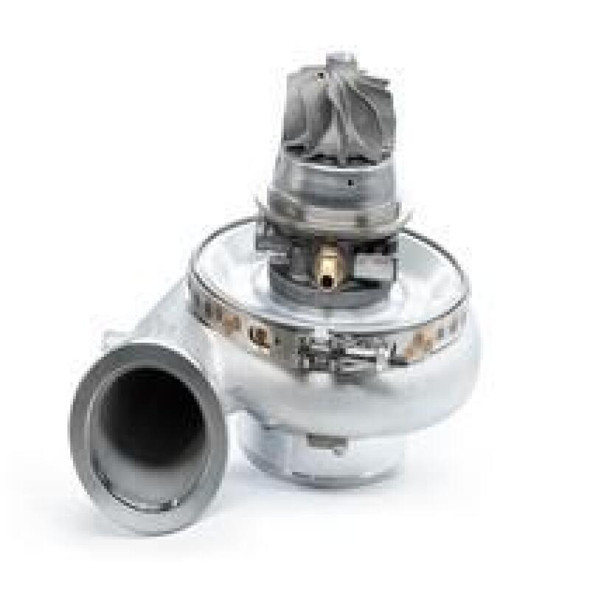
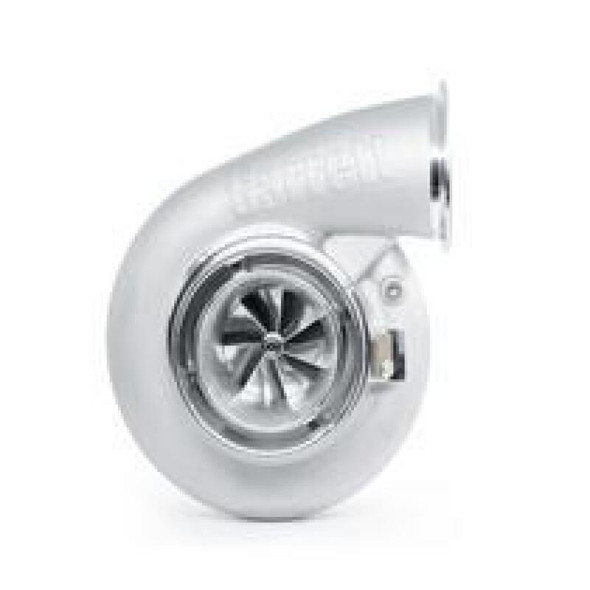
Garrett G-XRace GXR42-71 71mm DTA-Light Super Core - 952766-5006S
Garrett
MSRP: $3,773.75$3,169.95What are the primary benefits of upgrading to a Garrett GXR47 Super Core Assembly?Garrett GXR47 Super Core Assemblies deliver explosive acceleration and instant throttle response, achieving peak...MSRP: $3,773.75$3,169.95 -

Garrett G35-1050 Super Core - Reverse Rotation - 880696-5002S
Garrett
MSRP: $3,130.00$2,629.20How do I know if the GRT G35 Super Cores will fit my vehicle?Confirm precise fitment for your specific vehicle model and year before purchasing these Super Core Assemblies to ensure optimal...MSRP: $3,130.00$2,629.20 -


BorgWarner SuperCore S200 SX-R 58mm 7670 - 12707105086
BorgWarner
MSRP: $1,258.83$1,007.06Do these SuperCores require special modifications for installation?BorgWarner AirWerks SuperCores are designed for professional installation, ensuring precise integration and optimal performance...MSRP: $1,258.83$1,007.06 -

Garrett G42-1325c G-Series II Super Core - 938339-5001S
Garrett
MSRP: $3,449.79$2,897.82Are Garrett GRT G42 Super Cores compatible with my vehicle?Garrett GRT G42 Super Cores require precise fitment confirmation; always verify compatibility before installation for optimal Super Core...MSRP: $3,449.79$2,897.82 -


Garrett G-XRace GXR42-68 68mm Super Core - 934173-5001S
Garrett
MSRP: $3,847.46$3,231.87What is a Super Core Assembly?A Super Core Assembly is the central, high-performance component of a turbocharger system, vital for maximizing engine power output across all RPMs.Are Garrett GXR42...MSRP: $3,847.46$3,231.87
Super core assemblies are the integrated forced induction hardware — turbos, intercoolers, blow-off valves, boost solenoids, and water/methanol injection systems — that define how much power a boosted engine can make and sustain under load. Motor Sport Mayhem stocks 56 in-stock units from 48 brands, ranging from entry-level solenoid rebuilds to full-race turbo systems, so every build from street to competition gets the right foundation.
Our Top Picks for Super Core Assemblies
Every product below was selected based on verified performance data, engineering quality, and real-world results across street, track, and competition builds.
ADD Intercooler Upgrade Kits
Addictive Desert Designs | $1,499.99
A direct-fit intercooler upgrade that eliminates the thermal bottleneck of the factory core without modifying the charge pipe routing.
- Bar-and-plate core construction delivers measurably lower charge temps under sustained boost versus stock tube-and-fin designs
AEM Water/Meth Systems
AEM | $699.95
A multi-input water/methanol injection system that suppresses detonation and drops intake charge temps by up to 100°F under high boost.
- Progressive injection mapping through multi-input control allows precise fluid delivery matched to boost pressure and throttle position
aFe Bladerunner I/C & Tubes
aFe | $2,036.00
A complete intercooler and charge tube package designed to maximize airflow volume and minimize pressure drop on high-output diesel platforms.
- Full tube kit included means no adapters or mismatched couplers — charge path integrity is maintained end to end
ABR Solenoids
All Balls Racing | $41.33
A precision-rebuilt solenoid kit that restores factory actuation response and eliminates the electrical resistance buildup that causes erratic boost control behavior.
- OEM-spec contact materials and spring tensions ensure repeatable duty-cycle response across temperature extremes
PA Alta Tensioner Stop
Alta | $99.45
An adjustable tensioner stop that prevents supercharger belt slip under sustained high-boost operation without over-tensioning and accelerating bearing wear.
- Adjustable stop position allows tuning belt preload precisely to the power level and pulley size in use
AMS Intercoolers
AMS | $2,178.27
A front-mount intercooler kit with integrated bumper beam that replaces the factory core location, maximizing ambient airflow and eliminating heat soak on repeated pulls.
- Bumper beam integration maintains structural crash compliance while freeing the full frontal area for intercooler cooling
ATS 4000 Turbo Kits
ATS Diesel | $3,549.99
A stage 2 compound turbo system engineered for diesel platforms that require sustained high-EGT tolerance alongside maximum low-end torque response.
- Compound turbo staging reduces individual turbine heat load and extends component life under towing and competition use simultaneously
AWE Intercoolers
AWE Tuning | $3,545.00
A performance intercooler kit developed for high-specific-output turbocharged platforms where factory core saturation limits power consistency lap to lap.
- Engineered around track use where multiple high-load events in quick succession expose factory intercooler thermal limits
GBE Techni-Cooler Systems
Banks Power | $1,829.00
A complete charge-air cooling system that addresses both intercooler core capacity and charge tube flow restriction in a single integrated upgrade.
- System-level engineering means intercooler core sizing, end tank volume, and pipe diameter are matched — eliminating the mismatches common in piecemeal upgrades
BDD Turbos
BD Diesel | $3,918.95
A direct-replacement performance turbo for late-model diesel applications that delivers increased airflow capacity while retaining factory mounting and oil feed points.
- Billet compressor wheel and upgraded bearing housing address the two highest failure points in stock diesel turbochargers under sustained high-load operation
How to Choose the Right Super Core Assemblies
Super core assemblies span the entire forced induction system — from the turbocharger or supercharger itself through the intercooler, charge pipes, blow-off valve, and boost management hardware. What separates a quality assembly from a parts-bin failure is thermal management capacity, material durability under pressure cycling, and system-level compatibility. A turbo that flows 800 hp worth of air is useless if the intercooler downstream saturates at 450 hp or the charge pipes collapse at 25 psi. Every component in the core assembly must be sized and rated to work together at the target power level.
Key Specifications
For turbochargers, the most critical specifications are compressor wheel inducer diameter, turbine housing A/R ratio, and bearing type. A larger A/R ratio improves top-end power but increases spool lag — selecting the right ratio for your RPM band and power target is the single most important turbo selection decision. Billet compressor wheels offer significantly better fatigue life than cast aluminum counterparts under repeated boost cycling, which matters more in track and competition use than on a weekend street car.
Intercooler selection comes down to core type, core volume, and pressure drop. Bar-and-plate cores handle heat soak far better than tube-and-fin designs, making them the correct choice for any application where the engine sees repeated high-boost events in a short period — track days, drag events, or mountain runs. Core volume should be matched to your target charge air mass flow: undersized cores recover slowly between pulls, and oversized cores can actually increase turbo lag by adding excessive volume to the charge path. Pressure drop across the core should be under 1 psi in most performance street and track applications.
Blow-off valves and bypass valves must be rated for the system's peak boost pressure with margin to spare — a valve that cracks open at 18 psi when your target is 22 psi will bleed boost and create inconsistent power delivery. Piston-style valves seal more reliably under sustained high boost than diaphragm-only designs, and adjustable spring preload allows the valve to be tuned to the specific boost curve rather than relying on a fixed factory calibration. For water/methanol injection, nozzle flow rate must be matched to the injected volume your tune requires — undersized nozzles restrict flow at high boost and leave the engine exposed to detonation at exactly the worst moment.
Charge pipe diameter is often overlooked but creates real power losses when undersized. A pipe that's too small for the airflow volume creates turbulence and pressure drop that the turbocharger has to work harder to overcome, increasing heat and reducing efficiency. Silicon couplers between sections must be rated for the operating temperature and pressure — cheap coupler failures are one of the most common causes of boost loss on modified vehicles. Clamp torque on all connections should be verified after the first heat cycle, as silicon compresses and couplers loosen after initial thermal expansion.
Intercooler Core Sizing vs. Boost Pressure and Power Target
| Power Target (whp) | Recommended Core Volume (L) | Max Continuous Boost (psi) | Recommended Core Type |
|---|---|---|---|
| Up to 300 whp | 1.0–1.5L | Up to 15 psi | Tube-and-fin acceptable; bar-and-plate preferred |
| 300–500 whp | 1.5–2.5L | 15–22 psi | Bar-and-plate required for track use |
| 500–700 whp | 2.5–4.0L | 22–30 psi | Bar-and-plate; end tank flow optimization critical |
| 700–1000 whp | 4.0–6.0L | 28–40 psi | Bar-and-plate with ported end tanks; consider water/meth supplemental cooling |
| 1000+ whp | 6.0L+ | 35–60+ psi | Dedicated front-mount + water/meth injection; air-to-water intercooling for tight engine bays |
Price Guide
Entry ($3.42–$350): This range covers solenoid rebuilds, individual boost control components, tensioner hardware, and small ancillary forced induction parts. These are supporting pieces — correct for restoring factory function or adding targeted fixes — not full system upgrades. Quality at this tier is strong from established brands; avoid generic no-name hardware for anything that sees boost pressure.
Mid-range ($350–$2,000): The majority of enthusiast-grade intercooler kits, water/methanol injection systems, and turbo upgrade components land here. At this price point you're getting properly engineered core volumes, quality silicon and clamp hardware, and brand support for tuning guidance. This is where most street and club-level track builds find the best return on investment — meaningful thermal and flow improvement without full race-budget commitment.
Premium ($2,000–$13,288.86): Full turbo system kits, compound diesel turbo assemblies, and purpose-built competition intercooler packages occupy this tier. The cost reflects billet machining, race-validated testing, and engineering that covers complete system replacement rather than individual components. These are the correct choice for high-power competition builds, serious tow-and-haul diesel performance, and any application where the factory turbo architecture has reached its absolute limit.
Who Is This For?
Super core assemblies serve a wide range of applications — from street-driven daily performance upgrades to dedicated competition builds — and the usage data reflects that range clearly.
Engine Performance — 8.7/10
This is the highest-scoring use case in the category, and it makes sense: super core assemblies are fundamentally engine performance hardware. Every component — from the turbocharger itself to the charge cooling system — directly determines how much power the engine can produce and how consistently it can reproduce that power across a range of conditions. Replacing thermally saturated or flow-restricted factory components with properly sized aftermarket hardware is one of the highest-return modifications available on any boosted platform.
Racing Competition — 8.2/10
Competition use demands that forced induction hardware perform consistently across an entire race event, not just on a single pull. Heat soak, pressure drop under sustained load, and component fatigue from repeated boost cycling are all concerns that become critical at race pace. The 8.2/10 score reflects strong applicability, with the slight gap from engine performance driven by the fact that true competition builds often require custom fabrication work beyond bolt-on assemblies — particularly in classes with displacement or boost limits.
Street Performance — 8.0/10
Street performance builds score identically to drag racing here because the hardware requirements overlap substantially — both need reliable boost delivery, thermal management under repeated load, and components that survive variable ambient conditions. The primary difference is that street builds weight daily reliability and idle behavior more heavily, making proper valve calibration and boost control tuning more important than raw peak flow numbers.
Drag Racing — 8.0/10
Drag racing prioritizes peak power density and spool response over everything else, which makes turbo selection — specifically compressor map width and turbine A/R ratio — the most critical decision in this application. Many drag builds supplement the intercooler with water/methanol injection to manage charge temps on back-to-back runs when ambient air cooling alone is insufficient. The 8.0/10 score reflects broad applicability, with some products in this category better suited to sustained-load use than peak-power drag applications.
Track / Autocross — 8.0/10
Track and autocross use creates the most demanding thermal environment for intercoolers and charge pipes because the engine operates at high load for extended periods without the highway airflow that helps cool the charge path on street use. Intercooler heat soak is the primary failure mode in this application, which is why bar-and-plate core designs and air-to-water intercooler setups have become standard at serious track builds. Pairing super core assemblies with a proper cooling system upgrade is strongly recommended for any track application running more than 15 psi.
Trusted Super Core Assemblies Brands We Carry
The brands that dominate this category earned their positions through proven engineering and competition-validated hardware. Garrett's decades as an OEM turbocharger supplier to major manufacturers means their compressor maps and bearing designs are derived from engineering budgets no aftermarket-only company can match — their turbochargers are a direct technology transfer from OEM to performance applications. BorgWarner carries the same OEM credibility in the turbocharger space, supplying factory hardware to major diesel and performance platforms before selling that same technology into the aftermarket. Turbosmart built their reputation entirely on blow-off valves and boost control hardware, and their product depth in that space — 363 products — reflects category-specific engineering focus rather than a generalist catalog. Mishimoto's intercooler and charge pipe development involves documented dyno and thermal testing across hundreds of platform-specific applications, giving buyers performance data rather than marketing claims. aFe approaches forced induction hardware from a system perspective, pairing intercooler cores with matched charge tubes to eliminate the fitment and flow mismatches common when mixing brands. AMS Performance has established a strong presence in high-power builds through rigorous dyno-validated development, particularly in front-mount intercooler applications where core volume and pressure drop are precisely characterized before release.
Frequently Asked Questions
Are aftermarket turbos actually worth it?
Yes — when the factory turbocharger is the limiting factor in your power target. OEM turbos are sized conservatively for emissions compliance, packaging constraints, and broad RPM drivability, which means they reach their aerodynamic and mechanical limits well below what the engine itself can support. A properly selected aftermarket turbo with a wider compressor map and appropriately sized turbine housing unlocks power that the rest of the drivetrain can handle, but only when paired with matching fuel delivery, intercooling, and a supporting tune. Installing a larger turbo without addressing downstream components is the most common way to spend significant money and see no reliable power gain.
Are air-to-air intercoolers effective for performance builds?
Air-to-air intercoolers are the correct choice for the vast majority of performance builds because they're mechanically simple, reliable, and highly effective when properly sized and positioned in front of adequate airflow. Their limitation is heat soak recovery time — after multiple high-load runs in quick succession, a saturated air-to-air core needs time and vehicle speed to shed stored heat. Air-to-water systems offer faster recovery and more flexible packaging for tight engine bays, but add coolant system complexity and a heat exchanger that also needs to stay cool. For most street and track applications running under 700 whp, a quality bar-and-plate front-mount air-to-air intercooler is the more practical and cost-effective solution.
Are blow-off valves bad for your engine?
No — a properly calibrated blow-off valve protects the turbocharger by venting compressor surge pressure when the throttle closes suddenly, preventing the destructive reverse airflow that hammers the compressor wheel and thrust bearing. The concern that sometimes circulates around blow-off valves involves venting metered air on mass airflow sensor-equipped engines, which can cause a momentary rich condition and rough idle — but this is a tuning issue, not a hardware problem. Recirculating bypass valves that return vented air back into the intake solve the MAF sensor issue while still protecting the turbocharger. The real risk isn't having a blow-off valve — it's running a boosted engine without one, or with a valve calibrated too stiff to open before surge pressure damages the turbo.
Are boost controllers worth installing on a modified engine?
On any engine that has been tuned beyond factory boost levels, a boost controller is not optional — it's required for reliable and repeatable power delivery. Factory boost control systems are calibrated for stock hardware and will actively fight modifications that alter the pneumatic or electronic signals they rely on, resulting in boost creep, inconsistent peak pressure, and potential overboost that exceeds component limits. An electronic boost controller allows precise target boost pressure across the RPM range, with separate maps for different conditions, gear-dependent boost profiles, and hard cutoffs that protect the engine if boost deviates from target. Even on mildly modified street cars, the ability to reduce boost under high-heat or low-octane conditions makes a boost controller one of the more practical investments in the forced induction system.
Are boost pipes and charge pipes the same thing?
They refer to the same components — the terms are used interchangeably in the performance community to describe the ducting that carries compressed air from the turbocharger outlet through the intercooler and into the intake manifold. Some builders use "boost pipes" specifically for the hot side between the turbo and intercooler inlet, and "charge pipes" for the cold side between intercooler outlet and throttle body, but there's no universal standard for this distinction. What matters functionally is pipe diameter relative to your airflow target, wall thickness adequate for peak boost pressure, and coupler quality at every joint — a 2.5-inch pipe that collapses at 25 psi or a coupler that blows off under boost is a failure regardless of what it's called. For reference, most builds under 400 whp use 2.5-inch charge pipe diameter; builds targeting 600–800 whp typically require 3 inches or larger to avoid measurable pressure drop.
Building something specific? Our performance specialists can help you select the right Super Core Assemblies for your application — street, track, or full race build.