
Ball Joints
- Product
- Qty in Cart
- Quantity
- Price
- Subtotal
-

All Balls Racing 2019 Can-Am Outlander 450 6x6 Ball Joint Kit Upper - 42-1043
All Balls Racing
MSRP: $40.63$38.60Includes a POM-M90 bearing cup to isolate the ball end from the steel housing for longer lifeIncludes a POM-M90 bearing cup to isolate the ball end from the steel housing for longer lifeBall joints...MSRP: $40.63$38.60 -

All Balls Racing 2019 Can-Am Outlander 450 6x6 Ball Joint Kit Lower - 42-1042
All Balls Racing
MSRP: $40.63$38.60Includes a POM-M90 bearing cup to isolate the ball end from the steel housing for longer lifeIncludes a POM-M90 bearing cup to isolate the ball end from the steel housing for longer lifeBall joints...MSRP: $40.63$38.60 -

All Balls Racing 06-11 Polaris Hawkeye 2x4 High Performance Ball Joint Kit Lower - 42-1037-HP
All Balls Racing
MSRP: $89.51$85.04What is the main advantage of a POM-M90 bearing cup?POM-M90 bearing cup isolation significantly extends ball joint life by reducing friction and wear against the steel housing.How difficult is it to...MSRP: $89.51$85.04 -

All Balls Racing 00-06 Honda TRX350FE High Performance Ball Joint Kit Upper - 42-1015-HP
All Balls Racing
MSRP: $67.78$64.39Does the ABR Ball Joint Kit fit my vehicle?ABR Ball Joint Kits require you to confirm specific vehicle fitment using our comprehensive compatibility guide before purchase.Is professional installation...MSRP: $67.78$64.39 -

All Balls Racing 00-06 Honda TRX350FE Ball Joint Kit Upper - 42-1015
All Balls Racing
MSRP: $32.80$31.16Includes a POM-M90 bearing cup to isolate the ball end from the steel housing for longer lifeIncludes a POM-M90 bearing cup to isolate the ball end from the steel housing for longer lifeBall joints...MSRP: $32.80$31.16 -

All Balls Racing 97-01 Honda TRX250 Recon High Performance Ball Joint Kit Upper - 42-1009-HP
All Balls Racing
MSRP: $67.78$64.39How do I know if this ball joint kit will fit my vehicle?ABR Ball Joint Kits require you to confirm exact vehicle fitment using your vehicle's year, make, and model before purchase.Is this a direct...MSRP: $67.78$64.39 -

Zone Offroad Service Kit: Replacement UCA Ball Joint Kit Ford F2300/F2301 - ZONF8202
Zone Offroad
$52.95Replacement ball joint kit for Zone control arms. Kits include (1) press-in ball joint, snap ring, grease zerk, cotter pin and dust cap gasket to service (1) control armThis Part...$52.95 -

Zone Offroad 01-21 GM HD Replacement Ball Joint Kit - ZONC8213
Zone Offroad
$69.95What is the primary function of a ball joint?Ball joints connect suspension control arms to steering knuckles, enabling pivotal movement for precise wheel steering and smooth suspension travel.How...$69.95 -


Cognito 99-18 Chevrolet Silverado/GMC Sierra 1500 Alpha Ball Joint - 199-91320
Cognito
$94.95Are Cognito ball joints compatible with my vehicle?Confirm vehicle fitment using our online tool to ensure these Cognito Ball Joints integrate seamlessly with your specific application.What is the...$94.95 -
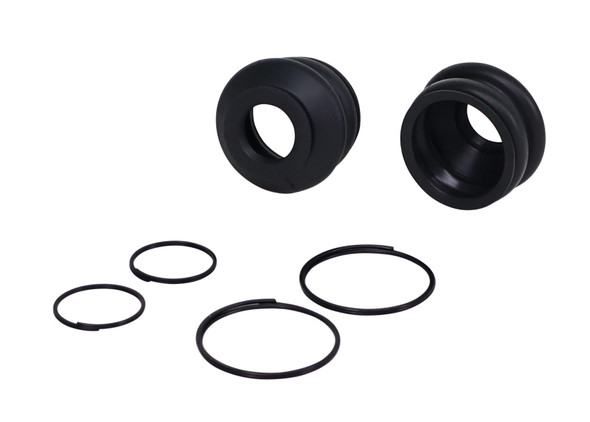
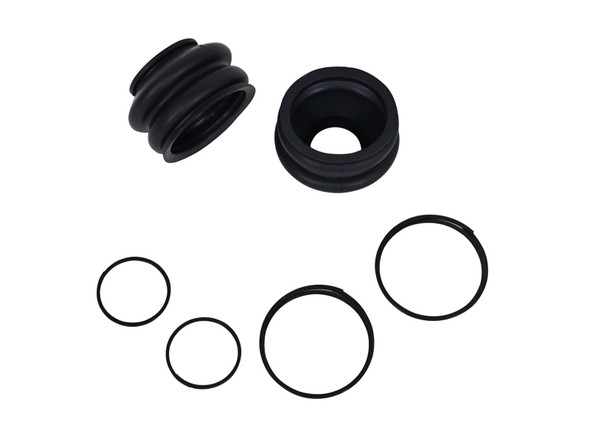
Whiteline 22-25 Subaru WRX Suspension Ball Joint Boot - Front - KSK206
Whiteline
MSRP: $22.88$20.59What are the main benefits of Whiteline ball joints?Whiteline ball joints protect your suspension from grit and moisture, maintaining lubrication for extended service life and responsive handling.Can...MSRP: $22.88$20.59 -
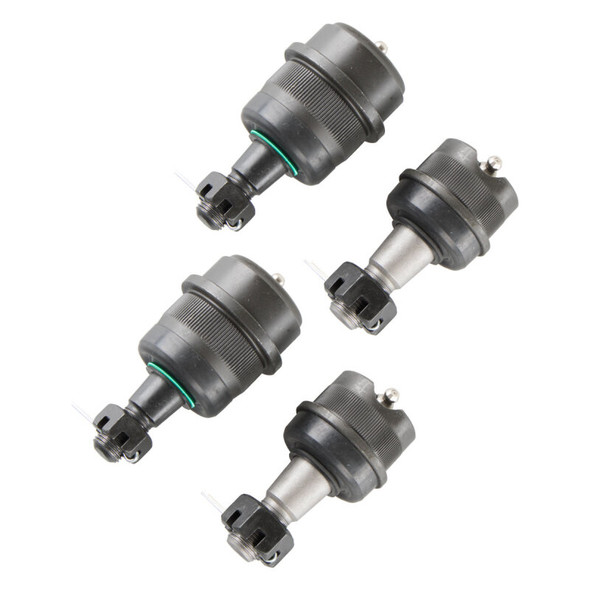
Synergy Jeep JK/WJ HD Knurled Front Ball Joint Set Dana 30/44 (w/2 Uppers + 2 Lowers) - 8009-12
Synergy Mfg
$277.75Are these ball joints designed for specific axle types?Synergy Mfg Ball Joint Kits are specifically engineered for robust performance on Dana 30 and Dana 44 axle applications.Can I install these ball...$277.75 -

Synergy Jeep TJ/LJ/XJ/YJ/ZJ HD Knurled Front Ball Joint Set Dana 30/44 (w/2 Uppers + 2 Lowers) - 4120
Synergy Mfg
$277.75Will these ball joints fit my Jeep TJ?Synergy Jeep TJ/LJ/XJ/YJ/ZJ HD Knurled Front Ball Joint Set is engineered for Dana 30/44 axles, confirming fitment for your Jeep TJ.Can I install these...$277.75
Ball joints are the pivoting load-bearing connection between your suspension control arms and steering knuckle — they are the single point where steering input, suspension travel, and vehicle weight all converge, making material quality and design tolerance the difference between precise handling and catastrophic failure. Motor Sport Mayhem stocks 100 ball joints spanning 109 brands, from direct OEM-replacement hardware priced at $1.14 to full race-spec spherical assemblies reaching $13,544, covering street, suspension builds, track competition, and serious off-road applications.
Our Top Picks for Ball Joints
Each product below was hand-selected based on engineering quality, real-world performance validation, and fit across the broadest range of builds.
AEM IND Strut Bars
AEM Induction | $346.99
Chassis bracing that ties strut tower loads directly into the firewall structure, reducing flex and improving front suspension geometry consistency under cornering stress.
- Reduces chassis twist that otherwise distorts ball joint load angles mid-corner
AFE Coilover Systems
aFe | $3,729.00
Single-adjustable damping with featherlight valving that keeps ball joints operating within optimal load range across ride height settings.
- Coilover geometry engineered to minimize bind and brinelling at the ball joint interface
ALF Wireless Air Control Systems
Air Lift | $1,363.99
Wireless air management that allows precise ride height control, keeping suspension geometry — and ball joint operating angles — within design parameters at all times.
- Prevents extreme droop or compression angles that accelerate ball joint wear in air suspension builds
ABR Steering Racks
All Balls Racing | $209.62
Heavy-duty steering rack rebuild that restores proper Ackermann geometry and removes slop that compounds ball joint stress in off-road and UTV applications.
- Tight rack tolerances reduce lateral loading on adjacent ball joints during hard steering inputs
PA Alta Adjustable Control Arms
Alta | $339.15
Adjustable-length control arms that allow precise alignment correction while maintaining proper ball joint operating angles after ride height changes.
- Geometry-corrected design prevents ball joint preload errors common with lowered suspensions
ANT Micro-Start Tire Inflator
Antigravity Batteries | $24.99
Compact portable tire inflator essential for maintaining correct tire pressure — under-inflation creates lateral forces that overload ball joints during cornering.
- Correct tire pressure directly reduces off-axis side loading on ball joint stud shafts
ARB BP51 Coilovers
ARB BP51 Coilovers
ARB | $4,580.69
Bypass-style coilover system engineered for lifted applications that places suspension travel and ball joint articulation range at the center of its design brief.
- Internal bypass tuning reduces shock-induced spike loads transferred through ball joints at speed over rough terrain
ART Coil Buckets
Artec Industries | $351.99
Frame-mount coil buckets that properly locate spring loads and limit suspension droop to keep ball joints within their rated articulation envelope.
- Structural coil mounting prevents the bind-and-snap loading cycle that destroys ball joint boots and housings off-road
AST 5100 Series Coilovers
AST | $4,554.00
Competition-grade coilover kit with digressive damping that smooths the high-frequency inputs most likely to fatigue ball joint housings under race conditions.
- Low-friction damper internals reduce the micro-vibration cycles that cause fretting wear in press-fit ball joint assemblies
AWE Chassis Bars
AWE Tuning | $435.00
Drivetrain stabilizer with polyurethane mounting that absorbs torque reaction forces before they can transmit into suspension geometry and misload front ball joints.
- Polyurethane mount compliance tuned to isolate drivetrain harmonics without inducing NVH at the chassis-suspension interface
How to Choose the Right Ball Joints
The core decision in ball joint selection comes down to joint type, load rating, and articulation angle — the three variables that determine whether a joint survives your application or fails mid-corner. OEM-replacement units use a steel stud pressed into a plastic or nylon socket with a grease reservoir and rubber boot; they are cost-effective for stock applications but have a defined articulation limit, typically 20–25 degrees, beyond which the boot tears and the joint runs dry. Aftermarket performance ball joints step up to hardened chromoly or 4130 steel studs, sintered bronze or PTFE-lined sockets, and in race-spec applications, full spherical bearing designs that eliminate the socket entirely in favor of a metal-to-metal race that accepts extreme angles and side loads without deformation. Failure modes in budget joints cluster around two issues: stud brinelling from high shock loads that leave flat spots in the socket, and boot failure from incorrect articulation angles that collapse the boot and introduce contamination — both are eliminated by moving to forged housings and sealed spherical designs for demanding builds.
Key Specifications
Stud diameter and taper are the starting point for any ball joint selection — these dimensions must match your spindle/knuckle bore exactly because an incorrect taper angle creates a bearing surface mismatch that loosens under load and cannot be corrected with torque alone. Common passenger car tapers run 1:8 or 1:10 Morse-type, while truck and off-road applications frequently use larger 1:6 tapers that provide more contact area under the heavier vertical loads involved. Always verify the taper angle against your spindle specification, not just the thread pitch, before purchasing.
Load rating separates performance joints from standard replacements in real terms. A stock-class ball joint for a light passenger car may be rated at 3,500–5,000 lbs static radial load, while a heavy half-ton truck lower ball joint typically requires 8,000–12,000 lbs rated capacity, and a dedicated race or lifted off-road unit needs to handle dynamic spike loads that can exceed 2–3x static weight in harsh terrain. Manufacturers publish dynamic load ratings separately from static — always use the dynamic figure for track and off-road applications.
Articulation angle is critical for any vehicle with a suspension lift or running aggressive alignment settings. A standard OEM lower ball joint allows roughly 20–25 degrees of articulation before binding; a lifted vehicle running 4 inches or more of suspension lift routinely demands 35–45 degrees of articulation at full droop. Pairing heavy lift with a low-articulation joint forces the stud to contact the housing edge, creating a stress riser that leads to stud fatigue and catastrophic separation — the most dangerous failure mode in the category. Verify articulation specification against your actual suspension travel envelope before finalizing selection. For track applications with coilovers and modified geometry, spherical rod-end replacements or Heim-joint upper ball joints give unlimited articulation at the cost of NVH and boot protection.
Greaseable versus pre-lubricated sealed designs represent a maintenance trade-off worth understanding. Pre-lubricated sealed joints require zero maintenance but have a finite service life determined by the original grease charge — ideal for daily drivers and OEM-replacement applications. Greaseable joints with zerk fittings allow periodic re-lubrication that can extend service life by 2–3x in off-road or high-wear applications where boot contamination is a constant threat. For any serious build, a greaseable joint paired with a quality synthetic grease rated to 350°F or higher is the professional preference.
Ball Joint Load Rating vs. Vehicle Weight and Application
| Vehicle Class / Application | Typical Curb Weight | Minimum Dynamic Load Rating (Lower BJ) | Recommended Joint Type |
|---|---|---|---|
| Compact / Sport Sedan — Street | 2,600–3,200 lbs | 4,500–6,000 lbs | OEM-replacement or performance rubber-socket |
| Compact / Sport Sedan — Track / Autocross | 2,600–3,200 lbs | 6,000–8,000 lbs | Hardened chromoly stud, PTFE-lined socket |
| Full-Size Truck / SUV — Street / Tow | 4,800–6,500 lbs | 10,000–14,000 lbs | Forged housing, greaseable, large-taper stud |
| Lifted Truck / SUV — Off-Road (2–4 in lift) | 4,800–6,500 lbs | 12,000–16,000 lbs + 35° articulation | Heavy-duty greaseable, high-articulation design |
| Lifted 4x4 — Extreme Off-Road / Rock Crawl (4+ in lift) | 5,000–7,500 lbs | 18,000+ lbs, 45°+ articulation | Forged DOM housing, rebuildable spherical |
| Dedicated Race Car — Road Course / Rally | 2,200–3,500 lbs | 8,000–12,000 lbs dynamic, unlimited articulation | Full spherical / Heim-joint, rebuildable race spec |
Price Guide
Entry ($1.14–$213): This range covers OEM-quality direct replacements, individual joint hardware, and single-axle replacement kits appropriate for restoring worn stock suspension to factory specification — the correct choice when the vehicle is stock, unmodified, and the priority is cost-effective maintenance rather than performance improvement.
Mid-range ($213–$1,500): The majority of performance enthusiasts land here — this tier delivers hardened stud materials, greaseable designs, improved articulation angles, and upgraded housing metallurgy that meaningfully outperform OEM parts under street performance and light track use; it also covers the complete upper and lower arm assemblies that include pre-installed high-spec joints for one-step geometry upgrades.
Premium ($1,500–$13,544): Full spherical race joints, rebuildable heavy-duty assemblies for serious off-road builds, and complete suspension system packages incorporating competition-grade ball joints belong here — the cost is justified by rebuild-ability, documented load ratings for sanctioned racing, and the metallurgical specifications required to survive repeated high-G cornering loads or sustained articulation under extreme terrain without fatigue failure.
Who Is This For?
Ball joints serve a wider range of applications than any other single suspension component — from daily commuters needing a safe OEM replacement to professional race teams requiring certified load-rated spherical assemblies.
Racing Competition — 8.1/10
Ball joints score highest here because race conditions place the most demanding and repeatable stress on the joint: high cornering G-forces sustained lap after lap, aggressive alignment settings that push the joint toward its articulation limit, and zero tolerance for play or flex that would corrupt steering feedback. Competition-grade joints in this application are typically full spherical designs with documented load ratings and rebuild programs, allowing teams to service joints at defined intervals rather than waiting for wear indicators. The 8.1 rating reflects how central joint quality is to consistent lap-time results — a joint with measurable play introduces steering vagueness that degrades driver confidence and corrupts corner entry data.
Track / Autocross — 8.0/10
Track and autocross use scores 8.0 because the load cycles are shorter than circuit racing but the lateral G demands are often higher in autocross due to tight transitions and abrupt direction changes that spike ball joint loads instantaneously. Upgraded joints for this application need high static and dynamic load ratings along with precise manufacturing tolerances that eliminate play without creating stiction — any binding in the joint translates directly to inconsistent steering feel that makes the car unpredictable at the limit. Pairing quality ball joints with upgraded shocks and struts is the standard approach for track builds because both components directly define suspension geometry accuracy under dynamic loading.
Street Performance — 7.7/10
Street performance applications score 7.7, driven by the combination of daily driving demands and occasional hard use that requires a joint capable of performing across a wide temperature range, tolerating road debris contamination, and surviving the fatigue cycles of regular road use without premature wear. Upgraded street joints focus on better boot material — silicone versus rubber — along with improved socket liners that maintain tighter preload over a longer service interval than OEM parts. The score reflects genuine value in upgrading on modified street vehicles where lowered ride height or added power has already moved loading beyond what the original OEM joint was engineered to handle.
Weekend Off-Roading — 7.7/10
Matching street performance at 7.7, off-road use is where ball joint selection has the highest safety stakes — a failed joint on a trail miles from pavement is a recovery situation, not an inconvenience. Off-road scoring reflects the high articulation demands of lifted suspensions combined with the contamination exposure that destroys standard rubber-boot OEM joints rapidly. High-articulation, greaseable joints with forged housings are the minimum specification for anything beyond mild dirt roads, and the ability to re-grease on the trail is a practical advantage that no sealed unit can match in genuine backcountry conditions.
Daily Driving Comfort — 6.2/10
Scoring 6.2, daily driving is the application where ball joints matter primarily for safety and steering accuracy rather than outright performance — worn joints introduce steering wander, uneven tire wear, and clunking that degrades comfort before any actual failure. OEM-specification replacements are appropriate for stock daily drivers, and the score acknowledges that upgrading beyond OEM spec on an unmodified daily driver produces minimal perceptible benefit versus simply maintaining the factory joint in serviceable condition with regular inspection. Where the score gains relevance is on daily-driven modified vehicles where lowering springs or coilovers have already altered the loading environment beyond OEM design parameters.
Trusted Ball Joints Brands We Carry
The brands that lead this category earn that position through documented engineering — not marketing. Moog has been an OEM supplier to major manufacturers for decades, with their Problem Solver series addressing documented factory weak points through improved socket geometry and gusher bearing designs. Skyjacker dominates the lifted truck segment with high-articulation greaseable joints engineered specifically for the extreme angles that lifted suspensions demand, backed by load ratings published for their specific lift height applications. Energy Suspension brings polyurethane expertise to adjacent pivot points that directly affect ball joint loading, and their complete bushing kits are a natural complement to any ball joint upgrade. Whiteline focuses on precision-tolerance street and track applications, engineering their joints to eliminate the manufacturing slop that causes premature wear in high-performance alignment setups. Superpro takes a polymer-science approach, using polyurethane compounds precisely formulated for each pivot's load and motion requirements — an engineering methodology that extends service life in both street and competition applications. ICON rounds out the premium off-road segment with billet-machined housings and full rebuildable designs rated for the most demanding terrain, justifying their position at the top of the price spectrum with metallurgical specifications that serious builders can verify independently.
Frequently Asked Questions
Are aftermarket ball joints actually better than OEM?
For stock vehicles in normal service, a quality OEM-spec replacement from a reputable manufacturer performs comparably to the factory original — the factory joint was engineered specifically for that vehicle's load and geometry requirements. Where aftermarket units genuinely outperform OEM is in applications where the vehicle has been modified: lowered ride height, increased power, lifted suspension, or regular track use all move loading outside the OEM design envelope, and aftermarket joints engineered for those conditions use harder stud materials, improved socket liners, and better boot compounds that survive where OEM parts fail prematurely. The key qualifier is "reputable manufacturer" — low-cost import units often use cast rather than forged housings and low-durometer nylon sockets that wear rapidly under any real stress, making them worse than a quality OEM replacement.
Are aftermarket control arms worth buying?
Aftermarket control arms deliver measurable value in three specific scenarios: when the OEM arm has a documented fatigue or geometry weakness, when you need to correct alignment parameters after a ride height change, and when the factory arm uses a non-greaseable ball joint that cannot be replaced independently. Adjustable-length aftermarket arms allow precise camber and caster correction that fixed OEM arms cannot provide after lowering — this directly extends tire life and improves handling consistency. The secondary benefit is that most quality aftermarket arms include upgraded ball joints and bushings as part of the assembly, replacing three wear items simultaneously with higher-specification components, which justifies the cost over sourcing replacements individually.
Are aftermarket lower control arms good for performance builds?
Lower control arms are the primary load path between the chassis and the wheel, meaning they carry vertical, lateral, and fore-aft forces simultaneously — upgrading to a properly engineered aftermarket unit with correct geometry for your ride height is one of the highest-impact suspension modifications available. Quality aftermarket lower arms for performance use are typically fabricated from 4130 chromoly or 6061-T6 aluminum, both of which offer significantly better strength-to-weight ratios than OEM stamped steel while adding camber and caster adjustment that the factory arm lacks entirely. The critical detail is geometry correctness: an arm that moves the ball joint pickup point even 5mm from the correct location changes camber gain rate and bump steer characteristics in ways that can make the car worse to drive, so engineering data from the manufacturer — not just claims — is the standard to demand before purchasing.
How do I know when my ball joints need replacing?
The primary wear indicators are radial play greater than 0.020 inches in a standard load-bearing lower joint as measured with a pry bar test, axial play exceeding 0.060 inches in a non-load-bearing upper joint, and any visible or audible clunking during low-speed parking lot maneuvers or slow-speed bumps that isolates to the front suspension. Boot condition is a leading indicator: a cracked, torn, or collapsed boot means the grease reservoir has been compromised and contamination has entered the socket, and the joint is wearing at an accelerated rate regardless of how tight it feels at the time of inspection. Any vehicle with measurable steering wander that cannot be corrected by alignment adjustment should be inspected for ball joint play before any other diagnosis — worn joints invalidate alignment readings entirely.
What is the difference between a regular ball joint and a spherical ball joint?
A conventional ball joint uses a studded ball pressed into a nylon or PTFE-lined plastic socket with a preloaded spring that maintains contact — this design provides smooth operation, noise isolation, and a defined failure mode (loosening) that gives warning before catastrophic separation, but it has a fixed articulation limit typically between 20 and 30 degrees. A spherical ball joint (also called a rod-end or Heim joint in some configurations) uses a precision-ground steel ball captured in a steel race with no socket housing, providing unlimited articulation in all planes at the cost of metal-to-metal contact that requires periodic lubrication and produces more NVH than a conventional design. For race applications where alignment precision and load capacity outweigh comfort considerations, the spherical design is the correct choice; for any vehicle that sees street use, the conventional socket design with upgraded materials strikes the better balance between performance and daily drivability.
Building something specific? Our performance specialists can help you select the right Ball Joints for your application — street, track, or full race build.