
Wheels - Forged
- Product
- Qty in Cart
- Quantity
- Price
- Subtotal
-
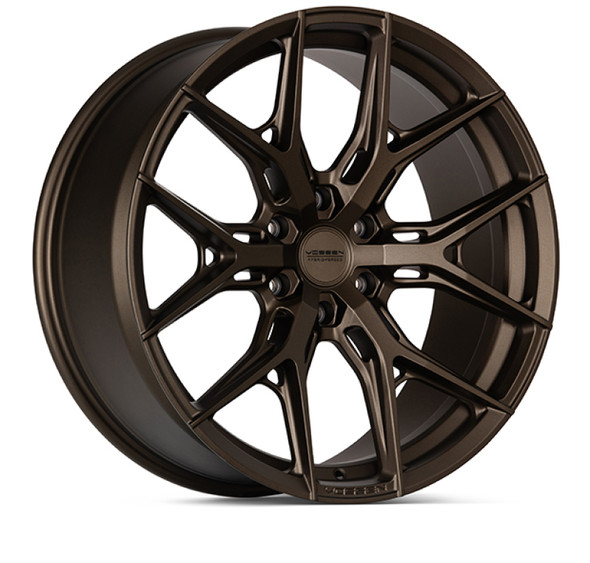
Vossen HF6-4 20x10 / 6x135 / ET-18 / Super Deep Face / 87.1 - Terra Bronze Wheel - VOSSENHF64-0F11
Vossen
$749.00What is the recommended installation process for Vossen HF6-4 Wheels?Professional installation is recommended for Vossen HF6-4 Wheels to ensure precise alignment and secure hub centering for optimal...$749.00 -

Vossen HF6-4 - 20x9 - ET18 - 6x139.7 - 106.1 - Deep - Gloss Black Wheel - VOSSENHF64-0G13
Vossen
$749.00$749.00 -

Vossen HF6-4 20x9.5 / 6x135 / ET15 / Deep Face / 87.1 - Matte Gunmetal Wheel - VOSSENHF64-0F03
Vossen
$749.00$749.00 -

Vossen HF6-4 20x10 / 6x135 / ET-18 / Super Deep Face / 87.1 - Matte Gunmetal Wheel - VOSSENHF64-0F09
Vossen
$749.00What is the bolt pattern for the VOS HF6-4 Wheels?The VOS HF6-4 Wheels feature a 6x135 bolt pattern, ensuring precise fitment for specific vehicle applications and enhanced stability.Do these wheels...$749.00 -

Vossen HF-7 20x9 / 5x112 / ET32 / Flat Face / 66.5 - Silver Polished Wheel - VOSSENHF7-0M10
Vossen
$749.00Are these wheels compatible with my specific vehicle model?Confirm fitment with your vehicle using our comprehensive database to ensure optimal integration and desired performance characteristics.Do...$749.00 -

Vossen HF-7 20x9 / 5x120 / ET35 / Flat Face / 72.56 - Silver Polished Wheel - VOSSENHF7-0B01
Vossen
$749.00$749.00 -
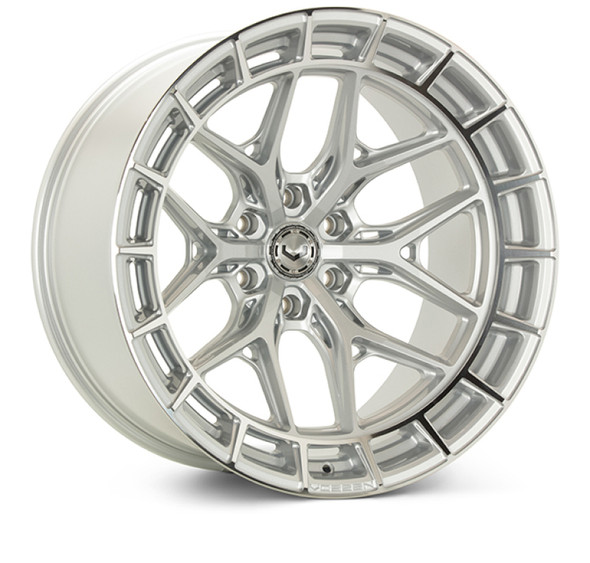
Vossen HFX-1 20x10 / 6x139.7 BP / ET-18 / 106.1 CB / Super Deep - Silver Polished Wheel - VOSSENHFX1-0G12
Vossen
$749.00$749.00 -

Vossen HF6-1 20x9.5 / 6x135 / ET15 / Deep Face / 87.1 - Tinted Matte Bronze Wheel - VOSSENHF61-0F05
Vossen
$749.00$749.00 -

Vossen HFX-1 20x9 - 5x112 - ET25 - Flat - 66.5 - Gloss Black Wheel - VOSSENHFX1-0M01
Vossen
$749.00What are the key dimensions for the VOS HFX-1 Wheels?VOS HFX-1 Wheels are specified as 20 inch diameter, 9 inch width, with a 5x112 bolt pattern and an ET25 offset.Do these wheels require...$749.00 -
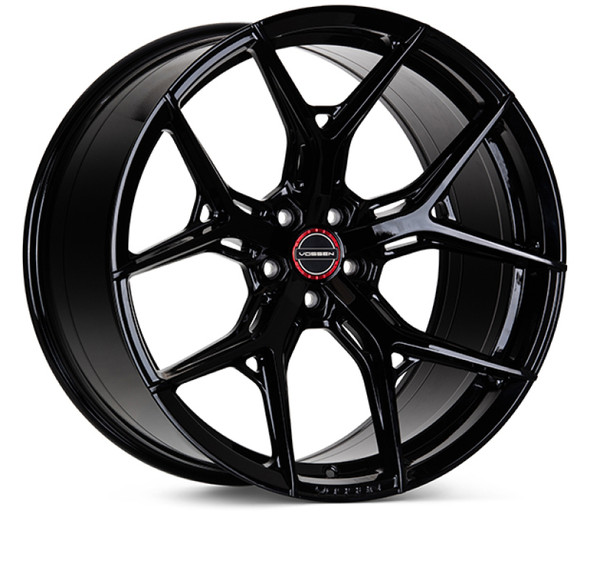
Vossen HF-5 20x10.5 / 5x112 / ET25 / Deep / 66.5 CB - Gloss Black Wheel - VOSSENHF5-0M16-25
Vossen
$799.00$799.00 -
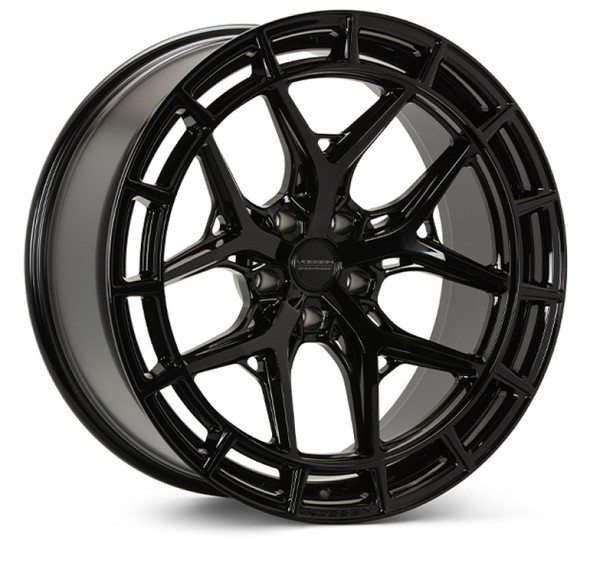
Vossen HFX-1 20x10.5 - 5x112 - ET25 - Deep - 66.5 - Gloss Black Wheel - VOSSENHFX1-0M07
Vossen
$799.00$799.00 -
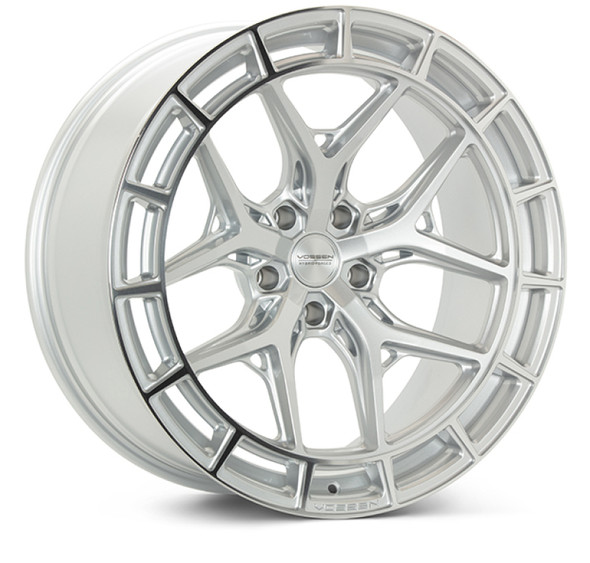
Vossen HFX-1 20x10.5 - 5x112 - ET25 - Deep - 66.5 - Silver Polished Wheel - VOSSENHFX1-0M08
Vossen
$799.00$799.00
Forged wheels are manufactured by pressing aluminum billets under thousands of tons of pressure, aligning the grain structure for superior tensile strength and the lowest rotating unsprung mass available in any production wheel technology. Motor Sport Mayhem stocks 323 forged wheels from 28 brands ranging from $50.99 to $3,105.00, covering everything from dedicated track builds to overland rigs.
Our Top Picks for Wheels - Forged
Each of the following wheels was hand-selected based on verified construction quality, competitive pricing within its segment, and proven real-world performance results across street, track, and off-road applications.
AVN GT Wheels
Advan | $1,334.08
A full monoblock forged construction optimized for high-speed track use, delivering exceptional rigidity with aggressive negative offset geometry.
- Race-bred forging process produces a denser, more uniform grain structure than casting or flow-forming
BBS FI-R Wheels
BBS | $3,105.00
The pinnacle of BBS forged engineering, purpose-built for high-horsepower supercar applications where brake clearance, stiffness, and thermal resistance are non-negotiable.
- OEM-supplier-grade tolerances with motorsport-certified load ratings for extreme lateral and braking forces
BKC Hubcap
Bikers Choice | $50.99
A direct-fit chrome hubcap that restores OE appearance on classic cruiser wheels without requiring full wheel replacement.
- Precision-fit design ensures secure retention with no play or vibration at highway speeds
DLW Enigma Race 9313 Wheels
Dirty Life | $538.99
A race-inspired off-road wheel built around a 6-lug truck bolt pattern with deep negative offset for maximum track width and stability on rough terrain.
- Machined face finish balances corrosion resistance with aggressive aesthetic for dual street and trail use
ENK GTC01RR Wheels
Enkei | $619.20
Enkei's MAT (Most Advanced Technology) forging process produces a wheel with a higher strength-to-weight ratio than conventional casting, purpose-built for performance street and track use.
- 5x114.3 bolt pattern compatibility makes this one of the most versatile track-spec forged options in the mid-range segment
EXC Takasago Rims
Excel | $350.84
A 36-hole motorcycle rim engineered for riders who need proven build quality with consistent spoke tension retention across high-mileage use.
- Takasago manufacturing heritage brings decades of two-wheel competition rim expertise to street and trail applications
FFT Holeshot RSR Wheels
fifteen52 | $488.75
A rally-inspired forged wheel that balances low mass with the structural integrity required for mixed-surface performance driving, built around the common 5x112 European bolt pattern.
- Radial spoke architecture optimizes load path distribution under combined braking and cornering forces
FR Wheels
Ford Racing | $1,693.66
A staggered front and rear wheel kit engineered specifically for the Mustang Mach 1 Handling Pack, matching OEM dimensional requirements with factory-level quality control.
- Factory-sourced engineering data ensures correct offset, hub bore, and load rating for the specific chassis and brake package
FRG F14 Wheels
Forgestar | $870.00
A flow-forged beadlock wheel delivering the tire retention security required for low-pressure off-road and drag applications in a single 17x10 fitment.
- Beadlock ring mechanically clamps the tire bead, eliminating de-beading risk at single-digit PSI pressures used in rock crawling and drag strip launches
GL 57DR Wheels
Gram Lights | $758.08
Manufactured by Rays Engineering using their proprietary forging process, this wheel delivers sub-9kg weights in an 18-inch diameter that directly reduces rotational inertia and improves acceleration response.
- Rays' forging heritage includes decades of JGTC and Super GT homologation, making these wheels among the most pedigree-backed options in the 5x100 fitment space
How to Choose the Right Forged Wheels
The difference between a high-quality forged wheel and a poor one is invisible on a shelf but immediately apparent under load — it lives in alloy grade, die design, post-forging heat treatment, and final machining tolerances. A properly forged wheel in 6061-T6 or 7075 aluminum will have a yield strength exceeding 500 MPa compared to 150–180 MPa for a typical A356 gravity cast wheel, which directly translates to thinner spokes, less material, and lower rotating mass without sacrificing safety margins. What causes failures is cutting corners on any single step: under-forging that leaves voids in the billet, skipping T6 heat treatment, or allowing hub bore tolerances wider than 0.1mm that cause harmonic vibration at speed.
Key Specifications
Construction method is the first decision point. True monoblock forged wheels are pressed from a single aluminum billet, producing the best grain continuity and the lowest mass — this is what you want for track and time attack applications. Flow-formed wheels start with a cast center and spin-form the barrel under heat and pressure, producing a barrel with near-forged strength at a lower price point — a sound compromise for most street performance builds. Two- and three-piece forged wheels use a forged center bolted or welded to forged or spun aluminum barrels, offering the widest fitment flexibility and repairability, which matters in racing programs where wheel damage is a when, not an if.
Offset and backspacing are the two most frequently misunderstood specs. Offset is the distance in millimeters from the wheel's mounting face to its centerline — positive offset pushes the wheel inward, negative offset pushes it outward. Running insufficient backspacing on a lifted truck will cause the tire to contact the upper control arm under full droop; running too much positive offset on a lowered car loads the inner wheel bearing at an unfavorable angle. Always cross-reference offset against your hub-to-fender measurement and suspension geometry before ordering. Paired with a suspension upgrade, correct offset also affects scrub radius, which directly influences steering feedback and braking stability.
Hub bore matters more than most buyers realize. A wheel with a hub bore smaller than your vehicle's hub register simply won't mount. A wheel with a bore larger than the hub register requires hub-centric rings to transfer load correctly — without them, the wheel is lug-centric, and lateral loads transfer through the lug nuts rather than the hub flange, which accelerates lug nut loosening and can crack spoke bases over time. Always specify hub bore to within 0.1mm of your factory hub diameter, or use precision billet hub-centric rings available in the wheel and tire accessories section.
Load rating is the spec most street buyers ignore and every track buyer must verify. A wheel's load rating is expressed in kilograms per wheel and must exceed your vehicle's corner weight — typically 25–35% of gross vehicle weight for a typical front-engine car — with margin for dynamic loads. At an autocross or track day, lateral G-forces multiply the effective load on the outside wheel by 1.5x to 2.0x. If you're running sticky tires on a heavy vehicle, prioritize load rating over aesthetics every time.
Forged Wheel Weight vs. Diameter Reference Guide
| Wheel Diameter | Typical Cast Weight | Typical Forged Weight | Rotational Inertia Saving (est.) |
|---|---|---|---|
| 17 inch | 10.0–12.5 kg | 6.5–8.5 kg | ~20–28% |
| 18 inch | 11.5–14.0 kg | 7.5–9.5 kg | ~22–30% |
| 19 inch | 13.0–16.0 kg | 8.5–11.0 kg | ~22–32% |
| 20 inch | 14.5–18.0 kg | 9.5–12.5 kg | ~23–33% |
| 21 inch | 16.0–20.0 kg | 10.5–14.0 kg | ~24–34% |
| 22 inch | 18.0–23.0 kg | 12.0–16.0 kg | ~25–35% |
Price Guide
Entry ($50.99–$447.00): At this price point you'll find hubcaps, motorcycle rims, and flow-formed wheels that borrow forging techniques for the barrel while using a gravity-cast center. Perfectly adequate for street aesthetics and moderate performance use — just verify load ratings carefully before track use.
Mid-range ($447.00–$1,200.00): This is where the majority of serious enthusiasts land, and for good reason — true monoblock and flow-forged options from Enkei, Gram Lights, fifteen52, Forgestar, and Weld live here, offering genuine weight savings and real motorsport engineering without supercar pricing.
Premium ($1,200.00–$3,105.00): Full monoblock forged wheels from brands like Advan, BBS, and Vossen with OEM-supplier tolerances, motorsport homologation, and in many cases vehicle-specific engineering. Justified for high-power builds, dedicated track cars, and factory-matching OEM replacement on exotic vehicles where dimensional precision is critical.
Who Is This For?
Forged wheels serve a wider range of applications than any other wheel construction category — from dedicated racing competition to weekend overlanding — and the usage data across our current inventory reflects that range directly.
Racing Competition — 8.6/10
Forged wheels score highest across our entire inventory for racing competition use, and the engineering reason is straightforward: every kilogram of unsprung rotating mass removed from a wheel has a disproportionate effect on acceleration, braking, and suspension response compared to equivalent weight removed elsewhere on the car. Monoblock and two-piece forged constructions in 6061-T6 and 7075 aluminum meet the load rating requirements of sanctioning bodies while delivering the lightest possible wheel at each diameter. If you're building a time attack, endurance, or drag car, forged is the only correct answer.
Track / Autocross — 8.3/10
Track and autocross applications score identically to off-road weekend use in our matrix — 8.3 out of 10 — because the demands are similarly uncompromising, just in different axes. Lateral G-forces at autocross regularly exceed 1.2g on sticky compound tires, placing the outer wheel under loads that expose any casting porosity or thin spoke sections immediately. Forged wheels absorb these repeated dynamic loads without the fatigue cracking that eventually develops in cast alternatives after multiple track days. Pairing forged wheels with upgraded brakes and coilovers is the standard recipe for a capable track day build.
Weekend Off-Roading — 8.3/10
Off-road applications benefit from forged construction in a different way than track use: impact resistance rather than fatigue resistance. A forged wheel struck against a rock ledge or embedded obstacle will deform plastically before it fractures — cast wheels shatter under the same impact, often explosively. For weekend wheelers running 30–40 PSI trail pressures, forged construction adds meaningful insurance against catastrophic wheel failure in remote locations. Beadlock-capable forged options extend this protection to low-pressure off-camber situations where bead retention is the limiting factor.
Street Performance — 7.8/10
Street performance applications score 7.8 out of 10, reflecting the genuine performance benefit of reduced unsprung mass on public roads where road texture, pothole impacts, and variable surface quality are daily realities. A forged wheel's superior impact toughness directly reduces the risk of cracking on sharp-edged expansion joints and frost-heaved pavement that regularly damage cast wheels. The weight savings also improve fuel efficiency modestly — our inventory includes 54 products rated for fuel efficiency at an average of 6.6/10 — making forged wheels a compounding upgrade that pays dividends in both performance and daily durability.
Overlanding / Expedition — 7.7/10
Overlanding scores 7.7 out of 10 in our data, acknowledging that expedition vehicles carry significant payload — recovery gear, water, food, camping equipment — that increases corner weights and demands higher sustained load ratings from the wheel. Forged construction provides that margin without adding the wheel mass that would compound the payload penalty. The corrosion resistance of properly anodized or powder-coated forged aluminum also outlasts the painted cast alternatives under the prolonged mud, moisture, and stone chip exposure that overlanding routes deliver.
Trusted Forged Wheel Brands We Carry
The brands that dominate our forged wheel inventory earned their position through engineering substance, not marketing spend. Rays Engineering — the parent company behind Gram Lights and Advan — has been supplying forged wheels to JGTC, Super GT, and WRC programs for over 40 years, with their proprietary forging process setting the technical benchmark for monoblock aluminum construction. BBS holds OEM supply contracts with multiple factory motorsport programs and manufactures to tolerances tighter than most aftermarket competitors can achieve. Enkei's MAT (Most Advanced Technology) forging process, developed through decades of Formula racing supply, produces wheels that consistently test above their published load ratings. Weld Racing has dominated American drag and oval racing with forged aluminum construction since the 1960s, with a product range that reflects the specific demands of high-horsepower launches. fifteen52 and Forgestar both occupy the performance enthusiast segment with flow-forged and monoblock constructions that bring genuine motorsport engineering to accessible price points without compromising structural integrity.
Frequently Asked Questions
Are Advan wheels actually made by Rays Engineering?
Yes — Advan is the performance wheel brand of Rays Engineering, one of Japan's most respected wheel manufacturers. Rays designs, forges, and machines Advan wheels at their Japanese facilities using the same forging processes and alloy grades they supply to factory motorsport programs. The Advan brand specifically covers the higher-performance, track-oriented portion of the Rays product range, while Gram Lights targets the enthusiast performance segment. Both brands share Rays' core forging technology, including their low-pressure casting and forging hybrids at entry level and full monoblock forged construction at the premium tier. When you buy an Advan wheel, you are buying a Rays-manufactured product with full motorsport engineering behind it.
Are BBS wheels truly high-end, or is it mostly brand reputation?
BBS wheels justify their premium pricing through verifiable engineering rather than brand mythology. BBS holds OEM supply agreements with factory motorsport teams in DTM, Formula racing, and Le Mans endurance — agreements that require third-party load and fatigue testing that exceeds any aftermarket standard. Their forged monoblock and multi-piece construction uses 6061-T6 aluminum forged on proprietary dies that produce hub bore tolerances within 0.05mm. The post-forging heat treatment cycle is fully documented and traceable, which is why BBS wheels appear on vehicles where wheel failure is not an acceptable outcome. The premium you pay is real engineering overhead, not marketing — though the brand equity exists too.
Are BBS RI wheels a forged construction?
The BBS RI series uses a flow-formed construction rather than a full monoblock forge — the barrel is spun under heat and pressure to achieve near-forged strength, while the center section is cast and then machined. This puts the RI in the flow-formed category, which delivers meaningful weight savings over conventional gravity casting but does not match the grain uniformity and ultimate tensile strength of a full billet forge. For street performance and occasional track use the RI is an excellent wheel; for dedicated competition use where weight and fatigue life at maximum loads are the primary concerns, stepping up to a full monoblock forged BBS construction is the technically correct choice.
Are beadlock wheels worth it on a side-by-side (SxS)?
For serious off-road SxS use — particularly rock crawling, sand, or mud where running 6–10 PSI is necessary for traction — beadlock wheels are not optional, they're a safety requirement. A conventional wheel relies entirely on air pressure to hold the tire bead against the rim seat; drop below roughly 12–15 PSI and the bead can break loose under lateral load, causing immediate deflation and potential loss of control. A beadlock mechanically clamps the outer bead with a bolted ring, allowing you to run arbitrarily low pressures without de-beading risk. The maintenance requirement — periodic re-torqueing of the beadlock ring bolts to spec — is the only real downside, and it is a minor one against the safety and traction benefits on technical terrain.
Are cast wheels good enough for daily driving, or do you need forged?
For standard daily driving on maintained roads, a high-quality cast wheel from a reputable manufacturer is entirely adequate — the load ratings, fatigue life, and impact resistance are engineered to exceed OEM requirements under normal operating conditions. The argument for forged on a daily driver comes down to longevity on poor road surfaces and the compounding benefit of lower unsprung mass on steering feel and ride quality over years of use. If your commute includes significant pothole exposure, sharp expansion joints, or you're running low-profile tires that transfer more impact energy directly to the wheel, forged construction's superior impact toughness will prevent the hairline cracking that eventually develops in cast wheels after repeated sharp strikes. Budget-constrained daily drivers who occasionally track their car are the clearest use case for forged over cast — see our cast wheels category for the full comparison range.
Building something specific? Our performance specialists can help you select the right Wheels - Forged for your application — street, track, or full race build.
Powered by BigCommerce. Theme designed by Papathemes.