
Motorcycle Tires - On Road
- Product
- Qty in Cart
- Quantity
- Price
- Subtotal
-


Dunlop AE2 Bias Front Tire - MT90B16 M/C 72H TL - 45252457
Dunlop
MSRP: $260.95$214.99What is the best use case for Dunlop AE2 tires?Dunlop AE2 tires excel in Street Performance, with an 9/10 score, offering enhanced grip and confidence for spirited riding.How do I confirm if Dunlop...MSRP: $260.95$214.99 -


Dunlop AE2 Bias Front Tire - 130/60B19 M/C 67H TL - 45252455
Dunlop
MSRP: $248.95$204.99How do Dunlop AE2 tires enhance street performance riding?Dunlop AE2 tires deliver exceptional grip and confidence in every lean angle, leveraging Multi-Tread technology for ultimate street...MSRP: $248.95$204.99 -


Dunlop AE2 Bias Front Tire - 130/80B17 M/C 65H TL - 45252454
Dunlop
MSRP: $312.95$256.99How do I confirm if DUN AE2 Tires will fit my motorcycle?Confirm DUN AE2 Tire fitment by consulting your motorcycle's owner manual or a qualified technician before installation.What is the best way...MSRP: $312.95$256.99 -
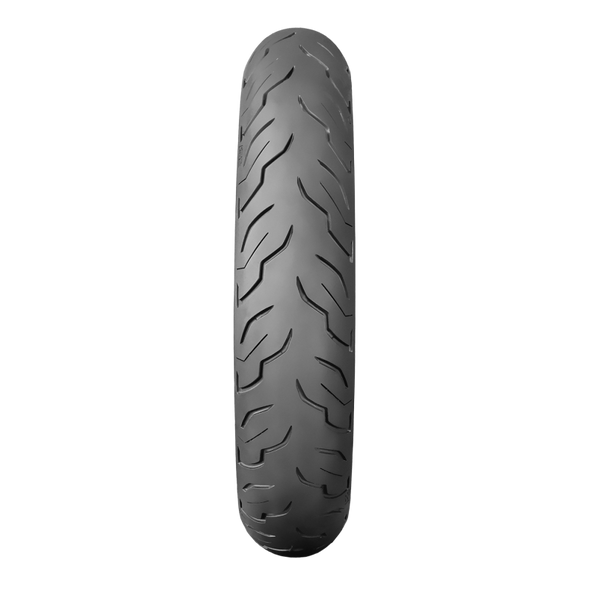

Dunlop AE2 Bias Front Tire - MH90-21 M/C 54H TL - 45252452
Dunlop
MSRP: $218.95$180.99What is the recommended tire pressure for the DUN AE2 Tires?Consult your motorcycle's owner manual for precise recommended tire pressure to ensure optimal performance and longevity of your DUN AE2...MSRP: $218.95$180.99 -


Dunlop AE2 Bias Front Tire - 130/60B21 M/C 69H TL - 45252451
Dunlop
MSRP: $259.95$214.99Succeeding the extremely popular American Elite, the new AE2 offers a more aggressive look through an optimized tread pattern and a new compound formula for increased mileage and enhanced wet-weather...MSRP: $259.95$214.99 -

Dunlop Sportmax Q5 Rear Tire - 200/60ZR17 M/C (80W) TL - 45247190
Dunlop
MSRP: $472.95$375.99What is the recommended installation method for the Dunlop Sportmax Q5 tires?Professional installation is strongly recommended for Dunlop Sportmax Q5 tires to ensure proper seating and performance...MSRP: $472.95$375.99 -
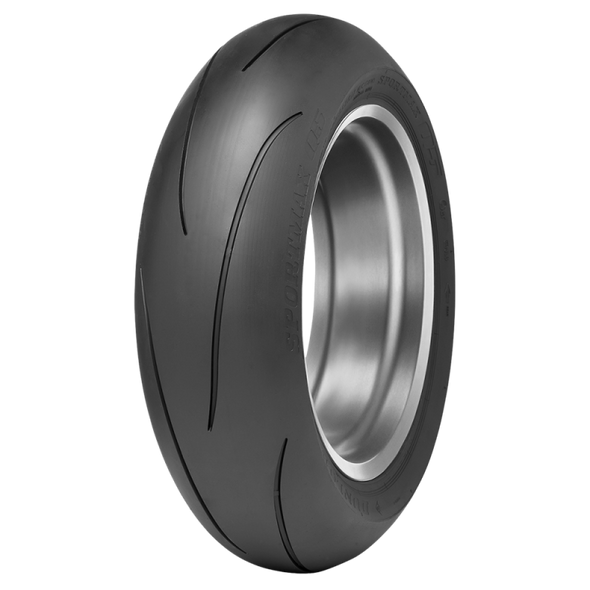
Dunlop Sportmax Q5 Rear Tire - 200/55ZR17 M/C (78W) TL - 45247189
Dunlop
MSRP: $461.95$365.99How do I determine the correct size for my motorcycle?Consult your motorcycle's owner's manual or a professional for precise size specifications to ensure optimal fitment with your DUN Sportmax Q5...MSRP: $461.95$365.99 -

Dunlop Sportmax Q5 Rear Tire - 190/55ZR17 M/C (75W) TL - 45247188
Dunlop
MSRP: $410.95$325.99What is the fitment for Dunlop Sportmax Q5 motorcycle tires?Dunlop Sportmax Q5 tires fitment must be confirmed with your specific motorcycle model for optimal performance on the road.What is the...MSRP: $410.95$325.99 -

Dunlop Sportmax Q5 Rear Tire - 190/50ZR17 M/C (73W) TL - 45247187
Dunlop
MSRP: $401.95$318.99How do Dunlop Sportmax Q5 tires ensure rider confidence through corners?Dunlop Sportmax Q5 tires provide rider confidence through corners with their Jointless Tread technology and Intuitive Response...MSRP: $401.95$318.99 -

Dunlop Sportmax Q5 Rear Tire - 180/60ZR17 M/C (75W) TL - 45247186
Dunlop
MSRP: $359.95$285.99What are the Dunlop Sportmax Q5 tires best suited for?Dunlop Sportmax Q5 tires excel in track competition and autocross, achieving a score of 9 due to enhanced grip and handling capabilities.How do I...MSRP: $359.95$285.99 -
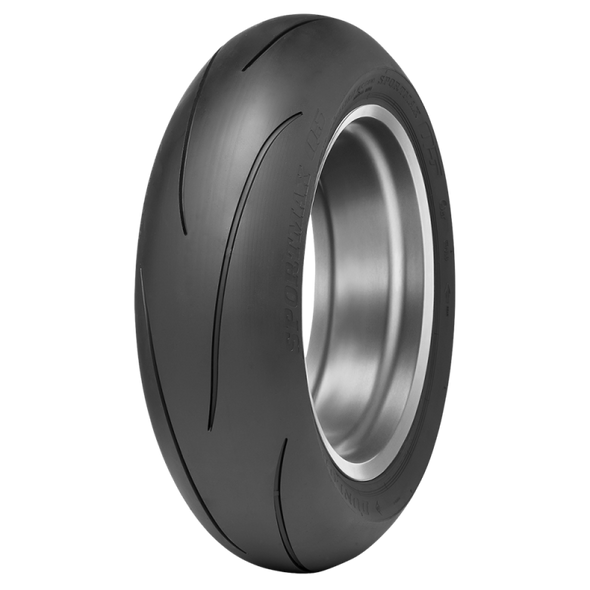
Dunlop Sportmax Q5 Rear Tire - 180/55ZR17 M/C (73W) TL - 45247185
Dunlop
MSRP: $351.95$279.99What is the primary performance advantage of Dunlop Sportmax Q5 tires on the street?Dunlop Sportmax Q5 tires deliver unwavering grip and stability through continuous contact with the road, ensuring...MSRP: $351.95$279.99 -

Dunlop Sportmax Q5 Rear Tire - 160/60ZR17 M/C (69W) TL - 45247184
Dunlop
MSRP: $348.95$277.99Will the Dunlop DUN Sportmax Q5 Tires fit my motorcycle?Dunlop DUN Sportmax Q5 Tires require confirming specific fitment details for your motorcycle model before purchase.How difficult is the Dunlop...MSRP: $348.95$277.99
On-road motorcycle tires are engineered to balance grip, wear rate, and handling precision across a spectrum of asphalt conditions — from sport touring to full track competition — and the right choice directly determines cornering confidence, braking distance, and longevity under load. Motor Sport Mayhem stocks 609 on-road motorcycle tires across 20 brands, from entry-level commuter compounds starting at $29.99 to race-spec slick-adjacent designs reaching $870.99.
Our Top Picks for Motorcycle Tires - On Road
Every tire below was selected based on compound performance, construction integrity, and demonstrated real-world results across street, touring, and competition applications.
AMT Terrain Attack M/T
AMP Tires | $616.99
Built on an aggressive multi-terrain carcass designed to deliver bite across transitional surfaces where on-road meets the edge of trail.
- High load index construction handles sustained highway speeds without heat buildup
ATT Trail Blade Boss Tires
Atturo Tire | $538.34
Engineered with a reinforced sidewall and dual-compound tread block design that maximizes contact patch stability under hard acceleration and braking.
- Staggered tread architecture improves wet evacuation without sacrificing dry grip
AVT Cobra Chrome Tires
Avon Tyre | $503.33
A purpose-built cruiser rear tire with a rounded profile and silica-enhanced compound that delivers consistent cornering feel across a wide temperature range.
- Bias-belted construction provides the compliant ride quality cruiser applications demand
BFG All Terrain TA KO2 Tires
BFGoodrich | $606.71
A proven all-terrain design that transitions between paved roads and unpaved surfaces without the compromise in highway manners common to aggressive-tread tires.
- CoreGard technology resists sidewall splitting under pinch shock and trail debris impact
BRG Battlax Racing Street RS11 Tire
Bridgestone | $355.00
A track-derived rear tire using a multi-compound tread construction that delivers race-level edge grip while remaining fully street-legal for warm-up laps and road transit.
- Aramid fiber belt package controls carcass expansion at sustained high-speed operation
CON ContiClassicAttack Tires
Continental Tire | $238.23
Designed specifically for classic and retro-style motorcycles, this front tire delivers a period-correct profile with modern silica compound performance.
- Optimized tread radius maintains predictable steering geometry on vintage geometry front ends
DFR 4Peak Tire
DragonFire Racing | $399.99
A UTV-oriented radial construction tire engineered for durability under the combined demands of hard pavement running and occasional off-road excursions.
- Eight-ply radial carcass resists puncture and bead failure under heavy lateral load
DUN D251 Tires
Dunlop | $528.89
A sport-touring rear tire built on a zero-degree steel belt construction that resists centrifugal growth at highway speeds and maintains a stable contact patch under load.
- Multi-tread compound zones balance center wear resistance with shoulder cornering grip
GMZ Sand Stripper XL HP Tires
GMZ Race Products | $389.70
A high-performance paddle tire engineered for maximum thrust on loose surfaces, with a reinforced bead seat that handles the extreme torque loads of high-horsepower UTV drivetrains.
- 14-paddle configuration and 7/8-inch paddle height maximize sand exit velocity at speed
ITP Savage X/T Tires
ITP | $349.83
An eight-ply radial constructed for hard-use ATV and UTV applications where sharp rocks, roots, and road running demand both puncture resistance and highway-capable speed ratings.
- Radial carcass construction provides superior heat dissipation compared to bias-ply alternatives at sustained road speeds
How to Choose the Right Motorcycle Tires - On Road
The single biggest mistake riders make is treating on-road motorcycle tires as a commodity — the compound formulation, carcass construction, tread geometry, and speed/load rating are all engineering decisions that directly affect how the tire behaves at the limit, not just in normal riding. A tire with the wrong profile radius for your chassis geometry will create vague turn-in; a tire with a compound not matched to your typical operating temperature range will either glaze over in cold conditions or wear prematurely in sustained heat. Understanding what separates a capable tire from a liability starts with knowing which specifications actually matter for your application.
Key Specifications
Tire construction type is the first decision point: radial vs. bias-ply. Radial tires use cords arranged perpendicular to the direction of travel with a separate belt package, producing lower sidewall heat, better high-speed stability, and a larger, more consistent contact patch. Bias-ply tires use cords layered diagonally, which creates a stiffer, more robust sidewall — preferred for heavy cruisers carrying significant load and for classic motorcycles where the original chassis geometry was designed around bias dimensions. Mixing radial and bias construction front-to-rear is not recommended and is prohibited by most manufacturers due to handling incompatibility.
Speed rating and load index are not suggestions — they are the engineer's guarantee of structural integrity at specified conditions. A V-rated tire (up to 149 mph) is appropriate for most street riding, while a W or Y rating is required for extended high-speed autobahn or track-transit use. Load index must meet or exceed the maximum load your motorcycle places on that wheel; running a tire with insufficient load index causes carcass flex, heat buildup, and catastrophic failure under sustained load. Always cross-reference both front and rear specifications against your motorcycle's service manual tire placard.
Compound technology has advanced significantly, and modern silica-blended tread compounds deliver meaningfully better wet grip than older carbon-black formulations without sacrificing dry wear life. Dual-compound and tri-compound designs place a softer, higher-grip compound at the shoulders — where lean-angle loading occurs — and a harder center strip for wear life under straight-line braking and acceleration. Single-compound tires are typically found at the entry price level and require a conscious tradeoff between grip and longevity. For sport and track applications, look at compound heat range specifications: a tire designed to operate optimally at 140–180°F (typical road use) will underperform on track where surface temps can push tire temps above 200°F.
Profile and fitment precision matter more on motorcycles than on any four-wheeled application because the tire's cross-sectional shape IS the steering geometry — the profile radius determines the steering arc from upright to maximum lean. A tire that is even 5mm wider than specified will alter the effective steering geometry, create sluggish turn-in, and potentially contact bodywork under full lock. Verify section width, aspect ratio, and rim width compatibility against the manufacturer's rim width fitment chart, not just the tire size label. When upgrading to a performance compound in the same size, confirm the new tire's loaded radius matches the OEM specification to preserve suspension geometry and suspension setup.
On-Road Motorcycle Tire Speed Rating, Load Index & Application Reference
| Speed Rating | Max Speed (mph) | Typical Application | Recommended Rim Width Range |
|---|---|---|---|
| H (97) | 130 mph | Standard/cruiser street commuting, low-performance touring | 1.85" – 3.00" (application dependent) |
| V (149) | 149 mph | Sport touring, naked bikes, general performance street | 2.50" – 5.50" (application dependent) |
| W (168) | 168 mph | Supersport, high-performance street, track days | 3.50" – 6.00" (application dependent) |
| Y (186) | 186 mph | Superbike, high-speed circuit, unlimited performance | 3.50" – 6.00" (application dependent) |
| ZR (>149) | Unlimited (see tire sidewall) | Racing-derived street/track tires, combined speed/compound designation | Per manufacturer fitment chart |
| Load Index 67–79 | N/A | Front tires, lightweight sport applications (677–963 lbs capacity) | Per manufacturer fitment chart |
Price Guide
Entry ($29.99–$150): This range covers single-compound bias-ply tires suited to low-mileage commuters, classic restorations on limited budgets, and riders who prioritize replacement cost over outright grip or longevity. Wet weather performance and wear rate at this tier are noticeably inferior to mid-range options — acceptable for fair-weather city riding, not for canyon roads or extended touring.
Mid-range ($150–$450): The overwhelming majority of serious street riders and sport tourers land here, and rightly so — this is where silica-blended compounds, dual-compound tread designs, and quality radial carcass construction become standard. Brands like Dunlop, Bridgestone, and Continental deliver genuinely excellent all-round performance at this price point, and the wear life improvement over entry tires typically makes the cost-per-mile math favorable.
Premium ($450–$870.99): Reserved for riders who spend meaningful time at track days, cover very high annual mileage on premium sport touring bikes, or operate large-displacement cruisers where load requirements demand the best available construction. Michelin's top-tier offerings averaging $408 reflect the R&D investment in race-derived compounds and carcass engineering that filters down from MotoGP development — you're paying for a provably smaller performance gap between street and track conditions.
Who Is This For?
On-road motorcycle tires serve a wider performance spectrum than most riders realize — from daily commuters needing durability and wet-weather confidence to club racers extracting every tenth from a track day.
Weekend Off-Roading — 8.4/10
This is the highest-scoring use case in the category at 8.4/10, which reflects the strong presence of dual-sport and adventure-oriented compounds in this catalog that are designed to handle unpaved surfaces without sacrificing paved road manners. Adventure-touring tires with a 70/30 or 90/10 road/off-road bias have made significant advances in tread compound design, allowing them to grip gravel fire roads and hardpack trails while still delivering predictable cornering on the return highway stretch. Riders who do weekend adventure loops — mixed pavement and dirt — get disproportionate value from choosing correctly in this segment.
Street Performance — 7.5/10
At 7.5/10 across 162 products, street performance is the backbone of this category, covering sport bikes, naked bikes, and performance-oriented standard motorcycles where maximum grip in real-world conditions is the primary objective. The key differentiator at this use level is compound temperature sensitivity — a high-performance street compound needs to deliver adequate grip from cold on the first corner of a morning ride, not just after a prolonged warm-up. Silica content in the tread compound and the tire's cross-section radius relative to the chassis are the two technical factors that most directly predict street performance feel.
Overlanding / Expedition — 7.3/10
Scoring 7.3/10 across 98 products, overlanding and expedition use demands a tire that can sustain 500+ mile days on varying road quality, carry significant luggage weight without carcass deformation, and remain functional when pavement disappears unexpectedly. Load index selection becomes critical here — a heavily loaded adventure bike can approach or exceed the maximum load rating of a sport-biased tire, requiring a step up to a tire with adequate load capacity and the carcass stiffness to handle saddlebag and top-case loads without handling degradation. Heat buildup across long-distance days is the primary failure mode in this segment, making radial construction and compound heat range specifications the buying priorities.
Racing Competition — 6.8/10
Racing competition scores 6.8/10 across 128 products, indicating a solid but specialized selection — this isn't a track-only tire catalog, but the race-derived street-legal compounds represented here are genuinely capable for club racing and trackday use. The relevant technical distinction at competition level is the difference between a homologated race tire (requiring tire warmers, operating in a narrow 170–220°F window) and a race-inspired street tire (operational from 120°F, legal for road transit). Most riders entering this price and performance tier are best served by a race-spec street tire rather than a full competition slick unless they're operating in a controlled race environment with warmers and dedicated setup time.
Track / Autocross — 6.7/10
Scoring 6.7/10 across 109 products, track and autocross use for motorcycles demands the narrowest compound temperature window and the most aggressive shoulder profile in the entire on-road category. Contact patch geometry at maximum lean angles above 50 degrees is the primary engineering challenge — a tire optimized for upright street load distribution will exhibit inconsistent grip feedback at full lean, which is why track-oriented tires feature a more pronounced shoulder compound transition and a flatter cross-section profile. Pairing the right tire with properly adjusted shocks and suspension setup is essential at this performance level, as an under-damped chassis will cause a technically superior tire to deliver worse lap times than a properly tuned setup on a mid-range compound.
Trusted Motorcycle Tires - On Road Brands We Carry
The brands that dominate this category earn their position through verifiable engineering credentials, not marketing spend. Bridgestone brings direct MotoGP development pipeline technology into their street catalog, and their extensive 325-product range reflects OEM supplier relationships with major manufacturers that demand the tightest dimensional tolerances in the industry. Dunlop's motorsport heritage spans Isle of Man TT and World Superbike supply, and their 254 on-road products reflect a depth of application-specific development — particularly in sport touring compounds — that few brands match. Michelin's premium positioning at an average of $408 across 188 products is backed by genuine race-derived compound engineering, including silica formulations developed for MotoGP wet conditions that now appear in their street touring lineup. Continental Tire brings over 150 years of rubber engineering to motorcycle tires, with a particularly strong reputation in classic and heritage bike fitments alongside modern sport touring applications. Avon Tyre has supplied the British motorcycle market for over a century and carries specific expertise in cruiser and classic bias-ply construction that remains relevant for a segment of the market the pure-sport brands underserve. ITP rounds out the functional range with robust ATV and UTV on-road construction that prioritizes carcass durability and load capacity over outright sport performance — exactly what their application base demands.
Frequently Asked Questions
Are Avon Cobra Chrome tyres any good?
The Avon Cobra Chrome is a purpose-engineered cruiser tire, not a compromise product, and it performs well within its design parameters. The silica-enhanced compound delivers solid wet-weather grip for a cruiser-bias tire, and the rounded profile provides consistent feedback through the moderate lean angles typical of heavyweight cruiser chassis. Where it distinguishes itself from cheaper alternatives is carcass quality — the bias-belted construction maintains its shape under heat and load in a way that budget cruiser tires do not, which translates to more predictable handling across a full riding season. For high-lean-angle sport riding it is not the right tool, but for its intended application it is a well-built, properly performing tire.
Are Avon tyres budget or premium?
Avon occupies a genuine mid-to-premium tier, not a budget position — their heritage as an OEM and race supplier to British manufacturers for over a century places them firmly in the performance camp despite pricing that sometimes undercuts the Japanese and French market leaders. The compound technology in their current lineup incorporates silica blending and multi-radius profile engineering that matches or exceeds competitors at similar price points. Where Avon differentiates is in classic and cruiser fitment depth — they maintain sizes and profiles for heritage motorcycles that Bridgestone and Michelin have discontinued, which creates a niche premium position in that segment. Calling them budget based on price alone would be a misreading of their engineering investment.
Are Atturo tires made in China?
Atturo tires are designed and engineered in the United States but manufactured in China, which is a common arrangement across the mid-tier tire market and does not inherently reflect on product quality when the design specifications and quality control protocols are enforced correctly. The relevant consumer question is not country of manufacture but rather whether the compound formulation, construction tolerances, and uniformity standards meet the claimed performance specification — and Atturo's testing data and independent reviews suggest they perform competitively within their price segment. For on-road applications where tire uniformity directly affects ride quality and handling, it is worth verifying that the specific product you're purchasing carries a DOT compliance marking and meets the rated speed and load index, regardless of manufacturing origin.
Are Atturo Trail Blade tires noisy on the highway?
Aggressive tread patterns like those on the Trail Blade lineup generate measurable highway noise because the large tread blocks, open shoulder voids, and stiff sidewall compound necessary for off-road performance create tonal frequencies at highway speeds — this is a physics reality of the design, not a manufacturing defect. The noise level is application-dependent: wider tires at highway speeds amplify the harmonic resonance compared to narrower fitments. Atturo's compound formulation and tread block geometry are designed to minimize this effect relative to competitors at the same tread depth, but riders transitioning from pure street tires to an all-terrain or mud-terrain design should expect a noticeable increase in road noise. Tire pressure maintained at the upper end of the recommended range modestly reduces noise by reducing tread squirm.
Are Atturo Trail Blade XT tires good in snow?
The Trail Blade XT carries a Three-Peak Mountain Snowflake (3PMSF) rating, which is an objectively tested certification confirming the tire achieves at least 10% better acceleration traction than a reference all-season tire on packed snow — this is a meaningful performance threshold, not just a marketing claim. The aggressive tread void ratio and biting edge geometry that create the noise characteristics on dry pavement are the same features that evacuate slush and pack into snow for traction. However, a 3PMSF-rated all-terrain tire still underperforms a purpose-built winter motorcycle tire on ice, and the compound does not remain as pliable at sub-20°F temperatures as a dedicated winter formulation. For mixed-condition winter commuting above 20°F on paved roads, it is a capable choice; for sustained ice riding or extreme cold, dedicated winter compounds are the correct answer.
Building something specific? Our performance specialists can help you select the right Motorcycle Tires - On Road for your application — street, track, or full race build.