
Sway Bar Bushings
- Product
- Qty in Cart
- Quantity
- Price
- Subtotal
-

Prothane 97-99 Ford F150 Front Sway Bar Bushings - 30mm - Black - 6-1130-BL
Prothane
MSRP: $72.33$40.18What is the primary function of sway bar bushings?Sway bar bushings connect the sway bar to the vehicle frame, controlling its rotation to minimize body roll during cornering.Are these sway bar...MSRP: $72.33$40.18 -
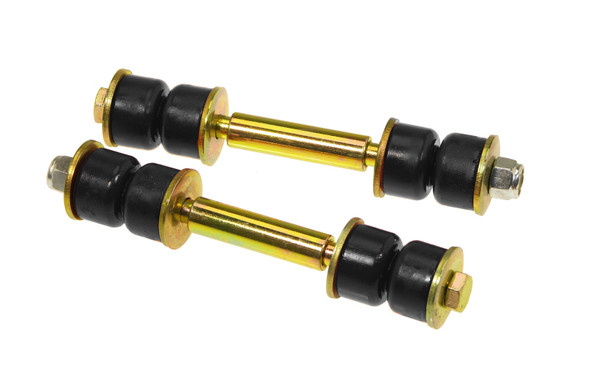
Prothane Universal End Link Set - 3 1/4in Mounting Length - Black - 19-405-BL
Prothane
MSRP: $42.35$23.53What is the difference between stock and Prothane sway bar bushings?Prothane sway bar bushings offer superior durometer and design over stock, ensuring a more precise and durable performance upgrade...MSRP: $42.35$23.53 -

Prothane 87-96 Jeep YJ Front Sway Bar Bushings - 1 1/8in - Black - 1-1107-BL
Prothane
MSRP: $36.98$20.54Are these sway bar bushings designed for my specific vehicle model?Confirm sway bar bushing fitment for your specific vehicle model before purchase to ensure optimal integration and performance.How...MSRP: $36.98$20.54 -

Prothane 88-00 Universal Sway Bar End Link Kit - Black - 8-401-BL
Prothane
MSRP: $34.90$19.38Will these sway bar bushings fit my car?Confirm fitment with your specific vehicle using our online compatibility tool before ordering these universal sway bar end link bushings.How difficult is it...MSRP: $34.90$19.38 -
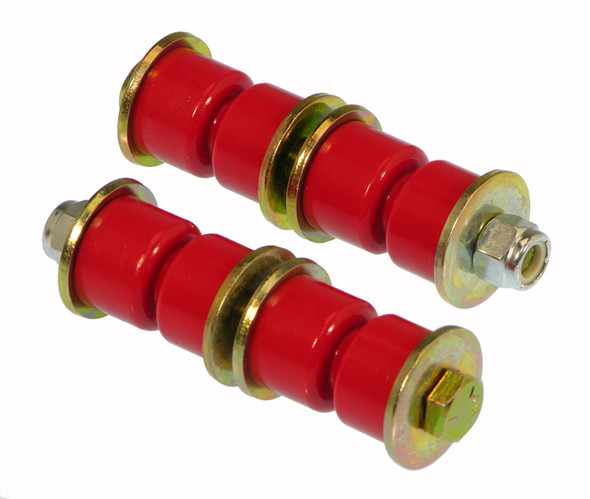
Prothane 88-00 Universal Sway Bar End Link Kit - Red - 8-401
Prothane
MSRP: $34.90$19.38Prothane 88-00 Universal Sway Bar End Link Kit - RedThis Part Fits:YearMakeModelSubmodel1990-1993,1997-2001AcuraIntegraGS1990-2001AcuraIntegraLMSRP: $34.90$19.38 -

Prothane 92-97 Honda Civic Front Sway Bar Bushings - 21mm - Black - 8-1101-BL
Prothane
MSRP: $40.92$22.73What is the recommended way to install these sway bar bushings?Professional installation is recommended for these sway bar bushings to ensure proper fitment and optimal performance.Will these sway...MSRP: $40.92$22.73 -

Prothane 97-06 Chevy Corvette Front Sway Bar Bushings - 30mm - Red - 7-1176
Prothane
MSRP: $21.60$12.00What vehicles are these sway bar bushings compatible with?Prothane 97-06 Chevy Corvette Front Sway Bar Bushings are engineered for specific C5 and Z06 models, ensuring precise fitment and performance...MSRP: $21.60$12.00 -

Prothane 99-06 Chevy Silverado Front Sway Bar Bushings - 1.42in - Red - 7-1168
Prothane
MSRP: $84.01$46.67How do I determine the correct sway bar bushing size for my vehicle?Consult your vehicle's service manual or confirm fitment with our detailed application guide to ensure precise sway bar bushing...MSRP: $84.01$46.67 -

Prothane 70-98 Ford Truck S/B & E/L Bush - 1 1/8in (for 2in Frames / Eye to Eye End Links) - Black - 6-1118-BL
Prothane
MSRP: $53.21$29.56What is the primary function of a sway bar bushing?Sway bar bushings isolate the sway bar from the chassis, allowing controlled flex and reducing unwanted body roll during cornering.Are these sway...MSRP: $53.21$29.56 -

Prothane 75-98 Ford Truck S/B & E/L Bush - 7/8in (for 2.5in Frames / Stud to Eye End Links) - Red - 6-1101
Prothane
MSRP: $51.81$28.78What is the primary function of sway bar bushings?Sway bar bushings connect the sway bar to your vehicle's chassis, controlling its rotational resistance for improved handling characteristics.Are...MSRP: $51.81$28.78 -

Prothane 94-05 Dodge Ram 1500-3500 2/4wd Front Sway Bar Bushings - 34mm - Red - 4-1138
Prothane
MSRP: $37.57$20.87What is the optimal vehicle application for the Prothane Red Sway Bar Bushings?These Prothane Red Sway Bar Bushings are engineered for optimal fitment on 2WD and 4WD Dodge Ram trucks, enhancing their...MSRP: $37.57$20.87 -

Prothane Universal End Link Bushings & Washers - 5/8 x 1 1/8 OD - Black - 19-430-BL
Prothane
MSRP: $20.28$11.27What is the typical lifespan of Prothane sway bar bushings?Prothane sway bar bushings are engineered for exceptional durability, offering a significantly extended service life under demanding...MSRP: $20.28$11.27
Sway bar bushings are the pivot interface between your anti-roll bar and chassis, and degraded or incorrect bushings directly compromise body roll control, steering response, and corner-entry balance regardless of how good your shocks or springs are. Motor Sport Mayhem stocks 182 sway bar bushing options from 109 brands — ranging from $1.14 entry-level rubber replacements to $13,544 premium competition kits — covering street performance, track use, and off-road applications.
Our Top Picks for Sway Bar Bushings
Each of these products was hand-selected by our technical team based on proven performance, fitment accuracy, and real-world results across street, track, and off-road builds.
AEM IND Strut Bars
AEM Induction | $346.99
Chassis triangulation that works in concert with sway bar geometry to reduce flex at the strut towers and improve anti-roll bar effectiveness end-to-end.
- Stiffens the chassis mounting plane so sway bar bushings transmit roll forces accurately rather than absorbing them into flex
AFE Coilover Systems
aFe | $3,729.00
Single-adjustable street/track coilover system engineered to pair with upgraded sway bar bushing setups for a fully tunable roll stiffness and rebound package.
- Featherlight construction reduces unsprung weight so sway bar bushing compliance translates directly into handling response rather than being masked by mass
ALF Wireless Air Control Systems
Air Lift | $1,363.99
Wireless air management that adjusts ride height and spring load on the fly, changing the dynamic load through your sway bar and bushings without physical intervention.
- Allows real-time tuning of sway bar bushing preload conditions by altering corner weight distribution through the air spring pressure
ABR Steering Racks
All Balls Racing | $209.62
Heavy-duty replacement steering rack built to OEM dimensional specs but with tighter tolerances, supporting consistent sway bar geometry alignment in off-road applications.
- Tight rack-and-pinion tolerances prevent front suspension compliance from undermining sway bar bushing geometry on rough terrain
PA Alta Adj Control Arms
Alta | $339.15
Adjustable rear control arms that allow precise alignment correction, ensuring sway bar end-link angles and bushing load paths remain optimal after any suspension modification.
- Corrects rear geometry so anti-roll bar bushings operate at their designed angular range rather than being pre-stressed by misaligned control arm positions
ANT Micro-Start Tire Inflator
Antigravity Batteries | $24.99
Compact tire inflator that ensures correct tire pressure is maintained — a factor that directly affects lateral load transfer and the effective stress on your sway bar bushings.
- Correct tire pressure keeps lateral load transfer predictable, preventing uneven bushing wear caused by chronic over- or under-inflation
ARB BP51 Coilovers
ARB | $4,580.69
Bypass-style coilover system with internal position-sensitive damping that complements sway bar bushing upgrades by managing body roll through damping rather than relying solely on bar stiffness.
- Position-sensitive damping reduces peak shock load transmitted through the sway bar mounts, extending bushing service life in demanding off-road conditions
ART Coils
Artec Industries | $351.99
Heavy-duty front frame coil buckets engineered to maintain correct spring geometry after lift, which keeps sway bar mount points and bushing angles within design tolerances.
- Properly positioned coil buckets prevent the chassis flex that accelerates sway bar bushing fatigue on lifted off-road platforms
AST 5100 Series Coilovers
AST | $4,554.00
Competition-grade coilover kit with dual-valve technology that pairs with stiff sway bar bushing setups to deliver precise roll gradient control at the limit of grip.
- High-resolution damping adjustment allows fine-tuning of body roll rate independently from anti-roll bar stiffness, giving you a true two-variable chassis setup tool
AWE Chassis Bars
AWE Tuning | $435.00
Drivetrain stabilizer with polyurethane mounting that reduces powertrain movement, limiting the torsional input that can pre-stress sway bar mounts and accelerate bushing wear.
- Polyurethane mount material matches the durometer commonly used in performance sway bar bushings, delivering a consistent NVH and compliance signature across the chassis
How to Choose the Right Sway Bar Bushings
The sway bar bushing is a simple component with outsized influence — it is the only thing preventing your anti-roll bar from rattling loose against the chassis bracket, and its material hardness directly determines how much rotational lag exists between chassis input and bar response. Rubber OEM bushings are calibrated for ride comfort and noise isolation, not roll stiffness accuracy; they deflect under lateral load, introducing a compliance dead-band that delays roll resistance and creates vague cornering feedback. Polyurethane replacements eliminate most of that deflection, and spherical or pillow-ball race bushings eliminate it entirely at the cost of NVH. Material choice is the first and most important decision you make in this category.
Key Specifications
Material durometer is measured on the Shore A scale. Stock rubber bushings typically fall in the 50–60A range. Street performance polyurethane runs 70–80A, delivering noticeably sharper roll response without excessive harshness. Track-focused urethane or delrin bushings push 85–95A, and full spherical bearings operate outside the Shore scale entirely — they are metal-on-metal with zero deflection and require grease maintenance intervals. Matching durometer to your damper and spring setup is critical; a 95A bushing on a lightly sprung street car will transmit every road input directly into the chassis and increase NVH to unacceptable levels for daily use.
Inside diameter (ID) tolerance is where cheap bushings fail. The bushing bore must match your specific sway bar diameter within ±0.5mm — oversized bores allow the bar to rock inside the bushing, generating clunking under roll and accelerating wear on both the bushing and bar surface. Quality manufacturers publish true dimensional specs; budget imports frequently run loose tolerances that make the part functionally equivalent to a worn OEM bushing from day one. Always verify bar OD against published bushing ID before ordering, especially when upsizing to a larger-diameter aftermarket bar where OEM bushing dimensions no longer apply.
Bracket design and retention method matters more than most buyers realize. Snap-in or clam-shell bushings that rely solely on bracket clamping force can migrate axially under repeated suspension cycling, particularly on vehicles with high bar articulation angles. Look for bushings with integrated retention lips or grooves that locate the bushing axially within the bracket — this prevents the bar from walking side-to-side and maintains consistent end-link geometry. On lifted or modified vehicles where the bar sees greater articulation than factory design, axial retention becomes even more important because the bar no longer moves in the plane it was engineered for.
Lubrication compatibility is a frequent installation error that causes premature failure. Polyurethane bushings must be installed with the correct grease — typically a lithium-based or PTFE grease specifically formulated for urethane compounds. Petroleum-based greases chemically attack urethane, causing swelling, softening, and accelerated wear within a single season. Many quality bushing kits include the correct lubricant; if yours does not, verify grease compatibility with the bushing manufacturer before installation. Spherical bushings require a different approach — most use a sealed or greaseable design with specific service intervals that must be followed to prevent corrosion and galling in the bearing race.
Sway Bar Bushing Material Selection by Application
| Application | Recommended Material | Shore A Durometer | Expected Service Life |
|---|---|---|---|
| OEM Replacement / Daily Driver | OE Rubber or Soft Urethane | 50–65A | 60,000–100,000 miles |
| Street Performance / Spirited Driving | Polyurethane | 70–80A | 50,000–80,000 miles |
| Street/Track Dual-Purpose | Performance Polyurethane or Delrin | 80–88A | 30,000–60,000 miles |
| Autocross / Time Attack | Hard Urethane or Spherical | 88–95A / N/A | 15,000–40,000 miles |
| Off-Road / Overlanding | Heavy-Duty Polyurethane | 75–85A | 40,000–70,000 miles |
| Full Race / Competition | Spherical Bearing or Billet Delrin | N/A (zero deflection) | Season-based inspection intervals |
Price Guide
Entry ($1.14–$213): This tier covers direct OEM-equivalent rubber replacements and basic polyurethane bushing sets for common applications. You are buying a functional replacement that restores factory handling characteristics — appropriate for high-mileage daily drivers where OEM compliance is acceptable and the goal is simply eliminating worn-out slop. Quality control is variable at the bottom of this range, so stick to brands with published dimensional specifications and known fitment databases.
Mid-range ($213–$850): The majority of performance enthusiasts land here, and for good reason — this price range covers engineered polyurethane and composite bushing kits from established suspension specialists, often including correct lubricant and hardware. You get meaningful improvements in roll response, durometer options for different driving styles, and consistent dimensional accuracy. Most street performance and dual-purpose track builds are well served without spending above this range.
Premium ($850–$13,544.00): At this level you are typically purchasing spherical bearing conversions, billet-machined housings, or complete anti-roll bar and bushing system packages from competition-focused manufacturers. The cost is justified for dedicated track cars, time-attack builds, and vehicles where precise roll gradient tuning is a competitive requirement. Some premium kits include adjustable bar stiffness or multiple-position mounting options that allow real-time setup changes between sessions — a capability that has no value for street use but significant value in motorsport.
Who Is This For?
Sway bar bushings serve a wider range of applications than most suspension components — the same product category that tightens up a track car's roll response also extends service life on an overlanding rig or restores feel to a worn daily driver.
Racing Competition — 8.1/10
Competition use scores highest in this category because roll stiffness precision is a direct performance variable in racing — not just a comfort preference. At the competition level, bushing deflection is a tuning problem: any compliance in the anti-roll bar mounting translates directly into unpredictable roll gradient and inconsistent weight transfer timing, both of which cost lap time. Spherical and hard-urethane bushing options in this category are purpose-engineered for this application, with zero-slop construction and materials that maintain dimensional stability under the sustained lateral loads of circuit racing.
Track / Autocross — 8.0/10
Track and autocross applications score nearly as high as outright competition because the performance demands are similar even if the budget and maintenance tolerance differ. At these events, consistent corner-entry balance and repeatable weight transfer are the difference between fast and slow laps, and worn or overly compliant sway bar bushings introduce variability that no amount of driving skill can fully compensate for. Performance urethane options in the 80–88A range hit the sweet spot here — stiff enough for precision, durable enough to survive regular event days without the maintenance burden of a full spherical setup.
Street Performance — 7.7/10
Street performance scores 7.7 because upgraded sway bar bushings are one of the highest-value handling modifications available at any price point — they directly improve roll response and steering precision without changing ride frequency or requiring spring or damper changes. The broad range of durometer options in the mid-range price tier means street performance buyers can tune the compliance-versus-response tradeoff to match their exact preference, from mildly sharper than stock to near-track-spec stiffness. This is also the application where correct lubrication and installation technique pays the largest dividends in service life.
Weekend Off-Roading — 7.7/10
Off-road applications score equally to street performance but for entirely different reasons — here the priority is durability and resistance to the tearing, abrasion, and UV degradation that destroys OEM rubber bushings in a single muddy season. Heavy-duty polyurethane in the 75–85A range resists cutting from debris and maintains its dimensions through wide temperature swings, keeping anti-roll bar geometry consistent on trails where chassis articulation is pushing the bar through its full range of motion repeatedly. Axial retention design matters especially here, where bar migration can cause bracket contact and accelerated wear far from a shop.
Overlanding / Expedition — 7.2/10
Overlanding scores 7.2 because the priority is long-term reliability under sustained load with minimal maintenance access — conditions where a failed OEM rubber bushing may go undetected for thousands of miles before causing measurable handling degradation. Upgraded bushings in this application are as much a maintenance-interval extension as a performance upgrade, reducing the frequency of inspection and replacement on vehicles that may spend weeks at a time in remote environments. The combination of UV resistance, chemical resistance, and dimensional stability that defines quality performance bushings makes them directly applicable to expedition use even when outright roll stiffness improvement is not the goal.
Trusted Sway Bar Bushings Brands We Carry
The brands that dominate this category earn their position through engineering specificity and material science — not marketing. Energy Suspension is the benchmark for street polyurethane, with an average price of $81 that reflects their volume production of application-specific formulations developed over decades in the performance aftermarket. Whiteline brings Australian motorsport engineering heritage and vehicle-specific compound tuning, offering multiple durometer options per application rather than a one-size solution. Superpro operates at a similar technical level with a focus on dimensional accuracy and OEM-equivalent fit quality across a broad fitment catalog. Eibach and H&R both manufacture bushing systems as part of integrated suspension packages, ensuring bushing compliance is matched to their spring and bar rates rather than being a standalone variable. For competition and off-road applications, Skyjacker and brands within the ARB ecosystem deliver heavy-duty construction validated in the field under conditions that destroy lesser materials — their products represent the upper end of the durability spectrum when the operating environment demands it.
Frequently Asked Questions
Are adjustable sway bars worth it?
Adjustable anti-roll bars are worth the investment if you regularly change between driving conditions — typically street-to-track or on-road-to-off-road transitions where the ideal roll stiffness is genuinely different. The adjustability only delivers value when paired with properly fitted, low-deflection bushings; if your mounts are using worn rubber that absorbs several degrees of bar rotation before transmitting force, the difference between adjustment positions is largely masked by compliance. For a dedicated single-use vehicle, a correctly sized fixed bar with quality polyurethane or spherical bushings will typically outperform an adjustable bar with compromised bushing quality. The real-world benefit of adjustability shows up in back-to-back track sessions where you can tune understeer-oversteer balance without changing springs or dampers.
Are adjustable drop links worth it?
Adjustable drop links are worth it on any vehicle that has been lowered, lifted, or fitted with an aftermarket anti-roll bar of different diameter than stock, because all three modifications change the angle at which the end link connects the bar to the control arm. Incorrect end-link length pre-loads the sway bar at static ride height, meaning the bushing and bar are already under torsional stress before the vehicle encounters any cornering force — this reduces effective roll stiffness range and accelerates bushing wear at the bar-to-bracket interface. Adjustable links allow you to restore the correct perpendicular end-link geometry, ensuring the full engineered range of bushing and bar compliance is available through suspension travel. On stock-height vehicles with factory bar diameters, OEM-length replacements are typically sufficient unless significant wear is present.
Are aftermarket control arms any good?
Quality aftermarket control arms from established manufacturers are consistently good and frequently superior to OEM in the specific dimensions that matter for performance use — wall thickness, bushing bore precision, and material grade. The variable is brand and price point: arms from manufacturers with documented engineering processes and published load ratings are proven hardware; unbranded budget imports with no published specifications are a genuine safety risk because control arms are primary suspension load paths. Aftermarket arms become clearly superior to OEM when they incorporate adjustability — correcting camber or caster geometry that stock arms cannot accommodate after a suspension modification. For a complete bushing overhaul, pairing new arms with fresh sway bar bushings ensures the entire front or rear suspension compliance system is at known specification simultaneously.
Are aftermarket bump stops worth it?
Aftermarket bump stops are worth it on any vehicle that has been lowered significantly, lifted, or used at sustained performance limits — all three conditions cause the bump stop to engage more frequently or at different points in travel than OEM calibration anticipated. OEM bump stops are typically designed to engage only in extreme compression; on a lowered vehicle, the reduced suspension travel means the stop engages at speeds and frequencies that cause harsh, unpredictable transitions rather than progressive compression. Progressive-rate foam or urethane aftermarket bump stops replace the sharp on-off engagement of OEM rubber with a gradual rate increase that blends into the spring rate, maintaining chassis composure and reducing the shock loading transmitted through shocks and struts and sway bar mount points. For off-road use, correctly sized bump stops prevent the full-compression chassis impact that is the primary cause of premature sway bar bushing bracket cracking.
Are aftermarket lower control arms worth it?
Aftermarket lower control arms are worth it when OEM arms have worn bushings, damaged geometry, or insufficient adjustability for the suspension modification you have made — in those cases, replacing the complete arm rather than re-bushing a worn unit gives you a known-good starting point and often upgrades the bushing material simultaneously. On performance builds, aftermarket lower arms typically offer camber and toe adjustment that OEM units do not, which is essential for achieving correct alignment after spring or coilover installation. The upgrade also matters when the factory arm's design limits articulation travel — a relevant concern for both lifted off-road vehicles and lowered performance cars where the OEM arm geometry was not designed for the modified ride height. Pair any lower control arm change with a fresh set of sway bar bushings and an alignment check, since arm geometry directly affects the load path and angular position of the anti-roll bar at the connection points.
Building something specific? Our performance specialists can help you select the right Sway Bar Bushings for your application — street, track, or full race build.