
Steering Stabilizer
- Product
- Qty in Cart
- Quantity
- Price
- Subtotal
-

Zone Offroad 17-20 Ford F-250 Single Stabilizer - Zone Only - ZON7302
Zone Offroad
$69.95Will this steering stabilizer fit my vehicle?Confirm fitment with your vehicle using our comprehensive online compatibility tool to ensure precise installation of your steering stabilizer.How...$69.95 -


Rugged Ridge Steering Damper Bracket 72-86 Jeep CJ - 18040.50
Rugged Ridge
$59.99Will this steering stabilizer fit my Jeep Wrangler JK?This Rugged Ridge steering stabilizer is specifically designed for use only with Crossover steering systems 18050.82 and 18050.83.How difficult...$59.99 -
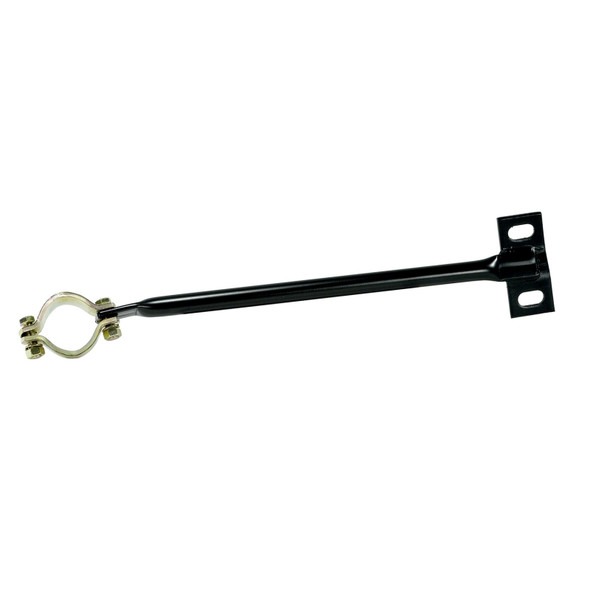
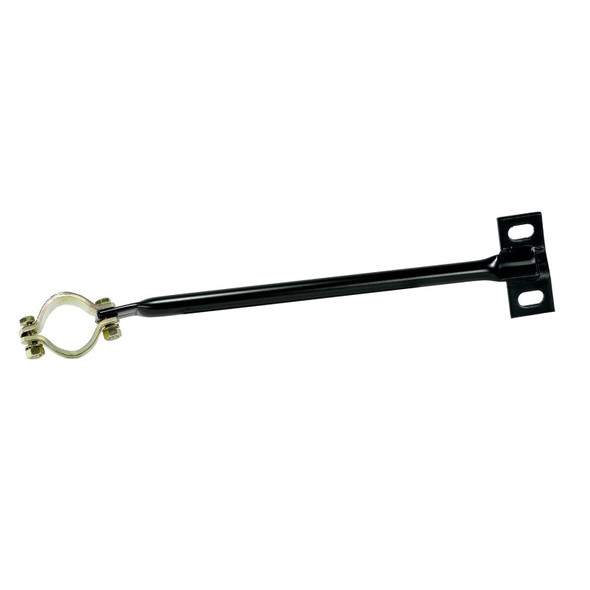
Rugged Ridge Heavy Duty Steering Box Brace 76-86 Jeep CJ - 18021.02
Rugged Ridge
$84.99Will this steering stabilizer fit my Jeep Wrangler JK 2007-2018?Confirm your specific Jeep Wrangler JK model and year for precise fitment before ordering this heavy-duty steering stabilizer.Is...$84.99 -

Omix Stabilizer Bar Front- 87-95 Wrangler YJ - 18272.06
OMIX
$81.00Is this steering stabilizer compatible with my vehicle?Confirm precise vehicle fitment before purchase; professional installation is recommended for optimal steering stabilizer performance.How...$81.00 -


Fabtech 17-21 Ford F250/F350 4WD Dual Steering Stabilizer System w/DL 2.25 Resi Shocks - FTS22304
Fabtech
$1,008.13How do I install a steering stabilizer?Confirm vehicle fitment and professional installation of this steering stabilizer is recommended for optimal performance and safety.What is the best use for a...$1,008.13 -

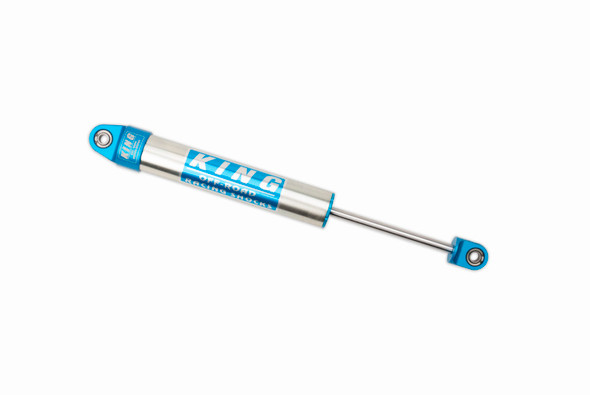
King Shocks 07-18 Jeep Wrangler JK Front 2.0 Dia Steering Stabilizer (Each) - 20001-152
King Shocks
MSRP: $317.00$311.84King OEM performance kit custom tuned to provide your (JEEP) with unparalleled levels of performance and ride quality. Each kit has been subjected to punishing real world testing to develop the...MSRP: $317.00$311.84 -

Cognito 11-25 GM 2500/3500HD Steering Stabilizer Kit - 110-91348
Cognito
$299.95GM Heavy Duty trucks are known for their inherent steering problems, and Cognito is known for providing the industry leading solution to these flaws with our Pitman and Idler Arm Support Kit...$299.95 -

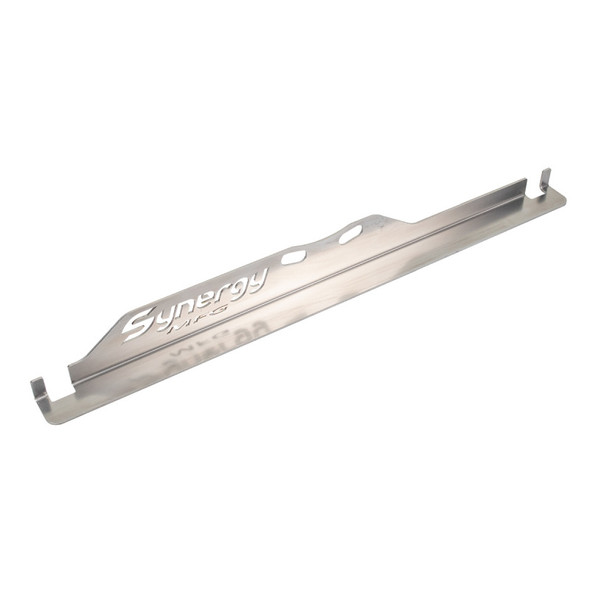
Synergy Toe Allignment Tool - 3102-01
Synergy Mfg
$90.00Will this steering stabilizer fit my Jeep Wrangler JK?Synergy Mfg steering stabilizers are engineered for specific vehicle applications; confirm exact fitment for your Jeep Wrangler JK before...$90.00 -


Rugged Ridge HD Steering Box Mount 76-86 Jeep CJ - 18003.10
Rugged Ridge
$239.99What is the primary function of a steering stabilizer?Steering stabilizers manage steering wheel vibrations and forces, enhancing control and reducing driver fatigue on rough terrain.Can I install...$239.99 -


Rancho 11-19 Ford Pickup / F250 Series Super Duty Front RS5000 Steering Stabilizer - RS5415
Rancho
$85.94What makes the Rancho RS5000 Steering Stabilizer different from a standard steering stabilizer?Rancho's RS5000 Steering Stabilizer features a twin-tube cellular gas design, delivering consistent...$85.94 -

Synergy 94-02 Dodge Ram 1500/2500/3500 4WD Steering Box Brace - 8557-04
Synergy Mfg
$250.00How does a steering stabilizer improve my vehicle's handling?A steering stabilizer enhances handling by resisting unwanted steering wheel movements, translating driver inputs directly for immediate...$250.00 -
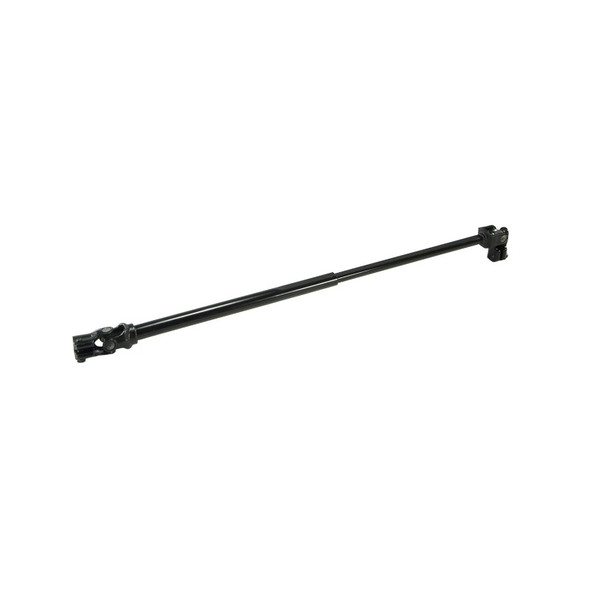
Omix HD Lower Steering Shaft Manual 76-86 Jeep CJ - 18024.01
OMIX
$145.81What is the purpose of a steering stabilizer?A steering stabilizer dampens unwanted steering wheel movement caused by road imperfections, enhancing control and driver comfort for your Jeep's steering...$145.81
A steering stabilizer is a hydraulic or gas-charged damper mounted inline with the steering linkage to absorb road-induced oscillation, eliminate death wobble, and reduce driver fatigue across street, off-road, and competition applications. Motor Sport Mayhem stocks 104 in-stock steering stabilizers spanning entry-level hydraulic units to fully adjustable race-spec dampers, priced from $1.14 to $13,544.00 across 109 brands.
Our Top Picks for Steering Stabilizer
Each of these units was selected based on proven performance value, verified customer application data, and real-world results across the use cases we see most often.
AEM IND Strut Bars
AEM Induction | $346.99
Rigid strut tower bracing that ties the front suspension pickup points together, reducing chassis flex and sharpening steering response under load.
- Directly reduces front-end flex that corrupts steering geometry during aggressive cornering
AFE Coilover Systems
aFe | $3,729.00
Single-adjustable monotube coilover system engineered for street-to-track versatility with precise damping control that directly stabilizes steering feel through suspension geometry management.
- Consistent damping force under high-frequency steering inputs eliminates the vagueness common with worn OEM struts
ALF Wireless Air Cntrl Systems
Air Lift | $1,363.99
Wireless-controlled air management system that enables on-the-fly ride height and pressure adjustment, directly influencing steering geometry and caster consistency.
- Maintains optimal caster angle across varying load conditions, preventing the bump steer and wander that comes from inconsistent ride height
ABR Steering Racks
All Balls Racing | $209.62
Heavy-duty rebuilt steering rack with tightened tolerances that eliminates the slop and feedback oscillation that wears into OEM units under repeated off-road stress.
- Precision-remanufactured internal seals and bearing surfaces restore the rack's ability to resist shimmy-inducing deflection under side loads
PA Alta Adj Control Arms
Alta | $339.15
Adjustable rear control arms with solid-mount polyurethane bushings that eliminate the compliance deflection responsible for rear-steer behavior under braking and lateral load.
- Correctable rear alignment geometry prevents the toe-change instability that makes steering feel nervous and unpredictable in spirited driving
ANT Micro-Start Tire Inflator
Antigravity Batteries | $24.99
Compact portable tire inflator that ensures correct tire pressure is maintained — a critical and frequently overlooked variable in steering stability and shimmy prevention.
- Proper tire pressure directly affects the contact patch stiffness that determines how much road-induced oscillation reaches the steering linkage
ARB BP51 Coilovers
ARB | $4,580.69
Bypass-style coilover system with independently adjustable compression and rebound that tames the high-speed chassis instability responsible for steering wander on lifted, loaded trucks.
- Internal bypass zones manage high-speed damping independently from low-speed compliance, keeping the front end planted when rough terrain tries to kick the steering
ART Coils
Artec Industries | $351.99
Frame-mounted coil buckets engineered to maintain correct coil spring geometry and bump stop contact under articulation, preserving the suspension alignment that keeps steering predictable off-road.
- Correctly positioned coil buckets prevent spring walkout under articulation, which is a primary cause of front-end steering wander on modified off-road builds
AST 5100 Series Coilovers
AST | $4,554.00
Competition-spec coilover kit with 5-way rebound and independent compression adjustment that delivers the platform stability needed for precise, race-level steering response.
- High-resolution damping adjustment allows engineers to dial out the front-end pitch and roll that blurs steering feel during track sessions
AWE Chassis Bars
AWE Tuning | $435.00
Polyurethane-mounted drivetrain stabilizer that controls powertrain movement under torque load, eliminating the chassis flex that translates into steering vagueness during hard acceleration.
- Reducing drivetrain torque reaction keeps subframe and front cradle geometry stable, which directly preserves the steering alignment baseline under power
How to Choose the Right Steering Stabilizer
The difference between a steering stabilizer that actually solves a handling problem and one that just masks it comes down to damping technology, valving quality, and correct fitment for your application's demands. Twin-tube hydraulic units use an outer reserve tube to store displaced fluid, which is cost-effective but prone to aeration and fade under sustained high-frequency inputs. Monotube gas-charged designs keep the working fluid and pressurized nitrogen gas separated by a floating piston, which eliminates aeration, runs cooler, and delivers more consistent damping force — this is why OEM performance vehicles and aftermarket race builds default to monotube construction. On lifted, long-travel, or high-load applications, a failing or undersized stabilizer will allow resonant oscillation to build into full death wobble at highway speeds, which is a progressive failure mode that begins as minor feedback and escalates rapidly.
Key Specifications
Damping force is measured in Newtons at a given velocity (typically 0.1 m/s and 0.5 m/s), and for a steering stabilizer this determines how aggressively the unit resists oscillation without inducing self-centering drag. A unit valved too stiff will create a heavy, wooden steering feel and mask genuine alignment feedback; too soft and it won't absorb enough oscillation energy to prevent wobble initiation. Adjustable units — particularly those with external knobs for rebound and compression — let you tune this balance for load changes, tire upgrades, or lift height modifications without replacing the entire unit.
Bore diameter directly governs oil displacement per cycle: larger bores move more fluid per unit of shaft travel, producing stronger initial damping force but requiring more precise valving to avoid harshness. Most street-duty stabilizers run 32–40mm bores; performance and off-road units step up to 46–54mm for greater thermal capacity and higher force output. Shaft diameter and chrome plating thickness matter for longevity — a 16mm hard-chrome shaft resists corrosion and side-load bending far better than an uncoated 12mm shaft, which is a common point of failure on budget units exposed to mud, salt, and trail debris.
End bushing and mount construction is a critical and frequently overlooked spec. Rubber bushings offer compliance that absorbs minor misalignment but degrade under heat and ozone exposure, introducing slop that negates the stabilizer's effectiveness over time. Polyurethane bushings maintain dimensional stability across a wider temperature range and resist compression set, but require periodic greasing on non-sealed designs. Heim joint or rod-end mounts eliminate bushing deflection entirely for maximum precision — the correct choice for race and competition builds where steering feedback accuracy matters more than NVH isolation.
Mounting configuration — whether the stabilizer mounts axle-to-frame, drag-link-to-axle, or in a dual-stabilizer cross configuration — determines how effectively the unit can counteract specific types of oscillation. A single stabilizer handles lateral shimmy well; dual configurations, used on heavily modified or wide-track front axles, address both lateral and fore-aft inputs simultaneously. When paired with upgraded suspension components like control arms, tie rod ends, and bushing kits, a properly specified stabilizer addresses the oscillation symptom while the surrounding components address the root causes.
Steering Stabilizer Specification Guide by Application
| Application | Recommended Bore | Damping Type | Mount Type |
|---|---|---|---|
| Stock-height street / daily driver | 28–34mm | Twin-tube hydraulic or monotube gas | Rubber bushing OEM replacement |
| Mild lift (1–3 in.) street/light off-road | 34–40mm | Monotube gas-charged | Polyurethane bushing with grease port |
| Moderate lift (3–6 in.) weekend off-road | 40–46mm | Monotube adjustable or bypass | Poly bushing or heim joint, relocation bracket |
| Heavy lift (6+ in.) overland / expedition | 46–54mm | Bypass or dual-tube bypass | Heim joint with heavy-duty relocation bracket |
| Dual-stabilizer configuration (wide-track axle) | 34–40mm per unit | Matched monotube pair, equal valving | Cross-over or symmetrical heim mount |
| Racing / competition (paved) | 32–40mm | High-pressure monotube, adjustable | Heim joint, spherical bearing, zero compliance |
Price Guide
Entry ($1.14–$200): Replacement-grade twin-tube hydraulic units and individual bushings, brackets, and hardware items suited to stock-height daily drivers needing an OEM-equivalent restore. Build quality is adequate for low-stress applications but these units typically lack adjustability, use standard rubber bushings, and will not stand up to sustained off-road vibration or lifted-vehicle loads.
Mid-range ($200–$600): This is where the majority of performance enthusiasts land, and for good reason — this tier covers quality monotube gas-charged replacements, adjustable single-stabilizer kits, and upgraded mount hardware from established brands. You gain nitrogen gas charging, larger bore dimensions, better corrosion-resistant shaft coatings, and in many cases polyurethane or heim joint mounts that eliminate the compliance degradation of rubber bushings.
Premium ($600–$13,544.00): Fully adjustable bypass dampers, dual-stabilizer competition kits, billet-body remote-reservoir units, and complete steering geometry correction systems belong in this tier. These are the correct choice for heavily modified long-travel builds, expedition rigs carrying significant payload over sustained rough terrain, and competition applications where steering precision is a direct performance variable — the cost is justified by adjustability range, thermal capacity, rebuild serviceability, and race-validated valving specifications.
Who Is This For?
Steering stabilizers serve a remarkably broad range of builders — from daily drivers eliminating highway wander to professional race engineers chasing consistent steering feedback at the limit.
Racing Competition — 8.1/10
This category scores its highest rating in competition applications because precise, repeatable steering feel is a direct lap time variable — any oscillation or damping inconsistency that reaches the driver is a distraction from the feedback needed to drive at the limit. Competition-spec stabilizers in this tier are high-pressure monotube units with full external adjustability, heim joint mounts, and valving developed on real race circuits. When combined with purpose-built coilovers and geometry-correcting control arms, a dialed stabilizer completes the front-end package needed to win.
Track / Autocross — 8.0/10
Track and autocross use scores nearly as high as full competition because these applications share the same demand for front-end precision, but with the added challenge of cars that also see street use. The ability to quickly adjust damping between track sessions and street driving is the defining feature at this level, making adjustable monotube units the default recommendation. Pair your stabilizer selection with performance shocks and struts to maximize the return on both investments.
Street Performance — 7.7/10
Street performance builds score 7.7/10 because a quality steering stabilizer delivers noticeable improvement in highway-speed composure, reduces steering effort fatigue on long drives, and sharpens turn-in response when paired with polyurethane bushing replacements and stiffer suspension components. The sweet spot for this application is a quality monotube gas-charged unit with upgraded mount bushings — adjustability is useful but not mandatory at this level. Builders adding lowering springs or upgrading to aftermarket control arms should address steering stabilization simultaneously to preserve the handling benefits of those geometry changes.
Weekend Off-Roading — 7.7/10
Off-road applications match street performance at 7.7/10 because terrain-induced shimmy and death wobble are the most visceral and dangerous steering stability failures that enthusiasts encounter — and a properly sized stabilizer is the first and most effective line of defense. Any lifted build with modified steering geometry requires an upgraded stabilizer spec'd for the new bump travel and axle articulation range, not an OEM replacement. Extended articulation cycles and mud contamination make corrosion-resistant shaft coatings and sealed end bushings essential selection criteria here.
Overlanding / Expedition — 7.2/10
Overlanding builds score 7.2/10 because the load variation from full camping gear and payload directly affects caster angle and front-end oscillation threshold — what feels stable empty can develop shimmy at GVW. Heavy-duty stabilizers with high-capacity bores and remote-reservoir options handle sustained off-pavement travel far better than standard units that fade as fluid temperature rises over hours of corrugated dirt road driving. For serious expedition builds, a dual-stabilizer configuration matched to the front axle's total front-end weight rating eliminates the resonance buildup that ruins both tires and driver confidence on long remote routes.
Trusted Steering Stabilizer Brands We Carry
The brands that dominate this category earn their position through consistent engineering standards, real-world race and off-road validation, and the ability to supply dampers that maintain spec across thousands of cycles. Bilstein's monotube gas-charged technology, developed through decades of OEM supply contracts and rally competition, sets the reference standard for consistent valving and fade resistance that competitors benchmark against. Skyjacker has built its reputation specifically in lifted and off-road steering stabilizer applications, with valving tuned for the high-cycle inputs that corrugated dirt roads and rock terrain generate. FOX brings bypass and remote-reservoir engineering directly from desert racing to streetable off-road products, with average pricing that reflects the genuine performance advantage of their thermal management and adjustability. ICON's engineering approach centers on application-specific valving — their stabilizer and suspension products are developed with lift height and payload in mind rather than adapted from a universal platform. KONI's sport and heavy-duty damper lines offer a balance of adjustability and durability that has kept them relevant across both street performance and commercial fleet applications for over 60 years. Whiteline rounds out the category with a focus on geometry-correcting bushing and bar systems that address the root alignment causes of steering instability, complementing damper upgrades with the kinematic corrections that maximize their effectiveness.
Frequently Asked Questions
Are aftermarket control arms actually worth the money over OEM replacements?
Yes — on any vehicle that has been modified with a suspension lift, lowering springs, or power upgrades, aftermarket control arms with adjustable length or corrected geometry deliver measurable alignment and handling improvements that OEM units cannot provide. OEM control arms are engineered for stock ride height and stock suspension travel; once you change either variable, the OEM arm's fixed geometry introduces bumpsteer, binding, and alignment drift that degrades steering feel and tire wear. Quality aftermarket arms use DOM steel or billet aluminum construction, heavier-duty ball joint specifications, and in many cases replaceable bushings or heim joints that extend service life beyond OEM. For unmodified vehicles needing a direct replacement, a quality OEM-spec aftermarket arm is typically equivalent in performance and may outlast the original depending on bushing compound and ball joint design.
Are adjustable sway bars worth it for performance driving?
Adjustable sway bars are worth the investment specifically when your use case spans multiple surfaces or load conditions — track, street, and occasional towing are a classic example where a fixed bar is always a compromise. A stiffer front bar reduces body roll and sharpens turn-in but increases understeer and reduces ride compliance; the ability to change leverage arm position while keeping the same bar lets you optimize this balance per event without swapping hardware. For dedicated street or dedicated track use at a fixed setup, a well-chosen fixed-rate bar from a quality manufacturer delivers equivalent performance at lower cost. Where adjustable bars pay the clearest dividend is in autocross and time attack where course layout changes the optimal understeer-oversteer balance between runs.
Are aftermarket bump stops actually worth upgrading?
Upgraded bump stops are one of the most undervalued handling and durability upgrades on modified vehicles because OEM rubber bump stops are calibrated for stock suspension travel — compress them beyond that range with a lift kit or sport spring and they fail structurally, often invisibly. Progressive-rate microcellular urethane bump stops deliver a controlled, ramp-rate force curve as the suspension approaches full compression, protecting the chassis and dampers from metal-to-metal impacts that cause immediate structural damage and progressive component loosening. On off-road builds, properly positioned and sized bump stops are essential for protecting steering and suspension linkage from overtravel-induced binding. For street performance lowered builds, shortened bump stops prevent the coil bind that destroys springs and transmits unfiltered impact force through the chassis into steering feel.
How good are aftermarket ball joints compared to OEM on a daily driver?
Quality aftermarket ball joints are equal to or better than OEM on a daily driver when selected from a manufacturer using forged steel housings, precision-ground ball studs, and pre-greased sealed or greaseable boots. The weak point in budget aftermarket ball joints is boot material and retention — a boot that splits early allows contamination of the grease pocket and accelerates wear of the tapered stud, producing the looseness that causes steering wander and tire wear. On a vehicle running stock suspension geometry, a direct OEM-replacement aftermarket ball joint from a quality brand is a valid service component; on a modified vehicle, an upgraded ball joint with a higher load rating and greaseable design is the correct specification because modified geometry increases the side-load stress the joint must carry. Always verify taper dimensions and torque specifications against OEM data, as an incorrect taper fit in the knuckle will result in fretting and premature loosening regardless of ball joint quality.
Are aftermarket lower control arms good for lowered or performance-tuned vehicles?
For lowered and performance-tuned vehicles, aftermarket lower control arms are frequently the correct engineering choice rather than simply an upgrade — lowering the ride height changes the front roll center, camber curve, and effective arm length in ways that OEM geometry was never designed to accommodate. Aftermarket arms for these applications often incorporate corrected mounting points that restore proper caster and camber alignment at the new ride height, which OEM arms physically cannot achieve. Tubular steel and billet aluminum designs also reduce unsprung weight, which improves the wheel's ability to follow road surface irregularities — a direct improvement in both steering feel and tire contact consistency. The critical selection criterion is that the arm's ball joint inclination and mounting geometry must be validated for your specific suspension configuration, not simply assumed to fit based on bolt pattern alone.
Building something specific? Our performance specialists can help you select the right Steering Stabilizer for your application — street, track, or full race build.
Powered by BigCommerce. Theme designed by Papathemes.