
Shock & Spring Kits
- Product
- Qty in Cart
- Quantity
- Price
- Subtotal
-

Carli 05-24 Ford F250/350 4x4 -Spec 2.0in IFP 2.5in Lift Front/Rear Shock Pkg PAP - AS-FLVLSPKG-CS20IFP-B
Carli
$961.91What is the recommended installation process for these shocks and springs?Professional installation is strongly recommended for these shock and spring kits to ensure proper calibration and optimal...$961.91 -
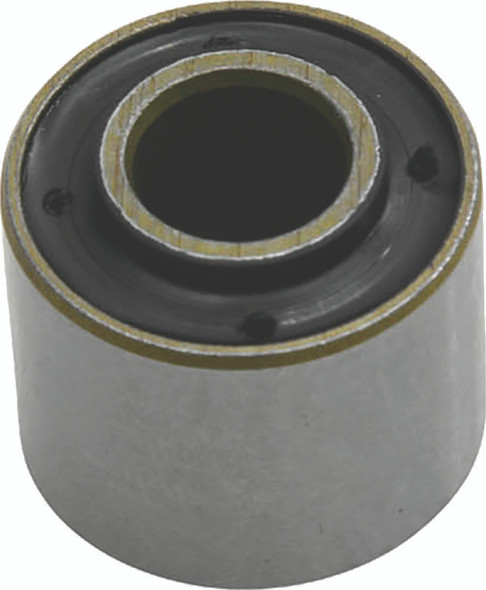
QuadBoss Shock Kit - 421015
QuadBoss
$11.53Are these shock bearing assemblies sold individually?QuadBoss shock bearing assemblies are sold individually, specified for either the upper or lower suspension position on your Honda Rancher.What is...$11.53 -
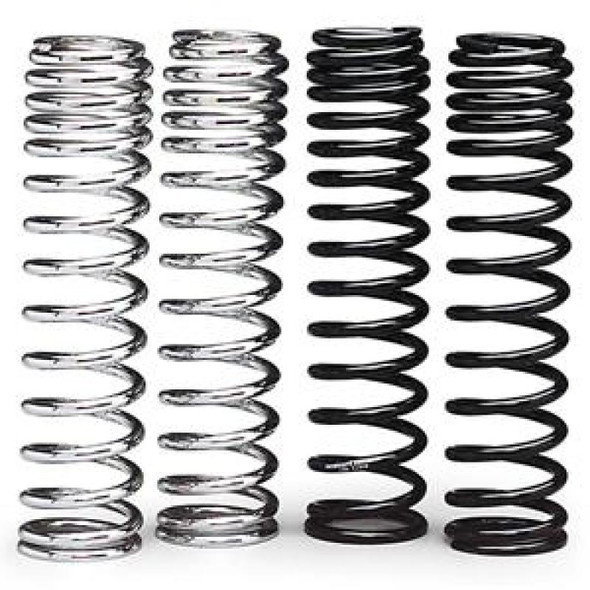
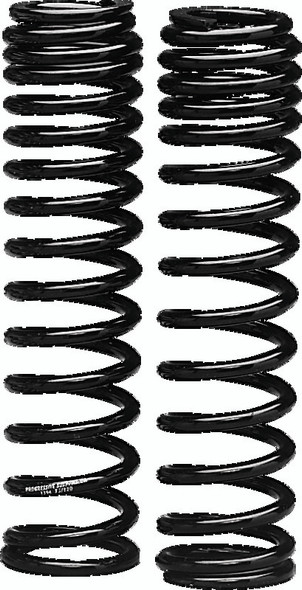
Progressive Rear Springs 75/120 (PR) - Black - 03-1394B
Progressive
$97.95Will these Progressive springs fit my vehicle?PGR Shock Springs require you to confirm exact vehicle fitment to ensure proper installation and optimal performance of your Shock & Spring Kits.How long...$97.95 -


Progressive Rear Springs 105/150 (PR) - Black - 03-1368B
Progressive
$97.95What is the main benefit of progressive rate springs?Progressive rate springs deliver a smoother ride over bumps and imperfections, enhancing overall comfort during daily driving.Is professional...$97.95 -

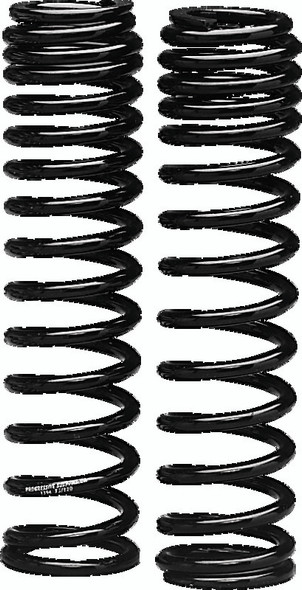
Progressive Rear Springs 90/130 (PR) - Black - 03-1367B
Progressive
$97.95Do these springs fit my vehicle?Confirm vehicle fitment using our comprehensive compatibility guide before purchasing these specialized shock springs for optimal installation.Can I install these...$97.95 -
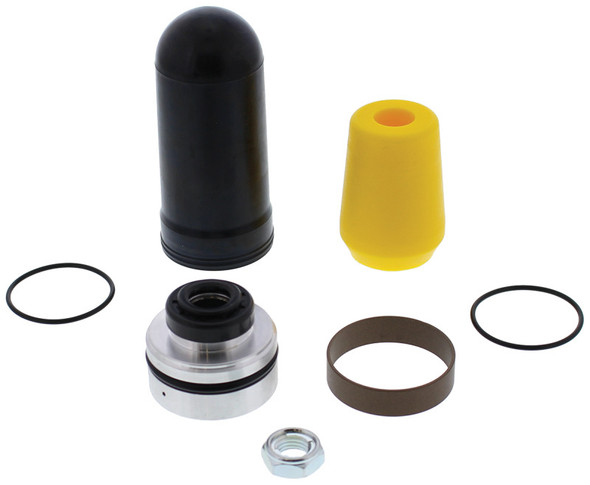
Pivot Works 01-05 Yamaha YZ125 - Rear Shock Absorber Rebuild Kit - PWSHR-Y01-000
Pivot Works
$95.85How many bikes does this kit fit?This PIV Shock Repair Kit expertly fits 1993-2007 Honda CR125R, Kawasaki KX125/KX250, and Yamaha WR250F/WR400F/WR426F models, plus seven additional motorcycle...$95.85 -


Pedders EziFit SportsRyder Front Right Spring And Shock (Twin Tube 25mm) 2013+ Subaru BRZ - PED-909148R
Pedders
MSRP: $279.95$259.19What vehicles will the PED Ezifit SportsRyder Lowered kit fit?Confirm fitment with your vehicle to ensure compatibility for your specific FR-S BRZ or 86 model's Shock & Spring Kits.How do I install...MSRP: $279.95$259.19 -

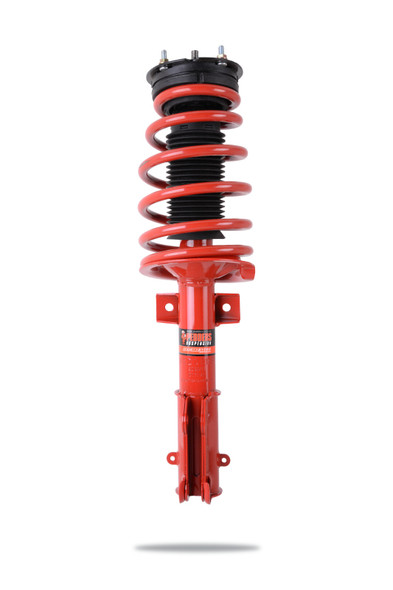
Pedders 05-14 Ford Mustang (GT 500 Mount) EziFit SportsRyder Spring And Shock Kit - PED-909031
Pedders
MSRP: $349.95$336.00Are these shock and spring kits suitable for all Ford Mustang models?Confirm precise vehicle fitment for these Pedders Ezifit SportsRyder Lowered shock and spring kits before installation to ensure...MSRP: $349.95$336.00 -
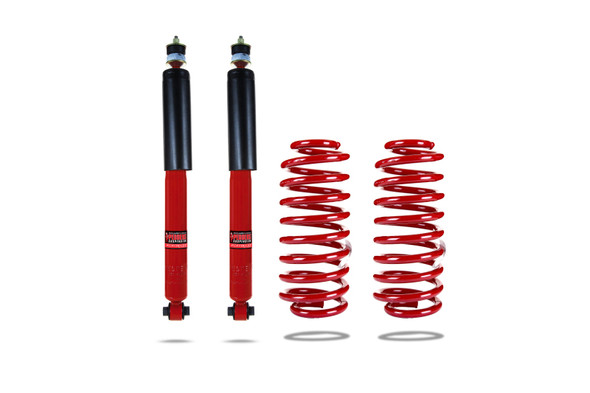

Pedders 05-14 Ford Mustang EziFit SportsRyder Rear Spring And Shock Kit - PED-902222
Pedders
MSRP: $469.95$447.10Is this a direct bolt-on kit or does it require modification?The PED Ezifit SportsRyder Lowered kit is an integrated and engineered suspension solution, designed for professional installation to...MSRP: $469.95$447.10 -

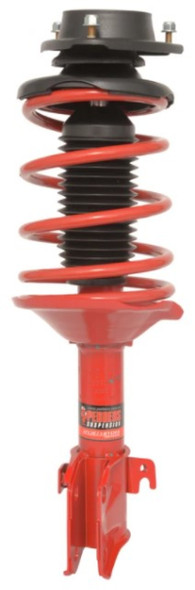
Pedders EziFit Right Front - OEM Replacement - 2003-2008 FORESTER SG - PED-818472R
Pedders
MSRP: $329.95$317.48Will this kit fit my 2003 Subaru Forester?Yes, the Pedders Ezifit SportsRyder Lowered Shock & Spring Kit is engineered to fit all 2003-2008 Subaru Forester models perfectly.Is this a direct bolt-on...MSRP: $329.95$317.48 -
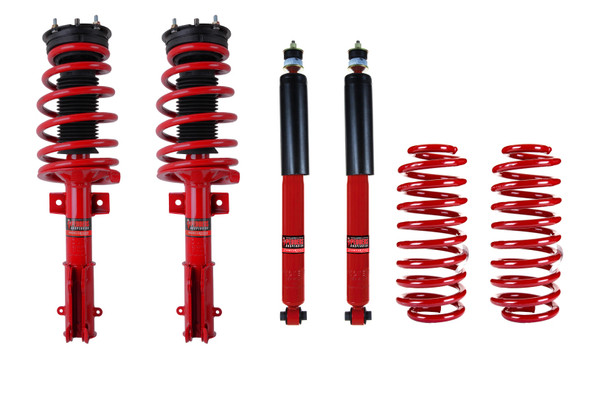

Pedders 05-14 Ford Mustang (GT 500 Mount) EziFit SportsRyder Spring And Shock Kit - PED-803052
Pedders
MSRP: $1,169.85$1,052.88Will this kit lower my 2005-2014 Ford Mustang GT 500 mount?The Pedders Ezifit SportsRyder Lowered kit is engineered to significantly lower your specific 2005-2014 Ford Mustang GT 500 mount.Is...MSRP: $1,169.85$1,052.88 -


Pedders EziFit SportsRyder Spring And Shock Kit 2015+ Ford Mustang - PED-803051
Pedders
MSRP: $1,159.60$1,123.61What is the Pedders Ezifit SportsRyder Lowered?Pedders EziFit SportsRyder Spring And Shock Kit is an integrated suspension solution specifically engineered for the 2015-2022 Ford Mustang.Do I need to...MSRP: $1,159.60$1,123.61
Shock and spring kits are the foundation of chassis control — pairing matched dampers and springs into a single engineered system that governs ride height, body motion, and tire contact patch under all load conditions. Motor Sport Mayhem stocks 86 in-stock kits across 109 brands, from entry-level sport upgrades to full competition-spec coilover systems, priced from $1.14 to $13,544.00.
Our Top Picks for Shock & Spring Kits
These kits were expert-selected based on verified performance data, real-world fitment quality, and consistent results across street, track, and off-road applications.
AEM IND Strut Bars
AEM Induction | $346.99
Bolt-on chassis triangulation that reduces strut tower flex and improves steering response under lateral load.
- Stiffens the front chassis plane to maximize the effectiveness of any upgraded shock and spring setup beneath it
AFE Coilover Systems
aFe | $3,729.00
Single-adjustable, lightweight coilover system engineered for dual-duty street and track use with tool-free ride height adjustment.
- Monotube damper architecture with anodized aluminum construction keeps unsprung weight low for sharper transient response
ALF Wireless Air Control Systems
Air Lift | $1,363.99
Wireless-controlled air management system that adjusts ride height and spring rate on demand without mechanical linkage.
- Bluetooth-enabled controller delivers precise PSI adjustments across all four corners independently for stance and load tuning
ABR Steering Racks
All Balls Racing | $209.62
Rebuilt-to-OEM-spec steering rack designed for powersports platforms where suspension lift and aggressive terrain cycling wear out stock units prematurely.
- Upgraded internal seals and hardened bearing surfaces handle the added steering load that comes with lifted suspension geometry
PA Alta Adj Control Arms
Alta | $339.15
Adjustable rear control arms that restore correct suspension geometry after ride height changes, preventing premature bushing and tire wear.
- Billet aluminum construction with threaded adjustment range corrects camber and toe simultaneously for dialed alignment after any spring kit install
ANT Micro-Start Tire Inflator
Antigravity Batteries | $24.99
Compact tire inflator designed as an accessory for Antigravity jump starters, essential when airing up after trail runs or adjusting tire pressure to match new suspension tune.
- Pairs directly with compatible Antigravity power units for a self-contained trailside or trackside inflation solution
ARB BP51 Coilovers
ARB | $4,580.69
Bypass-style internal floating piston coilover built specifically for lifted truck and 4WD applications demanding high-speed off-road damping control.
- Remote-reservoir IFP design separates oil and nitrogen charge to eliminate aeration fade during sustained high-speed off-road use
ART Coils
Artec Industries | $351.99
Front frame coil buckets engineered to relocate spring perches for lifted solid-axle builds while retaining OEM bump stop positioning.
- Laser-cut and CNC-formed steel construction maintains factory spring centerline to prevent bind and uneven load distribution at full droop
AST 5100 Series Coilovers
AST | $4,554.00
Competition-grade coilover kit with separate compression and rebound adjustment, engineered for club racing and time attack applications demanding precise damper tuning.
- Independent high-speed and low-speed damping circuits allow corner-by-corner tuning of both mechanical grip and body motion simultaneously
AWE Chassis Bars
AWE Tuning | $435.00
Drivetrain stabilizer bar with polyurethane mount that reduces powertrain movement under acceleration and braking for more consistent suspension behavior.
- Eliminates the drivetrain torque reaction that causes mid-corner suspension geometry shift in manual transmission performance applications
How to Choose the Right Shock & Spring Kits
The difference between a competent shock and spring kit and a poor one comes down to three things: valving accuracy, spring rate linearity, and build material integrity. Cheap twin-tube shocks use emulsified oil and gas in a single chamber, which aerates under heat and causes fade — a problem that quality monotube designs eliminate by physically separating the fluid charge with a floating piston. Spring steel quality matters equally: low-grade SAE 1095 steel sets and takes a permanent sag within 20,000 miles, while properly spec'd chrome-silicon or chrome-vanadium alloy springs hold their rate for the life of the vehicle. Tolerances at the piston-to-tube interface determine how consistent damping force is across the stroke — anything looser than 0.0005" introduces inconsistency that shows up as unpredictable handling mid-corner.
Key Specifications
Spring rate is the most misunderstood spec in this category. Rate is expressed in lbs/in or N/mm and must be matched to vehicle corner weight — not chassis type or brand preference. Running a spring too stiff for your corner weight means the tire loses contact with the road surface over mid-frequency inputs, which destroys mechanical grip regardless of how good the damper is. A progressive-rate spring can smooth the transition between ride and handling, but a linear spring gives more predictable behavior at the limit, which is why most purpose-built track setups run linear rates exclusively.
Damper travel and stroke length must be matched to your intended ride height change. Lowering a vehicle compresses the static damper position, reducing available droop travel — if you drop too aggressively on a shock with insufficient stroke, the damper contacts its internal bump stop under normal road inputs, creating a harsh, uncontrolled secondary spring rate. Always verify published stroke specifications against your intended ride height adjustment before purchasing, and cross-reference with coilover options if you need the full range of height adjustability built into one unit.
For off-road applications, reservoir volume and oil capacity determine thermal fade resistance. A standard 2-inch shock body holds roughly 10–12 oz of damping fluid; a 2.5-inch remote-reservoir unit can hold 3–4x that volume, which directly translates to sustained damping performance during repeated high-speed compressions on rough terrain. Nitrogen pre-charge pressure — typically 150–250 PSI in quality units — must be matched to the application: too high and the shock rides harsh; too low and the floating piston cavitates under heavy use. For paired spring and shock systems, always verify that the shock's valving was engineered for the spring rate in the kit — mix-matched components from different manufacturers frequently produce inconsistent behavior even when the specs appear compatible on paper.
Corrosion resistance matters more than most buyers account for. Zinc-plated shock bodies begin surface oxidation within 18 months in road-salt environments. Hard-anodized aluminum bodies and zinc-nickel plated steel components offer significantly better longevity. For track use, inspect for heat-resistant coating on any component that runs near exhaust or braking systems, where sustained temps above 300°F can degrade rubber bump stops and polyurethane spring isolators faster than normal road use. Complement your suspension build by reviewing your bushing kits at the same time — worn bushings defeat the performance gains of any upgraded shock and spring combination.
Spring Rate vs. Vehicle Corner Weight Reference Guide
| Corner Weight (lbs) | Street / Daily Spring Rate | Sport / Performance Rate | Track / Competition Rate |
|---|---|---|---|
| 600–750 lbs | 200–350 lbs/in | 350–500 lbs/in | 500–700 lbs/in |
| 750–900 lbs | 300–450 lbs/in | 450–600 lbs/in | 650–900 lbs/in |
| 900–1,100 lbs | 400–550 lbs/in | 550–750 lbs/in | 800–1,100 lbs/in |
| 1,100–1,350 lbs | 500–700 lbs/in | 700–950 lbs/in | 1,000–1,400 lbs/in |
| 1,350–1,600 lbs (trucks/SUVs) | 150–350 lbs/in (coil) / 400–600 lbs/in (leaf) | 350–550 lbs/in (coil) / 600–900 lbs/in (leaf) | 550–800 lbs/in (coil) / 900–1,200 lbs/in (leaf) |
Price Guide
Entry ($1.14–$213): Individual replacement components, basic sport spring sets, and single-application hardware fall in this range — appropriate for restoring worn suspension to factory spec or making modest ride height corrections on a daily driver with low track mileage. Material quality and damping refinement are limited, but for street use on a budget, these kits do what they advertise.
Mid-range ($213–$1,500): This is where most performance enthusiasts find the best value — matched shock and spring kits from established engineering brands with proper valving, quality spring steel, and measurable cornering improvement over OEM. Adjustable damping, monotube construction, and vehicle-specific spring rate tuning become standard features in this tier, covering everything from daily-driven sport compacts to weekend track cars and light off-road trucks.
Premium ($1,500–$13,544.00): Reserved for serious competition builds, high-performance trucks requiring remote-reservoir bypass technology, and air suspension management systems that demand precision manufacturing tolerances. At this level you're paying for hand-validated damping curves, CNC-machined aluminum bodies, independent high- and low-speed compression/rebound circuits, and in many cases direct factory support for race teams. If you're running consistent lap times or sustained off-road events, this investment is justified by the performance gap it closes.
Who Is This For?
Shock and spring kits span a wider range of applications than almost any other suspension category — from track-day time attack builds to overlanding rigs to show cars — and the usage data reflects exactly that breadth.
Racing Competition — 8.1/10
This category scores highest for racing competition applications because a matched shock and spring kit is the single most impactful chassis investment a racer can make outside of tires. Correctly valved dampers paired to application-specific spring rates directly control weight transfer rate, which determines how quickly and predictably a car rotates under braking and throttle. Competition-spec kits with independent compression and rebound adjustment allow corner-by-corner damper tuning to suit specific track surfaces, tire compounds, and driving styles — a level of precision that no OEM suspension system can match.
Track / Autocross — 8.0/10
Track and autocross use scores nearly as high as outright racing because the performance requirements are almost identical — the difference is that autocross courses demand faster transient response and higher mechanical grip at lower speeds, which pushes buyers toward stiffer spring rates and faster rebound damping than a dedicated circuit car might use. A quality shock and spring kit transforms lap consistency on track days by eliminating the body roll and dive that cause OEM suspension to understeer progressively as tire temperatures climb. Pairing upgraded suspension with quality brakes compounds the performance benefit since both systems interact directly under trail braking.
Street Performance — 7.7/10
Street performance scores 7.7/10 across 192 products — the largest product count in the matrix — because this is the broadest use case and the most common purchase motivation. A sport-tuned shock and spring kit on a street car delivers noticeable improvements in steering response, body control through sweeping on-ramps, and overall confidence without the harshness penalty of a full track setup. The key for street use is finding the right balance between spring rate and damper valving so the car handles confidently on imperfect road surfaces without transmitting every expansion joint into the cabin.
Weekend Off-Roading — 7.7/10
Off-road applications score 7.7/10, tied with street performance, but the technical requirements are completely different: long stroke, high oil volume, robust bypass valving, and resistance to thermal fade under sustained compression cycles on rough terrain. Lift-height-matched spring rates and valving tuned for loaded vehicle weight — accounting for gear, fuel, and passengers — are essential for off-road kits to perform as intended. Vehicles running lifted suspension geometry also need to verify extended-length shock travel doesn't allow CV joint overextension or track bar bind at full droop.
Overlanding / Expedition — 7.2/10
Overlanding scores 7.2/10 because the application is uniquely demanding in a way that pure off-road or street ratings don't capture: these vehicles carry heavy consistent loads over thousands of miles of mixed-surface terrain, which requires spring rates calibrated for loaded corner weights rather than curb weight. Shock valving for overlanding must handle both slow-speed trail crawling and sustained highway miles without compromising ride quality or damping precision. Remote-reservoir designs with large oil capacity are strongly preferred here because they resist the thermal degradation that destroys standard shock performance on multi-day trips.
Trusted Shock & Spring Kits Brands We Carry
The brands that dominate this category have earned their position through engineering depth, not marketing spend. Bilstein pioneered monotube gas-pressure damper technology and remains an OEM supplier to multiple European manufacturers — their base valving is calibrated in-house on proprietary shock dynamometers rather than outsourced. Eibach produces cold-wound chrome-silicon springs with rate tolerances held to ±2%, a spec that directly translates to predictable handling balance across matched front and rear pairs. FOX built their reputation in desert racing where thermal fade and durability under abuse are measurable and immediate — their bypass and remote-reservoir technology is validated in competition before reaching the aftermarket. ICON takes a similar race-proven approach with their extensive use of machined aluminum bodies and large-volume reservoir designs engineered for maximum oil capacity and heat dissipation. H&R brings German precision manufacturing to spring rate development, with vehicle-specific progressive and linear rates developed through chassis simulation rather than generic application fitment. KONI's Sport and STR.T lines offer field-adjustable damping through a unique twin-tube design that delivers a practical middle ground between comfort and performance — and their 10-year warranty reflects genuine confidence in material and build quality.
Frequently Asked Questions
Are adjustable coilover and shock kits worth it over fixed-rate replacements?
For any vehicle that sees both street and track use, adjustable damping is unambiguously worth the cost premium. A fixed-rate shock is optimized for one specific load condition — typically OEM ride quality — and performs progressively worse as conditions deviate from that target. Adjustable units let you run softer damping for comfortable daily driving and dial in firmer compression and rebound settings for track days without swapping components. Even on a pure street build, the ability to fine-tune rebound speed independently of compression rate allows you to dial out the floaty, disconnected feel that mid-range fixed shocks often produce on highway sweepers. The cost difference between a quality fixed shock and a quality adjustable unit in the same tier is typically 20–40%, which is a straightforward trade-off for drivers who want precision rather than compromise.
Are adjustable drop links worth it for a performance build?
Adjustable drop links are worth it specifically when you've changed ride height — either through lowering springs, coilovers, or a suspension lift — because factory drop links are length-engineered for OEM ride height and introduce sway bar preload or geometry error at any other ride position. A preloaded sway bar creates inconsistent roll resistance between corners, which manifests as unpredictable turn-in behavior and uneven tire wear. Adjustable drop links allow you to restore the sway bar to its neutral, horizontal position at your new ride height so it functions as designed. On a stock-height vehicle with no suspension modifications, standard replacement drop links are perfectly adequate — the adjustable version solves a specific geometric problem, not a universal one.
Are aftermarket control arms actually better than OEM?
Quality aftermarket control arms are genuinely better than OEM in specific applications — not universally. OEM arms are engineered to absorb road noise and minor impacts through compliant rubber bushings that intentionally allow small geometry movements for comfort; aftermarket arms replace those bushings with polyurethane or spherical rod ends that eliminate compliance and return near-zero deflection under load. For performance and track driving, that geometric precision translates directly to consistent camber and toe curves through suspension travel, which tightens steering response and improves tire wear. The trade-off is increased NVH transmission into the cabin, which is acceptable on a dedicated performance vehicle but is a real-world comfort penalty on a daily driver subjected to rough road surfaces. Aftermarket arms with adjustability — typically via threaded tube inserts or eccentric pivots — add the ability to correct alignment beyond OEM specification ranges, which is essential after significant ride height changes or engine/chassis modifications that shift static geometry.
Are aftermarket bump stops worth upgrading when installing a new spring and shock kit?
Aftermarket bump stops are a frequently overlooked but high-impact upgrade when paired with a new shock and spring kit, particularly on lowered or lifted applications. OEM bump stops are sized for factory suspension travel; when you lower a vehicle, the bump stop engages earlier in the stroke at a point where the OEM stop's progressive rate may be too soft or too aggressive for the new spring rate pairing. Quality aftermarket microcell foam or hydraulic bump stops offer engineered progressive rate curves specifically matched to common spring rate ranges, which smooths the transition from primary spring to full compression without the sharp, audible impact that worn or mismatched OEM stops produce. On lifted off-road builds, longer-travel bump stops help protect the shock shaft from hydraulic lock damage at full compression under high-speed terrain hits — a failure mode that destroys shocks and damages chassis mounting points.
Are adjustable sway bars worth it as part of a suspension kit build?
Adjustable sway bars are worth the investment when your shock and spring setup has already been optimized and you're chasing the final balance between understeer and oversteer. Sway bar rate directly controls how much lateral load transfers from the inside to the outside tire in a corner — increasing front bar rate adds understeer, increasing rear bar rate adds oversteer, and the balance between them sets the car's natural handling character. With adjustable end links and multi-position blade or splined sway bars, you can shift that balance without replacing springs or revalving shocks, which makes them an effective tuning tool for autocross and track day drivers who run different tire compounds or load configurations on different events. For a pure daily driver on OEM suspension, the benefit is minimal — adjustable bars pay off most when the rest of the suspension system has already been upgraded and dialed in, giving you a direct and repeatable method to fine-tune the handling balance the spring and shock kit establishes.
Building something specific? Our performance specialists can help you select the right Shock & Spring Kits for your application — street, track, or full race build.