
Shock Mounts & Camber Plates
- Product
- Qty in Cart
- Quantity
- Price
- Subtotal
-

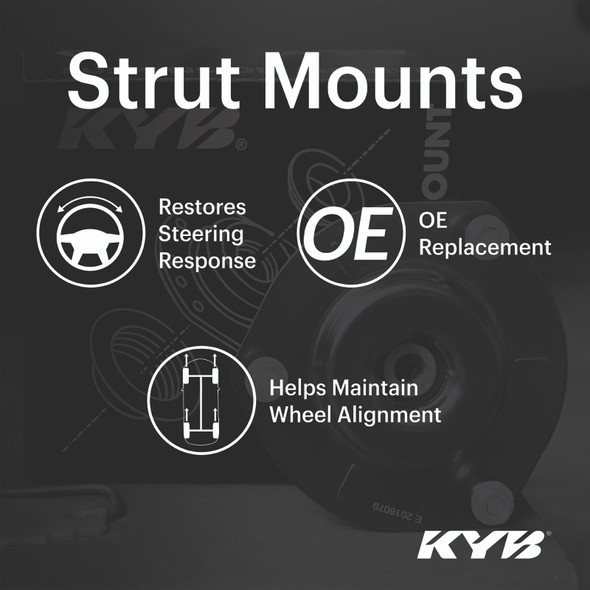
KYB Shocks & Struts Strut Mount Rear FORD Fiesta 2016-2011 - SM5802
KYB
MSRP: $39.85$26.88What are the main functions of strut mounts?Strut mounts act as steering pivots and support vehicle weight, cushioning impacts from road bumps to reduce jarring noise and vibration.Can I install...MSRP: $39.85$26.88 -
KYB Shocks & Struts Strut Mount Front DODGE Durango 2015-2011 - SM5769
KYB
MSRP: $59.83$40.37Will these strut mounts fit my 2020 Jeep Grand Cherokee?These KYB Strut Mounts are engineered to fit the 2011-2025 Dodge Durango and Jeep Grand Cherokee models specifically.Can I install these myself...MSRP: $59.83$40.37 -
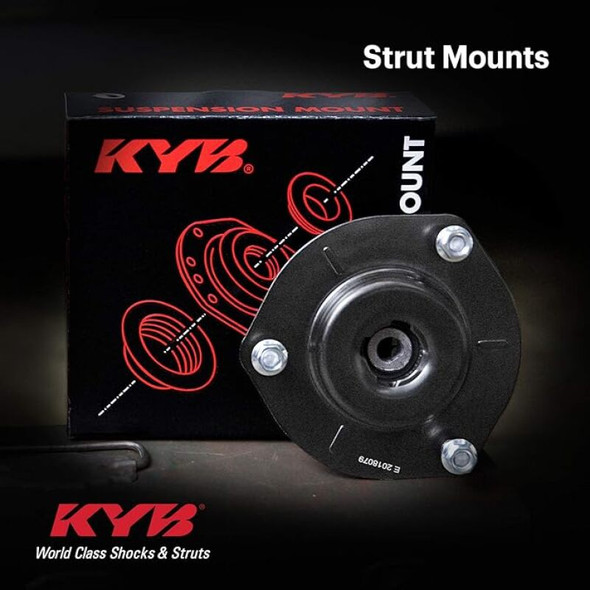

KYB Shocks & Struts Strut Mount Rear 13-15 Subaru BRZ / 09-13 Forester / 13-14 Legacy - SM5765
KYB
MSRP: $73.06$49.29How do I know if KYB Strut Mounts are compatible with my vehicle?Confirming fitment ensures these KYB Strut Mounts precisely match your vehicle's specifications for optimal Shock Mounts & Camber...MSRP: $73.06$49.29 -

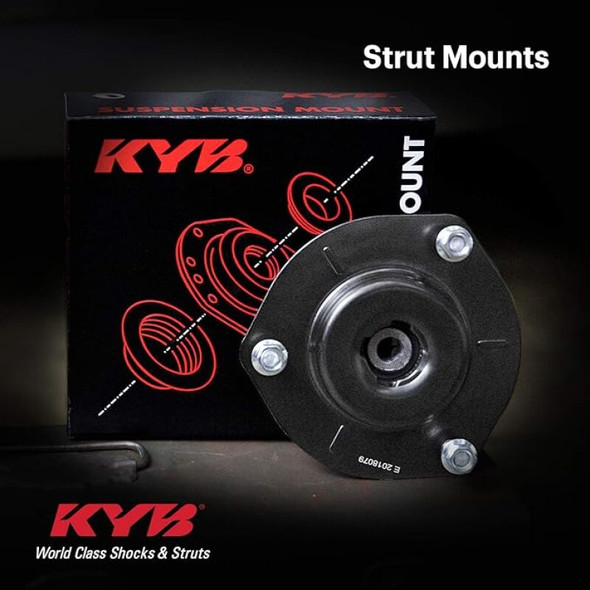
KYB Shocks & Struts Strut Mount Front 10-15 Hyundai Genesis Coupe - SM5757
KYB
$80.17Will these KYB Strut Mounts fit my 2010-2016 Hyundai Genesis Coupe?These KYB Strut Mounts are engineered as OE quality replacement components specifically designed to fit your 2010-2016 Hyundai...$80.17 -


KYB Shocks & Struts Strut Mount Front 11-14 Ford Edge / 11-14 Mustang / 11-14 Lincoln MKX - SM5753
KYB
MSRP: $86.29$58.21Are KYB Strut Mounts a direct OE replacement?KYB Strut Mounts are engineered as exact OE replacements, ensuring seamless integration and matching studs and nuts for effortless installation.What is...MSRP: $86.29$58.21 -
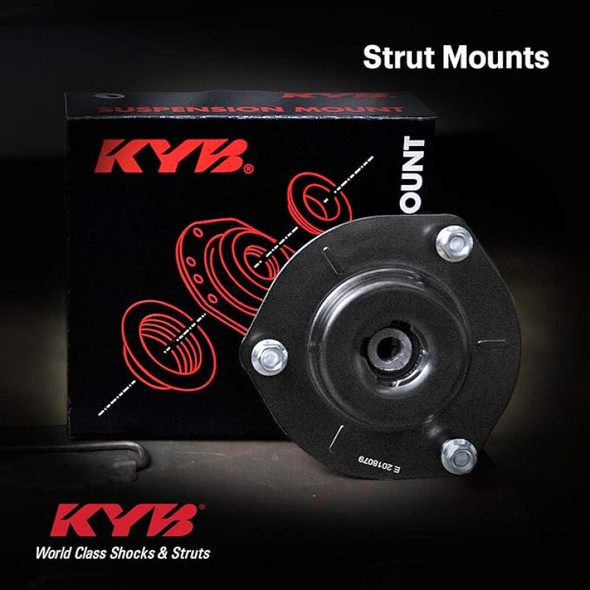
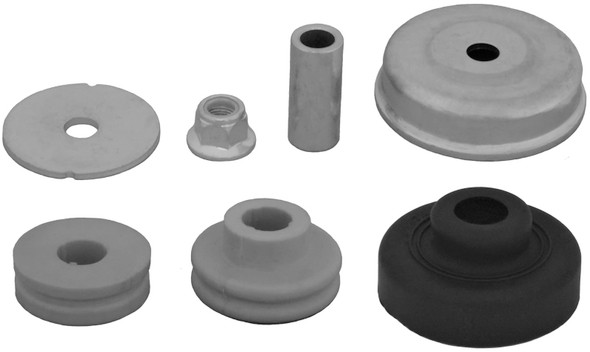
KYB Shocks & Struts Strut Mount Rear BMW 08-13 128i/135i / 09-11 335i / 08-13 M3 - SM5752
KYB
MSRP: $28.89$19.49Will these fit my 2015 BMW 328i?Confirm fitment with your vehicle using our fitment guide to ensure these KYB Strut Mounts are compatible with your 2015 BMW 328i.Is this a DIY install?Professional...MSRP: $28.89$19.49 -
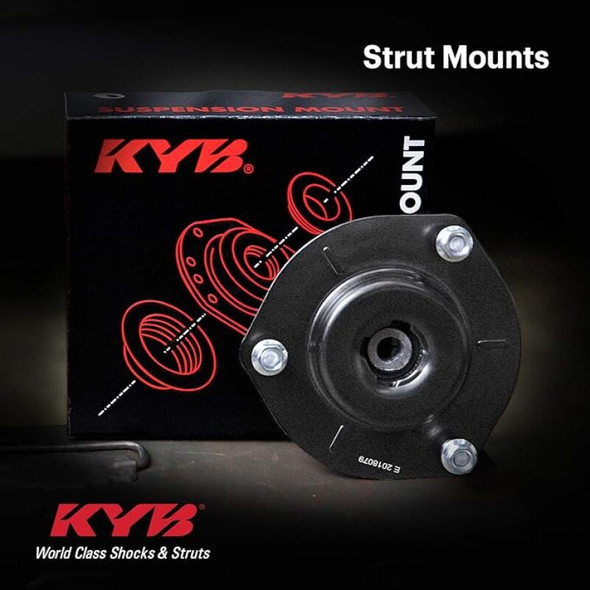
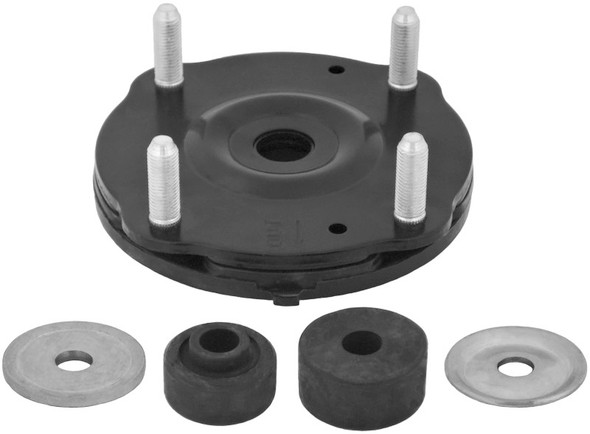
KYB Shocks & Struts Strut Mount Front Toyota Sequoia w/o Auto Leveling 08-14 / Tundra 07-15 - SM5737
KYB
MSRP: $49.02$33.06When should I replace my strut mounts?Replace KYB Strut Mounts when old vibration insulators harden, causing noise, or when suspension performance degrades. Confirm vehicle fitment for optimal...MSRP: $49.02$33.06 -
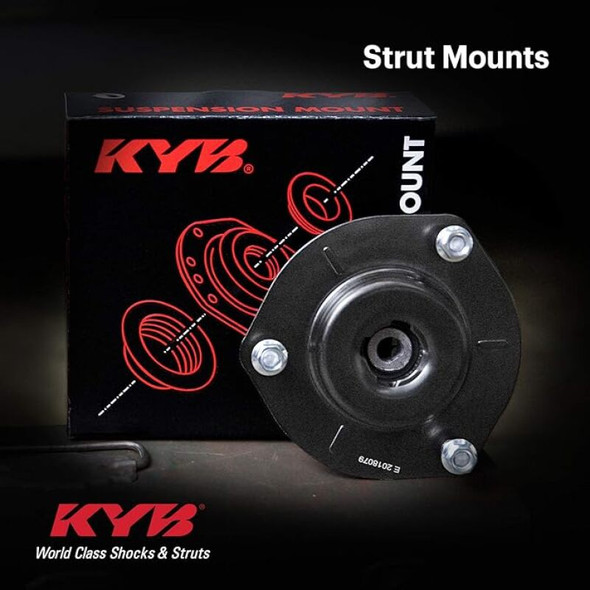

KYB Shocks & Struts Strut Mount Rear Infiniti G25 11-12 / G35 Sedan 07-08 / G37 09-10 - SM5734
KYB
MSRP: $49.99$33.72What is the typical lifespan of a strut mount?Strut mounts can last for approximately 50,000 to 100,000 miles, but replacement is recommended when worn to restore OE suspension feel.Are strut mounts...MSRP: $49.99$33.72 -


KYB Shocks & Struts Strut Mount Front Infiniti EX35 08-12 / Infiniti EX37 2013 / Infiniti G25 11-12 - SM5733
KYB
MSRP: $57.62$38.87What is the purpose of a strut mount?Strut mounts secure your vehicle's suspension struts, isolating road noise and vibration for a smoother ride experience.Can I install strut mounts...MSRP: $57.62$38.87 -
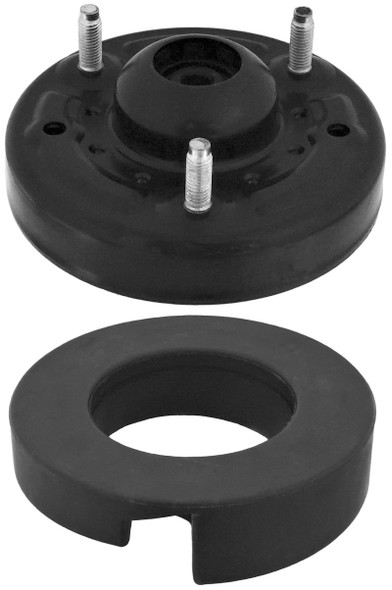

KYB Shocks & Struts Strut Mount Front Ford Expedition 07-14 / Ford F-150 (exc Raptor) 09-14 - SM5727
KYB
MSRP: $91.52$61.74Are these strut mounts a direct fit for my 2018 Ford F-150?Yes, these KYB strut mounts are engineered as OE quality replacement components, specifically fitting 2007-2024 Ford Expedition and F-150...MSRP: $91.52$61.74 -


KYB Shocks & Struts Strut Mounts Front 05-12 Nissan Frontier 2WD-4WD / 05-12 Nissan Pathfinder - SM5699
KYB
MSRP: $27.12$18.30What is the main function of KYB Strut Mounts?KYB Strut Mounts restore factory-fresh ride comfort by eliminating worn-out mount vibrations and cushion impacts from road bumps for a smoother drive.Are...MSRP: $27.12$18.30 -


KYB Shocks & Struts Strut Mount Front 12-13 Fiat 500 - SM5685
KYB
MSRP: $71.79$48.43What is the primary function of a strut mount?Strut mounts serve as critical steering pivots, supporting vehicle weight and cushioning impacts from road bumps for smoother operation.Is professional...MSRP: $71.79$48.43
Shock mounts and camber plates are the critical interface between your suspension and chassis — controlling strut bearing load, setting static camber, and determining how much alignment correction your geometry allows under compression. Motor Sport Mayhem stocks 112 in-stock options spanning entry-level rubber-isolated mounts to full pillow-ball race units, priced from $1.14 to $13,544 across 109 brands.
Our Top Picks for Shock Mounts & Camber Plates
Every product below was selected based on performance engineering merit, real-world installation results, and value at its respective price point.
AEM IND Strut Bars
AEM Induction | $346.99
Ties the front strut towers together to reduce chassis flex and sharpen steering response under hard cornering loads.
- Directly reduces strut tower movement, improving mount-point geometry consistency at the limit
AFE Coilover Systems
aFe | $3,729.00
Single-adjustable damping paired with integrated top-mount geometry delivers a tunable street-to-track setup in one system.
- Featherlight construction reduces unsprung mass, directly benefiting shock mount load cycles and fatigue life
ALF Wireless Air Control Systems
Air Lift | $1,363.99
Wireless management integrates with air-over-coilover top hat assemblies to allow real-time ride height and mount-load adjustment from a phone app.
- EZ-mount tank hardware simplifies install and reduces chassis stress concentrations at mounting points
ABR Steering Racks
All Balls Racing | $209.62
A rebuilt-to-spec steering rack that restores factory suspension geometry baselines before camber corrections are dialed in at the top mount.
- Worn rack play corrupts camber plate adjustments — this eliminates the root variable before alignment work begins
PA Alta Adjustable Control Arms
Alta | $339.15
Adjustable-length arms work in tandem with camber plates to give front-to-rear geometry control that a top mount alone cannot achieve.
- Polyurethane bushing construction stiffens compliance bushings that bleed out camber plate precision under load
ANT Micro-Start Tire Inflator
Antigravity Batteries | $24.99
A compact track-day essential for maintaining precise tire pressures after camber changes alter contact patch loading.
- Aggressive negative camber settings change tire pressure equilibrium — accurate inflation at each session is non-negotiable
ARB BP51 Coilovers
ARB BP51 Coilovers
ARB | $4,580.69
Bypass-style internals with integrated top-mount hardware engineered for sustained off-road articulation without mount fatigue.
- 2.5-inch body diameter increases bearing contact area at the top hat, spreading load across more chassis structure
ART Coil Buckets
Artec Industries | $351.99
Frame-mount coil buckets that re-establish the spring seat and bump stop interface when chassis modifications have compromised factory geometry.
- Laser-cut and CNC-formed steel ensures precise coil spring centering, preventing lateral load transfer to the shock body
AST 5100 Series Coilovers
AST | $4,554.00
Competition-spec coilover kit with top-mount geometry engineered to support aggressive static camber settings under repeated high-g cornering loads.
- 5100-series internals are valved specifically for competition spring rates, preventing top mount from experiencing off-axis bearing stress
AWE Chassis Bars
AWE Tuning | $435.00
Drivetrain stabilizer with polyurethane mount reduces chassis torque twist that can walk strut tower mounts under hard acceleration.
- Reduced drivetrain movement directly stabilizes the camber plate reference plane during on-throttle cornering exits
How to Choose the Right Shock Mounts & Camber Plates
The single biggest separator between a functional shock mount and a liability is bearing type and housing precision. A factory rubber-isolated mount absorbs NVH but deflects under lateral load, blurring the camber setting you dialed in at the alignment rack. An aftermarket pillow-ball or spherical bearing mount eliminates that compliance entirely — but it transfers every road input directly into the chassis. Choosing the wrong type for your use case costs you either tire wear (too soft) or cracked strut towers (too stiff for street miles). Material quality matters equally: cast aluminum tops with hardened steel bearing races hold tolerance through thousands of heat cycles; pressed-steel budget units fret and wear within one season of serious driving. Know what you're building before you buy.
Key Specifications
Bearing type and preload: Pillow-ball (spherical) bearings deliver zero compliance and are the correct choice for any dedicated track or autocross application. They require no preload compression to function but do need regular inspection for wear because they carry 100% of strut bearing load with no rubber buffer. For street-daily builds, a high-durometer polyurethane isolated mount gives 80% of the pillow-ball's precision with significantly reduced NVH intrusion — a genuinely useful compromise. Rubber OEM-replacement mounts have their place on comfort-oriented or heavy daily-driver applications where tire wear predictability matters more than outright lap time.
Camber adjustment range: Most OEM strut designs allow ±0 to ±0.5 degrees of camber at the top mount from factory. A quality adjustable camber plate typically opens that to ±2.5 to ±3.5 degrees, which is enough for most lowered street builds and light track use. True competition plates with slotted upper strut holes can reach ±4.5 degrees or more — necessary when running aggressive ride height drops that push the lower control arm geometry into severe positive-camber territory. Match the adjustment range to your actual ride height change, not the maximum the plate offers, because over-correcting introduces caster and scrub radius errors that create their own handling problems. Always re-align after any mount change.
Material and wall thickness: Billet 6061-T6 aluminum is the industry standard for top-quality camber plates — it's light, machines precisely, and doesn't corrode in the wet environments strut towers live in. Cast aluminum is acceptable for street use but introduces porosity risk at the bearing bore under sustained race loads. Steel top hats are found on heavy-duty off-road and truck applications where raw load capacity outweighs weight savings. Whatever the material, check wall thickness at the bearing bore: anything under 6mm in aluminum is marginal for track use, regardless of what the marketing says.
Hardware and fitment tolerance: A shock mount is only as good as the hardware clamping it to the chassis. Grade 8 or equivalent metric fasteners at the tower-to-mount interface are non-negotiable — factory Grade 5 hardware stretches under repeated compression cycles and is the most common cause of mount-point fatigue cracking. Fitment tolerance at the strut rod bore should be within 0.1mm of the strut rod diameter; excess slop here creates micro-movement that accelerates bearing wear and introduces alignment drift between track sessions. Always torque to spec with a calibrated wrench — over-torquing aluminum top hats distorts the bearing bore and voids the geometry accuracy you paid for.
Camber Plate Adjustment Range vs. Ride Height Drop
| Ride Height Drop | OEM Geometry Camber Error | Recommended Plate Range | Typical Application |
|---|---|---|---|
| 0–0.75 in (0–19mm) | 0 to −0.5° | ±1.0° adjustment | Stock-height street, mild spring drop |
| 0.75–1.5 in (19–38mm) | −0.5° to −1.2° | ±1.5° to ±2.0° adjustment | Lowering springs, entry coilovers |
| 1.5–2.5 in (38–64mm) | −1.2° to −2.0° | ±2.5° to ±3.0° adjustment | Performance coilovers, street/track |
| 2.5–3.5 in (64–89mm) | −2.0° to −3.0° | ±3.5° to ±4.0° adjustment | Aggressive coilovers, dedicated track |
| 3.5 in+ (89mm+) | −3.0°+ | ±4.5°+ with caster correction | Race-only, full geometry rebuild required |
Price Guide
Entry ($1.14–$213): This range covers OEM-replacement rubber top mounts, individual bearing components, and basic steel shock mount hardware. Correct choice for restoring a stock suspension to factory specification or replacing worn isolators on a comfort-oriented daily driver. Do not expect adjustability or track capability at this price — these parts are built to factory tolerances, not performance tolerances.
Mid-range ($213–$850): The majority of performance enthusiasts land here, and for good reason. This bracket delivers genuine adjustable camber plates in aluminum, polyurethane-isolated performance top hats, and strut tower brace reinforcement hardware. You get real alignment correction capability and measurably improved steering feedback without crossing into race-spec complexity. Most street-and-track builds can be fully addressed within this range.
Premium ($850–$13,544): Full competition pillow-ball top mounts, integrated coilover system top hats with multi-axis adjustment, and purpose-built race chassis mount hardware occupy this tier. The cost is justified when you're running competition spring rates above 400 lb/in, logging sustained track days, or building a vehicle where alignment drift between sessions is simply not acceptable. Off-road expedition builds at the high end of this range demand this level because fatigue failure at a remote shock mount is a recovery situation, not an inconvenience.
Who Is This For?
Shock mounts and camber plates serve a wider range of builds than most enthusiasts realize — from daily street performance to outright racing competition and serious off-road work.
Racing Competition — 8.1/10
This category scores highest in racing competition because mount geometry precision directly determines whether your expensive alignment setup holds through a race weekend. Pillow-ball top mounts with zero compliance are standard equipment in this application because rubber deflection at race cornering loads can introduce a half-degree of real-world camber change that no alignment rack can pre-compensate for. The 128 products in this segment are engineered for repeated high-load cycles, not miles between track days.
Track / Autocross — 8.0/10
Track and autocross use scores nearly as high as outright racing because the demands are similar — aggressive camber settings, repeated hard cornering, and the need for alignment consistency lap after lap. Adjustable camber plates are effectively mandatory for any car running more than 1.5 inches of drop alongside dedicated track tires. The 132 products optimized for this use case tend to balance pillow-ball precision with enough street drivability to get the car to and from the event without destroying wheel bearings.
Street Performance — 7.7/10
Street performance scores 7.7/10 across 192 products, reflecting the broad utility of even a basic top mount upgrade on a lowered street car. A performance-spec polyurethane isolated mount improves turn-in response noticeably over a worn factory unit without introducing the harshness of a full race plate. This is the largest product segment in the category for a reason — it addresses the most common build scenario: a daily-driven car that occasionally sees spirited driving and needs the alignment to stay where it was set.
Weekend Off-Roading — 7.7/10
Off-road scoring matches street performance at 7.7/10 across 85 products, and the engineering requirements are entirely different — high articulation travel, extreme shock body angles, and sustained dirt and moisture exposure demand mount designs that street products never consider. Heavy-duty steel top hats with sealed bearings and extended travel geometry are the standard here, and the load rating requirements exceed most track applications due to impact forces from rocks and whoops. A shock mount failure in a remote off-road environment is a trip-ending event, which is why this segment justifies premium investment.
Daily Driving Comfort — 6.2/10
Daily comfort scores 6.2/10 across 162 products, which is an honest rating — this category is fundamentally about performance geometry, not NVH reduction. That said, replacing a collapsed or cracked OEM rubber top mount with a quality OEM-spec replacement dramatically improves both steering precision and ride quality compared to the worn factory unit. The products optimized for this use case prioritize isolation and noise suppression over camber adjustability, making them appropriate for any build where the car needs to function comfortably across all road conditions every day.
Trusted Shock Mounts & Camber Plates Brands We Carry
Bilstein's OEM supplier history with European manufacturers means their top mount geometry matches the shock bodies they're designed around — a detail that matters when bearing preload is engineered for a specific valving curve. Eibach brings decades of spring-rate data to their mount designs, ensuring the top hat stiffness is matched to the spring rates they're paired with rather than treated as an afterthought. H&R has built a reputation specifically in camber plate precision, with billet aluminum construction and fine-thread adjustment hardware that holds position under race loads. Whiteline's approach focuses on the full geometry correction picture — their mount hardware is designed as part of a wider alignment correction system rather than an isolated component. KONI's long history as an OEM suspension supplier informs their mount engineering with real fatigue cycle data that aftermarket-only brands rarely publish. For off-road and truck applications, ARB and Skyjacker bring load-rated mount hardware validated against actual field conditions, not just laboratory stress tests.
Frequently Asked Questions
Are aftermarket control arms actually better than OEM, or is it marketing?
Aftermarket control arms are genuinely superior to OEM in specific, measurable ways — but only when the upgrade is appropriate for the application. OEM arms are engineered for NVH compliance and cost targets, which means the bushings are soft by design and the geometry is fixed to factory spec. Aftermarket arms use stiffer polyurethane or spherical rod-end bushings that eliminate deflection under cornering loads, and adjustable designs allow you to correct geometry changes introduced by ride height drops or chassis modifications. For a stock-height daily driver, OEM replacement quality is usually sufficient. For any car that's been lowered, modified, or tracked, a quality aftermarket arm restores or improves on the geometry accuracy the factory intended.
Are adjustable sway bars worth the investment?
Adjustable sway bars are worth it specifically when you need to tune the balance between understeer and oversteer for different track conditions or driving styles — which is not every application. A fixed-rate aftermarket bar that's correctly sized for your spring rates and vehicle weight will outperform a soft adjustable bar at any single setting. The value of adjustability comes when your setup needs to work across multiple configurations: a car used for both autocross and track days, or a setup where front and rear spring rates are being actively developed. If your suspension package is finalized and you're just replacing the bar, match the rate to your springs and don't pay extra for adjustment you won't use. If you're still developing the car, the ability to add or remove two clicks of roll stiffness at the paddock is genuinely useful.
Are aftermarket bump stops worth installing?
Aftermarket bump stops are undervalued by most builders and represent real performance per dollar on any car with a meaningful ride height drop. The OEM foam bump stop is calibrated for factory ride height — when you lower a car, the shock reaches full compression earlier in the travel, meaning the bump stop is contacted at lower impact energy than it was designed for, causing harsh bottom-out and potential shock body damage. A correctly sized aftermarket progressive-rate bump stop extends the effective spring rate progressively through the final portion of travel, eliminating harsh bottom-out without adding harshness to normal ride. For track use, precision bump stop tuning is a legitimate suspension setup tool used to control weight transfer at corner entry — it's not just a safety net for bottoming out.
Are adjustable drop links worth it compared to fixed replacements?
Adjustable drop links are worth the premium any time the sway bar end-link geometry has been changed by a ride height modification. When a car is lowered, the fixed-length OEM drop link pulls the sway bar into a bind at static ride height, effectively pre-loading the bar and introducing handling imbalance that no alignment adjustment can fix. An adjustable link lets you set the bar to a neutral angle at ride height so it operates as designed through its full range of motion. For stock-height vehicles replacing worn links, a quality fixed-length aftermarket unit in hardened steel or aluminum is all you need. For anything that's been lowered more than an inch, the adjustable version pays for itself in handling consistency alone.
Are aFe suspension and shock products genuinely competitive at the track level?
aFe's suspension line — developed under the Pfadt Engineering acquisition — is legitimately competitive for high-performance street and track use, not just a brand extension from their intake business. Their coilover systems use appropriate damping curves for the spring rates they're paired with, which is where many budget coilover brands fail — mismatched damping to spring rate creates either a pogo-stick or a brick regardless of the individual component quality. The single-adjustable configurations cover the full range from street-comfort to aggressive track use with a single knob, making them practical for cars that split time between both. They're positioned correctly in the mid-to-upper performance bracket — outperforming entry-level coilovers measurably, while purpose-built competition brands with custom valving will have an edge at the pure track-day level where you're investing in fitting sessions.
Building something specific? Our performance specialists can help you select the right Shock Mounts & Camber Plates for your application — street, track, or full race build.