
Lowering Springs
- Product
- Qty in Cart
- Quantity
- Price
- Subtotal
-

RS-R 2016-2021 Honda Civic (FK7) Down Sus Springs - H058D
RS-R
$279.00What is the typical drop for RS-R Down Sus Springs?RS-R Down Sus Springs deliver a precise drop, with specific measurements varying based on your vehicle's make and model for optimal fitment.Do RS-R...$279.00 -
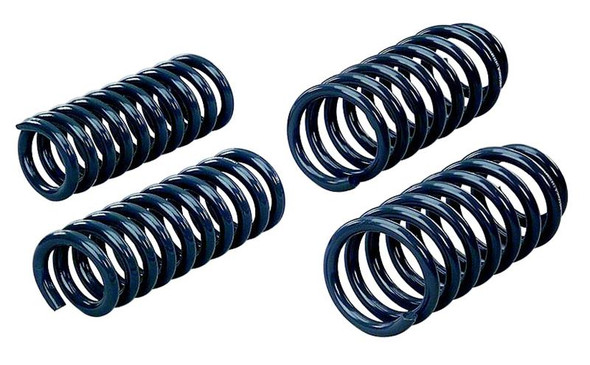
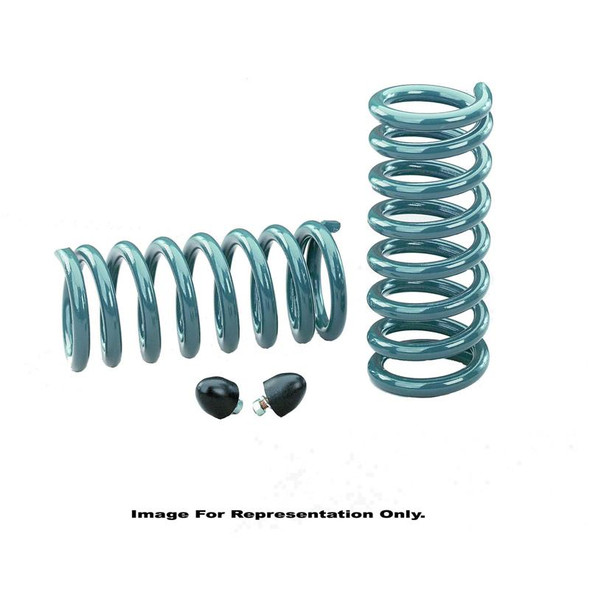
Hotchkis 67-69 Camaro / Firebird Small Block Front Performance Coil Springs - 1907F
Hotchkis
$242.52Hotchkis Sport Suspension 1907F 1967-1969 GM F-Body 68-74 X Body Front Sport Coil Springs 2 in. Drop Small Block. Lower your GM F-Body 2 in below stock ride height to give it the right look with...$242.52 -

BLOX Racing Lowering Springs 16-21 Honda Civic Coupe/Sedan Base/Si (Excl. Type-R) - BXSS-01006
BLOX Racing
MSRP: $175.00$174.02Are BLOX Racing BX Lowering Springs designed for specific vehicle models?Confirm vehicle fitment before purchase; BX Lowering Springs are engineered for precise application to ensure optimal...MSRP: $175.00$174.02 -


BLOX Racing Lowering Springs 96-00 Honda Civic - BXSS-01002
BLOX Racing
MSRP: $175.00$174.02BLOX Racing Lowering Springs 96-00 Honda CivicThis Part Fits:YearMakeModelSubmodel1996-2000HondaCivicCX1996-2000HondaCivicDX1MSRP: $175.00$174.02 -
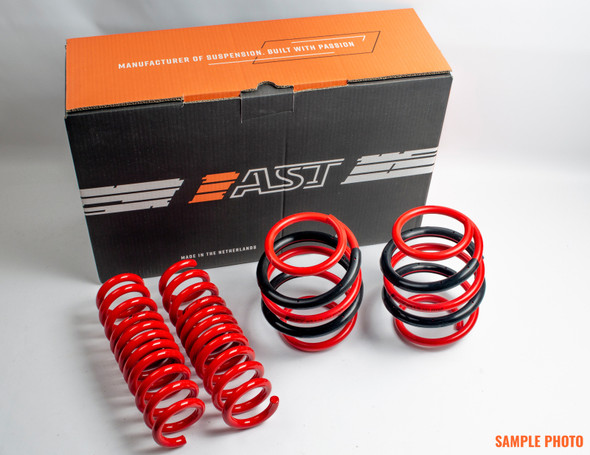
AST BMW G42 M240I xDrive (AWD) Lowering Springs 30mm Front/25mm Rear - ASTLS-22-294
AST
$383.36The AST Lowering Springs reduce your car’s center of gravity while maintaining the comfort of OEM springs. Designed as a direct OEM replacement, they are vehicle-specific and crafted with premium...$383.36 -
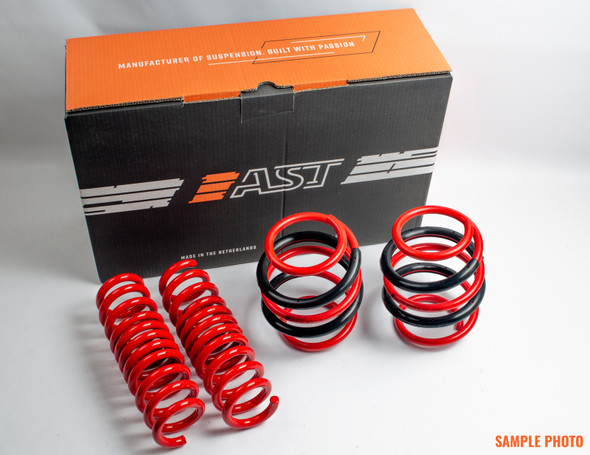
AST 03/2014-10/2020 BMW M4 Lowering Springs - 30mm/30mm - ASTLS-19-009
AST
$396.04The AST Lowering Springs reduce your car’s center of gravity while maintaining the comfort of OEM springs. Designed as a direct OEM replacement, they are vehicle-specific and crafted with premium...$396.04 -

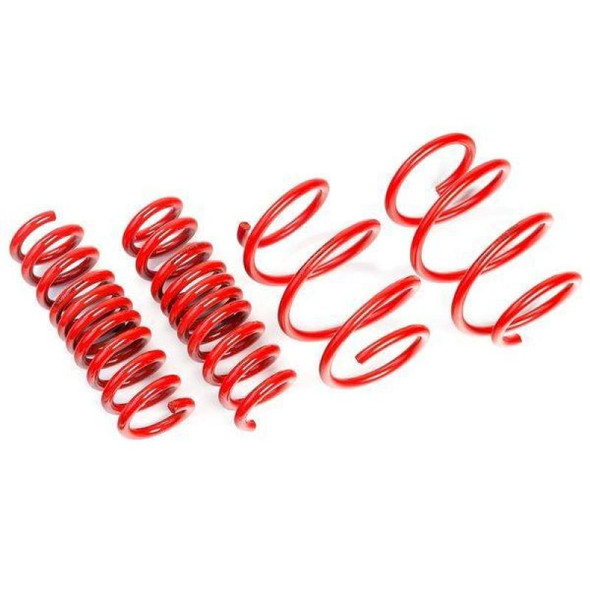
AST Suspension 2018+ BMW M3 Competition Sedan (F80) Lowering Springs - 30mm/25mm - ASTLS-19-008
AST
$346.26Will these lowering springs fit my 2015-2018 BMW M3?AST Lowering Springs are meticulously engineered as vehicle-specific components, ensuring a precise fit for your 2015-2018 BMW M3.What is the...$346.26 -

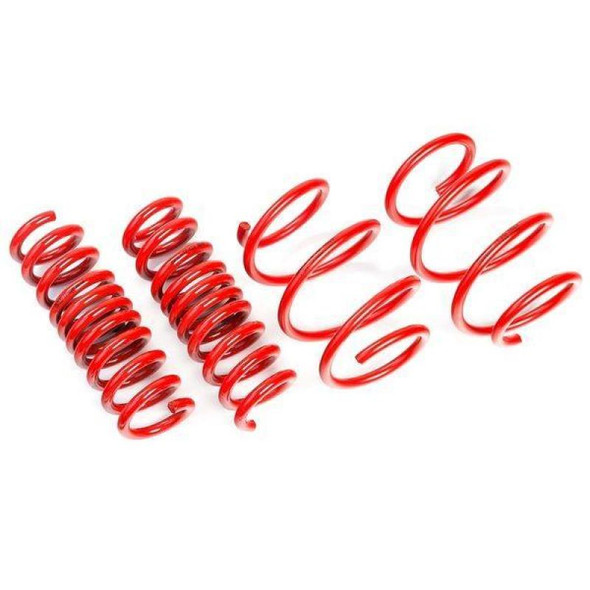
AST Suspension Lowering Springs - 13-20 VW Golf VII R Hatchback (MKVII/AU) 20mm/20mm - ASTLS-14-2721
AST
$319.31What is the main benefit of AST Lowering Springs?AST Lowering Springs significantly improve vehicle dynamics, transforming handling by lowering your car's center of gravity for sharper cornering.Is...$319.31 -

Whiteline Subaru STI VA Grip Series Stage 1 Kit - GS1-SUB007
Whiteline
MSRP: $1,374.40$1,168.24What is the spring rate for the Whiteline WL Performance Springs?WL Performance Springs feature a 6.1kg/mm front and 5.8kg/mm rear spring rate for balanced performance and handling.How much will the...MSRP: $1,374.40$1,168.24 -
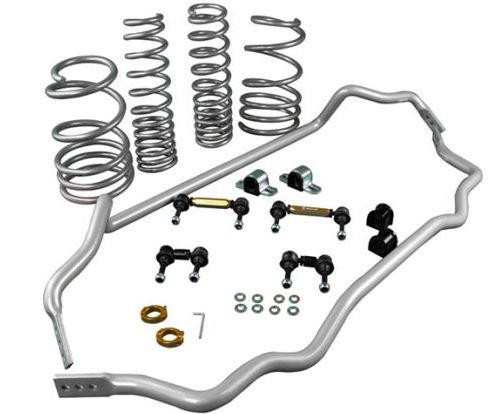
Whiteline Subaru Impreza WRX GD1 Grip Series Stage 1 Kit - GS1-SUB001
Whiteline
$1,082.88What is the recommended installation procedure for Whiteline lowering springs?Whiteline lowering springs require professional installation to ensure correct alignment and optimal performance...$1,082.88 -

RS-R 2025 Toyota GR Corolla Down Sus Springs - T554D
RS-R
$369.00What is the typical drop for RSR Down Sus Springs?RSR Down Sus Springs provide a significant visual enhancement by lowering your vehicle's center of gravity for improved aesthetics and handling.Can I...$369.00 -

RS-R 2023+ Acura Integra Type S Down Sus Springs - H093D
RS-R
$369.00Will these lowering springs fit my car?Confirm your vehicle's exact make, model, and year using our fitment tool before purchasing these specific lowering springs.Do I need professional installation...$369.00
Lowering springs are purpose-wound coil springs that reduce ride height by 1 to 2.5 inches and increase spring rate to lower center of gravity, reduce body roll, and sharpen steering response without the complexity of a full coilover conversion. Motor Sport Mayhem stocks 1,134 lowering springs from 109 brands ranging from $1.14 to $13,544.00, covering street performance, track duty, and everything between.
Our Top Picks for Lowering Springs
Each of these products was selected based on proven engineering standards, real-world performance validation, and consistent results across a range of builds.
AEM IND Strut Bars
AEM Induction | $346.99
Chassis bracing that works in tandem with lowering springs to maximize suspension geometry gains by reducing strut tower flex under load.
- Stiffens the front chassis plane to let lowered spring rates work as intended — not fight chassis deflection
AFE Coilover Systems
aFe | $3,729.00
A full single-adjustable coilover system delivering precise ride height control and tunable damping for street-to-track transitions.
- Monotube damper construction with matched spring rates gives this system an advantage over bolt-on drop springs at higher cornering speeds
ALF Wireless Air Control Systems
Air Lift | $1,363.99
Wireless air management lets you adjust ride height on demand, making it the most versatile alternative to fixed-rate lowering springs for dual-purpose builds.
- Eliminates the ride height versus clearance compromise inherent in fixed drop springs on vehicles that see varied road conditions
ABR Steering Racks
All Balls Racing | $209.62
A precision-rebuilt steering rack that restores factory steering geometry after suspension height changes affect bump steer characteristics.
- Correcting steering rack wear alongside a spring swap ensures the handling gains from lower ride height aren't offset by slop in the steering system
PA Alta Adjustable Control Arms
Alta | $339.15
Adjustable control arms restore correct suspension geometry after ride height is changed, preventing the camber and toe errors that degrade tire contact patch under lowered conditions.
- Critical companion upgrade to any drop spring install — corrects rear geometry that stock arms cannot compensate for once ride height moves outside OEM range
ANT Micro-Start Tire Inflator
Antigravity Batteries | $24.99
A compact tire inflator for maintaining correct tire pressure — essential for getting accurate handling feedback from newly installed lowering springs.
- Proper tire pressure calibration is the first adjustment required after any spring swap to validate that new spring rates are performing as intended
ARB BP51 Coilovers
ARB | $4,580.69
Bypass coilover technology with independently tuned compression and rebound circuits, designed for builds where ride height control must coexist with serious off-road articulation demands.
- Internal bypass design allows spring preload adjustment independently of damping tune — a capability fixed drop springs fundamentally cannot offer
ART Coils
Artec Industries | $351.99
Heavy-duty front frame coil buckets engineered to maintain correct spring seating geometry when suspension travel or spring diameter changes from OEM specification.
- Proper spring perch geometry is as critical as spring rate selection — a misaligned bucket binds the spring and creates inconsistent ride height under load
AST 5100 Series Coilovers
AST | $4,554.00
Competition-grade coilover system with independently adjustable bump and rebound for builds that have outgrown the performance ceiling of fixed lowering springs.
- Purpose-built for motorsport applications where spring rate and damping must be tuned independently across a wide range — not achievable with a drop spring alone
AWE Chassis Bars
AWE Tuning | $435.00
A drivetrain stabilizer with polyurethane mounting that reduces powertrain movement, complementing the tighter chassis dynamics created by stiffer lowering springs.
- When spring rates increase, driveline feedback increases proportionally — a stabilizer prevents that energy from transmitting as unwanted NVH into the cabin
How to Choose the Right Lowering Springs
The single most important decision in selecting lowering springs is matching spring rate to your damper's valving — a spring that's too stiff for your stock shock will blow through its damping range, producing a chassis that bounces rather than tracks. Quality lowering springs are cold-wound from chrome-silicon or chrome-vanadium alloy wire, heat-treated to prevent sag, and shot-peened to relieve surface stress. Springs wound from cheap high-carbon wire settle 5–15mm within the first 5,000 miles, defeating the purpose of the install. Look for manufacturers who publish spring rate tolerances — the tighter the tolerance (±2–3% is excellent, ±5% is acceptable), the more predictable the handling balance front to rear.
Key Specifications
Spring rate — measured in lb/in or N/mm — is the core spec. A linear-rate spring delivers consistent resistance through the entire stroke, making it predictable for track use. A progressive-rate spring starts softer and stiffens under compression, which better absorbs daily driving inputs while still controlling body roll near the limit. Neither is universally superior; the right choice depends on how far you drop and what dampers you're running. Matching the spring's free length and inner diameter to your strut assembly is non-negotiable — a spring that isn't fully seated on the perch will shift laterally under cornering loads and generate dangerous instability.
Drop amount determines how aggressively geometry is affected. A 1-inch drop on most strut-based platforms stays within the camber curve's acceptable range and requires only a camber adjustment at alignment. Drops beyond 1.5 inches on many platforms push the lower control arm past its designed arc, inducing positive camber under compression, which reduces tire contact patch exactly when you need it most. Verify that your target drop amount is compatible with your suspension geometry before purchasing — this is where most lowering spring installs go wrong. Pairing drop springs with adjustable suspension geometry correction hardware is the professional approach on any serious build.
Coating and corrosion resistance matter more than most buyers account for. Powder-coated springs hold up in road salt environments; bare zinc phosphate finishes begin surface rusting within two winters in northern climates. Rust doesn't immediately affect spring rate, but it does create stress concentration points where fatigue cracks initiate under high-cycle loading — exactly the failure mode you don't want on a track car. Confirm coating type before purchasing if the vehicle operates in a corrosive environment.
Confirm that your existing shocks and struts have sufficient stroke to work with the new spring's installed height. A lowering spring on a worn shock that is already near full compression at ride height will hit the internal bump stop immediately upon any road input — this destroys ride quality, hammers wheel bearings, and creates unpredictable handling. Replace shocks and springs as a system whenever possible for best results.
Spring Rate vs. Vehicle Weight Reference Guide
| Vehicle Weight Range | Recommended Front Spring Rate | Recommended Rear Spring Rate | Typical Application |
|---|---|---|---|
| 2,000–2,600 lbs | 180–250 lb/in (32–45 N/mm) | 150–200 lb/in (27–36 N/mm) | Lightweight sports cars, track-focused builds |
| 2,600–3,200 lbs | 250–350 lb/in (45–63 N/mm) | 200–280 lb/in (36–50 N/mm) | Compact performance cars, street/track dual use |
| 3,200–3,800 lbs | 350–450 lb/in (63–80 N/mm) | 280–380 lb/in (50–68 N/mm) | Sport sedans, coupes, daily performance drivers |
| 3,800–4,400 lbs | 450–600 lb/in (80–107 N/mm) | 380–500 lb/in (68–89 N/mm) | Muscle cars, sport trucks, heavier performance platforms |
| 4,400–5,200 lbs | 550–750 lb/in (98–134 N/mm) | 450–650 lb/in (80–116 N/mm) | Full-size performance vehicles, lightly modified trucks |
| 5,200+ lbs | 700–1,000+ lb/in (125–178+ N/mm) | 600–900+ lb/in (107–161+ N/mm) | Heavy-duty performance builds, trailer-tow capable platforms |
Price Guide
Entry ($1.14–$213.00): This range covers replacement-spec springs and basic drop springs made to looser tolerances — acceptable for visual stance builds and non-demanding street applications where handling precision isn't the primary goal. Expect spring rate tolerances of ±8–10% and basic zinc phosphate coatings. These are not track-appropriate components.
Mid-range ($213.00–$1,000.00): The majority of serious enthusiasts land here, where brands like Eibach, H&R, and KONI offer engineered spring rates published to tight tolerances, chrome-silicon wire construction, and multi-stage powder coat finishes. At this price point you get a genuine handling upgrade with dyno-validated spring rate matching and OEM-comparable installation safety.
Premium ($1,000.00–$13,544.00): Competition-grade coilover systems with adjustable spring perches, fully serviceable damper bodies, and application-specific spring rate packages developed from motorsport data. Justified for dedicated track cars, time-attack builds, and professional racing applications where setup repeatability and adjustability directly translate to lap time. The cost reflects engineering development, not marketing.
Who Is This For?
Lowering springs serve a broader range of applications than most buyers realize — from weekend track days to daily street driving to off-road performance builds, with usage data from 1,134 in-stock products showing strong scores across multiple disciplines.
Racing Competition — 8.1/10
Competition applications score highest because lowering springs are a foundational setup tool in any class-limited formula — when coilovers are prohibited or cost-capped, engineered drop springs with precisely matched rates are the only way to tune static ride height and weight transfer characteristics. At this level, spring rate consistency lap-to-lap is more important than outright stiffness; a spring that sags even 2mm mid-session changes corner weights and invalidates the setup. Chrome-silicon wire wound to tight tolerances with heat-stabilized set is the minimum acceptable standard here.
Track / Autocross — 8.0/10
Track and autocross builds score 8.0/10 because the combination of lower center of gravity, higher spring rate, and reduced body roll directly translates to faster corner entry and improved mechanical grip. Progressive-rate springs are popular in autocross where surface variation requires some compliance on initial compression, while linear rates are preferred for circuit work where load inputs are more predictable. Either way, the spring must be matched to a damper capable of controlling the increased rate — running a stiffer spring on a worn or undervalued shock generates overshoot and reduces corner exit traction.
Street Performance — 7.7/10
Street performance scores 7.7/10 — these are the highest-volume applications in the catalog, covering enthusiasts who want a genuine handling improvement without sacrificing daily usability. A well-chosen street spring drops ride height 1 to 1.5 inches and increases spring rate 15–30% over OEM, which noticeably reduces body roll and sharpens steering feel without creating a punishing ride on normal road surfaces. The key is selecting a spring designed specifically for street use rather than adapting a competition spring — competition rates on a street car with stock dampers create an undercontrolled, bouncing chassis that handles worse than stock.
Weekend Off-Roading — 7.7/10
Off-road applications score 7.7/10, reflecting the growing demand for lift springs and performance coil replacements in the truck and SUV segment — technically the inverse of a traditional lowering spring, but engineered on identical principles of rate, travel, and load management. Off-road spring selection centers on droop travel, not just lift height; a spring that adds 2.5 inches of lift but reduces wheel droop shortchanges articulation and defeats the purpose of the upgrade. Progressive rates are nearly universal in this application to handle both unladen highway driving and fully loaded off-camber terrain.
Daily Driving Comfort — 6.2/10
Daily comfort scores 6.2/10 — lower than other categories because lowering springs inherently involve a ride quality trade-off, and honest engineering acknowledges that. The best street-comfort lowering springs use progressive rates that absorb small road irregularities at low spring force before stiffening to control body roll at higher loads, but they cannot replicate the compliance of a full-travel OEM setup. Buyers prioritizing daily comfort above all other factors should evaluate whether a sport-tuned OEM replacement spring rather than an aggressive drop spring better meets their actual use case. Pairing a mild drop spring with a quality bushing kit reduces harshness transmission without sacrificing handling gains.
Trusted Lowering Springs Brands We Carry
The brands that dominate this category earned their positions through engineering infrastructure that most competitors cannot match. Eibach manufactures springs in-house on CNC winding machines to ±2% rate tolerances and supplies OEM suspension programs alongside their aftermarket catalog — their progressive-rate street springs are benchmarked against OEM ride quality data. H&R is a German-origin manufacturer whose TÜV-certified springs are engineered to keep suspension geometry within safe alignment parameters at their advertised drop — critical compliance documentation that budget alternatives rarely provide. Bilstein, while primarily a damper manufacturer, offers matched spring-and-shock packages where the spring rate was developed in parallel with damper valving — the system approach produces measurably better results than mixing brands. KONI brings similar matched-system engineering heritage from decades of motorsport and OEM supply work, with particular strength in sport-touring applications where compliance and control must coexist. Whiteline brings an Australian motorsport development background with a focus on geometry correction — their springs are frequently paired with their own alignment correction hardware for a comprehensive geometry overhaul rather than a simple drop. For premium coilover-level performance, AST and ARB represent the upper tier of the catalog with competition-derived technology and fully adjustable platforms built to survive race-pace punishment.
Frequently Asked Questions
Are adjustable drop links worth the upgrade over fixed links?
Yes, on any build where ride height has been changed more than 1 inch from stock. Fixed drop links are designed to operate at a specific geometry angle; lower the suspension and the sway bar end link angle changes, which pre-loads the bar in a way that creates handling imbalance — specifically, increased understeer on turn-in that wasn't present before the spring swap. Adjustable drop links restore the sway bar to its designed operating angle, recovering the bar's intended rate and neutralizing that unwanted pre-load. The cost is modest relative to the handling improvement, and on a car that's already received a spring upgrade, skipping adjustable drop links leaves measurable performance on the table.
Are adjustable sway bars worth it over fixed-rate bars?
Adjustable sway bars are worth the investment specifically when you need to tune the front-to-rear handling balance independently of spring rate changes. A fixed bar locks you into one roll stiffness ratio; an adjustable bar lets you run a softer setting for wet conditions or a stiffer setting for dry track days without touching the springs. On a street car that never sees track use, the adjustment range goes largely unused and the cost premium is harder to justify. On any car that transitions between daily driving and track days, the ability to independently tune front and rear roll resistance is a genuine performance tool — particularly important after spring rate changes that shift the neutral balance point from the factory calibration.
Are aftermarket control arms as good as OEM, and are they actually worth it?
Quality aftermarket control arms from established manufacturers are not just as good as OEM — they are frequently better for performance applications because they are designed with geometry correction and upgradeable bushing materials in mind. OEM arms are optimized for manufacturing cost, NVH compliance at stock ride height, and crash energy management — not for reduced deflection under cornering loads. Aftermarket arms typically use larger ball joints, stiffer mounting points, and accept polyurethane or spherical bushings that reduce compliance steer. The measurable benefit is improved steering response and more consistent tire contact under lateral load — particularly relevant after any ride height change that moves the suspension outside the OEM geometry envelope. The caveat is brand selection — there is a wide range of manufacturing quality in this segment, and arms made from inferior cast steel with loose ball joint tolerances can be genuinely dangerous.
Are aftermarket bump stops worth installing alongside lowering springs?
Aftermarket bump stops are an underrated component in any serious lowering spring build. When ride height drops, the gap between the suspension and the factory bump stop decreases — in some cases to the point where the bump stop contacts at near-normal road inputs, effectively turning your suspension into a rigid system at the worst possible moment. Performance bump stops made from microcellular urethane or progressive foam compounds provide a controlled, rising-rate transition rather than the abrupt hard stop of rubber OEM units. They also protect shock internals from bottoming impact, which is a common cause of damper failure on lowered cars. The cost is negligible relative to a spring purchase, and skipping them on a build with more than a 1-inch drop is a false economy.
Are aftermarket lower control arms a good choice for a lowered street build?
Aftermarket lower control arms are an excellent choice for lowered street builds, specifically because lowering the ride height changes the angle at which the lower arm operates through its arc — and stock geometry was not engineered for that new operating position. Aftermarket lower arms designed for lowered applications correct this by repositioning the ball joint pickup point to restore proper camber and caster curves at the new ride height. The result is that tires maintain a flatter contact patch through suspension travel, which improves both wear characteristics and handling predictability. On builds with more than 1.5 inches of drop, a geometry-correcting lower arm is effectively a required companion to the spring upgrade rather than an optional addition — running high camber gain without correction accelerates inside tire wear and creates unpredictable mid-corner behavior.
Building something specific? Our performance specialists can help you select the right Lowering Springs for your application — street, track, or full race build.