
Lowering Kits
- Product
- Qty in Cart
- Quantity
- Price
- Subtotal
-
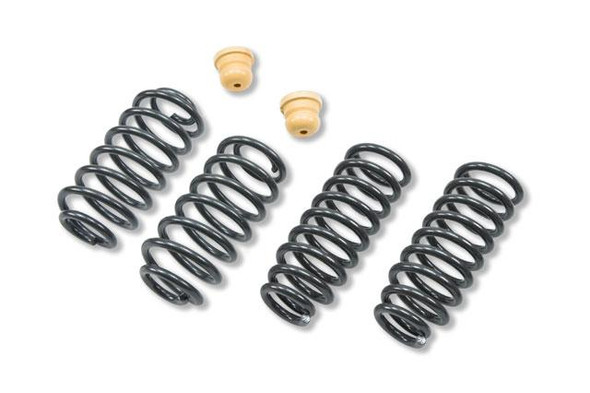

Belltech LOWERING KIT W/O SHOCKS - 795
Belltech
$463.86What is included in the Belltech Lowering Kit?Belltech complete component lowering kits provide all the parts and pieces needed, including grade 8 hardware and alignment pieces, for your specific...$463.86 -


Belltech LOWERING KIT WITH SP SHOCKS - 759SP
Belltech
$1,110.97Is professional installation recommended for the Belltech Street Performance Lowering Kit?Professional installation is recommended for this Belltech lowering kit to ensure precise fitment and optimal...$1,110.97 -
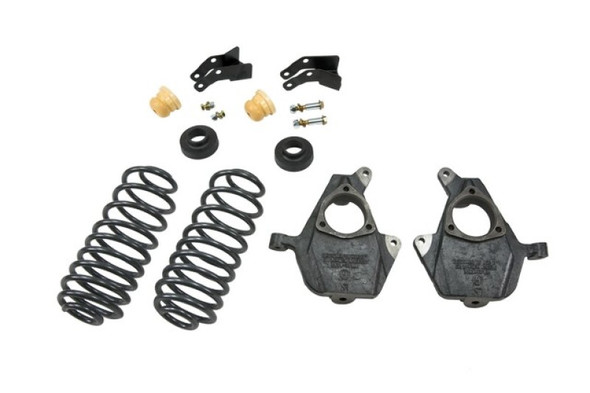
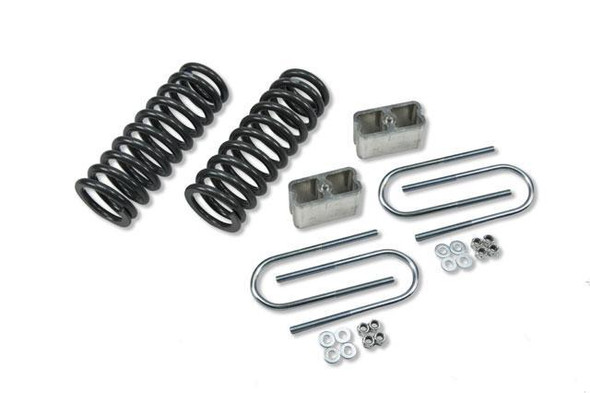
Belltech LOWERING KIT W/O SHOCKS - 753
Belltech
$880.06Will this kit fit my vehicle?Confirm fitment using our vehicle selector to ensure this Belltech kit precisely matches your truck's specifications for a perfect installation.What is the expected...$880.06 -

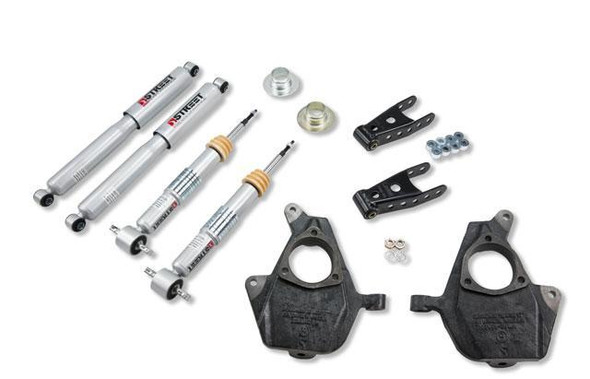
Belltech LOWERING KIT WITH SP SHOCKS - 739SP
Belltech
$1,332.92Will this lowering kit fit my vehicle?Confirm exact fitment for your Chevrolet Suburban or GMC Yukon using our online compatibility tool before purchase for a precise match.How difficult is the...$1,332.92 -
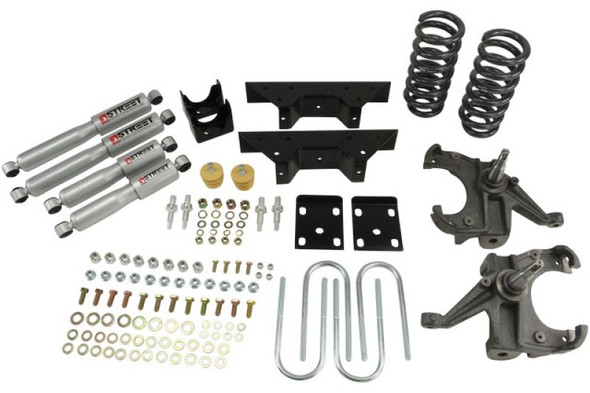

Belltech LOWERING KIT WITH SP SHOCKS - 707SP
Belltech
$1,413.53Does this kit fit my 1980 Chevrolet C10?This Belltech lowering kit is designed to precisely fit 1973-1987 Chevrolet C10 and GMC C1500 pickup trucks.How difficult is it to install this lowering...$1,413.53 -


Belltech LOWERING KIT WITH SP SHOCKS - 705SP
Belltech
$1,413.53Will this lowering kit fit my 1978 C10?This Belltech lowering kit is engineered to precisely fit 1973-1987 Chevrolet C10 and GMC C15 pickup trucks, ensuring optimal performance.Is professional...$1,413.53 -
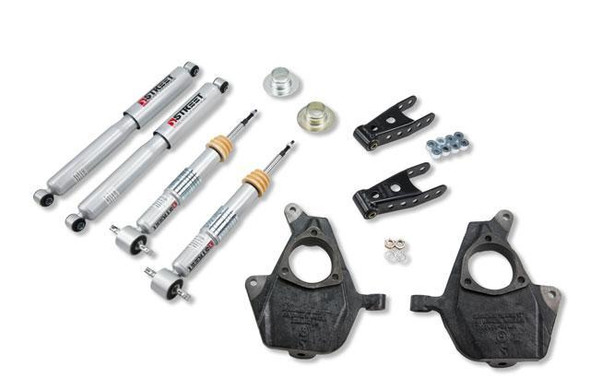

Belltech LOWERING KIT WITH SP SHOCKS - 686SP
Belltech
$870.93Do these lowering kits work with all C1500 and GMC C1500 models?Confirm fitment with your specific C1500 or GMC C1500 model to ensure proper installation and performance of this lowering kit.Are...$870.93 -
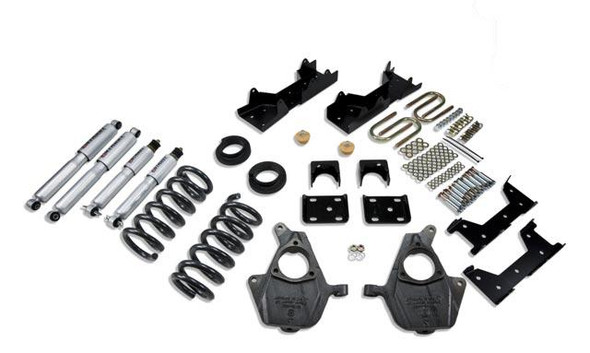
Belltech LOWERING KIT WITH SP SHOCKS - 667SP
Belltech
$1,652.40Will this kit lower my truck too much?This Belltech lowering kit is designed for a controlled drop, achieving aggressive aesthetics without excessive reduction in ride height.Are these shocks...$1,652.40 -

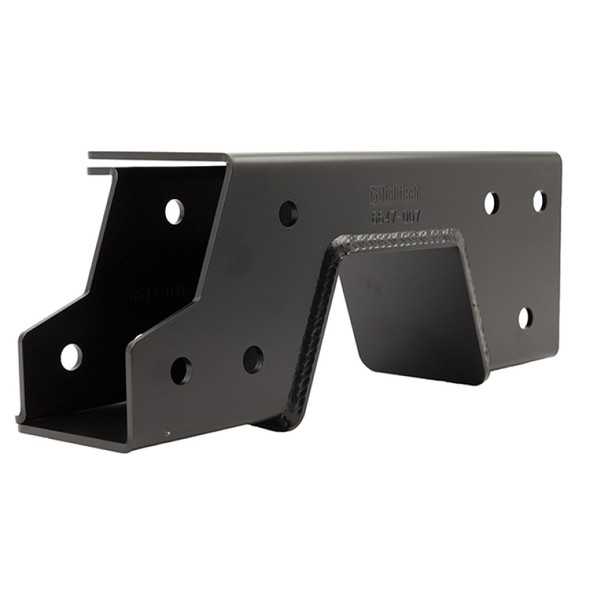
Belltech C-NOTCH KIT 15-20 Ford F-150 2WD All Cabs/Short Bed *C-Section ONLY w/ Hardware* - 6647
Belltech
$438.98What is the primary function of a c-notch kit?A c-notch kit increases rear axle compression travel by approximately two inch, enhancing performance and handling on your 2015-2025 Ford F-150.Is a...$438.98 -
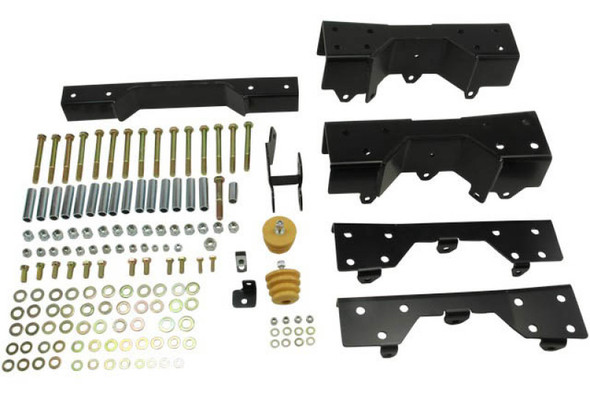
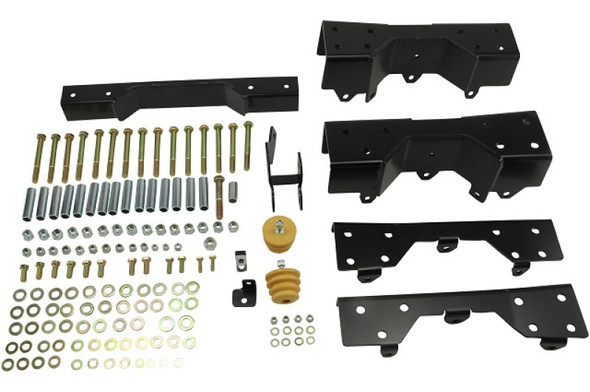
Belltech C-NOTCH KIT 07-14 Chevy/GMC Silverado/Sierra Standard Cab *C-Notch ONLY* - 6524
Belltech
$444.95Does the BT C-Notch Kit fit my 2015 Silverado 1500?Belltech's BT C-Notch Kit is engineered to fit 2007 through 2018 Chevrolet Silverado 1500 and GMC Sierra 1500 models precisely.How difficult is the...$444.95 -

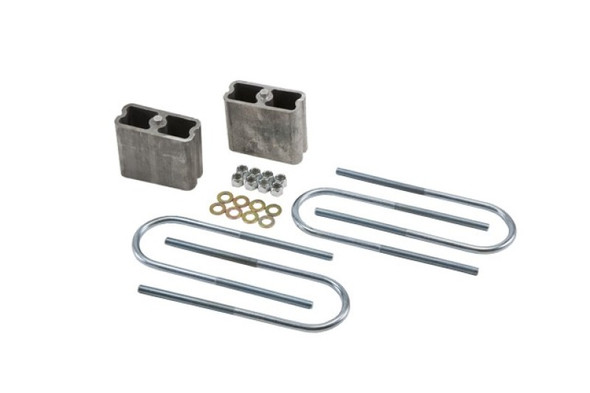
Belltech LOWERING BLOCK KIT 4inch EXTRUDED BLOCKS - 6203
Belltech
$82.00Will this lowering kit fit my specific vehicle?Confirm your vehicle's fitment details as this kit is designed for most mini and mid-size trucks with a 3 inch axle tube.How difficult is this kit to...$82.00 -


Belltech LOWERING BLOCK KIT 3inch WITH 2 DEGREE ANGLE - 6202
Belltech
$82.00What is the main purpose of a lowering block kit?Lowering block kits are engineered to reduce your vehicle's ride height, achieving a more aggressive stance and enhancing its visual appeal.Is this...$82.00
Lowering kits are engineered suspension systems that reduce a vehicle's ride height to lower its center of gravity, reduce body roll, and improve cornering grip — the most impactful single suspension upgrade available for street and track applications. Motor Sport Mayhem stocks 122 in-stock lowering kits across 109 brands, ranging from entry-level spring swaps to full competition coilover systems, priced from $1.14 to $13,544.00.
Our Top Picks for Lowering Kits
Each of these products was hand-selected based on engineering quality, real-world performance results, and value across a spectrum of builds from weekend street cars to full competition builds.
AEM IND Strut Bars
AEM Induction | $346.99
Chassis triangulation hardware that ties strut towers together to reduce flex and sharpen front-end response when running a lowered suspension setup.
- Reduces chassis flex that becomes amplified when lowering stiffens the suspension geometry
AFE Coilover Systems
aFe | $3,729.00
Single-adjustable monotube coilover system engineered for the transition between aggressive street driving and track day use without compromise.
- Monotube damper construction delivers faster thermal recovery and more consistent damping force under repeated high-load cornering
ALF Wireless Air Control Systems
Air Lift | $1,363.99
Wireless-operated air management system that lets you dial in ride height on the fly without running cab-mounted lines or mechanical controls.
- Wireless Bluetooth control eliminates hardwired switch panels while maintaining precise PSI management across all four corners
ABR Steering Racks
All Balls Racing | $209.62
Replacement steering rack built to restore precision geometry that can be compromised when suspension geometry changes are introduced through ride height adjustment.
- Engineered to tighter tolerances than OEM to compensate for increased Ackermann angle sensitivity after suspension modification
PA Alta Adj Control Arms
Alta | $339.15
Adjustable rear control arms that restore correct suspension geometry and alignment after ride height has been reduced, preventing premature tire wear and handling degradation.
- Adjustable length arms correct camber and toe curves thrown out of spec by lowering, which fixed OEM arms cannot compensate for
ANT Micro-Start Tire Inflator
Antigravity Batteries | $24.99
Compact tire inflator designed to pair with portable jump starters, essential for maintaining correct tire pressure when running lowered vehicles on stretched or low-profile fitments.
- Low-profile tire sidewalls used on lowered builds are acutely sensitive to pressure variance — this lets you correct on the fly at track events or shows
ARB BP51 Coilovers
ARB | $4,580.69
Bypass coilover system engineered for vehicles that need precise ride height control combined with heavy-load suspension travel management across variable terrain.
- Internal bypass technology allows independent tuning of low-speed and high-speed damping, a feature absent on standard twin-tube designs at this price point
ART Coils
Artec Industries | $351.99
Heavy-gauge steel coil spring buckets that provide a proper mounting foundation for suspension geometry correction when restructuring a vehicle's ride height baseline.
- Laser-cut and CNC-formed construction maintains dimensional accuracy critical to correct spring perch angles and coil bind clearance
AST 5100 Series Coilovers
AST | $4,554.00
Competition-grade coilover system built to FIA-level tolerances, offering genuine race-caliber damping adjustability in a street-legal package.
- AST's OEM supply background means these dampers are built to the same dimensional and fatigue standards used in factory motorsport programs, not just street aftermarket specs
AWE Chassis Bars
AWE Tuning | $435.00
Drivetrain stabilizer bar with polyurethane mount that reduces powertrain movement, a critical companion mod when lowering increases driveline angle sensitivity.
- Polyurethane mount durometer is selected to absorb NVH without the slop of rubber, keeping driveshaft angles consistent at reduced ride heights
How to Choose the Right Lowering Kit
The defining difference between a lowering kit that improves your car and one that ruins it comes down to whether the system addresses the complete geometry picture — not just ride height. Dropping a vehicle changes camber curves, bumpsteer angles, roll center position, and spring rate requirements simultaneously. A kit that accounts for all of these through matched spring rates, corrected control arm geometry, and appropriate damper valving will transform handling. A kit that only addresses height through cheap spring cuts or mismatched component substitutions will create bump steer, inner tire wear, and a harsh, unpredictable ride.
Key Specifications
Spring rate is the most critical spec to evaluate and the one most commonly misrepresented in marketing materials. Spring rate is measured in lbs/inch or N/mm and must be matched to the vehicle's corner weight, not just its total curb weight. A spring that is too soft relative to damper valving will cause the damper to bottom out on compression, creating a jarring impact. A spring that is too stiff will cause the wheel to skip over surface imperfections rather than follow the road, reducing grip. For street use, a rate increase of 15–30% over OEM is generally the usable performance window; track applications can justify 50–100% or more depending on corner weight and aero load.
Damper compatibility is non-negotiable. Lowering springs installed on worn OEM dampers are one of the most common causes of bad ride quality and handling complaints. OEM dampers are valved for OEM spring rates; a stiffer lowering spring causes the damper to operate outside its designed velocity range, compressing too fast on bumps and rebounding too slowly. The correct approach is to pair lowering springs with dampers revalved or purpose-built for the new rate — or to use a complete coilover system where spring and damper are pre-matched from the factory.
Material quality separates budget kits from serious suspension components. High-quality lowering springs use SAE 9254V or similar high-silicon chrome vanadium alloy with a minimum tensile strength of 1,700 MPa, shot-peened for fatigue resistance and powder-coated or epoxy-sealed for corrosion protection. Control arms in premium kits use chromoly or aircraft-grade aluminum with uniball or spherical bearing joints rather than rubber bushings — the latter deflect under load and introduce compliance that undermines the precision the rest of the kit provides. Inspect weld quality, bushing material durometer ratings, and whether adjustment hardware uses grade 8 or better fasteners.
Alignment capability after installation is mandatory, not optional. Any ride height reduction beyond 15mm will move alignment figures outside the OEM adjustment range on most production vehicles. Verify before purchasing that your vehicle has adequate camber adjustment range, or that the kit includes camber plates, adjustable control arms, or eccentric bolts to correct alignment post-installation. Running a lowered vehicle out of alignment will destroy tires within a few thousand miles and introduce unpredictable handling at the limit. Budget for a four-wheel alignment immediately after any lowering kit installation — it is part of the cost of the modification.
Lowering Drop vs. Recommended Spring Rate Increase by Vehicle Weight
| Vehicle Weight Class | Drop Range | Recommended Spring Rate Increase Over OEM | Notes |
|---|---|---|---|
| Under 2,600 lbs (lightweight sport) | 0.5–1.5 in | 20–40% | Low corner weight — moderate rate increase sufficient; prioritize damper revalve |
| 2,600–3,200 lbs (compact/sport sedan) | 0.75–1.75 in | 25–50% | Most common application; full coilover system recommended over spring swap |
| 3,200–3,800 lbs (midsize sedan/coupe) | 0.5–1.5 in | 30–60% | Higher corner weight demands proportionally stiffer rate to prevent coil bind |
| 3,800–4,500 lbs (muscle car/full-size) | 0.5–1.25 in | 35–65% | Roll center correction becomes critical; adjustable control arms strongly advised |
| 4,500–5,500 lbs (truck/SUV lowering) | 1.0–3.0 in | 40–80% | Drop spindles or torsion bar adjustment preferred over spring cuts; geometry changes are severe |
| Over 5,500 lbs (heavy truck/van) | 1.0–2.0 in | 50–90% | Load-rated components essential; frame stress at lowered geometry must be evaluated |
Price Guide
Entry ($1.14–$213.00): This tier covers individual components — replacement bushings, bump stops, drop spindles, and single spring sets. Suitable for targeted corrections or mild cosmetic drops on daily drivers where performance gains are secondary. Quality variance is high in this range; buy from established brands with published spring rate specs rather than unknown imports with no technical documentation.
Mid-range ($213.00–$1,500.00): The sweet spot for serious street performance and occasional track use, covering matched spring-and-damper kits, entry-level coilover systems, and adjustable control arm packages. Most enthusiasts with performance goals land here — this range provides meaningful handling improvement with enough adjustability to dial in the setup for specific use cases. Brands like Bilstein, Eibach, H&R, and KONI deliver proven engineering at this price point.
Premium ($1,500.00–$13,544.00): Full competition coilover systems with remote reservoirs, custom valving, ride height and rebound adjustment, and race-sourced materials. Justified for dedicated track cars, time attack builds, or any application where consistent damping performance under repeated hard use is required. At this level you are paying for thermal stability, rebuild serviceability, and precision tolerances that simply cannot be achieved at lower price points — not marketing.
Who Is This For?
Lowering kits span a broader range of use cases than almost any other suspension category — from mild aesthetic drops on daily drivers to full competition setups running near-zero ride height with custom valved dampers.
Racing Competition — 8.1/10
Lowering kits score at the top of the usage matrix for racing competition because ride height, roll center, and spring rate are direct performance variables in any competitive class. At the competition level, coilover systems with independent compression and rebound adjustment allow corner-by-corner tuning to match specific track surfaces and tire compounds. The 128 competition-rated products in our catalog reflect genuine motorsport-grade hardware, not street kits rebadged with track language.
Track / Autocross — 8.0/10
Track and autocross applications score nearly as high as full racing because the physics demands are identical — lower center of gravity, controlled body roll, and predictable suspension geometry under lateral load. The difference from competition use is typically the need for street legality and daily drivability between events, which is why adjustable coilovers dominate this use case. A well-chosen kit allows softening for the street commute and stiffening at the track entrance without tools on more advanced systems.
Street Performance — 7.7/10
The highest product volume in the usage matrix at 192 products reflects the fact that street performance is the core application for most lowering kit buyers. A 1.0–1.5 inch drop with properly matched spring and damper rates reduces body roll through corners, shortens stopping distances by reducing weight transfer, and makes the car feel significantly more connected to the road without destroying daily drivability. The key constraint is avoiding over-lowering, which compromises suspension travel and creates geometry problems that undo the handling benefits.
Weekend Off-Roading — 7.7/10
The 7.7/10 score for off-road at 85 products reflects a different application of the same suspension engineering principles — controlled ride height adjustment for terrain clearance rather than performance lowering. Products like bypas coilovers and long-travel suspension systems in this category allow precise height management across variable terrain while maintaining correct geometry throughout the travel range. This segment is technically demanding, as off-road ride height changes are far more extreme than street lowering and require components built for high-cycle durability under impact loading.
Daily Driving Comfort — 6.2/10
The 6.2/10 comfort score is honest: lowering a vehicle inherently involves trade-offs in ride quality unless a significant budget is allocated to properly matched damping. Budget kits on worn struts will produce a harsh, choppy ride that is worse than stock. However, premium coilover systems with wide damping adjustment ranges can actually improve ride quality over worn OEM hardware while still delivering a meaningful drop, which is why comfort scores are not at the bottom of the matrix — it is achievable, but not cheap.
Trusted Lowering Kit Brands We Carry
The brands that dominate this category have earned their positions through engineering depth, not marketing spend. Bilstein pioneered the monotube damper design and remains an OEM supplier to multiple factory motorsport programs, with over 1,450 products reflecting the broadest fitment coverage in our catalog. Eibach manufactures springs to aerospace-standard tolerances using high-silicon alloys and has supplied factory race teams across Formula 1, DTM, and World Rally Championship programs. H&R produces some of the most precisely rated lowering springs in the industry, with published spring rate data independently verified against stated specs — a standard many competitors do not meet. KONI's damper technology has a decades-long motorsport heritage and their adjustable units remain a benchmark for street-to-track transition builds. AST operates as both an OEM supplier and an aftermarket manufacturer, meaning their components are built to production-line dimensional standards rather than prototype tolerances. Whiteline specializes in the geometry correction side of the lowering equation — their adjustable control arms, bushing kits, and sway bar hardware address the alignment and compliance problems that lowering creates, making them an essential complement to any spring or coilover upgrade.
Frequently Asked Questions
Are adjustable drop links worth it?
Yes, particularly on any vehicle where ride height has been reduced more than 20mm. Drop links connect the sway bar to the suspension and have a specific effective length calculated for OEM ride height. When you lower the vehicle, the sway bar end moves relative to the control arm, changing the drop link angle and causing the bar to preload in one direction — effectively making the suspension stiffer on one side and introducing handling asymmetry. Adjustable drop links let you restore the correct geometry so the sway bar operates at its designed lever angle. On track builds where sway bar rate is part of the tuning equation, fixed-length links make precise tuning impossible.
Are adjustable sway bars worth the investment for a lowered build?
Adjustable sway bars are a high-value upgrade for any car being driven seriously, but they become particularly important once ride height and spring rates have been changed. A stiffer lowering spring naturally reduces body roll, which can make the stock sway bar feel too aggressive and introduce oversteer or understeer that wasn't present on OEM suspension. An adjustable bar lets you rebalance the front-to-rear roll stiffness ratio after changing spring rates, which is the correct way to set handling balance. For street-only builds the benefit is real but secondary; for autocross or track use, adjustable sway bar rates are as important as damper adjustment.
Are aftermarket control arms as good as OEM, and are they worth it?
Quality aftermarket control arms from reputable manufacturers are not just as good as OEM — in most cases they are purpose-built to outperform OEM in the specific conditions created by lowered suspension. OEM control arms are designed for stock ride height, stock geometry, and comfort-biased compliance. When ride height changes, the OEM arm's fixed length and bushing compliance work against you, introducing camber change through bump travel and understeer compliance under load. Aftermarket arms built with adjustable lengths, harder polyurethane or spherical bearing joints, and chromoly construction correct the geometry errors and eliminate the compliance that bleeds performance. The important caveat is that quality varies enormously in the aftermarket — buy from established brands with published dimensional specs and verifiable material certifications.
Are aftermarket bump stops worth replacing when installing a lowering kit?
Aftermarket bump stops are one of the most overlooked components in a lowering kit build, and ignoring them is a common cause of harsh ride quality even on premium coilover systems. OEM bump stops are sized for OEM suspension travel — when you lower the vehicle, the effective suspension travel decreases, and the bump stop contacts earlier and more aggressively in the compression stroke. Progressive-rate aftermarket bump stops, often called jounce bumpers, are shorter and softer in initial contact, building resistance progressively rather than hitting like a brick wall. On coilover systems with limited total travel, a correctly sized bump stop prevents metal-to-metal contact and protects the damper from bottoming damage. The cost is minimal relative to the improvement in ride quality and component longevity.
Are aftermarket lower control arms good for daily-driven lowered vehicles?
Aftermarket lower control arms are appropriate and often necessary for daily-driven lowered vehicles, provided the correct bushing material is selected for the application. Full spherical bearing joints — while ideal for track use — transmit road noise and vibration directly into the chassis, which becomes fatiguing on daily drivers over long distances. The better approach for a street car is a control arm with high-durometer polyurethane bushings, which eliminate the compliance of rubber while retaining enough vibration isolation to remain livable. Adjustable-length arms should be set and then locked in position for street use rather than left loose, and all pivot hardware should be re-torqued at operating height, not at full droop, to prevent bushing wind-up that accelerates wear. Pair any control arm replacement with a professional four-wheel alignment to realize the full benefit of the corrected geometry.
Building something specific? Our performance specialists can help you select the right Lowering Kits for your application — street, track, or full race build.