
Control Arms
- Product
- Qty in Cart
- Quantity
- Price
- Subtotal
-
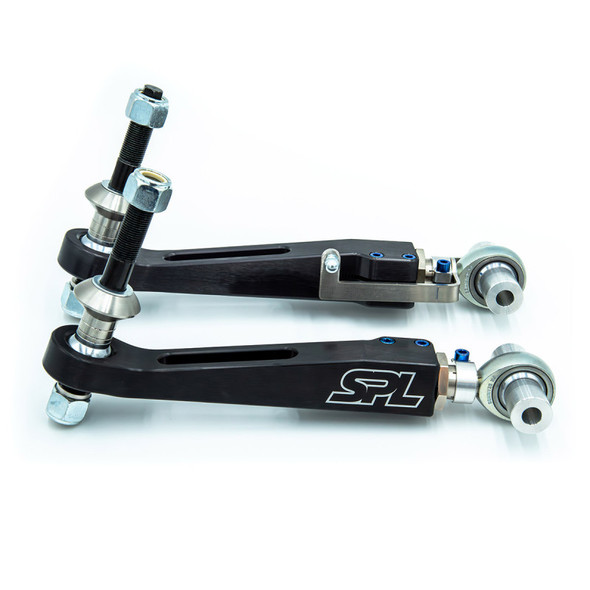
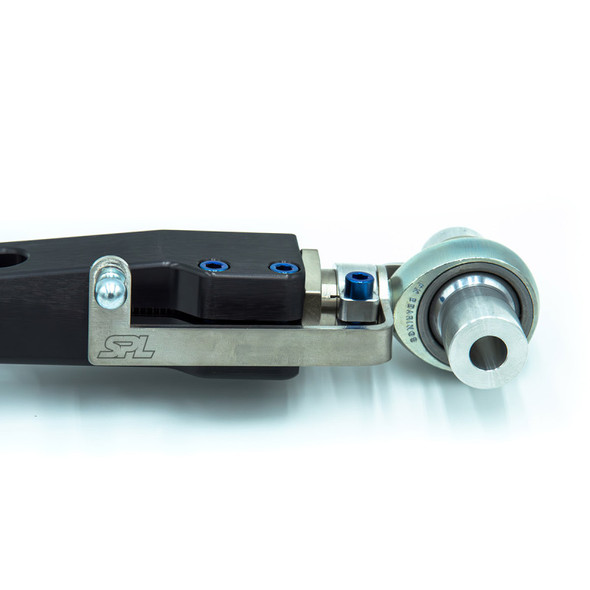
SPL Parts 2019+ BMW (G20) & 2021+ BMW (G22) Front Lower Control Arm - SPL FLCA G2X
SPL Parts
MSRP: $799.00$785.98What is the typical lifespan of SPP Lower Control Arms?SPP Lower Control Arms are engineered for extreme durability; confirm vehicle fitment for accurate longevity expectations.Are SPP Lower Control...MSRP: $799.00$785.98 -
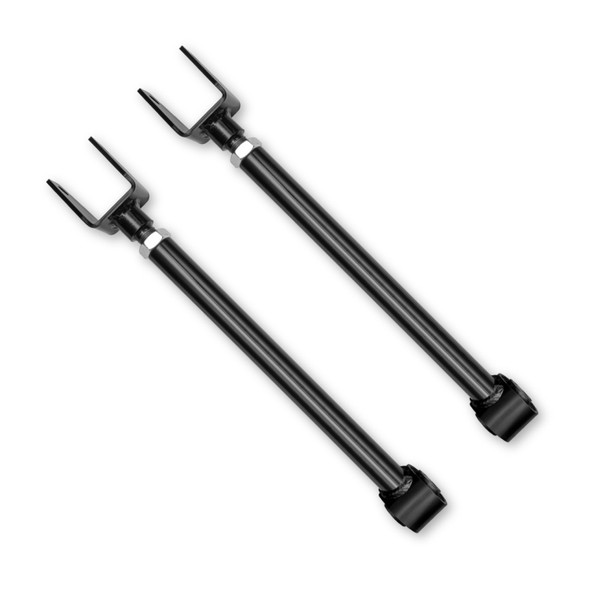
Rock Krawler 07-18 Jeep Wrangler JK/JKU JK Adventure Series Front Upper Control Arms - RK07852
Rock Krawler
MSRP: $297.15$282.29What is the primary benefit of installing RKR Upper Control Arms?RKR Upper Control Arms deliver superior articulation, enabling your vehicle to conquer challenging off-road terrain with unparalleled...MSRP: $297.15$282.29 -
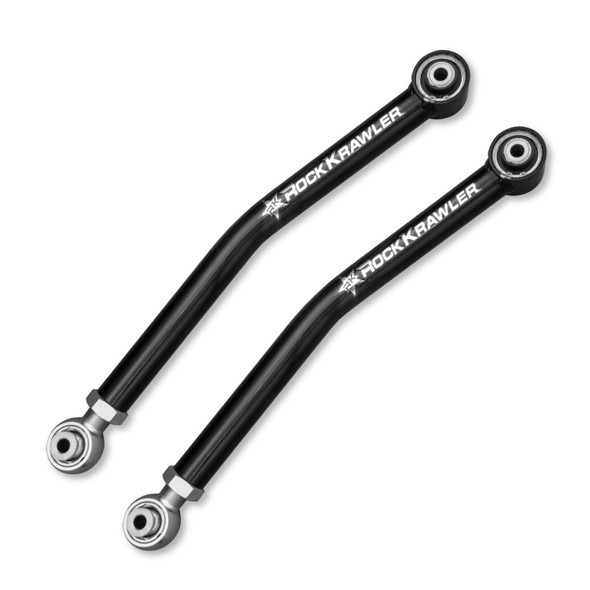
Rock Krawler 2018+ Jeep Wrangler JL 2DR / JLU 4DR X Series Front Lower Control Arms - RK06184B
Rock Krawler
MSRP: $474.42$450.70Do RKR Lower Control Arms fit my specific vehicle?RKR Lower Control Arms require confirmation of vehicle fitment for seamless integration and optimal performance. Always verify compatibility before...MSRP: $474.42$450.70 -


QA1 68-74 GM X-Body Level 3 Handling Kit 2.0 w/o Shocks - HK33-GMX2
QA1
MSRP: $2,319.77$2,298.05Want better handling for your 1968-1974 GM X-Body vehicle? Turn to QA1's handling suspension kits for the best ride that fits your needs. Available in three different levels of performance, these...MSRP: $2,319.77$2,298.05 -


QA1 68-74 GM X-Body Level 2 Handling Kit 2.0 w/o Shocks - HK32-GMX2
QA1
MSRP: $2,216.73$2,197.79How do I know if these control arms will fit my vehicle?QA1 Control Arms confirm vehicle fitment through an online tool, ensuring a perfect bolt-in match for your specific application.Are these...MSRP: $2,216.73$2,197.79 -


QA1 67-69 GM F-Body Level 2 Handling Kit 2.0 w/o Shocks - HK32-GMF1
QA1
MSRP: $2,216.73$2,197.79What is the general fitment for these control arms?QA1 Control Arms are engineered for average weight small block and LS powered vehicles with stock trim.Are these control arms designed for improved...MSRP: $2,216.73$2,197.79 -


ICON 96-04 Toyota Tacoma Billet Upper Control Arm DJ Kit - 58500DJ
ICON
$1,399.95What is the maximum amount of lift these control arms can accommodate?ICON Upper Control Arms are engineered to accommodate up to 3.5 inches of suspension lift for optimal geometry and alignment.How...$1,399.95 -
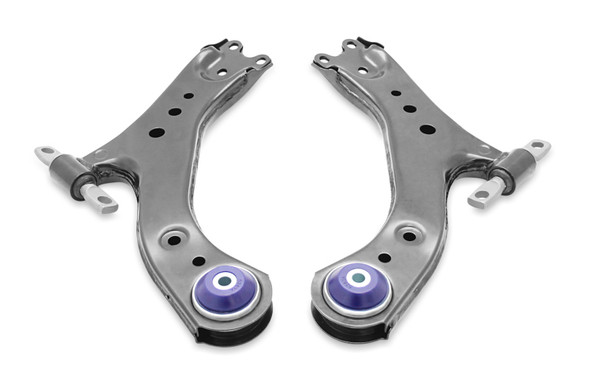
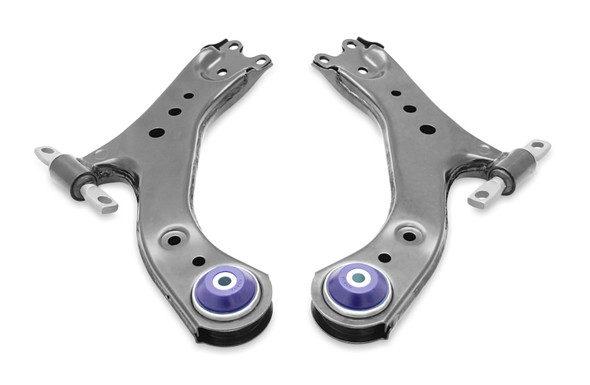
SuperPro Toyota Camry 18-21 Front Lower Control Arm Kit - TRC1042
Superpro
MSRP: $379.99$351.81What vehicles are compatible with Superpro Front Control Arms?Superpro Front Control Arms are specifically designed for a precise fit on 2017-2023 Ram 1500 and Toyota Camry models.How difficult is it...MSRP: $379.99$351.81 -
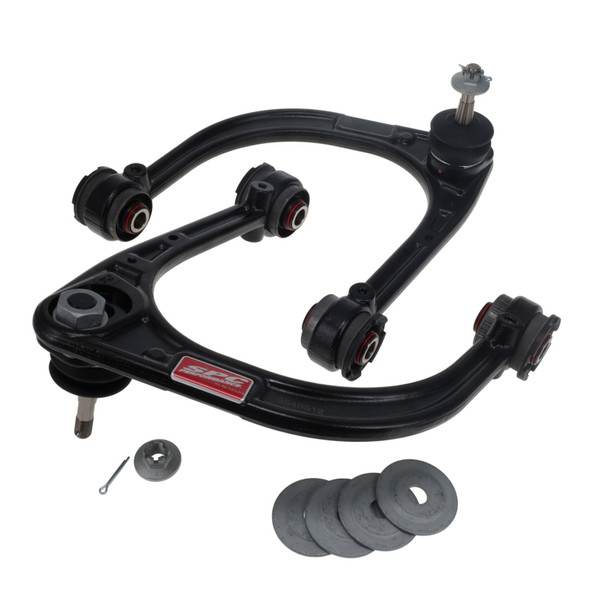
SPC Performance 23-26 Toyota Sequoia / 22-26 Toyota Tundra Adj. Upper Control Arm Kit - Pair - 35495
SPC Performance
$895.96What is the typical lifespan of an SPC control arm?SPC Control Arms feature maintenance-free ball joints and sealed flex joints for exceptional longevity and hassle-free ownership for years to come...$895.96 -
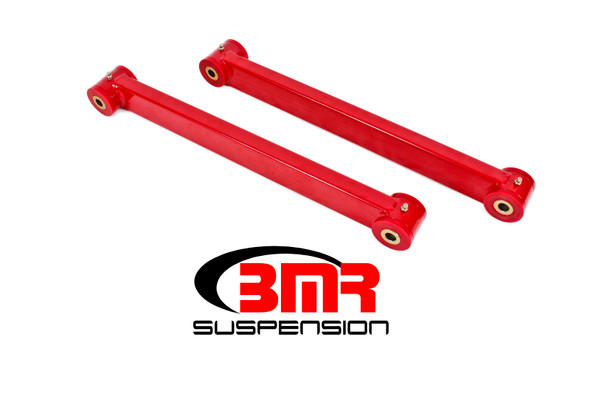
BMR 05-14 S197 Mustang Non-Adj. Boxed Lower Control Arms (Polyurethane) - Red - TCA032R
BMR Suspension
$109.95Will these control arms fit my 2005-2014 Ford Mustang?These BMR Control Arms are engineered to precisely fit all 2005-2014 Ford Mustang models, ensuring proper installation and performance.What is...$109.95 -


SPL Parts 97-04 Porsche Boxster (986) / 05-12 Porsche Cayman (986) Front Lower Control Arm Kit - SPL LCAK 996
SPL Parts
MSRP: $1,999.00$1,966.43What is the intended use for SPL Parts lower control arms?SPL Parts lower control arms excel for track and racing competition, offering a score of 10 for adjustable geometry and competitive advantage...MSRP: $1,999.00$1,966.43 -

RockJock 2021+ Bronco Johnny Joint Rear Upper Control Arm Set Steel Adjustable - RJ-182500-101
RockJock
$518.61What are RockJock control arms made of?RockJock Control Arms are constructed from heavy-duty 1.625 inch o.d. x 0.250 inch wall DOM steel tubing for exceptional off-road resilience.How do RockJock...$518.61
Control arms are the primary link between your chassis and steering knuckle, governing camber curve, caster variation, and wheel travel geometry through every phase of suspension motion. Motor Sport Mayhem stocks 520 control arms across 109 brands — from entry-level OEM-replacement pieces to fully adjustable billet race arms — covering street performance, track, and serious off-road applications.
Our Top Picks for Control Arms
Each product below was hand-selected by our engineering team based on measurable performance gains, build quality, and real-world results across multiple applications.
AEM IND Strut Bars
AEM Induction | $346.99
Bolt-in chassis triangulation that reduces strut tower flex under hard cornering, directly improving front suspension geometry consistency.
- Stiffens the upper chassis plane without permanent modification — measurable reduction in body flex under lateral load
AFE Coilover Systems
aFe | $3,729.00
Single-adjustable damping with a featherlight monotube design that pairs directly with upgraded control arm geometry for precise suspension tuning.
- Monotube construction delivers faster damper response than twin-tube OEM units — critical when running corrected control arm geometry
ALF Wireless Air Control Systems
Air Lift | $1,363.99
Wireless ride-height management that complements adjustable control arm setups by allowing real-time suspension travel and load tuning without a fixed spring rate.
- EZ-mount tank system integrates cleanly with aftermarket control arm configurations across a wide range of chassis types
ABR Steering Racks
All Balls Racing | $209.62
Heavy-duty steering rack built to withstand the lateral forces generated by upgraded control arm geometry in off-road and utility applications.
- All Balls Racing components are built to exceed OEM load ratings — essential when control arm changes alter Ackermann geometry or bump-steer characteristics
PA Alta Adjustable Control Arms
Alta | $339.15
Rear adjustable control arms with rod-end joints that allow precise camber and toe correction — eliminating the geometry compromises introduced by lowering springs or coilovers.
- Rod-end construction eliminates rubber bushing deflection, providing repeatable geometry settings that hold alignment through hard cornering
ANT Micro-Start Tire Inflator
Antigravity Batteries | $24.99
Compact tire inflator for maintaining correct pressures after suspension geometry changes — critical because control arm adjustments directly affect optimal tire contact patch pressure.
- Pairs with XP-series jump starters for a complete trackside or trail-side service kit after any suspension adjustment session
ARB BP51 Coilovers
ARB | $4,580.69
Bypass-style coilover system engineered to work in concert with extended-travel upper control arms, maintaining correct damper angle and stroke throughout lifted suspension travel.
- Internal bypass technology provides position-sensitive damping — essential for controlling axle articulation when control arm geometry is corrected for lift
ART Coils
Artec Industries | $351.99
Fabricated frame coil buckets that relocate the spring perch to accommodate long-travel control arm setups without compromising OEM bumpstop integration.
- Laser-cut and CNC-formed steel construction provides a predictable, weld-ready mounting solution for control arm geometry corrections on solid-axle suspensions
AST 5100 Series Coilovers
AST | $4,554.00
Competition-spec coilover kit designed to maximize the geometry corrections available from adjustable control arms on high-grip track applications.
- AST's 5100 series is built to FIA and motorsport homologation standards, with damper geometry optimized for use alongside corrected control arm pickup points
AWE Chassis Bars
AWE Tuning | $435.00
Polyurethane-mounted drivetrain stabilizer that reduces powertrain movement under load — a direct complement to upgraded control arms that have already reduced chassis flex.
- Poly mount provides NVH isolation while still eliminating the drivetrain torque steer that undermines precise control arm geometry adjustments at the front axle
How to Choose the Right Control Arms
The difference between a control arm that holds alignment under load and one that doesn't comes down to three things: joint type, material, and manufacturing tolerance. OEM rubber-bushed arms are engineered for compliance — they absorb NVH but allow geometry deflection under lateral force. Aftermarket arms address this by substituting polyurethane or spherical rod-end joints that maintain precise pivot points regardless of load, but that choice must match your use case. A spherical-jointed arm is the correct call for a track car; it will transmit every road imperfection on a daily driver and may wear faster on rough surfaces.
Key Specifications
Material is the first specification to evaluate. DOM (Drawn Over Mandrel) steel tubing is the baseline for performance arms — consistent wall thickness, predictable yield strength, and weldable without stress concentration issues. Chromoly (4130) provides a higher strength-to-weight ratio and is standard on purpose-built race arms. CNC-billet aluminum upper arms are common on lowered street and track cars where unsprung weight reduction directly affects wheel response; cast aluminum is generally not acceptable at the joint area. Check wall thickness specifications — arms with less than 0.120" wall on 1.5" DOM tubing are undersized for any performance application.
Joint selection determines how the arm performs under dynamic load. Polyurethane bushings reduce OEM rubber deflection by 60–80% while still providing some vibration isolation — the correct choice for aggressive street builds and weekend track use. Sealed spherical bearings (rod ends) eliminate all bushing deflection and allow precise camber and caster adjustment via threaded-body length changes, but they require periodic inspection and are sensitive to contamination. PTFE-lined spherical bearings extend service life significantly in contaminated environments and are the preferred choice for off-road applications where a standard rod end would fail rapidly from debris ingestion.
Adjustability is the most operationally important spec for any car that's been lowered, lifted, or run at the track. Fixed-length replacement arms restore factory geometry at factory ride height — useful for worn OEM arms but not for corrected geometry. Adjustable arms with threaded ends allow camber, caster, and toe correction across a range of ride heights and spring rates. On lowered street cars, even 1° of additional negative camber correction from an adjustable upper arm can recover tire wear that's being destroyed by a stock arm pulling positive camber at reduced ride height. Always confirm the adjustment range covers your specific geometry target before purchasing.
Fitment tolerance is where budget arms consistently fail. A control arm that fits loosely at the frame bracket or knuckle mount introduces compliance even with a perfect rod-end joint — you're building precision into the arm and throwing it away at the mount. Reputable arms specify bore tolerances to within ±0.001" at both pivot points. For lifted applications, verify that extended-length arms correct the geometry introduced by the lift rather than simply extending the OEM arm's arc — pinion angle, caster change through travel, and bumpsteer correction all need to be addressed simultaneously.
Control Arm Material and Joint Selection by Application
| Application | Recommended Material | Joint Type | Expected Geometry Deflection |
|---|---|---|---|
| Daily Driver / Comfort | OEM Steel or Forged Steel | OEM Rubber or Polyurethane | 2–4mm under lateral load (acceptable) |
| Aggressive Street / Lowered | DOM Steel Tube or Forged | Polyurethane (70–90A durometer) | 0.5–1.5mm under lateral load |
| Street/Track Dual Use | DOM or Chromoly Tube | PTFE-lined Spherical or Poly | <0.5mm under lateral load |
| Dedicated Track / Autocross | Chromoly or Billet Aluminum | Sealed Spherical Rod End | <0.1mm under lateral load |
| Lifted Truck / Off-Road | Heavy-wall DOM or Boxed Steel | Greaseable Spherical or Poly | Controlled flex preferred — <3mm at joint |
| Overlanding / Expedition | Boxed Steel or Heavy DOM | Greaseable OEM-style or PTFE Spherical | 1–3mm acceptable for durability priority |
Price Guide
Entry ($1.14–$213): This range covers individual bushings, hardware, OEM-spec rubber-bushed replacement arms, and polyurethane bushing inserts for stock arms. Correct choice for restoring worn factory geometry on a daily driver. Don't expect adjustability or material upgrades at this price point — you're buying dimensional accuracy and OEM compliance.
Mid-range ($213–$1,800): The majority of performance enthusiasts land here. This price bracket delivers adjustable DOM or chromoly arms with polyurethane or spherical joints, extended-travel arms for lifted applications, and paired front or rear arm kits with alignment correction built in. Build quality is meaningfully better than OEM, and adjustability is real — not marketing language.
Premium ($1,800–$13,544): Full billet CNC-machined arms, motorsport-certified spherical joints, complete multi-link geometry correction kits, and race-spec fabricated link setups with certified load ratings. Justified for dedicated competition vehicles, professional-level builds, and high-travel off-road rigs where a joint failure has serious consequences. The cost reflects engineering, material certification, and tolerance — not brand premium alone.
Who Is This For?
Control arms serve every performance discipline — the application determines whether you need adjustability, material grade, joint type, or travel range as your primary specification.
Racing Competition — 8.1/10
Control arms score highest in outright racing because geometry precision is a direct lap-time variable, not a comfort compromise. At this level, billet arms with certified spherical joints and documented deflection specs are the baseline expectation. The ability to make repeatable 0.25° camber changes at the arm rather than shimming at the knuckle is the operational difference between a properly set-up race car and a fast one that's leaving time on the table. Pair with quality coilovers to get the most from your geometry corrections.
Track / Autocross — 8.0/10
Track and autocross applications demand control arms that maintain consistent geometry across repeated thermal cycles and high lateral loads — conditions that expose rubber bushing deflection immediately. Adjustable arms allow competitors to dial in camber and caster between sessions, which is impractical or impossible with OEM-style fixed arms. The 8.0/10 score reflects how directly control arm quality translates to corner entry confidence and mid-corner stability on a timed course.
Street Performance — 7.7/10
Street performance builds score 7.7/10 because lowered ride heights make OEM control arms a geometry liability — negative camber gain through travel is designed for stock ride height, and reducing that height pulls the upper ball joint inward, introducing unwanted positive camber under load. Aftermarket adjustable arms correct this directly. Polyurethane-jointed arms are the practical choice here: they recover geometry without transmitting race-car NVH on daily roads.
Weekend Off-Roading — 7.7/10
Lifted suspensions create the same geometry problem as lowered street cars, just in the opposite direction — extended OEM arms carry the wrong caster angle and can introduce bumpsteer that makes the vehicle handle unpredictably at speed on trails. Geometry-correcting long-travel control arms address pinion angle, caster recovery, and axle-to-chassis clearance simultaneously. Heavy-wall DOM or boxed steel construction is mandatory here — rock strikes and articulation loads will crack undersized arms.
Daily Driving Comfort — 6.2/10
Daily driving scores 6.2/10 — not because control arms don't matter, but because worn or failing OEM arms are the primary use case rather than performance upgrades. High-quality polyurethane replacement arms restore handling precision that rubber-bushed OEM arms lose after 80,000–100,000 miles of compression and heat cycling. The slight NVH increase from poly bushings is the trade-off — most drivers adapt within a week, and the handling improvement is immediately perceptible. Check your bushing kits at the same time to address the full pivot system.
Trusted Control Arms Brands We Carry
The brands that consistently deliver in this category share one characteristic: they publish actual material specs and joint load ratings rather than vague "high-strength" marketing claims. Whiteline engineers geometry-corrected arms with documented alignment adjustment ranges and uses high-durometer poly that's formulated for specific durometer targets — not generic bushing compound. Skyjacker builds extended-travel arms with geometry correction calculated from actual suspension kinematics data for lifted applications, not simple dimensional extensions. Energy Suspension has been the benchmark for polyurethane bushing quality since the 1980s, with formulations that resist petroleum, ozone, and heat degradation that destroy rubber bushings in three to four years. ICON brings billet CNC fabrication standards to both off-road and performance street applications, with arms designed as a complete system alongside their damper geometry. Superpro supplies OE-specification geometry arms with independently tested poly compounds used by professional motorsport teams across multiple series. H&R — better known for springs — also offers suspension geometry components engineered to pair precisely with their spring rate data, ensuring the control arm arc and spring perch alignment work as a matched system.
Frequently Asked Questions
Are aftermarket control arms any good?
Yes — in most cases, quality aftermarket control arms are measurably better than OEM in the specifications that matter for performance. OEM arms are designed to minimize cost, weight, and NVH across a broad population of drivers, which means they use soft rubber bushings that deflect under load and fixed-length geometry that's only correct at the factory ride height. Aftermarket arms substitute stiffer joint materials, more precise pivot tolerances, and often add adjustability that's genuinely useful for alignment correction. The caveat is quality control: a sub-$50 offshore arm may have looser bore tolerances than OEM and will underperform. Stick to brands that publish material specs and joint load ratings.
Are aftermarket control arms as good as OEM for daily driving?
For daily driving, a quality polyurethane-bushed aftermarket arm is equal to or better than a new OEM arm in handling precision, and significantly better than a worn OEM arm — which is the realistic comparison after 80,000–100,000 miles. The trade-off is NVH: aftermarket poly bushings transmit more road noise and vibration than fresh rubber OEM bushings, though the difference becomes negligible after break-in on most street builds. If the vehicle's ride height is stock and comfort is the priority, OEM-spec replacement arms with poly bushings are the correct call. If the car is lowered even 0.5", adjustable aftermarket arms correct the geometry loss that a direct OEM replacement cannot address.
Are aftermarket lower control arms worth it?
Aftermarket lower control arms are worth it the moment your OEM arms can no longer maintain alignment settings, your ride height is no longer stock, or you're putting the vehicle through repeated high-lateral-load events like track days or aggressive off-road use. The lower control arm carries the majority of lateral braking and cornering load — it's the arm that fails first under abuse and deflects most under hard cornering with worn rubber bushings. On lowered vehicles specifically, an adjustable lower arm with a corrected arc restores camber curve through travel, which directly reduces inside tire wear and improves turn-in response. The return on investment is measurable in tire life alone on most performance builds.
Are adjustable sway bar drop links worth it on a modified suspension?
Adjustable drop links are absolutely worth it on any vehicle where ride height has been changed from stock, because fixed-length OEM drop links introduce sway bar preload at non-standard ride heights that causes the bar to act on one wheel before the other — effectively creating an unintended alignment and handling imbalance. Adjustable links allow you to set the drop link to a neutral (zero preload) position at your actual ride height, so the sway bar only works when you want it to — during body roll. This is especially relevant on lowered performance builds where the sway bar is already stiffer than stock; a preloaded stiffer bar causes immediate understeer or oversteer depending on which end is affected.
Are aftermarket ball joints better than OEM?
Performance aftermarket ball joints generally exceed OEM load and wear ratings, but the comparison isn't straightforward — OEM joints on modern vehicles are often well-engineered for their intended use, and a quality OEM-spec replacement from a reputable supplier is preferable to a cheap aftermarket unit. Where aftermarket ball joints genuinely outperform is in applications with increased loads: lifted suspensions where the joint operates at greater angles than designed, lowered builds where increased negative camber changes the joint's operating plane, and competition applications where sustained high lateral loads accelerate wear. Look for joints with grease fittings (most OEM joints are sealed and non-serviceable), higher Rockwell hardness ratings at the ball surface, and published axial and radial load ratings that exceed factory specs. The ball joint is the only connection between your control arm and steering knuckle — it's not the place to economize.
Building something specific? Our performance specialists can help you select the right Control Arms for your application — street, track, or full race build.