
Coilovers
- Product
- Qty in Cart
- Quantity
- Price
- Subtotal
-

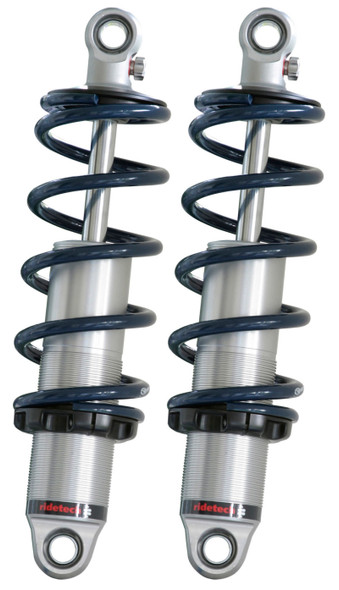
Ridetech 73-87 Chevy C10 Rear HQ Series CoilOvers for use with Bolt-On 4 Link - 11366510
Ridetech
$855.48How do I know if these coilovers will fit my vehicle?Confirm fitment with your specific vehicle's year, make, and model using our online compatibility tool for a guaranteed match.Do I need to be a...$855.48 -


ICON 2017+ Ford Raptor Front 3.0 Series Shocks VS RR CDCV Coilover Kit - 95002
ICON
$3,816.10The front end geometry of the Gen 2 Raptor was found to be fairly similar to the previous model truck, however the shock mounting points had been moved higher up on the chassis. Seeing this as an...$3,816.10 -


Icon 21-24 GM SUV 2.5-3in Stage 2 Suspension System - Billet - K73102
ICON
$5,914.60What is the recommended lift height for the ICON 2.5 Series Coilovers?These ICON 2.5 Series Coilovers offer adjustable front lift ranging from 2.5 to 3.25 inches, ensuring precise vehicle stance...$5,914.60 -


ICON 21-24 Chevrolet Tahoe 3-4in Lift Rear V.S. 2.5 Series Coilover Kit Internal Reservoir - 71610
ICON
$1,923.95What is the rear lift adjustability on the ICON 2.5 Series Coilovers for a Tahoe or Yukon?ICON 2.5 Series Coilovers provide three to four inches of rear lift height adjustability on compatible Tahoe...$1,923.95 -


Fox 2025+ Toyota 4Runner / 2024+ LandCruiser 250/GX550 2.5 Perf. HD Front Coilover - 0-2.25in Lift - 987-02-016
FOX
$789.95What vehicles are compatible with the FOX 2.5 Perf Coilover Shock?The FOX 2.5 Perf Coilover Shock precisely fits the 2024-2026 Lexus GX550 and Toyota 4Runner/Land Cruiser models.Is professional...$789.95 -


Fox 2025+ Toyota 4Runner / 2024+ LandCruiser 250/GX550 2.5 Performance Front Coilover - 987-02-015
FOX
$789.95What is the typical lifespan of FOX 2.5 Perf Coilover Shocks?With proper maintenance, these coilovers offer extended service life, ensuring consistent performance across numerous off-road adventures...$789.95 -


Fox 2024+ Ford Ranger 4WD 2.5 Performance IFP Front Coilover - 0-3in Lift - 987-02-014
FOX
$789.95Will the FOX 2.5 Perf Coilover Shock fit my vehicle?Confirm precise fitment for your vehicle by consulting our dedicated fitment guide before purchase to ensure optimal integration of these coilovers...$789.95 -

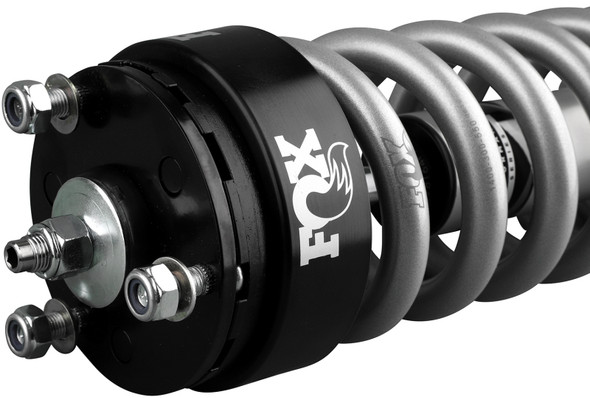
Fox 2.5 Performance HD Series 24+ Ford Ranger 4WD Front Coilover 0-3in Lift - 987-02-006
FOX
$789.95Does the FOX 2.5 Performance Coilover Shock fit my 2024-2026 Ford Ranger?These FOX 2.5 Performance Coilovers are specifically engineered for a precise bolt-on fitment for your 2024-2026 Ford Ranger...$789.95 -


Fox 2024+ Ford Ranger 4WD 2.0 Performance IFP Front Coilover - 0-3in Lift - 985-02-158
FOX
$629.95What vehicles are the FOX 2.0 Performance Coilover Shocks compatible with?These FOX 2.0 Performance Coilover Shocks are engineered to fit the 2024 through 2026 Ford Ranger models.What is the...$629.95 -

Fox 07-18 GM 1500 2.5 Performance IFP Front Coilover - 2-3in Lift - 887-02-012
FOX
$1,579.90Will these coilovers fit my 2015 Chevrolet Silverado 1500?These FOX 2.5 Perf Coilovers are specifically engineered to fit your 2015 Chevrolet Silverado 1500, ensuring a direct and precise suspension...$1,579.90 -

Fox 97-13 Chevrolet Corvette C5/C6 2.0 On-Road Performance Series LSR - 883-32-009
FOX
$1,500.00What is the intended application for these FOX 2.0 Performance Coilovers?These FOX 2.0 Performance Coilovers are specifically tuned for 1997-2013 Chevrolet Corvettes, maximizing their performance...$1,500.00 -


Fox 2025+ Toyota 4Runner / 2024+ LandCruiser GX550 2.5 Perf. Elite HD Rear Coilover - 0-1.5in Lift - 883-26-236
FOX
$1,889.95What vehicles are compatible with the FOX 2.5 Performance Coilover Shock?The FOX 2.5 Performance Coilover Shock is engineered to fit the 2024-2026 Lexus GX550 and the Toyota 4Runner and Land Cruiser...$1,889.95
Coilovers are a combined spring-and-damper assembly that replaces your factory strut or shock, giving you independent control over ride height, spring rate, and damping force in a single integrated unit. Motor Sport Mayhem stocks 884 coilover systems across 109 brands — from entry-level street setups to full competition-grade monotube assemblies with remote reservoirs — so every build from daily driver to dedicated race car is covered.
Our Top Picks for Coilovers
Every product below was hand-selected based on engineering quality, real-world performance validation, and value within its price tier.
AEM IND Strut Bars
AEM Induction | $346.99
Triangulates the strut towers to reduce chassis flex under hard cornering, maximizing the effectiveness of your coilover geometry.
- Stiffens the front chassis plane so coilover alignment doesn't shift under load — a critical pairing for any performance suspension build
AFE Coilover Systems
aFe | $3,729.00
Single-adjustable monotube construction with application-specific valving developed on-track, targeting both street drivability and autocross precision.
- Lightweight aluminum body reduces unsprung mass, directly improving transient response and steering feel at corner entry
ALF Wireless Air Control Systems
Air Lift | $1,363.99
Wireless-controlled air management system that lets you adjust ride height and spring rate on demand without manual intervention at the wheel.
- Pairs directly with air-over-coilover setups to give real-time height adjustment capability across driving conditions
ABR Steering Racks
All Balls Racing | $209.62
Rebuilt to OEM tolerances or better, ensuring your steering geometry stays accurate when combined with lifted coilover setups on off-road platforms.
- Steering rack integrity is a prerequisite for coilover performance — worn racks mask even the best damping tuning with vague feedback
PA Alta Adj Control Arms
Alta | $339.15
Adjustable control arms with polyurethane bushings that restore correct suspension geometry after ride height changes from coilover installation.
- Essential for dialing in camber and toe alignment after lowering — without this correction, coilover potential is never fully realized
ANT Micro-Start Tire Inflator
Antigravity Batteries | $24.99
Compact portable inflator that lets you fine-tune tire pressure on-site, which directly influences how your coilover setup feels and performs in real conditions.
- Tire pressure is the final variable in any suspension tune — even a 4 PSI deviation changes effective spring rate and cornering balance measurably
ARB BP51 Coilovers
ARB | $4,580.69
Bypass-style monotube coilover with independent compression and rebound adjustment, engineered specifically for high-speed off-road and overlanding loads.
- 2.5-inch bore with position-sensitive damping zones absorbs high-frequency off-road chatter without sacrificing low-speed compliance — a technically rare combination
ART Coils
Artec Industries | $351.99
Fabricated steel coil buckets that relocate the spring perch to accommodate extended-travel coilover installations on solid-axle off-road platforms.
- Correct coil bucket geometry is non-negotiable for coilover longevity on lifted builds — improper side-loading destroys shaft seals and bearings prematurely
AST 5100 Series Coilovers
AST | $4,554.00
Competition-grade monotube coilover with 16-way combined compression/rebound adjustment, built to FIA-compliant tolerances for circuit and rally applications.
- Digressive valving profile provides strong initial damping for body control without harsh high-speed harshness — the hallmark of a purpose-built race damper
AWE Chassis Bars
AWE Tuning | $435.00
Polyurethane-bushed drivetrain stabilizer that reduces powertrain movement and chassis twist, preserving the geometry baseline your coilovers are aligned to.
- Drivetrain torque reactions can shift subframe position under acceleration, corrupting coilover alignment mid-corner — this eliminates that variable
How to Choose the Right Coilovers
The gap between a good coilover and a poor one comes down to three things: damper construction type, adjustment resolution, and manufacturing tolerances. Monotube dampers separate the oil and gas chambers completely, which prevents aeration under sustained hard use and delivers faster thermal recovery — critical for track days. Twin-tube units cost less to produce and often ride more comfortably on the street, but their oil chambers are vulnerable to cavitation under repeated high-speed compression cycles. Housing material matters too: anodized aluminum bodies reduce unsprung weight but require proper sleeve coating to resist corrosion, while steel bodies are more durable in off-road environments where abrasion is a constant threat. Any coilover with sloppy pillow-ball tolerances exceeding 0.1mm of radial play will introduce steering vagueness that no alignment can fix.
Key Specifications
Adjustment range is the first spec to evaluate. A coilover advertised with 2 inches of height adjustment is meaningless if the spring rate doesn't match the vehicle's corner weight — running a spring that's too soft at full droop causes coil bind on compression, destroying threads and spring perches. Always cross-reference the spring rate with your corner weight: a rough baseline is 1 lb/in of spring rate per 10 lbs of corner weight for street use, increasing to 1.5–2x that ratio for dedicated track builds.
Damping adjustment clicks are not all created equal. Entry-level coilovers with 10-click adjustment ranges often have dead zones where multiple clicks produce no measurable change in damping force. Quality units use precision needle valves with consistent, evenly-spaced adjustment increments — verified by shock dyno data. When comparing coilovers, ask whether the manufacturer publishes dyno curves; brands that do are confident in their valving consistency.
Thread quality on the lower perch is a direct indicator of overall build quality. Coarse-pitch threads strip under road vibration and make fine ride-height adjustment impractical. Fine-pitch threads — typically M46x1.5 or tighter — hold adjustment under load and allow incremental height changes of less than 1mm per turn, which matters when corner-balancing a car. Always confirm whether the thread is on the damper body or a separate sleeve, as sleeve designs allow independent spring preload and height adjustment, a major advantage for corner weighting.
Top-mount design dictates how much of your coilover's capability translates to the chassis. Rubber top mounts absorb NVH effectively but flex under cornering loads, introducing steering delay. Pillowball or spherical top mounts eliminate compliance entirely and deliver immediate steering response, but transmit more road noise and require periodic inspection for wear. For dedicated track use, pillowball mounts are non-negotiable; for street-driven performance builds, a high-durometer rubber mount is a reasonable compromise. Always confirm the top-mount type before purchase — it affects alignment specs, noise levels, and service intervals equally.
Coilover Spring Rate Reference by Vehicle Weight and Application
| Vehicle Corner Weight (lbs) | Street / Daily (lb/in) | Street Performance (lb/in) | Track / Competition (lb/in) |
|---|---|---|---|
| 600–700 | 350–450 | 500–600 | 700–900 |
| 700–850 | 450–550 | 600–750 | 900–1100 |
| 850–1000 | 550–650 | 750–900 | 1100–1400 |
| 1000–1200 | 650–800 | 900–1100 | 1400–1700 |
| 1200–1500 | 800–1000 | 1100–1400 | 1700–2200 |
| 1500+ (truck/SUV) | 1000–1400 | 1400–1800 | 1800–2500+ |
Price Guide
Entry ($1.14–$425): This tier covers coilover components, individual replacement springs, and budget-oriented full kits aimed at ride-height adjustment rather than performance tuning. Damping is typically fixed or limited to a single adjustment, and materials are functional rather than optimized. Suited to enthusiasts who want a lower stance with modest handling improvement and plan to upgrade later.
Mid-range ($425–$2,000): The sweet spot for the majority of performance builds, where you start seeing quality monotube construction, multi-way damping adjustment, anodized aluminum hardware, and application-specific valving from brands like Bilstein, H&R, Eibach, and KONI. Street-to-track versatility is achievable in this range, and build quality is consistent enough to support corner balancing and professional alignment.
Premium ($2,000–$13,544): Full competition systems with independently adjustable high- and low-speed compression and rebound, remote reservoirs, titanium hardware, and manufacturer dyno certification on every unit. Brands like ICON, AST, ARB, and FOX occupy this space. The cost is justified for dedicated race builds, serious overland rigs running loaded expedition weight, and time-attack cars where every 0.1-second matters — not for street-only use.
Who Is This For?
Coilovers serve a wider range of drivers than any other single suspension component — from daily commuters wanting a cleaner stance to professional racing teams requiring FIA-compliant damper certification.
Racing Competition — 8.1/10
Coilovers score highest in pure competition use because they are the only suspension component that simultaneously controls ride height, spring rate, and damping in a single system that can be adjusted between sessions. In wheel-to-wheel racing, the ability to change corner balance by adjusting individual perch heights without swapping springs is a trackside advantage that fixed struts simply cannot match. At this level, coilovers with independent high- and low-speed adjustment, remote reservoirs, and dyno-verified valving consistency are the baseline expectation, not a luxury.
Track / Autocross — 8.0/10
Autocross and track day use scores near the top because the short, high-intensity nature of these events exposes damper limitations quickly — heat cycling, repeated compression, and abrupt direction changes all stress a coilover harder than equivalent road miles. Coilovers in this application need fast damping recovery, low unsprung weight, and the ability to be stiffened without raising ride height, since most track-day vehicles are also driven to the event. A properly valved street-track coilover with pillowball mounts and adjustable perches covers both use cases without compromise.
Street Performance — 7.7/10
Street performance applications score well because coilovers dramatically change how a car feels during spirited driving — reducing body roll, sharpening turn-in response, and improving brake dive control — while remaining manageable over daily road surfaces when valved correctly. The key variable in street performance fitment is damping tune: an overly stiff valving profile that works on smooth track tarmac becomes fatiguing and harsh over expansion joints, so mid-range adjustable units with a wide usable damping window are the practical choice. Paired with quality lowering springs data as a baseline reference, a good street performance coilover should offer 15–25mm of usable height adjustment without compromising bump travel.
Weekend Off-Roading — 7.7/10
Off-road coilovers score equally to street performance because the demands are equally specific — extended wheel travel, resistance to side-loading, consistent damping under variable terrain speeds, and compatibility with significant lift heights are all requirements that standard struts fail to meet. Larger-bore damper bodies (2.0-inch and above) are the minimum for serious off-road use, providing greater oil volume to resist fade on sustained rough terrain. Remote reservoir designs further increase oil capacity and allow the damper to run cooler under repeated high-speed impacts.
Daily Driving Comfort — 6.2/10
Daily comfort scores lower not because coilovers are poor daily drivers, but because extracting genuine comfort requires careful spring rate and valving selection that many buyers overlook — fitting a competition-valved coilover to a daily driver produces a jarring, fatiguing result that OEM struts would outperform. Coilovers specifically valved for street compliance, with spring rates close to OEM targets and damping tuned for low-frequency body motion rather than high-frequency track inputs, are entirely viable for daily use. The 162 products in this use-case tier reflect a real market segment that benefits from the height adjustability and improved geometry of coilovers without sacrificing ride quality.
Trusted Coilovers Brands We Carry
The brands that dominate this category earned their positions through engineering depth, race program validation, and consistent manufacturing tolerances — not marketing budgets. Bilstein's monotube damper technology, originally developed as an OEM supplier to major European manufacturers, remains an industry reference point for valving consistency and long-term durability; their position-sensitive damping technology is patented and genuinely differentiating. H&R brings decades of motorsport spring engineering to their coilover systems, with spring rates verified on corner-weight scales rather than estimated from vehicle data. Eibach's race program involvement — including factory-supported touring car and rally programs — feeds directly into their street and track coilover valving. FOX entered the coilover market from proven desert racing and OEM truck applications, and their reservoir technology reflects genuine off-road punishment testing. ICON builds its reputation on long-travel geometry engineering for demanding overland and off-road applications, while AST's competition coilover program has direct connections to professional circuit racing across multiple FIA-sanctioned series — their manufacturing tolerances reflect that lineage. KONI's twin-tube and monotube product lines span both comfort-oriented street fitments and firm track applications, giving them unusual breadth across the coilover market.
Frequently Asked Questions
Are aftermarket coilovers as good as OEM dampers for daily driving?
Quality aftermarket coilovers can match or exceed OEM ride quality when correctly specified, but the key word is correctly specified — a coilover with spring rates 3x stiffer than stock will always ride worse on public roads regardless of brand reputation. OEM dampers are tuned to a specific compliance target for the intended vehicle weight and use case; aftermarket units give you the ability to replicate or improve on that target while adding adjustability. Brands that publish street-specific valving recommendations and provide spring rate data matching OEM corner weights are the ones that achieve genuine daily driving competence. The advantage aftermarket coilovers hold over OEM is that when OEM dampers wear — typically past 60,000–80,000 miles — you can replace them with a unit that restores or improves handling rather than simply returning to the original degraded baseline.
Are adjustable coilovers worth it over fixed-rate options?
Adjustable coilovers are worth the cost premium specifically when your driving conditions vary between street, track, and seasonal use — if your car never leaves the same road surface, fixed-rate units with optimized valving often outperform adjustable units in the same price bracket because the manufacturer focused engineering budget on the damper itself rather than the adjustment mechanism. The practical value of damping adjustment is significant: moving from a soft street setting to a firm track setting can reduce body roll by 20–30% and improve lap times measurably without changing springs. However, adjustment is only useful if you understand what you're adjusting — a driver who sets a coilover once and never changes it would be better served by a single-rate unit with purpose-built valving. For anyone running track days, autocross, or regular back-road driving alongside highway commuting, adjustability pays for itself within the first season.
Are aftermarket control arms worth upgrading alongside coilovers?
Aftermarket suspension control arms are a high-value complement to coilover installation because ride height changes alter suspension geometry — specifically camber curves, roll center height, and anti-dive characteristics — in ways that factory control arms cannot correct. When you lower a vehicle by 30mm or more, the factory control arm angle moves outside its designed operating range, introducing bump steer and accelerating bushing wear. Adjustable aftermarket control arms with polyurethane or spherical bushings restore correct geometry at the new ride height and typically provide camber and toe adjustment that the factory arms never offered. The durability question depends heavily on bushing material: polyurethane units offer significantly better longevity than rubber in performance applications, while spherical bearing control arms provide the highest precision but require more frequent inspection and are better suited to track-only or weekend use.
Are aftermarket bump stops worth keeping or upgrading?
Bump stops are frequently overlooked but play a direct role in coilover performance: they define the transition point between normal damper travel and full compression, and a poorly matched bump stop produces a jarring, sudden impact rather than a progressive load increase. Factory foam bump stops compress inconsistently and degrade rapidly when exposed to heat from nearby exhaust or brake components. Performance jounce bumpers — typically made from micro-cellular urethane with a graduated hardness profile — provide a controlled, progressive rate increase as the coilover approaches full compression, effectively acting as a second-stage spring that prevents metal-to-metal contact without spiking chassis loads. For coilovers running aggressive spring rates, upgrading to matched bump stops is important: a coilover spring that's 400 lb/in softer than the bump stop's engagement rate produces the same harsh impact that drivers attribute to the coilover itself, when the real cause is an unmatched contact surface.
What's the difference between single, double, and triple adjustable coilovers?
Single-adjustable coilovers use one knob or collar to simultaneously control compression and rebound damping in a fixed ratio — straightforward to use and adequate for street performance and entry-level track use where broad damping changes are needed. Double-adjustable units separate compression and rebound control, allowing you to run soft rebound for mechanical grip on rough surfaces while maintaining firm compression for body motion control — this combination is not possible on single-adjustable designs and represents a meaningful performance step. Triple-adjustable coilovers add independent high-speed compression control, which governs how the damper responds to sharp, sudden inputs like kerb strikes and pothole impacts; this is the specification required for professional circuit racing where pavement irregularities must be isolated from the low-speed damping tune. For most enthusiasts, double-adjustable coilovers represent the optimal balance between tuning capability and usability — triple-adjustable units require shock dyno access and significant setup experience to exploit properly.
Building something specific? Our performance specialists can help you select the right Coilovers for your application — street, track, or full race build.