
Bushing Kits
- Product
- Qty in Cart
- Quantity
- Price
- Subtotal
-
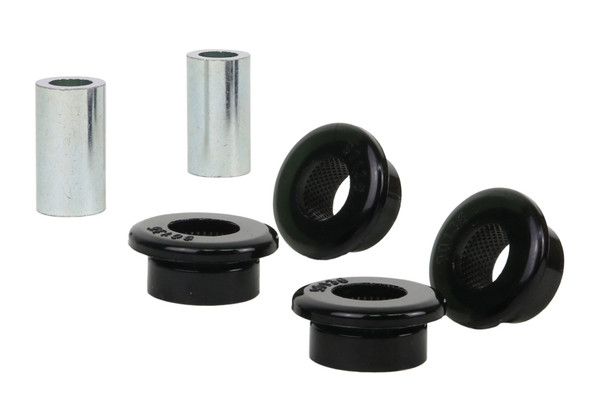

Whiteline Universal Pivot Bushing - W93511
Whiteline
MSRP: $13.88$12.49A critical service item for any leaf sprung vehicle. High kilometres and heavy load carrying causes excessive wear on rubber bushings. Nolathane bushings are made tough and offer outstanding abrasion...MSRP: $13.88$12.49 -

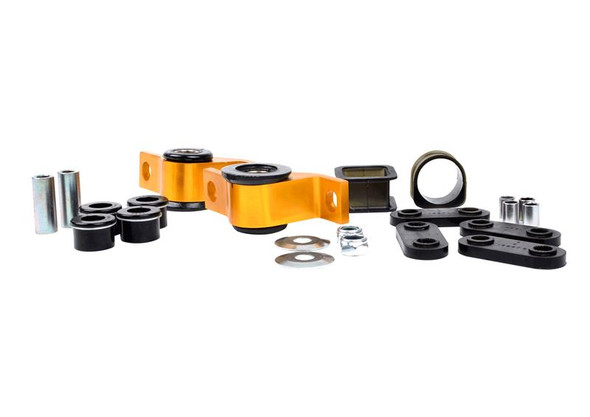
Whiteline Plus 4/91-5/01 BMW 3 Series E36 / 10/01-3/05 E46 Rear Lower Inner Control Arm Bushing Kit - W62625
Whiteline
MSRP: $59.88$53.89What is the primary function of control arm bushings?Control arm bushings isolate suspension components, absorbing road imperfections and maintaining precise wheel alignment for optimal handling and...MSRP: $59.88$53.89 -
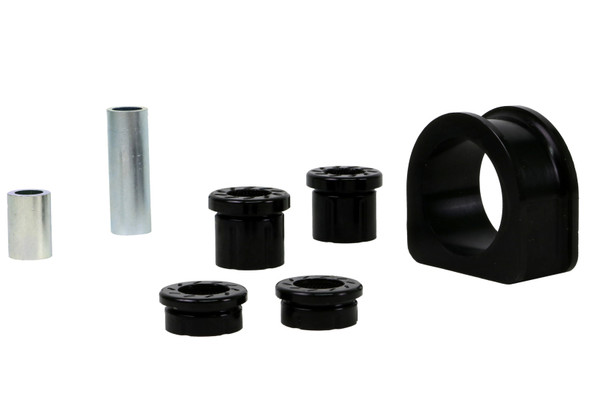

Whiteline 1995 Toyota Tacoma Base Steering Rack Bushing Kit - W13398
Whiteline
MSRP: $36.88$33.19How do I know if the WL Bushings - Steering Rack will fit my vehicle?Confirm exact vehicle fitment using the provided compatibility tool before ordering these steering rack bushings.Are Whiteline...MSRP: $36.88$33.19 -

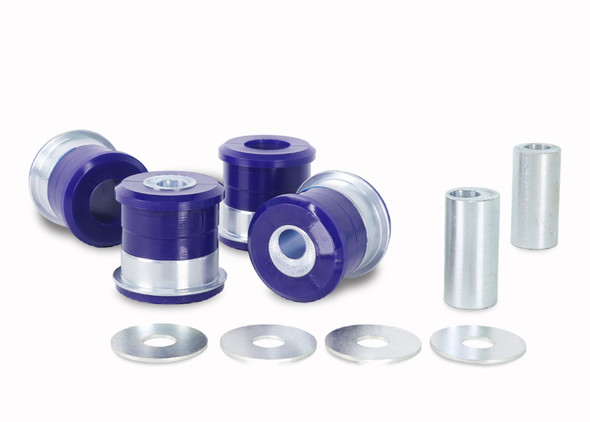
SuperPro 07-21 Toyota Tundra Front UCA - Camber Adj. Inner Bushing Kit - SPF5330XK
Superpro
MSRP: $219.99$197.99What is the warranty period for Superpro bushings?Superpro Control Arm Bushings are backed by a lifetime warranty against manufacturing defects, ensuring long-term performance and durability for your...MSRP: $219.99$197.99 -


SuperPro 2008 Toyota Highlander Hybrid Limited Rear Lower Forward Lateral Arm Outer Bushing Kit - SPF3880K
Superpro
MSRP: $59.99$53.99What is the benefit of upgrading to Superpro bushings?Superpro bushings deliver superior performance and durability, enhancing vehicle stability and steering response for a more connected driving...MSRP: $59.99$53.99 -
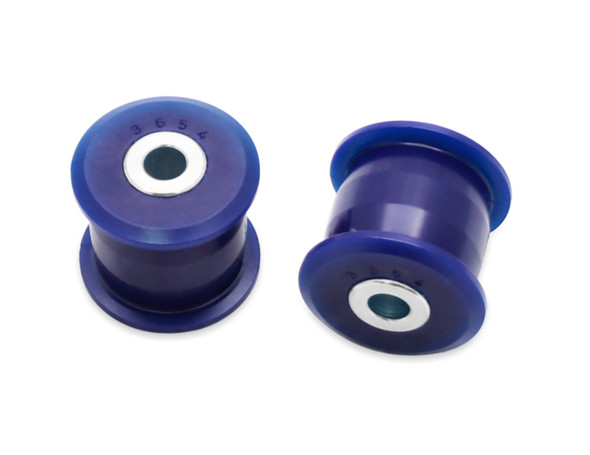
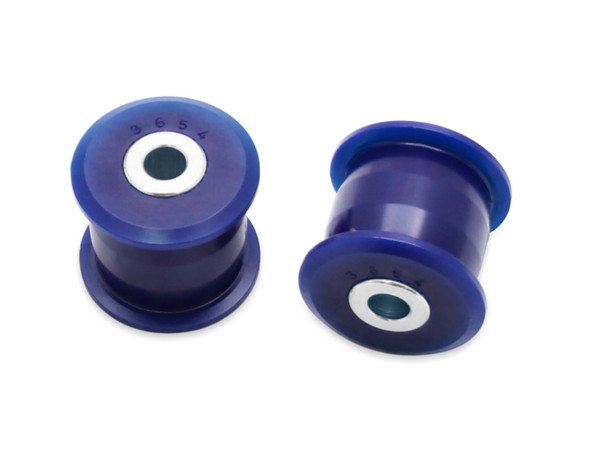
SuperPro 2007 Jeep Wrangler Rubicon Front Upper Rearward Control Arm Bushing Kit - SPF3654K
Superpro
MSRP: $54.43$48.99What is the benefit of upgrading to Superpro polyurethane control arm bushings?Superpro control arm bushings upgrade vehicle handling by delivering sharper steering response and improved cornering...MSRP: $54.43$48.99 -

Prothane 73-87 GM Rear 1.5in OD Frame Shackle Bushings - Black - 7-803-BL
Prothane
MSRP: $35.73$19.85Are Prothane polyurethane bushings a direct replacement for factory rubber bushings?Prothane polyurethane bushings are engineered as direct replacements for factory rubber bushings, ensuring precise...MSRP: $35.73$19.85 -
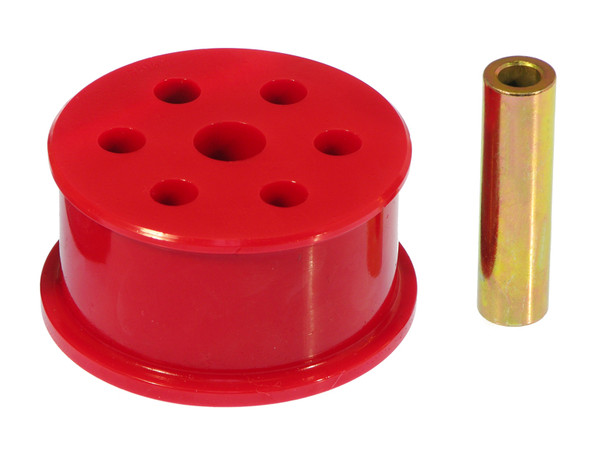
Prothane 95-04 Chevy Cavalier Front Trans Mount Insert - Red - 7-514
Prothane
MSRP: $44.80$24.88Does this transmission mount fit my 2001 Chevy Cavalier?Confirm precise fitment for your 2001 Chevy Cavalier by cross-referencing your vehicle's specifications against the product's detailed...MSRP: $44.80$24.88 -
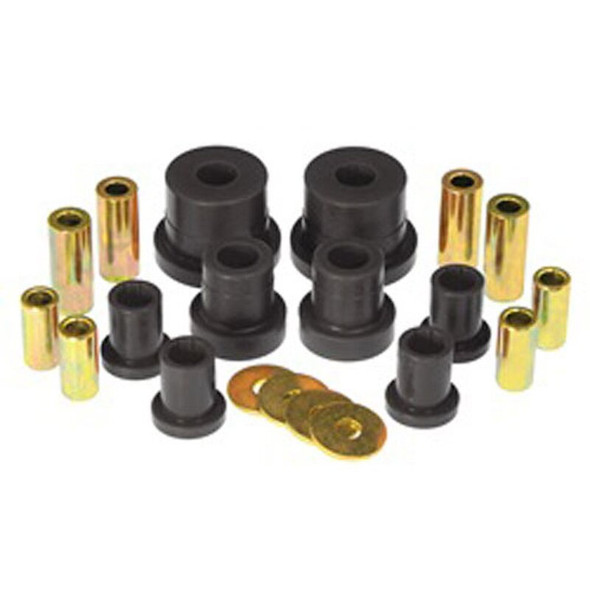
Prothane 06-09 Chevy Trailblazer Front Control Arm Bushings - Black - 7-242-BL
Prothane
MSRP: $189.64$105.35What is the main benefit of upgrading to Prothane control arm bushings?PRO Control Arm Bushings deliver sharper steering response and improved handling for a more connected and confident driving...MSRP: $189.64$105.35 -
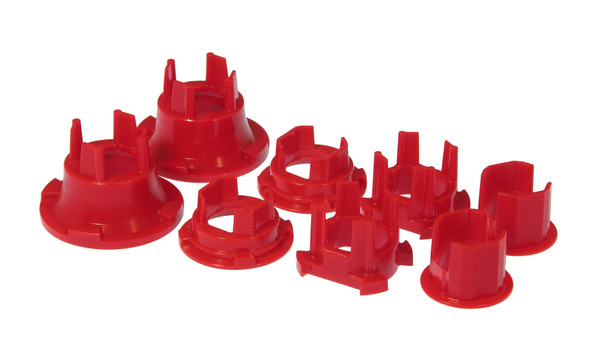
Prothane 10 Chevy Camaro Rear Subframe Bushing Insert Kit - Red - 7-146
Prothane
$92.11What vehicles is the Prothane 10 Chevy Camaro Rear Subframe Bushing Insert Kit compatible with?Confirm your specific vehicle's fitment using our detailed compatibility checker before purchasing this...$92.11 -
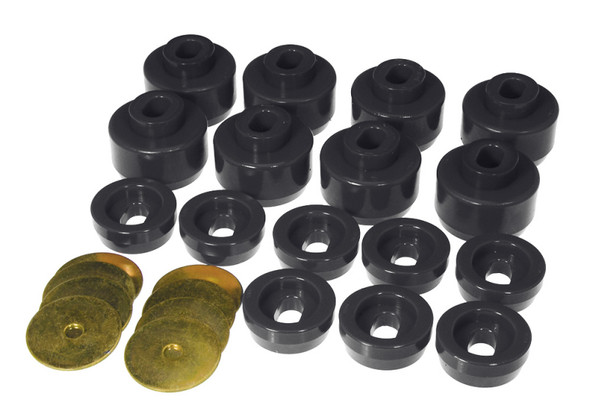
Prothane 99-06 Chevy Silverado 2/4wd Body Mounts - Black - 7-141-BL
Prothane
MSRP: $390.50$216.94How do I know if these bushings fit my truck?PRO Body/Subframe Bush - Blk are designed for 1999-2006 Chevy Silverado 2WD and 4WD body mounts; always confirm exact fitment with your specific vehicle...MSRP: $390.50$216.94 -

Prothane Dodge Ram 6.7 Cummins Motor Mount Insert - Black - 4-509-BL
Prothane
MSRP: $80.98$44.98What is the expected lifespan of Prothane Bushings?Prothane's durable polyurethane formulation ensures extended service life, often exceeding OEM rubber mounts for sustained performance benefits.Are...MSRP: $80.98$44.98
Bushing kits are the most overlooked leverage point in suspension tuning — worn or mismatched bushings introduce compliance that corrupts every other suspension upgrade you've made, while the right material choice directly controls how much deflection, NVH, and load transfer your chassis experiences. Motor Sport Mayhem stocks 1,541 bushing kits across 109 brands, ranging from entry-level rubber replacements to full spherical bearing upgrades for competition-level builds.
Our Top Picks for Bushing Kits
Each of these products was selected based on performance engineering merit, real-world fitment reliability, and value delivered across their target applications.
AEM IND Strut Bars
AEM Induction | $346.99
Triangulates strut tower loads to reduce chassis flex and keep suspension geometry consistent under hard cornering.
- Reduces strut tower walk that accelerates bushing wear and throws alignment out of spec mid-corner
AFE Coilover Systems
aFe | $3,729.00
Single-adjustable damping paired with purpose-engineered pillow ball mounts eliminates compliance from the top of the suspension stack down.
- Featherlight aluminum construction reduces unsprung mass while integrated mount bushings handle both radial and axial loading
ALF Wireless Air Control Systems
Air Lift | $1,363.99
Wireless pressure management for air suspension systems allows real-time ride height adjustment without compromising the bushing interfaces throughout the airbag mount structure.
- EZ-mount hardware integrates directly with existing suspension pickup points, reducing bushing stress from improper bracket positioning
ABR Steering Racks
All Balls Racing | $209.62
Complete rack assemblies built with pre-installed bushings and seals to OEM-plus tolerances, eliminating the slop and steering wander that develops when rack bushings wear.
- All Balls is an OEM-tier supplier that uses updated bushing materials versus original spec, extending service life significantly in off-road and utility applications
PA Alta Adjustable Control Arms
Alta | $339.15
Adjustable-length rear control arms with upgraded polyurethane pivot bushings deliver camber and toe correction that stock rubber-bushed arms can never achieve.
- Polyurethane bushing compound resists oil contamination and maintains consistent durometer across a wide temperature range — critical for canyon and track use
ANT Micro-Start Tire Inflator
Antigravity Batteries | $24.99
A compact shop and trail essential for maintaining precise tire pressures, which directly affects how hard your suspension bushings work against lateral cornering loads.
- Correct tire pressure reduces the lateral loading peaks transmitted through control arm and subframe bushings, measurably extending their service life
ARB BP51 Coilovers
ARB | $4,580.69
Bypass-style coilovers engineered with integrated remote reservoirs and precision-bored bearing mounts that demand properly spec'd bushing interfaces to perform as designed.
- ARB's internal floating piston technology maintains oil separation under sustained articulation, reducing the thermal degradation that migrates heat into adjacent rubber bushings
ART Coil Buckets
Artec Industries | $351.99
Frame-mount coil buckets provide a rigid, correctly-positioned seating surface that prevents the coil spring from walking and over-stressing the control arm bushing bores under full droop.
- Steel construction with OEM bump stop compatibility ensures the load path through the frame and into the bushing pickup points stays linear under off-road articulation
AST 5100 Series Coilovers
AST | $4,554.00
Competition-spec coilovers with pillow ball top mounts that eliminate all rotational compliance from the strut mount, transferring the geometry precision directly into improved bushing durability lower in the suspension.
- AST's 5100 platform is homologated for multiple sanctioning bodies, reflecting the tolerance stack precision required where bushings and bearing interfaces must perform repeatably across race weekends
AWE Chassis Bars
AWE Tuning | $435.00
Drivetrain stabilizer with integrated polyurethane mount bushing eliminates transmission torque reaction that would otherwise fatigue subframe and control arm bushings prematurely under aggressive shifts.
- The poly mount compound is durometer-tuned specifically for manual transmission applications where shift shock impulses are significantly higher than automatic counterparts
How to Choose the Right Bushing Kits
The single most important buying decision in bushing kits is material compound selection — rubber, polyurethane, and spherical bearings are not interchangeable philosophies, they represent fundamentally different tradeoffs between compliance, noise/vibration isolation, load capacity, and service interval. What kills a bushing is not wear alone; it's mismatched material to application, incorrect bore diameter tolerance allowing micro-movement, and installation without proper lubrication creating adhesive wear from the first mile. The right bushing for a daily driver subframe mount is a liability on a time attack car, and vice versa.
Key Specifications
Material and durometer determine everything downstream. OEM rubber bushings are engineered for isolation — they flex intentionally to absorb NVH but that same compliance creates geometry variation under load. Polyurethane compounds, typically ranging from 60A (softer, closer to rubber feel) to 95A (very firm, near-spherical performance), dramatically reduce deflection under cornering and braking forces. The tradeoff is increased NVH transmission into the cabin and, if improperly lubricated, a characteristic squeak under articulation. Spherical bearings eliminate compliance entirely and are the correct choice for serious track cars but require regular inspection and are not appropriate for street use where debris ingestion and lack of lubrication servicing will destroy them quickly.
Bore diameter and wall tolerance are the specs most buyers ignore and then wonder why the bushing fails prematurely or creates clunking. A bushing that fits the outer sleeve diameter loosely will fret against the housing bore, generating metal particles and accelerating wear on both surfaces. The industry standard for a properly pressed bushing is an interference fit of 0.001–0.003 inches on the outer diameter — enough to require a press but not so tight that the housing deforms. Inner sleeve clearance against the bolt should be 0.0005–0.001 inches to prevent fretting while still allowing proper clamping when the fastener is torqued to specification.
Lubrication compatibility is non-negotiable and frequently misunderstood. Polyurethane bushings require a specific grease — petroleum-based greases chemically degrade polyurethane over time, causing the bushing to swell, soften, and ultimately fail. The correct lubricant is a lithium-based or PTFE grease specified by the bushing manufacturer. Spherical bearings require their own service protocol: most use a self-lubricating PTFE liner, and the failure mode is liner delamination from contamination rather than lack of grease. Rubber bushings require no lubrication during installation and should not receive any, as petroleum contact accelerates rubber degradation.
Full-kit versus individual bushing replacement is a cost and strategy decision. Individual bushings let you target a known failure point, but if one bushing in a control arm has worn to the point of affecting handling, the others are usually within one or two service intervals of the same condition. Full suspension bushing kits ensure uniform deflection characteristics across all pivot points, which is especially important when you're also upgrading shocks and struts or coilovers — mixing fresh dampers with worn bushings wastes a significant portion of the upgrade's potential.
Bushing Material Selection Guide by Application
| Application | Recommended Material | Typical Durometer | Expected Service Life |
|---|---|---|---|
| Daily Street / Commuter | OEM Rubber or Soft Polyurethane | 60A–70A | 50,000–100,000 miles |
| Street Performance / Weekend Driver | Polyurethane | 70A–80A | 60,000–80,000 miles |
| Dual-Purpose Street / Track | Firm Polyurethane or Delrin Sleeve | 80A–90A | 30,000–50,000 miles street; inspect every 10 track events |
| Dedicated Track / Autocross | Hard Polyurethane or Spherical Bearing | 90A–95A / N/A | Inspect every 5–10 events; replace annually or as needed |
| Off-Road / Overlanding | Polyurethane with Grease Zerk | 70A–85A | Inspect every 10,000 off-road miles; re-grease every season |
| Full Race / Competition | Spherical Bearing (PTFE-lined) | N/A | Inspect every event; replace liner on wear indication |
Price Guide
Entry ($1.14–$213.00): Single-position or individual bushing replacements in standard polyurethane or OEM-spec rubber — the correct choice for targeted repairs, single-pivot replacements, or budget rebuilds where you're addressing a known failed component rather than upgrading system-wide compliance. Energy Suspension and Superpro both offer excellent individual and partial-kit coverage at this tier.
Mid-range ($213.00–$850.00): Full vehicle bushing kits in high-grade polyurethane, or partial kits with spherical bearing upgrades at key chassis nodes — this is where most performance street and dual-purpose builds land because the cost-per-improvement ratio is highest here. Whiteline, Superpro, and Energy Suspension full kits sit comfortably in this range and deliver genuine handling improvement over stock.
Premium ($850.00–$13,544.00): Complete spherical bearing conversion kits, adjustable eccentric bushing systems, or combined bushing-and-control-arm packages engineered for competition homologation — justified for dedicated track cars, professional race builds, and any application where geometry precision is more important than noise isolation or service cost.
Who Is This For?
Bushing kits serve a wider range of applications than almost any other suspension category — from a street driver chasing steering feel to a race engineer eliminating the last measurable degree of chassis compliance.
Racing Competition — 8.1/10
Bushing kits score highest in racing competition because compliance is the enemy of lap times — every degree of unintended camber change through a corner due to bushing deflection is a measurable loss. Competition builds typically run spherical bearings at every pivot point to achieve a truly rigid chassis that responds only to driver inputs and suspension geometry, not bushing flex. This application demands the most frequent inspection intervals but delivers the most precise vehicle response of any bushing material choice.
Track / Autocross — 8.0/10
Track and autocross applications score nearly as high as full competition, and polyurethane bushings at the 85A–95A range represent the ideal compromise here — stiff enough to measurably reduce roll center migration and geometry deflection under hard cornering, but still maintainable on a car that may also see street miles. Sway bar end link bushings and control arm pivot bushings show the most immediate handling return on investment at this application level. Pairing bushing upgrades with properly sorted coilovers ensures the geometry work you've done on alignment isn't being erased by compliance at the chassis pickups.
Street Performance — 7.7/10
Street performance scores 7.7/10 because the majority of handling complaints on modified street cars — vague steering, inconsistent corner entry, mid-corner understeer that appears after lowering — trace directly back to original rubber bushings that were never designed to handle the load transfers generated by stiffer springs or wider tires. A set of mid-durometer polyurethane bushings at the subframe, control arm, and sway bar positions transforms how a modified street car communicates with the driver without introducing the harshness of a full spherical conversion. This is the highest-value bushing application for enthusiasts who drive daily and want meaningful feedback improvement.
Weekend Off-Roading — 7.7/10
Off-road applications tie street performance at 7.7/10 for a different set of reasons — trail use exposes bushings to mud, water, UV, and constant articulation that destroys OEM rubber in a fraction of normal service life. Polyurethane bushings with integrated grease zerks address the lubrication problem that causes most off-road bushing failures, and the material's resistance to petroleum contamination prevents the swelling that leads to bushing seizure on the sleeve. Control arm and track bar bushing replacement is particularly high-return in lifted applications where geometry correction loads the bushings at angles OEM rubber was never engineered to handle.
Daily Driving Comfort — 6.2/10
Daily comfort scores 6.2/10 — not because bushings don't matter for comfort, but because the highest-comfort outcome is OEM rubber replacement in-kind, which doesn't require the aftermarket. Where this category genuinely helps daily drivers is correcting the noise, vibration, and handling slop that develops as original bushings age past 60,000–80,000 miles — fresh rubber or soft-compound polyurethane at that service interval restores NVH isolation and steering feel to a near-new baseline. The caution for daily drivers is avoiding over-firm compounds that introduce road noise and harshness on rough pavement.
Trusted Bushing Kits Brands We Carry
The brands that dominate this category earned their position through material science investment and application-specific engineering depth — not just packaging. Energy Suspension pioneered the polyurethane aftermarket bushing segment and remains the benchmark for street-performance compound formulation, with a full-vehicle kit catalog that covers more applications than any other single brand. Whiteline brings Australian motorsport engineering heritage and a proprietary high-flex polyurethane compound that threads the needle between performance and NVH better than most competitors, particularly on front subframe and differential mount applications. Superpro develops their compounds with active motorsport input and offers graded durometer options within the same application — genuine technical differentiation rather than marketing language. Bilstein and KONI, while primarily known for dampers, integrate bushing specifications directly into their suspension system engineering, ensuring that their matched damper and mount bushing combinations maintain the geometry the damper was tuned for. Eibach approaches bushing kits as part of their broader chassis geometry philosophy, particularly in their pro-kit and multi-link correction packages where bushing compliance is part of the alignment correction strategy.
Frequently Asked Questions
Are aftermarket control arms actually better than OEM?
In most cases, yes — but the reason is usually the bushing specification, not the arm itself. OEM control arms use rubber bushings engineered to a noise and vibration standard, not a handling precision standard, which means they deflect intentionally under cornering loads. Aftermarket arms typically come with polyurethane or spherical bushing inserts at the pivot points, which reduces that deflection and keeps your alignment settings consistent through hard driving. For a stock or mildly modified street car the difference is subtle but measurable in steering feel; for a lowered or track-driven car with stiffer spring rates, the improvement in geometry consistency is substantial. The one honest caveat is that spherical-bearing aftermarket arms on a daily driver will transmit more road noise and require more frequent inspection than OEM rubber.
Are aftermarket lower control arms worth the upgrade cost?
Yes, particularly if you're also running stiffer springs or have lowered the vehicle beyond OEM ride height range, because the geometry change from lowering increases the angle at which the OEM rubber bushing operates, accelerating wear and increasing compliance at exactly the wrong time. Aftermarket lower control arms with corrected geometry and upgraded bushing materials directly address the bump steer, roll center change, and contact patch inconsistency that lowered vehicles develop with stock arms. The return on investment is highest on multi-link and double-wishbone suspensions where the lower arm is the primary load-bearing pivot; on MacPherson strut platforms the benefit is real but somewhat smaller in scope. If your OEM arms are in good condition and your vehicle is near stock ride height, a bushing-only replacement is usually sufficient and far more cost-effective.
Are adjustable sway bar end links worth adding to a bushing upgrade?
Adjustable drop links are a logical complement to any bushing upgrade on a vehicle that's been lowered, because incorrect end link length preloads the sway bar in static ride height — meaning the bar is already partially engaged before you even enter a corner, which creates uneven roll resistance side-to-side and accelerates bushing wear at the bar mounts. Setting the correct length eliminates that preload and lets your freshly upgraded sway bar bushings operate in their designed load range. On a vehicle at stock ride height with OEM suspension geometry, fixed OEM-length end links are typically adequate if the bushings and ball joints within them are in good condition. The combination of fresh sway bar mount bushings and properly set end link length is a higher-value upgrade than most enthusiasts realize.
Are aftermarket bump stops worth replacing during a bushing kit install?
Bump stops are worth addressing at the same time as bushings because both components experience the same service environment and both directly affect how suspension loads are transmitted through the chassis at the limits of travel. A collapsed or deteriorated bump stop allows metal-to-metal contact at full compression, which can deliver impulse loads to adjacent bushing bores that are several times higher than normal operating loads — accelerating bushing failure even in freshly installed components. Aftermarket bump stops in progressive-rate polyurethane or microcellular foam control the rate of deceleration at full droop and full compression better than OEM units, which matters most on off-road and track applications where full-travel events are frequent. At minimum, inspect bump stops during any bushing replacement and replace if they show cracking, collapse, or permanent deformation.
How good are aftermarket ball joints compared to OEM?
Quality aftermarket ball joints from established manufacturers meet or exceed OEM specifications in axial and radial load capacity, and in many cases use updated stud taper angles and housing tolerances that reflect lessons learned from OEM failure patterns in service. The critical differentiator is the internal bearing design — low-quality aftermarket ball joints use minimal-contact ball designs with thin grease pockets that fail quickly under sustained load, while premium units use full-coverage bearing surfaces with grease retention channels that maintain lubrication under articulation. Ball joints and bushings share a relationship that matters during installation: a new ball joint installed into a worn control arm bushing bore will wear faster than its design life because the bore's slight ovality causes micro-movement on every suspension cycle. For this reason, replacing ball joints and control arm bushings together as a system rather than individually always delivers better long-term results.
Building something specific? Our performance specialists can help you select the right Bushing Kits for your application — street, track, or full race build.