
Bump Stops
- Product
- Qty in Cart
- Quantity
- Price
- Subtotal
-
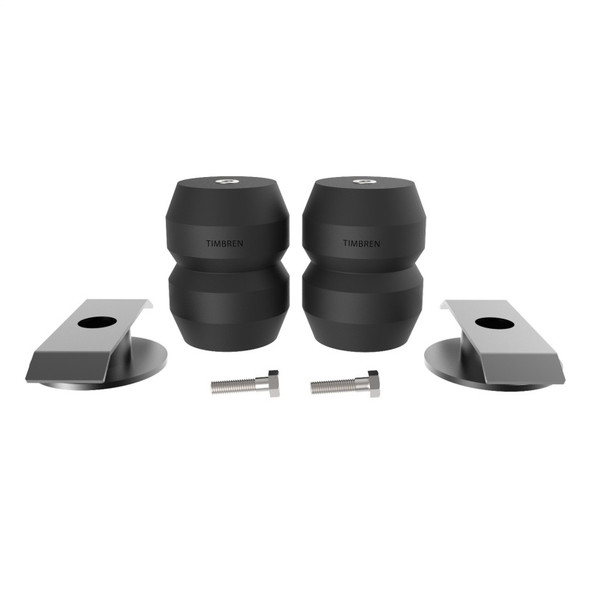

Timbren 2004 Nissan Titan Rear Suspension Enhancement System - NRTTN
Timbren
MSRP: $316.90$269.36Does the Timbren Suspension Enhancement System affect ride quality for a 2004-2024 Nissan TITAN?Yes, these Timbren bump stops enhance ride quality by absorbing road shocks, providing a smoother...MSRP: $316.90$269.36 -
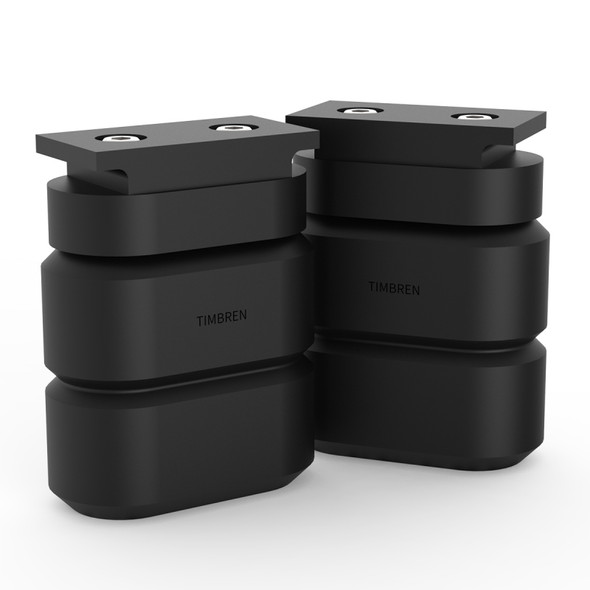
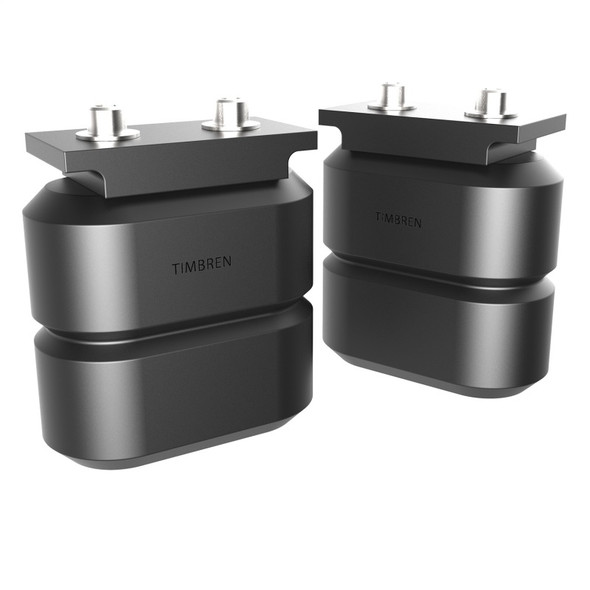
Timbren 2004 Dodge Sprinter 2500 Rear Suspension Enhancement System - MBRSP25A
Timbren
MSRP: $316.90$269.36Does the Timbren Suspension Enhancement System affect ride quality?Timbren Bump Stops deliver a smoother ride by absorbing harsh road impacts and bumps, even on uneven loads.How long do Timbren bump...MSRP: $316.90$269.36 -
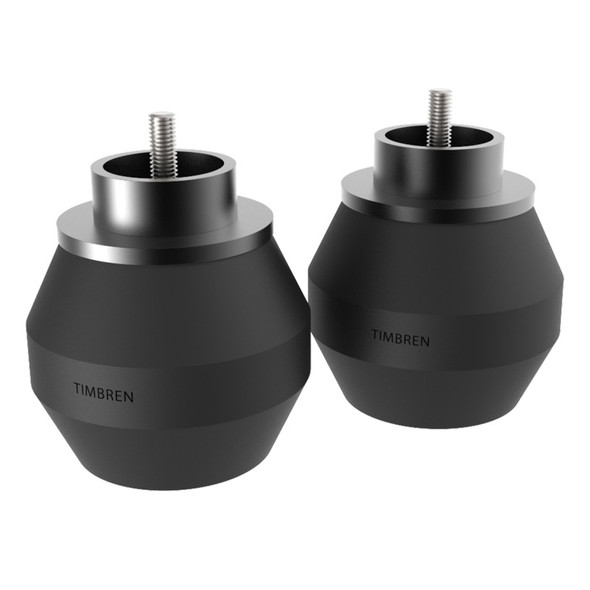
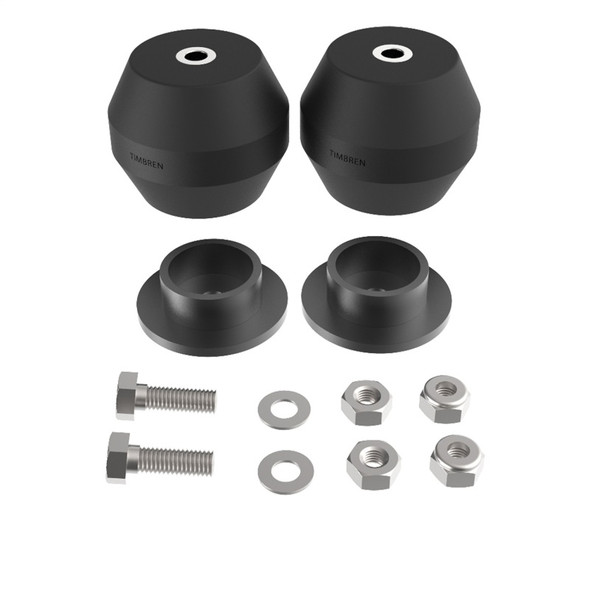
Timbren 2004 Dodge Sprinter 2500 Front Suspension Enhancement System - MBFSP35
Timbren
MSRP: $316.90$269.36What vehicles are compatible with Timbren Suspension Enhancement Systems?Timbren Suspension Enhancement Systems fit 2002-2026 Dodge Ram 2500 Van, Ram 3500 Van, and multiple Sprinter van models.How...MSRP: $316.90$269.36 -


Timbren 2007 Jeep Wrangler Rubicon Rear Suspension Enhancement System - JRJK
Timbren
MSRP: $316.90$269.36Will Timbren bump stops improve my vehicle's ride quality?Timbren bump stops significantly enhance ride quality by absorbing harsh road impacts and bumps, providing a noticeably smoother experience...MSRP: $316.90$269.36 -


Timbren 1984 Jeep Cherokee Rear Suspension Enhancement System - JRC01
Timbren
MSRP: $316.90$269.36Will Timbren bump stops fit my 1998 Nissan Xterra?Timbren bump stops are engineered to perfectly fit your 1998 Nissan Xterra, ensuring a straightforward bolt-on installation experience.How difficult...MSRP: $316.90$269.36 -


Timbren 1998 Jeep Wrangler Front Suspension Enhancement System - JFTJ
Timbren
MSRP: $316.90$269.36What is the warranty for Timbren Suspension Enhancement Systems?Timbren Suspension Enhancement Systems boast a lifetime warranty, ensuring long-term reliability and performance for your vehicle's...MSRP: $316.90$269.36 -
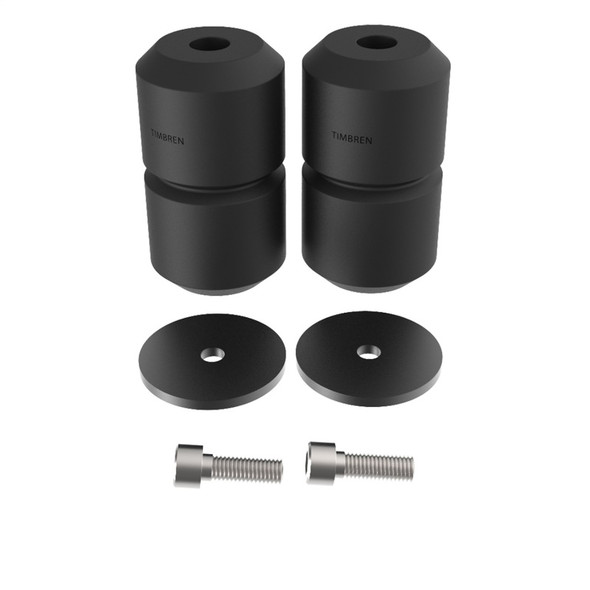

Timbren 1996 Isuzu Oasis Rear Suspension Enhancement System - HROD2
Timbren
MSRP: $316.90$269.36Are Timbren Bump Stops universal or vehicle-specific?TIM Suspension Enhancement Systems are engineered for bolt-on installation, requiring confirmation of specific vehicle fitment for optimal...MSRP: $316.90$269.36 -
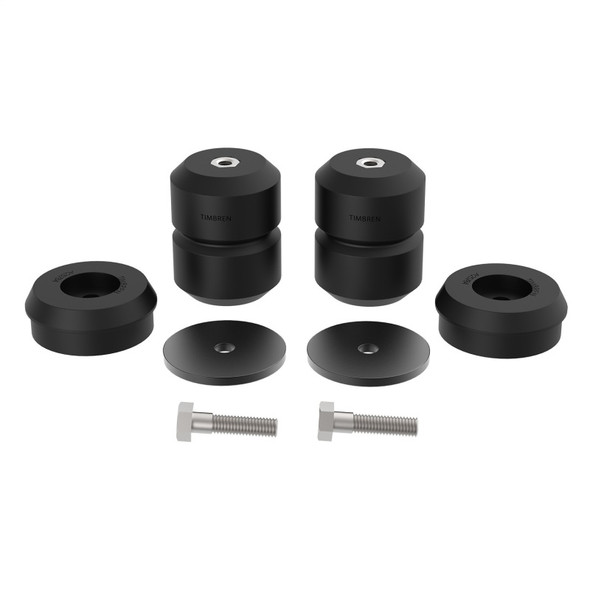

Timbren 2018 Honda Odyssey Rear Suspension Enhancement System - HRDD5G
Timbren
MSRP: $316.90$269.36Will the Timbren TIM Suspension Enhancement Systems fit my vehicle?Timbren TIM Suspension Enhancement Systems are engineered for a precise bolt-on fit for the 2018-2025 Honda Odyssey.How difficult is...MSRP: $316.90$269.36 -

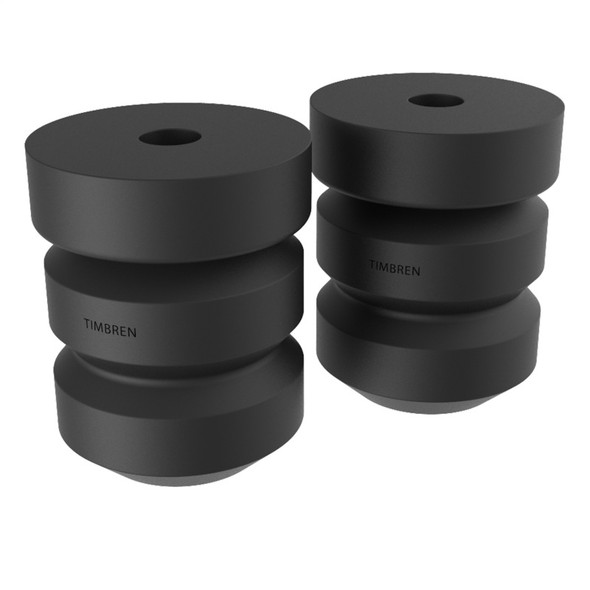
Timbren 2002 Cadillac Escalade RWD Rear Suspension Enhancement System - GMRYS4
Timbren
MSRP: $316.90$269.36Will Timbren Bump Stops improve my vehicle's ride quality?Timbren Bump Stops significantly enhance ride quality by absorbing harsh road impacts and smoothing out imperfections, ensuring a more...MSRP: $316.90$269.36 -
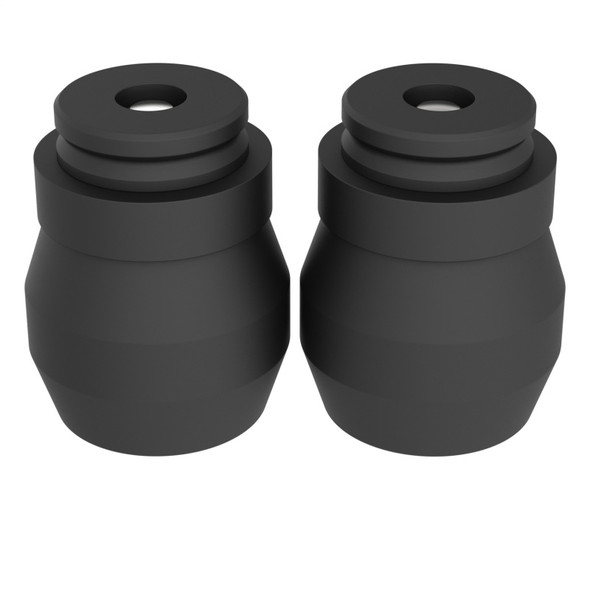
Timbren 2011 Chevrolet Silverado 2500 HD Rear Suspension Enhancement System - GMRTT35D
Timbren
MSRP: $468.32$398.07Does Timbren Suspension Enhancement Systems affect ride quality for my 2020 Chevrolet Silverado 3500 HD?These Timbren bump stops significantly enhance ride quality by absorbing road shocks,...MSRP: $468.32$398.07 -


Timbren 2019 Chevrolet Silverado 1500 Custom RWD Suspension Enhancement System - GMRSTT15
Timbren
MSRP: $316.90$269.36Will these bump stops fit my vehicle?Confirm fitment with your specific vehicle using our easy online compatibility tool before purchasing these Timbren bump stops.How difficult is the installation...MSRP: $316.90$269.36 -
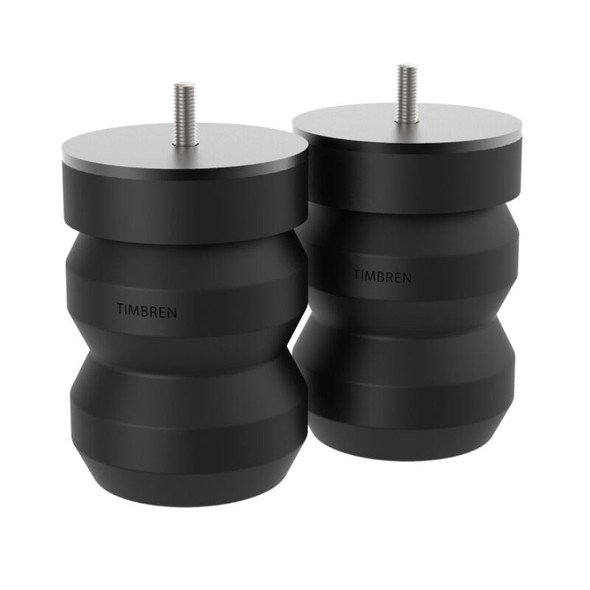
Timbren 2019 Chevrolet Silverado 1500 Custom RWD Suspension Enhancement System - GMRS15
Timbren
MSRP: $316.90$269.36Will Timbren bump stops improve my 2021 Silverado's ride quality?Yes, Timbren bump stops absorb road shocks, delivering a smoother ride for your 2021 Silverado's enhanced comfort.How durable are...MSRP: $316.90$269.36
Bump stops are the final line of defense in any suspension system — they control the hard limit of suspension travel, absorb impact energy at full compression or droop, and prevent metal-to-metal contact that would otherwise destroy control arms, frame rails, and shock bodies. Motor Sport Mayhem stocks 150 bump stop solutions across 109 brands, ranging from simple OE-replacement jounce buffers to high-performance hydraulic units engineered for competition use.
Our Top Picks for Bump Stops
Each of these products was selected based on engineering quality, real-world performance results, and proven value across street, track, and off-road applications.
ART Coils — Frame Coil Buckets for OEM Bump Stops
Artec Industries | $351.99
Fabricated steel coil buckets designed to properly locate OEM bump stops during suspension lifts, maintaining correct bump stop engagement geometry throughout the full travel arc.
- Ensures bump stop contact point remains factory-correct even with modified ride height — eliminates the premature engagement that causes harsh bottom-out on lifted builds
ARB BP51 Coilovers
ARB | $4,580.69
Bypass-style coilover system with integrated internal bump stop engineering that uses hydraulic resistance to progressively slow suspension velocity before hard contact — eliminating the spike load that destroys conventional foam or rubber units.
- Internal hydraulic bump zone is tunable independently from main compression damping — critical for overlanding and high-speed off-road use where terrain inputs are unpredictable
AST 5100 Series Coilovers
AST | $4,554.00
Competition-grade coilover kit engineered with precisely tuned internal bump stop geometry that keeps the tire contact patch loaded through aggressive corner entry and over high-speed track curbing.
- Bump stop rate and engagement point are matched to the spring rate to eliminate the discontinuity spike that causes mid-corner instability when the suspension reaches its travel limit
AFE Coilover Systems
aFe | $3,729.00
Street-track coilover system with a featherlight monotube design where bump stop length and durometer are calibrated to the system's ride height adjustment range, preventing coil bind and shock bottoming across the full drop spectrum.
- Single-adjustable damping tuned in conjunction with bump stop engagement point means the transition from shock stroke to bump stop load is smooth rather than abrupt — a key differentiator from budget coilover kits
Alta Adjustable Control Arms
Alta | $339.15
Adjustable rear control arms that restore correct suspension geometry when ride height is changed — directly affecting where and how aggressively the bump stop engages at the limits of travel.
- Correcting control arm angle after a ride height change prevents the bump stop from engaging prematurely or at the wrong suspension angle, which causes unpredictable handling at the limit
AWE Chassis Bars — Drivetrain Stabilizer
AWE Tuning | $435.00
Polyurethane-bushed drivetrain stabilizer that reduces chassis flex under load, keeping the suspension geometry consistent and ensuring bump stop engagement occurs at the same point lap after lap rather than varying with chassis distortion.
- Chassis rigidity directly affects suspension travel consistency — a flexing subframe changes the effective bump stop engagement point and makes car behavior at the limit unpredictable
AEM Induction Strut Bar
AEM Induction | $346.99
Strut tower brace that ties the front suspension pickup points together, reducing strut tower flex and keeping the bump stop load path aligned with the shock axis under hard cornering inputs.
- When strut towers flex outward under lateral load, the bump stop engages at an off-axis angle that accelerates both bump stop and shock body wear — a strut bar eliminates this failure mode
Air Lift Wireless Air Control System
Air Lift | $1,363.99
Wireless air management system that adjusts ride height on demand, which directly governs how much suspension travel remains before bump stop contact — giving the driver real-time control over the suspension travel envelope.
- Running a vehicle too low without accounting for bump stop engagement distance is the leading cause of chassis-to-pavement contact — active air management eliminates this by maintaining a safe travel buffer at any ride height
All Balls Racing Steering Rack
All Balls Racing | $209.62
Heavy-duty replacement steering rack engineered to maintain correct bump steer characteristics through the full suspension travel range, including through and beyond the bump stop engagement zone.
- Worn or incorrect steering rack geometry causes toe changes as bump stops engage — replacing the rack restores predictable steering response at the suspension limit and prevents tire scrub damage on repeated bump stop contact
Antigravity Micro-Start Tire Inflator
Antigravity Batteries | $24.99
Compact tire inflator for maintaining correct tire pressure in the field — directly relevant to bump stop performance because under-inflated tires compress more under load, changing the effective suspension travel and causing earlier-than-expected bump stop engagement.
- Every 5 PSI of tire pressure loss effectively reduces suspension travel by shifting the load transfer point upward — especially critical for off-road builds where bump stop tuning depends on a known tire pressure baseline
How to Choose the Right Bump Stops
A bump stop's job is to absorb kinetic energy at the suspension travel limit — the difference between a good unit and a bad one is how cleanly it does that across a range of velocities, temperatures, and impact frequencies. OE jounce buffers are typically open-cell polyurethane foam engineered for a narrow range of inputs at factory ride height; install a lift, lower the car, or push suspension velocity beyond street use and they fail fast. Aftermarket units use either microcellular foam (closed-cell, denser, rate-progressive), bonded rubber compounds, or full hydraulic bump stop technology — each with fundamentally different force-velocity characteristics that must match your application.
Key Specifications
Material and rate curve: Foam bump stops have a progressive spring rate — they get significantly stiffer as they compress, which is desirable because it slows the suspension gradually rather than stopping it dead. The rate curve is controlled by foam density (measured in kg/m³), cell structure (open vs. closed), and geometry (diameter, height, taper profile). A high-density microcellular unit rated at 60–80 shore A durometer works well for street performance. Track and competition applications often require 80–100 shore A or hydraulic units that control velocity independently of displacement.
Engagement length and ride height compatibility: The single biggest installation mistake is running a bump stop that is too long for the modified ride height. Bump stop engagement distance must be measured from the shock mount to the stop contact surface at ride height — typically you want 10–20mm of preload for street use, zero preload for track use where bump stops are a last resort rather than part of the primary damping strategy. Hydraulic bump stops have an adjustable engagement point controlled by shaft preload, making them the most tunable option for modified suspension geometries.
Diameter and mounting style: Bump stops mount either on the shock shaft (sleeve style), inside the spring (cup or hat style), or on a separate chassis bracket. Shaft-mounted stops must match the shock rod diameter precisely — typically 14mm, 16mm, or 20mm for most performance applications. Cup-style stops that sit inside the spring coil must clear the spring ID at full compression, which requires verifying both the uncompressed OD of the stop and its compressed OD under maximum load. Mixing mount styles between shock and chassis mounting points introduces geometry error that causes side-loading and premature wear.
Temperature range and durability: Rubber bump stops harden dramatically below 0°C and soften above 80°C, which creates inconsistent behavior in extreme climates or sustained high-load use. Microcellular polyurethane holds its rate curve from -40°C to 120°C and resists oil contamination that degrades rubber compounds. For off-road and competition use where bump stops absorb repeated high-energy impacts rather than occasional contact, material fatigue life measured in cycles at rated compression is the critical spec — quality units are rated for 500,000+ cycles at 75% compression without permanent set exceeding 5%.
Bump Stop Material and Application Reference Guide
| Bump Stop Type | Typical Rate Range | Best Application | Key Limitation |
|---|---|---|---|
| OE Open-Cell Foam | 5–15 N/mm progressive | OE replacement, stock ride height street use | Degrades rapidly above 60% compression frequency; incompatible with lifted or lowered geometry |
| Microcellular Polyurethane | 15–60 N/mm progressive | Street performance, mild track use, lifted off-road | Rate curve is fixed at manufacture — cannot be tuned post-install |
| Bonded Rubber (Natural/EPDM) | 20–80 N/mm near-linear | Heavy-duty towing, truck, SUV applications | Hardens in cold temperatures; oil contamination causes swelling and rate loss |
| Jounce Bumper (Compression Limiter) | 50–150 N/mm | Limiting maximum shock droop, preventing CV joint overextension | Not designed for repeated high-energy compression — single-function travel limiter only |
| Hydraulic Bump Stop (External) | 100–500+ N/mm velocity-dependent | Desert racing, dedicated track cars, prerunner builds | Requires valving selection and professional setup; cost-prohibitive for street-only use |
| Internal Hydraulic (Shock-Integrated) | 200–1000+ N/mm velocity-dependent | Competition coilovers, high-speed off-road systems | Only available as part of a complete shock assembly — cannot be retrofitted to existing shocks |
Price Guide
Entry ($1.14–$200): This range covers OE-equivalent jounce buffers, simple polyurethane foam bump stops, and rubber compression limiters — correct choice for stock or near-stock ride height vehicles needing direct replacement of failed factory units. Quality varies significantly in this bracket; look for density ratings and compression cycle specifications rather than buying on price alone.
Mid-range ($200–$600): Most performance enthusiasts building street-driven modified vehicles land here — this range includes high-density microcellular polyurethane bump stops from brands with published durometer and rate curve data, along with supporting hardware like coil buckets, strut bars, and control arm packages that affect how the bump stop system functions as a whole. The improvement over budget units in material consistency and geometry compatibility is substantial.
Premium ($600–$13,544): Hydraulic bump stop systems, competition coilover packages with integrated internal bump control, and complete suspension assemblies with tunable travel limit engineering belong here. This investment is justified for dedicated track cars, competitive off-road vehicles, and high-power builds where suspension velocity at the travel limit exceeds what any foam or rubber unit can absorb repeatedly without permanent deformation. For these applications, getting the bump stop wrong is a chassis and component destruction event — not just a handling compromise.
Who Is This For?
Bump stops serve a different functional role depending on whether you're chasing lap times, traversing rough terrain, or building a reliable daily driver — the usage data across our product catalog reflects those distinct demands clearly.
Racing Competition — 8.1/10
Competition-rated bump stops score highest in this category because the consequences of getting them wrong are immediate and expensive — a mistuned or failed bump stop at competition speeds loads the chassis with an uncontrolled spike force that can damage control arms, crack knuckles, and destroy wheel bearings in a single impact. Competition builds require bump stops matched to the shock's velocity curve, with engagement points set to preserve as much usable stroke as possible before the stop takes over. Hydraulic units that generate resistance proportional to velocity — not just displacement — are the engineering standard at this level.
Track / Autocross — 8.0/10
Track and autocross applications score nearly as high as outright competition because repeated high-frequency inputs over curbing and aggressive transitions will fatigue a substandard bump stop within a season. The priority here is rate-curve predictability over lap after lap — a bump stop that changes behavior as it heats up or fatigues introduces handling inconsistency that masks the driver's ability to tune the car. Microcellular polyurethane outperforms OE foam in this environment specifically because its rate curve degrades more slowly under repeated compression cycles at elevated temperatures.
Street Performance — 7.7/10
Street performance builds score well because aftermarket ride height changes — whether from coilovers or lowering springs — almost always require bump stop modification to prevent premature engagement at the new ride height. Running OE bump stops with a 1.5-inch drop frequently results in the stop engaging at 60–70% of suspension travel, effectively eliminating the remaining stroke and causing the harsh, uncontrolled ride quality that gives lowered cars a bad reputation. A correctly specified aftermarket bump stop restores the full intended travel range and ride quality the coilover or spring manufacturer designed for.
Weekend Off-Roading — 7.7/10
Off-road bump stop selection is driven by lift height and intended terrain — a 3-inch lift without bump stop modification leaves OE units engaging far above the correct geometry point, causing chassis contact on articulation that the lift was specifically supposed to prevent. Foam replacement units sized for the lifted geometry restore correct engagement at full compression while providing the progressive rate needed to protect CV axles and control arms from overextension at the opposite end of travel. For more aggressive use, external hydraulic bump stops mounted to frame brackets provide a tunable, high-energy alternative that foam cannot match.
Overlanding / Expedition — 7.2/10
Overlanding applications demand bump stops with exceptional durability and thermal stability because sustained rough-road use at loaded vehicle weight generates more cumulative bump stop energy than almost any other application outside of competition racing. Loaded expedition vehicles can be 400–600 lbs heavier than unloaded curb weight, which compresses the suspension closer to the bump stop engagement point before the vehicle even moves — meaning the stop is working constantly at low-level compression rather than only at extreme inputs. Material selection for this use case favors high-density bonded urethane or hydraulic units over foam, specifically because of long-term compression set resistance under sustained loading.
Trusted Bump Stop Brands We Carry
The brands that dominate this category earn their position through engineering investment in material science and published performance data — not just fitment coverage. Bilstein brings OEM-supplier engineering discipline to aftermarket bump stop systems, with internal hydraulic jounce bumper technology derived from their factory shock programs. FOX leads in high-velocity hydraulic bump stop engineering for off-road competition, where their internal floating piston technology and velocity-sensitive valving set the benchmark for desert racing applications. Eibach approaches bump stops as part of a complete spring-and-stop rate system, publishing matched progressive rate curves that ensure the transition from spring to bump stop load is mathematically smooth rather than abrupt. Energy Suspension has built their reputation specifically on polyurethane compound development — their durometer consistency and temperature stability data across decades of application-specific formulations make them the default choice for street performance replacement bump stops. Whiteline and Superpro both bring track-proven polyurethane engineering to bump stop applications, with compound formulations tested against OEM rubber for rate retention after 500,000 compression cycles — the kind of documented durability data that matters for performance builds used regularly.
Frequently Asked Questions
Are aftermarket bump stops actually worth it?
Yes — with one important qualification: they are only worth it when selected correctly for the vehicle's actual ride height and use case. OE bump stops are calibrated for factory suspension geometry; any modification to ride height, spring rate, or intended use case shifts the optimal bump stop specification. A correctly matched aftermarket unit restores the full suspension travel range, improves energy absorption at the travel limit, and extends the service life of adjacent components including shock bodies, control arm bushings, and ball joints. Buying the wrong durometer or wrong engagement length will make handling worse, not better — specification matters more than brand in this category.
Are aftermarket control arms any good, and how do they affect bump stop performance?
Quality aftermarket control arms from reputable manufacturers are not only as good as OEM — they are frequently better engineered for modified ride heights because they restore correct suspension geometry that OE arms cannot provide once ride height changes. The direct relationship to bump stop performance is geometry: a control arm at the wrong angle changes the suspension travel arc, which shifts the point at which the bump stop engages relative to both the spring and the shock stroke. Brands using DOM or chromoly steel construction with CNC-machined ends and serviceable rod end joints provide the dimensional accuracy needed to set bump stop engagement at the precise point the suspension system requires. Cheap arms with soft bushings or out-of-spec geometry introduce the same engagement variability as running the wrong bump stop entirely.
What makes aftermarket lower control arms worth the investment?
Aftermarket lower control arms are worth the investment when the factory arms are the limiting factor in achieving correct suspension geometry at a modified ride height — which is the majority of lifted and lowered builds. The lower control arm establishes the pivot axis around which suspension travel occurs, which directly governs the angle and velocity at which the bump stop is contacted at full compression. Adjustable lower arms allow precise caster and roll center correction that keeps bump stop engagement forces aligned with the shock axis — reducing side-loading that wears both the stop and the shock shaft seal. On performance builds, the improvement in predictable limit behavior from correct lower arm geometry is measurable in lap times, not just feel.
How do you know if your bump stops are failing or already failed?
The most common indicator of failed bump stops is a sharp, harsh clunk or thud at the end of suspension travel — particularly over sharp-edged bumps, dips, or during aggressive cornering transitions — which is the sound of metal contacting metal with no energy-absorbing material between them. Secondary indicators include unusual wear patterns on control arm jounce contact surfaces, shock shaft scoring from off-axis loading, and cracked or deteriorated rubber visible through the wheel well. Foam bump stops that have taken permanent compression set will feel sticky or crumbly to the touch and will not spring back when compressed by hand — any bump stop that has collapsed more than 15–20% of its original height at rest has exceeded its service life. Inspect bump stops whenever performing any suspension service; on performance-driven vehicles, annual inspection is the minimum acceptable interval.
Do adjustable sway bars interact with bump stop tuning?
Adjustable sway bars and bump stops address different phases of suspension behavior but interact significantly during hard cornering transitions. A stiffer sway bar setting reduces body roll, which reduces the rate at which the outside suspension corner approaches its bump stop under lateral load — effectively giving the bump stop more time to engage progressively rather than receiving a sudden velocity input. Conversely, a very stiff sway bar on a soft spring rate setup can cause the inside wheel to droop toward its travel limit simultaneously, which means both jounce and droop bump stops are active at the same time during hard cornering. The correct approach is to tune sway bar stiffness, spring rate, and bump stop rate as a system rather than in isolation — changes to one component change the operating conditions of the others. This is why competition tuners specify bump stop durometer and length only after spring rates and roll stiffness targets are finalized.
Building something specific? Our performance specialists can help you select the right Bump Stops for your application — street, track, or full race build.