
Boots
- Product
- Qty in Cart
- Quantity
- Price
- Subtotal
-
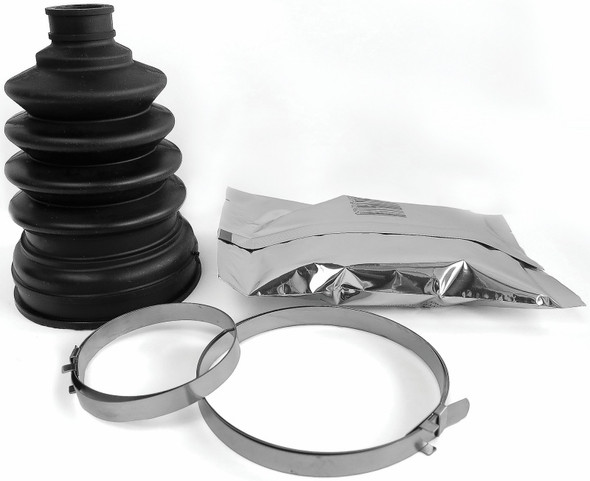
EPI 13+ Yamaha 550-700 Grizzly/ 450 Kodiak CV Boots Heavy Duty - WE130164
EPI
MSRP: $19.99$13.88How do I confirm the EPI CV Boots will fit my specific vehicle?EPI CV Boots require confirming fitment details with your vehicle's make, model, and year for an exact, custom replacement.Are EPI CV...MSRP: $19.99$13.88 -
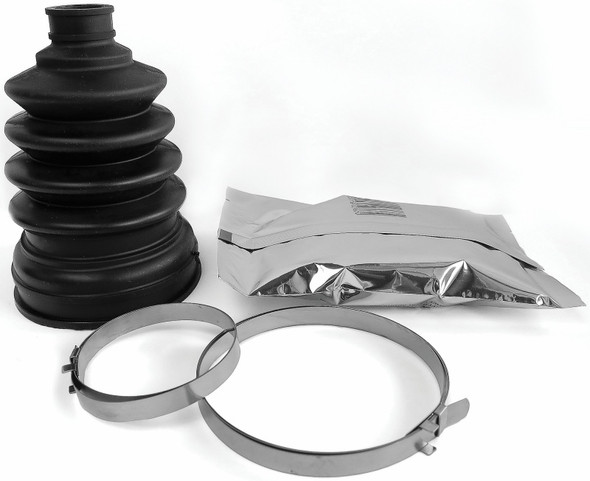
EPI 13+ Yamaha 550-700 Grizzly/ 450 Kodiak CV Boots Heavy Duty - WE130163
EPI
MSRP: $19.99$13.88What is the purpose of CV boots?CV boots protect vital constant velocity joints from dirt and moisture, ensuring smooth drivetrain operation and extended component longevity for your vehicle.Can I...MSRP: $19.99$13.88 -

EPI 18+ Polaris 900 -1000 RZR S/ Trail/4 / 16+ General / 4 CV Boot Heavy Duty - WE130157
EPI
MSRP: $19.99$13.88How do I know if these boots will fit my vehicle?Confirm fitment with your vehicle using our online tool to ensure these exact custom replacement boots guarantee a perfect match.Are these boots...MSRP: $19.99$13.88 -
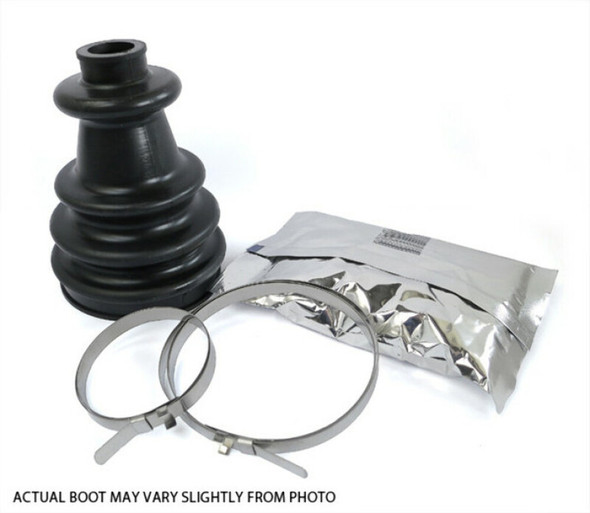
EPI 18+ Polaris 900 -1000 RZR S/ Trail/4 / 16+ General / 4 CV Boot Heavy Duty - WE130156
EPI
MSRP: $19.99$13.88Are these EPI CV boots universal fit?These EPI CV boots are exact custom replacements, guaranteeing a precise fit for your specific vehicle application.Are EPI CV boots easy to install?Professional...MSRP: $19.99$13.88 -

EPI 13+ Can-Am 400-1000 Outlander / 15-20 800-1000 Commander/Maverick CV Boot Heavy Duty - WE130153
EPI
MSRP: $19.99$13.88What is the best way to ensure proper installation of my EPI CV Boots?Professional installation is strongly recommended for EPI CV Boots to guarantee precise fitment and optimal drivetrain protection...MSRP: $19.99$13.88 -

EPI 11+ Can-Am Commander/ 16+ HD10/ 14+ Maverick CV Boot Heavy Duty - WE130138
EPI
MSRP: $21.99$15.26Will these CV boots fit my vehicle?EPI CV Boots are designed as exact custom replacements, confirming fitment ensures guaranteed integration with your specific vehicle model.Can I install these...MSRP: $21.99$15.26 -

EPI 10+ Polaris 850-1000 Scrambler/ Sportsman/ 11-16 800 Ranger CV Boot Heavy Duty - WE130136
EPI
MSRP: $19.99$13.88Do EPI CV Boots fit my vehicle?Confirm fitment with your specific vehicle for an exact custom replacement ensuring optimal performance and a perfect installation.Are EPI CV Boots easy to...MSRP: $19.99$13.88 -
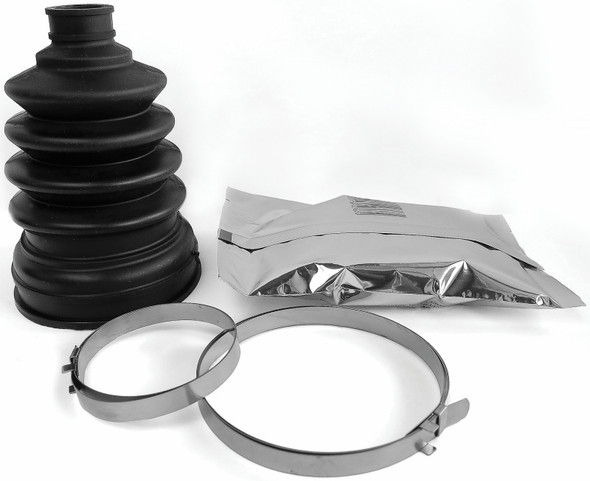
EPI 06+ Yamaha 450-700 Kodiak/Grizzly / 04-08 Can-Am/ Kawasaki/Polaris CV Boot Heavy Duty - WE130074
EPI
MSRP: $19.99$13.88What is the best way to ensure my EPI CV Boots fit my vehicle correctly?Confirm fitment with your vehicle using our comprehensive application guide to guarantee an exact custom replacement for your...MSRP: $19.99$13.88 -

QuadBoss 19-21 Kawasaki KAF700 Mule Pro-MX Front Inner CV Boot Kit - 414969
QuadBoss
$26.49What vehicles are compatible with the QBS CV Boot Kits?These universal CV boot kits fit 2012-2021 Honda SXS1000M5 Pioneer 1000-5, multiple Kawasaki Mule PRO models, and several Yamaha Wolverine...$26.49 -

QuadBoss 2008 Arctic Cat 366 4x4 AT Front Inner CV Boot Kit - 414967
QuadBoss
$20.53Are QBS CV Boot Kits compatible with my vehicle?QBS CV Boot Kits utilize an expandable universal design; confirm specific vehicle fitment before purchase for optimal performance.How do QBS CV Boot...$20.53 -

QuadBoss 09-10 Polaris Ranger 500 4x4 (03) Front Inner CV Boot Kit - 414965
QuadBoss
$20.78Will this boot fit my vehicle?QBS CV Boot Kits achieve a secure, universal fit on most vehicles thanks to two clamping diameters for broad compatibility.How does this CV boot compare to traditional...$20.78 -
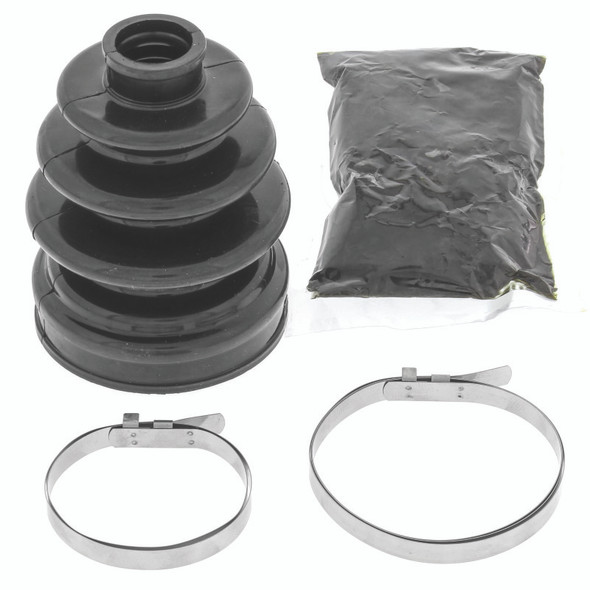
QuadBoss 18-20 Honda SXS500M2 Pioneer Front Inner CV Boot Kit - 414962
QuadBoss
$20.78Are these CV boots universal fit?QBS CV Boot Kits feature an expandable universal design with two clamping diameters for a secure fit on most vehicles.How difficult is it to install these CV...$20.78
Suspension boots are the first and last line of defense for your CV joints, tie rod ends, ball joints, and steering rack — a torn or missing boot exposes precision-machined components to grit, moisture, and road debris that causes accelerated wear and catastrophic joint failure. Motor Sport Mayhem stocks 67 in-stock boots from entry-level OE replacements to race-grade polyurethane and silicone compounds across 109 brands, ranging from $1.14 to $13,544.00.
Our Top Picks for Boots
Each of these products was selected by our in-house performance specialists based on real-world durability, fitment precision, and value across street, track, and off-road applications.
AEM IND Strut Bars
AEM Induction | $346.99
Reinforces the strut tower interface to reduce chassis flex and protect strut boot geometry under hard cornering loads.
- Minimizes lateral strut movement that accelerates boot wear and joint contamination
AFE Coilover Systems
aFe | $3,729.00
Precision-engineered coilover assemblies that integrate high-quality dust boots as part of a complete damper protection system.
- Factory-sealed boot geometry engineered for both street and track thermal cycling without cracking
ALF Wireless Air Control Systems
Air Lift | $1,363.99
Air suspension management system that pairs with bellows and boot assemblies to maintain proper airbag sealing under variable ride height conditions.
- Wireless control eliminates boot-damaging hydraulic line routing complications
ABR Steering Racks
All Balls Racing | $209.62
Complete steering rack assemblies ship with pre-fitted rack boots sealed to OE or better specifications for immediate deployment in off-road applications.
- Boot material rated for mud, sand, and water immersion common in UTV and off-road environments
PA Alta Adj Control Arms
Alta | $339.15
Adjustable control arm assemblies with robust boot-sealed pivot points designed to maintain alignment under repeated suspension articulation.
- Sealed adjustment joints prevent contamination at the pivot that causes binding and premature failure
ANT Micro-Start Tire Inflator
Antigravity Batteries | $24.99
Compact tire inflator essential for maintaining proper tire pressure that directly reduces lateral forces and CV boot stress during cornering.
- Under-inflated tires increase CV joint articulation angles, which accelerates boot fatigue and cracking
ARB BP51 Coilovers
ARB | $4,580.69
Remote-reservoir coilover system built with heavy-duty internal boot seals rated for sustained off-road abuse at full suspension travel.
- Bypass-compatible boot design accommodates full articulation without accordion collapse failure
ART Coils
Artec Industries | $351.99
Fabricated coil buckets that properly locate bump stops and associated boot hardware to prevent misalignment-induced boot tearing at full droop.
- Correct coil perch geometry eliminates the off-axis spring binding that splits OEM boots prematurely
AST 5100 Series Coilovers
AST | $4,554.00
Competition-grade coilover system featuring dust boots engineered to withstand the thermal and mechanical cycling demands of motorsport environments.
- Multi-layer boot construction maintains seal integrity across the full damper stroke at track operating temperatures
AWE Chassis Bars
AWE Tuning | $435.00
Drivetrain stabilizer that reduces excessive drivetrain movement, directly limiting the angular stress placed on CV and driveshaft boots under power.
- Polyurethane mount material matches boot compound hardness targets for consistent NVH and joint protection
How to Choose the Right Boots
The material compound is the single most important specification in any suspension boot — it determines resistance to ozone cracking, temperature cycling, grease compatibility, and mechanical fatigue over tens of thousands of articulation cycles. OEM rubber compounds typically begin cracking between 50,000 and 80,000 miles in harsh climates; upgraded thermoplastic elastomer (TPE), polyurethane (PU), and silicone compounds extend that service life significantly while tolerating wider temperature ranges and more aggressive lubricants.
Key Specifications
Material selection starts with your operating environment. Standard EPDM or neoprene rubber boots are adequate for mild climates and stock suspension geometry, but they harden and crack rapidly when exposed to road salts, petroleum-based fluids, or sustained temperatures above 120°C. Thermoplastic elastomer boots offer a meaningful step up in chemical and ozone resistance without the stiffness penalty of full polyurethane — they remain pliable at sub-zero temperatures where rigid PU boots can split under the initial articulation forces on a cold start.
Fitment geometry is equally critical and frequently overlooked. A boot that is too short for the joint's actual travel range will pull taut at full droop or bump and tear at the clamp ring — this is the primary failure mode for lifted or lowered vehicles running OEM replacement boots. Always cross-reference the joint's maximum articulation angle against the boot's rated angle spec; most OEM boots are designed for ±15–20 degrees of articulation, while modified suspension setups can demand ±25–35 degrees from CV and ball joint boots. Extended-travel or convoluted-profile boots address this by adding extra pleats to the accordion section.
Clamp retention is the second most common failure point after material fatigue. Ear-type crimp clamps (used on most OEM and entry-level aftermarket boots) require a proper clamp tool to achieve the correct closure force — undertightened clamps allow grease purge and contamination ingress within weeks. Screw-band clamps used on larger-diameter rack boots allow retorquing in service, which is a meaningful advantage on track and off-road vehicles where boot inspection intervals are shorter. For competition applications, check that the clamp material is stainless or zinc-plated to resist corrosion that can cause the clamp to lose preload over time.
Grease compatibility is often ignored until it causes a failure. Molybdenum disulfide greases used in CV joints will attack certain rubber compounds, causing swelling and premature boot degradation — always confirm that the boot compound is rated for moly-based or the specific OEM-specified lubricant in the joint. Polyurethane boots are generally more chemically inert across grease types but must be filled with the correct quantity of the specified grease, as PU generates slightly more friction in articulation and depends on adequate lubrication to prevent heat buildup at the joint.
Suspension Boot Material vs. Application Reference
| Boot Material | Temp Range | Max Articulation Angle | Best Application |
|---|---|---|---|
| EPDM Rubber | -40°C to +120°C | ±20° | OE replacement, mild climate street |
| Neoprene | -30°C to +130°C | ±20° | Street, moderate off-road, salt environments |
| Thermoplastic Elastomer (TPE) | -50°C to +150°C | ±25° | Performance street, cold climate, lifted vehicles |
| Polyurethane (PU) | -40°C to +160°C | ±30° | Track, autocross, high-load performance builds |
| Silicone | -60°C to +200°C | ±35° | Motorsport, extreme heat, racing competition |
| PTFE-Lined Composite | -50°C to +220°C | ±40° | Full race, high-articulation off-road, rally |
Price Guide
Entry ($1.14–$200): This range covers OE-equivalent rubber and neoprene boots suited for standard street replacement — correct fitment at stock suspension geometry, basic clamp hardware included, and appropriate for drivers who want to restore OEM protection levels without upgrading suspension components. Honest assessment: these are the right call for a daily driver with stock suspension that simply needs worn boots replaced on schedule.
Mid-range ($200–$500): Most performance enthusiasts land here because this tier steps up to TPE and entry-level polyurethane compounds, extended-travel convoluted designs, and improved clamp hardware. These boots accommodate modest suspension lifts or drops, tolerate more aggressive driving cycles, and typically carry longer service warranties — the incremental cost over entry-level is easily justified on any modified vehicle.
Premium ($500–$13,544.00): The upper tier encompasses full silicone and PTFE-composite boots used in motorsport applications, as well as complete assembly kits with precision-machined retaining hardware, race-specific grease charges, and engineering data sheets confirming articulation angle certification. Purpose-built race teams, serious rally builds, and extreme off-road expedition rigs that cannot afford mid-race boot failures are the rightful customers here — for a stock or lightly modified street car, this investment is unnecessary.
Who Is This For?
Suspension boots serve every category of driver from daily commuters to full competition builds, though the specific compound, geometry, and clamp specification that makes sense varies considerably by application.
Racing Competition — 8.1/10
Boots score highest for racing competition because joint contamination in a race environment means immediate mechanical failure with no warning — there's no driving home on a split CV boot at a circuit. Silicone and PTFE-composite boots are standard practice in closed-circuit motorsport precisely because they handle the combined thermal and mechanical stress of sustained high-load, high-articulation laps without fatigue cracking. At this level, boot inspection and replacement is a scheduled maintenance item between events, not a reactive repair.
Track / Autocross — 8.0/10
Track and autocross builds score nearly as high because repeated hard cornering loads place CV and tie rod boots under sustained elevated articulation angles that OEM rubber cannot tolerate over a full season of events. Polyurethane boots with stainless clamp hardware are the practical choice here — they outlast rubber by a significant margin under track thermal cycling and resist the petroleum and brake fluid contamination common in pit lane environments. Pairing upgraded boots with quality coilovers ensures the entire suspension envelope is addressed together.
Street Performance — 7.7/10
Street performance applications score well because enthusiasts pushing their vehicles harder than stock design intent need boots that match the upgraded suspension geometry they're running — a performance spring and damper combination changes articulation angles relative to OEM, and the stock boot often cannot accommodate the new range without premature failure. TPE and entry-level polyurethane boots are the sweet spot here, offering meaningful durability improvement without the installation complexity or cost of full race-spec hardware. Drivers who have already invested in upgraded shocks and struts or lowering springs should treat boots as a complementary upgrade, not an afterthought.
Weekend Off-Roading — 7.7/10
Off-road applications match street performance scores because the failure modes are simply more immediate — a torn boot in a river crossing or mud pit packs the joint with abrasive material and destroys the joint within minutes of continued operation. Extended-travel boots with multi-ply TPE or polyurethane construction and robust ear clamps or band clamps rated for immersion are the baseline requirement for any vehicle that sees regular trail use. The wider articulation angles demanded by lifted suspension geometry make extended-travel boot selection non-negotiable in this category.
Daily Driving Comfort — 6.2/10
Daily drivers score lower not because boots are unimportant — a failed CV boot on a daily commuter is a tow-truck call — but because the urgency for compound upgrades over OE replacement is lower when suspension geometry and driving style remain stock. The priority for daily drivers is simply replacing worn or torn boots before joint contamination progresses to joint replacement cost, which is typically 5–10 times the cost of a boot kit. Neoprene or EPDM replacements at OE spec are entirely appropriate here and represent the best value in the category for this use case.
Trusted Boots Brands We Carry
The brands that dominate this category do so because of engineering precision, material sourcing, and real-world validation — not marketing. Energy Suspension pioneered the performance polyurethane bushing and boot market with decades of durometer-specific compound development that remains the reference standard for street and track PU components. Superpro brings similar polyurethane engineering credibility from the Australian motorsport market, with particular depth in extended-travel and high-articulation designs validated in rally and off-road competition. Whiteline's engineering team has built a reputation for matching boot and bushing compounds specifically to vehicle chassis characteristics rather than offering generic universal fits. For off-road and expedition applications, ARB's sealed component engineering sets the benchmark for immersion resistance and sustained articulation durability in extreme environments. Bilstein and KONI, while best known for their damper technology, engineer their coilover boot systems as matched assemblies with the damper rather than universal fits — a detail that matters significantly for seal longevity at rated travel. Across all these brands, the common thread is compound validation through real-world testing rather than lab specification alone.
Frequently Asked Questions
Are aftermarket control arms worth it, and do they come with better boots than OEM?
Aftermarket control arms are worth the investment on any vehicle that has been modified beyond OEM suspension geometry — lifted, lowered, or track-prepared builds routinely exceed the articulation and load envelopes that OEM arms and their associated boots were designed for. Quality aftermarket arms from reputable manufacturers typically include upgraded boot compounds rated for the wider articulation angles their extended or adjustable geometry creates, which is a direct improvement over OEM boots that would tear under the new range of motion. The sealed pivot points on a well-engineered aftermarket arm also resist contamination better than worn OEM bushings, extending the service life of the entire assembly. For a stock-geometry daily driver that simply needs worn parts replaced, OEM-equivalent arms at OE spec are the more cost-effective choice.
Are aftermarket ball joints any good, and do boot quality differences matter?
Aftermarket ball joints range from genuinely superior to dangerously inferior depending on the manufacturer — this is a safety-critical joint and cut-rate sourcing is a real risk in this category. The boot on a ball joint is not just a dust cover; it retains the grease film that prevents metal-on-metal contact within the joint, so a boot that cracks or loses its clamp seal accelerates joint wear from negligible to catastrophic within a single winter season in a salt environment. Premium aftermarket ball joints use grease-zerk fittings paired with high-quality TPE or polyurethane boots that allow periodic regrease — something most OEM sealed units don't offer — which is a meaningful long-term durability advantage. For high-load applications like lifted trucks or track-driven vehicles, forged aftermarket ball joints with upgraded boot materials consistently outperform OEM pressed units in both load rating and service interval.
Are aftermarket bump stops worth it, and how do boots relate to bump stop function?
Aftermarket bump stops are worth the upgrade on any vehicle running non-standard ride height or sustained high-impact driving — OEM foam bump stops are tuned specifically for the OEM ride height and compress predictably only within that range, meaning a lifted or lowered vehicle will either contact the bump stop too early or miss it entirely. The boot associated with the bump stop and coilover dust shield protects the damper shaft from debris impact at full bump, so the two components work as a system — upgrading one without the other leaves the damper shaft exposed. Hydraulic or microcellular polyurethane aftermarket bump stops provide a progressive force curve that OEM foam cannot replicate, which reduces the shock loading transmitted to the chassis at full travel. On off-road vehicles specifically, matching the bump stop travel to the boot length prevents the dust boot from bottoming and tearing against the spring perch at full compression.
Are adjustable drop links worth it, and how do sealed boots factor into their longevity?
Adjustable drop links are worth it on any vehicle running aftermarket springs or ride height adjustment because OEM fixed-length drop links pull the sway bar out of its optimal operating angle when ride height changes — this introduces pre-load and bind that degrades handling and accelerates end link wear. The spherical rod ends or ball joints used in most quality adjustable drop links require sealed boots to prevent the grit ingestion that destroys the precision fit of the joint within weeks of off-road or winter use. Drop link end boots are small and inexpensive but are frequently omitted on budget-tier adjustable links to reduce cost — always verify that the end joint includes a grease-sealed boot rated for the vehicle's operating environment before purchasing. On track cars where the sway bar geometry is tuned precisely for corner balance, contaminated end link joints introduce inconsistency in bar stiffness that shows up as handling variance lap-to-lap.
Are adjustable sway bars worth it compared to fixed bars, and what boot or seal considerations apply?
Adjustable sway bars are worth the cost on vehicles that are driven in multiple configurations — track days and street use, or loaded and unloaded towing applications — because the ability to tune bar stiffness without disassembly is a genuine functional advantage over fixed bars. The pivot bushings and end link joints on an adjustable bar see higher loads than equivalent fixed-bar hardware because the adjustment mechanism itself introduces a stress concentration point, making boot and bushing quality on the adjustment interface critical to long-term function. Polyurethane pivot bushings with retained grease and quality end link boots are the baseline for any adjustable bar installation; contaminated or dry pivots cause the bar to bind rather than rotate freely, which converts a roll control device into an unintended chassis stiffener with unpredictable handling consequences. For a street performance build that rarely changes configuration, a fixed bar of the correct stiffness paired with quality bushing kits is often the more cost-effective solution than a mid-tier adjustable bar with inferior sealing hardware.
Building something specific? Our performance specialists can help you select the right Boots for your application — street, track, or full race build.