
Safety
- Product
- Qty in Cart
- Quantity
- Price
- Subtotal
-
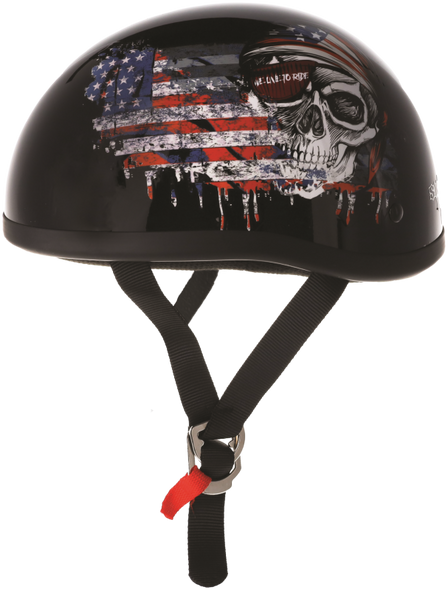

Skid Lids Live To Ride Original Helmet - Medium - 649514
Bikers Choice
$82.99Is the BKC Original Live to Ride Helmet DOT approved?The BKC Original Live to Ride Helmet proudly meets or exceeds rigorous D.O.T. standards, ensuring proven rider safety for your motorcycle journeys...$82.99 -
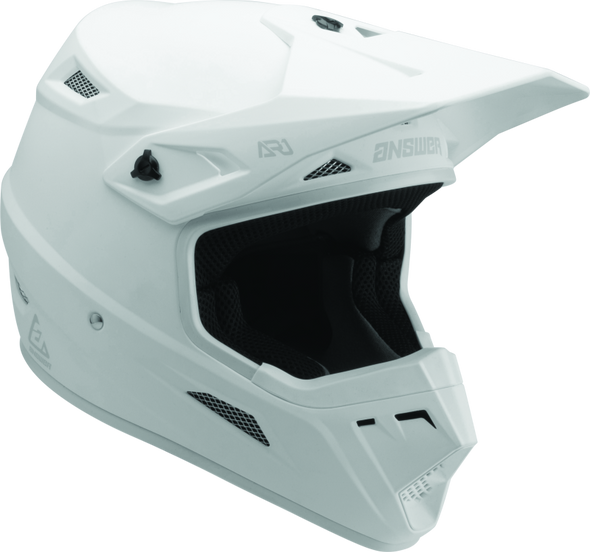
Answer AR1 Solid Helmet White Youth - Large - 446366
Answer
$99.99How do I ensure the Answer AR1 helmet fits my motorcycle?Confirm fitment with your specific vehicle before purchase to guarantee optimal integration and safety for your Answer AR1 helmet.Is...$99.99 -
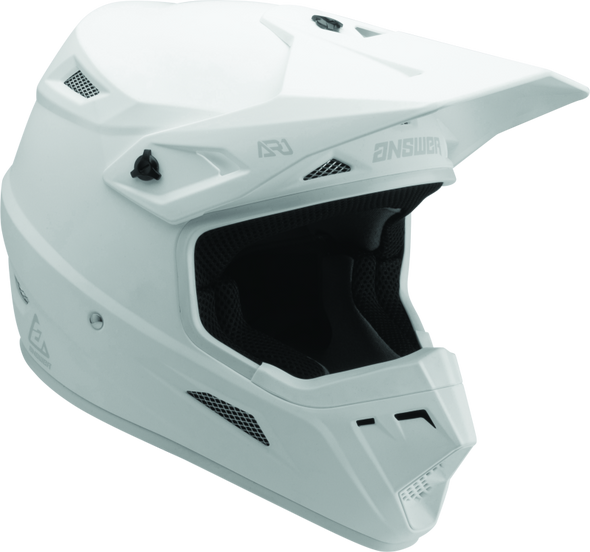
Answer AR1 Solid Helmet Matte White - XL - 446263
Answer
$99.99How do I know if the ANS AR1 Helmet will fit my motorcycle?Confirm helmet fitment with your specific vehicle model using the provided guide to ensure optimal safety and comfort for your riding helmet...$99.99 -

Answer AR1 Solid Helmet Matte White - Large - 446262
Answer
$99.99What is the optimal way to install the ANS AR1 Helmet?ANS AR1 Helmets require professional installation to ensure proper fitment and secure attachment for your vehicle.What safety certifications does...$99.99 -
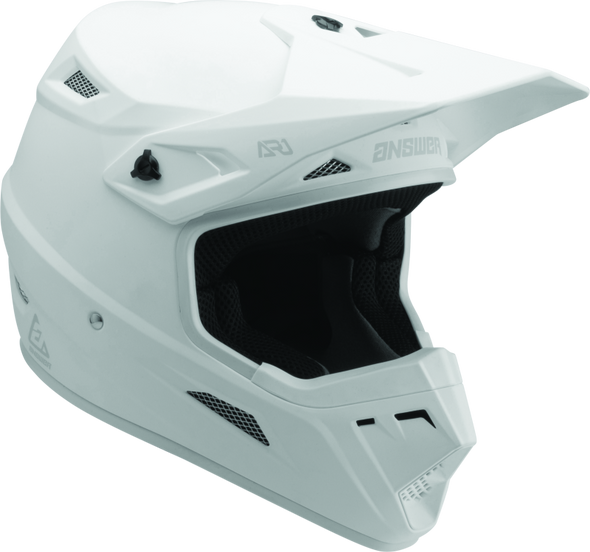
Answer AR1 Solid Helmet Matte White - Medium - 446261
Answer
$99.99The AR1 helmet is Answer Racing's best value helmet, all while meeting or exceeding D.O.T. and E.C.E. safety standards. A dual-density EPS liner helps to absorb both large and small impacts while a...$99.99 -

Answer AR1 Solid Helmet Matte White - Small - 446260
Answer
$99.99How do I know if the ANS AR1 Helmet will fit my motorcycle?Confirm helmet fitment with your specific motorcycle model before purchase to ensure optimal compatibility and safety performance.Is...$99.99 -
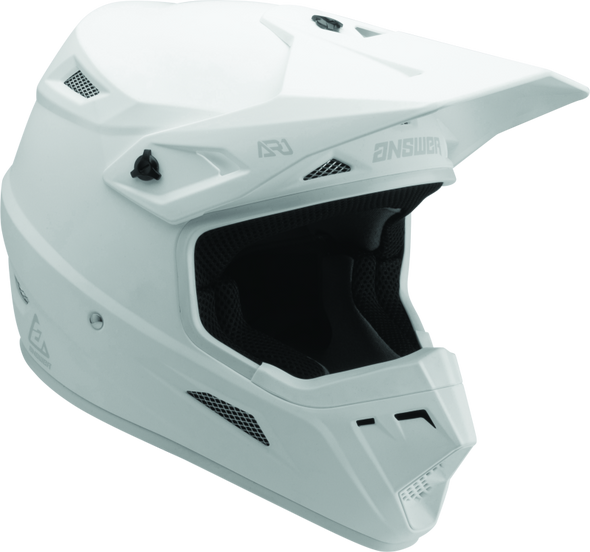
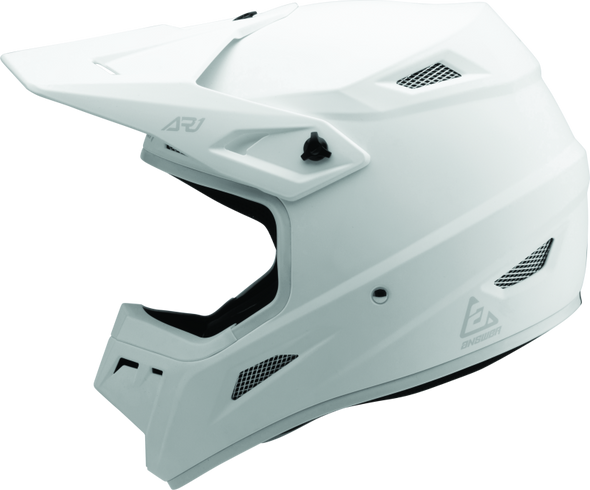
Answer AR1 Solid Helmet Matte White - XS - 446259
Answer
$99.99What is the primary safety feature of the ANS AR1 Helmets?The dual-density EPS liner delivers superior impact absorption, enhancing rider safety on every off-road adventure.Is professional...$99.99 -
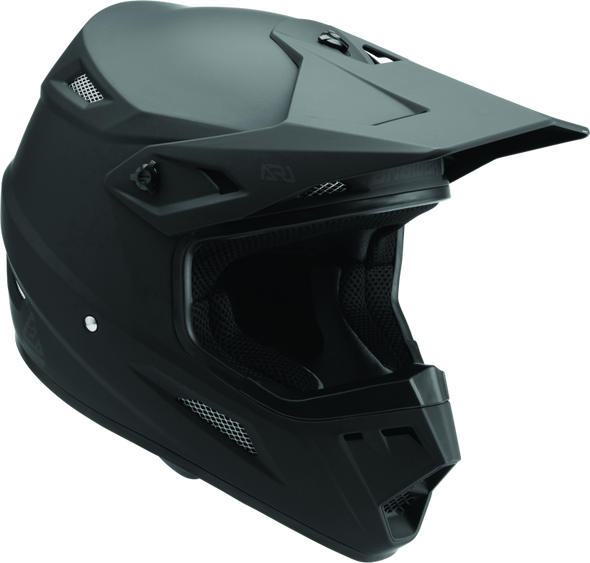
Answer AR1 Solid Helmet Matte Black - Large - 446256
Answer
$99.99What is the recommended installation process for the Answer AR1 Helmet?Answer AR1 Helmet professional installation is recommended to ensure optimal performance and proper fitment with your specific...$99.99 -
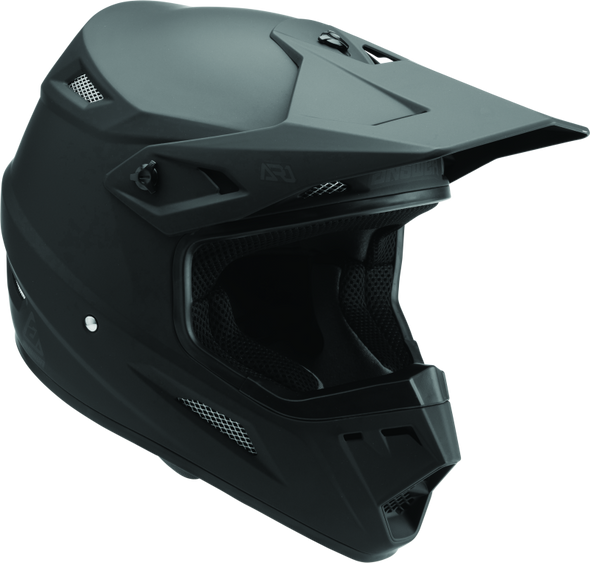
Answer AR1 Solid Helmet Matte Black - Medium - 446255
Answer
$99.99Will the ANS AR1 Helmet fit my specific motorcycle model?Confirm helmet fitment with your vehicle using the provided compatibility guide for optimal security and performance on your motorcycle.How...$99.99 -
 $29.99
 -
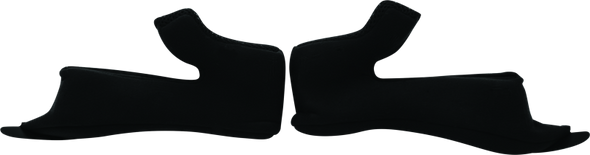
Answer AR1 Cheek Pads Black Youth - Large - 446131
Answer
$29.99Replacement cheek pads for Youth AR1 helmet$29.99 -
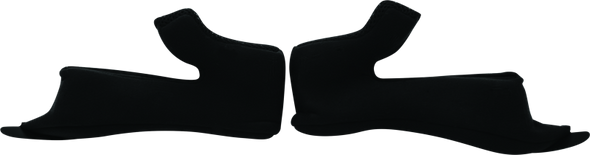
Answer AR1 AR3 Cheek Pads Black - XL - 446067
Answer
$29.99Replacement cheek pads for AR1/AR3 helmet$29.99
Motorsport safety gear is the difference between walking away and not — covering everything from SFI-certified harnesses and SA2020-rated helmets to harness bars, roost guards, and fire suppression equipment engineered for real race conditions. Motor Sport Mayhem stocks 301 in-stock safety products across 22 brands, priced from $5.00 to $749.95, purpose-built for drag racing, track days, off-road, and street performance applications.
Our Top Picks for Safety
Every product below was selected based on real-world performance, certification compliance, and value across the widest range of motorsport applications.
ANS Apex 1 Roost Guards
Answer | $149.99
High-impact plastic shell with ventilated foam backing delivers roost and debris protection without restricting upper-body movement.
- CE-rated impact protection designed for aggressive off-road and MX competition use
BLL K1 Helmets
Bell | $316.67
SA2020-certified composite shell helmet meeting the latest Snell and FIA standards for closed-car circuit competition.
- SA2020 rating satisfies SCCA, NASA, and most regional sanctioning body requirements through 2025 and beyond
BKC Original Chrome Helmet
Bikers Choice | $110.99
DOT-compliant low-profile shell with a durable chrome finish built for street motorcycle riders who prioritize classic styling alongside certified protection.
- DOT FMVSS 218 certification meets federal street-legal requirements across all 50 states
BX Harness Bars
BLOX Racing | $216.80
Bolt-in steel harness bar engineered to provide a proper mounting point for multi-point harnesses in vehicles without factory roll cage provisions.
- Seats the shoulder belt at the correct SFI-specified angle to prevent submarining and spinal loading under impact
BMR Harness Bars
BMR Suspension | $749.95
Heavy-duty chromoly steel harness bar with precision chassis mounting geometry for high-horsepower drag and track applications demanding maximum structural integrity.
- Engineered to strict load-bearing tolerances that withstand the inertia forces generated in high-g deceleration events
CUS Seat Harnesses
Cusco | $382.50
FIA-certified 4-point racing harness with 3-inch-wide shoulder belts that distribute crash loads across the shoulder girdle rather than concentrating force at a single point.
- FIA 8853-2016 homologation ensures compatibility with sanctioned time attack, rally, and circuit competition globally
DFR Harness Bar
DragonFire Racing | $229.99
UTV-specific harness bar engineered for side-by-side chassis geometry, providing a secure and correctly angled shoulder belt anchor point in roll-cage-equipped machines.
- Designed specifically for the unique belt routing demands of UTV roll cages in high-speed desert and trail environments
DVE Fire Extinguishers
DV8 Offroad | $99.99
Quick-release extinguisher mount keeps fire suppression accessible within arm's reach without rattling loose under off-road vibration and shock loads.
- Tool-free quick-release mechanism allows single-hand deployment in an emergency without fumbling with brackets or hardware
FSG Carbon Helmets
FIRSTGEAR | $299.99
Carbon fiber shell construction reduces helmet weight without sacrificing DOT impact-absorption requirements, directly lowering neck fatigue on long street and touring rides.
- Carbon composite shell typically saves 200–400g over equivalent fiberglass designs, a measurable reduction in cervical spine loading over hours of riding
KUR Helmet Locks
Kuryakyn | $63.99
Universal helmet lock mounts to 7/8-inch and 1-1/4-inch handlebars, securing your helmet to the bike via a keyed lock so you're not carrying it everywhere you stop.
- Hardened steel cable loop and keyed cylinder resist casual theft while accommodating a wide range of helmet D-ring and buckle styles
How to Choose the Right Safety Gear
The single most important buying decision in motorsport safety is matching certification level to your actual use case — a DOT-only helmet is legally sufficient for street riding but will not pass tech inspection at a sanctioned track event, while an SA2020-rated helmet is overkill and thermally uncomfortable for daily street use. Every category of safety equipment has a governing certification body: Snell and FIA for helmets, SFI and FIA for harnesses, SFI 45.1 for harness bars, and NFPA for fire extinguishers. Buying gear that meets the right standard for your application is not optional — it is the baseline.
Key Specifications
For helmets, the certification label tells you everything about tested impact velocity and fire resistance. SA (Sport Application) ratings from Snell are designed for closed cockpits with higher fire exposure risk; M-rated helmets are for open-face motorcycle use where fire exposure is minimal. The current benchmark is SA2020 — any helmet older than that standard is increasingly likely to be rejected at tech and is a full generation behind in liner foam technology, which directly affects concussion protection at real-world crash speeds. Shell material matters too: fiberglass is durable and cost-effective, carbon fiber saves weight at a premium, and thermoplastic polycarbonate is entry-level and heavier.
For harnesses and seat belts, belt width and webbing construction are the critical specs. A 3-inch shoulder belt spreads deceleration force across a larger surface area than a 2-inch belt, reducing peak tissue loading at the shoulder and clavicle. Five-point harnesses add a crotch strap to prevent the submarining failure mode seen in 4-point designs — where the occupant slides forward under the lap belt in a frontal impact. FIA 8853 and 8854 homologated harnesses use a time-dated webbing system, typically with a 5-year service life from date of manufacture, after which the belts must be replaced regardless of visual condition because UV exposure and compression cycling degrade tensile strength in ways invisible to the eye.
Harness bars are structural components and should be treated as such. The geometry of the bar determines the shoulder belt angle — SCCA and SFI guidelines specify that shoulder belts must route between 0 and 20 degrees downward from the occupant's shoulder to the mounting point. Any steeper angle transfers the load to the lumbar spine rather than the shoulder girdle, a well-documented spinal injury mechanism. Wall thickness, tube diameter, and material grade (DOM steel vs. ERW vs. chromoly) determine how much load the bar can absorb before yielding. A bar that yields in a crash transfers that impact load directly to the chassis attachment points, which in an unmodified unibody car are not rated for those forces.
For off-road and UTV applications, body armor and roost protection follow CE certification levels: CE Level 1 is adequate for trail riding and recreational use, while CE Level 2 is required for most organized enduro and MX competition. Fire extinguisher placement is regulated by most sanctioning bodies — typically within arm's reach of the driver, mounted with a quick-release bracket rated for the g-forces produced in a rollover. Halon alternatives (ABC dry chemical, CO2, and clean-agent systems) each have specific use cases: dry chemical is cheap and effective but corrosive to electronics, while clean-agent suppression is preferred for vehicles with significant electrical or ECU exposure.
Motorsport Safety Certification Quick Reference
| Equipment Type | Entry-Level Cert | Competition Cert | Notes |
|---|---|---|---|
| Closed-Car Helmet | SA2015 (aging out) | SA2020 / FIA 8859-2015 | SA2020 required by most sanctioning bodies from 2026 onward; check your rulebook |
| Motorcycle Helmet | DOT FMVSS 218 | ECE 22.06 / Snell M2020 | ECE 22.06 now required for many international events; DOT alone is street-legal only |
| Racing Harness (4-pt) | SFI 16.1 | FIA 8853-2016 | FIA homologation includes 5-year expiry date on webbing; SFI does not mandate dating |
| Racing Harness (5/6-pt) | SFI 16.1 | FIA 8854-2010 | Anti-submarine (crotch) strap mandatory for preventing submarining in frontal impacts |
| Harness Bar | No universal cert | SFI 45.1 (bolt-in bars) | Shoulder belt angle must stay within 0–20° below horizontal per SCCA/NASA rules |
| Body Armor / Roost Guards | CE Level 1 | CE Level 2 | CE Level 2 required for most sanctioned MX and enduro competition |
| Fire Extinguisher (handheld) | NFPA 10, 2.5 lb ABC | FIA-approved 2.4 kg AFFF | Must be accessible from driver's seat; bracket must withstand rollover g-forces |
Price Guide
Entry ($5.00–$127.00): At this range you'll find DOT-certified motorcycle helmets, bolt-on helmet locks, basic body armor, entry-level bolt-in harness bars, and protective accessories that meet street-legal minimums. These products are appropriate for street riders, weekend warriors, and anyone just starting to build out their safety kit — they deliver real protection but won't pass tech at most sanctioned race events.
Mid-range ($127.00–$400.00): This is where most serious enthusiasts and club racers land. SA2020-certified helmets, SFI or FIA-rated 4- and 5-point harnesses, UTV-specific harness bars, and CE Level 2 body armor all sit in this bracket. The jump in quality over entry-level is substantial — better shell materials, time-dated webbing, proper energy management liners, and construction tolerances that actually comply with sanctioning body tech inspection requirements.
Premium ($400.00–$749.95): This tier is for drivers doing sustained high-speed competition, sanctioned drag racing, or full circuit racing where safety equipment is load-tested at tech and a failure means disqualification or worse. Carbon shell helmets, FIA 8853/8854-homologated harnesses, heavy-duty chromoly harness bars, and purpose-built roll-cage integrated safety systems all live here. The cost is justified by measurable improvements in impact energy management, structural load capacity, and service life.
Who Is This For?
Motorsport safety gear serves everyone from daily street riders to full-time professional racers — the use case determines the certification level and construction quality required, not personal preference.
Drag Racing — 8.2/10
Drag racing scores highest in this category for a clear reason: NHRA and most sanctioned drag strip tech inspections are among the strictest in grassroots motorsport, requiring specific SFI ratings for helmets, harnesses, and fire suppression equipment tied directly to elapsed time. A car running in the 10s needs different certified equipment than one running in the 7s, and failure to comply means a red tag before you make a pass. The combination of high g-force deceleration, fire risk from fuel systems, and mandatory tech compliance drives demand for premium, certification-specific safety hardware in this segment.
Track / Autocross — 7.9/10
Track days and autocross have pushed safety gear adoption heavily in the past decade as NASA, SCCA, and similar organizations have tightened helmet age rules and introduced harness requirements for modified classes. Even non-competition track day events at most major circuits now require a Snell or FIA-rated helmet, moving participants off street motorcycle helmets and into proper SA-rated gear. Harnesses are increasingly common in time attack and modified classes where racing seats replace OEM units, making a proper harness bar and FIA-certified belt set a practical requirement rather than an optional upgrade.
High Speed Desert Running — 7.6/10
Desert racing and high-speed off-road events place unique demands on safety equipment — specifically helmets and harness systems that must perform across sustained high-vibration environments, extreme temperature swings, and rollover scenarios that are statistically more likely than in closed-course racing. UTV and off-road vehicle operators need harnesses rated for rollover (not just frontal impact), mounted to bars engineered for the lateral and vertical loads a desert racing chassis generates. HANS device compatibility and helmet collar design become relevant at speed, and fire suppression is mandatory in most organized off-road events regardless of displacement or class.
Racing Competition — 7.8/10
Full sanctioned racing competition is the environment every piece of safety equipment in this category was ultimately designed for, and it's where certification compliance is non-negotiable rather than aspirational. Circuit racing, rally, and wheel-to-wheel competition require helmets, harnesses, and supporting equipment that are individually logged, time-dated, and inspected by licensed scrutineers before every competitive event. Beyond compliance, this use case demands gear that functions correctly under actual crash conditions — which requires understanding the physics behind belt angle, helmet liner compression, and fire suppression agent selection rather than just buying to a price point.
Weekend Off-Roading — 7.4/10
Recreational off-roading has seen the strongest growth in UTV-specific safety equipment, driven by the mainstream adoption of side-by-side vehicles and a parallel increase in rollover incidents as performance models become faster. A proper 5-point harness, correctly mounted harness bar, and accessible fire extinguisher are the three most impactful safety upgrades for any UTV or off-road buggy build, and all three are represented in the product range here. Body armor and roost protection are also highly relevant for moto-oriented off-road disciplines where debris exposure is constant.
Trusted Safety Brands We Carry
Racequip has built the largest product footprint in this category by delivering SFI and FIA-certified harnesses and helmets at price points accessible to club racers without sacrificing the engineering tolerances that pass tech inspection. SPARCO brings decades of FIA-homologated race product development from the top tiers of European motorsport, with materials and construction methods that translate directly from factory rally and GT programs to the enthusiast market. OMP sits at the premium end of the harness and helmet spectrum with a small but precisely curated range averaging nearly $300, built to the same FIA 8853 and 8854 standards used in professional competition. Cusco's harness lineup reflects its Japanese time attack and circuit racing heritage — technically exacting and built for drivers who take sanctioned competition seriously. DragonFire Racing owns the UTV-specific safety segment, engineering harness bars and restraint systems specifically for the chassis geometry and rollover dynamics of side-by-side vehicles rather than adapting car-derived products. Bikers Choice rounds out the street and touring motorcycle side of the category with a broad helmet and accessory range that covers DOT and ECE certification at accessible price points for street riders who need compliance without competition-spec cost.
Frequently Asked Questions
Are 4-point harnesses street legal in California?
In California and most U.S. states, installing a 4-point racing harness as a replacement for your OEM seatbelt system technically puts you in violation of Federal Motor Vehicle Safety Standard 208, which requires vehicles to retain their factory restraint systems for street use. A 4-point harness used without a proper fixed-back racing seat and correctly positioned harness bar introduces a submarining risk that the factory seat and belt geometry is designed to prevent — making it genuinely less safe in a street crash than the OEM system it replaces. The legally and mechanically correct approach for street-driven vehicles is to retain OEM belts for street use and install the racing harness as a secondary system only when the vehicle is in competition with a properly configured seat and bar. If you're building a dedicated track car that also sees street use, consult your state's vehicle code and your sanctioning body's rulebook — some states treat dedicated race vehicles differently once they are registered as such.
Are harnesses safer than factory seatbelts?
In a properly configured race environment — fixed-back seat, correctly angled harness bar, and FIA or SFI-certified webbing — a 5- or 6-point harness is unambiguously safer than a factory 3-point belt at competition speeds because it eliminates the submarining failure mode and distributes crash loads across the entire torso rather than a single diagonal line. However, this advantage disappears or reverses in a street crash when the harness is paired with a standard reclining factory seat, because the geometry assumptions built into the belt angle calculations no longer apply. Factory 3-point belts also allow the occupant to move naturally to avoid secondary impacts inside the cabin, a dynamic that a tightly cinched racing harness prevents. The answer is context-dependent: harnesses are safer on track when the full system is correct, and standard seatbelts are safer on the street.
Are harness bars street legal?
Harness bars themselves are not prohibited devices under federal or most state vehicle codes — they are a structural addition to the vehicle interior, similar to a roll bar. The legality issue arises when a harness bar is used to justify removing or bypassing the factory seatbelt system, which is a federal FMVSS violation. A bolt-in harness bar installed as an additional mounting point while retaining OEM belts is generally legal in most jurisdictions, but any modification that disables, replaces, or obstructs a factory restraint is a different matter. For vehicles used exclusively on track, this becomes moot — but any car that is registered for street use must maintain its federally mandated restraint system in operable condition regardless of what additional safety equipment is installed.
Are 5-point harnesses actually safer than 4-point?
Yes, in a frontal impact scenario, a 5-point harness is meaningfully safer than a 4-point design because the anti-submarine crotch strap prevents the occupant from sliding forward and under the lap belt — a failure mode that can cause serious abdominal and spinal injuries even when the harness appears to be functioning. The crotch strap transfers load to the pelvis rather than allowing the pelvis to slide forward, keeping the entire restraint system in its correct loaded geometry throughout the impact event. Six-point harnesses add a second anti-submarine strap, splitting the crotch load and further reducing the compressive force applied to any single anchor point. For any vehicle doing sustained competitive use, a 5-point minimum is the correct spec — 4-point designs are primarily a cost-reduction measure and are increasingly obsolete in serious competition applications.
Are elbow guards worth it for off-road riding?
Elbow guards are absolutely worth it for any off-road discipline involving repeated falls, roost exposure, or technical terrain — the elbow is one of the most commonly injured joints in motocross and enduro crashes because riders instinctively extend their arms to break a fall, putting the elbow directly in the impact zone. CE Level 1 elbow guards provide meaningful protection against lacerations and contusions; CE Level 2 guards add rigid or semi-rigid outer shells that absorb and distribute impact energy before it reaches the joint, which is the relevant spec for hard-pack, rocky terrain where impacts are higher velocity. The trade-off between coverage and mobility is real — a bulkier Level 2 guard limits arm movement more than a slim Level 1 sleeve — but for anything beyond casual trail riding, the protection is worth the adjustment period. Riders who train regularly adapt to the restriction within a few sessions and most report they stop noticing the guards entirely within a season of consistent use.
Building something specific? Our performance specialists can help you select the right Safety for your application — street, track, or full race build.