
Starters
- Product
- Qty in Cart
- Quantity
- Price
- Subtotal
-

Twin Power 17-Up M8 Models Starter Drive M8 - 463042
TwinPower
$149.99Do I need to confirm fitment before purchasing a TwinPower starter?Confirming fitment with your vehicle's specific year, make, and model is essential for ensuring seamless integration and optimal...$149.99 -
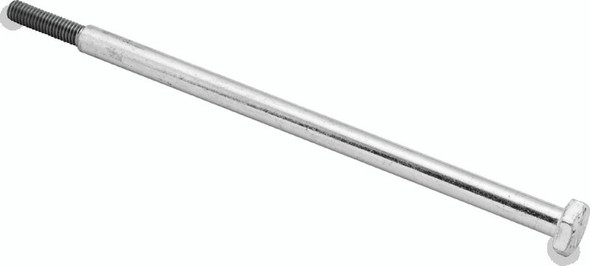
Twin Power 89-06 Big Twin w 10-32 Starter Exc 06 Dyna 1/4 Inch Jackshaft with 10-32 Thread - 413208
TwinPower
$8.99Will this starter fit my 2006 Dyna?This starter is not compatible with 2006 Dyna models, requiring confirmation of your specific vehicle's fitment before purchase.Is professional installation...$8.99 -

Twin Power 74-86 FX 84-88 FLT 82-88 FXR 74-76 XLH Black Hitachi Starter Replaces H-D 31570-73 - 215520
TwinPower
$329.99What is the warranty on TwinPower Starters?TWP Starters offer a limited manufacturer's lifetime warranty and a three-year warranty on Prestolite and Hitachi specific models for your peace of mind.Do...$329.99 -

Twin Power L66-82 FLH 82-E83 FXR 67-80 XLH XLS XLT Black Prestolite Starter Replaces H-D 31463-88T - 215519
TwinPower
$329.99Are TwinPower Starters compatible with my Harley-Davidson motorcycle?Confirming vehicle fitment is crucial; these Starters are designed for direct H-D replacements and offer precise integration.How...$329.99 -
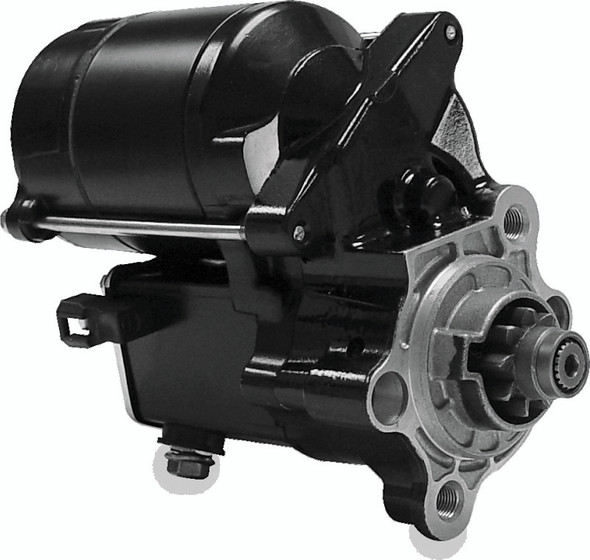
Twin Power 81-Up XL models Black 1.4 Kw Starter Replaces H-D 31390-86 31390-91F - 215513
TwinPower
$472.99Does this starter fit my 2001 Sportster 883?TwinPower E Starters are engineered for direct fitment on 1981-up XL models, ensuring compatibility with your 2001 Sportster 883.How difficult is the...$472.99 -

Twin Power 89-06 Big Twin Exc 06 Dyna 1.4 Kw Starter Chrome Rpls H-D 31522-89A 31553-90 31533-94B - 215507
TwinPower
$599.99What is the warranty on TwinPower starters?TwinPower starters boast a limited manufacturer's lifetime warranty, with a three-year warranty specifically on Prestolite and Hitachi models.How difficult...$599.99 -

Twin Power 89-06 Big Twin Exc 06 Dyna 1.4 Kw Starter Black Rpls H-D 31522-89A 31553-90 31533-94B - 215505
TwinPower
$449.99Can I install this starter myself?Professional installation is strongly recommended for this high-performance starter to ensure proper integration and optimal function with your vehicle's electrical...$449.99 -

QuadBoss 97-03 Yamaha YFA-1 Breeze 125 (02) Starter Solenoid & Relay - 495847
QuadBoss
$28.97What makes QBS Starters different from other starters?QBS Starters deliver maximum magnetic pull strength and 100% O.E.M. interchangeability, ensuring a superior starting experience.Are QBS Starters...$28.97 -

QuadBoss 00-06 Honda TRX350FM/FE/TM/TE FourTrax Rancher/4x4/ES Repair Kit Starter - 495815
QuadBoss
$36.49What is included in the QBS Starters kit?QBS Starters kits contain essential components like brushes, bearings, and seals for a comprehensive starter repair tailored to specific ATV applications.Do I...$36.49 -
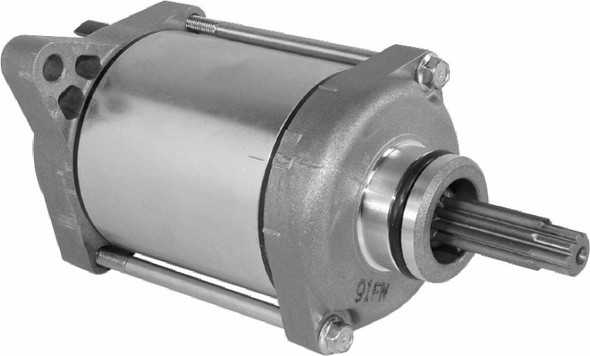
QuadBoss 15-20 Honda SXS500 Pioneer 500 Motor Starter - 495797
QuadBoss
$139.86What is the warranty on QBS Starters?QBS Starters offer dependable starting performance and are built to meet or exceed OEM specifications for extended engine life.How long does it take to install a...$139.86 -
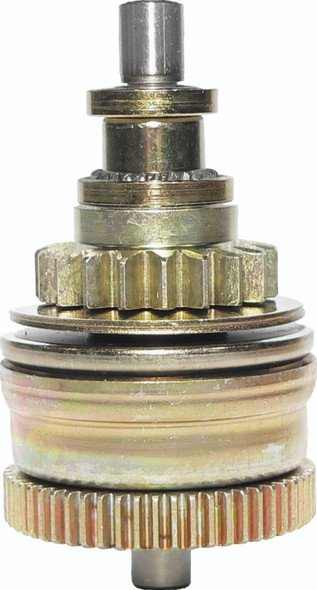
QuadBoss 05-09 Polaris Ranger 700 4x4 Starter Clutch - 495777
QuadBoss
$62.86Why is my Polaris Ranger starter kicking out or slipping?Worn starter clutches in your Polaris Ranger can cause kick out, freespin, or slipping issues, necessitating a replacement.Is this starter a...$62.86 -
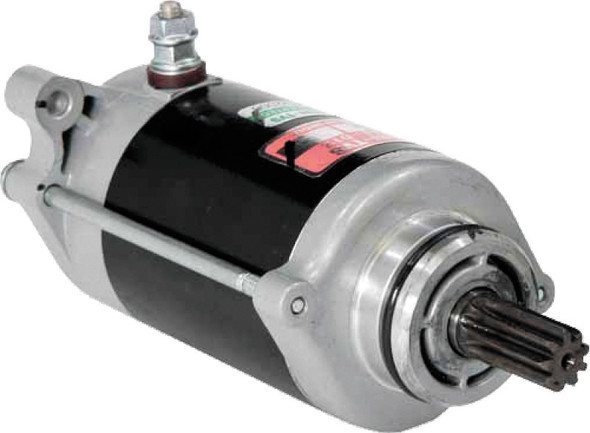
QuadBoss 98-01 Arctic Cat 400 2x4 Motor Starter - 495772
QuadBoss
$173.09What specific ATV models are compatible with this starter?This QuadBoss starter is engineered for direct-fit installation on 1998-2007 Arctic Cat 400/500 models and select Suzuki LT-A500F/LT-F500F...$173.09
A starter motor is the first link in your engine's performance chain — a weak or undersized unit means cranking failures under high compression, hot soak conditions, or extreme cold, none of which are acceptable on a race build or a daily driver you depend on. Motor Sport Mayhem carries 81 starters across 26 brands, ranging from budget-friendly replacements to heavy-duty units engineered for big-twin motorcycles, high-compression race engines, and off-road machines.
Our Top Picks for Starters
Every product below was selected based on engineering quality, proven real-world reliability, and the best match between application and value across our current in-stock inventory.
All Balls Racing ABR Starters
All Balls Racing | $457.31
A direct-replacement high-output starter built for big-twin V-twin applications where factory units routinely underperform under high-compression or hot soak conditions.
- Engineered to deliver consistent cranking torque in high-heat, high-compression environments where OEM starters fail prematurely
Arrowhead ARR Starters
Arrowhead | $330.23
A 12-volt, 9-tooth gear reduction starter designed for V-twin motorcycles, delivering higher torque output from a compact form factor compared to direct-drive OEM designs.
- Gear reduction design multiplies torque mechanically, reducing electrical draw and heat buildup during repeated cranking cycles
Bikers Choice BKC Starter
Bikers Choice | $549.99
A 1.4kW high-output starter for big-twin platforms that demand sustained cranking power without voltage sag or brush wear degradation over time.
- 1.4kW power rating places this well above stock output, handling high-compression camshaft upgrades and big-bore kits that overwhelm factory starters
Big Gun ATV SXS Rev Boxes
Big Gun | $178.73
An ignition control module that removes factory RPM limiters and optimizes ignition timing curves for ATV and SXS applications running performance modifications.
- Reprogrammed ignition advance maps unlock top-end power that factory CDI units deliberately cap for liability and emissions compliance
AEM Ignition Coils/Components
AEM | $222.95
A 4-channel coil driver designed for standalone EMS integration, giving tuners precise individual coil control across a wide range of engine configurations.
- Supports sequential coil-on-plug firing strategies essential for high-RPM naturally aspirated and forced induction builds running aftermarket engine management
aFe AFE Ignition Coils
aFe | $262.00
A full six-coil performance ignition set engineered for inline-six European platforms where OEM coils are a known weak point under sustained high-RPM operation.
- Higher primary winding saturation current produces stronger spark energy, directly improving combustion efficiency on modified and stock-displacement engines alike
BLOX Racing BX Ignition Coils
BLOX Racing | $212.80
A set of four coil-on-plug units built specifically for K-series four-cylinder platforms, addressing the OEM coil's well-documented degradation under high-boost and high-RPM conditions.
- Designed to maintain consistent spark energy output at elevated cylinder pressures where stock coils begin misfiring and losing dwell time accuracy
Bosch BOS Ignition Coils/Components
Bosch | $63.64
A compact 14V OE-spec ignition coil that meets original equipment tolerances, making it the correct choice for vehicles where reliability and exact fitment matter more than peak performance gains.
- Bosch manufactures OEM ignition components for multiple European automakers, meaning this is often the same part that shipped in the vehicle originally
COBB MAP Sensor Kit
COBB | $235.00
A 4-bar manifold absolute pressure sensor upgrade kit that extends the measurable boost range beyond what the factory 2.5-bar sensor can read, a mandatory upgrade for any serious forced induction build.
- At boost levels that saturate the OEM MAP sensor, the ECU loses accurate load data and begins pulling timing aggressively — this kit eliminates that ceiling entirely
AirDog ADG DieselRX Glow Plugs
AirDog | $20.65
Purpose-built glow plugs for 6.6L Duramax diesel applications that restore cold-start ignition reliability and reduce white smoke at startup caused by worn or failed OEM units.
- Proper glow plug function is the diesel equivalent of a spark ignition system — degraded plugs cause hard starts, incomplete combustion, and accelerated injector fouling
How to Choose the Right Starter
Starter selection comes down to four variables: output wattage, drive type, gear ratio, and thermal tolerance. The factory starter on most street vehicles is sized to crank a stock compression ratio at ambient temperature — it is not designed for modified engines, repeated hot-soak starts, or the sustained cranking demands of a race vehicle with a locked-out fuel system. When you add a high-compression piston kit, a stroker crank, or a camshaft with significant overlap, cranking resistance increases substantially, and the OEM unit runs hotter, draws more current, and fails sooner. Choosing the correct aftermarket starter means matching the output specification to the actual mechanical load of your engine, not just the vehicle's year and model.
Key Specifications
Output Rating (kW or HP): Starter output is measured in kilowatts on motorcycle and powersports applications and in horsepower on some automotive units. Higher compression engines — anything above 10.5:1 on a gasoline engine or modified diesel applications — need higher output starters to maintain adequate cranking RPM for reliable ignition. A starter that cranks too slowly under load will cause extended crank times, fuel wash on cylinder walls, and accelerated ring wear. For forced induction builds, consider that turbo engines often have higher effective compression on cold cranking cycles.
Drive Type — Direct Drive vs. Gear Reduction: Direct drive starters connect the motor armature to the ring gear through a Bendix drive, which is simple but mechanically inefficient at high torque demands. Gear reduction starters use an internal planetary or helical gear set to multiply torque at the output shaft while allowing the motor to spin at its optimal RPM — the result is more torque, less heat, and lower peak current draw from your electrical system. On high-compression or big-displacement engines, gear reduction is the correct architecture. For lightly modified or stock-compression applications, direct drive replacements remain a cost-effective solution.
Thermal Tolerance and Duty Cycle: Heat is the primary killer of starter motors. On a race vehicle where multiple staged cranking events happen in succession — parade laps, staging lanes, pit restarts — the thermal mass of the starter's armature and brush assembly determines how quickly resistance climbs and how long the unit survives. High-quality aftermarket starters use sintered copper brushes, higher-grade armature windings, and improved housing ventilation to extend duty cycle. If your application involves repeated short-interval cranking, this specification matters more than raw output wattage.
Ignition System Integration: On modern EFI platforms, the starting system does not operate in isolation — the ECU monitors cranking RPM via the crankshaft position sensor and adjusts fuel and ignition delivery accordingly. Paired upgrades to engine components like high-output ignition coils, upgraded MAP sensors, and performance glow plugs on diesel applications work together with starter hardware to ensure the engine fires cleanly on the first crank cycle. A starter that cranks fast enough to generate adequate compression signal data dramatically improves cold-start calibration accuracy.
Starter Motor Output vs. Engine Compression Ratio Reference
| Engine Compression Ratio | Minimum Recommended Starter Output | Preferred Drive Type | Notes |
|---|---|---|---|
| Up to 9.5:1 (Stock/Mild) | 0.8 – 1.0 kW | Direct Drive or Gear Reduction | OEM-equivalent replacement acceptable; standard duty cycle |
| 9.5:1 – 10.5:1 (Mild Performance) | 1.0 – 1.2 kW | Gear Reduction Preferred | Camshaft upgrades increase cranking load; budget for higher output |
| 10.5:1 – 12.0:1 (High Performance) | 1.2 – 1.4 kW | Gear Reduction Required | High-compression pistons and aggressive cams demand gear reduction architecture |
| 12.0:1 – 14.0:1 (Race / Naturally Aspirated) | 1.4 – 2.0 kW | High-Torque Gear Reduction | Consider race-spec starters with enhanced thermal management for repeated staging |
| Above 14.0:1 (Full Race / Alcohol) | 2.0 kW+ | High-Torque Gear Reduction | Dedicated race starters with external solenoids; short duty cycle management critical |
| Diesel (Glow-Plug Assist) | 1.2 kW minimum + functional glow plugs | Gear Reduction Standard | Glow plug condition directly impacts cranking duration and effective load on starter |
Price Guide
Entry ($2.99–$110.00): This range covers OE-equivalent replacement components, including ignition system maintenance items like glow plugs, individual replacement coils for stock-compression applications, and basic ignition control modules for lightly modified powersports machines. If your goal is restoring stock function on an unmodified vehicle, this tier delivers exactly what you need without paying for performance you won't use.
Mid-range ($110.00–$400.00): The majority of enthusiast builds land here, and for good reason. This is where gear reduction starter motors, high-output ignition coil sets for performance platforms, and application-specific ignition upgrade kits live. The engineering quality difference over budget units is real — better winding materials, tighter tolerances, and genuine application-specific design versus universal fit compromises. Most street performance and mild track builds are fully served in this range.
Premium ($400.00–$1,630.00): Race-spec and heavy-duty high-output units occupy this tier — starters engineered for maximum torque output, sustained duty cycles, and environments where failure is not an option. This includes full-race starter systems, high-output big-twin motorcycle starters designed to handle significant engine modifications, and complete ignition management systems for standalone EMS builds. If you are building a dedicated race vehicle, running an engine with substantial compression or displacement upgrades, or operating in conditions that routinely destroy budget components, the premium tier is the correct investment.
Who Is This For?
Starters and ignition starting components serve everything from daily commuters to professional race builds — here is how the usage data breaks down across real applications.
Easy DIY Install — 8.7/10
This category scores the highest of all use cases for DIY installation, which reflects the nature of starter and ignition component replacement — most applications require basic hand tools, a factory service manual, and a straightforward disconnect-and-reconnect process. Gear reduction starter swaps on motorcycle platforms are bolt-in procedures that experienced home mechanics complete in under an hour. Coil-on-plug ignition upgrades on four-cylinder and inline-six platforms are similarly accessible, making this one of the best categories for DIY performance gains without fabrication skills.
Engine Performance — 8.2/10
A strong cranking system is foundational to engine performance in ways that don't always show up on a dyno sheet but absolutely show up in real-world driving. Consistent, fast cranking ensures the ECU receives accurate crank position data from the first revolution, enabling proper ignition timing on the first combustion event rather than requiring several crank cycles to establish sync. On modified engines with aggressive camshaft timing or high-compression pistons, a high-output starter directly reduces the mechanical stress of extended cranking and improves cold-start combustion efficiency across the board.
Street Performance — 7.8/10
Street performance vehicles benefit from starter and ignition upgrades primarily in reliability and consistency rather than peak power numbers — a car that starts cleanly every time, in every weather condition, is a better street machine than one with a marginal starting system that degrades under heat soak or cold temperatures. Upgraded ignition components paired with a properly spec'd starter eliminate the partial-misfire cold-start conditions that cost fuel economy and accelerate catalyst degradation. Pairing starting system upgrades with fuel delivery improvements gives a complete first-fire system that performs consistently across ambient temperature extremes.
Track / Autocross — 7.9/10
Track day and autocross use places specific demands on starters that daily driving never surfaces — repeated hot-soak restarts in staging lanes, grid holds with the engine off, and the occasional stall on course all require a starter that performs reliably at elevated underhood temperatures. A gear reduction starter's lower current draw also reduces the voltage drop that affects other electrical systems during cranking, which matters on vehicles running data acquisition, standalone ECUs, or electric power steering. For autocross builds where the battery and electrical system are already stressed by the performance modifications, a thermally efficient starter is a genuine competitive advantage.
Drag Racing — 7.8/10
Drag racing presents the most abusive starting environment of any motorsport — engines idling for extended staging periods, hot restarts between rounds, and the high compression ratios common in bracket and heads-up classes all demand a starter that can deliver consistent cranking torque regardless of thermal state. High-torque gear reduction units with copper-sintered brush assemblies and heavy-gauge armature windings are the correct specification here. For serious drag racing applications, pairing a high-output starter with a properly sized battery, quality cables, and a reliable ignition system ensures the car leaves the line on the first crank without electrical system compromise.
Trusted Starter Brands We Carry
Arrowhead has built a reputation in the powersports and motorcycle starter market on the strength of their gear reduction engineering — their units are used as reference points by technicians when diagnosing OEM starter failures because the output specifications are published and verifiable. All Balls Racing brings the same closed-tolerance bearing and drivetrain manufacturing philosophy to their starter line, producing units that meet or exceed OEM specifications without the OEM price premium. Bikers Choice sources components specifically for big-twin V-twin platforms where the starting loads are well above typical small-displacement applications, and their output ratings reflect real-world testing on modified engines rather than theoretical stock calculations. On the ignition side, Bosch is an OEM supplier to multiple European automakers and their aftermarket coils carry the same manufacturing tolerances as the parts that shipped in vehicles originally — this matters when fitment accuracy and emissions compliance are requirements. AEM and BLOX Racing approach ignition components from a motorsport engineering background, designing coil drivers and coil packs for modified platforms where factory components were never intended to operate. COBB's sensor and calibration components round out the ignition ecosystem for forced induction builds where the OEM sensor range is insufficient for the modified operating envelope.
Frequently Asked Questions
Are aftermarket ignition coils as good as OEM?
For a stock-compression, unmodified engine, a quality aftermarket coil from an OEM supplier like Bosch will match original equipment performance exactly — in many cases it is manufactured in the same facility with the same tooling. Where aftermarket coils genuinely exceed OEM is on modified engines: higher primary saturation current, improved epoxy encapsulation for heat resistance, and stronger secondary windings allow performance-oriented aftermarket coils to deliver more spark energy at elevated cylinder pressures and RPM ranges that OEM designs were never validated against. The critical variable is buying from a brand that publishes actual output specifications — coils from reputable performance manufacturers include measurable data, while ultra-cheap alternatives typically do not. On a forced induction or high-compression build, a quality aftermarket coil is not just as good as OEM — it is meaningfully better for the application.
Are all ignition wires the same?
Ignition wires differ significantly in core construction, insulation material, and suppression resistance values — and these differences have real performance consequences. Spiral-wound magnetic core wires provide superior RFI suppression with minimal resistance, which matters on vehicles with sensitive electronics or data acquisition systems. Straight-wound carbon core wires are cheaper to manufacture but degrade faster under heat cycling and can develop high-resistance spots that cause partial misfires. The diameter of the wire, quality of the boot seals, and the conductor-to-terminal connection method all affect long-term reliability under vibration and heat. On a performance build, wire quality directly affects spark energy delivery — a degraded wire absorbs voltage that should be reaching the plug.
Are all voltage regulators the same?
Voltage regulators vary substantially in their regulation accuracy, thermal tolerance, and maximum current capacity — and on a modified vehicle with additional electrical loads, these differences are consequential. A stock regulator sized for the OEM alternator output can be overwhelmed by additional lighting, data systems, or high-output ignition components, causing voltage fluctuations that destabilize ignition timing and fuel injector pulse width. Quality aftermarket regulators use MOSFET switching technology rather than older SCR designs, which results in tighter voltage control, lower heat generation, and longer service life. On any build that has added electrical accessories beyond the factory configuration, the regulator specification should be reviewed against the actual charging system load.
Are high energy ignition coils worth it?
High energy ignition coils are worth the investment on any engine that operates outside the original design envelope — forced induction, high compression, aggressive camshaft timing, or extended RPM range. The fundamental benefit is a longer, hotter spark event that ensures complete combustion of a denser or leaner air-fuel charge that a stock coil cannot reliably ignite at its design dwell time. On a naturally aspirated stock engine, the gains are measurable but modest — improved cold-start combustion efficiency and reduced plug fouling. On a turbocharged engine running elevated boost, a high-energy coil is a legitimate power component because it directly prevents the partial misfires that cause power loss and damage catalytic converters. The threshold where high-energy coils become clearly justified is approximately 15 PSI of boost or a compression ratio above 11:1.
Are cheap MAP sensors worth it?
A MAP sensor is a safety-critical input — the ECU uses its signal to calculate engine load and make real-time fuel and ignition decisions, so inaccurate data from a cheap sensor translates directly into incorrect fueling, timing errors, and potential engine damage under high-load conditions. Budget MAP sensors often have poor linearity at the extremes of their measurement range, which is precisely where accuracy matters most on a modified engine. Beyond accuracy, housing seal quality and connector durability determine how long the sensor survives in an underhood environment exposed to heat cycling, vibration, and fuel vapor. For a stock-compression daily driver using a replacement at OEM range, a quality mid-tier option is acceptable. For any forced induction application, the sensor is a load-bearing component and the quality of its output signal is non-negotiable — spend appropriately.
Building something specific? Our performance specialists can help you select the right Starters for your application — street, track, or full race build.