
Ignition
- Product
- Qty in Cart
- Quantity
- Price
- Subtotal
-


HKS SUPER FIRE RACING M45i - Single - 50003-M45I-1
HKS
$27.00What is the proper gap for HKS Super Fire Spark Plugs?Consult your vehicle's service manual for the precise spark plug gap, as it varies by application for optimal performance.How do I ensure the HKS...$27.00 -
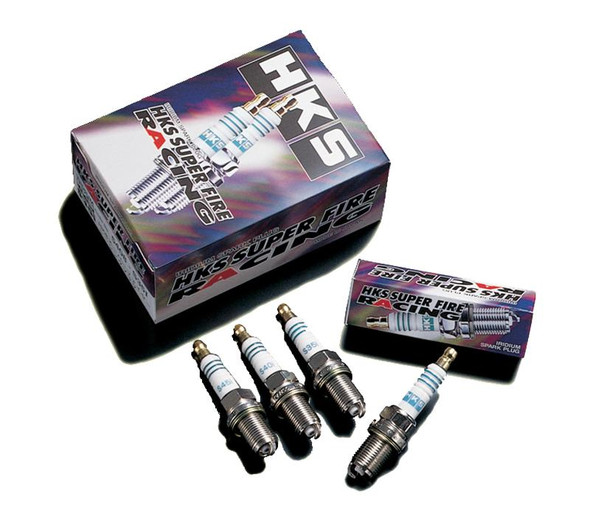
HKS SUPER FIRE RACING M45G - Single - 50003-M45G-1
HKS
$27.00How do I know if the HKS Super Fire Spark Plug is compatible with my vehicle?Confirm compatibility using our detailed fitment guide to ensure precise installation and optimal performance for your...$27.00 -
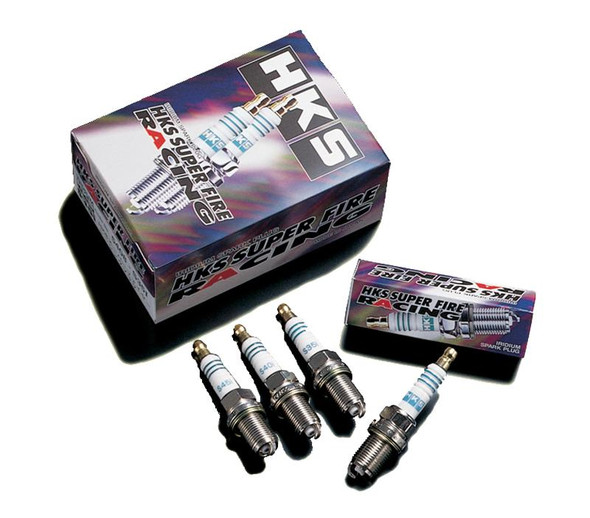
HKS SUPER FIRE RACING M45 - Single - 50003-M45-1
HKS
$27.00Which HKS Super Fire Spark Plug should I get?Confirm vehicle fitment using our comprehensive compatibility guide before selecting your HKS Super Fire Spark Plug for optimal results.How do I install...$27.00 -

Bosch 14V Compact Type 167 Ignition Coil (OE 177074) - 0221504015
Bosch
$50.79How many ignition coils are in a 2000-2005 Ferrari 360?Each Bosch ignition coil is designed to deliver the right ignition voltage for optimal combustion and peak engine power on your Ferrari 360.Can...$50.79 -


NGK Nickel Spark Plug Box of 4 (B8EFS) - 1049
NGK
MSRP: $35.00$13.27What is the main advantage of using NGK Nickel Spark Plugs?NGK Nickel Spark Plugs deliver consistent engine power and smooth acceleration through their OE quality nickel alloy and robust construction...MSRP: $35.00$13.27 -

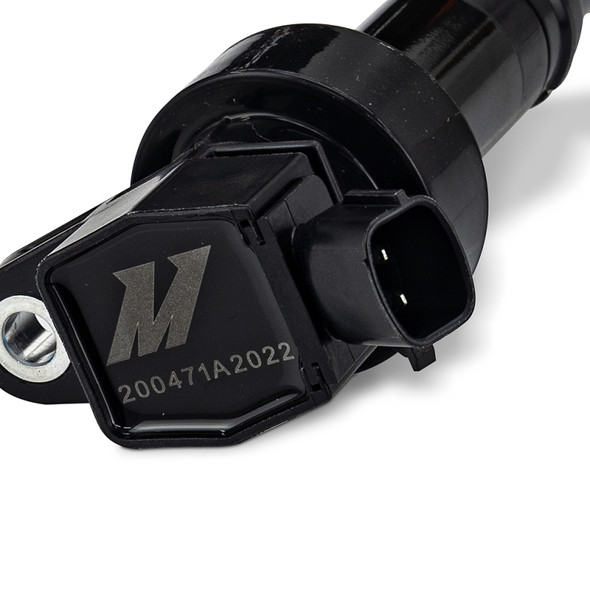
Mishimoto 12-18 Hyundai Accent 1.6L Ignition Coil - 4-Pack - MMIG-ACCNT-1204
Mishimoto
MSRP: $152.00$137.95What vehicles do these ignition coils fit?Mishimoto ignition coils are engineered for a precise fit on 2012-2020 Hyundai Accent/Veloster and Kia Rio/Soul models, ensuring seamless integration.Can I...MSRP: $152.00$137.95 -
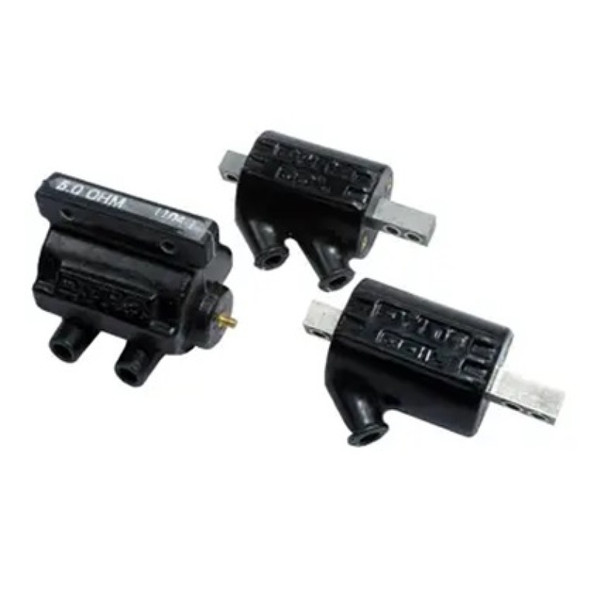
Dynatek Ignition Coil Set - Dual Output - 3 Ohm Single Plug/Dual Fire - DC6-1
Dynatek
MSRP: $144.43$129.99What is the primary benefit of upgrading my ignition coils?Dynatek ignition coils deliver a hotter spark, enabling more complete combustion and significantly improving throttle response for a refined...MSRP: $144.43$129.99 -

Big Gun 04-08 Polaris Scrambler 500 4x4 Rev Box - 40-R10C
Big Gun
MSRP: $184.75$149.67Is this rev box compatible with my stock ECU?This rev box is a direct plug-in replacement for your stock CDI box, ensuring seamless integration with your existing ECU system.Will this rev box void my...MSRP: $184.75$149.67 -
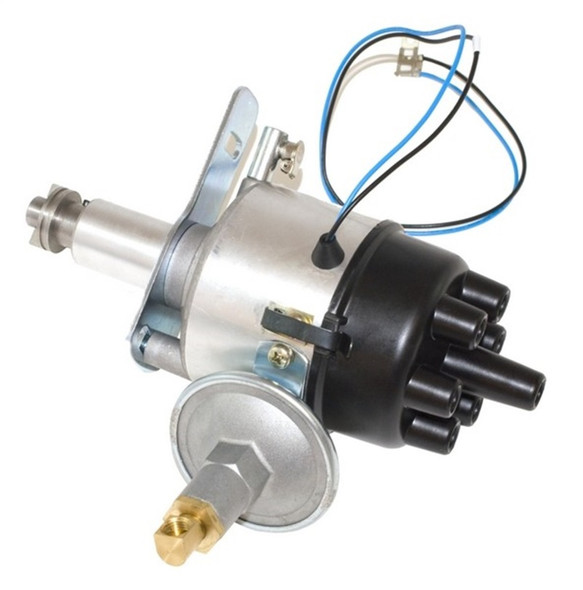
Omix Distributor Electronic 226 54-64 Willys Models - 17239.08
OMIX
$307.83Omix proudly offers high quality replacement parts for your Willys/Jeep that always meet or exceed factory standards for a great fit and quality you can rely on. This replacement electronic...$307.83 -
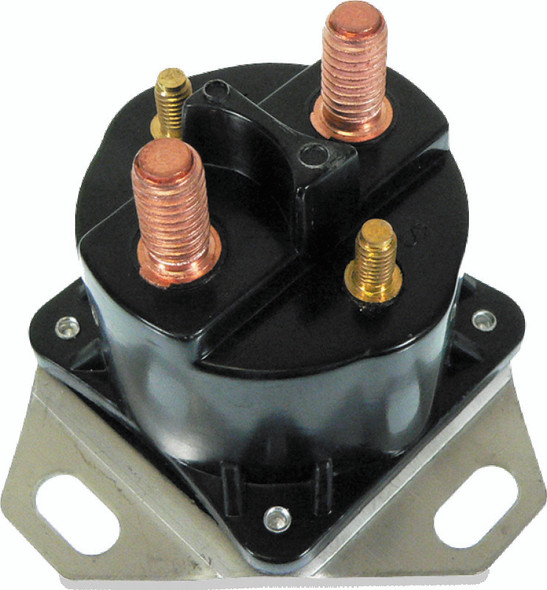
Twin Power Starter Relay Replaces H-D 71463-73A - 463053
TwinPower
$31.99Twin Power™ starter relay directly replaces H-D 71463-73A, delivering reliable electrical activation for Harley-Davidson starter circuits across Big Twin and XL applications.Precision OEM replacement...$31.99 -

QuadBoss 94-95 Polaris 300 2x4 Ignition Coil - 463725
QuadBoss
$45.02What does a failing ignition coil usually indicate?A failing ignition coil often indicates weak spark issues, lost engine power, or a need for Stock Replacement Ignition maintenance on compatible...$45.02 -
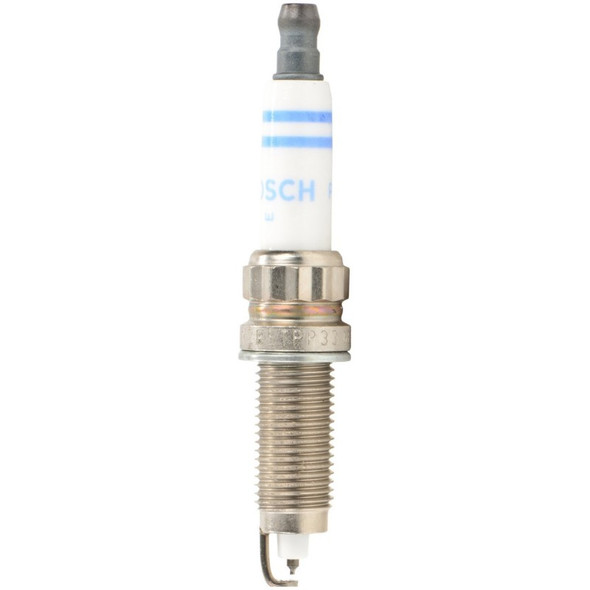
Bosch Suppressed Spark Plug (ZR5TPP33) - 0242145515
Bosch
$8.62How often should I change my spark plugs?Bosch spark plugs deliver consistent ignition for smoother engine operation and a more refined drive, with recommended replacement intervals confirmed by your...$8.62
The ignition system is the foundation of combustion efficiency — every millisecond of spark timing, every volt delivered to the plug, and every coil saturation cycle directly determines how much power your engine makes and how reliably it makes it. Motor Sport Mayhem stocks 649 ignition components across 26 brands, from entry-level replacement plugs to full race-spec coil drivers, covering gasoline, diesel, and powersports applications at every performance tier.
Our Top Picks for Ignition
Each of these products was selected based on proven performance data, engineering quality, and results across real-world street and competition builds.
AEM Ignition Coils/Components
AEM | $222.95
A 4-channel coil driver engineered for precise coil control in high-output engine builds where factory ignition drivers are the limiting factor.
- Supports individual coil-on-plug control with programmable dwell, critical for forced induction and high-rpm applications
aFe Ignition Coils
aFe | $262.00
A complete high-performance coil set delivering increased spark energy over OEM for improved throttle response and combustion efficiency.
- Higher primary winding voltage output compared to stock coils means more reliable ignition under lean or high-boost conditions
ADG DieselRX Glow Plugs
AirDog | $20.65
Direct-fit glow plugs engineered for cold-start reliability and consistent pre-chamber heat on high-displacement diesel applications.
- Precision ceramic heating element reaches target temperature faster than standard steel-tip plugs, reducing crank cycles in sub-freezing conditions
ABR Starters
All Balls Racing | $457.31
A high-torque replacement starter built to exceed OEM cranking performance on high-compression V-twin applications.
- 1.4kW output rating handles elevated compression ratios that overtax stock starter motors, particularly after engine displacement upgrades
ARR Starters
Arrowhead | $330.23
A 12-volt, 9-tooth starter motor designed as a robust OEM-replacement with improved internal component tolerances for extended service life.
- Arrowhead's remanufactured and new-build starters undergo load-testing at rated amperage draw to verify performance before shipping
BIG ATV SXS Rev Boxes
Big Gun | $178.73
A performance CDI rev box that removes the factory RPM limiter and optimizes ignition timing curves for maximum top-end power on powersports applications.
- Reprogrammed timing advance curves deliver measurable mid-range and top-end gains without requiring additional engine modifications
BKC Starter
Bikers Choice | $549.99
A 1.4kW black-finish starter built specifically for Big Twin V-twin engines, combining OEM bolt-pattern fitment with upgraded internal winding specs.
- Heavy-duty copper windings and reinforced Bendix drive mechanism address the two most common failure points in high-mileage starter rebuilds
BX Ignition Coils
BLOX Racing | $212.80
A matched set of four direct-fit coil-on-plug units engineered for K-series engines, delivering consistent spark energy across all cylinders at elevated rpm.
- Tight coil-to-coil output variance across the set prevents cylinder-to-cylinder combustion inconsistency that degrades power and response at high rpm
BOS Ignition Coils/Components
Bosch | $63.64
An OEM-specification compact ignition coil that restores factory spark output and dwell characteristics — the benchmark for reliable, cost-effective coil replacement.
- Bosch is an original equipment supplier to major automotive manufacturers, meaning this coil meets the same electrical specs the factory engineered the system around
COBB MAP Sensor Kit
COBB | $235.00
A 4-bar MAP sensor upgrade kit that expands the boost pressure sensing range, allowing accurate fueling and ignition timing calculations beyond the factory sensor's saturation point.
- Essential for forced induction builds running boost levels that exceed stock sensor ceiling — a saturated MAP sensor causes the ECU to miscalculate load and pull timing aggressively
How to Choose the Right Ignition
Ignition system failures and mismatches are among the most misdiagnosed performance problems in motorsport — the category spans spark plugs, ignition coils, wires and boots, CDI and ignition control modules, MAP sensors, glow plugs, starters, and rev limiters, and the right choice in each sub-category depends entirely on your application's voltage requirements, operating rpm range, combustion temperature, and whether the ECU controls timing or the ignition module does it independently.
Key Specifications
For ignition coils, the two specifications that matter most are peak secondary voltage output (measured in kilovolts) and maximum dwell time (measured in milliseconds). A stock coil on a naturally aspirated engine typically delivers 30–40kV — sufficient for pump fuel at modest compression. Once you add boost, raise compression, or switch to alternative fuels, the ionization voltage required to fire the plug increases substantially, and an underpowered coil will misfire under load long before it throws a code. Upgraded coils rated at 45–50kV+ provide the overhead needed for modified combustion conditions.
Spark plug selection is driven by heat range, electrode material, and gap specification. Heat range controls how quickly the plug transfers heat away from the firing tip — too cold and the plug fouls with carbon at low loads, too hot and the tip becomes a pre-ignition source under high load. Iridium and platinum electrodes reduce the voltage required to fire a spark compared to copper due to their smaller tip diameter, which matters in high-rpm applications where dwell time is short. Gap specification must match coil output capacity — a wide gap demands more voltage to bridge, and pairing a wide-gap plug with a marginal coil guarantees misfires at high rpm.
For MAP sensors, the critical specification is absolute pressure range expressed in bar. A factory 2-bar MAP sensor saturates at approximately 14.7 psi of boost — adequate for mildly tuned applications but completely blind above that threshold. Running a modified engine on a saturated MAP sensor causes the ECU to default to a fixed load calculation, pulling timing and enriching fuel delivery incorrectly. Upgrading to a 3-bar or 4-bar sensor restores accurate load data across the full boost range, which is why MAP sensor upgrades are inseparable from serious forced induction builds. The sensor must be supported by a compatible ECU calibration to translate the extended voltage range correctly.
Starter motors are rated by kilowatt output and tooth count on the Bendix drive — neither is interchangeable without verifying ring gear compatibility. High-compression or big-displacement engines require starters with higher torque output to overcome the increased static compression during cranking. Undersized starters overheat on extended crank cycles, destroying brushes and windings. Voltage regulators, often overlooked in ignition system planning, control charging output to the battery and directly affect coil saturation time — a failing regulator that allows voltage to drop below 13V under load will degrade coil performance measurably, which is why electrical system health is always the first diagnostic step before condemning ignition components.
Ignition Coil Output vs. Application Requirements
| Application Type | Required Secondary Voltage (kV) | Recommended Spark Plug Gap (in) | Coil Tier |
|---|---|---|---|
| Stock N/A Daily Driver | 28–35 kV | 0.040–0.044" | OEM Replacement |
| Mild Street Performance (N/A) | 35–42 kV | 0.038–0.042" | High-Energy OEM-Upgrade |
| Turbocharged / Supercharged Street | 40–48 kV | 0.028–0.035" | Performance Aftermarket |
| High-Boost Forced Induction (>20 psi) | 45–55 kV | 0.022–0.028" | Race-Spec / Coil Driver |
| Naturally Aspirated Race / High Compression | 42–50 kV | 0.030–0.038" | Race-Spec Coil-on-Plug |
| E85 / Methanol Fuel | 45–55 kV | 0.024–0.032" | Race-Spec / External Driver |
Price Guide
Entry ($2.99–$55): This range covers OEM-replacement spark plugs, individual replacement coils for common applications, and basic glow plugs — the right choice for restoring a stock ignition system to factory specification without adding complexity. Quality varies significantly in this tier; sticking to established OEM-supplier brands is critical because counterfeit and substandard ignition components are prevalent at the lowest price points.
Mid-range ($55–$250): The majority of performance enthusiasts and track-day drivers land here, picking up high-energy coil upgrades, performance CDI modules, complete coil sets, and MAP sensor kits that deliver measurable improvements over stock without requiring ECU recalibration in most cases. This tier includes the iridium and platinum plug sets, quality ignition wire sets with low-resistance spiral-wound cores, and starter motors with upgraded internals.
Premium ($250–$1,630): Programmable coil drivers, complete race ignition systems, multi-channel ignition controllers, and high-output starters for heavily modified engines occupy this tier — these are purpose-built components for builds where the ignition system is a tuned parameter rather than a fixed one. The cost is justified when combustion control at high rpm, high boost, or alternative fuel compositions is the difference between consistent power and catastrophic detonation.
Who Is This For?
Ignition components serve every performance tier from casual street driving to full competition — the usage data reflects genuine demand across all of them.
Easy DIY Install — 8.7/10
The highest score in the matrix reflects the reality that ignition is one of the most accessible performance categories for home builders. Spark plug replacement, coil-on-plug swaps, and MAP sensor upgrades require basic hand tools and a service manual — no alignment rack, no press, no specialized equipment. The direct-connect nature of most ignition components means even first-time builders can restore or upgrade ignition performance in an afternoon, which drives strong volume in this category across all skill levels.
Engine Performance — 8.2/10
Ignition system efficiency is a direct multiplier on combustion quality — a stronger, more consistent spark means more complete fuel burn, which translates to measurable power gains particularly in the mid-range and top-end where marginal coils and worn plugs cost horsepower invisibly. Pairing upgraded coils with fresh plugs gapped correctly for the application consistently produces dyno-verifiable results, especially on engines that have accumulated mileage on original ignition components. This is one of the highest return-on-investment upgrades available for modified street engines before moving into more invasive engine component work.
Street Performance — 7.8/10
Street performance builds score this category highly because throttle response, cold-start reliability, and idle quality are all ignition-dependent characteristics that affect daily driving feel as much as peak output. Upgraded coils and iridium plugs produce noticeably crisper tip-in response and eliminate the subtle misfires that manifest as roughness at light throttle — improvements that street drivers feel immediately without needing a dyno to confirm. MAP sensor accuracy also falls in this use case, directly affecting how cleanly the ECU manages fueling during normal driving cycles on modified engines.
Track / Autocross — 7.9/10
At sustained high rpm on track, marginal ignition components fail in ways that don't appear during street driving — heat soak degrades coil output, plug gaps erode from accumulated mileage, and CDI timing curves that are acceptable at part-throttle become limiting at full load. Autocross specifically punishes ignition hesitation because throttle transitions are abrupt and frequent; a coil or plug that barely passes street use will misfire repeatedly through a timed run. Serious track day competitors treat ignition as a consumable category — plugs are inspected or replaced on a schedule, not when symptoms appear, following the same logic applied to brakes and tires.
Racing Competition — 7.3/10
Full competition applications score slightly lower in aggregate because purpose-built race engines often run spec or heavily controlled ignition systems within class rules, limiting component choice. Where the score climbs is in open-class drag, sprint, and endurance competition, where programmable ignition timing, multi-spark CDI systems, and coil drivers become genuine power-adding tools rather than maintenance items. Rev boxes and ignition controllers in this segment are calibrated specifically for the engine combination, working in conjunction with fuel delivery tuning to extract every available horsepower.
Trusted Ignition Brands We Carry
NGK is the dominant brand in this category for good reason — as an OEM supplier to virtually every major manufacturer, their spark plugs and ignition components are engineered to exact heat range and gap specifications that match combustion chamber geometry, and their iridium and laser-platinum lines set the benchmark for electrode longevity and consistent spark output. HKS brings genuine motorsport engineering to the ignition category, with programmable timing controllers and high-output ignition systems developed on the Japanese racing circuit and proven in high-boost turbocharged applications. Granatelli Motor Sports specializes in single-fire ignition wires and coil technology specifically developed for reduced electromagnetic interference and maximum energy transfer, with a particular strength in V-twin and American V8 applications. Mishimoto, better known for cooling components, brings the same materials engineering to ignition coils — their products are designed for thermal stability under sustained high-load conditions. Moroso has been supplying drag racing and circle track teams for decades with ignition wire sets wound to minimize radio frequency interference while maximizing spark energy delivered to the plug, and their products remain a go-to choice for racers who can't afford a misfire at wide-open throttle. COBB rounds out the lineup with ECU-integrated ignition support hardware, including MAP sensor kits that are designed and validated as part of a complete engine management solution rather than as standalone components.
Frequently Asked Questions
Are aftermarket ignition coils as good as OEM — or better?
Quality aftermarket ignition coils from established brands match or exceed OEM specifications, but the key word is quality — the ignition coil market has a significant counterfeit and substandard tier that looks identical to legitimate parts until it fails under load. OEM-supplier brands like Bosch produce coils that meet exactly the same electrical specifications as factory components because they often supply the factory. True performance aftermarket coils from brands engineering specifically for modified applications are designed to exceed OEM output voltage and sustain higher thermal loads — in those cases, they are measurably better than stock for the specific application they're built for. The danger zone is unbranded or suspiciously cheap coils that claim OEM equivalence but use inferior winding materials and plastic housings that crack under engine bay temperatures.
Are all ignition wires the same?
Ignition wires vary significantly in core construction, insulation material, suppression rating, and maximum operating voltage — none of which are visible at purchase. Spiral-wound or helical-wound cores offer better radio frequency interference suppression than solid-core wires, which matters on modern vehicles with sensitive electronics and on race vehicles where ignition noise can interfere with data acquisition. Wire diameter affects both current capacity and heat resistance — thicker wire with silicone jacket insulation tolerates higher underhood temperatures and higher voltage without insulation breakdown. The terminal and boot construction is equally important; a well-made wire with a poorly sealed boot will arc to ground through moisture before the wire itself fails. For performance applications, wire resistance per foot should be verified against the coil's output specification — a high-resistance wire on a marginal coil will drop spark voltage at the plug end where you need every volt available.
Are high-energy ignition coils actually worth the upgrade?
High-energy ignition coils deliver a return on investment that scales with how far the engine has deviated from stock — on a completely stock, low-mileage engine, the improvement is marginal because the factory system was designed adequately for that application. Once compression rises, boost is added, fuel changes, or the engine accumulates miles that erode plug gaps and reduce coil efficiency, the higher output voltage and extended spark duration of a performance coil produces real, measurable combustion improvements. The most consistent gains are seen on engines running modified air intake and exhaust systems where the air-fuel ratio at the plug tip has changed from the factory calibration. At sustained high rpm, the faster coil recharge time of a high-energy unit also reduces the probability of misfires that stock coils allow at their dwell limit.
Are cheap MAP sensors worth the risk?
No — a MAP sensor is a direct input to fuel and ignition timing calculations, and an inaccurate reading from a substandard sensor causes the ECU to miscalculate engine load across the entire operating range, not just at peak boost. The consequences range from reduced fuel efficiency from over-rich calculations at cruise to detonation from retarded timing caused by erroneous low-load signals at high throttle. The cost differential between a budget MAP sensor and a quality unit is typically $50–$100 — negligible against the cost of a damaged engine from a single detonation event. On a tuned or modified engine where the ECU calibration was built around accurate sensor data, a drifting or inaccurate MAP sensor invalidates the entire tune. This is one component category where buying cheap is a false economy regardless of application.
Are all voltage regulators the same, and does it affect ignition performance?
Voltage regulators vary substantially in output stability, maximum sustained amperage, and thermal management design — and yes, ignition performance is directly tied to charging system voltage stability. Ignition coils are designed to saturate at a specific supply voltage, typically 13.5–14.5V on a healthy charging system; voltage below 12.5V under load extends the time required for full coil saturation, which at high rpm means the coil fires before fully charged, reducing spark output voltage. On motorcycles and powersports applications, regulator/rectifier quality is especially critical because the compact designs used in these applications are prone to thermal failure under sustained electrical load. A failing voltage regulator is frequently the root cause of what presents as coil or plug failure — always verify charging system output voltage before diagnosing ignition misfires on any platform.
Building something specific? Our performance specialists can help you select the right Ignition for your application — street, track, or full race build.