
Gauge Components
- Product
- Qty in Cart
- Quantity
- Price
- Subtotal
-

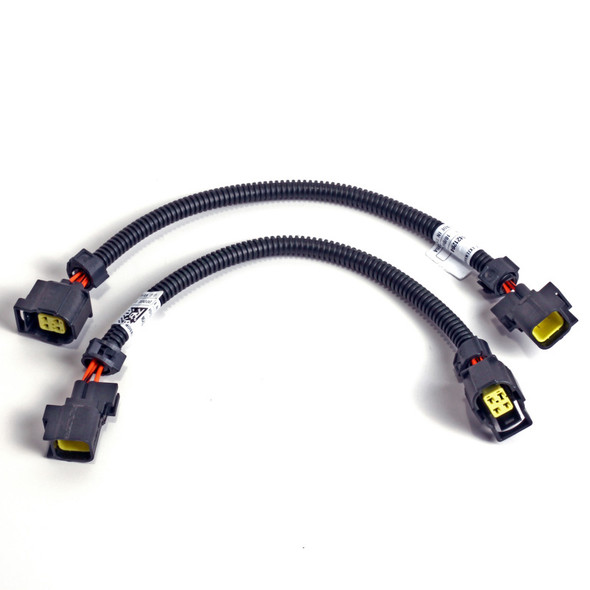
BBK 05-20 Dodge 6.1L/6.2L/6.4L Rear O2 Sensor Extensions 4 Pin Square Style 24in (pair) - 11181
BBK
MSRP: $89.99$74.99Will these BBK extension cables fit my specific vehicle?Confirm fitment with your vehicle before purchase; these extension cables ensure a secure, factory-fit connection for optimal oxygen sensor...MSRP: $89.99$74.99 -
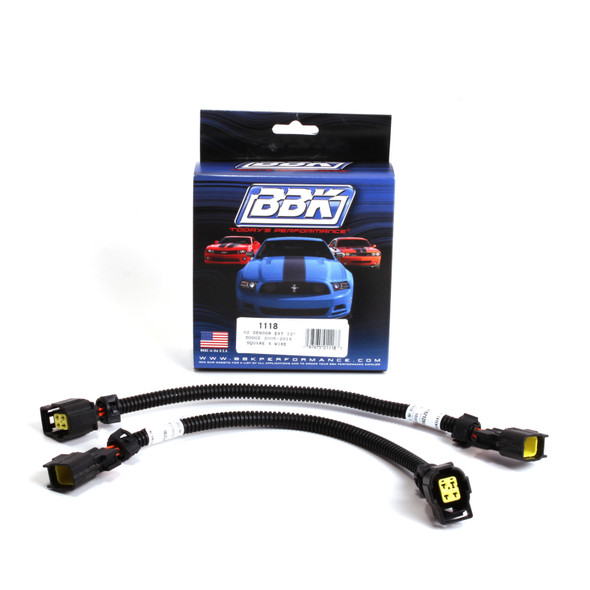

BBK 05-20 Dodge 4 Pin Square Style O2 Sensor Wire Harness Extensions 12 (pair) - 1118
BBK
MSRP: $89.99$69.99What is the primary function of an oxygen sensor extension cable?Oxygen sensor extension cables provide necessary length for relocating O2 sensors, ensuring accurate engine management readings after...MSRP: $89.99$69.99 -

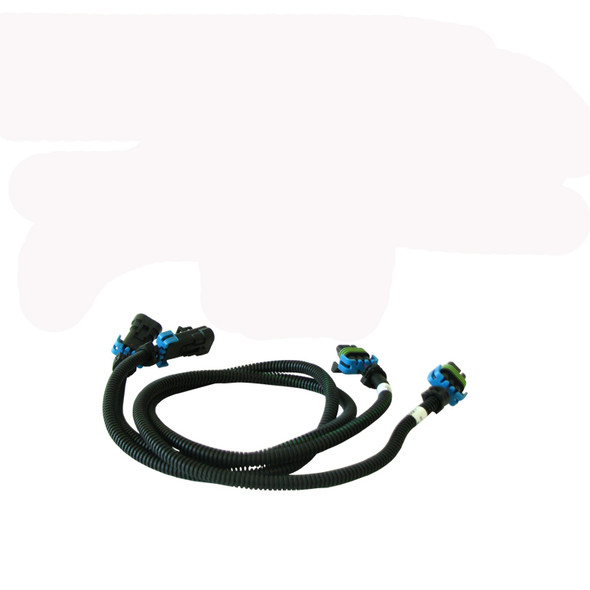
BBK 08-15 GM Corvette Camaro O2 Sensor Wire Harness Extensions 36 (pair) - 1116
BBK
MSRP: $89.99$69.99What is the main purpose of an oxygen sensor extension cable?Oxygen sensor extension cables ensure proper exhaust gas monitoring by extending the factory sensor's reach without signal degradation for...MSRP: $89.99$69.99 -


BBK 08-15 GM Corvette Camaro O2 Sensor Wire Harness Extensions 12 (pair) - 1115
BBK
MSRP: $89.99$69.99Will this oxygen sensor extension cable fit my vehicle?Confirm vehicle fitment using our compatibility checker; this BBK extension cable is designed for precise integration with specific automotive...MSRP: $89.99$69.99 -
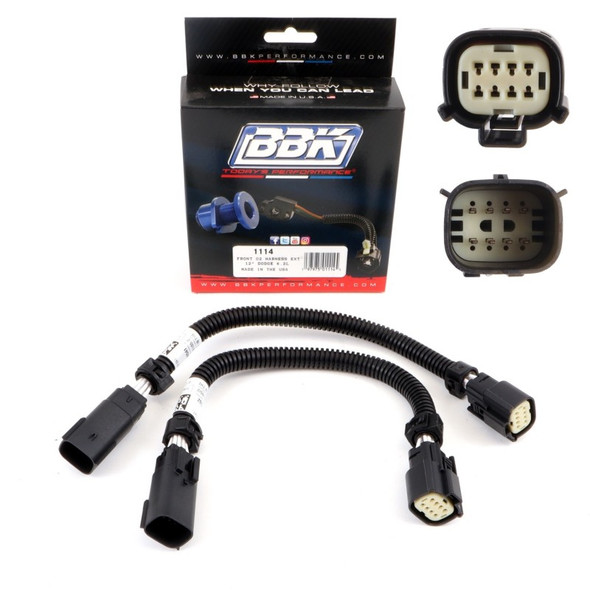
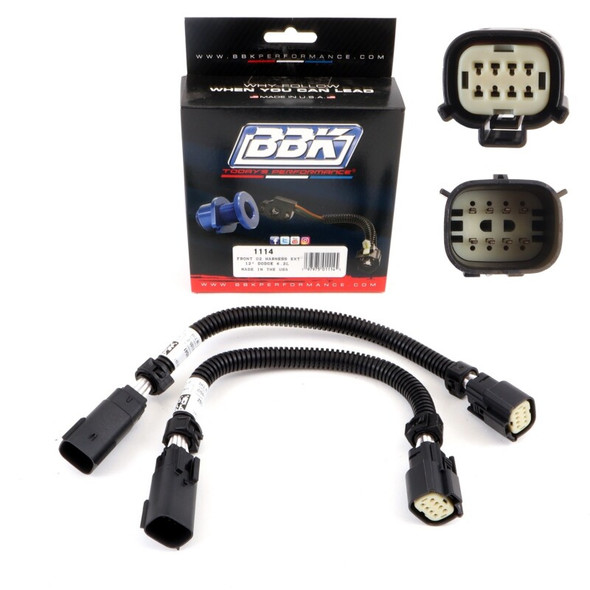
BBK 05-20 Dodge Hellcat 6.2L 6 Pin Front O2 Sensor Wire Harness Extensions 12 (pair) - 1114
BBK
MSRP: $89.99$69.99Are these extension cables compatible with my 2018 Dodge Charger Hellcat?BBK Oxygen Sensor Exten Cables are designed for a direct fit, ensuring compatibility with your 2015-2023 Dodge Challenger and...MSRP: $89.99$69.99 -
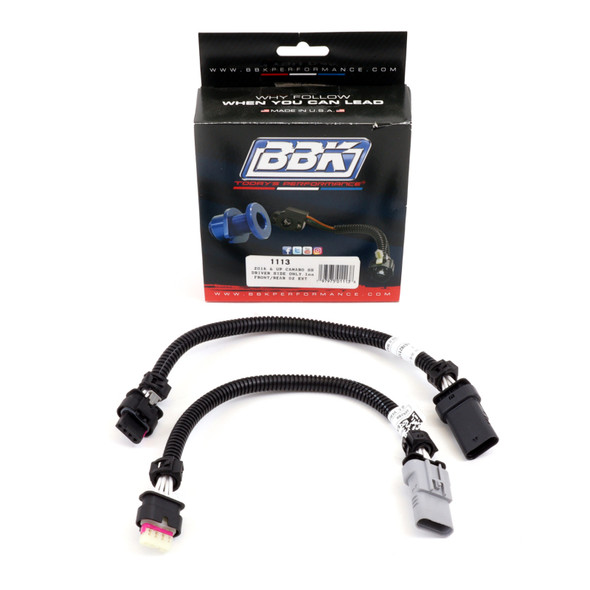

BBK 16-20 Chevrolet Camaro 6.2L SS O2 Sensor Extensions (AUTO ONLY Drivers Side 1 Front & 1 Rear) - 1113
BBK
MSRP: $89.99$69.99Will this BBK Oxygen Sensor Extension Cable fit my vehicle?Confirm fitment with your specific vehicle before purchasing to ensure proper installation and function of this Gauge Component.Is the...MSRP: $89.99$69.99 -
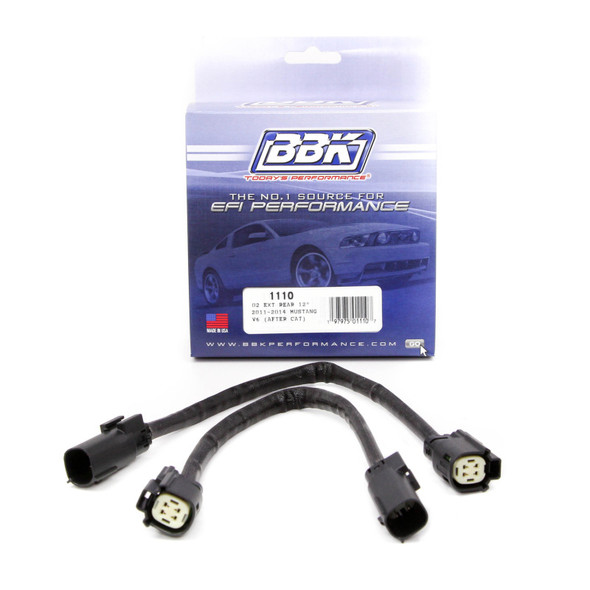
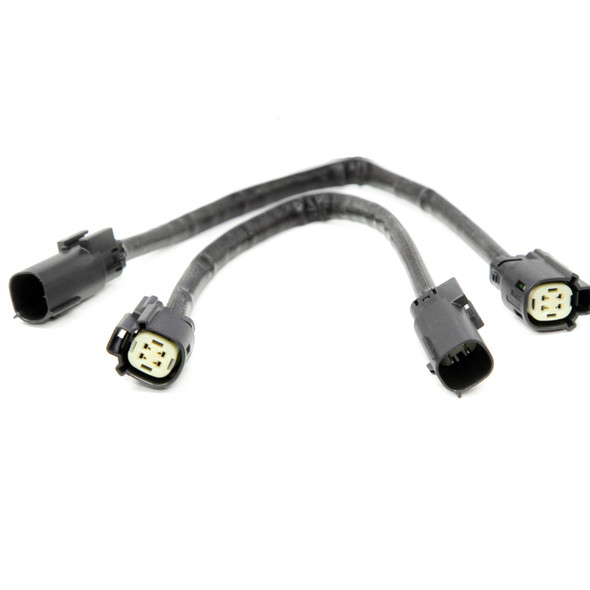
BBK 11-14 Mustang V6 GT Rear O2 Sensor Wire Harness Extensions 12 (pair) - 1110
BBK
MSRP: $89.99$69.99What is an oxygen sensor extension cable?An oxygen sensor extension cable, like this BBK model, provides additional length to relocate your sensor, ensuring proper engine diagnostics and performance...MSRP: $89.99$69.99 -
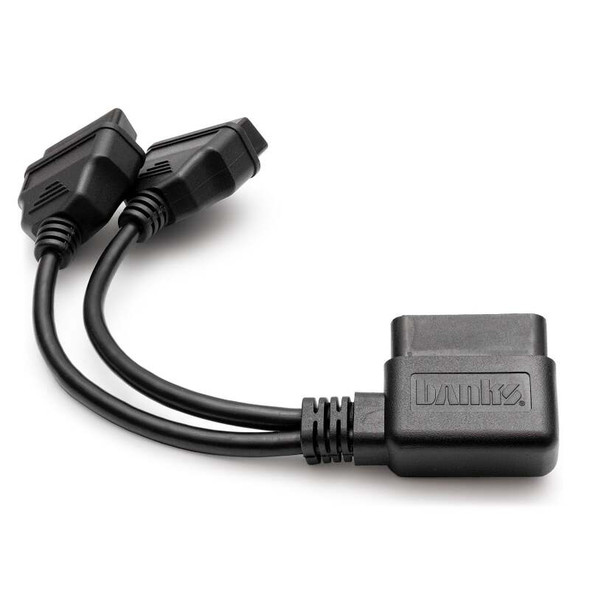

Banks Power Universal OBD-II Splitter Cable - 63735
Banks Power
MSRP: $33.33$30.00Universal fitment designed to allow you to connect two devices to the OBDII port. The plug is a right angle for minimal interference. Most ECMs will only communicate with one diagnostic device at a...MSRP: $33.33$30.00 -

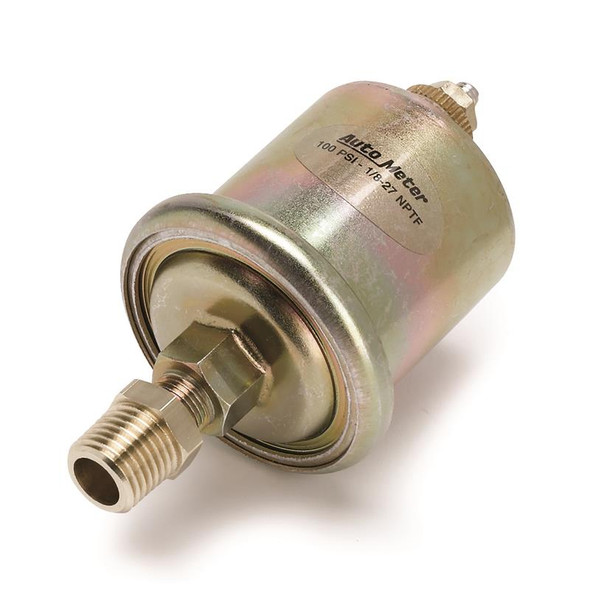
Autometer Accessories 0-100PSI 1/8in. NPT Male Oil Pressure Sensor (For Short Sweep Elec.) - 990342
AutoMeter
$60.77Is this compatible with my specific vehicle?Confirm vehicle fitment before purchasing to ensure proper compatibility and function of these Gauge Components.Can I install this myself?Professional...$60.77
Gauge components are the instrumentation layer between your build and a blown engine — covering everything from analog boost gauges and wideband O2 sensors to full digital race dashes and sensor extension harnesses. Motor Sport Mayhem stocks 69 in-stock gauge components across 36 brands, spanning $9.60 entry-level sensors to $2,151.95 GPS-enabled race displays built for professional competition.
Our Top Picks for Gauge Components
Every product below was hand-selected based on engineering quality, real-world installation feedback, and proven performance across street, track, and race applications.
AEM Digital Gauges
AEM | $2151.95
A GPS-enabled carbon fiber race dash that logs, displays, and processes CAN bus data simultaneously for full competition-level data acquisition.
- CAN input architecture integrates directly with ECU and sensor networks without analog conversion loss
AER Gauges
Aeromotive | $58.74
A 0–100 PSI mechanical fuel pressure gauge built by the industry's most respected fuel system specialist for accurate, fuel-safe monitoring.
- Wetted internals are fuel-compatible across gasoline, ethanol, and methanol applications
AFE Gauge Display
aFe | $522.00
A 5.5-inch digital monitor purpose-built for diesel performance applications, displaying multiple engine parameters simultaneously on a high-visibility color screen.
- OBD-II and direct sensor inputs allow real-time monitoring of EGT, boost, and fuel pressure without separate gauges
ALF LCI Single Gauges
Air Lift | $336.99
A load-controller gauge system with 5 PSI minimum pressure sensing designed for precise air suspension management and repeatable ride height control.
- Low-pressure sensing threshold ensures accurate readout at the low end of air bag operating range where standard gauges lose resolution
PA Alta Gauge Pod
Alta | $37.40
A direct-fit gauge pod accepting 52mm and 60mm gauges that mounts cleanly without drilling or permanent modification to the interior.
- Dual-diameter compatibility maximizes gauge brand and style options within a single pod solution
AM Jeep Gauges
AutoMeter | $1401.46
A seven-piece direct-fit dash gauge kit engineered for OE-grade fitment and comprehensive engine monitoring across multiple parameters in a single purchase.
- Complete kit format eliminates sensor and sender compatibility guesswork versus buying individual gauges separately
GBE Gauge Mounts
Banks Power | $68.00
A dual-gauge suction-mount pod designed to position both a digital monitor and a 52mm analog gauge within the driver's sightline without permanent installation.
- Suction-mount design preserves factory interior and allows repositioning for optimal viewing angle
BBK Oxygen Sensor Exten Cable
BBK | $74.99
A 16-inch O2 sensor wire harness extension pair that resolves routing conflicts created when installing aftermarket exhaust headers or mid-pipes.
- OE-matched connector terminations maintain signal integrity and prevent ECU fault codes during aftermarket exhaust installs
BDD Low Pressure Alarms
BD Diesel | $98.95
A red LED low fuel pressure alarm kit engineered specifically for diesel injection systems where pressure drop is a direct precursor to injector and pump failure.
- Active alarm output triggers before pressure drops to damaging levels, giving the driver reaction time before catastrophic fuel delivery failure
BKC Speedometer
Bikers Choice | $295.99
A 5-inch electronic replacement speedometer with black face designed as a direct-fit OE replacement that upgrades visual style without rewiring or signal conversion.
- Electronic pickup compatibility eliminates the cable-drive failure points common on older mechanical speedometer setups
How to Choose the Right Gauge Components
The single most important factor separating professional-grade gauge components from cheap units is sensor accuracy and signal stability — a gauge that reads 2 PSI high on boost or 0.05 lambda off on wideband isn't just inaccurate, it leads to incorrect tuning decisions and engine damage. Look for gauges that publish actual accuracy specifications (typically ±1–2% of full scale for quality units), use stainless or brass wetted parts for fuel and pressure applications, and include an isolated ground circuit to prevent noise contamination from the vehicle's electrical system.
Key Specifications
Gauge diameter standardization matters for pod compatibility — 52mm (2-1/16 inch) is the universal performance standard accepted by virtually all aftermarket A-pillar pods, gauge clusters, and mounting solutions. Some specialized units run 60mm or larger, which gives better face readability but limits mounting options. Confirm your pod or dash location accepts the gauge diameter before purchasing, especially on tight factory locations.
Electrical type — analog electromechanical, digital stepper motor, or fully digital display — determines both accuracy and response time. Analog air-core movements respond fast but can drift with temperature. Digital stepper motor gauges offer excellent precision and hold calibration better over time. Full digital displays eliminate mechanical failure points entirely and allow multiple parameters on a single screen, but require clean CAN bus or sensor wiring to deliver accurate data.
Sender and sensor compatibility is a critical pre-purchase check that gets overlooked. Most quality gauge brands engineer their senders and gauges as matched pairs calibrated together — mixing a gauge from one brand with a sender from another introduces calibration error that can't be corrected without custom scaling. For wideband O2 applications specifically, the sensor, controller, and display must be from the same calibrated system or the AFR readings will be unreliable. Sensor extension harnesses and relocation adapters must maintain the correct wire gauge and shielding spec to avoid signal degradation, especially for low-voltage analog outputs.
For installations where sensors are mounted near heat sources — exhaust headers, turbine housings, or engine bay firewall locations — verify the sensor's rated operating temperature and look for heat sleeve options. Wiring routing matters too: keeping sensor signal wires away from ignition wires and power cables prevents RF interference that shows up as erratic gauge needle movement or fluctuating digital readouts. Quality gauge components include full wiring instructions with designated grounding points; skip brands that don't provide this documentation.
Gauge Accuracy and Sensor Type Reference Guide
| Parameter | Recommended Sensor Type | Typical Accuracy (Quality Unit) | Key Selection Criteria |
|---|---|---|---|
| Boost / Vacuum | Piezo-resistive pressure transducer | ±1.5% full scale | Pressure range (30 in-Hg to 60 PSI common), 1/8 NPT port compatibility |
| Oil Pressure | Resistive sender or 0–5V transducer | ±2% full scale | Brass wetted parts, 0–100 PSI range for most performance engines |
| Fuel Pressure | Stainless-wetted pressure transducer | ±1.5% full scale | Fuel-safe wetted materials, range matched to fuel system (0–15 PSI carb, 0–100 PSI EFI) |
| Air/Fuel Ratio (Wideband) | Bosch LSU 4.9 planar O2 cell | ±0.1 AFR (7.35–22.4 AFR range) | Matched controller/sensor system, free-air calibration support, CAN or analog output |
| Exhaust Gas Temp (EGT) | Type K thermocouple | ±4°F at operating temp | Weld bung location (pre-turbine vs post), shielded extension wire, 0–2000°F range |
| Coolant / Oil Temp | NTC thermistor sender | ±3°F over operating range | Thread size match to bung (⅜ NPT common), sender curve matched to gauge brand |
Price Guide
Entry ($9.60–$80): This range covers sensor extension harnesses, gauge pods, individual pressure senders, and basic analog gauges — hardware that supports a monitoring setup rather than anchoring it. Quality at this level is brand-dependent; a $75 fuel pressure gauge from a dedicated gauge manufacturer outperforms a $75 generic unit significantly. Ideal for completing an existing system or adding a single monitored parameter to a street build.
Mid-range ($80–$500): The majority of serious enthusiasts land here — wideband O2 controller kits, digital boost gauges, individual stepper-motor analog gauges, and diesel multi-parameter monitors all occupy this range. This is where accuracy specifications, sender quality, and electrical noise immunity separate brands. For track and autocross use, spend here rather than at the entry level; the difference in tuning confidence is immediate.
Premium ($500–$2151.95): Full digital race dashes, GPS-enabled logging displays, and complete multi-gauge direct-fit kits with matched senders define this tier. The cost is justified when data logging, CAN bus integration, or professional-level accuracy is required — specifically for forced induction tuning, endurance racing, or builds where engine management and data acquisition overlap. These are tools, not accessories.
Who Is This For?
Gauge components serve every level of performance driving — from a daily driver owner wanting to monitor oil pressure, to a professional racer running a full digital logging dash — with usage scores from real product data reflecting where this category delivers the most value.
Engine Performance — 8.3/10
Gauge components score highest in the engine performance category because instrumentation is the direct feedback loop for any engine build. Without accurate oil pressure, coolant temperature, AFR, and boost monitoring, tuning decisions are made blind — and blind tuning costs engines. The 8.3/10 score reflects how fundamental monitoring is to both protecting and maximizing any performance engine build, whether naturally aspirated or force inducted.
Easy DIY Install — 8.0/10
At 8.0/10, gauge components rank among the more DIY-accessible performance upgrades in the catalog — most installs require only basic hand tools, a drill for pod mounting, and the ability to route wiring cleanly. Sensor senders typically thread into existing NPT bungs on the engine or use factory bung locations. The key to a clean install is pre-planning the wiring route before cutting anything and using the correct tap size for any new bung locations you're adding.
Track / Autocross — 7.6/10
Track and autocross applications score 7.6/10, reflecting that instrumentation is a non-negotiable safety and performance layer at this level. Oil pressure and coolant temperature monitoring are minimum requirements for any car running laps — gauges that respond fast enough to catch transient pressure drops during hard cornering are worth the investment. Digital units with peak-hold and warning outputs are strongly preferred over basic analog gauges for track use.
Racing Competition — 7.6/10
Competition racing shares the 7.6/10 score with track use but moves toward more comprehensive data logging and multi-channel displays. At this level, individual gauges give way to integrated digital dashes that log every sensor channel simultaneously, allowing post-session data review to identify trends before they become failures. Sanctioning body rules for certain classes also specify gauge and sensor requirements, making brand reputation and accuracy certification important selection criteria.
Street Performance — 7.4/10
Street performance rates 7.4/10 — slightly lower than track applications because the consequences of a missed reading are less immediate, but monitoring is still critical on any modified street engine running elevated boost, aggressive cam timing, or a standalone ECU tune. Street builds benefit most from a focused set of three to four critical gauges — oil pressure, oil temperature, coolant temperature, and boost for forced induction builds — rather than a full competition-style display setup.
Trusted Gauge Components Brands We Carry
The brands that dominate this category have earned their positions through engineering precision, not marketing — AutoMeter has manufactured gauges in Illinois since 1957 and their stepper-motor movements hold calibration better than virtually any competitor at the price point. AEM built their electronics reputation on wideband O2 technology and digital instrumentation that meets professional motorsport accuracy standards. Innovate Motorsports pioneered the wideband AFR controller market and remains the benchmark for lambda accuracy in street and race tuning. Haltech's gauge and display products are engineered to integrate natively with their ECU platforms, making them the natural choice for builds running Haltech engine management. For diesel and towing applications, BD Diesel and Banks Power engineer monitoring solutions specifically around diesel injection system behavior that general-purpose gauge brands don't address. Aeromotive's pressure gauges are built in-house to match their fuel system components — a matched-system advantage that shows in real-world accuracy.
Frequently Asked Questions
Are aftermarket wheel speed sensors any good?
Quality aftermarket wheel speed sensors from reputable manufacturers match or exceed OE signal accuracy because they use the same Hall-effect or variable-reluctance technology as factory units but are often built to tighter gap tolerances for performance applications. The critical specification is the air gap between the sensor tip and tone ring — most performance sensors are pre-set or include shim kits to achieve the 0.020–0.050-inch gap that produces a clean square-wave signal. Avoid no-name sensors on ABS-equipped vehicles; an incorrect signal frequency from a mismatched tone ring tooth count will trigger false ABS interventions. For dedicated track cars running data loggers, aftermarket wheel speed sensors with analog voltage output allow direct integration with standalone logging systems that standard CAN-based OE sensors can't support.
Are all wideband O2 sensors the same?
No — wideband O2 sensors are not interchangeable, and the controller-sensor pairing is the most misunderstood aspect of AFR monitoring. The Bosch LSU 4.9 is the dominant cell used across most quality wideband systems, but its output characteristics require controller firmware calibrated specifically to that cell's resistance-versus-lambda curve. Running an LSU 4.2 sensor on a controller programmed for LSU 4.9 will produce readings that are off by as much as 1.5 AFR — enough to miss a dangerous lean condition entirely. Always use the sensor specified by the controller manufacturer, perform the free-air calibration procedure before each use, and replace sensors at the manufacturer's recommended interval because the planar cell degrades over time and shifts the output curve.
Are AutoMeter gauges accurate?
AutoMeter gauges are genuinely accurate when installed correctly with their matched senders — their published accuracy spec of ±2% full scale is consistent with what independent testing shows across their analog and stepper-motor digital product lines. The most common source of inaccuracy isn't the gauge itself but sender substitution: using a third-party sender with an AutoMeter gauge introduces calibration mismatch because AutoMeter senders are curve-matched to their specific gauge movements. Ground quality is the second most common accuracy issue — AutoMeter specifies a dedicated chassis ground for each gauge, and sharing a noisy ground with accessory circuits introduces needle flutter that mimics inaccuracy. Their premium street and race lines use higher-resolution movements with tighter repeatability specs than their entry-level products, which is worth the price difference on critical parameters like oil pressure.
Are boost gauges necessary?
On any turbocharged or supercharged engine, a boost gauge is not optional — it is the minimum instrumentation required to detect boost leaks, verify boost targets, and identify failing wastegate or bypass valve behavior before it causes engine damage. Factory boost indicators in production vehicles are typically single-bar or coarse-resolution displays that can't distinguish between 12 PSI and 16 PSI, a difference that matters enormously on a tuned engine. For street builds, a boost gauge paired with an oil pressure gauge gives you the two most critical data points for detecting problems in real time. On track, a gauge with a peak-hold function lets you verify boost consistency across multiple laps without requiring a second person to watch the gauge mid-corner.
Are digital tachometers accurate?
Digital tachometers are inherently more accurate than analog units because they count ignition pulses directly rather than converting electrical frequency to mechanical needle movement, which introduces inertia and damping error. A quality digital tach reading from the coil negative, distributor signal, or ECU tach output will display RPM within ±10–25 RPM of actual engine speed — far tighter than most analog movements. The configuration step that most people skip is setting the cylinder count and pulse-per-revolution correctly; an 8-cylinder tach signal input on a 4-cylinder engine will read exactly double actual RPM. For multi-coil COP ignition systems, verify whether the tach accepts low-voltage logic signals from the ECU or requires a traditional coil-current trigger, as many digital tachs designed for older points ignitions won't trigger reliably on modern ignition systems without a signal conditioner.
Building something specific? Our performance specialists can help you select the right Gauge Components for your application — street, track, or full race build.