
Gauges & Pods
- Product
- Qty in Cart
- Quantity
- Price
- Subtotal
-
Tazer 05-10 Chrysler 300/08-14 Dodge Challenger/06-10 Dodge Charger No ESP Traction Control Module - Z_NOESP
Tazer
$50.00Will the ZAT modules affect my vehicle's warranty?Confirm fitment with your vehicle; professional installation is recommended to ensure optimal system integration and warranty compliance for your...$50.00 -

Tazer 15-21 Dodge Challenger/Charger Inactive Exhaust Module Kit - Z_AES_DELETE
Tazer
$189.00Will this speedometer calibrator work with my specific vehicle year, make, and model?ZAT Modules offer precise speedometer calibration, but always confirm specific vehicle fitment before purchase to...$189.00 -
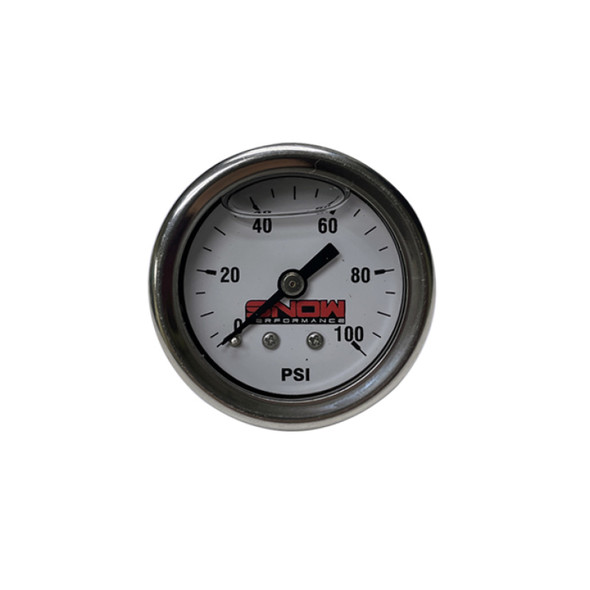

Snow 0-100PSI Fuel Pressure Gauge (1/8in NPT) - SNF-20010
Snow Performance
MSRP: $50.92$36.37Are these gauges compatible with my vehicle?Confirm fitment with your specific vehicle's make, model, and year before purchasing these SNOW Gauges.Is professional installation recommended for these...MSRP: $50.92$36.37 -

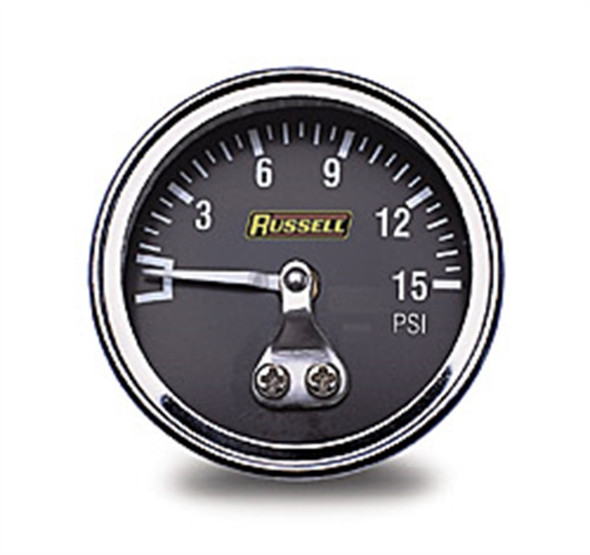
Russell Performance 15 psi fuel pressure gauge (Non liquid-filled) - 650350
Russell
$25.95What is the operating range of the RUS Fuel Pressure Gauges?RUS Fuel Pressure Gauges offer a precise 0 to 100 psi operating range, ensuring accurate monitoring for optimal engine tuning across...$25.95 -


Russell Performance 100 psi fuel pressure gauge (Liquid-filled) - 650340
Russell
$38.95How accurate are these fuel pressure gauges?RUS Fuel Pressure Gauges provide precise readings from 0 to 100 psi, ensuring optimal engine tuning and peak performance monitoring.Can I install this...$38.95 -
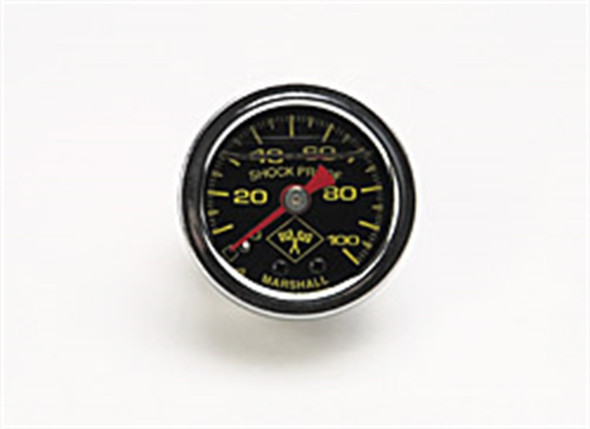
Russell Performance 100 psi fuel pressure gauge black face chrome case (Liquid-filled) - 650320
Russell
$38.95How do I install a fuel pressure gauge?RUS Fuel Pressure Gauges require professional installation for optimal accuracy and safety, ensuring proper vehicle integration. Confirm fitment with your...$38.95 -
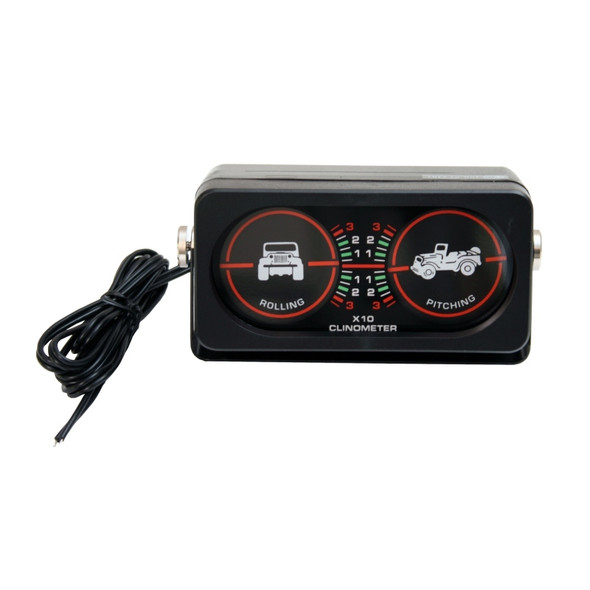

Rugged Ridge Clinometer with Light - 13309.02
Rugged Ridge
$41.99Will these gauges fit my vehicle?Confirm fitment with your specific vehicle to ensure these universal gauges integrate seamlessly with your existing dash.How difficult is the installation...$41.99 -


Rugged Ridge Clinometer with Compass - 13309.01
Rugged Ridge
$41.99How do I know if the RUG Gauges will fit my vehicle?Confirm fitment with your specific vehicle using the provided compatibility checker before purchasing these essential automotive gauges.Are the RUG...$41.99 -

Revel VLS Oil Temp Sensor - 1TR1UA103
Revel
MSRP: $12.00$10.80Are these gauge components compatible with my specific vehicle model?Confirm fitment for your vehicle model before installation to ensure optimal compatibility with these gauge components.Can I...MSRP: $12.00$10.80 -
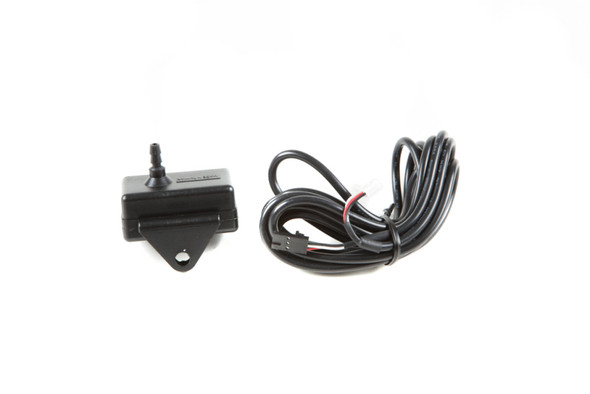
Revel VLS Boost Sensor w/ Wiring Harness - 1TR1UA101
Revel
MSRP: $42.00$37.80Is there a warranty on these RVL VLS Gauges?RVL VLS Gauges offer a robust warranty, ensuring your investment in precise engine monitoring is protected.Can I install these myself or do I need a...MSRP: $42.00$37.80 -
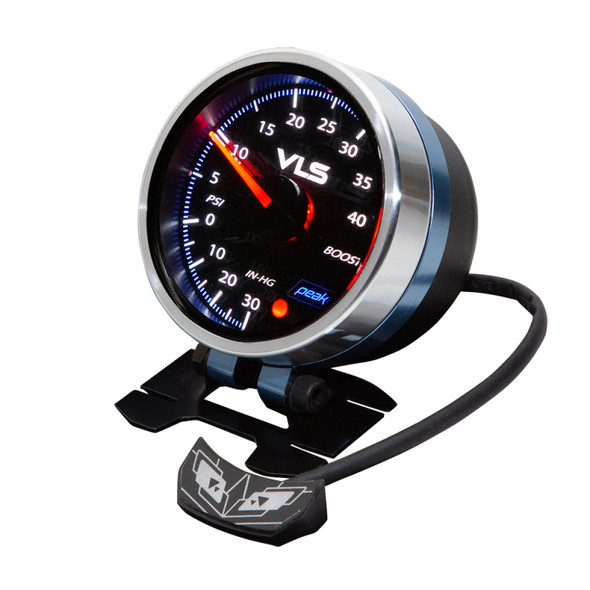
Revel VLSII Boost 52mm Gauge - 1TR1AB001
Revel
MSRP: $198.00$178.20What makes the RVL VLSII Gauges stand out from other gauges on the market?RVL VLSII Gauges deliver crystal-clear readings with unparalleled accuracy, featuring a 270-degree sweep for immediate data...MSRP: $198.00$178.20 -

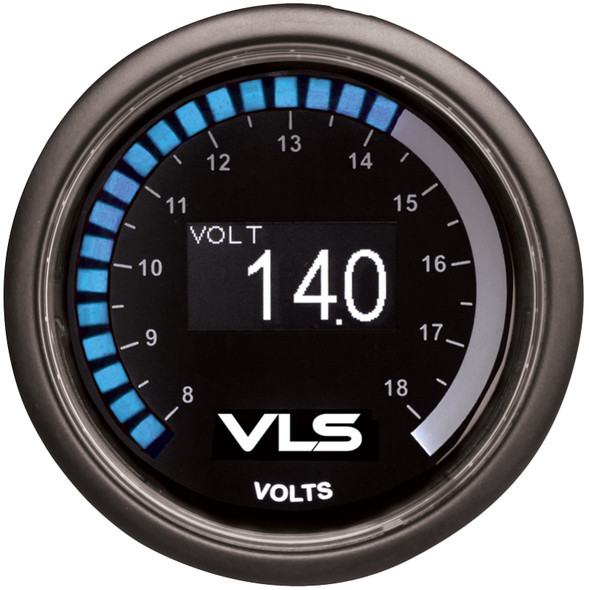
Revel VLS 52mm Voltage Gauge - 1TR1AA007R
Revel
MSRP: $158.00$142.20How do I ensure the RVL VLS Gauges fit my specific vehicle?RVL VLS Gauges require careful confirmation of your vehicle's specific fitment details before purchase to ensure proper integration and...MSRP: $158.00$142.20
Performance gauges and pods give you real-time access to the critical engine, fueling, and chassis data your factory cluster never shows — and on a performance build, missing that data is how engines get hurt. Motor Sport Mayhem stocks 484 gauges and pods across 36 brands, spanning from mechanical fuel pressure gauges under $10 to full GPS-enabled digital race dashes, so whether you're tuning a street car or preparing a dedicated competition vehicle, you're getting the right instrumentation for the job.
Our Top Picks for Gauges & Pods
Each of these products was hand-selected based on engineering quality, real-world performance data, and the breadth of applications they serve across our customer base.
AEM Digital Race Dash
AEM | $2151.95
A GPS-enabled, CAN-bus logging digital display that replaces an entire analog gauge cluster with a single carbon fiber unit capable of recording and displaying dozens of channels simultaneously.
- Full data logging with GPS overlay — the benchmark for serious competition instrumentation
Aeromotive Fuel Pressure Gauge
Aeromotive | $58.74
A liquid-filled mechanical fuel pressure gauge purpose-built for the low-pressure range critical to monitoring returnless and regulated fuel systems under load.
- Glycerin fill dampens needle flutter under high-vibration conditions for accurate steady-state readings
aFe Advanced Gauge Display
aFe | $522.00
A 5.5-inch digital monitor engineered specifically for diesel truck platforms, pulling OBD and sensor data into a single high-resolution display with programmable warning thresholds.
- Diesel-specific parameter monitoring — EGT, boost, DEF level, and DPF status in one screen
Air Lift Load Controller II Single Gauge
Air Lift | $336.99
An integrated single-gauge controller for air suspension systems that manages bag pressure with a 5 PSI minimum threshold and onboard compressor control logic.
- Low-pressure sensor protection prevents bag collapse during dynamic load changes
Alta Gauge Pod
Alta | $37.40
A direct-fit gauge pod engineered to accept both 52mm and 60mm gauges with a factory-integrated mounting location that keeps gauges in the driver's sightline without cutting or fabricating.
- Platform-specific fitment eliminates the vibration and flex issues common to universal pod solutions
AutoMeter 7-Piece Direct-Fit Dash Gauge Kit
AutoMeter | $1401.46
A complete seven-gauge direct-fit instrumentation package designed to replace the factory cluster entirely using vehicle-specific sender locations and plug-and-play wiring.
- Direct-fit kits eliminate calibration guesswork and deliver matched aesthetics across all gauges
Banks Power Dual Gauge Pod Suction Mount
Banks Power | $68.00
A dual-position suction-cup pod designed to co-mount a digital iDash module alongside a standard 52mm analog gauge without requiring any permanent dash modification.
- Non-destructive mounting is ideal for leased vehicles, daily drivers, or builds where reversibility matters
BBK O2 Sensor Wire Harness Extensions
BBK | $74.99
A 16-inch pair of O2 sensor harness extensions purpose-built to resolve the wiring length deficit that occurs when aftermarket long-tube headers relocate sensor bungs further from the factory harness termination point.
- Properly extended O2 leads prevent DTCs and maintain closed-loop fueling accuracy after exhaust modifications
BD Diesel Low Fuel Pressure Alarm Kit
BD Diesel | $98.95
A threshold-triggered red LED alarm system that monitors lift pump fuel pressure and alerts the driver before dangerously low pressure reaches the injection pump on high-mileage diesel applications.
- Pre-failure alerting on fuel pressure is one of the highest-ROI instrumentation upgrades on any diesel build
Bikers Choice Electronic Replacement Speedometer
Bikers Choice | $295.99
A 5-inch electronic black-face direct-replacement speedometer designed to drop into factory mounting locations with a clean OEM-matching profile and electronic signal compatibility.
- Electronic pickup compatibility eliminates the cable drive failures that plague high-mileage original units
How to Choose the Right Gauges & Pods
The difference between a gauge you can trust and one that gets you hurt is accuracy under sustained heat and vibration — and those are conditions a $15 budget unit will fail in every time. A properly specified gauge system is engineered around its sensor, not just its face: the sender must be rated for the fluid temperature and pressure range it's measuring, the signal path must be shielded from ignition noise, and the display must be readable at a glance without taking your eyes off the track. Cheap gauges typically fail at the bourdon tube, the electrical sender, or the weld joint on liquid-filled units — all failure modes that either give you false readings or no reading at the worst possible moment.
Key Specifications
Gauge diameter is your first decision point. The 52mm format is the universal standard in performance builds — it fits virtually every aftermarket pod and A-pillar mount, and nearly every major brand offers their full lineup in this size. The 60mm format provides better visibility at a glance and is often preferred for gauges you'll monitor frequently, like boost or oil pressure. Larger 2-5/8-inch and full-size cluster replacement gauges are used when packaging a complete instrumentation upgrade into the factory dash opening.
For analog gauges, specify whether you need electrical or mechanical operation before you buy. Mechanical gauges use direct fluid or vacuum lines to the cockpit — accurate and simple, but a line failure can route hot oil or fuel into the cabin. Electrical gauges use a remote sender and a signal wire, which is far safer for engine fluids and preferred for any gauge mounted inside a roll-caged or competition vehicle. For wideband O2 and air-fuel ratio monitoring, you're always in the electronic domain — these require a calibrated Bosch LSU or equivalent sensor and a dedicated controller, not a simple analog sender.
Digital dashes and multi-channel displays add a layer of complexity but deliver information density that no analog cluster can match. CAN-bus-capable units can pull data directly from the ECU, eliminating redundant senders entirely — critical for cleanly instrumented competition cars where weight and wiring complexity matter. Look for units with programmable shift lights, warning thresholds with audible or visual alerts, and data logging if your application involves post-session analysis. Ensure the display's input protocol matches your ECU or standalone sensor outputs before purchasing.
Gauge pod and mounting hardware quality is often an afterthought that creates real problems. A pod that flexes, vibrates, or blocks critical sightlines in a competition environment is a safety issue, not just an annoyance. Direct-fit, vehicle-specific pods are always preferable to universal solutions — they use existing mounting points, maintain the factory dash structure, and hold gauge position under aggressive driving. For A-pillar and windshield-mount solutions, verify the mounting hardware is designed for your specific pillar diameter and that gauge placement keeps the instrument within your peripheral vision rather than requiring head movement to read.
Gauge Type vs. Application: Recommended Specification Guide
| Gauge Type | Recommended Range | Sensor Type | Best Application |
|---|---|---|---|
| Boost / Vacuum | -30 inHg to 35 PSI (combo) or 0–60 PSI (dedicated boost) | Electrical (1/8" NPT sender) | Forced induction street and track builds |
| Oil Pressure | 0–100 PSI | Electrical sender (mechanical NOT recommended for cabin-mount) | All performance builds — first gauge any engine needs |
| Wideband Air-Fuel Ratio | Lambda 0.68–1.36 (AFR 10:1–20:1 gasoline) | Bosch LSU 4.9 wideband O2 | Tuning, forced induction, any fuel system modification |
| Exhaust Gas Temperature (EGT) | 0–1800°F (diesel) / 0–2000°F (gas turbo) | Type K thermocouple | Diesel tow/race, turbocharged competition engines |
| Fuel Pressure | 0–15 PSI (carb/returnless) / 0–100 PSI (EFI) | Electrical or glycerin-filled mechanical | Any modified fuel delivery system |
| Water / Coolant Temperature | 100–280°F | Electrical (1/2" NPT or 3/8" NPT sender) | All performance builds, especially turbocharged and supercharged |
Price Guide
Entry ($9.60–$80): This tier covers basic analog gauges, individual senders, O2 sensor extensions, and universal mounting hardware — the components that support a larger build or fill a single monitoring need without a large investment. Quality varies significantly here; stick to established brands and avoid any unit that doesn't specify its sender type and accuracy tolerance. Hardline and BBK offer legitimate utility in this range for wiring and accessory components.
Mid-range ($80–$500): This is where most serious street and track builders land, and it's where the selection is deepest — covering complete individual gauges from top-tier brands, entry-level digital displays, direct-fit gauge kits, and wideband systems. At this level you're getting precision-wound movements, proper sender calibration, and real warranty support. AutoMeter, Innovate Motorsports, and Revel all deliver strong performance per dollar in this band.
Premium ($500–$2151.95): Premium instrumentation is for builds where data quality and system integration are non-negotiable — full digital race dashes with GPS logging, multi-channel CAN-bus displays, and complete direct-fit cluster replacement kits. These are not vanity purchases for a dedicated competition or high-horsepower build; they're the difference between guessing and knowing. AEM and Haltech dominate this space with products that communicate directly with standalone ECUs and live-log everything the engine does.
Who Is This For?
Gauges and pods serve a remarkably wide range of builders — from a daily driver owner who wants to know if their oil pressure is normal to a full race team needing GPS-correlated data logging — and the usage matrix reflects that range clearly.
Engine Performance — 8.3/10
This is the highest-scoring application in the matrix, and it makes complete sense: you cannot tune or protect an engine you cannot see inside of. Gauges that monitor oil pressure, coolant temperature, fuel pressure, and air-fuel ratio provide the feedback loop that separates a safe engine build from a destructive one. Any time you modify engine components — camshafts, compression ratio, forced induction — the instrumentation requirement goes up proportionally.
Easy DIY Install — 8.0/10
The 8.0 score here reflects how well this category accommodates enthusiast installation — direct-fit pods, plug-and-play wiring harnesses, and pre-calibrated senders mean most gauge installs are an afternoon job without specialized tools. The key is matching the gauge to the correct sender thread size and signal voltage range before purchase, not after. Direct-fit kits score highest for DIY because vehicle-specific sender locations and harness connectors eliminate the two biggest installation failure points.
Racing Competition — 7.6/10
Competition applications score 7.6 across 151 products, reflecting a market that demands both precision and reliability under sustained abuse — vibration, heat soak, and the need for instant data readability at speed. Digital displays and multi-channel logging units serve this application best, and the ability to set programmable warning thresholds is not optional at competition level. Many sanctioning bodies also specify minimum instrumentation requirements, making gauges a compliance item as much as a performance tool.
Track / Autocross — 7.6/10
Matching competition at 7.6 across 160 products, the track and autocross segment uses gauges primarily for pre- and post-session analysis rather than real-time tuning — boost levels, oil temps, and AFR trends all tell a story about whether the car is running within its design envelope. A-pillar pods and dash-mount solutions are especially popular here because they keep critical readings in the driver's sightline during competition runs without cluttering the cockpit.
Street Performance — 7.4/10
Street builds score 7.4 across the largest product pool — 194 products — which reflects the broad spread of street performance needs from basic analog oil pressure monitoring to full digital dash upgrades on show-quality builds. Street applications prioritize OEM-style integration, ambient light readability, and long-term electrical reliability over pure data density. Pods, replacement clusters, and visually matched gauge sets perform strongly here where aesthetics carry nearly as much weight as function.
Trusted Gauges & Pods Brands We Carry
AutoMeter has built its reputation over five decades of motorsport instrumentation, producing gauges used at every level from weekend autocross to professional drag racing — their 289-product lineup here is the broadest in the category for good reason. AEM brings electronics engineering depth from their standalone ECU and wideband controller background, which shows in digital displays that integrate cleanly with modern CAN-bus systems rather than treating instrumentation as an isolated accessory. Innovate Motorsports essentially defined the standalone wideband O2 controller market and remains the benchmark for air-fuel ratio accuracy at the enthusiast level. Haltech approaches gauges from the ECU side of the equation, producing display solutions engineered specifically to interface with their engine management systems for seamless data integration on serious competition builds. BBK and Aeromotive round out the category with application-specific accessories — sensor extensions, fuel pressure gauges, and wiring solutions — that are engineered to complement the specific systems they support rather than serving as generic fits.
Frequently Asked Questions
Are AutoMeter gauges accurate?
AutoMeter gauges are among the most accurate in the aftermarket, with their top-tier units rated to within ±2% of full scale — tighter than many OEM instruments. The key to maintaining that accuracy is using the correct matched sender: AutoMeter gauges are calibrated to work with AutoMeter-specific senders, and substituting a generic sender degrades accuracy significantly. Their electrical gauges use precision-wound stepper motors rather than the cheaper D'Arsonval movements found in budget units, which means they hold calibration under heat and vibration far longer. If you see erratic readings, the sender or ground circuit is almost always the culprit before the gauge itself.
Are all wideband O2 sensors the same?
No — and the difference matters significantly for tuning accuracy. The Bosch LSU 4.9 is the industry-standard wideband element used by virtually all reputable aftermarket wideband controllers, but the controller's calibration algorithm, heater management circuit, and free-air calibration routine determine how accurately that sensor's output is interpreted. Lower-cost wideband systems often use inferior heater control, which shortens sensor life and introduces measurement drift, particularly at low exhaust temperatures during warm-up. For any application where you're actively tuning fuel maps — especially on forced induction builds — invest in a controller from a brand with a documented calibration standard and replaceable sensor elements rather than a sealed unit with no serviceability.
Are boost gauges necessary?
On any turbocharged or supercharged build, a boost gauge is not optional — it's the most fundamental safety and diagnostic instrument you can install. Boost pressure directly correlates with cylinder pressure, and running more boost than your tune, fuel, or engine components are designed for is a fast path to detonation and catastrophic failure. A boost gauge also tells you immediately if a boost control solenoid, wastegate, or intercooler pipe has failed, symptoms that may not trigger a check engine light until after damage is done. Vacuum reference on the same gauge also helps diagnose intake leaks and restriction issues that affect power on naturally aspirated engines. If you've modified your air intake or exhaust on a boosted car, a boost gauge belongs on the dash before those parts do.
Are digital tachometers accurate?
Digital tachometers are generally more accurate than analog units because they count ignition pulses directly rather than converting a signal through a mechanical movement — they're typically accurate to ±10–20 RPM in a range where analog needles can swing 50–100 RPM under vibration. The critical setup variable is cylinder count and ignition signal type: the tachometer must be configured for the number of cylinders and whether it's reading a points-style, distributor, coil-on-plug, or ECU trigger signal, or it will display at a multiple or fraction of actual RPM. Digital displays also eliminate the parallax error that affects analog needle readings when viewed off-axis, which matters in a competition seat where your sightline to the cluster changes with body position. For shift-point accuracy in racing applications, a digital or stepper-motor tach with programmable shift light output is measurably more consistent than a traditional sweep needle.
Are aftermarket wheel speed sensors any good?
Quality aftermarket wheel speed sensors from reputable manufacturers are fully adequate for street performance and most track applications, provided they meet the OEM signal specification — typically a Hall-effect or variable reluctance output calibrated to the factory reluctor ring tooth count. Where issues arise is with generic, non-application-specific sensors that have incorrect airgap tolerances or mismatched signal outputs, which can cause ABS, traction control, and stability control systems to log false faults or behave erratically. For builds where wheel speed data feeds into a standalone data logger or a programmable ABS system, verify that the sensor's output voltage and frequency range matches the logger's input specification. On any vehicle where wheel speed sensors interface with braking or suspension control systems, use a vehicle-specific or OEM-equivalent sensor rather than a universal substitute.
Building something specific? Our performance specialists can help you select the right Gauges & Pods for your application — street, track, or full race build.