
Fuel Rails
- Product
- Qty in Cart
- Quantity
- Price
- Subtotal
-

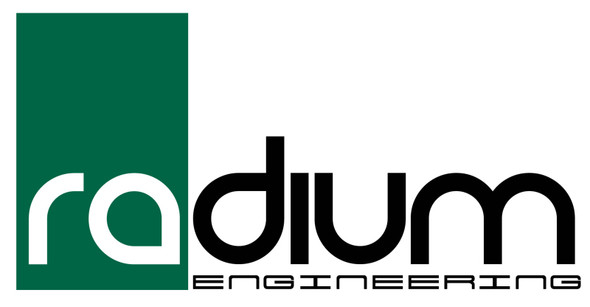
Radium Engineering LS1 / LS2 / LS3 / LS6 / L76 / L99 Fuel Rail Plumbing Kit - 20-0232-PK
Radium Engineering
MSRP: $149.95$142.45What is the primary function of a fuel rail?Fuel rails distribute pressurized fuel from the fuel pump to the fuel injectors, ensuring consistent delivery for optimal engine operation.Are fuel rails...MSRP: $149.95$142.45 -

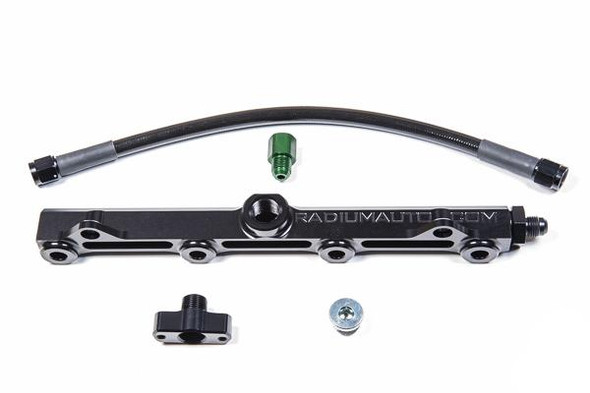
Radium Engineering GM LS Engine Fuel Rails - 20-0232
Radium Engineering
MSRP: $229.95$218.45What vehicles does the Radium Engineering fuel rail fit?Radium Engineering fuel rails are precision-engineered to fit 1997-2017 Cadillac CTS, Chevrolet Camaro, and Chevrolet Corvette models.Is...MSRP: $229.95$218.45 -


Radium Engineering Honda K-Series Fuel Rail - 20-0230-02
Radium Engineering
MSRP: $149.95$142.45Does this fuel rail fit my 2002 Honda Civic Si?The RAD Fuel Rails specifically fit the 2002-2006 Acura RSX, ensuring optimal integration with K-series intake manifolds.Are these fuel rails difficult...MSRP: $149.95$142.45 -


Radium Nissan RB26DETT Fuel Rail Plumbing Kit - 20-0217-PK
Radium Engineering
MSRP: $89.95$85.45What is a fuel rail?Fuel rails distribute pressurized fuel from the fuel pump to the fuel injectors, ensuring consistent delivery for optimal engine operation across all performance scenarios.Are...MSRP: $89.95$85.45 -


Radium Engineering Nissan RB26DETT Fuel Rail - 20-0217
Radium Engineering
MSRP: $199.95$189.95What is the primary function of Radium Engineering Fuel Rails?Radium Engineering Fuel Rails ensure consistent fuel flow, achieving precise delivery for optimal engine performance and enhanced...MSRP: $199.95$189.95 -


Radium Engineering 92-02 Toyote Supra 2JZ-GTE Top Feed Fuel Rail Kit - 20-0215
Radium Engineering
MSRP: $199.95$189.95What is the fitment for the Radium Engineering RAD Fuel Rail Kit?This RAD Fuel Rail Kit precisely fits the 1993-1998 Toyota Supra models, ensuring seamless integration with the 2JZ-GTE engine.How...MSRP: $199.95$189.95 -
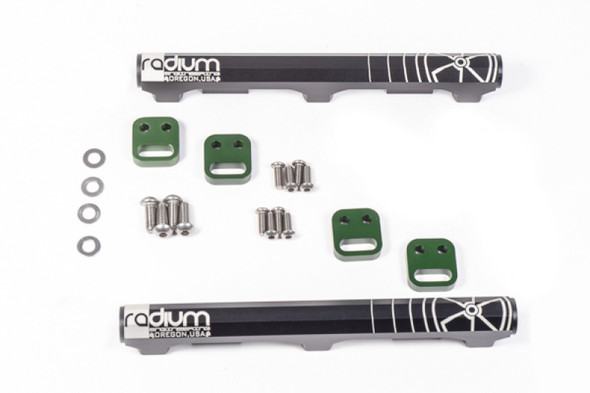

Radium Engineering Toyota 2GR-FE Fuel Rail Kit - 20-0198-02
Radium Engineering
MSRP: $249.95$237.45What is the primary benefit of installing a Radium Engineering Fuel Rail Kit on my 2010-2017 Lotus Evora?This Radium Engineering fuel rail kit ensures consistent fuel flow for optimal engine...MSRP: $249.95$237.45 -


Radium Engineering Mitsubishi Evo 8-9 Fuel Rail Kit - 20-0119-12
Radium Engineering
MSRP: $149.95$142.45What is the purpose of a fuel rail?Fuel rails distribute pressurized fuel from the fuel pump to the fuel injectors, ensuring consistent delivery for optimal engine operation.Is installation of a fuel...MSRP: $149.95$142.45 -

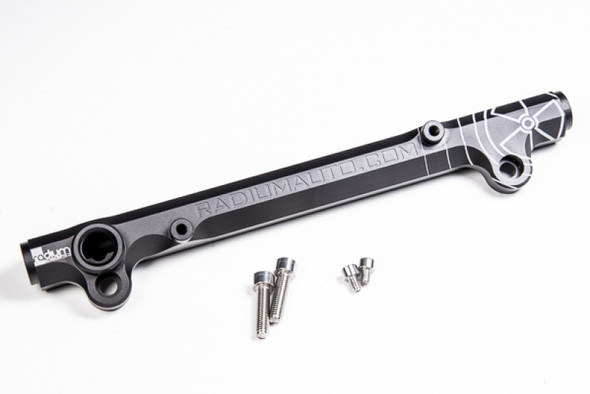
Radium Engineering Mitsubishi Evo X Fuel Rail - 20-0112-12
Radium Engineering
MSRP: $149.95$142.45Is this fuel rail compatible with my 2010 Mitsubishi Lancer Evolution X?Confirm fitment with your vehicle, as this Radium Engineering Mitsubishi Evo X Fuel Rail is specifically designed for select...MSRP: $149.95$142.45 -
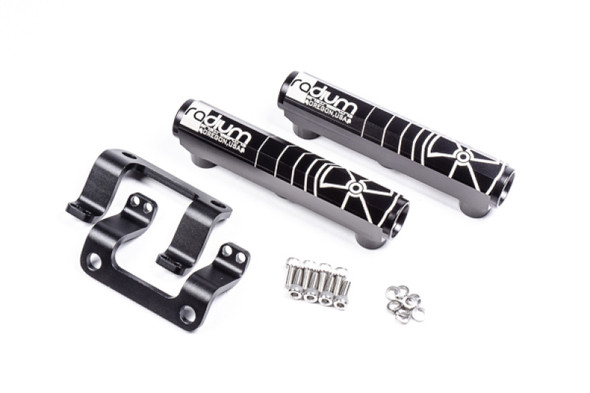
Radium Engineering 2013+ Scion FR-S/Subaru BRZ/Toyota 86 Fuel Rail Kit - 20-0111-02
Radium Engineering
MSRP: $179.95$170.95What vehicles are compatible with Radium Engineering's RAD Fuel Rail Kits for the FA20 engine?Radium Engineering's RAD Fuel Rail Kits for the FA20 engine precisely fit the 2013-2017 Scion FR-S,...MSRP: $179.95$170.95 -


Radium Engineering BMW E46 M3 (S54) Fuel Rail Kit (Does Not Include Hose or Fittings) - 20-0070-02
Radium Engineering
MSRP: $199.95$189.95What vehicles are the Radium Engineering RAD Fuel Rail Kits compatible with?Radium Engineering RAD Fuel Rail Kits precisely fit 2001-2008 BMW M3, Z3, and Z4 models.What is the installation process...MSRP: $199.95$189.95 -
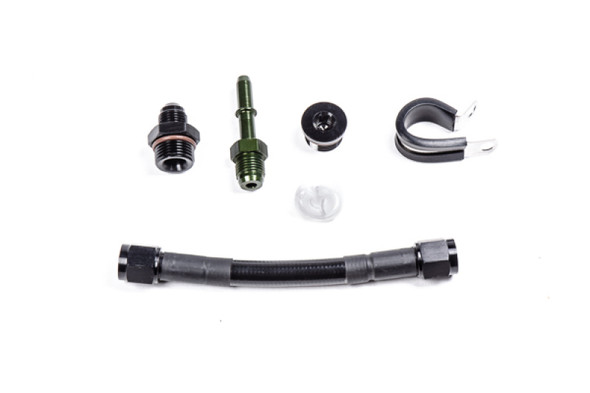
Radium Engineering Fuel Rail Plumbing Kit Toyota 2ZZ-GE - 20-0012-PK
Radium Engineering
MSRP: $59.95$56.95Will these fuel rails fit my car?Confirm specific vehicle fitment to ensure seamless integration with your factory fuel system for this plug-and-play fuel rail upgrade.Are these fuel rails difficult...MSRP: $59.95$56.95
Fuel rails are the pressurized manifold that distributes fuel evenly to each injector in a port or direct injection system, and the quality of that distribution directly determines injector timing precision, fuel atomization consistency, and the ceiling of your engine's safe power output. Motor Sport Mayhem stocks 137 fuel rails across 58 brands — from budget-friendly stock replacements to billet race-spec units built for four-digit horsepower — so every build level has a purpose-matched option.
Our Top Picks for Fuel Rails
Each of these products was selected based on verified performance credentials, real-world fitment accuracy, and the best value available in its price tier right now.
ACB Fuel Tanks
Acerbis | $436.73
High-density polyethylene construction delivers expanded fuel capacity with a weight-optimized profile for off-road and adventure applications.
- Increased reservoir volume directly supports sustained fuel delivery under aggressive fuel rail demand cycles
AEM Fuel Pressure Regulators
AEM | $222.95
Adjustable fuel pressure regulation keeps rail pressure dialed to injector requirements across the full RPM range, eliminating lean conditions at peak load.
- Precision regulation is the critical complement to any upgraded fuel rail — pressure stability defines injector duty cycle accuracy
AER Fuel Systems
Aeromotive | $3,624.93
A complete brushless fuel cell system purpose-built to feed high-demand race fuel rails without starvation under sustained high-G cornering or acceleration loads.
- Brushless pump technology eliminates the wear-based flow degradation that undercuts rail pressure stability in long-duration competition events
AFE ProGuard Fuel Filter
aFe | $74.00
Multi-stage diesel fuel filtration protects high-pressure common-rail injector systems from particulate contamination that accelerates fuel rail bore wear.
- Upstream filtration is non-negotiable when running upgraded injectors — rail internals are precision-machined to tolerances under 5 microns
ADG AirDog II-5G A/F Separator
AirDog | $854.00
Integrated air and vapor separation prevents entrained gas from reaching the fuel rail, which causes pressure fluctuations that misfire and erode injector tip seats over time.
- Air separation upstream of the rail is critical on diesel builds where aeration from tank draw-down directly spikes injector return line pressure
ABR Fuel Pump Kits
All Balls Racing | $310.11
Complete pump module replacement restores factory-spec fuel delivery volume and pressure to keep rail pressure stable across the injector's full operating range.
- Pump output is the upstream limit on rail pressure — a worn pump cannot be compensated for by a regulator or upgraded rail alone
AMS Flex Fuel Kit
AMS | $999.95
CAN-based ethanol content sensing integrates live fuel composition data with ECU fueling maps, allowing the fuel rail system to operate correctly across any E0–E85 blend.
- Flex fuel conversion demands that the entire fuel delivery chain — including rail volume and injector sizing — account for ethanol's approximately 30% lower stoichiometric AFR
ATS Fuel Regulators
ATS Diesel | $74.99
Electronic fuel regulation on diesel high-pressure injection systems corrects the common failure mode that causes erratic rail pressure, hard starting, and power loss under load.
- On high-pressure diesel rails, a failing electronic regulator is the single most common source of pressure instability — replacement is straightforward and immediately measurable
BBK Fuel Pump
BBK | $419.99
A 300 LPH high-flow intank pump delivers the upstream volume required to keep an upgraded fuel rail at target pressure without duty-cycle saturation under wide-open throttle.
- At power levels above stock, OEM pump flow becomes the bottleneck before the rail — upgrading the pump is the prerequisite to unlocking full rail and injector potential
BDD Injection Pumps
BD Diesel | $883.95
A remanufactured CP3 high-pressure injection pump restores the volumetric efficiency and pressure output that the common rail system was engineered around from the factory.
- Common rail pressure on diesel engines is generated entirely by the high-pressure pump — a worn CP3 cannot sustain the 23,000+ PSI rail pressure that modern diesel injectors require for clean combustion
How to Choose the Right Fuel Rails
The single most important specification on any fuel rail is internal bore diameter — it determines the maximum volume of fuel that can transit the rail at any given pressure, and undersizing the bore relative to injector flow demand is the mechanism by which a fuel rail becomes a restriction rather than a reservoir. OEM rails are designed to the minimum specification for stock injectors; the moment you add power — forced induction, larger injectors, alternate fuels — the rail's internal volume and port sizing must scale accordingly or you will see injector pulse-width saturation before the tune can deliver target air-fuel ratios. Material choice is the second critical variable: cast aluminum OEM-style rails are adequate for moderate street builds, but billet 6061-T6 aluminum rails machined to ±0.001-inch tolerances offer substantially better pressure consistency across all injector ports because they eliminate the porosity and dimensional variation inherent in casting. For ethanol and methanol applications, ensure the rail material and any O-ring seats are rated for oxygenated fuel chemistries — standard Viton seals are compatible with ethanol blends up to E85, but E100 and methanol require PTFE-lined or stainless internals.
Key Specifications
Internal bore volume is measured in cubic centimeters and should be matched to total injector flow demand at maximum duty cycle — the rail must maintain consistent pressure at the inlet and outlet ports simultaneously, which means the bore must be large enough that flow velocity through the rail does not cause a measurable pressure drop between the first and last injector position. A pressure drop of more than 3 PSI rail-inlet to rail-outlet under sustained WOT is considered a flow restriction and will produce cylinder-to-cylinder fueling imbalance that no tune can fully correct.
Port angle and injector seat design matters more than most builders account for — rails with straight-cut injector bores produce a different spray-pattern alignment than rails engineered with angled ports, and swapping rail geometry without confirming injector tip clearance to port wall is a common cause of tip damage and injector seal failure. Always verify the rail's injector seat diameter against your specific injector O-ring diameter: the two standard sizes are 11mm and 14mm, and confusing them is a straightforward way to create a pressurized fuel leak at the injector seat.
For forced induction applications, a rising-rate fuel pressure regulator referenced to manifold boost pressure is the correct pairing for a fuel rail — it adds approximately 1 PSI of rail pressure for every 1 PSI of boost above atmospheric, which maintains a consistent pressure differential across the injector tip regardless of manifold pressure. Failing to reference the regulator to boost on a turbocharged or supercharged engine effectively leans out fueling proportionally as boost pressure climbs, which is a calibration problem that cannot be resolved purely through injector sizing or rail volume.
End-feed versus center-feed rail architecture is a layout decision with real consequences at high flow rates: end-feed rails can exhibit a standing wave pressure node at maximum flow that causes the injectors nearest the inlet to see slightly higher transient pressure than those at the return end. Center-feed designs divide flow in both directions from the inlet, which naturally equalizes pressure distribution at high demand and is the preferred configuration for engines making over approximately 600 wheel horsepower on a single inline rail. Dual-feed billet rails — which introduce fuel from both ends simultaneously — are standard in serious drag racing applications for exactly this reason.
Fuel Rail Bore Diameter vs. Target Power Output
| Target Power (HP at crank) | Minimum Rail Bore ID | Recommended Rail Type | Notes |
|---|---|---|---|
| Up to 300 HP | 8mm (0.315 in) | OEM replacement or cast aluminum | Stock injector sizing adequate; OEM rail geometry typically sufficient |
| 300–500 HP | 10mm (0.394 in) | Billet aluminum, end-feed | Upgraded injectors require larger seat bore; regulator reference to boost if forced induction |
| 500–750 HP | 12mm (0.472 in) | Billet aluminum, center-feed preferred | Dual injector setups may be required; confirm O-ring compatibility with fuel type |
| 750–1,000 HP | 14mm (0.551 in) | Billet aluminum or stainless, center-feed | PTFE-lined internals recommended for E85 and above; dual-feed preferred |
| 1,000–1,500 HP | 16mm (0.630 in) | Billet stainless or dual-rail setup | Port injection supplemented by direct injection common at this level; rail damper required |
| 1,500+ HP | 19mm+ or dual-rail | Custom-fabricated or purpose-built race rail | Flow modeling required; rising-rate regulator with external surge tank standard practice |
Price Guide
Entry ($1.16–$200): This tier covers replacement O-ring kits, rail plugs, fuel rail bolts, seal rebuild components, and basic OEM-spec replacement rails for naturally aspirated street vehicles that are running stock injectors and have no plans for power increases. The value here is reliability restoration — if your existing rail is seeping at injector seats or showing corrosion, a direct OEM-spec replacement is the correct and most cost-efficient fix.
Mid-range ($200–$1,500): The majority of performance builds — street cars with upgraded injectors, track cars on forced induction, and turbocharged daily drivers tuned for pump premium or E30 — will find their fuel rail here. Billet aluminum construction, proper bore sizing for injectors in the 550–1,000 cc/min range, adjustable regulators, and correct fuel-type sealing are all standard at this price point. This is where brands like DeatschWerks, Radium Engineering, and Fuelab deliver the best engineering-per-dollar ratio in the category.
Premium ($1,500–$6,439.78): Purpose-built race fuel systems — complete cell-and-rail assemblies, high-pressure diesel common-rail systems, brushless pump and surge tank integrations, and billet stainless dual-rail setups for four-digit horsepower builds — live in this tier. The cost is justified by the engineering tolerance, material certification, and system-level integration that a race or extreme street build cannot compromise on. Aeromotive and Injector Dynamics lead this segment with products that carry genuine motorsport provenance, not just marketing claims.
Who Is This For?
Fuel rails serve every level of build from mild street upgrades to full race systems, and the usage data across our catalog reflects a product category where engine performance and competitive racing are the clear primary drivers.
Engine Performance — 8.7/10
The highest score in our usage matrix reflects the reality that fuel rail upgrades are one of the most directly impactful engine performance modifications available — they are the infrastructure that every other fueling component depends on. Properly sized billet rails, matched to upgraded injectors and a calibrated regulator, are what allow a tune to extract consistent, repeatable power rather than averaging around injector and pressure variability. For any build targeting meaningful power gains, the fuel rail is foundational to engine component reliability at elevated output.
Drag Racing — 8.2/10
Drag racing places extreme and instantaneous demand on fuel delivery — the transition from idle to full throttle in under a second at high boost means the rail must be pre-charged to target pressure and capable of sustaining it through the entire run without any injector starving mid-pass. Rail architecture choice (center-feed or dual-feed), internal volume, and the absence of any pressure wave resonance are all critical for drag applications where a single lean spike at peak boost can end an engine. The 8.2 score reflects the fact that almost every serious drag build will modify or replace the OEM fuel rail before it modifies most other components.
Racing Competition and Track / Autocross — 8.1/10
Both circuit racing and autocross applications score identically at 8.1, which makes sense because sustained high-load cornering and repeated wide-open throttle events both require fuel delivery that never wavers regardless of g-loading or thermal soak. Track applications add the specific concern of fuel slosh in the tank affecting pump inlet pressure, which then directly manifests as rail pressure instability under cornering — a problem that a billet rail with good internal volume can partially buffer, but which ultimately requires a proper surge tank or baffled cell upstream. Consistent rail pressure is not negotiable in timed competition where every lap demands repeatable combustion.
Street Performance — 7.8/10
Street performance builds score 7.8 because upgraded fuel rails become relevant the moment injector sizing exceeds OEM flow rates — a common outcome of any moderate tune, intake, or forced induction addition. For street use, the primary selection criteria shift slightly toward ease of installation, compatibility with pump gasoline and mid-level ethanol blends, and long-term corrosion resistance rather than outright flow capacity. The 7.4 Easy DIY Install score in our data confirms that many fuel rail upgrades are accessible to competent home mechanics — most billet rail swaps require basic hand tools and a fuel system depressurization procedure.
Fuel Efficiency — 6.8/10
Fuel efficiency rates lowest among primary use cases at 6.8, which is technically accurate — fuel rails do not create efficiency by themselves, but they enable it by ensuring injectors receive consistent pressure so the tune can operate with minimum fuel enrichment safety margins. An OEM rail that is seeping pressure or producing cylinder-to-cylinder delivery variance forces the ECU to run a richer global fuel correction to protect all cylinders, which directly reduces efficiency. Restoring correct rail pressure behavior through an upgraded or reconditioned rail can recover measurable fuel economy on high-mileage engines operating with degraded factory rail components.
Trusted Fuel Rails Brands We Carry
The brands that dominate our fuel rail catalog earned their positions through verifiable engineering credentials and real racing results, not marketing budgets. DeatschWerks has built its reputation on dimensional accuracy — their billet rails are machined to tolerances that consistently outperform the published specs, and their injector seat geometry is tested against actual injector O-ring durometers rather than nominal dimensions. Radium Engineering brings fabrication-house precision to production parts, with a full catalog of fuel rail and fitting solutions that are fully AN-compatible for builders integrating custom fuel systems. Aeromotive is the benchmark for high-pressure and high-flow fuel system components used in professional drag racing, with rail and regulator products that appear on class-winning cars across NHRA and NMRA competition. Fuelab specializes in precision pressure regulation technology and builds regulators and rails that are used by engine builders who need rail pressure repeatability within 0.5 PSI across a wide operating temperature range. Injector Dynamics approaches fuel rails as part of a complete injector-and-delivery system, designing rail geometry specifically around the flow characteristics of their injectors to ensure the entire fuel delivery path is optimized rather than assembled from mismatched components.
Frequently Asked Questions
Are aftermarket fuel rails worth it?
For any engine running injectors above OEM flow rate, modified fueling maps, or forced induction, an aftermarket fuel rail is not optional — it is a prerequisite for safe, consistent power. OEM rails are engineered to the exact minimum specification for stock injectors at factory fuel pressure, and they have no headroom for increased flow demand. Billet aftermarket rails provide larger internal bore volume, better port-to-port pressure consistency, and correct injector seat geometry for upgraded injector O-ring sizes. The cost of a quality billet rail is always less than the cost of a single lean-spike engine failure caused by a fuel delivery restriction that could have been resolved upstream.
Are Aeromotive fuel pressure regulators good?
Aeromotive fuel pressure regulators are among the most respected in the industry and are used in professional motorsport applications where fuel pressure consistency is a survival requirement, not a preference. Their regulators use a large-diaphragm design that responds to demand changes faster than most competitors, which is critical at high injector duty cycles where pressure spikes and drops can occur within milliseconds. The housings are machined from billet aluminum and are fully compatible with all fuel types including gasoline, E85, methanol, and race gasoline. For high-horsepower builds where rail pressure stability is a tuning variable rather than a background assumption, Aeromotive regulators consistently deliver the repeatability that advanced ECU calibration requires.
Are aftermarket fuel pumps worth it?
Aftermarket fuel pumps are worth it the moment your power target exceeds the flow capacity of the OEM pump — which for most turbocharged or supercharged applications occurs well before the fuel rail or injectors become the limiting factor. A fuel pump that cannot maintain volume at the required delivery pressure will cause the fuel rail to lose pressure under sustained wide-open throttle, regardless of how well the rail and injectors are sized. High-flow intank pumps in the 300–450 LPH range are the standard solution for street performance builds, while external inline pumps are preferred for competition applications where serviceability and bypass pressure management are additional requirements. Pump selection should always be matched to injector total flow demand with a minimum 20% reserve margin to account for voltage drop and fuel temperature effects on pump output.
Are aftermarket fuel filters worth it for performance builds?
Aftermarket fuel filters are worth it in every application where injector protection is a priority, which is all of them — but they are especially critical when running upgraded injectors, high-pressure common rail diesel systems, or direct injection engines where injector tip tolerances are measured in single-digit microns. OEM filter replacement intervals are often too conservative for competition use, and OEM filter media is not always rated for high-ethanol fuel blends that can degrade filter housings and pass contamination that gasoline would not. A quality aftermarket fuel filter with a defined micron rating — typically 10 micron pre-filter and 3 micron final filter for gasoline DI systems — is inexpensive insurance against injector contamination that costs hundreds to thousands of dollars to repair. Always confirm the filter's flow rating against your pump's maximum output so the filter itself does not become a restriction under full-demand conditions.
Are aftermarket fuel pumps as good as OEM?
Quality aftermarket fuel pumps from established manufacturers are not merely as good as OEM — for performance applications, they are better, because they are engineered to deliver higher flow rates and maintain output over a wider operating voltage and temperature range than stock pumps. OEM pump specifications are set by cost constraints and minimum performance requirements for a factory-tuned engine; an aftermarket high-flow pump from a reputable brand is built to a performance specification rather than a cost target. The key distinction is brand selection — budget-tier aftermarket pumps with no published performance curve data are genuinely risky, as they can deliver inconsistent flow output that causes intermittent lean conditions. Pumps from brands with published LPH-versus-pressure curves and documented motorsport use are the correct choice when the fuel rail system is part of a performance build rather than a stock repair.
Building something specific? Our performance specialists can help you select the right Fuel Rails for your application — street, track, or full race build.