
Fuel Pumps
- Product
- Qty in Cart
- Quantity
- Price
- Subtotal
-
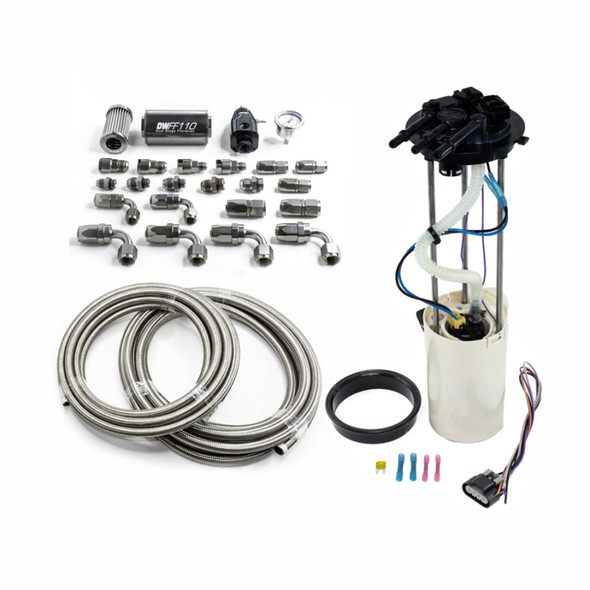
DeatschWerks 1999-2004 GM Truck DW400 Pump Module w/CPE fuel lines - DEATSCHWERKS9-401-603-7010
DeatschWerks
$1,129.00What is the fuel flow rate of the DW400 fuel pump?The DW400 fuel pump module provides a robust fuel supply, ensuring consistent flow for peak engine performance under demanding conditions.Can I...$1,129.00 -
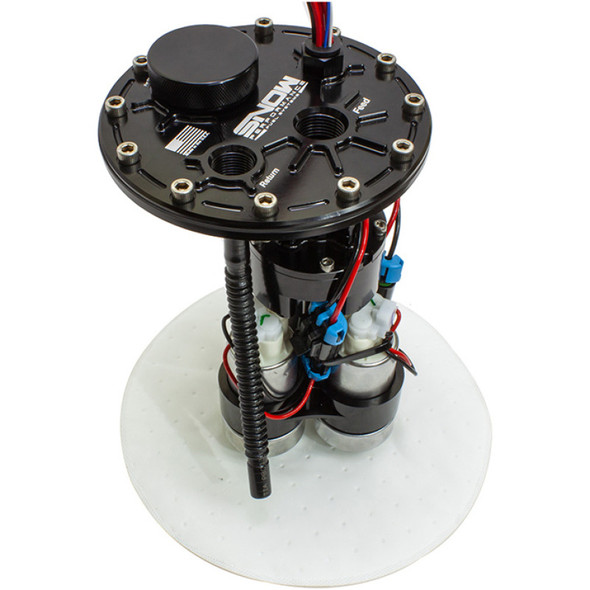
Snow Universal 10 Gal 8.72in Tank Depth Multi Pump Fuel Hat - Triple Pump - SNOWPERFORMANCESNF-52900H
Snow Performance
MSRP: $1,673.60$1,195.43What are the dimensions of the SNOW Fuel Hats?The SNOW Fuel Hats feature a 10 gallon tank depth and an 8.72 inch tank depth, ensuring ample fuel capacity for high-performance vehicles.Is the SNOW...MSRP: $1,673.60$1,195.43 -

Snow Universal 15-20 Gal 9.72in Tank Depth Multi Pump Fuel Hat - Triple Pump - SNOWPERFORMANCESNF-52910H
Snow Performance
MSRP: $1,673.60$1,195.43How do I know if the SNOW Fuel Hats will fit my tank?Confirm fitment using your vehicle's specific tank dimensions, ensuring compatibility with the 9.72 inch tank depth for optimal fuel pump...MSRP: $1,673.60$1,195.43 -

Snow Universal 10 Gal 8.72in Tank Depth Multi Pump Max Flow Fuel Hat - Triple Pump - SNOWPERFORMANCESNF-52900R
Snow Performance
MSRP: $1,697.85$1,212.75What is the optimal fuel pump setup for a high-performance application?The SNOW Fuel Hats' triple pump system ensures unparalleled fuel flow, delivering maximum performance for extreme demands and...MSRP: $1,697.85$1,212.75 -
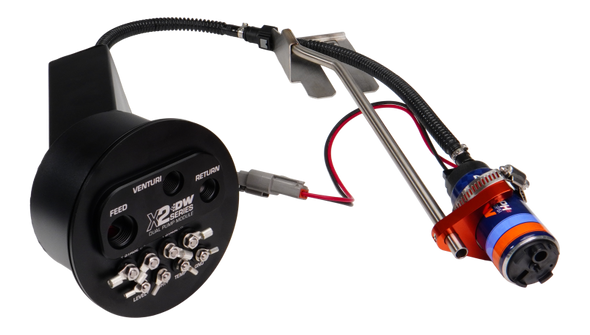
DeatschWerks 94-02 Nissan Silvia and Skyline X2 Surge Module with DW420 Pumps and Install Kit - DEATSCHWERKS9-421-7022
DeatschWerks
$1,259.00What is the primary function of the X2 Surge Module in the DW X2 Fuel Pump Module Kit?The X2 Surge Module maintains consistent fuel pressure, delivering precise fuel flow for optimal engine...$1,259.00 -

Fuelab High Efficiency EFI In-Line Twin Screw Fuel Pump - 1250 HP - FUELAB47403
Fuelab
$1,311.00What is the maximum horsepower supported by this fuel pump?The FLB H/E In-Line Fuel Pump reliably supports up to 1250 horsepower for demanding EFI applications.Is professional installation required...$1,311.00 -

Fuelab High Efficiency EFI In-Line Twin Screw Fuel Pump - 1500 HP - FUELAB47404
Fuelab
$1,364.00Is the Fuelab H/E In-Line Fuel Pump compatible with my vehicle?Confirm fitment with your specific vehicle model and year before installation to ensure optimal performance and compatibility of this...$1,364.00 -

Snow Performance Universal 10 Gallon 12 Hole Fuel Cell Hat Xtreme Version (3 Pump) - SNOWPERFORMANCESNF-52900X
Snow Performance
MSRP: $1,977.85$1,412.75What type of fuel pump is this?This SNOW Fuel Hat is an Xtreme version with a robust 3-pump fuel delivery system, engineered for ultimate performance across demanding applications.What is the flow...MSRP: $1,977.85$1,412.75 -

Fuelab High Efficiency SAE Flange Mount In-Tank DC Brushless Fuel Pump - 1500 HP - FUELAB93904
Fuelab
$1,416.00What is the horsepower rating for this fuel pump?This Fuelab H/E Series fuel pump supports up to 1500 horsepower, making it ideal for extreme performance vehicle builds.Is professional installation...$1,416.00 -

Edelbrock Supercharger Supplemental Fuel Pump Kit GM Suv 1500 2007-2009 6 0 6 2L Non-Flex Fuel - EDELBROCK15671
Edelbrock
$1,590.17$1,590.17 -
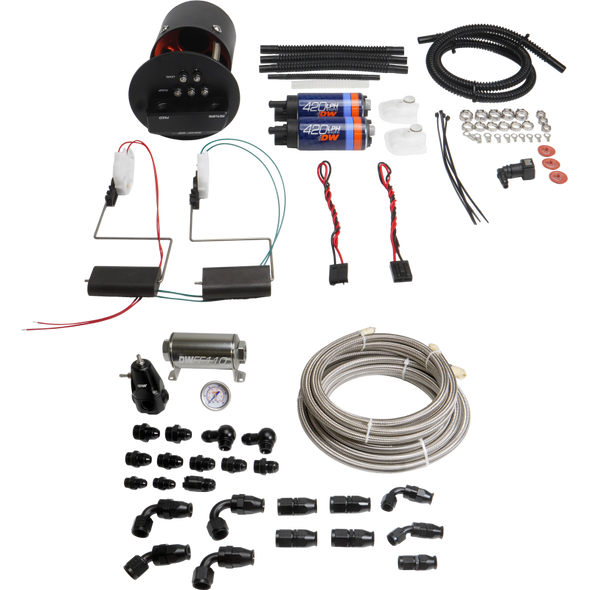
DeatschWerks 92-06 BMW 3-Series E36/E46 X2 Module with DW420 Pumps and PTFE Plumbing Kit - DEATSCHWERKS9-421-629-7070
DeatschWerks
$1,699.00Does this fit my car?Confirm fitment with your vehicle before purchasing to ensure seamless integration of this high-performance fuel pump.How difficult is installation?Install this drop-in fuel pump...$1,699.00 -

DeatschWerks 94-02 Nissan Silvia and Skyline X2 Surge Module with DW420 Pumps and PTFE Plumbing Kit - DEATSCHWERKS9-421-625-7022
DeatschWerks
$1,889.00What is the X2 Surge Module?The X2 Surge Module is a proprietary system that ensures consistent fuel delivery for peak engine performance across all driving conditions.How often should the fuel pump...$1,889.00
Fuel pumps are the foundation of every performance fuel system — they determine how much fuel your engine can consume at wide-open throttle, and an undersized or failing pump is one of the most common causes of lean-condition detonation on modified engines. Motor Sport Mayhem stocks 385 fuel pumps and fuel system components across 58 brands, covering everything from budget OEM replacements to brushless race-spec fuel cells rated for four-digit horsepower builds.
Our Top Picks for Fuel Pumps
Every product below was selected based on demonstrated performance value, engineering quality, and real-world results across street, track, and race applications.
ACB Fuel Tanks
Acerbis | $436.73
High-density polyethylene construction delivers expanded fuel capacity and superior impact resistance over OEM tanks for off-road and adventure riding applications.
- Increased capacity over stock extends range without adding the corrosion risk of aluminum on harsh terrain
AEM Fuel Pressure Regulators
AEM | $222.95
Adjustable fuel pressure regulation with a billet aluminum body allows precise fuel delivery tuning across a wide operating range on modified street engines.
- Direct-fit application-specific design eliminates adapter complications and maintains consistent pressure under load
AER Fuel Systems
Aeromotive | $3,624.93
A brushless in-tank spur pump fuel cell engineered for extreme-demand race builds where conventional fuel delivery systems run out of flow capacity long before the engine does.
- Brushless motor technology provides dramatically longer service life and higher flow consistency under sustained high-demand conditions
AFE ProGuard Fuel Filter
aFe | $74.00
Multi-stage diesel fuel filtration designed to protect high-pressure injection components from particulate contamination that destroys injector tip geometry over time.
- Filtration efficiency rated to protect common rail injection systems operating at pressures exceeding 20,000 PSI
ADG AirDog II-5G A/F Separator
AirDog | $854.00
Combined air/fuel separation and filtration system removes entrained air and water from diesel fuel before it reaches the injection pump, directly improving combustion consistency and injector longevity.
- Lift pump functionality reduces the workload on the OEM CP4 or CP3 injection pump, which is the most expensive component in the diesel fuel system
ABR Fuel Pump Kits
All Balls Racing | $310.11
Complete fuel pump module assemblies for powersports applications provide a single-kit solution that eliminates the piecemeal sourcing of individual components that plagues OEM-style repairs.
- Module design includes pump, sender, strainer, and all seals — preventing the mismatched tolerances that cause premature failure when components are replaced individually
AMS Flex Fuel Kit
AMS | $999.95
CAN-based flex fuel integration allows real-time ethanol content reading and fuel system adaptation, enabling E85 compatibility without sacrificing pump gas driveability.
- CAN communication eliminates the analog signal noise issues that degrade flex fuel sensor accuracy on older wideband-based systems
ATS Fuel Regulators
ATS Diesel | $74.99
Electronic fuel regulator kit for high-mileage diesel applications addresses one of the most documented failure points that causes hard starts, rough idle, and declining injection pressure over time.
- Upgraded regulator internals restore injection pressure to factory spec, which directly recovers lost power and fuel economy on worn fuel systems
BBK Fuel Pump
BBK | $419.99
A 300 LPH in-tank fuel pump providing the flow capacity to support substantial power increases over the factory fuel system's rated output ceiling.
- In-tank placement maintains fuel cooling of the pump motor and preserves factory fuel system architecture, avoiding the complexity of external pump mounting
BDD Injection Pumps
BD Diesel | $883.95
Stock exchange CP3 injection pump rebuild delivers factory-specification high-pressure fuel delivery to common rail diesel engines where the original pump has degraded or failed outright.
- Exchange program core return keeps total cost of ownership below a new-unit purchase while delivering a fully remanufactured pump built to OEM dimensional tolerances
How to Choose the Right Fuel Pump
The single most important specification in fuel pump selection is flow rate measured in liters per hour (LPH) at your target operating pressure — a pump that flows 255 LPH at 40 PSI will deliver significantly less at 60 PSI, and manufacturers who only publish free-flow numbers are hiding the pump's real-world limitations. Beyond flow, the critical differentiators are motor construction (brushed versus brushless), inlet and outlet port sizing, fuel compatibility (ethanol content tolerance is non-negotiable for E85 builds), and whether the pump is rated for continuous or intermittent duty — a distinction that separates race-only hardware from anything that sees street miles.
Key Specifications
Flow rate must be matched to your engine's fuel consumption at maximum power output, calculated as: (Target HP × BSFC) ÷ (Fuel Specific Gravity × 60). A gasoline engine making 500 horsepower with a BSFC of 0.50 requires approximately 4.2 LPM of fuel delivery — always size 20–25% above that calculated requirement to maintain adequate pressure at the injector rail under sustained full-throttle conditions. Running a pump at its maximum rated output continuously accelerates wear and increases heat soak in the fuel, which can cause vapor lock on marginally designed installations.
Pump housing and internal material compatibility is the spec that kills more fuel pumps than anything else, particularly on flex fuel or E85 setups. Ethanol is hygroscopic and attacks certain elastomers, brass, and zinc alloys used in budget pump internals — any pump destined for ethanol blends above E30 must explicitly carry ethanol compatibility ratings for all wetted components. This is not a marketing distinction; it is a material science issue that will cause pump seizure within hours on an incompatible unit running straight E85.
In-tank versus external pump mounting is a genuine engineering decision rather than a personal preference. In-tank pumps benefit from constant fuel submersion that cools the motor and prevents vapor lock, making them the preferred solution for street-driven vehicles and any application where the fuel level may vary. External inline pumps allow easier serviceability and the ability to run higher flow rates by stacking multiple units in series, which is why they dominate high-horsepower drag racing setups where fuel cells are used and the pump sits below tank level to maintain positive inlet pressure.
For diesel applications, the fuel system architecture is fundamentally different from gasoline — a low-pressure lift pump feeds a high-pressure injection pump that then supplies the common rail at pressures between 5,000 and 30,000 PSI depending on the platform. The lift pump is the most overlooked component in a diesel fuel system upgrade; an inadequate lift pump starves the injection pump under load, causing cavitation damage that destroys a $1,500–$3,000 injection pump. Any diesel build adding power should address lift pump flow capacity before touching anything else in the fuel system.
Fuel Pump Flow Rate vs. Horsepower Requirements Reference
| Target Horsepower | Min. Flow Required (LPH @ 43 PSI) | Recommended Pump Size (LPH) | Typical Application |
|---|---|---|---|
| Up to 250 HP | ~95 LPH | 150–190 LPH | Mild street tune, N/A engine |
| 250–400 HP | ~150 LPH | 255–300 LPH | Bolt-on street performance, light boost |
| 400–600 HP | ~225 LPH | 340–450 LPH | Turbo/supercharged street or track |
| 600–900 HP | ~340 LPH | 525–650 LPH | High-boost forced induction, E85 |
| 900–1,400 HP | ~530 LPH | 800–1,000 LPH | Race-built engines, dual pump setups |
| 1,400+ HP | 700+ LPH | Dual pump or brushless cell system | Pro-level drag racing, full fuel cell |
Price Guide
Entry ($1.16–$200): This range covers OEM-replacement in-tank pumps, individual fuel filters, basic regulators, and powersports pump components. Quality varies sharply — name-brand units from Walbro and similar manufacturers in this range use proven internal designs with documented flow curves, while unbranded imports often publish optimistic flow figures measured at zero back pressure. For a stock or lightly modified daily driver needing a straightforward pump replacement, this range is entirely appropriate.
Mid-range ($200–$800): The majority of street performance and track-day builds land here, and for good reason — this price band covers 255–450 LPH in-tank pumps, quality adjustable regulators, lift pump systems for diesel applications, and complete fuel pump module assemblies. Brands like DeatschWerks, Fuelab, and Walbro's performance lineup occupy this space, offering validated flow data, ethanol-compatible internal materials, and proper documentation for tuner use. This is also where most complete powersports fuel system solutions sit.
Premium ($800–$6,439.78): Brushless fuel cells, complete fuel system kits with integrated filtration and air separation, high-pressure diesel injection pump assemblies, and dual-pump setups live in this tier. The cost is justified when flow demand, continuous duty cycle, or fuel system reliability at extreme power levels makes a lower-cost solution a liability rather than a savings. AirDog lift pump systems, Aeromotive brushless fuel cells, and remanufactured high-pressure injection pumps represent real engineering investment — not marketing premium.
Who Is This For?
Fuel pump upgrades serve an extraordinarily wide range of applications — from a $74 diesel filter protecting a work truck's injection system to a $3,600 brushless race cell feeding a four-digit horsepower drag car — and the usage data reflects exactly that spread.
Engine Performance — 8.7/10
Engine performance is the highest-scoring application in the category, and the reasoning is mechanical: every horsepower increase above stock demands proportionally more fuel, and the OEM pump was sized with exactly zero headroom for modification. A fuel pump upgrade is often the first critical enabling component for any serious engine build, because running lean on a modified engine causes detonation, melted pistons, and destroyed bearings — not a gradual power loss. Pairing a properly sized pump with quality engine components ensures the entire system performs at its rated capacity.
Drag Racing — 8.2/10
Drag racing scores an 8.2 because the fuel system demands are uniquely punishing: full throttle from a standing start, sustained maximum power output for 8–15 seconds, extreme g-loading that can cause fuel slosh uncovering a standard in-tank pickup, and in many builds, nitrous or methanol injection stacking additional fuel demand on top of the base tune. External pump setups, surge tanks, and dedicated fuel cells are standard equipment in anything beyond street-strip use, and the category's 136 drag-rated products reflect that breadth of solutions. Fuel delivery failures in drag racing are not slow degradation — they are catastrophic single-pass events.
Racing Competition / Track-Autocross — 8.1/10
Track and autocross use scores an 8.1 because lateral g-forces during cornering create fuel starvation conditions at the OEM in-tank pickup that simply do not exist on a straight-line drag car — a hard corner at 1.0g or more can momentarily uncover a standard pickup and cause the engine to run lean mid-corner at exactly the worst moment. Surge tanks, baffled fuel cells, and high-flow in-tank assemblies with redesigned pickup geometry solve this problem at the hardware level. Building a serious track car means the fuel system needs the same engineering attention as the suspension and brakes.
Street Performance — 7.8/10
Street performance scores 7.8 — strong, but tempered by the reality that many street builds stay within the OEM pump's capacity until forced induction or aggressive naturally aspirated builds push fuel demand past factory limits. The street performance sweet spot is a direct-fit upgraded in-tank pump in the 255–340 LPH range paired with an adjustable fuel pressure regulator, which provides tuning flexibility without requiring fuel system surgery. Ethanol content in pump fuel has also increased in many markets, making material compatibility a growing concern even on otherwise stock fuel systems.
Easy DIY Install — 7.4/10
A 7.4 DIY score reflects the genuine range of installation complexity across the category — a direct-fit in-tank pump module swap is a straightforward 2–3 hour job for anyone comfortable with basic fuel system safety precautions, while a complete external pump, surge tank, and fuel cell installation requires fabrication skill, proper AN fittings knowledge, and an understanding of return-line fuel system design. The 98 products rated for DIY install are primarily direct-fit replacement and upgrade pumps where the manufacturer has done the engineering work to ensure the new unit drops into existing brackets and wiring.
Trusted Fuel Pump Brands We Carry
The brands that dominate this category earned their positions through documented flow testing, material engineering, and real-world validation at the highest levels of motorsport. DeatschWerks built its reputation on publishing actual flow curves at multiple pressures — not just peak free-flow numbers — making pump selection a precise exercise rather than a guess. Aeromotive has been the benchmark for external pump systems and fuel cells in American motorsport for decades, with hardware in everything from NHRA Pro Stock to endurance road racing. Fuelab brings aerospace-influenced regulator and pump technology to the performance market with tighter manufacturing tolerances than most competitors. Walbro's turbine pump designs are so proven that they're found as OEM suppliers in numerous production vehicles, and their performance variants represent genuine flow improvements over stock without exotic pricing. AirDog dominates the diesel lift pump segment because their air and vapor separation technology directly addresses the specific failure mode that destroys high-pressure diesel injection pumps, while Fleece Performance delivers purpose-built diesel fuel system solutions engineered specifically for maximum horsepower diesel applications.
Frequently Asked Questions
Are aftermarket fuel pumps as good as OEM?
For stock or lightly modified applications, a quality aftermarket pump from an established manufacturer is fully equal to OEM — and in many cases uses the same or better internal components at a lower price point. The critical factor is buying from a brand that publishes actual flow data at operating pressure rather than peak free-flow specs, because that's the number that determines whether your engine will fuel correctly under load. Where aftermarket pumps genuinely exceed OEM is in flow capacity — factory pumps are engineered to the minimum specification needed for a stock engine, leaving zero headroom for power modifications. The caveat is that budget unbranded pumps often use inferior brushed motors and non-ethanol-compatible seals that fail prematurely; the price gap between junk and quality in this category is real and consequential.
Are aftermarket fuel pumps worth it?
On any modified engine pushing beyond stock power levels, an upgraded fuel pump is not optional — it's a prerequisite for reliable, safe operation. Running an OEM pump at its maximum rated flow continuously causes accelerated motor wear and heat buildup that shortens pump life, while a properly sized aftermarket unit operates comfortably within its capacity at your power level. Even on unmodified high-mileage vehicles, an aftermarket upgrade pump often outlasts a second OEM replacement because performance-spec pumps are built to tighter tolerances and more robust materials. The cost of a fuel pump upgrade is trivial compared to the cost of a lean-condition engine failure caused by fuel starvation.
Are Aeromotive fuel pressure regulators good?
Aeromotive regulators are among the most respected in the industry, used on everything from SCCA club racers to professional drag cars, and that reputation is based on consistent regulation accuracy across wide flow and temperature ranges rather than marketing. Their billet construction and precision-machined valve seats maintain pressure stability at high flow rates where cheaper regulators show pressure drop, which directly affects injector pulse width calculation accuracy during tuning. The return-style regulator design they popularized is the correct solution for any high-performance build because it maintains constant pressure regardless of engine fuel demand fluctuation. At their price points they represent fair value given the engineering behind them — cheaper alternatives exist, but the performance difference is measurable on a dyno.
Are aftermarket fuel filters any good?
Aftermarket fuel filters from quality manufacturers are not only as good as OEM — for diesel applications in particular, they are often significantly better due to finer filtration ratings that protect expensive high-pressure injection components. The specification that matters most is micron rating: diesel common rail injectors require fuel filtered to 2–4 microns to prevent erosive wear on injector tips and needle valves, and some OEM filters are rated at a coarser level than optimal. For gasoline applications, replacement interval compliance matters as much as filter quality — a premium filter run too long provides less protection than a budget filter changed on schedule. Aftermarket diesel filtration systems that add water separation capability address a failure mode that OEM systems often handle inadequately, particularly in geographic regions with higher fuel water contamination.
Are aluminum fuel tanks better than steel?
Aluminum and high-density polyethylene tanks each have legitimate advantages over steel for performance applications, and the best choice depends on the specific use case. Aluminum is lighter than steel, corrosion-immune, and weldable for custom fitment, making it the preferred material for dedicated fuel cells in race cars and restomod builds — it also dissipates heat faster, which can slightly reduce fuel temperature in high-ambient-temperature racing environments. Steel OEM tanks offer proven longevity in daily-driven street applications where cost, repairability, and crash safety behavior under known conditions matter most. Plastic composite tanks — common in modern OEM applications and off-road powersports — are lighter than both metals, fully corrosion-proof, and flexible enough to resist crack propagation from impact, which is why they dominate adventure motorcycle and ATV applications where rock strikes are a real concern.
Building something specific? Our performance specialists can help you select the right Fuel Pumps for your application — street, track, or full race build.