
Turbochargers
- Product
- Qty in Cart
- Quantity
- Price
- Subtotal
-


Turbosmart Oil Cooled 6262 V-Band Inlet/Outlet A/R 0.82 External Wastegate TS-1 Turbocharger - TS-1-6262B-VB082E
Turbosmart
MSRP: $2,420.99$2,178.89What vehicles are compatible with TS Turbochargers?TS Turbochargers require careful fitment verification with your specific vehicle to ensure optimal integration and performance.How difficult is the...MSRP: $2,420.99$2,178.89 -


Turbo XS Subaru 20G Turbocharger - TU-EJ-TXS400
Turbo XS
MSRP: $1,649.00$1,241.97What is the power output of the TXS Turbocharger?TXS Turbochargers deliver explosive acceleration and thrilling power gains across the RPM range, significantly boosting engine performance.What is the...MSRP: $1,649.00$1,241.97 -

Industrial Injection 2020+ 6.7L Ford Cab & Chassis New Turbocharger - 925351-5001S
Industrial Injection
$1,593.52What is the primary function of this replacement turbocharger?This new replacement turbocharger is engineered to deliver explosive acceleration and instant throttle response, unlocking your vehicle's...$1,593.52 -

Industrial Injection 15-16 Ford 6.7L Garrett Service Replacement Turbo - 892147-5001S
Industrial Injection
$1,631.52What is the installation process like for the IND Turbo?Professional installation is recommended for the IND Turbo to ensure precise fitment and optimal performance of this critical turbocharger...$1,631.52 -

Industrial Injection 17-19 6.7L Ford 1 Ton Pickup New Garrett Turbocharger - 888143-5001S
Industrial Injection
$1,708.62What is the main benefit of installing an IND Turbo?This IND Turbo delivers explosive acceleration and instant throttle response, unlocking your vehicle's true performance potential for exhilarating...$1,708.62 -
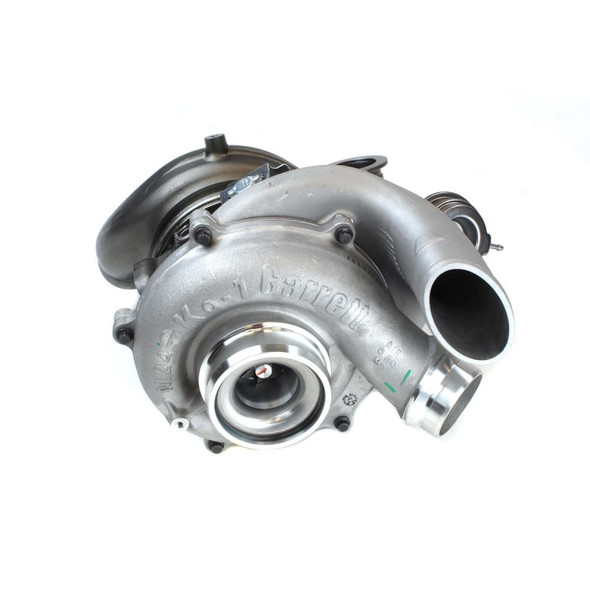

Industrial Injection 11-14.5 Ford 6.7L New Stock Replacement Turbo - 851824-5001S
Industrial Injection
$1,810.08What is the expected horsepower gain from installing this turbocharger?This IND Turbocharger is engineered to achieve a 100 horsepower gain over stock, delivering exhilarating performance for your...$1,810.08 -


Industrial Injection 11-16 Duramax 6.6L LML New Stock Replacement Turbocharger - 848212-5002S
Industrial Injection
$1,651.63What is the primary benefit of installing an IND Turbo?This IND Turbo delivers explosive acceleration and instant throttle response, unlocking your vehicle's true performance potential with...$1,651.63 -


Industrial Injection 05.5-07 6.0L Power Stroke New Garrett Stock Turbocharger - 743250-5025S
Industrial Injection
$1,070.69What is the part number for this IND Turbo - New Replacement?Consult your vehicle's specific application details to confirm exact fitment and the precise part number for this IND Turbo - New...$1,070.69 -
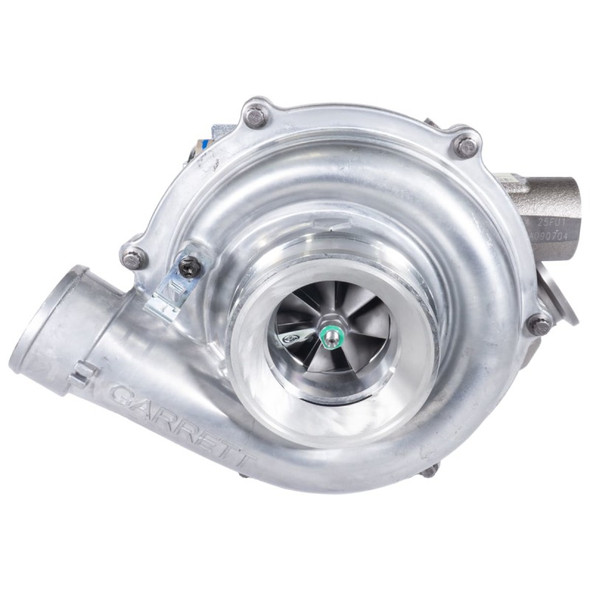
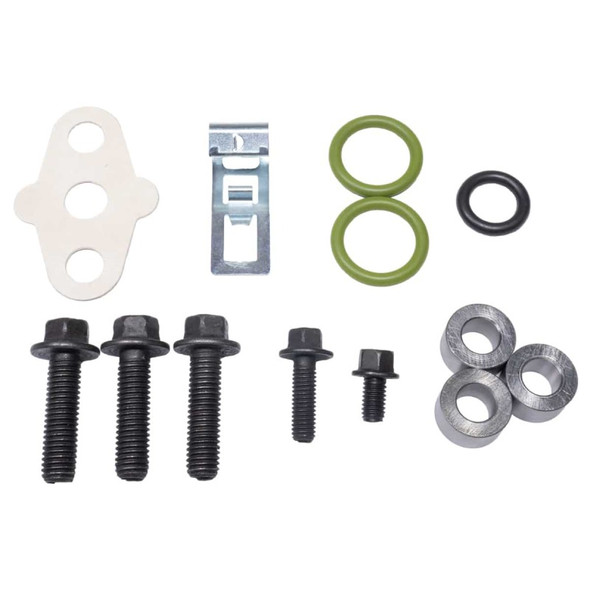
Industrial Injection 03-07 Ford Powerstroke 6.0L New Garrett Stock Turbo (w/Variable Sensor) - 725390-5006S
Industrial Injection
$973.88Is this a direct replacement for my stock turbocharger?Confirm fitment with your specific vehicle application before installation, as this IND Turbo is a new replacement unit designed for precise...$973.88 -

Garrett G30-825 G-Series II Turbocharger 0.83 A/R V-Band / V-Band IWG - 934118-5003S
Garrett
MSRP: $3,750.57$3,150.48What is the main advantage of upgrading to a Garrett GRT Turbocharger?Garrett GRT Turbochargers deliver explosive acceleration and instant throttle response, unlocking your engine's true potential...MSRP: $3,750.57$3,150.48 -


Garrett 2022+ Ford Bronco/Ranger Raptor 3.0L GT1752S PowerMax Turbocharger Kit (RH & LH Turbos) - 926432-5002S
Garrett
MSRP: $4,168.99$3,501.95What is the primary function of a turbocharger?A turbocharger forces more air into the engine, enabling it to burn more fuel and produce significantly higher horsepower for enhanced performance.Can I...MSRP: $4,168.99$3,501.95 -
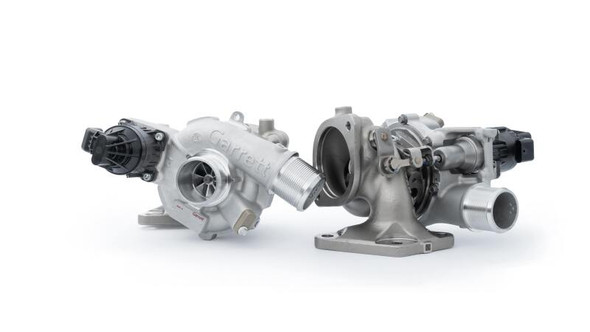

Garrett 2021+ Ford Bronco 2.7L GT1752S PowerMax Turbocharger Kit - 926432-5001S
Garrett
MSRP: $4,168.99$3,501.95How to find out if GRT Turbochargers will fit my vehicle?GRT Turbochargers require confirmation of vehicle fitment to ensure precise integration and optimal performance for your specific application...MSRP: $4,168.99$3,501.95
Turbochargers are the most power-dense forced induction solution available, using exhaust-driven compression to force substantially more air into the combustion chamber than any naturally aspirated setup can achieve. Motor Sport Mayhem stocks 115 in-stock turbocharger system components and complete kits across 48 brands, spanning everything from boost management solenoids to full twin-turbo replacement systems priced from $3.42 to $13,288.86.
Our Top Picks for Turbochargers
Every product below was hand-selected by our performance specialists based on real-world dyno results, fitment reliability, and measurable power gains across street and competition applications.
ADD Intercooler Upgrade Kits
Addictive Desert Designs | $1,499.99
A direct-fit intercooler upgrade engineered to dramatically reduce intake air temperatures on forced-induction truck platforms without cutting or fabrication.
- Drop-in core replacement eliminates heat soak for sustained high-output driving
AEM Water/Meth Systems
AEM | $699.95
Water-methanol injection provides charge cooling and octane supplementation that directly supports higher boost pressure without detonation risk on diesel and gasoline platforms.
- Internal MAP sensor delivers progressive injection control tied directly to boost level
aFe Bladerunner I/C & Tubes
aFe | $2,036.00
A full air-to-air intercooler and charge pipe system engineered for high-output diesel trucks where OEM core size is the primary restriction to further power gains.
- Bar-and-plate core construction delivers superior thermal capacity versus tube-and-fin OEM cores
ABR Solenoids
All Balls Racing | $41.33
A precision solenoid rebuild kit that restores electrical switching accuracy critical to boost control and wastegate actuation systems that depend on clean solenoid function.
- OEM-spec tolerances ensure consistent duty-cycle response in boost control circuits
Alta Tensioner Stop
Alta | $99.45
An adjustable tensioner stop that prevents supercharger belt slip under high-boost conditions, a known failure point that undermines forced induction reliability at elevated power levels.
- Adjustable design allows belt preload tuning without full drivetrain disassembly
AMS Intercoolers
AMS | $2,178.27
A front-mount intercooler kit with integrated bumper beam that maximizes core volume and airflow without compromising chassis structural integrity or requiring custom fabrication.
- Full-face core design maximizes ram-air cooling efficiency at speed and on track
ATS 4000 Turbo Kits
ATS Diesel | $3,549.99
A stage 2 compound turbo system designed for heavy-duty diesel applications where a single OEM turbo cannot sustain spool efficiency across the full RPM range under tow or competition loads.
- Compound (series sequential) configuration splits compression work for lower intake temps and broader power band
AWE Intercoolers
AWE Tuning | $3,545.00
A performance intercooler kit engineered for high-output turbocharged sports car platforms where charge temperature reduction directly translates to measurable peak power and sustained lap consistency.
- Precision-matched end tanks and core sizing prevent pressure drop penalties seen in oversized generic cores
Banks Techni-Cooler Systems
Banks Power | $1,829.00
A complete intercooler system engineered for high-output diesel trucks combining a high-flow core with optimized charge piping to reduce pressure drop and intake air temperature simultaneously.
- Banks' fin-and-tube geometry is tuned specifically for high-volume diesel airflow versus generic automotive cores
BD Diesel Screamer Turbos
BD Diesel | $3,918.95
A direct-replacement performance turbocharger for late-model diesel trucks engineered with upgraded compressor and turbine wheel specifications to support substantially higher airflow than OEM without frame or mount modifications.
- Billet compressor wheel option improves surge resistance and high-boost efficiency at elevated power targets
How to Choose the Right Turbocharger System
The difference between a turbocharger system that delivers on its power promise and one that fails prematurely comes down to three fundamentals: compressor map match to your engine's airflow target, turbine housing A/R ratio relative to your RPM range, and bearing assembly quality under thermal and mechanical load. A turbo with a compressor wheel sized too large for a low-displacement engine will surge at partial throttle and deliver sluggish spool; one sized too small will hit its efficiency wall before you reach your horsepower target. Turbine housing A/R ratios below 0.60 spool faster but choke high-RPM flow, while ratios above 0.90 favor top-end power at the cost of low-RPM response. Bearing type — journal versus ball-bearing CHRA — determines both spool speed and longevity under sustained boost, with ball-bearing assemblies showing measurably faster transient response and better oil film stability at high temperatures.
Key Specifications to Evaluate
Compressor wheel exducer diameter is the primary sizing reference — matched to target airflow in pounds per minute, not horsepower alone, because fuel type, boost pressure, and volumetric efficiency all shift the actual air mass requirement. A wheel too small for your airflow target will operate outside its efficiency island, generating excessive heat that defeats the intercooler before combustion even occurs. Always cross-reference compressor maps from the manufacturer; a legitimate performance brand publishes actual efficiency contour data, not just a peak horsepower claim.
Turbine housing material separates budget units from competition-grade hardware. Cast iron housings handle thermal cycling adequately for street use, but high-nickel Inconel or stainless steel turbine housings are required for sustained high-EGT applications like diesel competition or extended track sessions where exhaust temperatures regularly exceed 1,600°F. Wastegate design — internal flapper versus external gate — directly controls boost curve shape and affects how precisely a boost controller can regulate pressure across RPM.
The intercooler is inseparable from the turbocharger selection decision. Compressing air raises its temperature at roughly 10–15°F per pound of boost pressure, meaning a system running 25 psi needs to reject 250–375°F of heat before that air enters the combustion chamber. Bar-and-plate cores offer superior thermal capacity and physical durability versus tube-and-fin cores, though they add weight and require more ram-air face area to achieve equivalent cooling at low vehicle speeds. For forced induction systems intended for track use, core volume and end-tank flow path design matter more than peak cooling numbers measured in a straight line.
Charge piping diameter and material are frequently overlooked but critically important — undersized charge pipes create backpressure that the turbo must work against, raising compressor outlet temperature and reducing net boost at the throttle body. Silicone couplers with T-bolt clamps outperform OEM-style spring clamps above 25 psi; above 30 psi, aluminum or stainless hardpipe sections eliminate the expansion losses inherent in long flexible sections. Pair any boost system upgrade with supporting fuel delivery upgrades — fuel system capacity defines the ceiling regardless of how much air the turbo can move.
Turbocharger Sizing Reference by Power Target
| Power Target (WHP) | Compressor Flow (lb/min) | Typical Compressor Exducer (mm) | Recommended Turbine A/R |
|---|---|---|---|
| 200–300 WHP | 18–25 lb/min | 50–58 mm | 0.48–0.63 |
| 300–450 WHP | 25–38 lb/min | 58–67 mm | 0.63–0.82 |
| 450–600 WHP | 38–52 lb/min | 67–76 mm | 0.82–1.01 |
| 600–800 WHP | 52–68 lb/min | 76–88 mm | 1.01–1.15 |
| 800–1,000 WHP | 68–88 lb/min | 88–102 mm | 1.15–1.32 |
| 1,000+ WHP | 88+ lb/min | 102+ mm (or compound/twin setup) | 1.32+ or application-specific |
Price Guide
Entry ($3.42–$355): This tier covers boost solenoids, rebuild components, blow-off valves, boost controllers, and supporting hardware — the maintenance and tuning layer of a forced induction system rather than core turbo assemblies. Excellent value for replacing wear items or adding boost control capability to an existing setup.
Mid-range ($355–$1,800): Where most street and light-track enthusiasts land for complete intercooler kits, water-methanol injection systems, and bolt-on turbo upgrades. This range delivers measurable intake air temperature reductions and meaningful power gains without exotic materials or custom fabrication.
Premium ($1,800–$13,288.86): Full turbocharger replacement systems, compound diesel setups, and engineered intercooler kits with precision-matched components. Justified for competition builds, high-horsepower diesel applications, and platform-specific systems where OEM turbo architecture is the fundamental bottleneck to power and reliability at elevated output levels.
Who Is This For?
Turbocharger systems serve an exceptionally broad range of applications — from bolt-on intercooler upgrades for weekend street driving to full compound turbo systems built for sustained competition loads.
Engine Performance — 8.7/10
Turbocharger and forced induction components score highest in pure engine performance application because increased airflow directly and proportionally increases combustion potential — no other single category produces this magnitude of power gain per dollar. Supporting components like intercoolers, boost solenoids, and charge piping work as a system, and the 8.7 score reflects how comprehensively this category addresses the full chain from turbo outlet to intake manifold. Upgrading one component without addressing the others leaves measurable performance on the table.
Racing Competition — 8.2/10
Competition applications demand components that maintain consistent performance across multiple passes or laps, not just peak numbers on a single pull — which is why the 8.2 score for racing competition reflects the durability and thermal management capabilities in this category rather than just raw power figures. Bar-and-plate intercooler cores, billet compressor wheels, and high-duty-cycle boost solenoids are not marketing upgrades in a competition context; they are the difference between consistent lap times and thermal degradation mid-session. Compound turbo systems for diesel competition address spool efficiency across a wide RPM band that single-turbo setups cannot cover.
Drag Racing — 8.0/10
Drag racing prioritizes fast boost response and maximum peak airflow in a narrow RPM window, which demands precise A/R ratio selection and often a smaller turbine housing than road course applications of equivalent horsepower. Water-methanol injection becomes particularly effective in this application because charge cooling between passes prevents heat soak from degrading consistency across multiple runs. The 8.0 score reflects strong but not dominant suitability — drag racing also demands coordinated fuel delivery and engine component upgrades that live outside this category.
Street Performance — 8.0/10
Street performance applications score 8.0 because bolt-on intercooler upgrades and boost controller additions offer genuine, drivable power gains without requiring engine removal or tuning beyond a reflash. The street use case rewards good throttle response across a broad RPM range — which means proper turbine A/R selection and tight boost control matter as much as peak power numbers. Heat soak on stop-and-go streets is the primary enemy of consistent street turbo performance, making intercooler core volume and airflow design the deciding factor in real-world street satisfaction.
Track / Autocross — 8.0/10
Track and autocross use demands the best thermal management because repeated high-boost acceleration events with minimal cool-down time push intercoolers and turbo bearing oil temperatures beyond what street-rated components can sustain. The 8.0 score acknowledges this category's capability while noting that track-specific builds require careful attention to oil feed and drain line sizing, intercooler core capacity relative to vehicle frontal area, and boost solenoid duty cycle ratings that hold calibration under heat. For extended track sessions, integrating cooling system upgrades from the cooling category alongside turbo hardware is standard practice.
Trusted Turbocharger Brands We Carry
Garrett has supplied OEM turbochargers to major manufacturers for decades and brings that engineering pedigree to its aftermarket line with precision-machined compressor wheels and published efficiency maps that allow accurate pre-purchase sizing — their average price of $1,610 reflects genuine engineering content, not marketing. BorgWarner occupies a similar OEM-supplier position, particularly in the diesel space, with turbocharger assemblies averaging $1,175 that are used as reference benchmarks by diesel tuners worldwide. HKS brings Japanese motorsport precision at an average of $1,324 per unit, with a heritage in time-attack and circuit racing that informs their bearing and housing tolerances. On the support-component side, Turbosmart produces blow-off valves, wastegates, and boost controllers that are the de facto standard in professional turbo builds globally, with a broad catalog averaging $374 that covers every boost management need. aFe Power and Banks Power each bring diesel-specific engineering depth — aFe with their Bladerunner intercooler systems optimized for diesel thermal loads, and Banks with flow-bench-validated charge systems developed specifically for high-volume diesel airflow rather than adapted gasoline-engine designs.
Frequently Asked Questions
Are aftermarket turbos worth the money?
For any forced induction platform where the OEM turbocharger is the limiting factor in the power chain, a quality aftermarket turbo is one of the highest return-per-dollar modifications available. A properly sized aftermarket unit can deliver 30–80% more airflow than stock with improved efficiency across a broader RPM range, translating directly to power gains that no bolt-on intake or exhaust modification can match. The key qualifier is sizing — an aftermarket turbo that is too large for the application produces worse real-world performance than OEM despite superior peak numbers because it spools outside the operating RPM window. When the turbo upgrade is matched to supporting fuel, intercooler, and tune upgrades, the investment is absolutely justified for both street and competition applications.
Are air-to-air intercoolers a good choice for turbo systems?
Air-to-air intercoolers are the dominant choice for most forced induction applications because they require no coolant circuit, no pump, no heat exchanger, and their cooling capacity scales naturally with vehicle speed and ram-air pressure — exactly when you need it most under hard acceleration. Bar-and-plate core construction in a properly sized air-to-air unit will outperform an equivalent air-to-water system on sustained track use because the heat rejection path to ambient air is unlimited, whereas an air-to-water system accumulates heat in a finite reservoir. The limitation of air-to-air systems is physical — they require charge pipe routing from turbo outlet to front-mount core and back to the throttle body, which adds pipe volume and slight turbo lag versus a compact air-to-water unit mounted close to the throttle body. For most street and competition builds, air-to-air is the correct default choice when installation space allows proper front-mount placement.
Are blow-off valves bad for your engine?
Properly sized and configured blow-off valves are not harmful — they are protective devices that vent compressor surge pressure to prevent the turbocharger's compressor wheel from stalling against a closed throttle body. Compressor surge is the actual damaging condition: when a throttle snaps shut, the compressed air column rebounds against the compressor wheel, creating a pressure wave that causes bearing load spikes and can crack compressor wheel blades over time. The concern arises specifically with mass airflow sensor vehicles where venting air that has already been metered causes a brief fuel mixture error — this is managed by using a recirculating bypass valve (recirc BOV) that returns the vented air to the intake upstream of the MAF sensor. Atmospheric venting on a speed-density or MAP-based tune causes no fueling issues whatsoever. The choice between atmospheric and recirculating configuration is a tuning and sensor architecture decision, not an engine safety concern.
Are boost controllers worth adding to a turbo system?
A boost controller — electronic or manual — is worth adding any time you want to run boost pressure above the wastegate spring's natural cracking pressure without relying on an ECU-integrated solenoid that may be locked by factory software. Manual boost controllers are simple, reliable, and appropriate for builds where a single fixed boost level is acceptable; electronic boost controllers allow boost mapping by gear, RPM, throttle position, and even traction conditions, which matters significantly on track where boost needs to be managed differently exiting a slow corner versus a long straight. The measurable benefit on a well-tuned system is consistent boost pressure across all operating conditions rather than the boost creep or drop-off that an uncontrolled wastegate spring exhibits as exhaust backpressure changes with RPM. For any build running above OEM boost levels, a quality solenoid-based boost controller is not optional — it is the mechanism that keeps your power curve safe and consistent.
Are boost solenoids universal, or do they need to match the application?
Boost solenoids are not universal — they must be matched to the operating pressure range, duty cycle requirement, port size, and control voltage of the specific boost control system they serve. A solenoid rated for a maximum operating pressure of 15 psi will not hold calibration reliably in a system running 30 psi, and port size determines flow rate through the control circuit, which affects how quickly the wastegate actuator can respond to pressure commands. Three-port versus two-port configuration also matters: three-port solenoids allow full vent-to-atmosphere on the reference port for more aggressive boost control, while two-port units are inline references only. Duty cycle rating is critical for continuous-use applications — a solenoid rated for 50% duty cycle will overheat and fail if the boost controller is commanding 90% duty cycle to hold high boost pressure against a stiff wastegate spring. Always match solenoid specifications to the boost controller's output signal and your target operating pressure rather than selecting by physical connector fit alone.
Building something specific? Our performance specialists can help you select the right Turbochargers for your application — street, track, or full race build.