
Turbine Housings
- Product
- Qty in Cart
- Quantity
- Price
- Subtotal
-

BorgWarner Turbine Housing SX S300 1.00 A/R Volute Twin Flow 80mm Turbine Wheel - 179905
BorgWarner
MSRP: $295.52$236.41Will these turbine housings fit my car?Confirm exact fitment for your specific vehicle before purchase; professional installation is recommended to ensure proper integration.What is the expected...MSRP: $295.52$236.41 -

BorgWarner Turbine Housing S400SX SX 1.25 A/R-T4 VTF (87mm) - 178790
BorgWarner
MSRP: $405.90$324.72What are the main benefits of installing a BorgWarner AirWerks turbine housing?BorgWarner AirWerks turbine housings deliver rapid spool for immediate throttle response and exhilarating acceleration,...MSRP: $405.90$324.72 -

BorgWarner Turbine Housing S400SX SX 1.10 A/R-T4 VTF (87mm) - 178789
BorgWarner
MSRP: $312.45$249.96What is the horsepower capability of the BWA AirWerks Turbine Housings?These turbine housings achieve a 1000 horsepower capability, making them ideal for extreme performance builds that demand...MSRP: $312.45$249.96 -
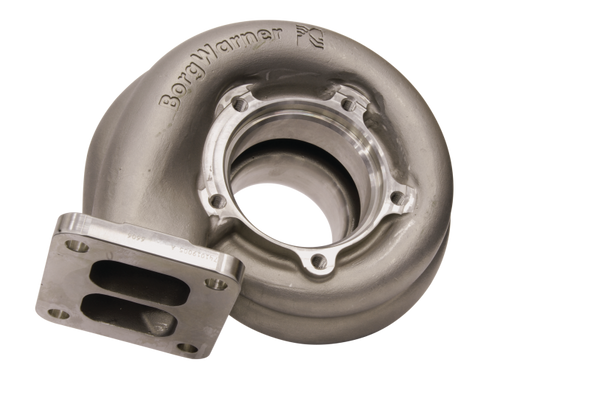
BorgWarner Turbine Housing S400SX SX 1.00 A/R-T4 VTF (87mm) - 178788
BorgWarner
MSRP: $524.04$419.24How do I know if this turbine housing is compatible with my vehicle?Confirm vehicle fitment using our online tool to ensure these BWA AirWerks turbine housings integrate perfectly.Is this a direct...MSRP: $524.04$419.24 -

BorgWarner Turbine Housing S400SX SX .90 A/R-T4 VTF (87mm) - 178787
BorgWarner
MSRP: $312.45$249.96Do BWA AirWerks Turbine Housings improve turbo spool time?BorgWarner BWA AirWerks Turbine Housings achieve faster turbo spool for immediate throttle response through superior exhaust flow.Is...MSRP: $312.45$249.96 -
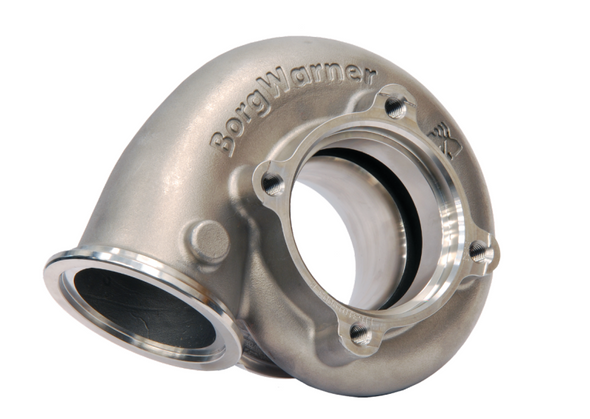

BorgWarner Turbine Housing S300SX3 SX .83 A/R T4 (68/76mm) - 178313
BorgWarner
MSRP: $514.73$305.48What is the optimal turbine housing size for my specific application?BWA AirWerks Turbine Housings offer various A/R ratios; consult your vehicle's fitment guide or a performance specialist to...MSRP: $514.73$305.48 -

BorgWarner Turbine Housing SX S300SX3 A/R .88 80/74mm - 177211
BorgWarner
MSRP: $287.64$230.11What is the main advantage of upgrading to a BWA AirWerks Turbine Housing?BWA AirWerks Turbine Housings deliver rapid spool for immediate throttle response and exhilarating acceleration on your...MSRP: $287.64$230.11 -
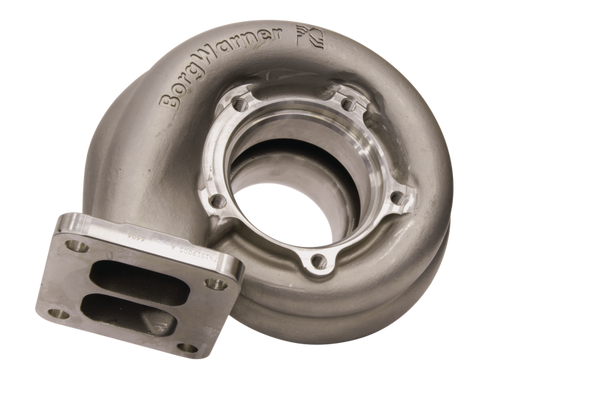
BorgWarner Turbine Housing SX S300SX3 A/R .88 68mm - 177210
BorgWarner
MSRP: $287.64$230.11Will this turbine housing fit my vehicle?Confirm turbine housing fitment with your specific vehicle application before purchase to ensure optimal compatibility and performance.Is professional...MSRP: $287.64$230.11 -
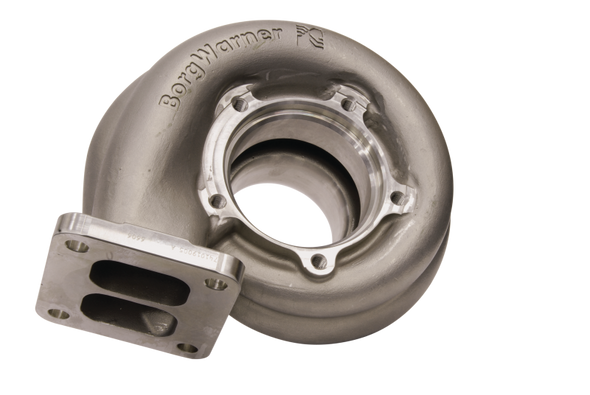
BorgWarner Turbine Housing SX S300 A/R 1.00 68mm - 177209
BorgWarner
MSRP: $287.64$230.11Will this turbine housing fit my vehicle?Confirm your specific vehicle's fitment before purchasing to ensure optimal compatibility with these BorgWarner turbine housings.Is professional installation...MSRP: $287.64$230.11 -

BorgWarner Turbine Housing SX S300SX3 A/R .91 80/74mm - 177208
BorgWarner
MSRP: $287.58$230.06Are these turbine housings a direct bolt-on replacement?These BWA AirWerks Turbine Housings require professional installation for optimal fitment; confirm vehicle compatibility before purchase.What...MSRP: $287.58$230.06 -

BorgWarner Turbine Housing SX S300SX3 A/R .91 68mm - 177207
BorgWarner
MSRP: $283.46$226.77BorgWarner Turbine Housing SX S300SX3 A/R .91 68mmMSRP: $283.46$226.77 -

BorgWarner Turbine Housing SX S200 T4 Twin Volute A/R 1.22 61mm - 177194
BorgWarner
MSRP: $380.29$304.23Is this turbine housing compatible with my specific vehicle model?Confirm your vehicle's specific fitment details using our comprehensive compatibility tool before purchase to ensure optimal...MSRP: $380.29$304.23
The turbine housing is the single most influential component in a turbocharger's spool behavior and peak power delivery — it dictates exhaust gas velocity, turbine wheel speed, and the entire boost curve from idle to redline. Motor Sport Mayhem stocks 61 turbine housings across 48 brands, from entry-level replacements to full competition-spec castings, covering everything from street builds to purpose-built race engines.
Our Top Picks for Turbine Housings
Every product below was hand-selected based on demonstrated performance, verified fitment integrity, and real-world results across street, track, and competition builds.
ADD Intercooler Upgrade Kits
Addictive Desert Designs | $1499.99
A complete charge-side upgrade that reduces heat soak and maximizes the efficiency of the turbine's output under sustained high-load conditions.
- Engineered to complement high-flow turbine housing configurations where charge temperature management is the limiting factor
AEM Water/Meth Systems
AEM | $699.95
Water-methanol injection directly addresses the elevated charge temps that result from aggressive turbine housing A/R ratios on high-boost diesel applications.
- Multi-input control logic allows precise delivery tuned to boost pressure output from the turbine stage
AFE Bladerunner I/C & Tubes
aFe | $2036.00
A high-core-density intercooler and tube package built to handle the volume of air a large-A/R turbine housing can push at elevated boost levels.
- Bar-and-plate core construction handles thermal cycling and pressure spikes common in aggressive turbo configurations
ABR Solenoids
All Balls Racing | $41.33
A precision rebuild solution for electrical control components that operate in the heat-intensive environment surrounding the turbine housing.
- Dimensionally accurate replacement internals maintain reliable actuation in high-temperature underhood conditions
PA Alta Tensioner Stop
Alta | $99.45
An adjustable tensioner stop that stabilizes belt-driven supercharger systems under the increased load that accompanies turbine-stage power upgrades.
- Prevents belt slip and tensioner flutter during high-load acceleration runs after forced induction upgrades
AMS Intercoolers
AMS | $2178.27
A front-mount intercooler package engineered to extract full thermal benefit from a properly sized turbine housing on high-output applications.
- Retains structural bumper beam integrity while maximizing core face area for airflow efficiency
ATS 4000 Turbo Kits
ATS Diesel | $3549.99
A staged turbo system built around a purpose-designed turbine housing that improves spool rate and extends the power band on heavy-duty diesel platforms.
- Stage 2 configuration targets both low-end torque response and sustained high-RPM turbine efficiency
AWE Intercoolers
AWE Tuning | $3545.00
A performance intercooler kit designed for factory twin-turbo platforms where turbine housing upgrades unlock additional airflow volume that the OEM charge cooler cannot manage.
- Precision fitment ensures no clearance compromise when pairing with upgraded turbine-side components
GBE Techni-Cooler Systems
Banks Power | $1829.00
A complete charge-cooling system engineered to handle the increased thermal output produced when a higher-flow turbine housing raises compressor outlet temperatures.
- Designed with truck-duty durability in mind for builds where towing loads demand sustained turbine output
BDD Turbos
BD Diesel | $3918.95
A complete turbocharger assembly built around an upgraded turbine housing configuration that unlocks significantly more airflow than the factory unit on late-model diesel platforms.
- Billet compressor wheel and matched turbine housing geometry deliver a wider efficient operating range across the RPM band
How to Choose the Right Turbine Housing
The turbine housing is not a universal component — the wrong A/R ratio, inlet configuration, or material spec will either kill spool response or cap peak power, regardless of how well the rest of the forced induction system is built. Every turbine housing purchase starts with three variables: A/R ratio, inlet flange standard, and material grade. Get any one of those wrong and the housing becomes a restriction rather than an enhancement.
Key Specifications
The A/R (area-to-radius) ratio is the most critical spec on a turbine housing. A smaller A/R — typically in the 0.63–0.82 range — accelerates exhaust gas velocity and produces fast spool at low RPM, which suits street applications, daily drivers, and lower-displacement engines where midrange torque is the priority. A larger A/R — 0.96 and above — reduces backpressure and extends the power band into higher RPM territory, which is where dedicated track cars, drag builds, and large-displacement diesel applications need to operate. Matching A/R to your engine's exhaust pulse characteristics and your target power RPM range is more important than any other single spec decision.
Inlet flange standards — T3, T4, T3/T4 divided, V-band, and twin-scroll divided — determine what manifolds and downpipes will physically connect to the housing. Twin-scroll divided housings require a divided exhaust manifold and maintain pulse separation to improve turbine efficiency at low-to-mid RPM; they're increasingly common on modern OEM and performance applications for exactly this reason. V-band connections have become the preferred choice in performance and race applications due to their leak-free clamping, 360-degree rotational adjustment, and fast removal during maintenance or rebuild cycles. Confirm your existing or planned manifold flange before selecting any housing.
Material grade separates housings that last from housings that crack. Cast iron remains the industry standard for its combination of thermal mass, machinability, and resistance to exhaust heat cycling — quality housings use Grade 2 or Grade 3 cast iron, and premium units step up to high-silicon-molybdenum (SiMo) iron for sustained temps above 900°C. Stainless steel housings are common in high-output race applications where weight and thermal conductivity matter. Avoid housings with thin casting walls, inconsistent surface finish inside the scroll, or missing wastegate seat machining — these are the three most common failure points in lower-grade castings.
Wastegate integration — whether internal or external — affects both the housing geometry and how boost is controlled. Internal wastegate housings incorporate the bypass valve directly into the casting, keeping the package compact and cost-effective for street use. External wastegate housings use a V-band or screamer pipe outlet and route exhaust gases through a separate actuator, which provides finer boost control and is strongly preferred for competition builds where boost curve precision is non-negotiable. The housing must be matched to the wastegate port size and actuator spring rating to maintain consistent boost pressure without flutter or creep at the top of the RPM range. When upgrading the turbine housing, revisit your engine components to confirm the rest of the rotating assembly can handle the additional airflow.
Turbine Housing A/R Ratio Selection by Power Target and Application
| Power Target (WHP) | Recommended A/R Range | Best Application | Spool Characteristic |
|---|---|---|---|
| Under 300 WHP | 0.48 – 0.63 | Street / daily driver, small displacement | Fast spool, strong midrange torque, limited top-end |
| 300 – 450 WHP | 0.63 – 0.82 | Street performance, mild track use | Balanced spool with usable powerband width |
| 450 – 600 WHP | 0.82 – 0.96 | Track / autocross, street-strip | Slightly delayed spool, broad mid-to-top power |
| 600 – 800 WHP | 0.96 – 1.15 | Drag racing, dedicated track builds | High-RPM bias, requires boost by gear or transbrake strategy |
| 800 – 1200+ WHP | 1.15 – 1.45 | Pro-level drag / circuit competition | Late spool, maximum top-end flow, needs supporting fuel and management |
| Diesel towing / HD | 0.72 – 0.90 (divided) | Heavy-duty diesel, tow rigs | Twin-scroll pulse separation improves low-RPM torque density |
Price Guide
Entry ($3.42–$357): This tier covers replacement gaskets, hardware, and basic OEM-equivalent housings suited to restoring a worn turbo to factory spec or supporting a modest street build that doesn't exceed factory boost levels. Quality can vary significantly here — prioritize verified casting wall thickness and inlet flange flatness over price alone.
Mid-range ($357–$1500): The majority of serious street and track enthusiasts land here, where you find properly engineered aftermarket housings with accurate A/R tolerances, V-band options, and materials rated for sustained elevated exhaust temps. This range also covers most complete turbo assemblies with matched turbine housing geometry from established performance brands.
Premium ($1500–$13,288.86): Full competition-spec housings, complete staged turbo systems, and diesel performance turbo assemblies engineered for consistent output under race conditions live in this range. The cost is justified by tighter casting tolerances, motorsport-validated material specs, external wastegate integration, and in many cases, full dyno-development data behind the A/R selection.
Who Is This For?
Turbine housing upgrades and replacements serve a remarkably wide range of builders — from street enthusiasts chasing sharper boost response to professional race teams optimizing peak-power airflow at the turbine stage.
Engine Performance — 8.7/10
Turbine housings score highest in the engine performance category because the housing geometry is inseparable from the engine's breathing efficiency on any turbocharged application. Selecting the correct A/R ratio and scroll design is a core engine calibration decision, not an accessory upgrade — it directly determines where in the RPM range the engine operates at peak volumetric efficiency. Builders targeting maximum horsepower on the engine dyno will often test multiple housing configurations before finalizing a tune.
Racing Competition — 8.2/10
Competition builds demand turbine housing precision that street applications simply don't require — class rules, weight limits, and lap-time sensitivity all push builders toward housings with tight A/R tolerances, external wastegate ports, and verified thermal durability across full race distances. A housing that performs consistently on lap one and lap forty is worth significantly more in competition than one that makes impressive peak numbers on a short pull. This is where premium-grade SiMo iron and billet-inlet V-band housings justify their price.
Drag Racing — 8.0/10
Drag racing places unique demands on turbine housings because the entire power delivery window is compressed into a few seconds — spool strategy, boost onset RPM, and peak flow ceiling all need to be engineered together rather than treated as separate variables. Many drag builds use larger A/R housings intentionally, relying on anti-lag systems, two-step limiters, or transbrake staging to build turbine speed before launch rather than relying on a small housing to spool quickly on its own. Housing selection in this application is always a function of the overall staging and boost strategy, not just airflow capacity.
Street Performance — 8.0/10
Street builds score equally with drag racing in the usage matrix, which reflects the reality that the majority of turbine housing upgrades are purchased by enthusiasts running modified street cars who need better boost response in real-world driving conditions. Smaller-A/R housings, divided twin-scroll designs, and properly matched internal wastegate setups deliver the kind of linear, progressive boost curve that makes a street-driven turbocharged car genuinely enjoyable on a daily commute. Durability under heat cycling — stop-and-go traffic, cold starts, extended idling — is equally important as outright flow capacity for this application.
Track / Autocross — 8.0/10
Track and autocross use cases share the street performance score but demand different housing characteristics — specifically, consistent boost response across variable throttle inputs and corner-exit acceleration events rather than a linear full-throttle pull. Twin-scroll housings with divided inlets maintain better spool behavior under partial-throttle conditions, which directly translates to more predictable power delivery when exiting slow corners. Thermal management is also a critical factor on track, where sustained high-load running keeps exhaust gas temperatures elevated for extended periods compared to street use.
Trusted Turbine Housing Brands We Carry
The brands that dominate this category have earned their positions through documented engineering investment in casting quality, A/R accuracy, and real-world validation — not marketing. Garrett has been manufacturing turbine housings as an OEM and aftermarket supplier for decades, and their dimensional tolerances and material certifications set the benchmark that other brands are measured against. BorgWarner brings OEM-supplier engineering to performance applications, with particular strength in divided and twin-scroll housing designs that reflect their OEM development work. HKS has developed turbine housings specifically optimized around their own compressor maps, ensuring housing geometry and wheel design are engineered together rather than as separate components. ATS Diesel and BD Diesel bring heavy-duty diesel-specific engineering expertise to turbine housing design, addressing the unique thermal and flow demands of large-displacement compression-ignition engines under towing and competition loads. Turbosmart rounds out the category with a strong offering across wastegate-integrated housings and external wastegate products that complement housing upgrades on both street and competition builds.
Frequently Asked Questions
Are aftermarket turbos worth it over a rebuilt stock unit?
For most performance builds, yes — an aftermarket turbocharger with an application-matched turbine housing delivers measurable gains that a rebuilt OEM unit simply cannot replicate because the factory housing geometry was engineered around emissions compliance and broad consumer usability, not power output. Aftermarket units are designed with A/R ratios, scroll geometry, and wastegate configurations tuned to specific power targets, which means the entire boost curve is purpose-built rather than compromised. The value calculation depends entirely on your target power level: if you're within 15–20% of what the factory turbo was designed for, a quality rebuild makes sense; beyond that threshold, an aftermarket unit with a matched housing pays for itself in consistency and longevity.
Are boost controllers worth adding to a turbine housing upgrade?
A boost controller becomes significantly more valuable after a turbine housing upgrade because the new housing's A/R ratio changes where in the RPM range the wastegate needs to start bleeding pressure — the factory actuator spring rating and duty cycle were calibrated around the original housing geometry. Without a proper boost controller, you're leaving efficiency on the table and potentially running uncontrolled overboost during transient conditions. Electronic boost controllers allow you to set boost by gear, RPM, and throttle position, which is essential for managing the different spool and peak-pressure characteristics that come with a higher-flow housing. Manual bleed-type controllers are a functional budget option for simple street builds, but any serious performance or track application should use a quality electronic unit.
Are boost pipes and charge pipes the same thing?
The terms are used interchangeably in common usage but technically refer to different sections of the same pressurized intake tract — boost pipes generally refer to the piping between the turbocharger compressor outlet and the intercooler inlet, while charge pipes describe the section from the intercooler outlet to the throttle body. Both are part of the same pressurized system and both need to be properly sized to match the airflow volume your turbine housing can deliver at your target boost level. Undersized piping in either section creates a restriction that negates the flow gains achieved by upgrading to a larger-A/R turbine housing, so pipe diameter, wall thickness, and coupler quality all need to scale with the turbo upgrade.
Are boost solenoids universal or application-specific?
Boost control solenoids are not universal — port sizing, flow rate, operating frequency range, and duty cycle capacity all need to match both the boost controller and the wastegate actuator being used. A solenoid with the wrong flow coefficient will cause boost spikes, creep, or sluggish response even with a correctly sized turbine housing because it cannot accurately bleed the pressure signal to the wastegate fast enough to maintain the target boost curve. Three-port solenoids are the most common configuration in performance applications, but the specific operating frequency — typically 30–50 Hz for most street applications — needs to be matched to the controller's output signal. When upgrading a turbine housing, verify the solenoid spec alongside the actuator spring rate rather than assuming the existing hardware will remain compatible.
Are AMS racing parts worth the money for forced induction builds?
AMS components occupy the upper tier of the forced induction parts market, and the price premium reflects genuine engineering investment — dyno-validated designs, precision-machined fitment tolerances, and materials specified for competition use rather than minimum cost. For builds where peak power consistency and long service intervals under hard use are non-negotiable, the premium over mid-tier alternatives is defensible because the cost of a failed component under race conditions exceeds the price difference many times over. For street builds that rarely see sustained high-load use, mid-range alternatives from other established brands can deliver comparable results at a lower price point. The honest answer is that AMS parts are worth the money when the application genuinely demands competition-level specifications — and a misapplied expensive part is never better than a correctly specified mid-range part.
Building something specific? Our performance specialists can help you select the right Turbine Housings for your application — street, track, or full race build.