
Intercooler Kits
- Product
- Qty in Cart
- Quantity
- Price
- Subtotal
-
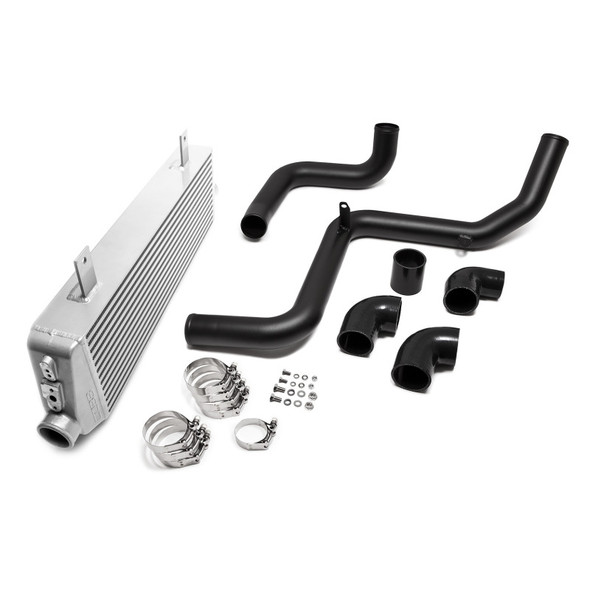
Cobb 13-18 Ford Focus ST V2 Front Mount Intercooler - 792500
COBB
$1,290.00What is the primary function of a front mount intercooler?A front mount intercooler cools compressed intake air before it enters the engine, delivering denser, more powerful air charge for maximum...$1,290.00 -
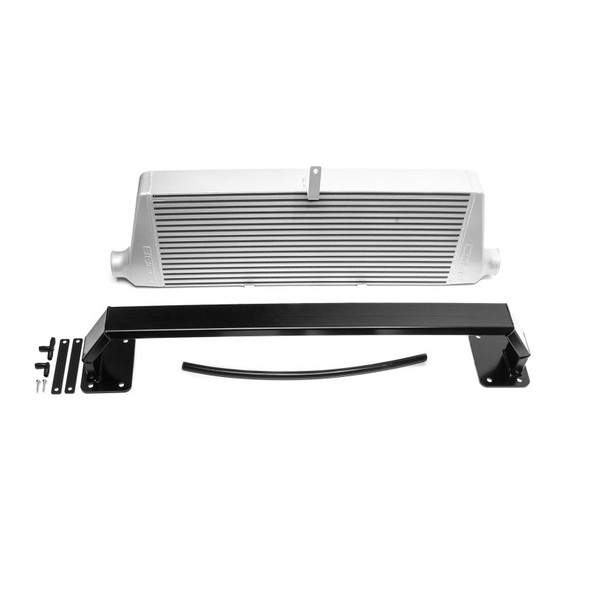
Cobb 08-14 Subaru WRX/STI Front Mount Intercooler Core - Silver - 724502-SL
COBB
$1,125.00Is this intercooler kit compatible with my specific vehicle model?Confirm exact fitment for your vehicle model before purchasing this intercooler kit to ensure proper installation and performance.Can...$1,125.00 -
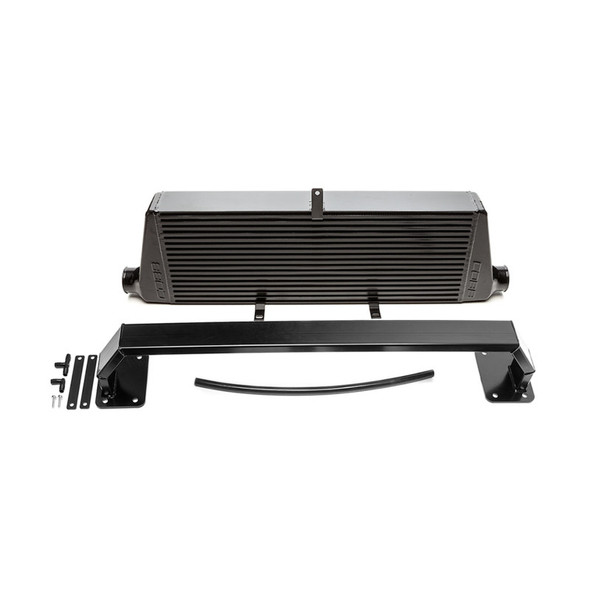
Cobb 2008-2014 Subaru WRX Front Mount Intercooler Core - Black - 724502-BK
COBB
$1,125.00What is the primary function of an intercooler?An intercooler cools compressed intake air, delivering denser charge for increased engine horsepower and torque in your vehicle.How does an intercooler...$1,125.00 -
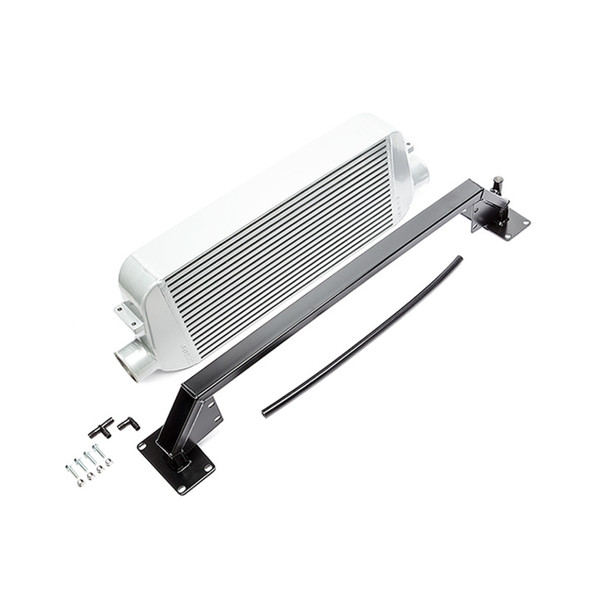
Cobb 15-21 Subaru WRX/STI FMIC Core - Silver - 716500-SL
COBB
$1,150.00Will this intercooler kit fit my Subaru WRX?Confirm exact vehicle fitment on our site to ensure this specific intercooler kit integrates perfectly with your Subaru WRX.Is professional installation...$1,150.00 -
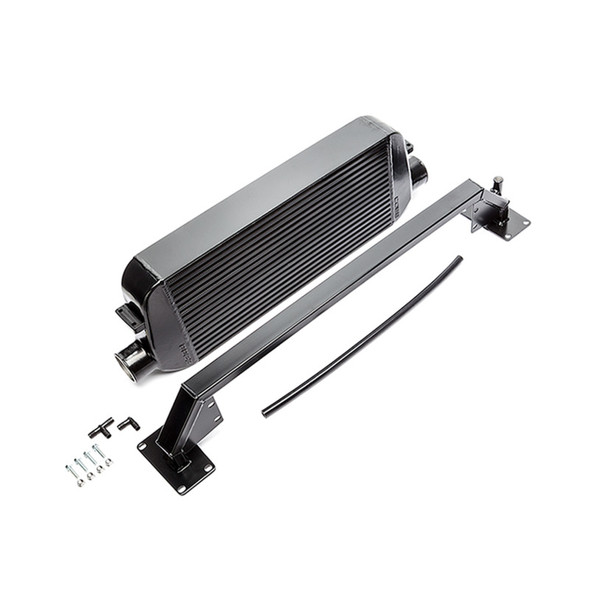
Cobb 15-21 Subaru WRX/STI FMIC Core - Black - 716500-BK
COBB
$1,150.00Does COBB offer custom tuning for this intercooler?COBB offers extensive tuning solutions specifically engineered to maximize the performance gains from this intercooler kit for your vehicle.Is...$1,150.00 -

Cobb 04-07 Subaru WRX / STI Front Mount Intercooler Core - Black - 712502-BK
COBB
$1,125.00Will this intercooler fit my car?Confirm vehicle fitment before purchasing; this Intercooler Kit is designed for specific applications to ensure proper integration and performance.Do I need...$1,125.00 -


Banks Power 11-16 Chevy/GMC 6.6L Duramax Techni-Cooler System w/ Boost Tubes - 25988
Banks Power
MSRP: $2,032.22$1,829.00What is the core volume compared to stock?GBE Techni-Cooler Systems provide over 95 percent greater core volume, ensuring optimal charge air cooling for your truck's engine.Is installation...MSRP: $2,032.22$1,829.00 -
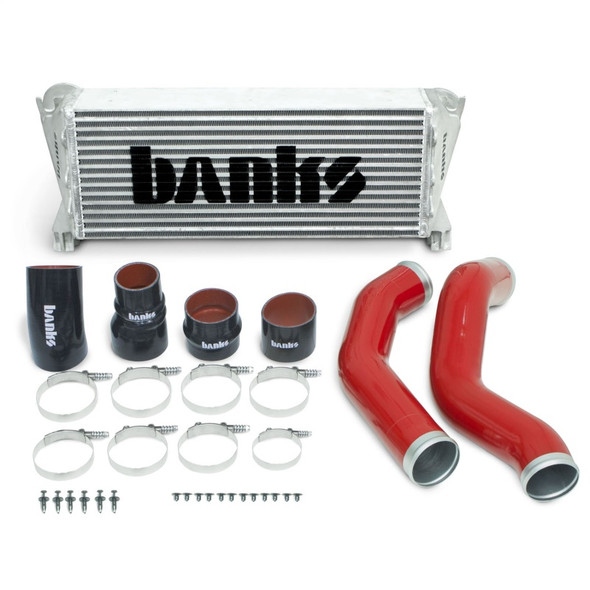

Banks Power 13-17 Ram 6.7L Techni-Cooler System - 25987
Banks Power
MSRP: $2,032.22$1,829.00What makes Banks Power's intercooler kits so efficient?Banks Power intercooler kits are engineered for superior airflow, boasting a 48 percent improvement over stock for unmatched charge air cooling...MSRP: $2,032.22$1,829.00 -
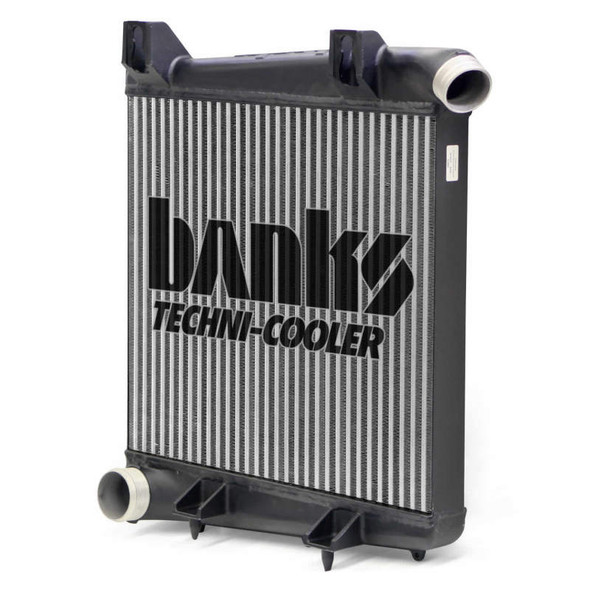

Banks Power 08-10 Ford 6.4L Techni-Cooler System - 25984
Banks Power
MSRP: $1,532.22$1,379.00What is the Banks Power Techni-Cooler System?Banks Power's Techni-Cooler System for 2008-2010 Ford Super Duty trucks dramatically increases intercooler cooling capacity for sustained peak engine...MSRP: $1,532.22$1,379.00 -

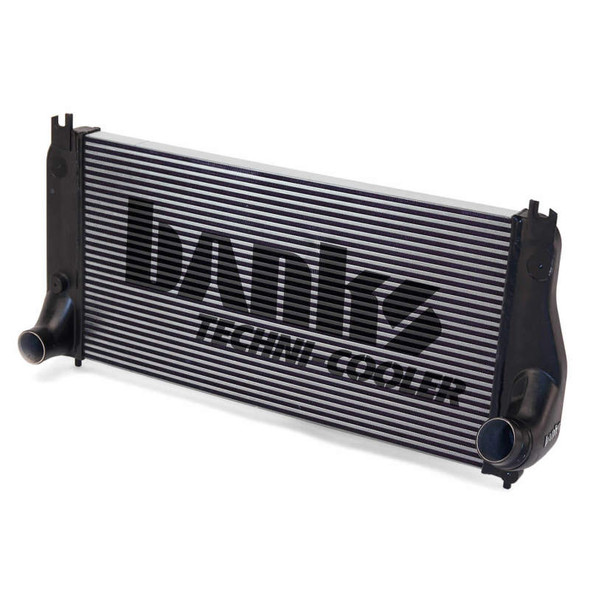
Banks Power 06-10 Chevy 6.6L (All) Techni-Cooler System - 25982
Banks Power
MSRP: $1,287.78$1,159.00What is the primary benefit of installing a Banks Power Techni-Cooler Kit on my 2006-2010 Silverado or Sierra HD?Banks Power Techni-Cooler Kits deliver cooler EGTs, increased MPG, and consistent...MSRP: $1,287.78$1,159.00 -

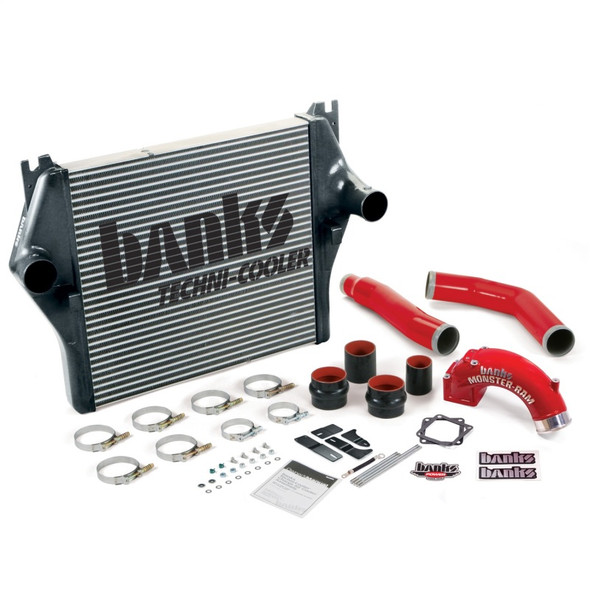
Banks Power 06-07 Dodge 5.9L Techni-Cooler System - 25981
Banks Power
MSRP: $1,621.11$1,459.00It's all bigger: Large 3-1/2 inch boost tubes, Thicker core with 27 percent more flow volume. Superior aluminum end tank design. Includes Monster-Ram intake and boost tubes. Increases air density for...MSRP: $1,621.11$1,459.00 -


Banks Power 05-07 Ford 6.0L F250-450 Techni-Cooler System - 25975
Banks Power
MSRP: $1,621.11$1,459.00Is the GBE Techni-Cooler System a direct bolt-on installation?Yes, the GBE Techni-Cooler System is a direct bolt-on intercooler kit, simplifying installation for your vehicle.What is the primary...MSRP: $1,621.11$1,459.00
Intercooler kits reduce compressed charge air temperature before it enters the engine, directly increasing air density, oxygen content, and detonation resistance — making them one of the highest-ROI upgrades in any forced induction system. Motor Sport Mayhem stocks 110 intercooler kits from 48 brands, ranging from bolt-on street upgrades to full competition-grade front-mount systems capable of supporting four-digit horsepower builds.
Our Top Picks for Intercooler Kits
Every kit below was selected based on core performance, fitment integrity, and proven real-world results across street, track, and full race applications.
ADD Intercooler Upgrade Kits
Addictive Desert Designs | $1499.99
A direct-fit intercooler upgrade engineered to drop charge air temps and support increased boost pressure without requiring custom fabrication.
- Bolt-on fitment with a larger core volume than OEM for meaningful heat soak reduction under sustained load
AEM Water/Meth Systems
AEM | $699.95
Water/methanol injection delivers charge cooling and anti-detonation protection that complements or replaces a traditional intercooler upgrade in space-constrained applications.
- Programmable injection curve with internal MAP sensor support allows precise charge temperature management across the boost range
AFE Bladerunner I/C & Tubes
aFe | $2036.00
A complete intercooler and charge tube package engineered for high-output diesel applications where both core efficiency and piping flow capacity are critical.
- Full-system kit eliminates restrictive factory charge tubes alongside upgrading the core, addressing two pressure-drop sources in one installation
ABR Solenoids
All Balls Racing | $41.33
Precision-rebuilt solenoid assemblies that maintain electrical reliability in forced induction systems where boost solenoid function directly impacts boost control accuracy.
- Rebuild-grade tolerances at a fraction of OEM replacement cost, making this the smart entry point for forced induction system maintenance
PA Alta Tensioner Stop
Alta | $99.45
A tensioner stop designed to support supercharger belt retention integrity on boosted applications where belt slip undermines consistent boost and charge cooling performance.
- Adjustable design allows fine-tuning of belt tension for different boost levels without requiring full accessory drive disassembly
AMS Intercoolers
AMS | $2178.27
A front-mount intercooler kit with bumper beam integration that maximizes core size and airflow exposure while maintaining structural rigidity in the front crash structure.
- Bumper beam retention means this kit meets safety and rigidity standards that purely aesthetic or budget FMIC kits routinely compromise
ATS 4000 Turbo Kits
ATS Diesel | $3549.99
A Stage 2 upgraded turbo system engineered for high-demand diesel applications where OEM turbo efficiency falls short under sustained towing or performance tuning loads.
- Higher compressor efficiency at elevated flow rates means lower charge air temperatures at the intercooler inlet, maximizing downstream cooling effectiveness
AWE Intercoolers
AWE Tuning | $3545.00
A performance intercooler kit targeting charge air temperature reduction on factory twin-turbo platforms where heat soak is the primary barrier to consistent lap-to-lap power.
- Engineered specifically for track use where sustained high-load conditions expose OEM intercooler thermal saturation within the first few hard corners
GBE Techni-Cooler Systems
Banks Power | $1829.00
A complete charge air cooling system designed around the thermodynamic demands of heavy-duty diesel applications under towing, hauling, and high-load duty cycles.
- Banks Power's proprietary fin geometry increases effective cooling surface area over OEM without adding parasitic pressure drop across the core
BDD Turbos
BD Diesel | $3918.95
A high-flow turbocharger upgrade engineered to move significantly more air mass at improved compressor efficiency, reducing pre-intercooler charge temps on high-output diesel builds.
- Operating closer to the compressor's efficiency island means less heat of compression entering the intercooler, making the entire cooling system more effective
How to Choose the Right Intercooler Kit
The single most important factor separating a quality intercooler kit from a cheap one is thermal efficiency at sustained load — not peak bench numbers. An undersized core drops charge temps on the dyno but saturates within minutes of track use, and a core with excessive pressure drop negates power gains regardless of how well it cools. Good kits are built from bar-and-plate or tube-and-fin aluminum construction with leak-tested end tanks, and the charge pipe components use consistent wall thickness and mandrel bends that don't constrict flow at the elbow. Failure points in budget kits are almost always the end tank welds and the silicone coupler-to-pipe interface — both of which fail progressively under boost cycling before catastrophic blowoff.
Key Specifications
Core type is the first decision: bar-and-plate cores offer superior heat rejection and structural strength, making them the correct choice for track, drag, and high-boost street applications. Tube-and-fin cores are lighter and less prone to damage from road debris, which makes them viable for OEM-replacement street applications that don't see sustained maximum load. The density of fin count matters — too high and the core blocks airflow, too low and heat transfer suffers. Optimal fin pitch for most performance applications falls between 16 and 22 fins per inch on the air side.
Core sizing must match your actual flow target. A core that's oversized for a given application introduces unnecessary pressure drop and thermal mass that slows response — a real problem on fast-spooling setups. Charge pipe diameter must also match the core outlet; mismatched pipe sizing creates turbulence and pressure loss that shows up as slower boost rise on the dyno. For forced induction systems above 500 whp, full 3-inch or larger charge pipe diameter through the entire hot-side-to-cold-side path is non-negotiable.
End tank design is frequently overlooked but directly affects flow distribution across the core. Poorly designed end tanks create hot spots where charge air bypasses sections of the core, reducing effective cooling area. Cast end tanks generally outperform fabricated sheet tanks in flow distribution quality. For water-to-air intercooler systems, coolant flow rate and reservoir volume are equally critical — a water-to-air core with inadequate coolant capacity will heat-soak its own coolant charge on extended pulls, eliminating any advantage over air-to-air.
Complete kits that include charge pipes, couplers, and clamps are worth the premium over core-only upgrades because coupler diameter, wall thickness, and clamp type all affect boost retention. Gear-drive hose clamps outperform OEM-style worm clamps at pressures above 20 psi. Verify that any kit's charge pipe routing doesn't create sharp bends below 2.5 times pipe diameter — this is where poorly engineered kits introduce 5–10% flow restriction that shows directly in spool time and peak power.
Intercooler Core Sizing Reference by Boost and Power Target
| Power Target (whp) | Recommended Core Volume (in³) | Minimum Charge Pipe Diameter | Suitable Core Type |
|---|---|---|---|
| Up to 300 whp | 50–100 in³ | 2.0 in | Tube-and-fin or bar-and-plate |
| 300–450 whp | 100–175 in³ | 2.25–2.5 in | Bar-and-plate preferred |
| 450–600 whp | 175–275 in³ | 2.5–3.0 in | Bar-and-plate required |
| 600–800 whp | 275–400 in³ | 3.0 in | Bar-and-plate, cast end tanks |
| 800–1000 whp | 400–550 in³ | 3.0–3.5 in | Bar-and-plate, water-to-air optional |
| 1000+ whp | 550+ in³ or water-to-air | 3.5 in+ | Water-to-air or dual-core air-to-air |
Price Guide
Entry ($3.42–$355): This range covers solenoids, rebuild kits, coupler components, and individual hardware pieces rather than complete intercooler assemblies. Correct applications include maintenance replacements, system ancillaries, and supplemental components on existing setups — not primary cooling upgrades for performance builds.
Mid-range ($355–$1,500): The majority of street performance and bolt-on track builds land here, where complete bar-and-plate front-mount kits with charge pipes and couplers are available from established manufacturers. This is where most enthusiasts get the best combination of genuine thermal performance, fitment quality, and value — expect 20–40°C charge air temperature reductions over OEM at moderate boost levels.
Premium ($1,500–$13,288.86): Competition-grade complete systems, water-to-air setups with reservoir and pump, full turbo system replacements, and purpose-built race kits with certified materials and race-validated flow data occupy this tier. This is the correct investment for builds targeting consistent power across consecutive track sessions, high-horsepower diesel towing applications, or any application where thermal stability directly affects safety or class legality.
Who Is This For?
Intercooler kits serve a broad spectrum from weekend street drivers seeking reliable daily power gains all the way to competition teams managing charge temperature as a primary performance variable.
Engine Performance — 8.7/10
Engine performance is the highest-rated use case in our data at 8.7 out of 10, and it reflects exactly what intercoolers do at a fundamental level — they protect and enable the engine by lowering charge air temperature, increasing air density, and expanding the detonation threshold. Every meaningful engine performance upgrade on a forced induction platform benefits from a properly sized intercooler because power gains from fueling, camshaft, or compression changes are constrained by how well charge air is cooled. This category scores so high here because it's not a peripheral upgrade — it's foundational to extracting performance from any turbocharged or supercharged engine build.
Racing Competition — 8.2/10
At 8.2 out of 10 across 168 products, racing competition applications demand the most from intercooler systems because heat soak is cumulative across consecutive runs, laps, or stages. A core that performs adequately on the street will show thermal saturation after two or three hard competition passes, causing charge air temps to rise, ECU timing to pull back, and power to drop measurably at the worst possible moment. Competition-grade kits are engineered for consistent performance across repeated maximum-effort cycles, not just peak performance on a cold core.
Drag Racing — 8.0/10
Drag racing scores 8.0 out of 10 across 184 products, and the application demands are distinct from road racing — burst thermal capacity over a short, maximum-effort pull matters more than sustained lap-to-lap consistency. Bar-and-plate cores with high thermal mass perform well here because they absorb heat rapidly without saturating over the duration of a quarter-mile run. Water-to-air intercooler systems are particularly popular in drag applications where ice water in the reservoir provides aggressive charge cooling that air-to-air systems cannot match at standing-start boost levels.
Street Performance — 8.0/10
Street performance ties drag racing at 8.0 out of 10 across 200 products, representing the largest single use case in this category by product count. Street applications benefit enormously from intercooler upgrades because factory intercoolers are sized conservatively for OEM power levels and heat soak rapidly under enthusiast driving conditions. A correctly sized aftermarket kit on a street-driven forced induction vehicle typically produces more consistent daily power, better throttle response in warm ambient conditions, and a meaningful safety margin against detonation without requiring any additional tuning changes.
Track / Autocross — 8.0/10
Track and autocross applications also score 8.0 out of 10 across 183 products, where the challenge is managing heat soak across sustained laps rather than isolated pulls. Autocross in particular stresses intercooler systems because the combination of low vehicle speed between cones and repeated maximum-throttle bursts creates poor ambient airflow across the core while repeatedly heat-loading the charge air. Front-mount systems with maximum core exposure to incoming airflow are the correct solution here, and water-to-air systems with chilled reservoirs are a legal and effective option at many autocross events where under-hood space limits FMIC core size.
Trusted Intercooler Kit Brands We Carry
The brands that dominate this category do so because they invest in validated thermal performance data, not just catalog fitment. Mishimoto backs every intercooler with published charge temperature reduction figures from standardized testing and supports their products with an industry-recognized warranty that signals genuine confidence in manufacturing quality. AMS Performance has established its reputation through documented competition results at the highest horsepower levels, where intercooler failure is not a recoverable mistake. Banks Power brings decades of diesel-specific thermal engineering that translates directly to real-world towing and performance applications where sustained load is the norm rather than the exception. AWE Tuning's intercooler development process is rooted in track validation, ensuring their products perform consistently across multiple hard sessions rather than only on a cold core. aFe Power and ATS Diesel round out the heavy-duty performance segment with application-specific engineering for diesel platforms where charge cooling is critical to both performance and engine longevity — and BD Diesel reinforces this with turbo and cooling system packages developed explicitly for high-demand commercial and competition diesel use.
Frequently Asked Questions
Are air-to-air intercoolers good for performance builds?
Air-to-air intercoolers are the correct choice for the vast majority of performance builds because they are simple, reliable, self-regenerating between pulls, and capable of handling very high power levels when properly sized. The core absorbs heat from the charge air and dissipates it into the ambient airstream passing through the fins — no pump, no reservoir, no coolant lines required. Their primary limitation is response to ambient air temperature and vehicle speed: at low speeds or in high-ambient conditions, cooling efficiency drops, which is why water-to-air systems gain favor in drag racing and track applications with restricted airflow. For street and road course use at moderate boost levels, a quality bar-and-plate air-to-air front-mount kit will outperform the OEM system by a significant margin with zero added system complexity.
Are aftermarket turbos worth it on a built engine?
An aftermarket turbo is worth the investment when the factory unit is operating outside its efficient compressor map — typically when power targets exceed 30–40% over stock output, or when the OEM wheel trim and housing geometry create excessive heat of compression that limits downstream intercooler performance. A turbo that operates at higher compressor efficiency delivers cooler charge air to the intercooler inlet, meaning the intercooler doesn't have to work as hard and charge temperatures at the throttle body are lower for the same boost pressure. The key metric is compressor efficiency percentage at your target flow rate — factory turbos commonly drop to 60–65% efficiency at elevated flow, while a correctly sized aftermarket unit maintains 72–78% in the same range. Pairing a high-efficiency aftermarket turbo with an upgraded intercooler is the most thermodynamically coherent approach to a high-output forced induction build.
Are boost pipes and charge pipes the same thing?
The terms are used interchangeably in most contexts and refer to the same components: the aluminum, steel, or composite tubes that route compressed charge air from the turbo or supercharger outlet, through the intercooler, and into the intake manifold. Some builders use "boost pipe" specifically for the pre-intercooler hot side and "charge pipe" for the post-intercooler cold side, but there is no universal industry standard for this distinction. What matters technically is that the entire path — hot side and cold side — is sized correctly for your target flow rate, uses mandrel-bent sections to maintain consistent inner diameter at bends, and is sealed with quality couplers and clamps rated for your boost pressure. Replacing factory plastic charge pipes with aluminum on turbocharged applications is one of the most cost-effective reliability upgrades available, independent of any power gain.
Are boost solenoids universal, and do they affect intercooler performance?
Boost solenoids are not universal — they vary by port count (two-port vs. three-port), duty cycle frequency response, flow rating, and connector type, and using the wrong solenoid for a given boost controller application will result in erratic boost control, boost creep, or an inability to hold target pressure. A properly functioning boost solenoid is directly relevant to intercooler performance because boost instability — spikes above target pressure — drives charge temperatures higher than the intercooler is calibrated to handle, and boost dropping below target wastes the thermal capacity invested in the cooling system. Three-port solenoids offer more precise bleed control than two-port units and are the correct choice for any ECU-controlled boost management system running above 20 psi. Always match the solenoid's rated operating frequency to your boost controller's output — a mismatch here is a common source of unexplained boost hunting that gets misdiagnosed as intercooler or turbo issues.
Are AMS racing intercoolers worth the premium over budget alternatives?
Purpose-built competition intercooler kits from manufacturers with race-validated designs are worth the premium specifically because the engineering investment shows up in situations that budget cores cannot handle — sustained track sessions, back-to-back competition runs, or any application where consistent thermal performance across multiple heat cycles is required. The price difference between a mid-tier and competition-grade intercooler kit is almost always attributable to core density and construction quality, end tank flow design, and fit precision that eliminates boost leaks at the coupler interfaces. Budget cores frequently use lower fin density and thinner core bar stock that deforms under pressure cycling, degrading performance over time rather than maintaining it. If your build is street-only and sees infrequent hard use, a quality mid-tier kit delivers excellent value; if the car runs track events or competition, the cost-per-consistent-lap math favors the premium option considerably.
Building something specific? Our performance specialists can help you select the right Intercooler Kits for your application — street, track, or full race build.