
Hoses
- Product
- Qty in Cart
- Quantity
- Price
- Subtotal
-


Walbro Fuel Hose - 236mm Length x 8mm ID - TF0001604
Walbro
$5.91Is this WAL Fuel Hose compatible with my vehicle?Confirm hose fitment with your specific vehicle's make, model, and year before installation for guaranteed compatibility.What is the recommended...$5.91 -


PERRIN 22-26 Subaru WRX / 19- 25 Ascent / 20-25 Outback & Legacy Turbo PCV Hose - Red - PSP-PCV-110RD
Perrin Performance
MSRP: $92.00$78.20What is the maximum operating temperature for these PA hoses?Perrin PA hoses are engineered to withstand demanding conditions, consistently regulating temperature up to high performance thresholds...MSRP: $92.00$78.20 -
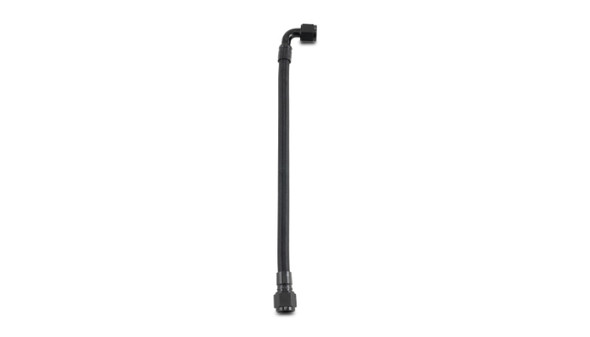

Vibrant 18in PTFE Hose Assy w/10AN Female Fittings Straight/90 Deg - 29081
Vibrant
MSRP: $76.99$59.99What is the best way to determine if the VIB Flex Hose - PTFE will fit my vehicle?Confirm fitment with your specific vehicle application and consult professional installation guidelines for optimal...MSRP: $76.99$59.99 -


Vibrant 24in PTFE Hose Assy w/8AN Female Fittings Straight/90 Deg - 29072
Vibrant
MSRP: $72.99$55.99What is the maximum temperature rating for Vibrant hoses?Vibrant PTFE hoses are rated for extreme temperatures, ensuring reliable performance in demanding engine conditions.Do Vibrant hoses require...MSRP: $72.99$55.99 -


Vibrant 36in PTFE Hose Assy w/6AN Female Fittings Straight/90 Deg - 29063
Vibrant
MSRP: $76.99$59.99Can I use the VIB Flex Hose - PTFE for a custom fuel line?PTFE lined hoses deliver superior fluid flow and chemical resistance, making them ideal for custom fuel line applications requiring ultimate...MSRP: $76.99$59.99 -
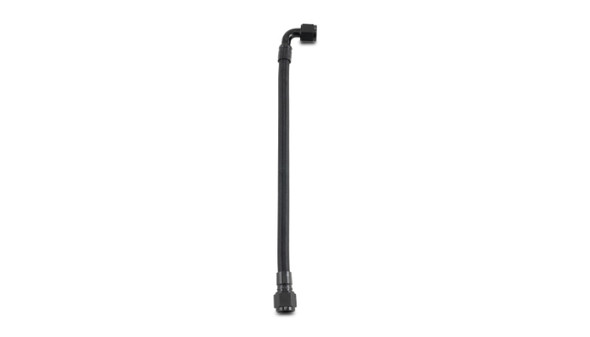

Vibrant 18in PTFE Hose Assy w/6AN Female Fittings Straight/90 Deg - 29061
Vibrant
MSRP: $62.99$46.99How do I know if the VIB Flex Hose - PTFE is compatible with my vehicle?Confirm precise fitment for your specific vehicle application before purchasing this VIB Flex Hose - PTFE to ensure correct...MSRP: $62.99$46.99 -


Vibrant 12in PTFE Hose Assy w/6AN Female Fittings Straight/90 Deg - 29060
Vibrant
MSRP: $55.99$41.50What is the recommended installation process for VIB Flex Hoses?VIB Flex Hoses require professional installation to ensure secure, leak-free connections and optimal system integrity.What are the key...MSRP: $55.99$41.50 -
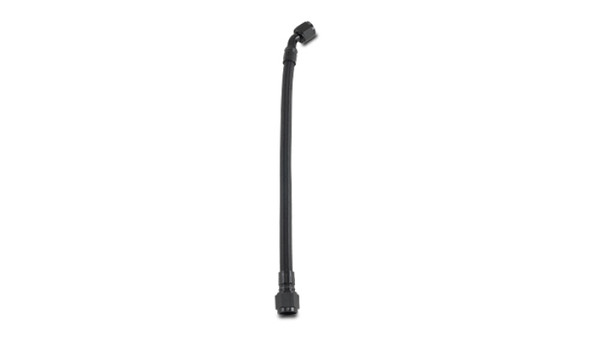

Vibrant 36in PTFE Hose Assy w/10AN Female Fittings Straight/45 Deg - 29053
Vibrant
MSRP: $94.50$74.50What is the minimum ambient temperature for using this hose?VIB Flex Hoses are rated for optimal performance in most operational environments, confirm specific temperature ranges with your vehicle's...MSRP: $94.50$74.50 -


Vibrant 12in PTFE Hose Assy w/10AN Female Fittings Straight/45 Deg - 29050
Vibrant
MSRP: $70.99$54.99Is this hose compatible with my specific vehicle model?Confirm fitment with your vehicle using our online tools before purchasing to ensure seamless integration with your existing hose setup.What is...MSRP: $70.99$54.99 -


Vibrant 18in PTFE Hose Assy w/8AN Female Fittings Straight/45 Deg - 29041
Vibrant
MSRP: $67.50$51.50How do I determine the correct VIB Flex Hose - PTFE size for my vehicle?Confirm the specific fitment details for your vehicle; this ensures the VIB Flex Hose PTFE is the correct size for your...MSRP: $67.50$51.50 -


Vibrant 24in PTFE Hose Assy w/6AN Female Fittings Straight/45 Deg - 29032
Vibrant
MSRP: $67.50$51.50Is this hose compatible with my vehicle?VIB Flex Hose requires users to confirm specific vehicle fitment to ensure proper installation and performance of these specialized hoses.Do I need to be a...MSRP: $67.50$51.50 -


Vibrant 18in PTFE Hose Assy w/10AN Female Fittings Straight/Straight - 29021
Vibrant
MSRP: $63.99$47.99Vibrant Performance Pre-Assembled Hose Assemblies are PTFE lined and perfect for a wide range of applications, including fuel, oil, nitrous, coolant and more. These professionally assembled lines...MSRP: $63.99$47.99
Performance hoses cover every fluid and air transfer circuit in a race or street build — from silicone coolant and braided stainless fuel lines to high-pressure oil and air suspension lines — and are the single most overlooked failure point on modified vehicles. Motor Sport Mayhem stocks 366 hose products across 110 brands, ranging from entry-level replacements at $1.49 to full system kits at $1,535.70, so every build level has an appropriate solution.
Our Top Picks for Hoses
Every product below was selected based on performance pedigree, verified fitment integrity, and real-world results across street, track, and expedition applications.
ALF Perf Air Lines
Air Lift | $53.09
Engineered for air suspension systems, this hose kit delivers consistent pressure retention and flexibility across wide temperature ranges.
- Rated for the continuous pressure cycling demands of active air suspension — not a generic pneumatic hose substitute
AMS Oil Line Kits
AMS | $59.95
A purpose-built remote-mount oil pressure line kit designed for high-output turbocharged engines where accurate oil pressure data is critical.
- Keeps the sending unit away from heat soak zones while maintaining signal integrity — a genuine engineering improvement over OEM routing
ADG Fuel Fittings
AirDog | $150.00
A boost-referenced fuel pressure compensation kit that pairs directly with AirDog lift pump systems to maintain correct fuel pressure differential under forced induction load.
- Addresses a real tuning problem — without boost compensation, rising manifold pressure effectively leans the engine at peak power
AMP Air Tank Relocation Kit
AMP Research | $89.99
A complete air tank relocation kit with all necessary lines and fittings, allowing clearance for suspension lifts or aftermarket components without compromising the air system's integrity.
- Includes pre-routed, pressure-rated hose — no cutting or splicing required for a clean, OEM-quality install
ARB Fitting Kits
ARB | $1,535.70
A comprehensive vehicle-specific fitting kit for on-board air systems, supplying all the hose, fittings, and hardware needed to integrate an ARB compressor into a full expedition or overland build.
- Purpose-engineered for the specific chassis — no improvised adapters, no flow restrictions, no leak points from generic hardware
AER Brackets
Aeromotive | $981.70
A belt-drive fuel pump kit with mounting hardware that supports high-volume mechanical fuel delivery for extreme power applications where electric pumps hit their limits.
- Designed for purpose-built race engines where fuel system reliability is a primary engineering constraint, not an afterthought
ABR Primary Bearing Kits
All Balls Racing | $28.69
A seal and bearing kit that restores oil control at the primary case — preventing the fluid migration that leads to clutch contamination and premature wear.
- Seals are manufactured to tighter dimensional tolerances than OEM replacements, addressing a known failure mode before it becomes a reliability issue
ADD Brackets and Hardware
Addictive Desert Designs | $318.98
An adaptive cruise control sensor relocation bracket that preserves OEM electronics function after bumper or front-end modifications — a critical detail for builds that also reroute coolant and oil lines behind the front fascia.
- Laser-cut steel construction ensures the sensor stays in calibration-spec position regardless of off-road vibration or trail impacts
AVN Steering Wheel Bolts
Advan | $38.00
A precision bolt set for aftermarket steering wheel installations, ensuring the critical fastener interface between driver and chassis is held to motorsport tolerances.
- Specified torque values are tighter than generic hardware — important in any build where the steering system lines and hardware share a service interval
ARP Crankcase Bolts
ARP | $1,263.79
A complete crankcase through-bolt kit manufactured from ARP's proprietary high-tensile alloy, addressing the structural fastener that directly affects crankcase sealing and oil retention on high-output air-cooled engines.
- Crankcase fastener integrity is prerequisite to reliable oil line performance — a leaking case defeats even the best oil plumbing
How to Choose the Right Hoses
The difference between a hose that lasts a race season and one that fails at the worst possible moment comes down to three factors: material construction, pressure and temperature rating, and end-fitting compatibility. OEM rubber hoses are engineered for stock power levels and ambient under-hood temperatures — once you add a turbocharger, raise coolant temps with a track-spec thermostat, or increase fuel system pressure for bigger injectors, you've moved outside the design envelope those hoses were built for. Braided stainless PTFE-lined hose, high-ply silicone, and EPDM-reinforced rubber each have distinct performance windows, and choosing the wrong type for the application is the most common installation error we see.
Key Specifications
Material and construction: Silicone hose is the first upgrade most builders make — it handles sustained heat better than OEM rubber, resists cracking from ozone and oil contamination, and comes in multiple plies (2-ply for street, 4-ply and above for boost applications). PTFE-lined braided stainless is the correct choice for fuel, oil, and brake lines — the PTFE core is chemically inert and dimensionally stable under pressure, while the braided outer jacket prevents expansion under high working pressure. Never use standard silicone hose for fuel or oil — it will absorb hydrocarbons and degrade from the inside out within months.
Pressure and temperature ratings: Every hose has a maximum working pressure (MWP) and a burst pressure — MWP is the number that matters for your application, typically 3–4x lower than burst. Coolant hoses for turbocharged applications should be rated for at least 30 PSI working pressure and continuous service to 250°F. Oil feed lines to turbochargers see sustained temps above 300°F and pressure spikes with every cold start — minimum rating for those circuits is 400°F and 150 PSI MWP. Air suspension and compressed air lines run comparatively lower temperatures but must handle 200 PSI or higher continuously without micro-cracking.
Fitting compatibility and AN sizing: AN (Army-Navy) fittings are the standard in performance plumbing — AN-3 through AN-20 cover virtually every automotive application, with dash size corresponding to 1/16-inch increments of inner diameter. A -6 AN hose has a 3/8-inch ID; a -10 AN hose has a 5/8-inch ID. Mixing fitting standards — JIC, NPT, BSPP, and AN — requires proper adapter hardware, and incorrect adapters are a primary source of leaks and fitting failures. Always verify the fitting thread type, not just the outer diameter, before assembling any fluid line. For fittings, see our dedicated category.
Routing, clearance, and heat management: Even the best hose will fail prematurely if it's routed against a sharp edge, kinked through a tight radius, or exposed to exhaust heat without shielding. Minimum bend radius is a published spec — violate it and you create a stress concentration point that will crack under vibration. For any line running within four inches of exhaust components, wrap or sleeve it; DEI and similar brands make heat-reflective sleeve specifically for this purpose. Clamp torque matters too — over-torquing a worm-drive clamp on silicone hose will cut the hose wall; use a torque-spec clamp or switch to a T-bolt design for any hose 1.5 inches ID or larger.
Performance Hose Size and Pressure Reference Guide
| Application | Recommended Hose Type | Minimum Working Pressure | Temperature Range |
|---|---|---|---|
| Coolant (NA engine, street) | 2-ply silicone or EPDM rubber | 20 PSI | -40°F to 212°F |
| Coolant (turbocharged, track use) | 4-ply silicone | 30 PSI | -40°F to 250°F |
| Fuel line (carb/low-pressure EFI) | PTFE-lined braided stainless, -6 AN | 50 PSI | -65°F to 300°F |
| Fuel line (high-pressure EFI / forced induction) | PTFE-lined braided stainless, -6 to -8 AN | 100 PSI | -65°F to 300°F |
| Turbo oil feed line | PTFE-lined braided stainless, -3 to -4 AN | 150 PSI | -65°F to 400°F |
| Air suspension / on-board air | Nylon PA12 or reinforced polyurethane | 200 PSI | -40°F to 230°F |
Price Guide
Entry ($1.49–$30): Single replacement hoses, clamps, barb fittings, and short silicone reducers fall in this range — correct choice for a direct OEM replacement on a street-driven naturally aspirated vehicle where the goal is reliability, not performance improvement. Quality is adequate for stock applications; don't expect race-grade wall thickness or reinforced braid at this price point.
Mid-range ($30–$150): This is where most performance builders spend — complete silicone hose kits for cooling systems, PTFE-lined AN hose assemblies, oil line kits, and air line kits for suspension upgrades all live here. Material and construction quality improves substantially: multi-ply silicone, 304 stainless braid, and precision-machined swaged or reusable fittings. For any boosted or track-driven vehicle, this tier is the minimum investment that makes sense.
Premium ($150–$1,535.70): Full system kits — complete vehicle fitting kits for on-board air, belt-drive fuel system assemblies, and engineered complete plumbing solutions for specific chassis — justify the higher price through system-level engineering, vehicle-specific fitment, and the elimination of improvised adapter hardware. These are the right choice for serious competition builds, overlanding rigs, or any application where a fluid system failure has significant consequences.
Who Is This For?
Performance hoses serve a wider range of applications than almost any other fabrication category — from a weekend autocross car needing a silicone coolant kit to a purpose-built drag car requiring a full braided fuel system.
Track / Autocross — 7.6/10
Track and autocross use scores at the top of the matrix because sustained high-load operation is where OEM hoses fail first — elevated coolant temps, higher oil pressures from hard cornering, and thermal cycling from repeated hot laps all accelerate rubber degradation. Silicone coolant hose kits and PTFE-lined oil lines are the two highest-priority upgrades for any car that sees regular track days. The investment pays back in reliability before it pays back in lap time, which is exactly the right priority.
Racing Competition — 7.6/10
Competition-level builds require hose specifications that meet or exceed sanctioning body regulations — most organizations mandate braided steel-jacketed lines for fuel and oil systems in the engine bay. Beyond compliance, race-spec hose construction eliminates the hose expansion under pressure that subtly affects brake pedal feel on rubber brake lines and fuel pressure consistency on rubber fuel lines. For brakes specifically, the upgrade from rubber to braided stainless is one of the highest-value changes a competition driver can make.
Drag Racing — 7.6/10
Drag racing imposes unique demands on fuel system hoses — the combination of high fuel flow rates, ethanol or methanol compatibility requirements, and the pressure spike that occurs at wide-open throttle means that material compatibility is as critical as pressure rating. PTFE-lined hose is the only correct choice for alcohol fuels; standard rubber and many generic braided hoses will swell and degrade with E85 or methanol. Fuel system integrity is a safety issue in drag racing, not just a performance variable. Paired with a purpose-built fuel delivery system, the right hose specification removes a major variable from consistent performance.
Street Performance — 7.3/10
Street performance scores slightly below competition applications because OEM hoses can survive for years on a lightly modified car — the upgrade becomes necessary rather than optional once power output climbs meaningfully above stock or the vehicle is driven hard in hot weather. The most impactful street upgrade is a silicone coolant hose kit, which eliminates the swelling and collapsing under vacuum that aging rubber hoses develop and improves the visual quality of the engine bay. For forced induction street builds, upgrading all boost-referenced lines — including intercooler charge pipes and turbo oil feed and return — is a required step, not an optional one. See our forced induction category for related hardware.
Overlanding / Expedition — 7.1/10
Overlanding scores a solid 7.1/10 because remote-environment reliability is non-negotiable — a hose failure 100 miles from pavement is a trip-ending event. The priority in expedition builds is eliminating every aging rubber line before departure: coolant, power steering, fuel, and any pneumatic line in the air system. ARB and similar expedition-focused brands engineer their fitting kits specifically for the vibration, temperature cycling, and mud/water exposure of off-road use, which is why vehicle-specific system kits at the premium price tier are genuinely worth the investment for this application.
Trusted Hoses Brands We Carry
Vibrant Performance has built one of the broadest silicone hose catalogs in the aftermarket — their multi-ply silicone products are used by fabricators and professional teams because of consistent wall thickness and a color-stable outer layer that doesn't fade or crack in under-hood heat. Fragola is the benchmark for affordable AN hose assemblies, with a product line that covers -3 through -16 AN in both PTFE-lined and rubber-core construction. Mishimoto has become the dominant brand for complete silicone coolant hose kits, offering vehicle-specific fitment with wall thickness and reinforcement genuinely above OEM specification. Radium Engineering focuses on fuel system plumbing with an engineering-first approach — their AN fuel line kits and rail adapters are designed around fuel system dynamics, not just dimensional fit. Russell Performance pioneered the performance hose category and remains a standard reference for braided stainless fuel and oil line construction at a price point accessible to the street performance market. DEI rounds out the category with thermal protection products — heat sleeve and wrap that every serious hose installation near exhaust should include.
Frequently Asked Questions
Are aftermarket coolant hoses worth it?
For any modified or high-mileage vehicle, yes — aftermarket silicone coolant hoses are a legitimate upgrade, not just a cosmetic choice. Silicone maintains its shape and wall integrity across a wider temperature range than OEM rubber, which means it won't collapse under vacuum at cold start or swell and restrict flow when the engine is heat-soaked. On turbocharged or track-driven engines, the higher continuous temperature rating of multi-ply silicone directly reduces the risk of a hose failure during hard use. The cost difference between OEM rubber and a silicone kit is small relative to the cost of an overheating incident. For cooling system context, see our full cooling category.
Are aftermarket radiator hoses worth it?
Aftermarket radiator hoses are worth it when the factory hoses are aging, when the vehicle has been modified for higher power output, or when the car sees track use where coolant temperatures run higher than the OEM design target. Silicone radiator hoses resist the internal swelling and softening that aged rubber develops — a partially collapsed lower radiator hose at startup is one of the most common causes of water pump cavitation and localized overheating. Reinforced silicone also handles the higher system pressures that come with a higher-output cooling system or a coolant reroute. If the hoses are original and the vehicle has over 60,000 miles, replacement with quality silicone is a straightforward, cost-effective maintenance upgrade.
Are all brake line fittings the same?
No — brake line fittings use several distinct thread and flare standards that are not interchangeable, and mixing them is a serious safety hazard. The most common standards in North American vehicles are 3/16-inch inverted double flare (SAE) and ISO bubble flare (metric), which use different sealing geometries and will not seal correctly if cross-threaded together. Banjo fittings add another variable — the bolt diameter and thread pitch must match the caliper or master cylinder port exactly. AN brake fittings used in race cars are yet another standard, requiring AN-compatible flared line ends and fittings. Always identify the exact fitting standard on both ends of a brake line run before purchasing hardware — use a thread gauge and a flare reference, not visual estimation.
Are 45-degree and 90-degree hose elbows the same?
They are not the same — the angle of deflection changes both the flow characteristic and the packaging requirement significantly. A 45-degree elbow produces less turbulence and lower pressure drop than a 90-degree elbow at equivalent flow rates, making it the preferred choice wherever routing geometry allows it. In tight engine bays, a 90-degree elbow is often the only solution that clears adjacent components, but it must be sized to maintain adequate flow velocity — going one size up in inner diameter can offset the pressure drop penalty. Silicone elbows are measured by their inner diameter and the center-line radius of the bend — a tight-radius 90-degree elbow creates more restriction than a long-radius version of the same diameter. Match the elbow geometry to the routing requirement first, then verify the flow rating against your system's demand.
Are all coolant reservoir caps the same size?
No — coolant reservoir caps vary in both physical diameter and pressure rating, and both dimensions matter. Most OEM caps fall in the 13–18 PSI range, but the thread diameter and turn depth vary by manufacturer, meaning a cap that physically fits may not seal at the correct pressure or may vent at the wrong threshold. On a modified engine with elevated coolant temperatures, running a higher-pressure cap (within the cooling system's rated capacity) raises the boiling point of the coolant and reduces the risk of localized cavitation. Never install a lower-pressure cap than the system was designed for — it will vent at a lower temperature than intended and gradually purge coolant. Always verify both the physical fitment and the pressure rating when replacing any coolant system cap.
Building something specific? Our performance specialists can help you select the right Hoses for your application — street, track, or full race build.