
Flanges
- Product
- Qty in Cart
- Quantity
- Price
- Subtotal
-

Stainless Bros Audi R8/Lamborghini Huracan 304SS Exhaust Flange 3in - 603-41076-2000
Stainless Bros
$69.99How do I ensure I order the correct flange size for my exhaust system?Confirm precise fitment with your vehicle's specific exhaust system dimensions to guarantee correct flange size and compatibility...$69.99 -

Stainless Bros PTE T4 108mm Pro Mod Turbine Outlet Flange - 603-10814-6000
Stainless Bros
$37.99What is the best way to ensure a proper seal with the STB Turbo Outlet Flanges?STB Turbo Outlet Flanges achieve a leak-free seal when properly installed, ensuring optimal turbocharger performance and...$37.99 -
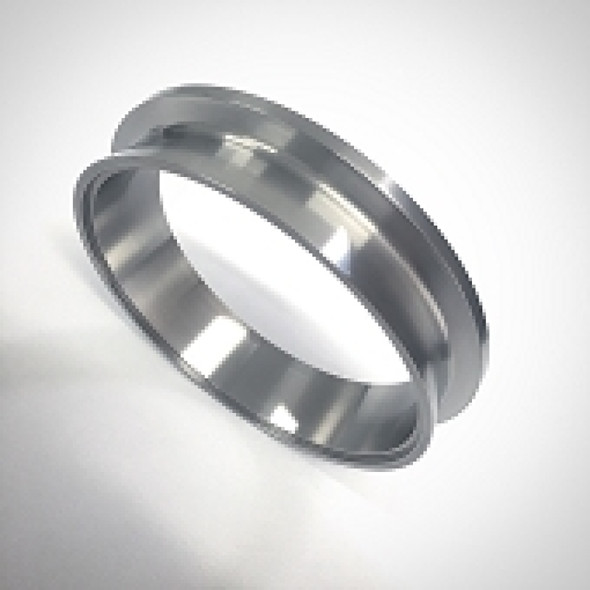
Stainless Bros PTE GT42 Style 304SS V-Band Turbine Outlet Flange - 603-08915-6000
Stainless Bros
$49.99Are these flanges made of stainless steel?STB Turbo Outlet Flanges are precision-machined from high-grade stainless steel for superior corrosion resistance and durability.What is the recommended...$49.99 -
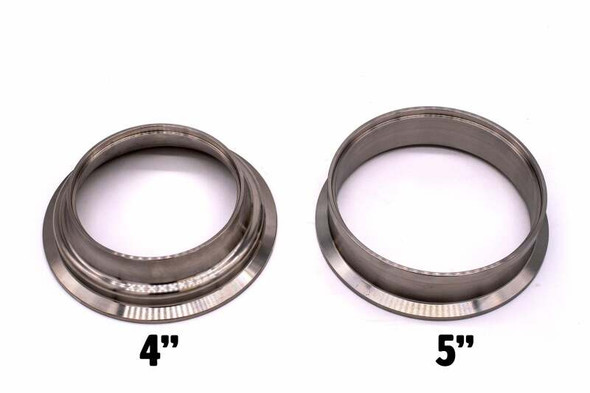
Forced Performance S400 T6 Marmon Outlet Flange 4in ID - 2759300
Forced Performance
$54.00Are there any special tools required for installation?Forced Performance Flanges often require specialized exhaust tools for proper alignment and sealing during installation. Professional...$54.00 -
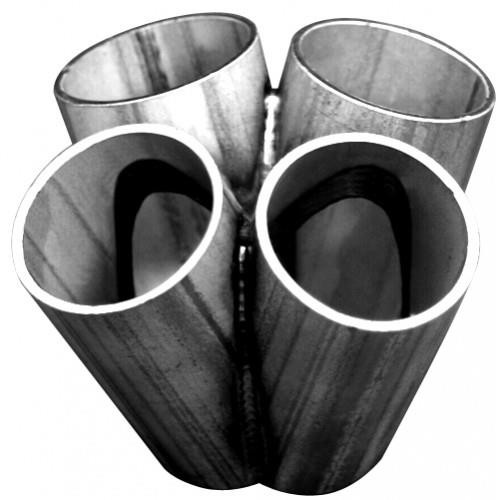

BLOX Racing Cylinder Head Exhaust Flange - Honda B-series engines (T304) - BXFL-00036
BLOX Racing
MSRP: $63.00$50.40BLOX Racing Cylinder Head Exhaust Flange - Honda B-series engines (T304)MSRP: $63.00$50.40 -
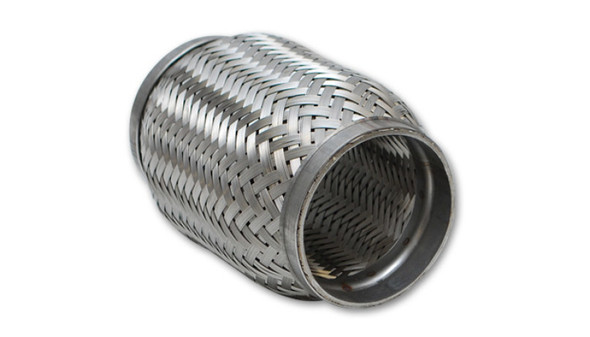
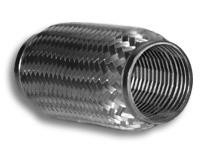
Vibrant SS Flex Coupling with Inner Braid Liner 2.25in inlet/outlet x 4in flex length - 62704
Vibrant
MSRP: $43.50$32.50How do I ensure the Vibrant VIB SS Flex Couplings will fit my vehicle?Confirm exact fitment for your vehicle's make, model, and year before purchasing these high-quality Vibrant VIB SS Flex Couplings...MSRP: $43.50$32.50 -
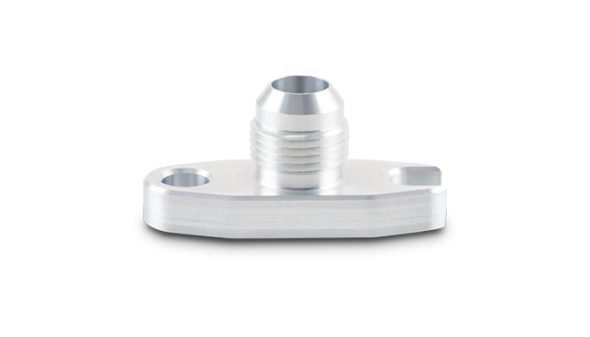

Vibrant 2.00in Bolt Hole -10AN Male Flare Aluminum Oil Drain Flange w/Crowfoot - 28491
Vibrant
MSRP: $35.50$26.79What is the bolt hole center to center measurement?The VIB Flanges feature a bolt hole center to center measurement of 2.000 inches, ensuring precise alignment for fluid system connections.What is...MSRP: $35.50$26.79 -

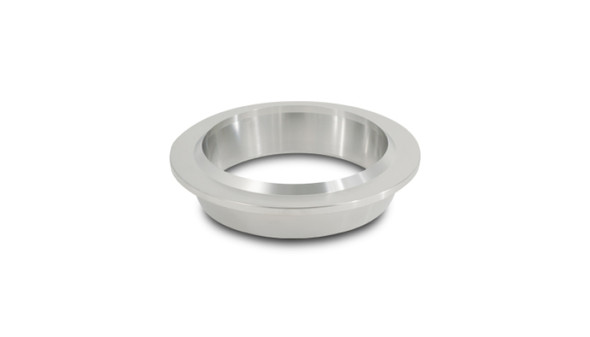
Vibrant T304 SS Turbo V-Band Inlet Flange for Garrett GTX47/GTX50/GTX55 Gen2 - 19862
Vibrant
MSRP: $67.79$51.75How do I know if this VIB Flange will fit my application?Confirm fitment with your vehicle's specific turbocharger and exhaust manifold configuration before purchase for guaranteed compatibility.What...MSRP: $67.79$51.75 -
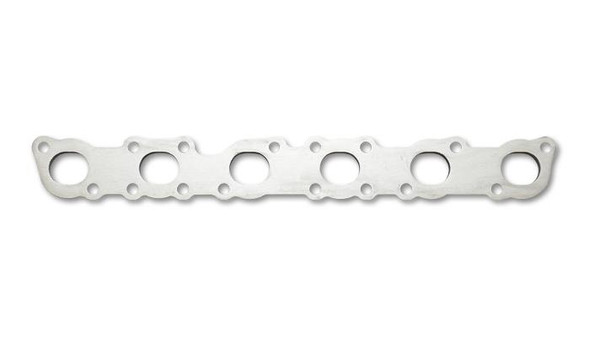
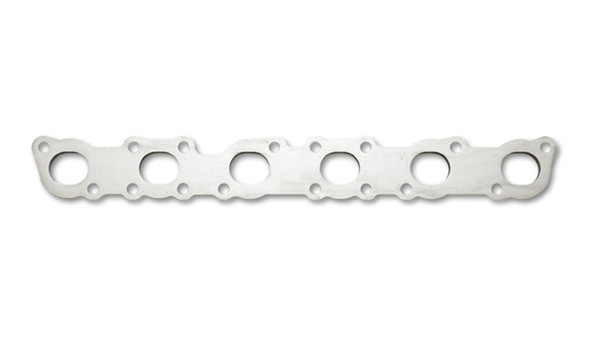
Vibrant Mild Steel Exhaust Manifold Flange for Nissan RB25/RB26 motor 1/2in Thick - 14625
Vibrant
$81.50How do I confirm if the VIB Flanges will fit my vehicle?Confirm fitment with your vehicle by checking compatibility details and dimensions against your specific exhaust system's requirements for a...$81.50 -

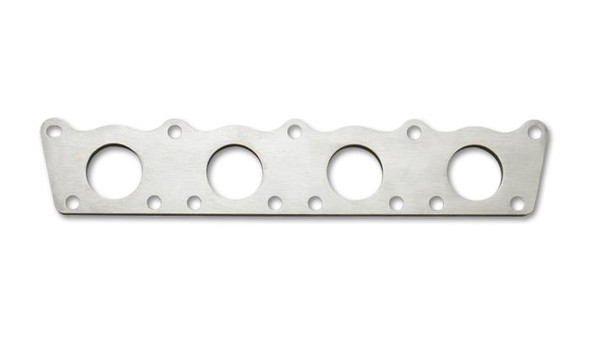
Vibrant Mild Steel Exhaust Manifold Flange for VW/Audi 1.8T motor 1/2in Thick - 14618
Vibrant
MSRP: $72.99$55.99Are these VIB Flanges compatible with my 2010 Volkswagen Jetta?VIB Flanges are engineered to fit your 2010 Volkswagen Jetta, ensuring a direct and precise integration with its exhaust system.Is...MSRP: $72.99$55.99 -
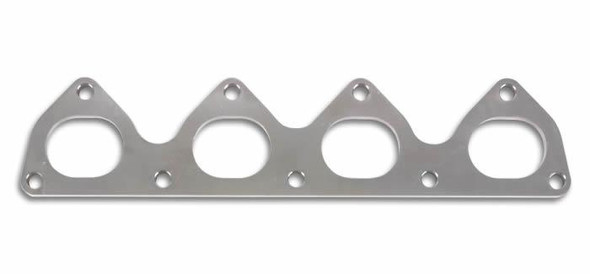
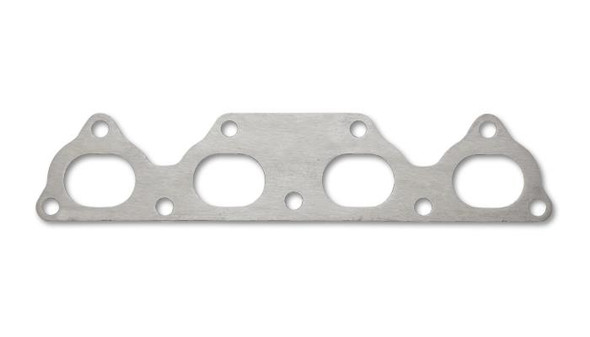
Vibrant Mild Steel Exhaust Manifold Flange for Honda/Acura D-Series motor 1/2in Thick - 14610D
Vibrant
MSRP: $72.50$55.50What is the optimal operating temperature for VIB Flanges?VIB Mild Steel Flanges are engineered for robust exhaust integrity, ensuring reliable performance under typical operating conditions for...MSRP: $72.50$55.50 -

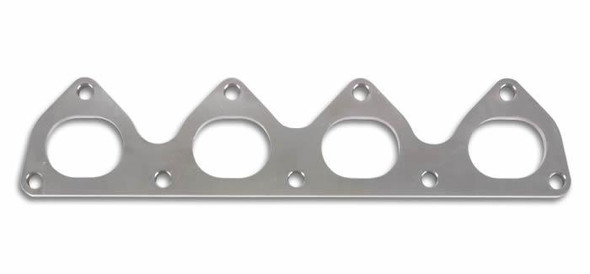
Vibrant Exhaust Manifold Flange for VW 2.5L 5 cyl offered from 2005+ - 3/8in Thick - 14325
Vibrant
$86.50What is the material of the VIB Flanges?VIB Flanges utilize mild steel construction, providing a durable and cost-effective solution for custom exhaust fabrication projects.What is the warranty...$86.50
Flanges are the critical connection points in every high-performance fluid, exhaust, and fuel system — the difference between a leak-free race build and a DNF. Motor Sport Mayhem stocks 348 flanges across 110 brands, from basic weld flanges under $2 to full billet fabrication kits pushing $1,500, covering every application from street builds to sanctioned competition.
Our Top Picks for Flanges
Every product below was selected based on proven performance, engineering quality, and consistent real-world results across street and race applications.
ADD Brackets and Hardware
Addictive Desert Designs | $318.98
Laser-cut steel construction with precision CNC tolerances ensures hardware-correct fitment without shimming or gap-filling.
- Heavy-duty steel fabrication engineered for high-vibration off-road and expedition duty cycles
AVN Steering Wheel Bolts
Advan | $38.00
Race-grade fastener set with controlled thread engagement geometry designed to maintain clamping force under sustained vibration loads.
- Motorsport-pedigree bolt specification validated for track and competition steering applications
AER Brackets
Aeromotive | $981.70
Billet aluminum belt-drive pump mounting system engineered to handle the torque reaction and thermal cycling of high-output fuel delivery under race conditions.
- Direct-drive bracket architecture eliminates flex and misalignment that kills pump longevity in competition builds
ADG Fuel Fittings
AirDog | $150.00
Boost-referenced fuel pressure compensation fitting kit that actively corrects fuel delivery as manifold pressure climbs in forced induction applications.
- Critical for turbocharged diesel builds where static fuel pressure calibration causes lean conditions at boost
ALF Perf Air Lines
Air Lift | $53.09
High-pressure polyurethane air line kit rated for sustained working pressures with push-to-connect fittings that hold seal against pressure cycling without clamp reinforcement.
- Industry-standard line spec for air suspension plumbing where fitting integrity is non-negotiable
ABR Primary Bearing Kits
All Balls Racing | $28.69
Complete bearing and seal kit engineered to OEM interface dimensions with upgraded material specs that outperform original equipment service life.
- All-in-one kit eliminates piecemeal sourcing and dimensional mismatch risk during drivetrain rebuilds
AMP Air Tank Relocation Kit
AMP Research | $89.99
Vehicle-specific air tank relocation hardware that repositions the onboard air supply without compromising system pressure capacity or line routing integrity.
- Engineered bracket geometry maintains correct line angles and eliminates kink points that cause premature air line failure
AMS Oil Line Kits
AMS | $59.95
Remote-mount oil pressure sending unit line kit that relocates the sensor away from engine heat soak zones for accurate data logging during hard driving.
- Braided stainless construction handles sustained oil pressure and thermal load without hose degradation over time
ARB Fitting Kits
ARB | $1,535.70
Comprehensive vehicle-specific fitting kit that integrates ARB protection and air systems with factory mounting geometry for zero-compromise fitment on serious expedition builds.
- Engineered as a complete system — hardware, brackets, and fittings are matched to eliminate field-fabrication and fitment guesswork
ARP Crankcase Bolts
ARP | $1,263.79
ARP2000 or Custom Age 625+ alloy crankcase through-bolt kit delivering clamping force retention at sustained high-RPM thermal loads that OEM fasteners cannot maintain.
- Required for any high-output engine build where crankcase integrity under detonation and boost loads is non-negotiable
How to Choose the Right Flanges
The single biggest mistake builders make with flanges is prioritizing price over face flatness and material grade — a flange that warps under heat cycling will leak regardless of how good your gasket is. For exhaust flanges, surface flatness tolerance should be within 0.010 inches across the face; anything looser invites blow-by at temperature. For AN and fuel system flanges, confirm thread pitch and dash size compatibility before ordering — mixing SAE and metric threads or mismatching dash sizes creates instant leak points. Material matters equally: mild steel is fine for low-heat applications and budget street builds, but 304 or 321 stainless is the minimum for anything living in an exhaust system, and inconel becomes relevant above 1,800°F in turbo or collector applications.
Key Specifications
Flange thickness directly affects rigidity under bolt torque. Thin flanges — under 3/8 inch in mild steel — will dish inward as fasteners are torqued, creating an uneven sealing surface that gaskets cannot compensate for. For high-vibration applications like turbo downpipes, flanges 1/2 inch or thicker in 304 stainless maintain face integrity across thousands of heat cycles. If you're welding flanges into a custom exhaust or fabrication project, ensure the flange ID matches your pipe OD to within 0.030 inches — wider gaps burn through during TIG welding and compromise the root pass.
Bolt pattern and bolt circle diameter must match your mating component exactly. V-band flanges offer the advantage of zero bolt-pattern dependency and easy disassembly, making them the preferred choice for turbo systems and collectors where regular removal is expected. Traditional multi-bolt flanges are more rigid under lateral load and better suited to chassis-mounted or frame-connected hardware where torque reaction forces are present. For forced induction applications, confirm that turbo inlet and outlet flanges match the exact turbine housing spec — even 1mm offset in a V-band clamp can produce audible boost leaks that are nearly impossible to locate post-install.
Coating and finish selection depends entirely on thermal exposure. Raw mild steel flanges are acceptable only when fully coated post-weld — bare steel in exhaust heat will scale and shed debris into the system. Ceramic-coated flanges hold surface integrity up to 2,000°F and are the right call for collector-to-header junctions. Anodized aluminum flanges are appropriate for cool fluid systems — fuel, coolant, air — but have no place in exhaust applications. For fuel system flanges connected to fuel delivery components, ensure all contact surfaces are compatible with E85 and ethanol blends if you run alternative fuels — some aluminum alloys and plating types degrade with sustained ethanol exposure.
Thread engagement on bolt-style flanges is frequently overlooked. Minimum engagement depth should be 1.5 times the fastener diameter in aluminum, and 1.0 times in steel — anything less risks pull-out under vibration load. For critical engine flanges like crankcase and head hardware, fastener grade matters as much as flange geometry: grade 8 minimum for steel, ARP or equivalent for anything running boost or high compression.
Flange Material and Temperature Rating Reference Guide
| Flange Material | Max Continuous Temp | Best Application | Corrosion Resistance |
|---|---|---|---|
| Mild Steel (bare) | 900°F | Low-heat brackets, non-exhaust mounts | Low — requires coating |
| Mild Steel (coated/painted) | 1,200°F | Budget exhaust flanges, street use | Moderate with quality coating |
| 304 Stainless Steel | 1,600°F | Cat-back, downpipe, turbo outlet flanges | High |
| 321 Stainless Steel | 1,800°F | Header collectors, turbo inlet, race exhaust | High — better at sustained temp |
| Inconel 625 | 2,200°F+ | Turbo turbine housing, EWG flanges, top-tier race | Excellent — no scaling |
| 6061 Aluminum | 400°F | AN fluid fittings, fuel, coolant, air systems | High with anodize — never use in exhaust |
Price Guide
Entry ($1.49–$30): Weld flanges, basic hardware, and single-piece mild steel components live here — perfectly functional for street exhausts, low-stress brackets, and non-critical fluid connections where thermal load is minimal and replacement is easy.
Mid-range ($30–$200): The majority of enthusiasts land here, picking up stainless weld flanges, complete fitting kits, AN flange sets, and fabrication hardware with proper material specs — this range covers most street performance and track day builds without compromise.
Premium ($200–$1,535.70): Complete system kits, billet machined assemblies, high-temperature alloy flanges, and multi-component bracket systems justify the cost through precision engineering, material certification, and system-level integration that eliminates fitment risk on serious competition and expedition builds.
Who Is This For?
Flanges serve every corner of the performance market — from weekend autocross prep to full race fabrication — and the usage data across our 348 in-stock products reflects that broad utility.
Track / Autocross — 7.6/10
Track and autocross applications score the highest in our usage matrix because flange integrity is directly tied to lap-time consistency — a leaking exhaust flange costs power, a loose fuel fitting ends sessions. The demand for flanges at this level is driven by frequent disassembly for inspection, which favors V-band designs and high-quality hardware that can be removed and reinstalled without distortion. Thermal cycling is more aggressive on track than street, which pushes material selection toward 304 stainless minimum.
Racing Competition — 7.6/10
Sanctioned competition ties track use at 7.6/10 because race regulations often mandate specific flange standards for safety — particularly around fuel, oil, and exhaust routing. Competition builds prioritize weight alongside integrity, which is why billet aluminum flanges and thin-wall stainless weld flanges dominate race fabrication even at premium price points. Leak-free connections at every joint are non-negotiable when engines are running at full tilt for extended periods.
Drag Racing — 7.6/10
Drag racing matches the highest usage scores because high-horsepower, high-boost applications place extreme demand on every connection in the fuel, oil, and exhaust circuit. V-band turbo flanges, high-torque crankcase fasteners, and billet fuel system fittings are all drag-specific flange needs where failure means a destroyed engine rather than a minor inconvenience. The short-duration, maximum-effort nature of drag passes means thermal shock is acute — material selection and flange thickness matter more here than in any other application.
Street Performance — 7.3/10
Street builds score 7.3/10 because flanges on a street car still need to perform reliably through years of heat cycling, seasonal temperature swings, and road vibration — not just a few sessions. Budget weld flanges are acceptable here as long as material grade matches exhaust heat exposure, and aftermarket stainless flanges offer a meaningful upgrade over OEM stamped steel in service life. Most street performance builders encounter flanges when upgrading the exhaust system or installing turbo hardware.
Overlanding / Expedition — 7.1/10
Overlanding applications score 7.1/10 because remote-environment reliability raises the stakes on every hardware connection — a flange failure 100 miles from a paved road is a very different problem than one in a shop parking lot. Bracket and fitting kits for expedition builds favor corrosion-resistant materials and hardware-correct fitment over weight savings, and complete system kits that eliminate field fabrication are strongly preferred over individual components.
Trusted Flanges Brands We Carry
The brands that dominate our flange catalog earned that position through engineering precision and proven performance under load. Vibrant Performance sets the standard for stainless weld flanges and V-band hardware, with CNC-machined face tolerances that eliminate the hand-fitting typically required with cheaper imports. ARP brings aerospace fastener engineering to crankcase and structural flange hardware — their custom alloy bolts maintain clamp load at temperatures and pressures that grade-8 hardware cannot sustain. Stainless Bros focuses exclusively on stainless fabrication components, and their flange wall thickness and weld prep geometry reflect serious race fabrication standards. Radium Engineering specializes in fuel system flanges and surge tank fittings machined from billet aluminum, with full E85 compatibility and port geometry optimized for high-flow race applications. Turbosmart brings validated turbo system flange hardware tested directly on their own products, ensuring dimensional accuracy for wastegate and BOV flange interfaces. Fragola rounds out the AN and fluid fitting side of the catalog with consistent thread quality and broad dash-size coverage that makes them a go-to for full-system plumbing builds.
Frequently Asked Questions
Are 45-degree and 90-degree elbows the same as straight flanges in terms of connection compatibility?
No — elbow flanges and straight flanges share the same face geometry and bolt pattern, but their flow path geometry is entirely different and the two are not interchangeable in a system layout. A 45-degree elbow flange changes flow direction by 45 degrees off-axis, while a 90-degree elbow turns flow perpendicular to the inlet — each produces different pressure drop characteristics and requires different clearance in the chassis. The mating face dimensions and bolt patterns are standardized within a given flange spec (such as V-band or SAE Class 150), so the connection itself is compatible, but you cannot swap one elbow angle for another without changing your pipe routing. Always verify your system's flow path geometry before selecting elbow flanges, particularly in tight engine bay fabrication where routing space dictates the angle needed.
Are all brake line fittings the same as standard flange fittings?
No — brake line fittings use an inverted flare standard (SAE J1078 double-flare or ISO bubble flare) that is entirely specific to hydraulic brake circuits and should never be mixed with AN or NPT fittings used in fuel and oil systems. AN fittings use a 37-degree single flare seating surface, while brake line fittings use a 45-degree double flare — the seating angles are close enough that mismatched fittings can partially thread together but will never seal properly under hydraulic pressure. Brake system flanges and fittings must also meet DOT pressure ratings, which general-purpose fabrication flanges do not. If you're building or modifying a brake system, use only purpose-made brake line components rated for hydraulic service.
Are aftermarket coolant hoses and fittings worth the upgrade over OEM?
Yes — for any car running higher-than-stock coolant temperatures or boost pressure through a water-to-air intercooler, aftermarket silicone hoses and billet aluminum flanges offer measurable advantages over OEM rubber. Silicone maintains its wall integrity and clamping surface from -65°F to over 350°F, while OEM rubber hoses typically begin softening and collapsing internally above 250°F sustained. Billet aluminum coolant flanges eliminate the cracking that plagues plastic OEM thermostat housings under repeated heat cycling. For a stock daily driver, OEM replacement is adequate — but for any modified engine or track application, the upgrade pays off in reliability. See our cooling category for the full range of hose and flange options.
Are all crank bolts and crankshaft flange fasteners the same?
No — crank bolt specifications vary significantly by engine family, including thread diameter, pitch, engagement depth, and torque-to-yield versus reusable design. Many OEM crank bolts are torque-to-yield single-use fasteners that must be replaced every time they're removed — reusing them risks under-clamping the harmonic balancer, which can destroy the crank snout at high RPM. Aftermarket crank flanges and bolt kits in materials like ARP2000 or Custom Age 625+ are designed for repeated removal and deliver higher clamp loads than OEM, which matters on high-compression or boosted engines where torsional loads on the crank snout are elevated. Always verify thread spec, shank length, and required preload torque against your specific engine's service data before installing any crank flange hardware.
Are aftermarket radiators and cooling flanges actually worth it for performance builds?
For any engine producing significantly more power than stock, or operating in a track environment, an upgraded radiator combined with proper inlet and outlet flange hardware is one of the highest-value cooling system investments you can make. Aftermarket aluminum radiators typically offer 25–40% greater core volume than OEM units, and their inlet and outlet flanges are often sized for larger-diameter hoses that flow more coolant volume per minute. Proper flange sizing at the radiator neck is critical — undersized inlet flanges create a restriction that defeats the purpose of a larger core. For serious builds, matching the radiator flange diameter to the water pump outlet diameter ensures you're moving coolant fast enough to take advantage of the increased heat rejection capacity.
Building something specific? Our performance specialists can help you select the right Flanges for your application — street, track, or full race build.