
Fittings
- Product
- Qty in Cart
- Quantity
- Price
- Subtotal
-
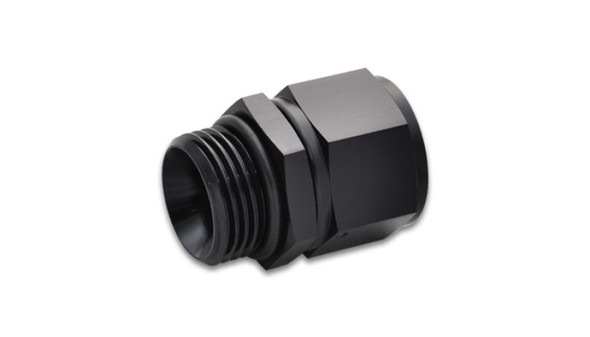
Vibrant Female AN Flare to Male ORB Adapter Female AN -8AN Male ORB Thread 12 ORB (1-1/16in - 12) - 16872
Vibrant
MSRP: $37.99$27.99What makes VIB Adapter Fittings ideal for high-performance applications?VIB Adapter Fittings achieve a guaranteed leak-free fluid system, preventing costly damage and downtime by ensuring robust and...MSRP: $37.99$27.99 -

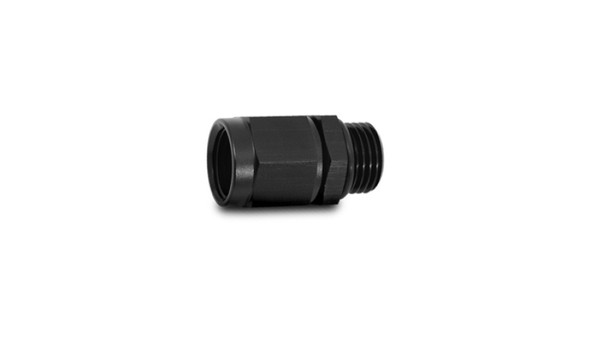
Vibrant -6AN Female to -10 ORB Swivel Adapter w/ O-Ring - Anodized Black - 16865
Vibrant
MSRP: $26.99$19.99Are these fittings compatible with all vehicle makes and models?Confirm fitment with your specific vehicle's existing ports before installation for guaranteed compatibility with these Vibrant...MSRP: $26.99$19.99 -
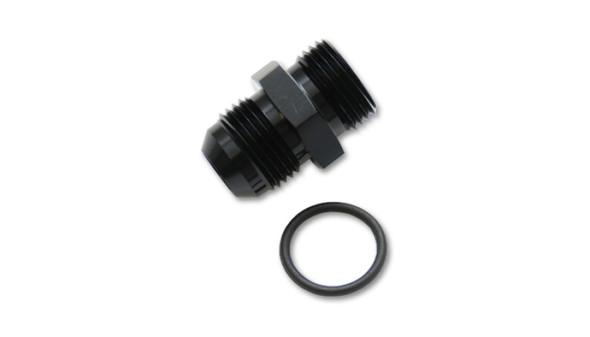

Vibrant -6AN Flare to AN Straight Cut Thread (9/16-18) w/ O-Ring Adapter Fitting - 16826
Vibrant
MSRP: $14.29$10.59Are Vibrant adapter fittings suitable for my vehicle?Vibrant adapter fittings are designed for specific applications; confirm exact fitment with your vehicle's make, model, and year before purchasing...MSRP: $14.29$10.59 -

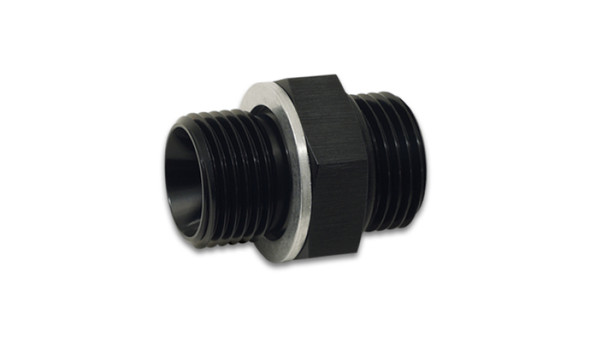
Vibrant -6AN to 14MM x 1.5 Straight Adapter with O-Ring - 16691
Vibrant
MSRP: $14.25$10.50What is the primary application for these Vibrant fittings?VIB Adapter Fittings are ideal for achieving seamless integration within performance-oriented fuel or oil systems, enabling cleaner and more...MSRP: $14.25$10.50 -

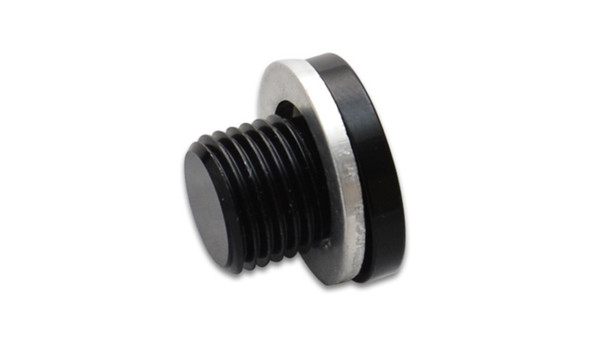
Vibrant M10 x 1.25 Metric Aluminum Port Plug with Crush Washer - 16661
Vibrant
MSRP: $14.29$10.59What are VIB Plugs used for?VIB Plugs seal exposed ports and lines, preventing leaks and keeping contaminants out of your vehicle's critical systems.Can I install VIB Plugs myself?Professional...MSRP: $14.29$10.59 -

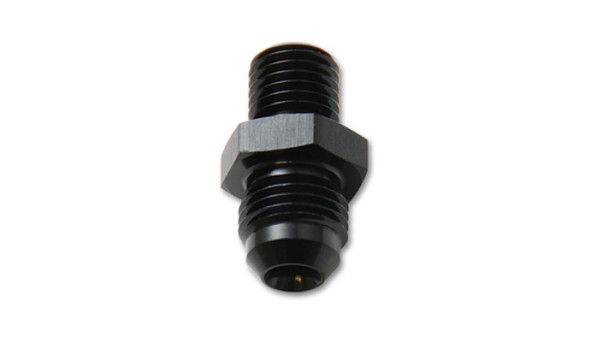
Vibrant -16AN to 22mm x 1.5 Metric Straight Adapter - 16649
Vibrant
MSRP: $39.50$29.50Vibrant Performance adapter fittings are lightweight and constructed from 6061 aluminum alloy. Vibrant Performance aluminum hose end fittings allow for the connection of Vibrant hose ends to almost...MSRP: $39.50$29.50 -


Vibrant Brass Olive Inserts 5/16in - Pack of 5 - 16465
Vibrant
MSRP: $20.50$15.29Vibrant Performance Brass Olive Inserts for Aluminum Hardline Tubing are intended for use with adapter fittings featuring a straight thread when trying to seal a port that doesn't accommodate an...MSRP: $20.50$15.29 -

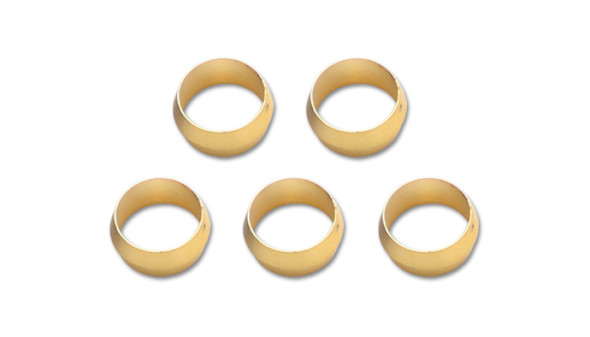
Vibrant 1/4in Brass Olive Inserts - 5pk - 16464
Vibrant
MSRP: $20.50$15.29What is the primary function of Vibrant VIB Adapter Fittings?Vibrant VIB Adapter Fittings achieve a secure seal on aluminum hardline tubing for reliable fluid transfer when O-rings are not applicable...MSRP: $20.50$15.29 -
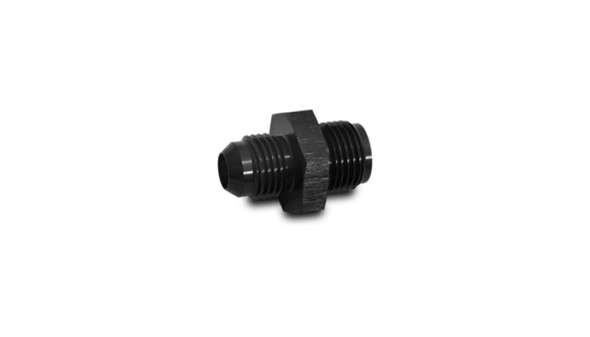

Vibrant Inverted Flare to AN Adapter -6AN Inverted Flare 7/16in -24 - 16439
Vibrant
MSRP: $15.79$11.79How do I confirm fitment for my vehicle?Confirm fitment for your specific vehicle before purchasing Vibrant Performance Male AN Flare to Inverted Flare Adapters to ensure proper installation and...MSRP: $15.79$11.79 -


Vibrant Inverted Flare to AN Adapter -6AN Inverted Flare 1/2in-20 - 16425
Vibrant
MSRP: $14.59$10.79Vibrant Performance Male AN Flare to Inverted Flare Adapters are manufactured from 6061 Aluminum Alloy. These fittings are commonly used in a variety of fuel system applications, making it easier to...MSRP: $14.59$10.79 -
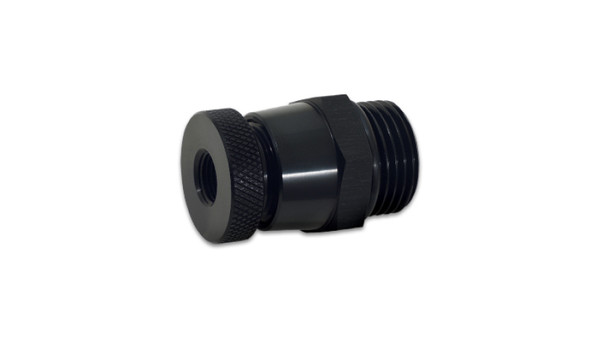
Vibrant 6 ORB to 1/8 NPT Aluminum Drain Valve - 12679
Vibrant
MSRP: $32.99$24.99What is the primary function of a Vibrant check valve?Vibrant check valves deliver precise fluid control, ensuring critical system functions operate reliably under demanding automotive conditions.Are...MSRP: $32.99$24.99 -
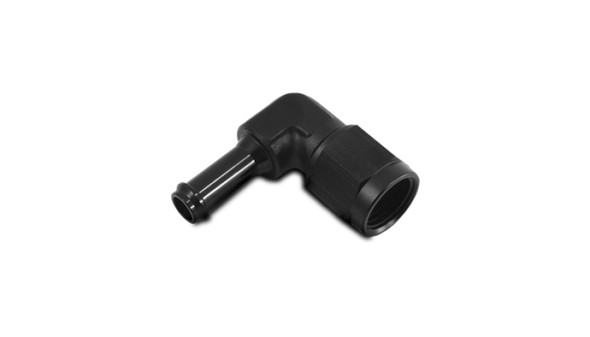
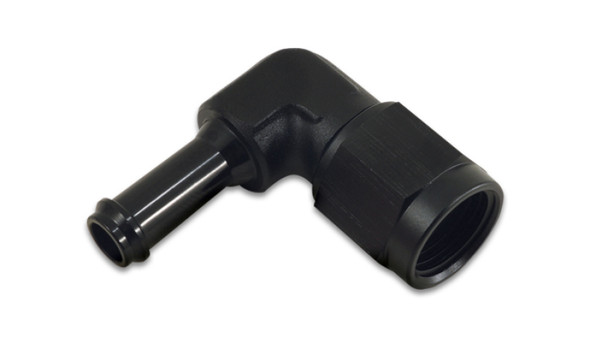
Vibrant -8AN to 1/2in Hose Barb 90 Degree Adapter - Anodized Black - 12028
Vibrant
MSRP: $23.79$17.79Do Vibrant VIB Adapter Fittings require professional installation?Vibrant VIB Adapter Fittings installation is recommended for professionals to ensure optimal performance and a secure, leak-free...MSRP: $23.79$17.79
Performance fittings are the connective tissue of every race-engineered fluid system — the difference between a build that holds pressure at redline and one that fails on the first hard lap. Motor Sport Mayhem stocks 1,692 fittings across 110 brands, covering every AN size, thread standard, and material specification from $1.49 entry-level hardware to $1,535.70 professional fitting kits.
Our Top Picks for Fittings
Each of these was hand-selected based on engineering quality, real-world durability, and proven performance across street and competition applications.
ADD Brackets and Hardware
Addictive Desert Designs | $318.98
Heavy-duty relocation hardware engineered for demanding off-road and overlanding fitment with precision CNC-machined mounting tolerances.
- Laser-cut steel construction resists flex under sustained vibration and trail stress
AVN Steering Wheel Bolts
Advan | $38.00
High-tensile steering wheel fasteners designed for competition hub adapters where torque retention under repeated steering inputs is non-negotiable.
- Grade-spec bolt material prevents thread galling in aluminum hub adapters common in track builds
AER Brackets
Aeromotive | $981.70
Belt-drive fuel pump mounting system that integrates mechanical pump drive with precision-aligned brackets for high-horsepower fuel delivery systems.
- Gilmer pulley and bracket combination eliminates the reliability risk of electric pump failure at maximum load
ADG Fuel Fittings
AirDog | $150.00
Boost-referenced fuel pressure compensation kit that adjusts fuel delivery in direct proportion to boost pressure for turbocharged diesel and gas applications.
- Direct fitting interface with existing fuel lift pump systems eliminates the need for custom fabrication
ALF Perf Air Lines
Air Lift | $53.09
Reinforced air line hose kit rated for sustained pressure cycling in air suspension systems, delivering leak-free performance across temperature extremes.
- DOT-compliant tubing construction handles repeated pressurization without fatigue cracking or fitting pullout
ABR Primary Bearing Kits
All Balls Racing | $28.69
Complete inner primary bearing and seal kit engineered to OEM dimensional tolerances with upgraded material specifications for extended service life.
- Includes all required seals and retaining hardware so there are no partial-kit fitment gaps mid-assembly
AMP Air Tank Relocation Kit
AMP Research | $89.99
Purpose-built air tank relocation hardware that repositions the OEM air supply tank for clearance during suspension or accessory upgrades on heavy-duty trucks.
- All fittings and line connections are included to maintain full system pressure integrity post-relocation
AMS Oil Line Kits
AMS | $59.95
Remote-mount oil pressure sending unit line kit that relocates the sensor away from engine heat soak for more accurate, repeatable pressure readings under race conditions.
- Stainless-braided construction rated for sustained oil pressure and temperature without hose degradation
ARB Fitting Kits
ARB | $1,535.70
Comprehensive vehicle-specific fitting kit that delivers a complete, no-fabrication installation of ARB air systems with every line, adapter, and bracket accounted for.
- OE-matched fitting interfaces eliminate improvised adapters that compromise system pressure integrity in off-road environments
ARP Crankcase Bolts
ARP | $1,263.79
ARP2000-material crankcase through-bolt kit engineered to hold crankcase halves under extreme cylinder pressure loads in high-output flat-six applications.
- 180,000 PSI tensile strength fasteners address the single most common failure point in high-power air-cooled engine builds
How to Choose the Right Fittings
The fitting is the most load-stressed point in any plumbing circuit — it's where thread engagement, sealing surface geometry, and material hardness all converge under live pressure, vibration, and thermal cycling. A fitting that looks adequate on paper will split a flare, weep at the ferrule, or back out of its port the moment conditions get serious. The difference between a $4 fitting and a $40 fitting is usually wall thickness, alloy grade, thread class tolerance, and whether the sealing surface was machined or cast. Get this wrong and you're not just chasing a leak — you're risking a fire, a brake failure, or a blown oil system at the worst possible moment.
Key Specifications
Thread standard and dash size are the first non-negotiables. AN (Army-Navy) fittings use a 37-degree flare seat and are sized by dash number — -3AN through -20AN covering roughly 3/16" to 1-1/4" inside diameter. NPT (National Pipe Taper) fittings seal on the taper itself and are sized in nominal pipe dimensions that don't match actual bore diameter — a common source of mismatched purchasing. BSPP and metric fittings appear on European-spec components and require their own adapters. Mixing thread standards without proper adapters strips threads and creates leak points that no amount of thread sealant reliably fixes.
Material selection is a function of fluid type, pressure, and environment. 6061-T6 aluminum fittings are standard for fuel, oil, and coolant lines in most performance builds — lightweight, corrosion-resistant, and adequate for pressures up to 3,000 PSI in AN applications. Stainless steel fittings are mandatory anywhere you're running brake fluid, as aluminum will corrode from prolonged DOT fluid exposure and heat cycling. Brass is acceptable for low-pressure air and water circuits but should never be used in fuel or high-pressure hydraulic systems. Titanium fittings exist for weight-critical racing applications but require careful installation torque management to avoid galling.
Sealing method determines how a fitting performs under sustained pressure and vibration. Flare fittings (AN/JIC 37-degree) create a metal-to-metal seal that holds reliably through thermal cycles without relying on thread sealant — correct for fuel and oil. NPT fittings require PTFE tape or anaerobic sealant because the taper thread itself is not a fluid-tight seal without it. Push-lock fittings use an internal barb and O-ring and are rated for lower-pressure applications — adequate for coolant and vacuum but not for high-pressure fuel or hydraulic circuits. O-ring face seal (ORFS) fittings are the most leak-resistant option for high-pressure hydraulics and are increasingly common on forced induction oil feed and coolant systems.
Bend radius and fitting angle directly affect flow restriction and line routing. A straight fitting in a tight space forces the hose into a sharp bend, collapsing its inner diameter and creating a flow restriction — sometimes up to 40% in extreme cases. 45-degree and 90-degree fittings allow the hose to exit cleanly without bending, maintaining full bore flow and preventing hose fatigue at the fitting junction. 90-degree elbow fittings are not interchangeable with 45-degree fittings despite both solving the same routing problem — the exit angle changes the hose path geometry entirely, and using the wrong angle forces compensatory bends elsewhere in the run.
AN Fitting Size to Flow Rate Reference
| AN Size | Approx. Inside Diameter | Typical Flow Rate (GPM) | Common Application |
|---|---|---|---|
| -3AN | 3/16" | Up to 2 GPM | Brake lines, pilot/signal lines |
| -4AN | 7/32" | Up to 4 GPM | Fuel feed (low-power), oil pressure gauge lines |
| -6AN | 11/32" | Up to 8 GPM | Fuel feed (up to ~500 HP), oil drain returns |
| -8AN | 7/16" | Up to 14 GPM | Fuel feed (500–800 HP), turbo oil feed, coolant |
| -10AN | 9/16" | Up to 22 GPM | Fuel feed (800–1200+ HP), oil cooler lines |
| -12AN | 11/16" | Up to 32 GPM | High-volume fuel return, transmission cooler lines |
Price Guide
Entry ($1.49–$30): Individual adapters, NPT plugs, single AN straight fittings, and push-lock connectors live in this range — correct choice for supplemental fittings on a street build or for filling out a plumbing kit with low-stress components like vent lines and breather connections. Quality varies significantly at this price point; stick to recognized brands even on budget pieces.
Mid-range ($30–$150): This is where most enthusiasts and club racers source their complete fitting kits — proper AN swivel fittings, stainless-braided line ends, billet aluminum elbow sets, and O-ring face seal adapters for fuel delivery and oil systems. Materials and tolerances improve substantially over entry-level, and you start seeing proper hard-anodized finishes that resist fluid degradation.
Premium ($150–$1,535.70): Complete vehicle-specific fitting kits, belt-drive pump mounting systems with integrated hardware, and professional-grade crankcase fastener sets occupy this tier — the right choice when you're commissioning a full custom fluid system, building to a sanctioning body specification, or replacing OEM fasteners in a high-power engine build where a failure is catastrophic rather than merely inconvenient.
Who Is This For?
Performance fittings serve builders across the full spectrum from weekend street cars to purpose-built race vehicles, with meaningful differences in specification requirements at each level.
Track / Autocross — 7.6/10
Track and autocross use represents the highest-scoring application in this category for good reason — sustained high-RPM operation, g-force loads on fluid lines, and heat soak between sessions put every fitting junction under repeated stress that street driving never replicates. At this level, AN swivel fittings are standard rather than optional, because rigid line connections crack under chassis flex that doesn't exist on the road. Proper fitting selection here directly correlates to DNFs avoided.
Racing Competition — 7.6/10
Full competition builds demand fittings that meet sanctioning body requirements in addition to engineering specifications — many series mandate stainless steel braided lines with specific end fitting types for fuel and oil circuits. Heat-shielded fittings adjacent to exhaust systems and fire-resistant line assemblies are non-negotiable at this level. The fittings in a competition car are inspected pre-race, which means visual cleanliness, correct assembly, and proper lockwiring on critical fasteners all matter beyond just function. Pairing quality fittings with the right fabrication components completes a race-ready fluid system.
Drag Racing — 7.6/10
Drag racing scores equally high because high-horsepower fuel systems demand large-bore, high-pressure fittings that street builds never require — -10AN and -12AN fuel fittings feeding high-flow injectors through EFI rails or carburetors are standard on serious builds. The short, violent nature of a drag run means fuel pressure spikes are sharp and frequent, putting momentary loads on every fitting seal that sustained-load applications don't generate. Correct fitting torque and proper flare condition are especially critical here — a loose -8AN fuel fitting at 60 PSI fuel pressure under a 150 shot of nitrous is a fire event.
Street Performance — 7.3/10
Street performance builds score slightly lower not because quality matters less, but because the operating envelope is narrower — fewer sustained high-load cycles, lower peak fluid temperatures, and no sanctioning body minimum specifications. That said, a street car with a quality oil cooler system, upgraded cooling plumbing, or a forced induction oil feed line still demands proper AN fittings — push-lock hardware on a turbo oil feed is an engine at risk. The price-per-fitting justification is easy when the alternative is an oil fire in a daily driver.
Overlanding / Expedition — 7.1/10
Overlanding applications introduce a unique challenge that track builds don't face: remote failure with no shop support means every fitting must be both technically correct and installable or repairable in the field. Vehicle-specific fitting kits from brands with off-road heritage score well here because they eliminate the guesswork of sourcing individual adapters for air systems, auxiliary fuel tanks, and differential breather extensions. Corrosion resistance matters more in this application than in any other — stainless and anodized aluminum fittings outlast uncoated brass in mud, water crossing, and salt environments by a significant margin.
Trusted Fittings Brands We Carry
The brands that dominate this category earned their position through engineering consistency, not marketing — Vibrant leads by sheer catalog depth with over 2,000 SKUs of AN fittings, adapters, and weld bungs machined from 6061 billet to tight dimensional tolerances that make assembly predictable. Fragola has supplied AN plumbing components to professional racing teams for decades, with a reputation for sealing surfaces that hold without excessive torque. ARP sets the standard for threaded fastener tensile strength, with their proprietary alloys achieving 180,000–220,000 PSI ratings that OEM hardware cannot approach. Radium Engineering focuses on complete fuel system plumbing solutions with fitting specifications designed around real fuel delivery engineering rather than catalog adaptation. Russell offers one of the widest coverage ranges for street-to-track transition builds at accessible price points, making proper AN plumbing achievable on a realistic budget. Turbosmart rounds out the forced induction side with fittings and line kits engineered specifically for boost-pressure and oil circuits in turbocharged applications where thermal and pressure cycles are most severe.
Frequently Asked Questions
Are 45-degree and 90-degree elbow fittings interchangeable?
No — a 45-degree elbow and a 90-degree elbow are fundamentally different fittings that solve different routing problems, and substituting one for the other changes your hose exit angle by 45 degrees, which forces compensatory bends elsewhere in the line run. The correct elbow angle is determined by the geometry between your hard port and your hose destination — using the wrong angle either collapses the hose in a forced bend or routes it into an obstruction. Flow restriction also differs: a 90-degree elbow creates more turbulence and pressure drop than a 45-degree fitting, which matters in high-flow fuel and oil applications. Always mock up your routing before finalizing fitting angle selection.
Are all brake line fittings the same?
No — brake line fittings vary by thread standard, flare type, and material, and mixing incompatible types is a safety-critical failure mode. The two primary standards are SAE 45-degree double flare (common on North American vehicles) and ISO/DIN 37-degree bubble flare (standard on European vehicles) — these are not interchangeable, and forcing the wrong flare against a mismatched seat creates a seal that will fail under brake line pressure. Thread pitch also varies: 3/8"-24, 7/16"-24, and metric M10x1.0 are all common brake fitting threads depending on application. On any brake system, use the correct fitting type for the existing hardware and never use NPT or compression fittings in place of proper flare-type brake fittings. For performance brake system upgrades, see our brakes category for compatible hardware.
Are aftermarket coolant hoses worth it?
For a performance build, yes — silicone aftermarket coolant hoses outperform OEM rubber in every measurable dimension relevant to a modified vehicle: they handle sustained temperatures up to 350°F versus roughly 257°F for standard EPDM rubber, they don't soften or collapse at elevated coolant pressure, and they don't degrade from ozone or fuel vapors in the engine bay. On a turbocharged or supercharged engine where coolant temperatures routinely spike, OEM rubber hoses become a maintenance liability within two to three seasons. The dimensional consistency of quality silicone hoses also makes them less prone to the clamp-induced collapse that creates localized restriction in OEM-spec rubber. Street-only naturally aspirated vehicles see less immediate benefit, but the longevity argument still applies over a full ownership period.
Are aftermarket radiators worth it?
On a stock or mildly modified vehicle, an OEM-replacement radiator of equivalent specification offers minimal measurable benefit — the factory unit was sized adequately for stock thermal load. However, on a build with increased power output, forced induction, or any application where the engine runs hotter than stock (including track use, towing, or competition), an upgraded radiator with a denser core, wider tanks, or higher row count delivers a real reduction in operating temperature. A 10–20°F reduction in sustained coolant temperature directly protects head gaskets, oil viscosity, and knock threshold in heat-sensitive engines. The payoff calculation is straightforward: a quality radiator costs far less than a head gasket replacement triggered by chronic overheating. Browse our cooling category for full radiator and hose fitment options.
Are all crank bolts the same?
No — crank bolts are highly application-specific in thread pitch, shank diameter, length, and required torque spec, and using the wrong fastener risks catastrophic engine failure. OEM crank bolts on many engines are torque-to-yield (TTY) fasteners designed for single use — reusing them after removal compromises their clamping load because they've already exceeded their elastic limit. Performance replacement crank bolts, such as those from ARP, use non-TTY alloy steel that can be removed, inspected, and retorqued to a consistent specification across rebuilds. Thread engagement length matters critically on crank bolts — a bolt that is even 2mm short of full engagement into a crankshaft snout can pull free under the torsional shock of a missed shift or engine braking event. Always verify thread specification against your engine's factory service documentation before installing any crank fastener.
Building something specific? Our performance specialists can help you select the right Fittings for your application — street, track, or full race build.