
Catback
- Product
- Qty in Cart
- Quantity
- Price
- Subtotal
-
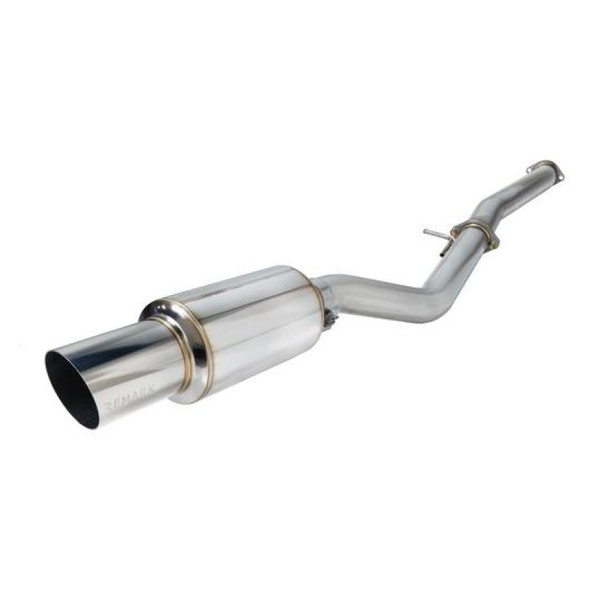
Remark 2009+ Nissan 370Z Cat-Back Exhaust R1-Spec w/Single Stainless Steel Exit - RK-C1076N-01
Remark
$1,013.82Does this Remark Cat-Back exhaust system fit my specific vehicle?Confirming fitment for your specific vehicle is crucial to ensure proper installation and optimal performance from this Cat-back...$1,013.82 -
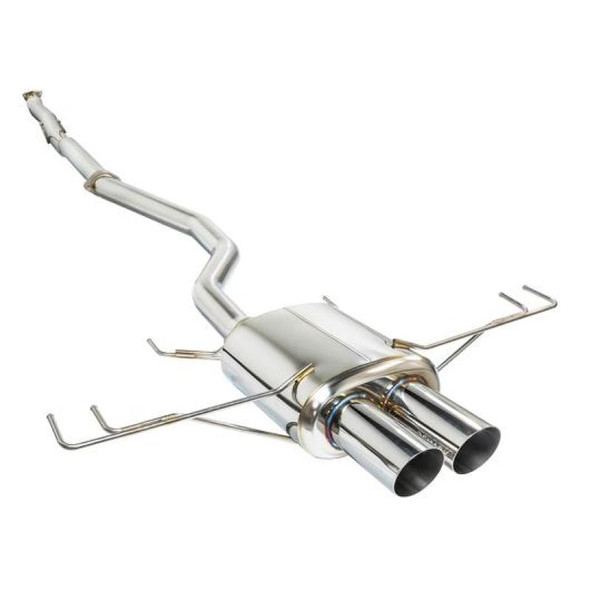
Remark 2017+ Honda Civic Sport (Non-Resonated) Cat-Back Exhaust w/Stainless Steel Tip Cover - RK-C1076H-04
Remark
$1,013.82What vehicles is the REM Cat-Back Exhaust compatible with?Confirm exact vehicle fitment using the provided compatibility checker to ensure proper installation and performance for your specific...$1,013.82 -

Remark 2017 Civic Si 4 Door Sedan Cat Back Exhaust w/Stainless Double Wall Tip (Not Resonated) - RK-C1076H-02
Remark
$1,013.82Is this a direct bolt-on installation?Remark cat-back exhaust systems are engineered for precise fitment, but professional installation is strongly recommended to ensure proper alignment.What kind of...$1,013.82 -

Remark 2019+ Toyota Corolla Hatchback Cat-Back Remark Exhaust w/Stainless Polished Tip - RK-C1063T-01
Remark
$872.86What is the estimated horsepower and torque gain for this cat-back exhaust system?This cat-back exhaust system is engineered to deliver an estimated 15 horsepower and 12 pound ft of torque increase...$872.86 -

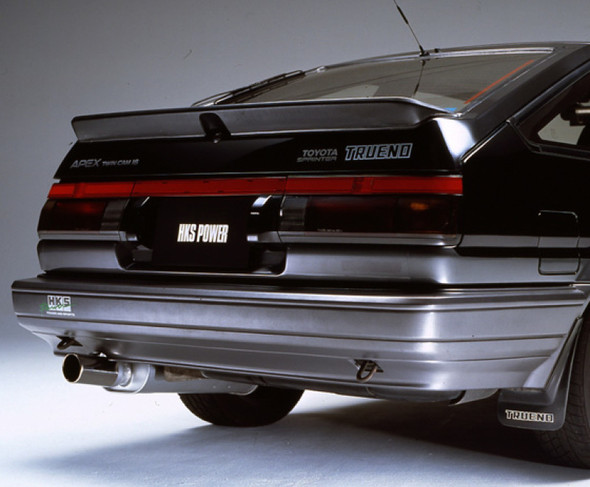
HKS 85-87 Corolla GTS Exhaust System - 3302-ST029
HKS
$770.00Do I need professional installation for the HKS Catback exhaust system?Professional installation is strongly recommended to ensure proper fitment and performance for your HKS Catback system.What are...$770.00 -
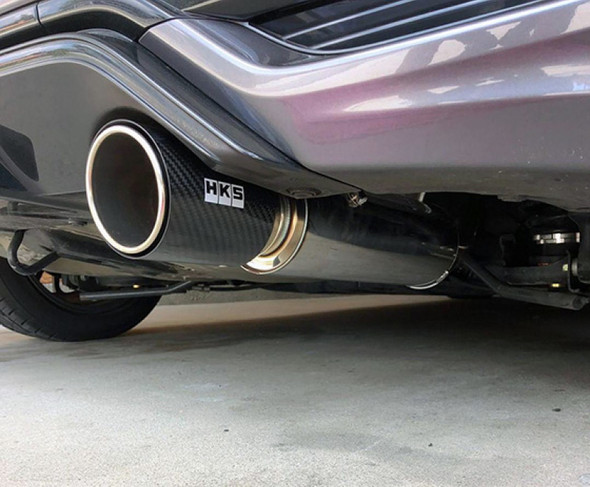
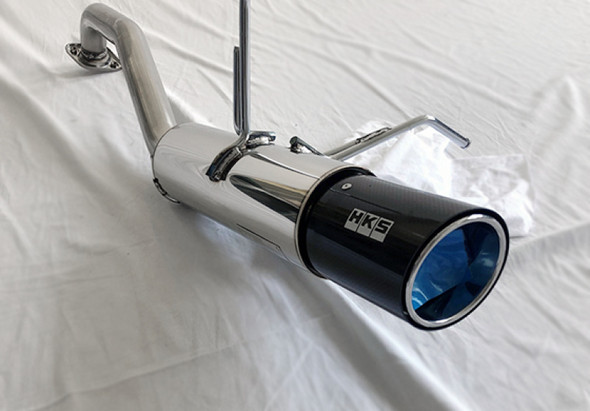
HKS Hi-Power Muffler 2014+ Honda Fit Sport GK5 w/ Carbon Tips - 32016-KH001
HKS
$480.00Does this HKS Hi-Power Catback exhaust system fit my vehicle?Confirm exact vehicle fitment using our compatibility checker to ensure optimal integration with your specific model's factory exhaust...$480.00 -
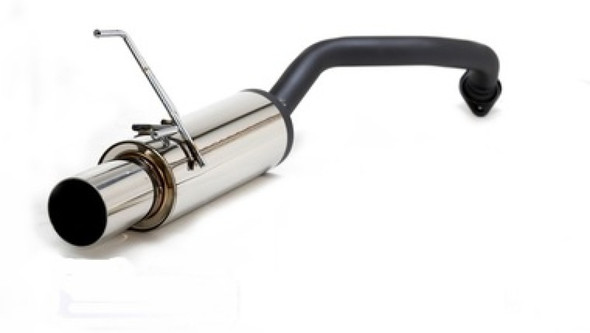
HKS 09-14 Honda Fit Hi-Power Rear Section Only Exhaust (SUS304 NO COATING) - 32003-BH006
HKS
$620.00What is the expected sound profile of the HKS Hi-Power Catback exhaust system?The HKS Hi-Power Catback exhaust delivers a deeper, more aggressive exhaust note, enhancing your driving passion with a...$620.00 -
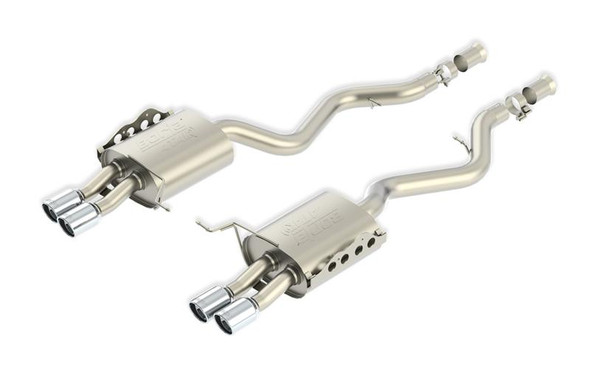
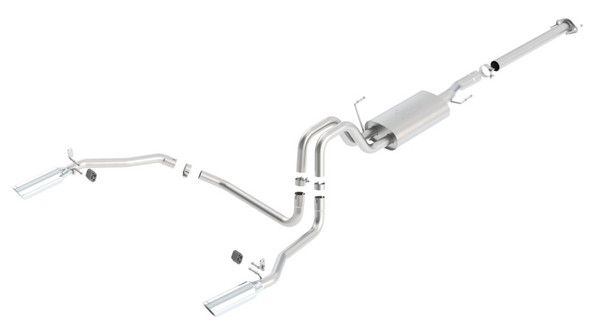
Borla 11-14 Ford F-150 5.0L AT 2/4WD Aggressive ATAK SS Catback Exhaust - 140417
Borla
MSRP: $1,889.99$1,686.99Will this Cat Back ATAK fit my 2011 Ford F-150?Confirm fitment with your specific 2011 Ford F-150 before purchase to ensure proper installation and optimal performance from this cat-back system.What...MSRP: $1,889.99$1,686.99 -

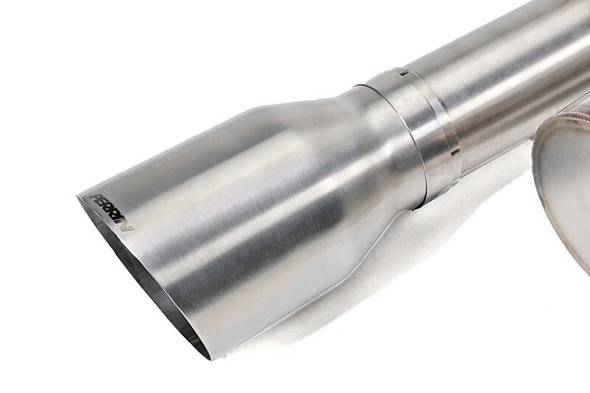
PERRIN 22-26 Subaru WRX Single Exit Catback Exhaust - PSP-EXT-354BR
Perrin Performance
$999.60Will this catback exhaust fit my vehicle?The Perrin Performance Catback Exhaust requires careful fitment confirmation to ensure a perfect bolt-on installation for your specific vehicle model.What is...$999.60 -

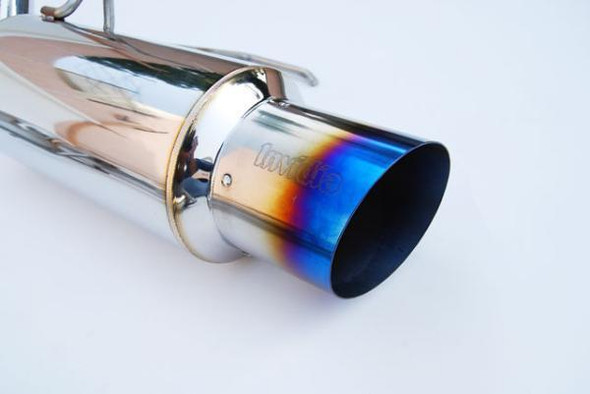
Invidia 92-99 Honda Civic EX/SI Models Only Coupe 60mm (101mm tip) Titanium Tip Cat-Back Exhaust - HS92HC2GTT
Invidia
$774.40Does the Invidia N1 exhaust improve performance for my 1992-2000 Honda Civic?Yes, the Invidia N1 Cat-back exhaust system enhances exhaust flow and engine performance for your specific Honda Civic...$774.40 -
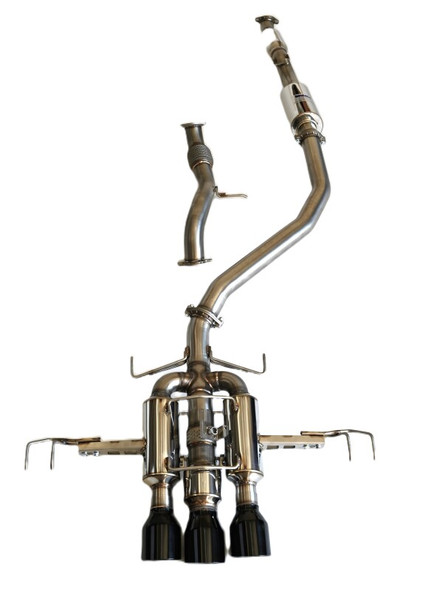

Invidia 22+ HONDA CIVIC TYPE-R FL5 R400 SINGLE LAYER BLACK TIP CAT-BACK (NON POLISH PIPE) - HS22CTRFGM3SBL
Invidia
MSRP: $2,633.40$1,843.38How do I install the Invidia R400 catback exhaust system?Professional installation is strongly recommended for the Invidia R400 catback to ensure proper fitment and optimal performance integration...MSRP: $2,633.40$1,843.38 -
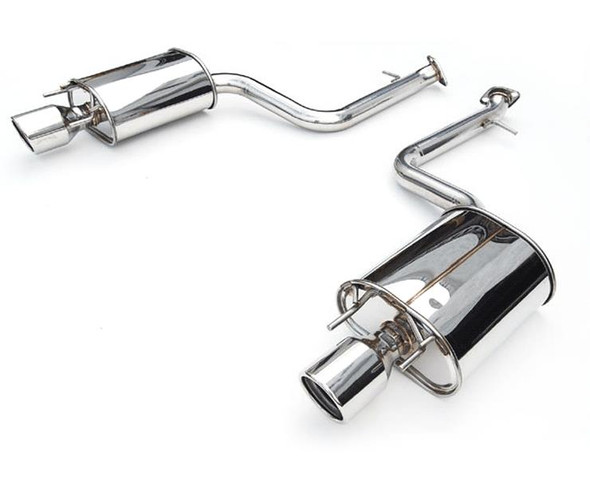
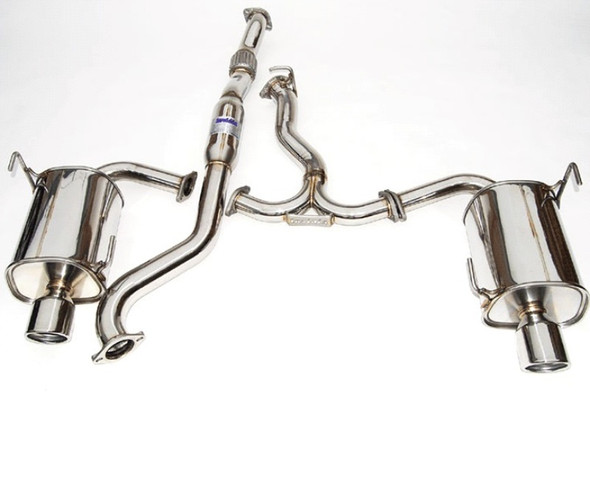
Invidia 2014-2016 Subaru Forester XT Q300 w/ Rolled Polished Tips Cat-Back Exhaust - HS14SFXG3S
Invidia
MSRP: $1,750.14$1,225.10Is this Invidia Q300 cat-back exhaust system compatible with my Subaru Forester?Confirm exact vehicle fitment with your Subaru Forester's year, make, and model before purchasing this cat-back exhaust...MSRP: $1,750.14$1,225.10
A cat-back exhaust system replaces everything from the catalytic converter outlet rearward — mid-pipe, muffler, and tips — and is the single most impactful bolt-on modification for exhaust flow, sound character, and measurable power gains on naturally aspirated and forced-induction engines alike. Motor Sport Mayhem stocks 1,755 cat-back systems across 64 brands, spanning entry-level budget builds to full titanium race configurations priced up to $11,935.
Our Top Picks for Catback
Every system below was hand-selected based on proven dyno results, material quality, and real-world fitment performance across street and competition applications.
AFE Exhaust Cat Back
aFe | $2,593.00
Mandrel-bent stainless construction with a stepped 3-inch to 3.5-inch diameter transition optimizes scavenging velocity for truck-specific torque curves.
- Black ceramic-coated finish resists corrosion and heat discoloration at sustained highway loads
AKR Slip-On Line – Titanium
Akrapovic | $5,768.53
Aircraft-grade titanium construction delivers a system weight reduction of approximately 50% versus OEM stainless with zero compromise in structural integrity at sustained high-RPM track use.
- Hand-welded titanium headers and slip-on architecture meet FIA GT3 homologation standards
AMS Downpipes
AMS | $2,249.95
Large-diameter downpipe design directly targets the primary exhaust restriction point on turbocharged applications, reducing backpressure where it hurts spool time and peak power most.
- Pairs directly with cat-back systems for a full turbo-back exhaust flow path on boosted builds
ATS Exhaust Manifolds
ATS Diesel | $894.99
Pulse-flow exhaust manifold design preserves exhaust gas energy and velocity to the turbo inlet, making it the critical upstream complement to any cat-back upgrade on diesel performance builds.
- Cast ductile iron construction handles sustained EGT spikes that destroy cast-iron OEM manifolds under tow and pull conditions
AWE Axle-Back SwitchPath
AWE Tuning | $3,895.00
SwitchPath valve technology provides electronically switchable sound modes — quiet for daily driving, open for track sessions — without sacrificing flow at wide-open throttle.
- Mandrel-bent 304 stainless with chrome silver tips engineered specifically for a flat-plane crank V8 exhaust signature
GBE Torque Tube Systems
Banks Power | $569.00
Banks Power's torque tube architecture uses larger-diameter, less-restrictive tubing to increase exhaust mass flow on 4x4 applications where factory exhaust systems are significantly undersized for the heat and flow demands of off-road use.
- Engineered for off-road thermal cycling and trail-clearance geometry, not just straight-line flow
BBK Full Header & Cat
BBK | $1,499.99
Long-tube headers combined with a high-flow catted mid-pipe represent the most aggressive legal exhaust upgrade path available, addressing primary and secondary scavenging losses that a cat-back alone cannot fix.
- 1-3/4-inch primary tubes in silver ceramic coating manage radiant heat and resist oxidation at sustained track temperatures
BDD Exhaust Brakes
BD Diesel | $1,685.95
A 4.0-inch exhaust brake with integrated air compressor allows diesel truck operators to use exhaust backpressure as a primary retarding force, preserving service brake life on grades and reducing brake fade risk under load.
- Universal fitment at 4.0 inches makes this compatible with most large-diameter diesel cat-back systems already running upgraded pipe sizing
BIG EXO Aluminum ATV Dual Full System
Big Gun | $944.22
A dual full-system exhaust in aluminum construction cuts significant unsprung and rotating mass on ATV applications where weight savings translate directly into handling response and acceleration on tight off-road terrain.
- Aluminum canister construction reduces heat soak to adjacent plastics compared to steel competitors while saving weight at the same time
BKM Exhaust Bungs B
BikeMaster | $12.99
Muffler packing kits restore sound deadening material inside perforated-core mufflers that has degraded over time, returning exhaust tone and internal flow dynamics to as-new specification at a fraction of replacement cost.
- Essential maintenance item for any packed-core muffler running on street bikes, ATVs, or off-road machines
How to Choose the Right Catback
The cat-back system starts at the catalytic converter outlet flange and ends at the exhaust tips — every component in that span affects backpressure, exhaust velocity, sound frequency, and ground clearance simultaneously. A system that fails on one axis, such as a muffler that sounds great at idle but creates excessive backpressure at high RPM, or a mid-pipe with too-tight bends that choke flow, costs you real power and real money. Understand what you're optimizing for before you buy.
Key Specifications
Pipe diameter is the first spec that matters. Factory exhaust systems are deliberately undersized to reduce drone, manage sound levels, and meet emissions targets — not to flow efficiently. Selecting the correct pipe diameter for your power level (see reference table below) is non-negotiable. Too small and you create the same restriction you started with. Too large and exhaust velocity drops, scavenging efficiency collapses, and you lose low-end torque without gaining anything meaningful up top. For most street-driven naturally aspirated engines, 2.5-inch to 3-inch cat-back piping is the correct range. Turbocharged and supercharged builds running over 400 wheel horsepower typically need 3-inch to 3.5-inch to prevent the cat-back from becoming the new restriction after a tune and downpipe upgrade.
Bend quality determines how much of that diameter is usable. Crush bends — found in budget systems and many factory exhausts — reduce effective internal diameter at every curve by deforming the pipe wall inward. Mandrel bending maintains a consistent circular cross-section through every radius, preserving the full advertised diameter throughout the system. Any system worth buying at a street performance level uses mandrel-bent tubing. Verify this in product specs before purchasing; it is not always clearly stated at the budget tier.
Material selection comes down to your environment and application. Aluminized steel is cost-effective and serviceable for dry climates and occasional track use, but it has a finite lifespan in salt-belt states and off-road environments exposed to mud, water, and abrasion. 304 stainless steel is the correct choice for longevity in all road conditions — it resists corrosion, handles thermal cycling without scaling, and can be polished or coated. Titanium is reserved for weight-critical builds; it offers superior strength-to-weight ratio and natural heat resistance but costs significantly more and requires TIG welding expertise for any field repairs.
Muffler internals define your sound profile. Straight-through perforated cores — chambered around acoustic packing — produce the most aggressive tone with the lowest restriction. Chambered mufflers use internal baffles to cancel specific sound frequencies and are tuned by the manufacturer for a particular exhaust note; they add some restriction but deliver a more controlled, resonance-free sound. Turbo or spiral-flow mufflers slow the gas path with a helical internal design, suppressing sound while maintaining reasonable flow — a popular choice for daily drivers who want a mild tone upgrade without drone. Match the muffler type to your daily use pattern: if the vehicle doubles as a commuter car, chamber or spiral designs prevent the fatigue of constant resonance on highway cruises. Pair your exhaust selection with a quality cold air intake to maximize the flow gains on both ends of the engine.
Exhaust Pipe Diameter vs. Target Power Output Reference
| Target Wheel HP | Recommended Cat-Back Pipe OD | Application Type | Notes |
|---|---|---|---|
| Under 200 whp | 2.0" – 2.25" | Stock NA 4-cylinder, small-displacement | Sound upgrade primary benefit; minimal flow restriction at this power level |
| 200 – 300 whp | 2.25" – 2.5" | Mild NA or lightly boosted 4-cylinder | Standard street-performance sizing; most budget and mid-tier systems target this range |
| 300 – 450 whp | 2.5" – 3.0" | Boosted 4-cylinder, NA V6/V8 | Crossover zone — verify system is mandrel-bent; crush-bent 2.5" flows worse than mandrel 2.25" |
| 450 – 600 whp | 3.0" – 3.5" | Tuned turbo/supercharged V6/V8, performance trucks | Dual 3" preferred over single 3.5" on V8 platforms for scavenging balance |
| 600 – 800 whp | 3.5" – 4.0" | High-output boosted V8, diesel performance builds | Single large-diameter common on diesel; V8 gas engines typically run dual 3.5" |
| 800+ whp | 4.0"+ or custom fabricated | Full race, standing mile, drag-only builds | Off-the-shelf cat-back often inadequate; custom fabrication frequently required |
Price Guide
Entry ($3.99–$400): This tier covers muffler packing and maintenance components, budget aluminized steel systems for daily-driven commuters, and universal-fit mufflers for custom builds. Construction quality varies widely — inspect bend quality and wall thickness specifications before committing. Sound and aesthetic upgrades are achievable at this price point, but measurable power gains require moving up.
Mid-range ($400–$1,500): The majority of enthusiast purchases land here, and for good reason. 304 stainless mandrel-bent systems with engineered muffler cores, proper fitment flanges, and OEM-style hangers dominate this tier. Brands like Magnaflow, aFe, and FMF Racing deliver proven street performance gains with full fitment hardware included. This is also where dedicated exhaust systems with specific tuning for exhaust note become available alongside genuine horsepower and torque improvements.
Premium ($1,500–$11,935): Above $1,500 you are paying for precision-engineered flow paths, motorsport-validated designs, exotic materials like titanium and Inconel, acoustic engineering, and in many cases homologation certifications for competition use. Brands like AWE Tuning, CORSA Performance, and Akrapovic operate at this level. The cost is justified for track cars where weight savings and maximum flow have a direct lap-time value, for high-power builds where incorrect sizing is genuinely restrictive, and for prestige vehicles where fit, finish, and sound refinement must match the platform's standards.
Who Is This For?
Cat-back exhaust systems serve a broader range of builds than almost any other performance category — from weekend cruisers chasing a better sound note to full competition cars where every gram and every horsepower matters.
Street Performance — 7.9/10
Street performance is the highest-scoring use case in our catalog data, and the numbers reflect reality: a cat-back is the most accessible, most reversible, and most immediately satisfying performance modification available for a street-driven vehicle. The combination of measurable power gains (typically 5–15 wheel horsepower depending on how restrictive the OEM system was), improved throttle response, and a transformed exhaust note makes it the first serious modification most enthusiasts make. At this score, the category is essentially purpose-built for the street application.
Engine Performance — 7.9/10
The engine performance score matches street performance because exhaust restriction is a direct limiter of volumetric efficiency — every pound of backpressure the engine has to work against to push exhaust gases out is energy that doesn't make it to the wheels. A properly sized cat-back reduces pumping losses across the entire RPM range, with the most notable gains appearing in the mid-range and top-end where factory exhausts are most restrictive. For the best results on performance-tuned engines, pair exhaust upgrades with supporting engine components that let you take full advantage of the improved flow.
Exhaust Note / Sound — 7.7/10
Sound is a primary purchase driver for a large portion of cat-back buyers, and the 7.7/10 score across 132 products reflects how well-designed systems deliver on that expectation. The tone produced by a cat-back is determined by pipe diameter, muffler internal architecture, and the number and placement of resonators in the system — all of which are deliberately engineered by reputable brands rather than left to chance. Buyers should specifically evaluate drone characteristics at highway RPM in addition to the more commonly marketed idle and wide-open-throttle sound, because a system that sounds spectacular at 3,500 RPM but resonates inside the cabin at 1,800 RPM on the freeway will erode enthusiasm quickly.
Easy DIY Install — 7.8/10
A 7.8/10 DIY score across 100 products is earned because cat-back systems are designed to bolt directly to the existing catalytic converter outlet flange with no cutting, no welding, and no tuning required on most applications — the modification begins and ends at the OEM interface points. Quality systems include all necessary hardware, hangers, and gaskets in the box. The actual installation time on a lift with basic hand tools runs one to three hours for most platforms. Heavily corroded exhaust flanges and seized hardware on high-mileage vehicles are the most common installation complication, and having penetrating oil and a quality torch available is standard practice before attempting any exhaust removal on a vehicle with more than five years of service.
Track / Autocross — 7.2/10
At 7.2/10 across 135 products, the track score reflects a meaningful but slightly more selective application — not every cat-back system is engineered to survive the thermal cycling, vibration, and sustained high-RPM use of competition driving. Track-focused buyers should prioritize systems with full stainless or titanium construction, reinforced hangers, and documented flow testing at sustained high RPM rather than just peak numbers. Sound level regulations at many track day organizations and SCCA venues also require attention — some aggressive systems will exceed posted dB limits, making valve-equipped or resonator-equipped systems a strategic choice for dual-purpose track and street builds. For complete track build coordination, consider how your exhaust selection interacts with suspension and braking upgrades as part of a balanced performance package.
Trusted Catback Brands We Carry
The brands that dominate this category have earned their positions through engineering investment, not marketing. Borla — with 700 products in our catalog — manufactures exclusively in the USA using T-304 stainless steel and backs its systems with a million-mile warranty, a benchmark no budget competitor can match. Magnaflow brings OEM supply chain relationships and mandrel-bent stainless construction to a broader price range, making professional-grade flow available at mid-tier prices across 508 SKUs. AWE Tuning leads in acoustic engineering, with its SwitchPath and Touring/Track Edition architecture providing measurably different exhaust personalities in a single system — its average price of $1,536 reflects genuine R&D investment in resonance modeling. CORSA Performance holds the highest average price in our top ten at $1,828 because its Reflective Sound Cancellation technology eliminates interior drone by design rather than by compromise, targeting the enthusiast who refuses to accept cabin resonance as a trade-off for an aggressive exhaust note. FMF Racing brings direct off-road and motocross racing development to its street and trail systems, with 358 products averaging $309 — evidence that racing heritage doesn't always mean premium-only pricing. HKS contributes 142 products averaging $1,158 with engineering roots in Japanese motorsport and a reputation for systems that complement forced-induction builds with tight tolerances and precise acoustic tuning.
Frequently Asked Questions
Are aftermarket exhaust tips worth buying on their own?
Exhaust tips are a visual upgrade only — they do not change backpressure, flow velocity, or exhaust note in any meaningful way because the restriction and acoustic character of an exhaust system are determined by pipe diameter, muffler internals, and bend quality, all of which are upstream of the tips. A larger-diameter tip on a small-diameter mid-pipe creates a cosmetic flare but does nothing for flow. If you are buying tips purely for aesthetics — to change the look of the rear bumper cutout, to add a polished or black chrome finish — that is a legitimate purchase. If you expect a power or sound improvement without replacing the rest of the system, the money is better spent on a full cat-back.
Are Akrapovic exhausts actually worth the premium price?
Akrapovic systems are worth the premium specifically when weight reduction, race-level finish quality, and motorsport homologation are genuine requirements — not when the primary goal is sound improvement or modest power gains at a reasonable budget. Their titanium and carbon fiber construction delivers documented weight savings over stainless alternatives that matter at the track where unsprung and total vehicle mass directly affects lap times. Akrapovic also invests heavily in computational fluid dynamics and acoustic simulation, and their finished products reflect that engineering depth. For a daily-driven enthusiast build where a quality stainless system from a tier-two brand delivers 80% of the performance at 30% of the cost, the premium is harder to justify purely on power numbers.
Are axle-back exhaust systems a good upgrade?
Axle-back systems — which replace only the muffler and tips from the rear axle rearward — are a legitimate upgrade for sound and aesthetics but deliver minimal power gains because they address the least-restrictive section of most factory exhaust systems. The catalytic converter, mid-pipe, and factory resonators upstream of the axle-back are the primary flow restrictions on most OEM exhaust systems; replacing only the rearmost section leaves all of those intact. The correct use case for an axle-back is when budget is limited, when the factory mid-pipe is already in good condition, or when sound improvement is the primary goal and power is secondary. Buyers who eventually want maximum performance should start with a full cat-back rather than an axle-back and then upgrade.
Are BBK headers made in the USA and are they stainless steel?
BBK Performance manufactures its headers domestically in the USA and uses stainless steel construction across its performance header lineup — the silver ceramic coating on many of their systems is applied over stainless tubing and serves as both a heat management layer and a corrosion barrier rather than as a substitute for proper base material. Their long-tube headers use larger-diameter primary tubes than factory manifolds to improve scavenging at high RPM, which is where the power gains on naturally aspirated engines are most significant. Ceramic-coated stainless is a durable and legitimate choice for street performance use, offering better thermal management than uncoated steel and reasonable longevity under repeated heat cycling.
Are long-tube headers actually better than short-tube headers for performance?
Long-tube headers produce more peak power on naturally aspirated applications by lengthening the primary tube to optimize scavenging at mid-to-high RPM — the extended primary length allows exhaust gas pulses to create a stronger vacuum effect that pulls the next exhaust charge out of the cylinder more efficiently. Short-tube headers (also called shorty headers) improve over cast iron manifolds by eliminating restriction at the exhaust port but do not significantly extend the tuned primary length, leaving mid-range and top-end scavenging gains on the table. The practical trade-off is installation difficulty and ground clearance — long-tubes require more extensive removal work and may create clearance issues with steering components, oxygen sensor locations, and catalytic converter positioning that shorty headers avoid entirely. For a street car that also sees track time, long-tubes paired with a quality cat-back represent the highest-returning exhaust investment available without forced induction.
Building something specific? Our performance specialists can help you select the right Catback for your application — street, track, or full race build.