
Exhaust, Mufflers & Tips
- Product
- Qty in Cart
- Quantity
- Price
- Subtotal
-

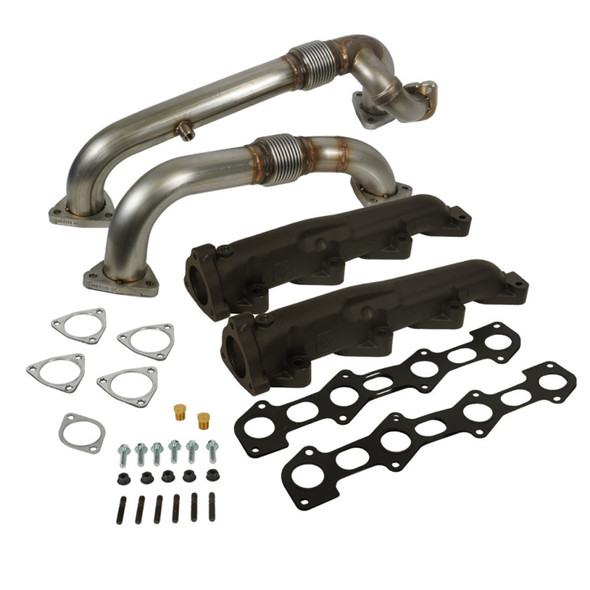
BD Diesel 08-10 Ford F-250/F-350/F-450/F-550 Powerstroke 6.4L Up Pipes Kit w/Manifold Set - 1041484
BD Diesel
$1,019.95Will this up-pipe kit affect my truck's warranty?Installing this bolt-on BD Diesel up-pipe kit on your 2008-2010 Ford Super Duty is designed to be compliant with most warranty terms.What kind of...$1,019.95 -
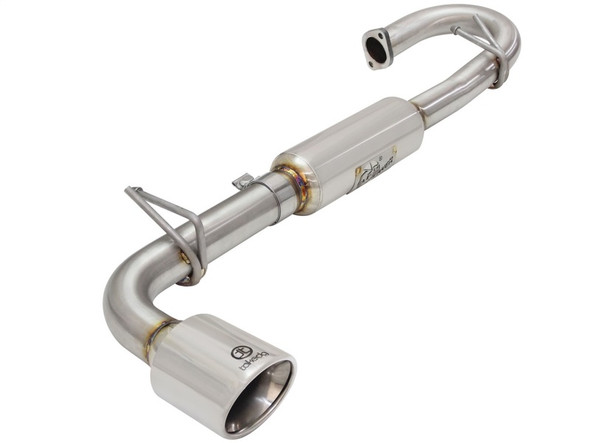

aFe 11-16 Scion TC L4-2.5L 304SS 2-1/4in to 2-1/2in Axle-Back Takeda Exhaust w/ Polished Tip - 49-36025-P
aFe
$633.00Will the aFe AFE Exhaust Axle Back fit my vehicle?The aFe AFE Exhaust Axle Back is engineered to perfectly fit 2011-2016 Scion tC models for a seamless installation.How difficult is the aFe AFE...$633.00 -


aFe Twisted Steel Shorty Header 11-17 Ford Mustang V6-3.7L - 48-43031
aFe
$514.50Will these headers fit my 2017 Ford Mustang GT?Yes, these aFe Headers are specifically engineered to bolt-on directly to your 2011-2017 Ford Mustang for a perfect fit.How much horsepower will these...$514.50 -
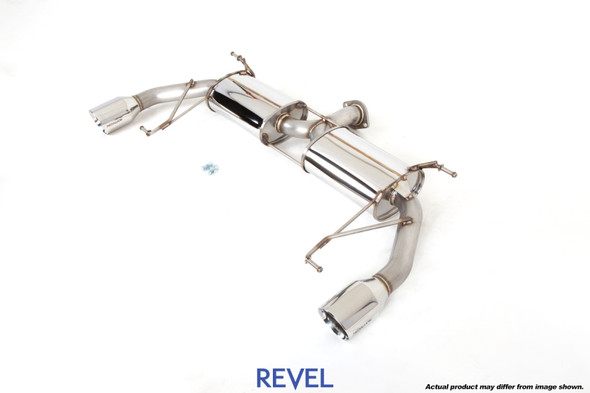
Revel Medallion Touring-S Catback Exhaust - Dual Muffler / Rear Section 14-17 Mazda 6 - T70173AR
Revel
MSRP: $940.00$893.00Will this exhaust fit my vehicle?Confirm your vehicle's specific model and year using our comprehensive fitment guide before ordering this Revel Catback exhaust.Can I install this myself?Professional...MSRP: $940.00$893.00 -

Remark 2009+ Nissan 370Z Cat-Back Exhaust R1-Spec w/Single Titanium Exit - RK-C1076N-01T
Remark
$1,114.51How do I know if the REM Cat-Back Exhaust is compatible with my specific vehicle model and year?Confirming fitment with your vehicle is paramount for this cat-back exhaust; always consult your...$1,114.51 -

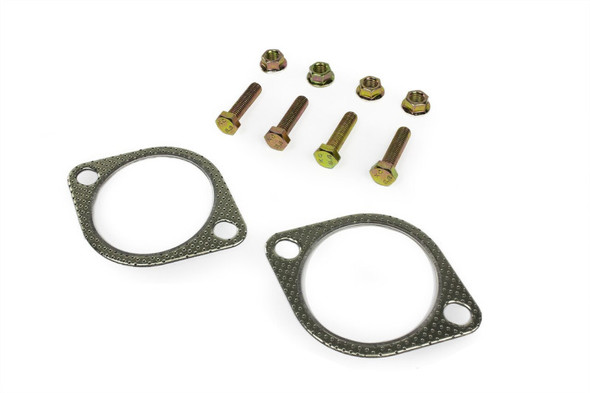
ISR Performance Series II - Resonated Mid Section Only - 89-94 (S13) Nissan 240sx - IS-S2RMD-S13
ISR Performance
MSRP: $275.00$261.25What is the primary function of a midpipe?This ISR midpipe enhances exhaust flow for improved engine responsiveness, directly contributing to more thrilling acceleration.How do I know if the midpipe...MSRP: $275.00$261.25 -


ISR Performance MB SE Type -E Dual Tip Exhaust 89-94 (S13) Nissan 240sx - IS-MBSE-S13-TE
ISR Performance
MSRP: $605.00$586.14What is an axle back exhaust?An axle back exhaust replaces the muffler and tailpipe section of your existing exhaust system for improved sound and performance.Is professional installation...MSRP: $605.00$586.14 -

AWE Tuning 23-25 Chevrolet C8 Corvette Z06 5.5L SwitchPath Exhaust System - Chrome Silver Tips - 3025-42906
AWE Tuning
MSRP: $4,100.00$3,940.85Will this axle-back exhaust fit my Corvette?Confirm fitment with your specific Corvette model and year using our detailed vehicle compatibility tool for a guaranteed direct bolt-on installation.Is...MSRP: $4,100.00$3,940.85 -

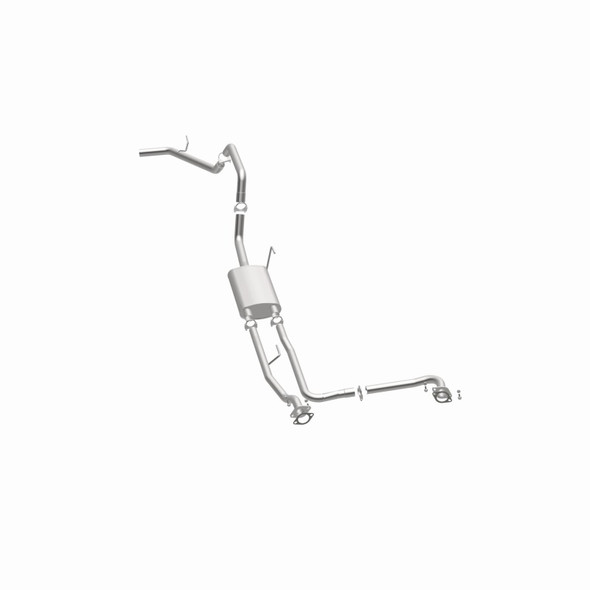
MagnaFlow BRE Exhaust Kit 12-17 Nissan NV1500 NV2500 NV3500 4.0L - 106-0296
Magnaflow
$644.52Are there any special tools required for the installation of the BRExhaust Direct-Fit Replacement Exhaust Kit 106-0296?No special tools are required; this bolt-on Catback exhaust kit includes all...$644.52 -

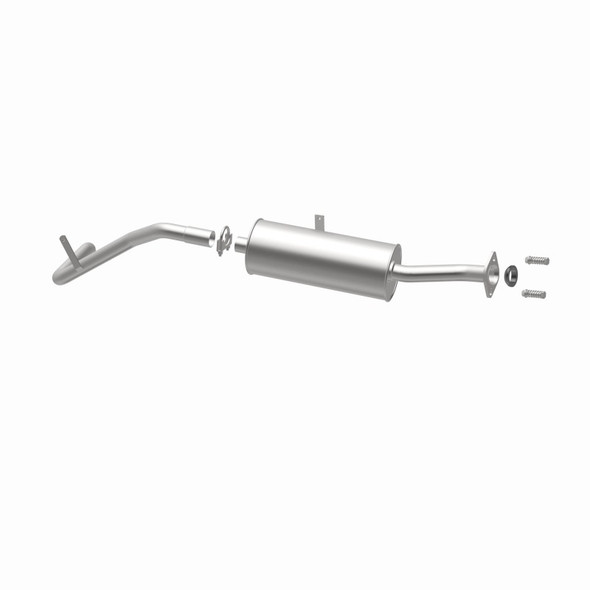
MagnaFlow BRE Exhaust Kit 86-95 Suzuki Samurai 1.3L - 106-0223
Magnaflow
$167.00Will this Magnaflow exhaust fit my Suzuki Samurai?Confirm fitment using our vehicle selector to ensure this BRExhaust direct-fit replacement exhaust kit precisely matches your Suzuki Samurai's...$167.00 -
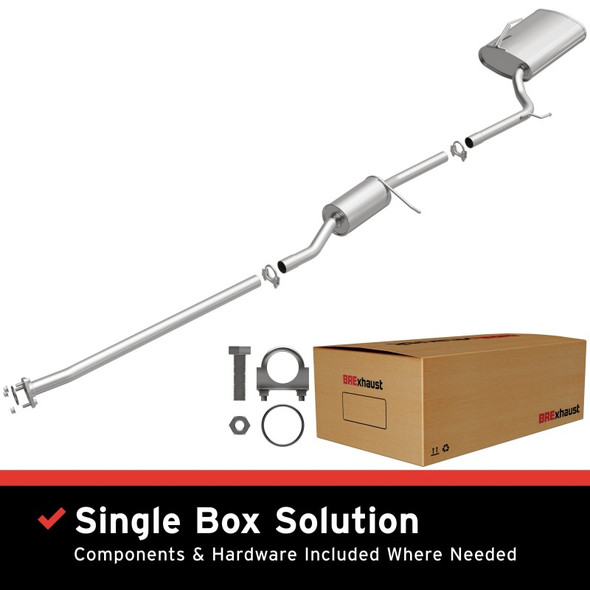
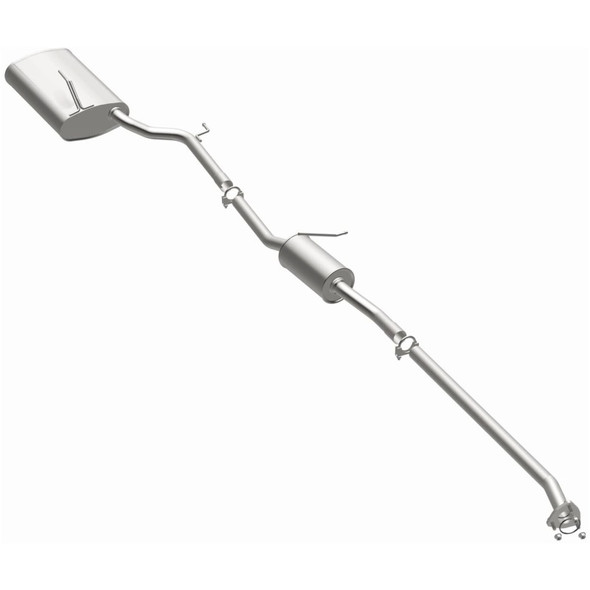
MagnaFlow BRE Exhaust Kit 03-05 Honda Accord 2.4L - 106-0151
Magnaflow
$248.09How do I install the Magnaflow Catback exhaust system?This Catback exhaust system features a direct bolt-on install type, utilizing included ring gaskets and 1.75 inch U-bolt clamps for secure...$248.09 -
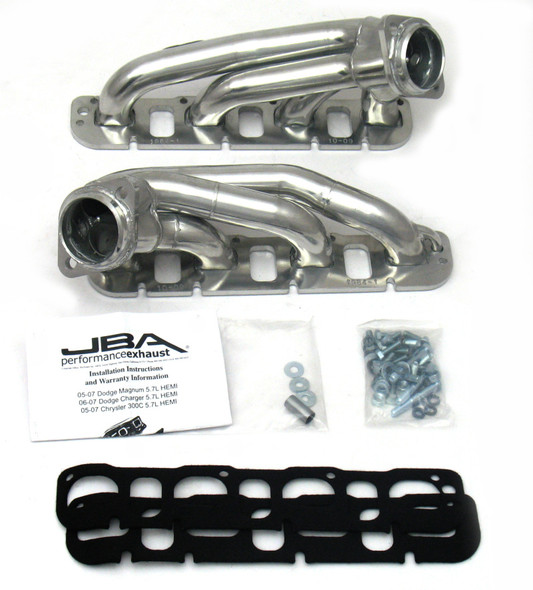
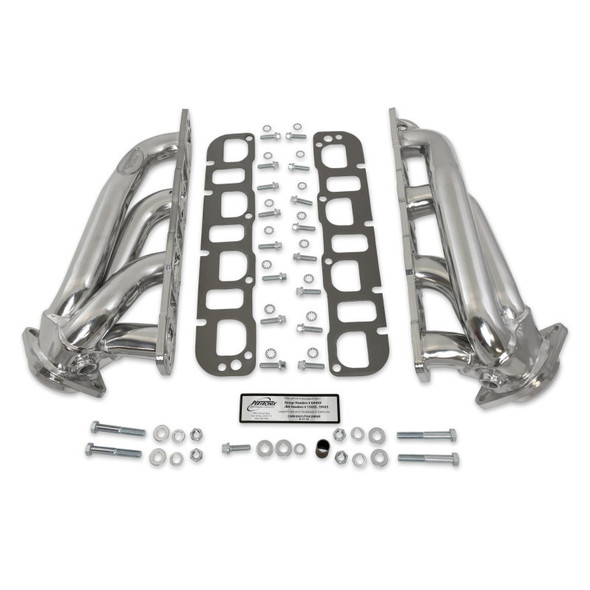
JBA 09-20 Chrysler 5.7L HEMI 1-3/4in Primary Silver Ctd Cat4Ward Header - 1964S-1JS
JBA
MSRP: $968.75$880.68Will JBA Cat4Ward Headers fit my 2015 Dodge Charger?JBA Cat4Ward Headers are engineered to bolt-on directly, providing a guaranteed fit for your 2015 Dodge Charger.How difficult is it to install JBA...MSRP: $968.75$880.68
A performance exhaust system is the most direct path to unlocking horsepower, reducing back pressure, and dialing in the exhaust note your build demands — from bolt-on axle-backs to full race-spec titanium systems. Motor Sport Mayhem stocks 3,787 exhaust components across 64 brands, covering cat-back systems, headers, downpipes, mufflers, exhaust brakes, and tips for street, track, off-road, and competition applications priced from $3.99 to $11,935.89.
Our Top Picks for Exhaust, Mufflers & Tips
Every product below was selected based on engineering quality, proven performance gains, and real-world results across street and competition applications.
AFE Exhaust Cat Back
aFe | $2,593.00
Mandrel-bent stainless steel construction with a stepped diameter design maximizes exhaust velocity and flow for measurable torque and horsepower gains on high-displacement truck engines.
- Stepped 3-inch to 3.5-inch tubing optimizes scavenging across the RPM range, not just at peak power
AKR Slip-On Line – Titanium
Akrapovic | $5,768.53
Full titanium construction delivers a dramatic weight reduction over the OEM system while producing the aggressive race-derived sound profile Akrapovic is known for in international motorsport.
- Titanium alloy grades used in Akrapovic systems match those found in MotoGP and FIA World Endurance Championship applications
AMS Downpipes
AMS | $2,249.95
High-flow downpipes are the single highest-impact exhaust upgrade on a turbocharged engine, reducing exhaust backpressure directly at the turbine housing where restriction costs the most boost response.
- Critical for reducing turbine backpressure on twin-turbo EcoBoost applications where OEM downpipes are a major restriction
ATS Exhaust Manifolds
ATS Diesel | $894.99
A pulse-flow exhaust manifold design leverages exhaust gas energy to improve turbine spool speed and torque delivery at low RPM — critical for diesel towing and performance applications.
- Pulse-flow runners preserve exhaust gas momentum that a log-style OEM manifold dissipates before it reaches the turbine wheel
AWE Axle-Back SwitchPath
AWE Tuning | $3,895.00
SwitchPath technology uses a remotely actuated valve to switch between a touring-quiet exhaust note and a full-open track mode, giving drivers two distinct exhaust characters without removing any hardware.
- Dual-mode valve operation is driver-controlled and eliminates the compromise between daily drivability and track sound levels
GBE Torque Tube Systems
Banks Power | $569.00
Banks Power's torque tube design uses a large-diameter single-pipe layout engineered to maximize low-end torque and exhaust flow on off-road applications where ground clearance is a design constraint.
- Engineered for off-road duty cycles where exhaust routing, clearance, and torque output matter more than outright peak power
BBK Full Header & Cat
BBK | $1,499.99
1-3/4-inch primary long tube headers paired with a high-flow catted mid-pipe represent the most complete header upgrade path, extracting exhaust gases from the ports before restriction can build anywhere in the system.
- Silver ceramic coating on the header tubes manages radiant heat and extends header longevity under sustained high-exhaust-temperature conditions
BDD Exhaust Brakes
BD Diesel | $1,685.95
An exhaust brake creates backpressure in the exhaust stream to use engine compression as a retarding force, reducing service brake wear and heat on heavy tow rigs descending grades.
- 4-inch universal sizing accommodates large-diameter diesel exhaust systems where OEM exhaust brake systems are insufficient for max GCWR loads
BIG EXO Aluminum ATV Dual Full System
Big Gun | $944.22
A full dual exhaust system for ATV applications delivers the maximum flow improvement possible by replacing every component from the header collector rearward with larger-diameter, lower-restriction tubing.
- Aluminum canister construction keeps unsprung and total vehicle weight in check on sport ATV platforms where power-to-weight ratio is the primary performance metric
BKM Exhaust Bungs B
BikeMaster | $12.99
Muffler packing is a consumable maintenance item on fiberglass-packed slip-on and full exhaust systems — degraded packing increases sound output and reduces mid-range power by disrupting proper back-pressure tuning inside the canister.
- Restoring packing to spec is the lowest-cost, highest-impact maintenance step for keeping a motorcycle or ATV exhaust system performing and sounding as designed
How to Choose the Right Exhaust, Mufflers & Tips
The exhaust system is one of the few performance modifications that simultaneously affects power output, vehicle weight, sound character, and emissions compliance — and every purchasing decision involves tradeoffs between those four variables. Cheap exhaust systems cut corners on tubing wall thickness (often 16-gauge or thinner versus the 14-gauge standard on quality systems), weld quality at collector joints, and muffler internals that determine both sound and flow characteristics. The difference between a mandrel-bent tube and a crush-bent tube is not aesthetic — crush bending reduces the internal cross-sectional area at every bend, directly restricting exhaust flow. Material selection between 304 stainless, 409 stainless, and titanium determines both corrosion resistance and long-term durability in road salt, heat cycling, and high-vibration environments.
Key Specifications
Pipe diameter is the first specification to get right, and it must match your engine's actual power output — not your target power. Running oversized piping on a stock or mildly modified engine reduces exhaust gas velocity, which kills scavenging efficiency and hurts low-RPM torque. The general rule holds that 2.25-inch piping suits engines producing up to roughly 300 horsepower, 2.5-inch handles 300–400 hp, 3-inch is appropriate from 400–600 hp, and 3.5-inch or larger is reserved for high-output forced-induction or naturally aspirated race engines above 600 hp. Header primary tube diameter follows a similar logic — smaller primaries build more low-end torque by maintaining exhaust velocity at low RPM, while larger primaries favor top-end power by reducing restriction at high flow rates.
Material selection defines the long-term value of any exhaust purchase. T304 stainless steel (containing 18% chromium and 8% nickel) is the performance standard — it resists corrosion in road-salt environments and withstands sustained exhaust temperatures exceeding 1,400°F at the header. T409 stainless is a ferritic stainless with lower nickel content, adequate for cat-back applications but less corrosion-resistant than 304 at the header. Titanium offers the best strength-to-weight ratio of any exhaust material and is chemically inert at high temperatures, but it costs significantly more and requires TIG welding with inert gas backing to prevent oxidation during fabrication. Aluminized steel is the entry-level option — functional for street use but prone to corrosion at welds within 3–5 years in harsh climates.
For cat-back systems, the muffler design determines both sound output and flow restriction. Straight-through perforated-core mufflers (sometimes called "glasspacks") offer the least restriction but the loudest, most aggressive tone. Chambered mufflers use internal baffles to tune a specific sound frequency, typically producing a deeper, more resonant note with slightly more restriction than straight-through designs. Turbo-style mufflers use a spiral path design that balances reasonable flow with a muted, street-appropriate tone. Understanding which design serves your intended use — daily driver, weekend track car, or dedicated race vehicle — is more important than brand loyalty when selecting a muffler.
Fitment tolerance is where budget systems fail most visibly. OEM exhaust hangers, flange bolt patterns, and outlet diameters vary enough between model years that a system built to broad tolerances will require modification at installation. Quality brands invest in vehicle-specific jig fixtures during manufacturing to hold tube routing within ±2mm of OEM reference points, which translates directly to bolt-on fitment without exhaust shop modifications. For turbocharged applications, downpipe fitment at the turbine outlet flange is especially critical — a poorly fitting downpipe creates exhaust leaks that contaminate the cabin and cause premature turbocharger bearing failure due to heat cycling at the turbine housing.
Exhaust Pipe Diameter Guide by Target Power Output
| Target Power Output | Recommended Pipe Diameter | Ideal Application | Notes |
|---|---|---|---|
| Under 250 hp | 2.0 – 2.25 inch | Stock / lightly modified street engines | Maintaining velocity matters more than flow area at this power level |
| 250 – 350 hp | 2.25 – 2.5 inch | Bolt-on street builds, NA V6/4-cyl performance | Most factory cat-back replacements fall in this range |
| 350 – 500 hp | 2.5 – 3.0 inch | Mildly forced-induction, built NA V8 | Header primary diameter should be matched at 1.625–1.75 inch |
| 500 – 700 hp | 3.0 – 3.5 inch | High-boost turbo, supercharged V8 builds | Downpipe sizing becomes critical — match to turbine outlet flange |
| 700 – 1000 hp | 3.5 – 4.0 inch | Built race engines, high-flow twin-turbo setups | Dual 3-inch may outperform single 4-inch for scavenging on V8s |
| 1000+ hp | 4.0 inch+ or dual 3.5 inch | Dedicated drag, unlimited race, diesel competition | Exhaust tuning at this level requires dyno verification of velocity |
Price Guide
Entry ($3.99–$300): This tier covers individual components — exhaust tips, muffler packing, bungs, flanges, hangers, and universal mufflers. These are not full system purchases; they serve enthusiasts doing DIY fabrication, completing a specific repair, or adding a cosmetic tip upgrade to an existing system. Quality varies widely at this price point, and aluminized or thin-wall stainless construction is common. For fabricators sourcing raw components, brands like Vibrant offer precision-grade fittings and tubing accessories at this price level that are legitimately used in professional shop builds.
Mid-range ($300–$2,000): The majority of enthusiasts land here, and for good reason — this tier delivers complete cat-back, axle-back, and header systems in 304 stainless with vehicle-specific fitment and measurable dyno-verified power gains. Brands like Magnaflow, FMF Racing, and Borla operate heavily in this space, offering mandrel-bent construction, multiple sound levels, and direct bolt-on installation that an experienced DIYer can complete in an afternoon. This is where the performance-per-dollar ratio peaks for most street and weekend track builds.
Premium ($2,000–$11,935.89): Premium systems are for builds where every fraction of a kilogram, every horsepower at redline, and every decibel of exhaust note has been deliberately engineered. Titanium construction, active valve systems with remote operation, full-system race configurations, and brand heritage from brands like Akrapovic, AWE Tuning, CORSA Performance, and Invidia justify the cost when the application demands it. Competition vehicles, high-horsepower street builds requiring emissions certification, and exotic sports cars where OEM integration is complex all benefit from this tier's engineering investment. For diesel performance builds, complete exhaust manifold and downpipe systems in this range represent the foundation of a serious power build that a cat-back alone cannot achieve.
Who Is This For?
Exhaust components serve every motorsport and street performance discipline — from a daily driver seeking a better sound to a dedicated race car chasing every last horsepower on a closed course.
Street Performance — 7.9/10
Street performance earns the highest usage score in this category for a reason: an exhaust upgrade is one of the most impactful modifications available to a street-driven vehicle without requiring supporting engine modifications. A well-matched cat-back or axle-back system on a street car improves exhaust flow at highway cruising speeds, produces a more satisfying throttle response under acceleration, and delivers a sound character that makes every drive more engaging. The 7.9 score reflects both the breadth of vehicle fitments available and the high success rate of these installs in producing noticeable, real-world results.
Engine Performance — 7.9/10
Exhaust restriction is one of the most commonly underestimated limitations on OEM powertrains. A factory exhaust system is engineered to balance sound regulations, emissions compliance, manufacturing cost, and performance — and performance is frequently the last priority. Replacing headers, downpipes, and mid-pipes with performance-spec components reduces exhaust backpressure at the cylinder head, which directly extends the exhaust stroke and allows the intake charge to fill more completely on the next cycle. On turbocharged engines, reducing turbine backpressure with high-flow downpipes also reduces turbine inlet pressure, which allows the turbocharger to spool faster and operate more efficiently across the power band. Pairing exhaust upgrades with intake system improvements amplifies the gains from both modifications.
Exhaust Note / Sound — 7.7/10
Sound character is a legitimate engineering parameter, not a vanity metric — and the 7.7 score reflects that a significant portion of buyers are specifically engineering the acoustic output of their exhaust system. Muffler internal design (chambered vs. straight-through vs. turbo-style), primary tube length, collector design, and pipe diameter all contribute to the final sound character, and manufacturers like Borla and CORSA Performance publish specific sound measurements for their systems across different variants. Active valve systems that allow on-demand switching between a quiet touring mode and a full-open track mode have become the engineering solution of choice for enthusiasts who need both daily-driver noise compliance and an aggressive open sound on track days.
Track / Autocross — 7.2/10
Track and autocross use cases score 7.2, reflecting the reality that exhaust modifications deliver strong but not dominant gains in timed competition compared to suspension and tire changes — but they remain a core component of any track build. On a closed course, the primary goal shifts from sound to outright power and weight reduction. Titanium systems, lightweight aluminum muffler canisters, and full race-spec header systems eliminate OEM restrictions that cost measurable lap time, and the weight reduction from a titanium system versus an OEM stainless or mild-steel system can exceed 15–20 pounds on some platforms. For autocross, header primaries tuned for mid-range torque delivery typically outperform top-end-focused race headers on tight, technical courses.
Easy DIY Install — 7.8/10
The 7.8 DIY install score is one of the strongest in the performance parts category, and it reflects a genuine characteristic of quality exhaust systems: a properly engineered vehicle-specific system with correct flange patterns, OEM hanger locations, and appropriate tube routing requires nothing more than basic hand tools and a lift or jack stands to install. Most cat-back and axle-back systems are designed specifically for this — no cutting, no welding, no specialized equipment. Header installs on some platforms require more disassembly time but remain DIY-accessible. The most common installation failure is applying insufficient anti-seize to flange hardware, which leads to seized bolts during future removal.
Trusted Exhaust, Mufflers & Tips Brands We Carry
The brands that dominate this category have earned their positions through measurable engineering standards, not marketing spend. Borla, with 701 products averaging over $1,300, is one of the few exhaust manufacturers to hold a patent on straight-through stainless steel muffler construction and publishes dyno data for every system it sells. Magnaflow operates as both an aftermarket performance brand and an OEM-certified catalyst manufacturer, giving its exhaust systems a level of quality assurance rooted in OEM production standards. AWE Tuning's 301-product lineup earns its $1,537 average price through in-house engineering development and the SwitchPath active valve technology that no competitor has matched at the same fitment depth. CORSA Performance leads the category in acoustic engineering, using Reflective Sound Cancellation technology that uses tuned resonators to cancel drone frequencies specifically — not just reduce overall volume. For motorcycle and off-road applications, FMF Racing's 358-product lineup is built on decades of motocross and cross-country race wins where exhaust system durability under sustained abuse is the only proof of concept that matters, and Invidia rounds out the sport compact and Japanese performance segment with 167 products built to the tight tolerances those platforms require.
Frequently Asked Questions
Are aftermarket exhaust tips worth it?
Exhaust tips are a purely aesthetic modification — they do not change exhaust flow, back pressure, or power output on their own. The tip is downstream of the muffler outlet, where exhaust gases have already expanded and lost nearly all their velocity, so tip diameter and shape have no meaningful effect on engine performance. Where tips provide real value is in completing the visual and acoustic finish of a system: a larger-diameter tip subtly amplifies perceived exhaust volume by reducing restriction at the tail end, and a polished or coated tip dramatically improves the appearance of the rear fascia on performance vehicles. If you are buying a tip without upgrading the rest of the system, manage your expectations — the sound and power change will be minimal to zero, but the visual upgrade can be significant for the cost.
Are axle-back exhausts worth it?
Axle-back systems replace only the muffler and tips, leaving the catalytic converter, mid-pipe, and header in place — which means their power gains are modest compared to a full cat-back or header system, but they are the most affordable entry point into a meaningfully better exhaust note. For enthusiasts whose primary goal is improved sound character and rear-end aesthetics without spending $1,500 or more on a full cat-back, an axle-back is absolutely worth the investment. The installation is typically the simplest of any exhaust modification — most require unbolting two to four hangers and a single flange connection. On vehicles where the factory mid-pipe and catalytic converters are already low-restriction designs, an axle-back can capture most of the sound benefit of a full system at a fraction of the cost.
Are Akrapovic exhausts worth the money?
Akrapovic exhausts are worth the money specifically when the application justifies the material and engineering specification — on high-performance sports cars, track vehicles, and premium motorcycles where weight, peak power, and sound engineering are all primary objectives simultaneously. The titanium alloys Akrapovic uses are aerospace-grade and welded to tolerances that justify the price premium over standard 304 stainless systems. Independent dyno testing on multiple platforms consistently shows Akrapovic systems producing measurable power gains over OEM, and the weight reduction on a full titanium system versus OEM can exceed 40% — a real, tangible performance number. For a daily driver or mild street build where you are not chasing lap times or maximum power-to-weight ratio, the premium over a quality stainless system from a competing brand is harder to justify on performance grounds alone, though the craftsmanship and brand pedigree are unmatched.
Are BBK headers made in the USA and are they stainless steel?
BBK Performance headers are manufactured in the United States and have been a domestic production brand since their founding in California — a meaningful distinction in a market where many budget header brands are sourced overseas with inconsistent quality control. BBK offers headers in both chrome and silver ceramic coating over steel construction, as well as stainless steel variants depending on the specific application — their product lineup includes both coated mild steel and full stainless steel options, so verifying the material spec on the specific part number you are purchasing is important. The ceramic coating on their steel headers provides meaningful heat management and corrosion resistance, but full stainless construction is the preferred specification for longevity in high-moisture or road-salt environments. BBK's long tube header designs are widely regarded as strong performance value in the domestic V8 market, and their header primary dimensions are engineered specifically for street and street-strip use rather than top-end race applications.
Are long tube headers actually better than shorty headers?
Long tube headers and shorty headers serve fundamentally different power bands, and neither is universally better — the correct choice depends on your RPM target. Long tube headers use extended primary tubes (typically 28–36 inches) to leverage exhaust pulse scavenging across a broader RPM range, which maximizes mid-range and top-end power gains of 15–30 horsepower on well-matched naturally aspirated V8 builds. Shorty headers improve flow over an OEM exhaust manifold with minimal tube length, preserving low-end torque but producing smaller peak power gains — typically 5–15 horsepower. Long tubes are the correct choice for performance builds targeting highway and track RPM ranges, but they require more installation clearance, often mandate separate high-flow catalytic converters or off-road mid-pipes, and involve more complex routing around steering components on front-engine, rear-drive platforms. For turbocharged applications, the header design priorities shift entirely — turbo manifold pulse separation and runner volume targeting turbine spool speed matter far more than primary tube length.
Building something specific? Our performance specialists can help you select the right Exhaust, Mufflers & Tips for your application — street, track, or full race build.